Muhammad asif Zeb
Lecturer- Hematology
IPMS KMU
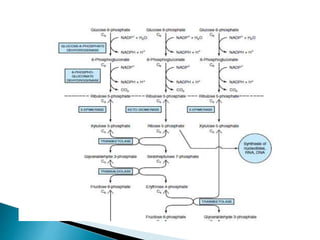
 The pentose phosphate pathway (also called the hexose
monophosphate pathway, or 6-phosphogluconate pathway)
occurs in the cytosol of the cell.
 No ATP is directly consumed or produced in the cycle.
 Carbon 1 of glucose 6-phosphate is released as CO2, and two
NADPH are produced for each glucose 6-phosphate
molecule.
Reaction of the Pathway
 HMP pathway consists of two reactions that lead to the
formation of ribulose 5-phosphate, CO2, and two molecules of
NADPH for each molecule of glucose 6-phosphate oxidized .
 this pathway is particularly important for fatty acids in
 liver, lactating mammary glands, Adipose,
 For steroid hormones in
 In the testes, ovaries, placenta and adrenal cortex
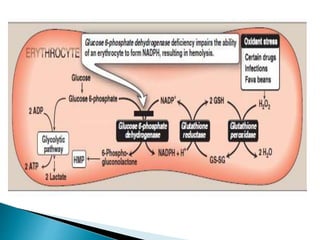
 In erythrocytes to keep glutathione in Reduced form.
 G6PD catalyzes an irreversible oxidation of glucose 6-
phosphate to 6-phosphogluconolactone
 The pentose phosphate pathway is regulated primarily at the
G6PD reaction.
 NADPH is a potent competitive inhibitor of the enzyme
 Insulin upregulates expression of the gene for G6PD,
 6-PG is hydrolyzed by 6-pg hydrolase.
 The reaction is irreversible

 The oxidative decarboxylation of the product, 6-
phosphogluconate is catalyzed by 6-phosphogluconate
dehydrogenase.
 This irreversible reaction produces a pentose sugar–phosphate
(ribulose 5-phosphate), CO2, and a second molecule of
NADPH
 The nonoxidative reactions of the pentose phosphate pathway occur in
all cell types synthesizing nucleotides and nucleic acids.
 These reversible reactions permit ribulose 5-phosphate to be
converted either to ribose 5-phosphate (needed for nucleotide
synthesis) or to intermediates of glycolysis—fructose 6-phosphate and
glyceraldehyde 3-phosphate.
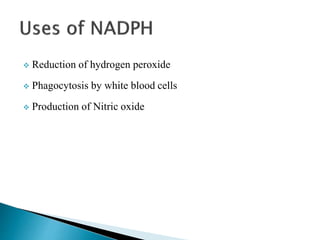
 Reduction of hydrogen peroxide
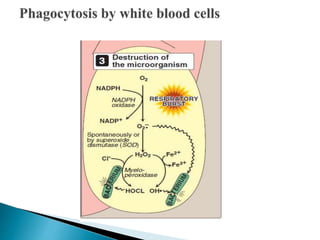
 Phagocytosis by white blood cells
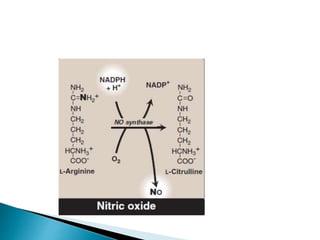
 Production of Nitric oxide
 Hydrogen peroxide is one of a family of reactive oxygen
species (ROS) that are formed from the partial reduction of
molecular Oxygen
 The highly reactive oxygen intermediates can cause serious
chemical damage to DNA, proteins, and unsaturated lipids,
and can lead to cell death
Hmp shunt pathway
Hmp shunt pathway
Hmp shunt pathway

Hmp shunt pathway

  • 1.
    Muhammad asif Zeb Lecturer-Hematology IPMS KMU
  • 2.
     The pentosephosphate pathway (also called the hexose monophosphate pathway, or 6-phosphogluconate pathway) occurs in the cytosol of the cell.  No ATP is directly consumed or produced in the cycle.  Carbon 1 of glucose 6-phosphate is released as CO2, and two NADPH are produced for each glucose 6-phosphate molecule.
  • 3.
  • 4.
     HMP pathwayconsists of two reactions that lead to the formation of ribulose 5-phosphate, CO2, and two molecules of NADPH for each molecule of glucose 6-phosphate oxidized .  this pathway is particularly important for fatty acids in  liver, lactating mammary glands, Adipose,  For steroid hormones in  In the testes, ovaries, placenta and adrenal cortex  In erythrocytes to keep glutathione in Reduced form.
  • 5.
     G6PD catalyzesan irreversible oxidation of glucose 6- phosphate to 6-phosphogluconolactone  The pentose phosphate pathway is regulated primarily at the G6PD reaction.  NADPH is a potent competitive inhibitor of the enzyme  Insulin upregulates expression of the gene for G6PD,
  • 6.
     6-PG ishydrolyzed by 6-pg hydrolase.  The reaction is irreversible   The oxidative decarboxylation of the product, 6- phosphogluconate is catalyzed by 6-phosphogluconate dehydrogenase.  This irreversible reaction produces a pentose sugar–phosphate (ribulose 5-phosphate), CO2, and a second molecule of NADPH
  • 7.
     The nonoxidativereactions of the pentose phosphate pathway occur in all cell types synthesizing nucleotides and nucleic acids.  These reversible reactions permit ribulose 5-phosphate to be converted either to ribose 5-phosphate (needed for nucleotide synthesis) or to intermediates of glycolysis—fructose 6-phosphate and glyceraldehyde 3-phosphate.
  • 9.
     Reduction ofhydrogen peroxide  Phagocytosis by white blood cells  Production of Nitric oxide
  • 10.
     Hydrogen peroxideis one of a family of reactive oxygen species (ROS) that are formed from the partial reduction of molecular Oxygen  The highly reactive oxygen intermediates can cause serious chemical damage to DNA, proteins, and unsaturated lipids, and can lead to cell death