

Understanding Lung Disease
What is COPD?
A set of lung diseases that limit air flow and is
not fully reversible.
๏‚— COPD patients report they are โ€œhungryโ€ for
air
๏‚— Usually progressive and is associated with
inflammation of the lungs as they respond to
noxious particles or gases
๏‚— Potentially preventable with proper
precautions and avoidance of precipitating
factors
๏‚— Symptomatic treatment is available
In COPD, less air flows in and out of the airways
because of one or more of the following:
1. The airways and air sacs lose their elastic quality.
2. The walls between many of the air sacs are destroyed.
3. The walls of the airways become thick and inflamed.
4. The airways make more mucus than usual, which tends to
clog them.
Two Major Causes of COPD
๏‚— Chronic Bronchitis is characterized by
๏‚— Chronic inflammation and excess mucus production
๏‚— Presence of chronic productive cough
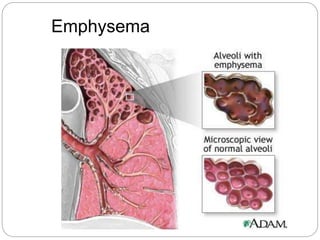
๏‚— Emphysema is characterized by
๏‚— Damage to the small, sac-like units of the lung that
deliver oxygen into the lung and remove the carbon
dioxide
๏‚— Chronic cough
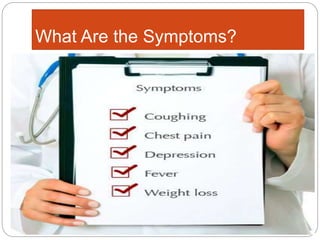
What Are the Symptoms?
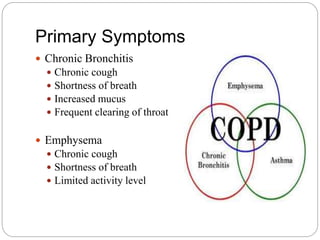
Primary Symptoms
๏‚— Chronic Bronchitis
๏‚— Chronic cough
๏‚— Shortness of breath
๏‚— Increased mucus
๏‚— Frequent clearing of throat
๏‚— Emphysema
๏‚— Chronic cough
๏‚— Shortness of breath
๏‚— Limited activity level
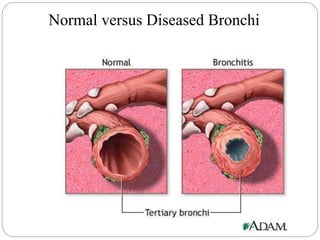
Normal versus Diseased Bronchi
Emphysema
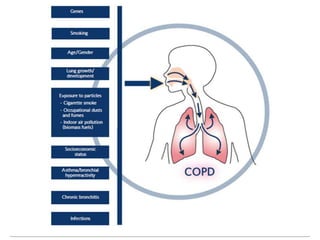
๏‚— Smoking
๏‚— Most common cause, however, as many of 1 out of 6 people
with COPD never smoked
๏‚— Environmental exposure
๏‚— Chemicals, dusts, fumes
๏‚— Secondhand smoke, pollutants
๏‚— Genetic Factor
๏‚— Alpha-1 antitrypsin (AAT) deficiency
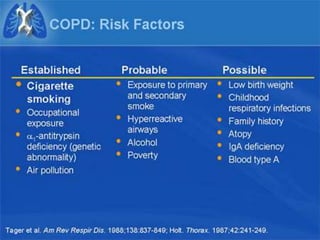
What can cause COPD?
๏‚— Smoking is the primary risk factor
๏‚— Long-term smoking is responsible for 80-90 % of cases
๏‚— Smoker, compared to non-smoker, is 10 times more likely to die
of COPD
๏‚— Prolonged exposures to harmful particles and gases
from:
๏‚— Second-hand smoke,
๏‚— Industrial smoke,
๏‚— Chemical gases, vapors, mists & fumes
๏‚— Dusts from grains, minerals & other materials
Difference between COPD and
Asthma
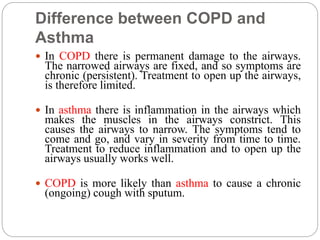
๏‚— In COPD there is permanent damage to the airways.
The narrowed airways are fixed, and so symptoms are
chronic (persistent). Treatment to open up the airways,
is therefore limited.
๏‚— In asthma there is inflammation in the airways which
makes the muscles in the airways constrict. This
causes the airways to narrow. The symptoms tend to
come and go, and vary in severity from time to time.
Treatment to reduce inflammation and to open up the
airways usually works well.
๏‚— COPD is more likely than asthma to cause a chronic
(ongoing) cough with sputum.
Contโ€™d
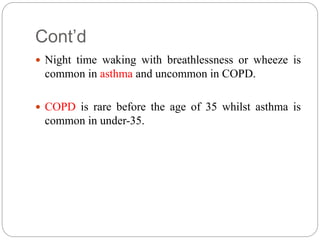
๏‚— Night time waking with breathlessness or wheeze is
common in asthma and uncommon in COPD.
๏‚— COPD is rare before the age of 35 whilst asthma is
common in under-35.
Ways to prevent or slow the
progression of COPD
๏‚— Stop smoking, if you smoke, to prevent further
damage to your body
๏‚— Smoking cessation is critical for all severities of COPD
๏‚— Avoid or protect yourself from exposures to
๏‚— Second-hand smoke
and
๏‚— Other substances such as chemical vapors, fumes, mists,
dusts, and diesel exhaust fumes that irritate your lungs
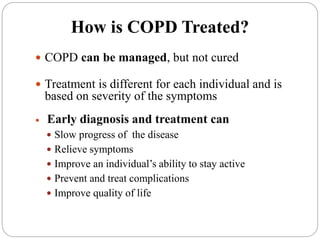
How is COPD Treated?
๏‚— COPD can be managed, but not cured
๏‚— Treatment is different for each individual and is
based on severity of the symptoms
๏‚— Early diagnosis and treatment can
๏‚— Slow progress of the disease
๏‚— Relieve symptoms
๏‚— Improve an individualโ€™s ability to stay active
๏‚— Prevent and treat complications
๏‚— Improve quality of life
When should you see your doctor?
๏‚— If smoker, see doctor for baseline evaluation of your lungs
๏‚— When first experiencing shortness of breath or having other lung
symptoms
๏‚— When your symptoms get worse
๏‚— Seek emergency medical treatment if:
๏‚— Breathing suddenly becomes more difficult
๏‚— If diagnosed with chronic bronchitis, emphysema or COPD, see
doctor 1-2 times yearly to review your treatment plan
Questions?

Chronic Obstructive Pulmonary Disease (COPD)

  • 1.
  • 3.
    What is COPD? Aset of lung diseases that limit air flow and is not fully reversible. ๏‚— COPD patients report they are โ€œhungryโ€ for air ๏‚— Usually progressive and is associated with inflammation of the lungs as they respond to noxious particles or gases ๏‚— Potentially preventable with proper precautions and avoidance of precipitating factors ๏‚— Symptomatic treatment is available
  • 4.
    In COPD, lessair flows in and out of the airways because of one or more of the following: 1. The airways and air sacs lose their elastic quality. 2. The walls between many of the air sacs are destroyed. 3. The walls of the airways become thick and inflamed. 4. The airways make more mucus than usual, which tends to clog them.
  • 5.
    Two Major Causesof COPD ๏‚— Chronic Bronchitis is characterized by ๏‚— Chronic inflammation and excess mucus production ๏‚— Presence of chronic productive cough ๏‚— Emphysema is characterized by ๏‚— Damage to the small, sac-like units of the lung that deliver oxygen into the lung and remove the carbon dioxide ๏‚— Chronic cough
  • 6.
    What Are theSymptoms?
  • 7.
    Primary Symptoms ๏‚— ChronicBronchitis ๏‚— Chronic cough ๏‚— Shortness of breath ๏‚— Increased mucus ๏‚— Frequent clearing of throat ๏‚— Emphysema ๏‚— Chronic cough ๏‚— Shortness of breath ๏‚— Limited activity level
  • 8.
  • 9.
  • 10.
    ๏‚— Smoking ๏‚— Mostcommon cause, however, as many of 1 out of 6 people with COPD never smoked ๏‚— Environmental exposure ๏‚— Chemicals, dusts, fumes ๏‚— Secondhand smoke, pollutants ๏‚— Genetic Factor ๏‚— Alpha-1 antitrypsin (AAT) deficiency
  • 11.
    What can causeCOPD? ๏‚— Smoking is the primary risk factor ๏‚— Long-term smoking is responsible for 80-90 % of cases ๏‚— Smoker, compared to non-smoker, is 10 times more likely to die of COPD ๏‚— Prolonged exposures to harmful particles and gases from: ๏‚— Second-hand smoke, ๏‚— Industrial smoke, ๏‚— Chemical gases, vapors, mists & fumes ๏‚— Dusts from grains, minerals & other materials
  • 14.
    Difference between COPDand Asthma ๏‚— In COPD there is permanent damage to the airways. The narrowed airways are fixed, and so symptoms are chronic (persistent). Treatment to open up the airways, is therefore limited. ๏‚— In asthma there is inflammation in the airways which makes the muscles in the airways constrict. This causes the airways to narrow. The symptoms tend to come and go, and vary in severity from time to time. Treatment to reduce inflammation and to open up the airways usually works well. ๏‚— COPD is more likely than asthma to cause a chronic (ongoing) cough with sputum.
  • 15.
    Contโ€™d ๏‚— Night timewaking with breathlessness or wheeze is common in asthma and uncommon in COPD. ๏‚— COPD is rare before the age of 35 whilst asthma is common in under-35.
  • 16.
    Ways to preventor slow the progression of COPD ๏‚— Stop smoking, if you smoke, to prevent further damage to your body ๏‚— Smoking cessation is critical for all severities of COPD ๏‚— Avoid or protect yourself from exposures to ๏‚— Second-hand smoke and ๏‚— Other substances such as chemical vapors, fumes, mists, dusts, and diesel exhaust fumes that irritate your lungs
  • 17.
    How is COPDTreated? ๏‚— COPD can be managed, but not cured ๏‚— Treatment is different for each individual and is based on severity of the symptoms ๏‚— Early diagnosis and treatment can ๏‚— Slow progress of the disease ๏‚— Relieve symptoms ๏‚— Improve an individualโ€™s ability to stay active ๏‚— Prevent and treat complications ๏‚— Improve quality of life
  • 18.
    When should yousee your doctor? ๏‚— If smoker, see doctor for baseline evaluation of your lungs ๏‚— When first experiencing shortness of breath or having other lung symptoms ๏‚— When your symptoms get worse ๏‚— Seek emergency medical treatment if: ๏‚— Breathing suddenly becomes more difficult ๏‚— If diagnosed with chronic bronchitis, emphysema or COPD, see doctor 1-2 times yearly to review your treatment plan
  • 19.