Dr. Sookun Rajeev K
(MD)
Dept of General Medicine
Anna Medical College
Definition:
Asthma is a disease characterised by:
๏ƒผ Chronic Airway Inflammation
๏ƒผIncreased Airway Responsiveness
๏ƒผAirways Obstruction
๏ƒผVariable over Short Periods of Time
๏ƒผReversible with Treatment
1.Allergic asthma (extrinsic)
2.Non-allergic asthma (intrinsic)
3.Cough variant asthma
4.Occupational asthma
5.Exercise induced asthma
6.Medication induced asthma
7.Nocturnal asthma
Types Of Asthma
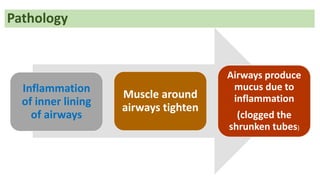
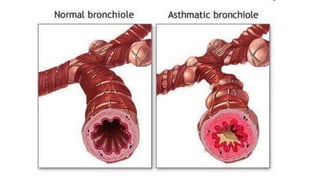
Inflammation
of inner lining
of airways
Muscle around
airways tighten
Airways produce
mucus due to
inflammation
(clogged the
shrunken tubes)
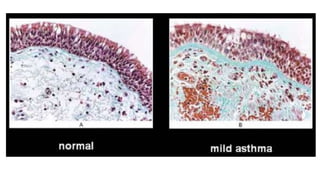
Pathology
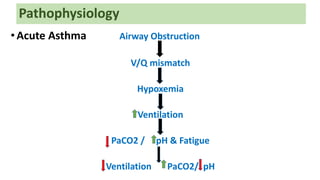
Pathophysiology
โ€ขAcute Asthma Airway Obstruction
V/Q mismatch
Hypoxemia
Ventilation
PaCO2 / pH & Fatigue
Ventilation PaCO2/ pH
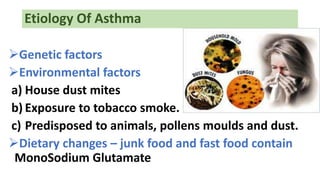
Etiology Of Asthma
๏ƒ˜Genetic factors
๏ƒ˜Environmental factors
a) House dust mites
b) Exposure to tobacco smoke.
c) Predisposed to animals, pollens moulds and dust.
๏ƒ˜Dietary changes โ€“ junk food and fast food contain
MonoSodium Glutamate
Etiology Of Asthma
๏ƒ˜Atopic diseases โ€“ eczema and allergic rhinitis.
๏ƒ˜Maternal status โ€“ both physical and mental
conditions like anaemia and depression in the
mother are associated with asthmatic stress for
the child.
๏ƒ˜Early antibiotic use โ€“ babies who are given
antibiotics may be 50% more likely to develop
asthma by the age of six
Common Triggering Factors
Extrinsic (Allergic) Triggers:
๏ƒผ Dust mites
๏ƒผ Mould
๏ƒผ Certain foods
๏ƒผ Animal dander
๏ƒผ Pollen
Intrinsic (Non-Allergic) Triggers:
๏ƒผ Exercise
๏ƒผ Infections (cold and flu)
๏ƒผ Cold or humid air
๏ƒผ Intense emotions (ex. Stress)
๏ƒผ Medications (aspirin)
๏ƒผ Hormones
๏ƒผ Air pollution
๏ƒผ Fragrances and chemicals
๏ƒผ Occupational irritants
Common symptoms of asthma
1.Coughing, especially at night
2.Wheezing
3.Shortness of breath
4.Chest tightness, pain, or pressure
Signs & Symptoms
Mild Asthma attack
1. Cough
2. Wheezing
3. Mild difficulty breathing during normal activities
4. Difficulty sleeping
5. Hiccups
6. Peak expiratory flow rate (PEFR) is 70 to 90% of
personal best
Symptoms of Asthma attack
Moderate asthma attack
1. Severe cough
2. Moderate wheezing
3. Shortness of breath
4. Chest tightness
๏ƒ˜Usually worsens with exercise
5. Inability to sleep
6. Nasal congestion
7. PEFR is 50 to 70% of personal best
Symptoms of Asthma attack
Severe asthma attack
1. Severe wheezing
2. Severe difficulty breathing
3. Inability to speak in complete sentences
๏ƒผSentences are interrupted by breathing
4. Inability to lie down
5. Signs of severe difficulty breathing
๏ƒผRib retractions: ribs are visible during each breath
๏ƒผNasal flaring: nostrils open wide during each breath
Symptoms of Asthma attack
๏ƒผUse of accessory muscles: neck muscles are prominent during
each breath
6. Chest pain
๏ƒผSharp, chest pain when taking a breath, coughing
7. PEFR is <50% of personal best
8. Confusion
9. Rapid pulse
10. Fatigue
11. Rapid breathing rate
Symptoms of Asthma attack
Severe asthma attack
1. Severe wheezing
2. Severe difficulty breathing
3. Inability to speak in complete sentences
๏ƒผSentences are interrupted by breathing
4. Inability to lie down
5. Signs of severe difficulty breathing
๏ƒผRib retractions: ribs are visible during each breath
๏ƒผNasal flaring: nostrils open wide during each breath
๏ƒผUse of accessory muscles: neck muscles are prominent during each
breath
Symptoms of Asthma attack
6. Chest pain
๏ƒผSharp, chest pain when taking a breath, coughing
7. PEFR is <50% of personal best
8. Confusion
9. Rapid pulse
10. Fatigue
11. Rapid breathing rate
Establishing the Diagnosis
Not all that wheezes is asthma
โ€ขThe Medical history
โ€ขPhysical Examination
โ€ขDifferential Diagnosis
โ€ขLaboratory Investigations
Physical Examination
โ€ขHyperexpansion of the thorax
โ€ขSounds of wheezing during normal breathing or a
prolonged phase of forced exhalation Increased nasal
secretions, mucosal swelling, sinusitis, rhinitis, or
nasal polyps
โ€ขAtopic dermatitis/eczema or other signs of allergic
skin problem
Investigations
๏ƒผPeak Expiratory Flow Rate
๏ƒผSpirometry
๏ƒผChest Radiograph
๏ƒผSkinPrick Testing
๏ƒผMeasurement of Airway Hyperresponsiveness
๏ƒผSputum Examination
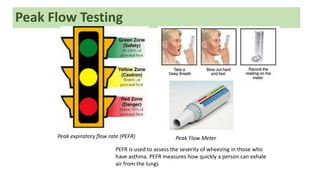
Peak Flow Testing
Peak Flow Meter
PEFR is used to assess the severity of wheezing in those who
have asthma. PEFR measures how quickly a person can exhale
air from the lungs
Peak expiratory flow rate (PEFR)
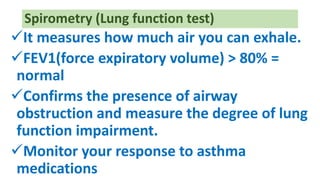
๏ƒผIt measures how much air you can exhale.
๏ƒผFEV1(force expiratory volume) > 80% =
normal
๏ƒผConfirms the presence of airway
obstruction and measure the degree of lung
function impairment.
๏ƒผMonitor your response to asthma
medications
Spirometry (Lung function test)
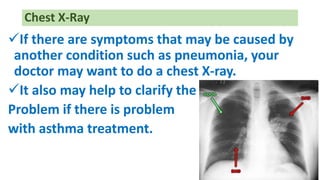
๏ƒผIf there are symptoms that may be caused by
another condition such as pneumonia, your
doctor may want to do a chest X-ray.
๏ƒผIt also may help to clarify the
Problem if there is problem
with asthma treatment.
Chest X-Ray
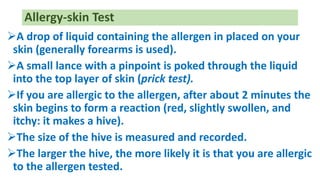
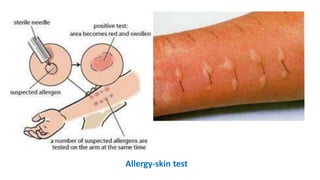
๏ƒ˜A drop of liquid containing the allergen in placed on your
skin (generally forearms is used).
๏ƒ˜A small lance with a pinpoint is poked through the liquid
into the top layer of skin (prick test).
๏ƒ˜If you are allergic to the allergen, after about 2 minutes the
skin begins to form a reaction (red, slightly swollen, and
itchy: it makes a hive).
๏ƒ˜The size of the hive is measured and recorded.
๏ƒ˜The larger the hive, the more likely it is that you are allergic
to the allergen tested.
Allergy-skin Test
Allergy-skin test
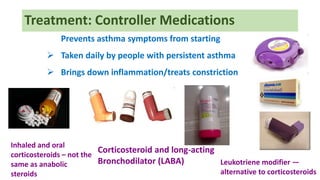
๏ƒ˜ Prevents asthma symptoms from starting
๏ƒ˜ Taken daily by people with persistent asthma
๏ƒ˜ Brings down inflammation/treats constriction
Treatment: Controller Medications
Inhaled and oral
corticosteroids โ€“ not the
same as anabolic
steroids
Leukotriene modifier โ€”
alternative to corticosteroids
Corticosteroid and long-acting
Bronchodilator (LABA)
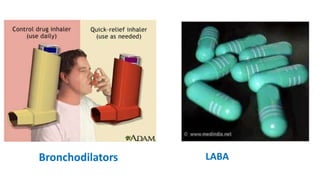
Bronchodilators LABA
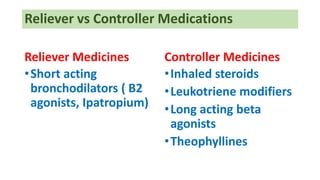
Reliever vs Controller Medications
Reliever Medicines
โ€ขShort acting
bronchodilators ( B2
agonists, Ipatropium)
Controller Medicines
โ€ขInhaled steroids
โ€ขLeukotriene modifiers
โ€ขLong acting beta
agonists
โ€ขTheophyllines
Step 1 Treatment for Adults and Children >5 :
Mild Intermittent
๏ƒ˜Daily Long Term Control
๏ƒผNot needed
๏ƒ˜Quick Relief
๏ƒผShort-acting inhaled B2-agonist PRN
๏ƒผIncreasing use, or use more than 2x/week, may
indicate need for long term control therapy
๏ƒผIntensity of treatment depends on severity of
exacerbation
Step 2 Treatment for Adults and Children >5 :
Mild Persistent
๏ƒ˜Daily Long Term Control
๏ถAnti-Inflammatory preferred
๏ƒผInhaled corticosteroid (low dose) or
๏ƒผCromolyn or Nedocromil
Or
Sustained release theophylline (to serum concentration 5-15
mcg/mL) is an alternative but not preferred
๏ƒผLeukotriene modifier may be considered
Step 2 Treatment for Adults and Children >5:
Mild Persistent (Cont)
๏ƒ˜Quick Relief
๏ƒผShort-acting inhaled B2 agonist PRN
๏ƒผBaily or increasing use indicates need
for increase long term control therapy
๏ƒผIntensity of treatment depends on
severity of exacerbation
Step 3 Treatment for Adults and Children >5:
Moderate Persistent
๏ƒ˜Daily Long-Term Control
๏ƒผInhaled corticosteroid (medium dose)
OR
๏ƒผInhaled corticosteroid ( low to medium dose)
AND
๏ƒผLong acting bronchodilator (long-acting B2-agonist or sustained
release theophylline)
๏ƒ˜IF NEEDED, increase to:
๏ƒผInhaled corticosteroid (medium to high dose) and long acting
bronchodilator
Step 3 Treatment for Adults and Children >5:
Moderate Persistent (Cont)
๏ƒ˜Quick Relief
๏ƒผShort acting inhaled B2 agonist PRN
๏ƒผDaily or increasing use indicates increase
for long term control therapy
๏ƒผIntensity of treatment depends on severity
of exacerbation
Step 4 Treatment for Adults and Children >5:
Severe Persistent
Daily long term control
๏ƒ˜Inhaled corticosteroid (high dose)
AND
๏ƒ˜Long acting bronchodilator
๏ƒผLong โ€“acting inhaled B2 agonists
OR
๏ƒผSustained release theophylline
OR
๏ƒผLong acting B2 agonist tablets
AND
๏ƒ˜Oral corticosteroid, long term
Step 4 Treatment for Adults and Children >5:
Severe Persistent (Cont)
๏ƒ˜Quick Relief
๏ƒผShort acting inhaled B2 agonist PRN
๏ƒผDaily or increasing use indicates need for
increase long term control therapy
๏ƒผIntensity of treatment depends on severity of
exacerbation
Treatment of Exacerbation
๏ƒผHigh dose B2 agonist (inhales, sq,
IV)
๏ƒผAnticholinergics
๏ƒผGlucocorticoids- double inhaled
cdose or add systemic therapy
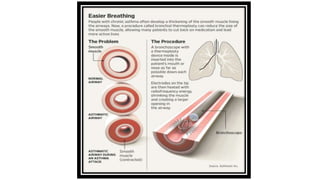
Bronchial thermoplasty
๏ƒผInvasive procedure for severe asthma
๏ƒผIs not painful (no nerves inside airways)
๏ƒผRisks : mainly lung collapse, bleeding and additional breathing
problems, mostly related to the bronchoscope.
๏ƒผPrecaution: Pt. must be at least 18 y/o to have the procedure.
๏ƒผPt. still need to use their asthma-maintenance medications after
the procedure
๏ƒผBenefits: Pt. may use rescue inhalers less often and are able to
engage strenuous physical activity than before
Surgical Treatment
Bronchial Asthma by Dr. Sookun Rajeev Kumar

Bronchial Asthma by Dr. Sookun Rajeev Kumar

  • 1.
    Dr. Sookun RajeevK (MD) Dept of General Medicine Anna Medical College
  • 2.
    Definition: Asthma is adisease characterised by: ๏ƒผ Chronic Airway Inflammation ๏ƒผIncreased Airway Responsiveness ๏ƒผAirways Obstruction ๏ƒผVariable over Short Periods of Time ๏ƒผReversible with Treatment
  • 3.
    1.Allergic asthma (extrinsic) 2.Non-allergicasthma (intrinsic) 3.Cough variant asthma 4.Occupational asthma 5.Exercise induced asthma 6.Medication induced asthma 7.Nocturnal asthma Types Of Asthma
  • 4.
    Inflammation of inner lining ofairways Muscle around airways tighten Airways produce mucus due to inflammation (clogged the shrunken tubes) Pathology
  • 5.
    Pathophysiology โ€ขAcute Asthma AirwayObstruction V/Q mismatch Hypoxemia Ventilation PaCO2 / pH & Fatigue Ventilation PaCO2/ pH
  • 8.
    Etiology Of Asthma ๏ƒ˜Geneticfactors ๏ƒ˜Environmental factors a) House dust mites b) Exposure to tobacco smoke. c) Predisposed to animals, pollens moulds and dust. ๏ƒ˜Dietary changes โ€“ junk food and fast food contain MonoSodium Glutamate
  • 9.
    Etiology Of Asthma ๏ƒ˜Atopicdiseases โ€“ eczema and allergic rhinitis. ๏ƒ˜Maternal status โ€“ both physical and mental conditions like anaemia and depression in the mother are associated with asthmatic stress for the child. ๏ƒ˜Early antibiotic use โ€“ babies who are given antibiotics may be 50% more likely to develop asthma by the age of six
  • 10.
    Common Triggering Factors Extrinsic(Allergic) Triggers: ๏ƒผ Dust mites ๏ƒผ Mould ๏ƒผ Certain foods ๏ƒผ Animal dander ๏ƒผ Pollen Intrinsic (Non-Allergic) Triggers: ๏ƒผ Exercise ๏ƒผ Infections (cold and flu) ๏ƒผ Cold or humid air ๏ƒผ Intense emotions (ex. Stress) ๏ƒผ Medications (aspirin) ๏ƒผ Hormones ๏ƒผ Air pollution ๏ƒผ Fragrances and chemicals ๏ƒผ Occupational irritants
  • 11.
    Common symptoms ofasthma 1.Coughing, especially at night 2.Wheezing 3.Shortness of breath 4.Chest tightness, pain, or pressure Signs & Symptoms
  • 12.
    Mild Asthma attack 1.Cough 2. Wheezing 3. Mild difficulty breathing during normal activities 4. Difficulty sleeping 5. Hiccups 6. Peak expiratory flow rate (PEFR) is 70 to 90% of personal best Symptoms of Asthma attack
  • 13.
    Moderate asthma attack 1.Severe cough 2. Moderate wheezing 3. Shortness of breath 4. Chest tightness ๏ƒ˜Usually worsens with exercise 5. Inability to sleep 6. Nasal congestion 7. PEFR is 50 to 70% of personal best Symptoms of Asthma attack
  • 14.
    Symptoms of Asthmaattack Severe asthma attack 1. Severe wheezing 2. Severe difficulty breathing 3. Inability to speak in complete sentences ๏ƒผSentences are interrupted by breathing 4. Inability to lie down 5. Signs of severe difficulty breathing ๏ƒผRib retractions: ribs are visible during each breath ๏ƒผNasal flaring: nostrils open wide during each breath
  • 15.
    Symptoms of Asthmaattack ๏ƒผUse of accessory muscles: neck muscles are prominent during each breath 6. Chest pain ๏ƒผSharp, chest pain when taking a breath, coughing 7. PEFR is <50% of personal best 8. Confusion 9. Rapid pulse 10. Fatigue 11. Rapid breathing rate
  • 16.
    Symptoms of Asthmaattack Severe asthma attack 1. Severe wheezing 2. Severe difficulty breathing 3. Inability to speak in complete sentences ๏ƒผSentences are interrupted by breathing 4. Inability to lie down 5. Signs of severe difficulty breathing ๏ƒผRib retractions: ribs are visible during each breath ๏ƒผNasal flaring: nostrils open wide during each breath ๏ƒผUse of accessory muscles: neck muscles are prominent during each breath
  • 17.
    Symptoms of Asthmaattack 6. Chest pain ๏ƒผSharp, chest pain when taking a breath, coughing 7. PEFR is <50% of personal best 8. Confusion 9. Rapid pulse 10. Fatigue 11. Rapid breathing rate
  • 18.
    Establishing the Diagnosis Notall that wheezes is asthma โ€ขThe Medical history โ€ขPhysical Examination โ€ขDifferential Diagnosis โ€ขLaboratory Investigations
  • 19.
    Physical Examination โ€ขHyperexpansion ofthe thorax โ€ขSounds of wheezing during normal breathing or a prolonged phase of forced exhalation Increased nasal secretions, mucosal swelling, sinusitis, rhinitis, or nasal polyps โ€ขAtopic dermatitis/eczema or other signs of allergic skin problem
  • 20.
    Investigations ๏ƒผPeak Expiratory FlowRate ๏ƒผSpirometry ๏ƒผChest Radiograph ๏ƒผSkinPrick Testing ๏ƒผMeasurement of Airway Hyperresponsiveness ๏ƒผSputum Examination
  • 21.
    Peak Flow Testing PeakFlow Meter PEFR is used to assess the severity of wheezing in those who have asthma. PEFR measures how quickly a person can exhale air from the lungs Peak expiratory flow rate (PEFR)
  • 22.
    ๏ƒผIt measures howmuch air you can exhale. ๏ƒผFEV1(force expiratory volume) > 80% = normal ๏ƒผConfirms the presence of airway obstruction and measure the degree of lung function impairment. ๏ƒผMonitor your response to asthma medications Spirometry (Lung function test)
  • 23.
    ๏ƒผIf there aresymptoms that may be caused by another condition such as pneumonia, your doctor may want to do a chest X-ray. ๏ƒผIt also may help to clarify the Problem if there is problem with asthma treatment. Chest X-Ray
  • 24.
    ๏ƒ˜A drop ofliquid containing the allergen in placed on your skin (generally forearms is used). ๏ƒ˜A small lance with a pinpoint is poked through the liquid into the top layer of skin (prick test). ๏ƒ˜If you are allergic to the allergen, after about 2 minutes the skin begins to form a reaction (red, slightly swollen, and itchy: it makes a hive). ๏ƒ˜The size of the hive is measured and recorded. ๏ƒ˜The larger the hive, the more likely it is that you are allergic to the allergen tested. Allergy-skin Test
  • 25.
  • 26.
    ๏ƒ˜ Prevents asthmasymptoms from starting ๏ƒ˜ Taken daily by people with persistent asthma ๏ƒ˜ Brings down inflammation/treats constriction Treatment: Controller Medications Inhaled and oral corticosteroids โ€“ not the same as anabolic steroids Leukotriene modifier โ€” alternative to corticosteroids Corticosteroid and long-acting Bronchodilator (LABA)
  • 27.
  • 28.
    Reliever vs ControllerMedications Reliever Medicines โ€ขShort acting bronchodilators ( B2 agonists, Ipatropium) Controller Medicines โ€ขInhaled steroids โ€ขLeukotriene modifiers โ€ขLong acting beta agonists โ€ขTheophyllines
  • 29.
    Step 1 Treatmentfor Adults and Children >5 : Mild Intermittent ๏ƒ˜Daily Long Term Control ๏ƒผNot needed ๏ƒ˜Quick Relief ๏ƒผShort-acting inhaled B2-agonist PRN ๏ƒผIncreasing use, or use more than 2x/week, may indicate need for long term control therapy ๏ƒผIntensity of treatment depends on severity of exacerbation
  • 30.
    Step 2 Treatmentfor Adults and Children >5 : Mild Persistent ๏ƒ˜Daily Long Term Control ๏ถAnti-Inflammatory preferred ๏ƒผInhaled corticosteroid (low dose) or ๏ƒผCromolyn or Nedocromil Or Sustained release theophylline (to serum concentration 5-15 mcg/mL) is an alternative but not preferred ๏ƒผLeukotriene modifier may be considered
  • 31.
    Step 2 Treatmentfor Adults and Children >5: Mild Persistent (Cont) ๏ƒ˜Quick Relief ๏ƒผShort-acting inhaled B2 agonist PRN ๏ƒผBaily or increasing use indicates need for increase long term control therapy ๏ƒผIntensity of treatment depends on severity of exacerbation
  • 32.
    Step 3 Treatmentfor Adults and Children >5: Moderate Persistent ๏ƒ˜Daily Long-Term Control ๏ƒผInhaled corticosteroid (medium dose) OR ๏ƒผInhaled corticosteroid ( low to medium dose) AND ๏ƒผLong acting bronchodilator (long-acting B2-agonist or sustained release theophylline) ๏ƒ˜IF NEEDED, increase to: ๏ƒผInhaled corticosteroid (medium to high dose) and long acting bronchodilator
  • 33.
    Step 3 Treatmentfor Adults and Children >5: Moderate Persistent (Cont) ๏ƒ˜Quick Relief ๏ƒผShort acting inhaled B2 agonist PRN ๏ƒผDaily or increasing use indicates increase for long term control therapy ๏ƒผIntensity of treatment depends on severity of exacerbation
  • 34.
    Step 4 Treatmentfor Adults and Children >5: Severe Persistent Daily long term control ๏ƒ˜Inhaled corticosteroid (high dose) AND ๏ƒ˜Long acting bronchodilator ๏ƒผLong โ€“acting inhaled B2 agonists OR ๏ƒผSustained release theophylline OR ๏ƒผLong acting B2 agonist tablets AND ๏ƒ˜Oral corticosteroid, long term
  • 35.
    Step 4 Treatmentfor Adults and Children >5: Severe Persistent (Cont) ๏ƒ˜Quick Relief ๏ƒผShort acting inhaled B2 agonist PRN ๏ƒผDaily or increasing use indicates need for increase long term control therapy ๏ƒผIntensity of treatment depends on severity of exacerbation
  • 36.
    Treatment of Exacerbation ๏ƒผHighdose B2 agonist (inhales, sq, IV) ๏ƒผAnticholinergics ๏ƒผGlucocorticoids- double inhaled cdose or add systemic therapy
  • 37.
    Bronchial thermoplasty ๏ƒผInvasive procedurefor severe asthma ๏ƒผIs not painful (no nerves inside airways) ๏ƒผRisks : mainly lung collapse, bleeding and additional breathing problems, mostly related to the bronchoscope. ๏ƒผPrecaution: Pt. must be at least 18 y/o to have the procedure. ๏ƒผPt. still need to use their asthma-maintenance medications after the procedure ๏ƒผBenefits: Pt. may use rescue inhalers less often and are able to engage strenuous physical activity than before Surgical Treatment