PATHO-PHYSIOLOGY
CHRONIC
OBSTRUCTIVE
AIRWAY DISEASES
NEM KUMAR JAIN
MS (PHARM.) PHARMACOLOGY & TOXICOLOGY
ASSISTANT PROFESSOR, SCHOOL OF PHARMACY
ITM UNIVERSITY GWALIOR
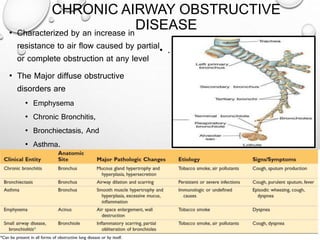
CHRONIC AIRWAY OBSTRUCTIVE
DISEASE• Characterized by an increase in
resistance to air flow caused by partial
or complete obstruction at any level
• The Major diffuse obstructive
disorders are
• Emphysema
• Chronic Bronchitis,
• Bronchiectasis, And
• Asthma.
• .
• Forced vital capacity (FVC) is either
normal or slightly decreased, while the
expiratory flow rate, usually measured as
the forced expiratory volume at 1 second
(FEV1), is significantly decreased. Thus,
the ratio of FEV to FVC is
characteristically decreased
• Expiratory obstruction may result from
anatomic airway narrowing, classically
observed in asthma, or from loss of elastic
recoil, characteristic of emphysema
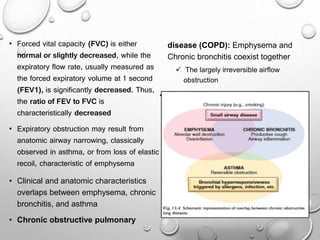
• Clinical and anatomic characteristics
overlaps between emphysema, chronic
bronchitis, and asthma
• Chronic obstructive pulmonary
disease (COPD): Emphysema and
Chronic bronchitis coexist together
 The largely irreversible airflow
obstruction
• Asthma: reversible airflow obstruction
EMPHYSEMA:
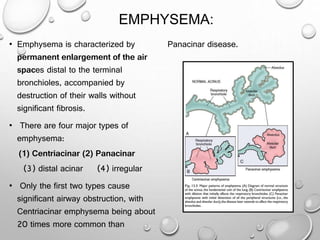
• Emphysema is characterized by
permanent enlargement of the air
spaces distal to the terminal
bronchioles, accompanied by
destruction of their walls without
significant fibrosis.
• There are four major types of
emphysema:
(1) Centriacinar (2) Panacinar
(3) distal acinar (4) irregular
• Only the first two types cause
significant airway obstruction, with
Centriacinar emphysema being about
20 times more common than
Panacinar disease.
EMPHYSEMA:
• Etiology:
• Smoking
• Genetic predisposition
• Pollutants
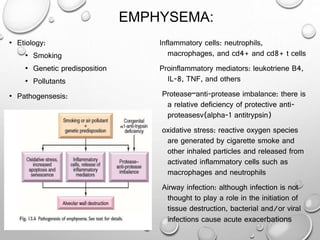
• Pathogensesis:
Inflammatory cells: neutrophils,
macrophages, and cd4+ and cd8+ t cells
Proinflammatory mediators: leukotriene B4,
IL-8, TNF, and others
Protease–anti-protease imbalance: there is
a relative deficiency of protective anti-
proteasesv(alpha-1 antitrypsin)
oxidative stress: reactive oxygen species
are generated by cigarette smoke and
other inhaled particles and released from
activated inflammatory cells such as
macrophages and neutrophils
Airway infection: although infection is not
thought to play a role in the initiation of
tissue destruction, bacterial and/or viral
infections cause acute exacerbations
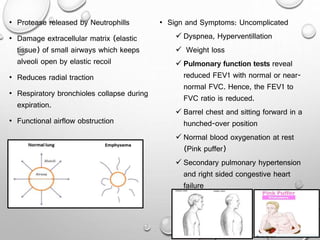
• Protease released by Neutrophills
• Damage extracellular matrix (elastic
tissue) of small airways which keeps
alveoli open by elastic recoil
• Reduces radial traction
• Respiratory bronchioles collapse during
expiration.
• Functional airflow obstruction
• Sign and Symptoms: Uncomplicated
 Dyspnea, Hyperventillation
 Weight loss
 Pulmonary function tests reveal
reduced FEV1 with normal or near-
normal FVC. Hence, the FEV1 to
FVC ratio is reduced.
 Barrel chest and sitting forward in a
hunched-over position
 Normal blood oxygenation at rest
(Pink puffer)
 Secondary pulmonary hypertension
and right sided congestive heart
failure
CHRONIC BRONCHITIS
• Chronic bronchitis is diagnosed on clinical
grounds: it is defined by the presence of a
persistent productive cough for at least
3 consecutive months in at least 2
consecutive years.
• 20% to 25% of men in the 40- to 65-
year-old age group are prone to develop
Etiology:
• Smoking
• Air Pollutants (sulfur dioxide and
nitrogen dioxide)
• Microbial Infection may be present
• Pathogenesis:
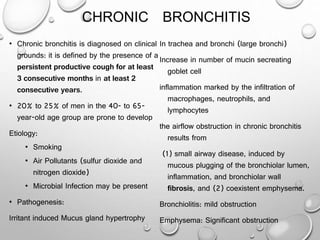
Irritant induced Mucus gland hypertrophy
In trachea and bronchi (large bronchi)
Increase in number of mucin secreating
goblet cell
inflammation marked by the infiltration of
macrophages, neutrophils, and
lymphocytes
the airflow obstruction in chronic bronchitis
results from
(1) small airway disease, induced by
mucous plugging of the bronchiolar lumen,
inflammation, and bronchiolar wall
fibrosis, and (2) coexistent emphysema.
Bronchiolitis: mild obstruction
Emphysema: Significant obstruction
CHRONIC BRONCHITIS
• Sign and Symptoms:
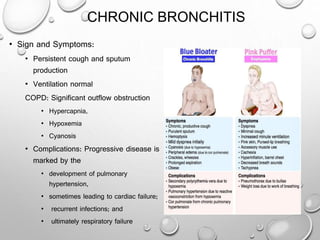
• Persistent cough and sputum
production
• Ventilation normal
COPD: Significant outflow obstruction
• Hypercapnia,
• Hypoxemia
• Cyanosis
• Complications: Progressive disease is
marked by the
• development of pulmonary
hypertension,
• sometimes leading to cardiac failure;
• recurrent infections; and
• ultimately respiratory failure
REFERENCE
• ROBINS BASIC PATHOLOGY 10TH EDITION
• FILE:///F:/ROBBINS%20BASIC%20PATHOLOGY%2010%20TH%20EDIT
ION.PDF
• AHTHMA: SLIDESHARE LINK:
HTTPS://WWW.SLIDESHARE.NET/NEMKUMARJAIN2/PATHO-
PHYSIOLOGY-OF-ASTHMA

Chronic Obstructive Airway diseases

  • 1.
    PATHO-PHYSIOLOGY CHRONIC OBSTRUCTIVE AIRWAY DISEASES NEM KUMARJAIN MS (PHARM.) PHARMACOLOGY & TOXICOLOGY ASSISTANT PROFESSOR, SCHOOL OF PHARMACY ITM UNIVERSITY GWALIOR
  • 2.
    CHRONIC AIRWAY OBSTRUCTIVE DISEASE•Characterized by an increase in resistance to air flow caused by partial or complete obstruction at any level • The Major diffuse obstructive disorders are • Emphysema • Chronic Bronchitis, • Bronchiectasis, And • Asthma. • .
  • 3.
    • Forced vitalcapacity (FVC) is either normal or slightly decreased, while the expiratory flow rate, usually measured as the forced expiratory volume at 1 second (FEV1), is significantly decreased. Thus, the ratio of FEV to FVC is characteristically decreased • Expiratory obstruction may result from anatomic airway narrowing, classically observed in asthma, or from loss of elastic recoil, characteristic of emphysema • Clinical and anatomic characteristics overlaps between emphysema, chronic bronchitis, and asthma • Chronic obstructive pulmonary disease (COPD): Emphysema and Chronic bronchitis coexist together  The largely irreversible airflow obstruction • Asthma: reversible airflow obstruction
  • 4.
    EMPHYSEMA: • Emphysema ischaracterized by permanent enlargement of the air spaces distal to the terminal bronchioles, accompanied by destruction of their walls without significant fibrosis. • There are four major types of emphysema: (1) Centriacinar (2) Panacinar (3) distal acinar (4) irregular • Only the first two types cause significant airway obstruction, with Centriacinar emphysema being about 20 times more common than Panacinar disease.
  • 5.
    EMPHYSEMA: • Etiology: • Smoking •Genetic predisposition • Pollutants • Pathogensesis: Inflammatory cells: neutrophils, macrophages, and cd4+ and cd8+ t cells Proinflammatory mediators: leukotriene B4, IL-8, TNF, and others Protease–anti-protease imbalance: there is a relative deficiency of protective anti- proteasesv(alpha-1 antitrypsin) oxidative stress: reactive oxygen species are generated by cigarette smoke and other inhaled particles and released from activated inflammatory cells such as macrophages and neutrophils Airway infection: although infection is not thought to play a role in the initiation of tissue destruction, bacterial and/or viral infections cause acute exacerbations
  • 6.
    • Protease releasedby Neutrophills • Damage extracellular matrix (elastic tissue) of small airways which keeps alveoli open by elastic recoil • Reduces radial traction • Respiratory bronchioles collapse during expiration. • Functional airflow obstruction • Sign and Symptoms: Uncomplicated  Dyspnea, Hyperventillation  Weight loss  Pulmonary function tests reveal reduced FEV1 with normal or near- normal FVC. Hence, the FEV1 to FVC ratio is reduced.  Barrel chest and sitting forward in a hunched-over position  Normal blood oxygenation at rest (Pink puffer)  Secondary pulmonary hypertension and right sided congestive heart failure
  • 7.
    CHRONIC BRONCHITIS • Chronicbronchitis is diagnosed on clinical grounds: it is defined by the presence of a persistent productive cough for at least 3 consecutive months in at least 2 consecutive years. • 20% to 25% of men in the 40- to 65- year-old age group are prone to develop Etiology: • Smoking • Air Pollutants (sulfur dioxide and nitrogen dioxide) • Microbial Infection may be present • Pathogenesis: Irritant induced Mucus gland hypertrophy In trachea and bronchi (large bronchi) Increase in number of mucin secreating goblet cell inflammation marked by the infiltration of macrophages, neutrophils, and lymphocytes the airflow obstruction in chronic bronchitis results from (1) small airway disease, induced by mucous plugging of the bronchiolar lumen, inflammation, and bronchiolar wall fibrosis, and (2) coexistent emphysema. Bronchiolitis: mild obstruction Emphysema: Significant obstruction
  • 8.
    CHRONIC BRONCHITIS • Signand Symptoms: • Persistent cough and sputum production • Ventilation normal COPD: Significant outflow obstruction • Hypercapnia, • Hypoxemia • Cyanosis • Complications: Progressive disease is marked by the • development of pulmonary hypertension, • sometimes leading to cardiac failure; • recurrent infections; and • ultimately respiratory failure
  • 9.
    REFERENCE • ROBINS BASICPATHOLOGY 10TH EDITION • FILE:///F:/ROBBINS%20BASIC%20PATHOLOGY%2010%20TH%20EDIT ION.PDF • AHTHMA: SLIDESHARE LINK: HTTPS://WWW.SLIDESHARE.NET/NEMKUMARJAIN2/PATHO- PHYSIOLOGY-OF-ASTHMA