PRESENTED BY ,
Spurthi BS
Doctor of Pharmacy (PharmD)
Mallige college of pharmacy
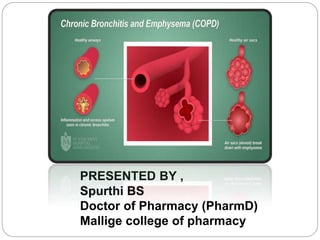
Chronic obstructive pulmonary
diseases
COPD is also known as chronic obstructive lung
disease (COLD), chronic obstructive airway
disease (COAD), chronic airflow limitation (CAL)
and chronic obstructive respiratory disease
(CORD)
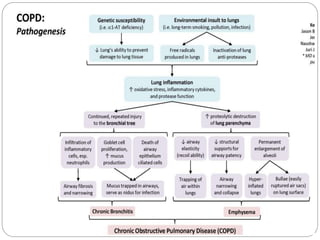
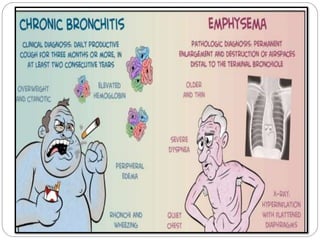
Chronic obstructive pulmonary disease (COPD)
refers to chronic bronchitis and emphysema, a
pair of two commonly co- existing diseases of
the lungs in which the airways become
narrowed.
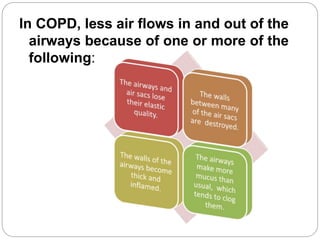
In COPD, less air flows in and out of the
airways because of one or more of the
following:
Incidence
It is the 4th leading cause
of mortality and 12th
leading cause of disability
in the united states.
In 2020 COPD is the 3rd
leading cause of death.
RISK FACTORS FOR COPD
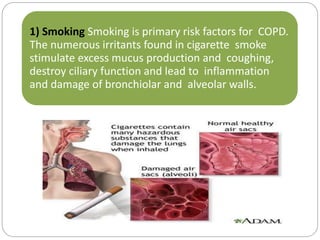
1) Smoking Smoking is primary risk factors for COPD.
The numerous irritants found in cigarette smoke
stimulate excess mucus production and coughing,
destroy ciliary function and lead to inflammation
and damage of bronchiolar and alveolar walls.
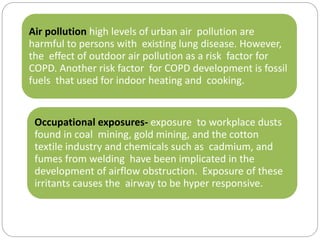
Air pollution high levels of urban air pollution are
harmful to persons with existing lung disease. However,
the effect of outdoor air pollution as a risk factor for
COPD. Another risk factor for COPD development is fossil
fuels that used for indoor heating and cooking.
Occupational exposures- exposure to workplace dusts
found in coal mining, gold mining, and the cotton
textile industry and chemicals such as cadmium, and
fumes from welding have been implicated in the
development of airflow obstruction. Exposure of these
irritants causes the airway to be hyper responsive.
Infection :infections is risk factor for developing COPD.
Severe recurring respiratory tract infection in childhood
have been associated with reduced lung function and
increased respiratory symptoms in adulthood. Recurring
infections impair normal defense mechanisms, making
bronchioles and alveoli more susceptible to injury.
Genetics-Alpha 1-antitrypsin deficiency is a genetic
condition that is responsible for about 2% of cases of COPD.
In this condition, the body does not make enough of a
protein, alpha 1-antitrypsin. Alpha 1- antitrypsin protects the
lungs from damage caused by protease enzymes, such as
elastase and trypsin, that can be released as a result of an
inflammatory response to tobacco smoke
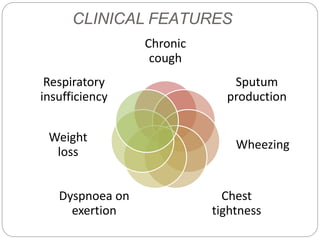
CLINICAL FEATURES
Chronic
cough
Sputum
production
Wheezing
Chest
tightness
Dyspnoea on
exertion
Weight
loss
Respiratory
insufficiency

Copd

  • 1.
    PRESENTED BY , SpurthiBS Doctor of Pharmacy (PharmD) Mallige college of pharmacy
  • 2.
    Chronic obstructive pulmonary diseases COPDis also known as chronic obstructive lung disease (COLD), chronic obstructive airway disease (COAD), chronic airflow limitation (CAL) and chronic obstructive respiratory disease (CORD) Chronic obstructive pulmonary disease (COPD) refers to chronic bronchitis and emphysema, a pair of two commonly co- existing diseases of the lungs in which the airways become narrowed.
  • 3.
    In COPD, lessair flows in and out of the airways because of one or more of the following:
  • 4.
    Incidence It is the4th leading cause of mortality and 12th leading cause of disability in the united states. In 2020 COPD is the 3rd leading cause of death.
  • 5.
  • 6.
    1) Smoking Smokingis primary risk factors for COPD. The numerous irritants found in cigarette smoke stimulate excess mucus production and coughing, destroy ciliary function and lead to inflammation and damage of bronchiolar and alveolar walls.
  • 7.
    Air pollution highlevels of urban air pollution are harmful to persons with existing lung disease. However, the effect of outdoor air pollution as a risk factor for COPD. Another risk factor for COPD development is fossil fuels that used for indoor heating and cooking. Occupational exposures- exposure to workplace dusts found in coal mining, gold mining, and the cotton textile industry and chemicals such as cadmium, and fumes from welding have been implicated in the development of airflow obstruction. Exposure of these irritants causes the airway to be hyper responsive.
  • 8.
    Infection :infections isrisk factor for developing COPD. Severe recurring respiratory tract infection in childhood have been associated with reduced lung function and increased respiratory symptoms in adulthood. Recurring infections impair normal defense mechanisms, making bronchioles and alveoli more susceptible to injury. Genetics-Alpha 1-antitrypsin deficiency is a genetic condition that is responsible for about 2% of cases of COPD. In this condition, the body does not make enough of a protein, alpha 1-antitrypsin. Alpha 1- antitrypsin protects the lungs from damage caused by protease enzymes, such as elastase and trypsin, that can be released as a result of an inflammatory response to tobacco smoke
  • 13.