CHRONIC
OBSTRUCTIVE
PULMONARY
DISEASE
BY - MUSKAN KAPOOR
INTRODUCTION
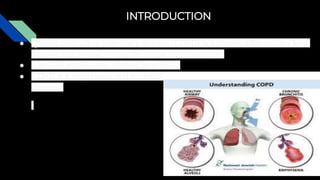
● Chronic obstructive pulmonary disease (COPD) is a chronic inflammatory lung
disease that causes obstructed airflow from the lungs.
● It include emphysema, chronic bronchitis.
● COPD is a progressive and incurable
disease.
● It can cause greater long term disability and have greater
effect on the heart and the other organ system than asthma.
● COPD due to emphysema and chronic bronchitis characterized
by airflow limitation that is not fully irreversible.
● In COPD less air flows in and out of the airway because of one
or more of the following :-
- The airway and the air sacs lose their elastic quality .
- The walls between many of the air sacs are destroyed .
- The walls of airways become thick and inflamed.
- The airways makes more mucus than usual, which tends to
clog them.
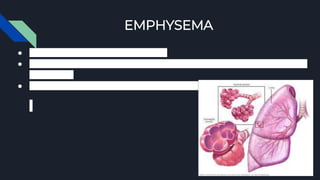
EMPHYSEMA
● Damage to alveoli cause emphysema.
● The wall inside the alveoli disappear, making many small sacs became larger,
single sacs.
● These larger sacs don’t absorb oxygen as well.
● Also when the alveoli are damaged, the lungs became
stretched out and lose their springiness.
● The airways become flabby and air is trapped in the lungs.
● It becomes hard to breathe out.
● This creates a feeling of shortness of breath.
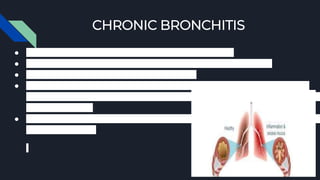
CHRONIC BRONCHITIS
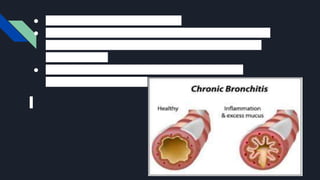
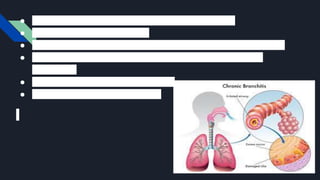
● Damage to the bronchial tubes causes chronic bronchitis.
● Bronchitis occurs when the bronchial tubes are irritated and swollen.
● This causes coughing and shortness of breath.
● If mucus comes up with the cough and the cough lasts at least three months for
two years in a row, the bronchitis has become
chronic bronchitis.
● There are hair-like fibers lining the bronchial
tubes of the lungs.
● These tiny hairs are called cilia.
● The cilia help move mucus up the tubes so it can be
coughed out. In chronic bronchitis, the tubes have
lost their cilia.
● This makes it hard to cough up mucus, which
causes more coughing.
● More coughing makes the tubes more irritated.
● This creates more mucus.
● The tubes then become swollen, making it hard to breathe.
● Smoking even just a little keeps the cilia from working
normally.
● Mucus can build up in the lungs.
● This can cause more damage.
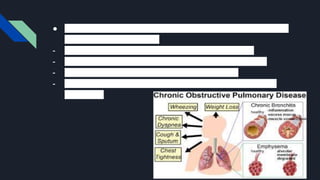
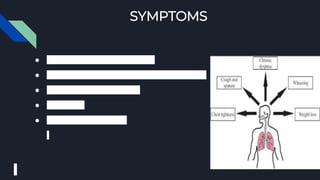
SYMPTOMS
● Increased shortness of breath
● Frequent coughing (with and without mucus)
● Increased breathlessness
● Wheezing
● Tightness in the chest
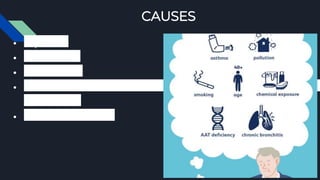
CAUSES
● Smoking
● Heavy dust
● Air pollution
● Exposure to chemical or
toxic fumes
● Genetic conditions
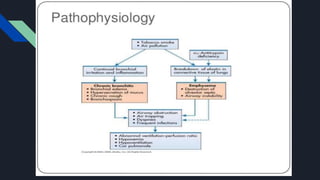
PATHOPHYSIOLOGY
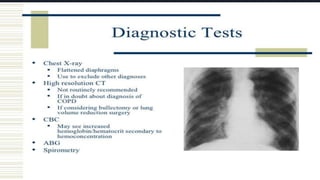
DIAGNOSTIC TESTS
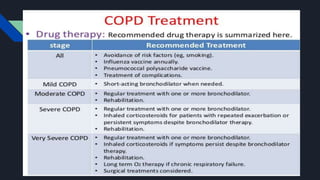
MEDICAL MANAGEMENT
● Antibiotics
● Bronchodilators
● Chest physiotherapy
● Steroid therapy
● Adrenaline
● Aminophylins
● IV Corticosteroids
● Increase fluid intake
● CPAP
● BiAP
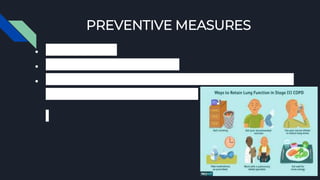
PREVENTIVE MEASURES
● Quite smoking
● Avoid using aerosol sprays.
● Avoid to exposure to persons known to have cold or
other respiratory tract infections
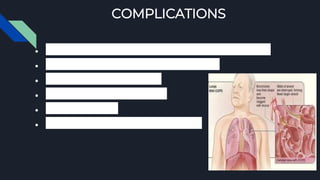
COMPLICATIONS
● Respiratory insufficiency and respiratory failure
● Pneumonia and respiratory infection
● Right sided heart failure
● Pulmonary hypertension
● Pneumothorax
● Depression and anxiety disorder
CHRONIC OBSTRUCTIVE PULMONARY DISEASE (COPD)

CHRONIC OBSTRUCTIVE PULMONARY DISEASE (COPD)

  • 1.
  • 2.
    INTRODUCTION ● Chronic obstructivepulmonary disease (COPD) is a chronic inflammatory lung disease that causes obstructed airflow from the lungs. ● It include emphysema, chronic bronchitis. ● COPD is a progressive and incurable disease.
  • 3.
    ● It cancause greater long term disability and have greater effect on the heart and the other organ system than asthma. ● COPD due to emphysema and chronic bronchitis characterized by airflow limitation that is not fully irreversible.
  • 4.
    ● In COPDless air flows in and out of the airway because of one or more of the following :- - The airway and the air sacs lose their elastic quality . - The walls between many of the air sacs are destroyed . - The walls of airways become thick and inflamed. - The airways makes more mucus than usual, which tends to clog them.
  • 5.
    EMPHYSEMA ● Damage toalveoli cause emphysema. ● The wall inside the alveoli disappear, making many small sacs became larger, single sacs. ● These larger sacs don’t absorb oxygen as well.
  • 6.
    ● Also whenthe alveoli are damaged, the lungs became stretched out and lose their springiness. ● The airways become flabby and air is trapped in the lungs. ● It becomes hard to breathe out. ● This creates a feeling of shortness of breath.
  • 7.
    CHRONIC BRONCHITIS ● Damageto the bronchial tubes causes chronic bronchitis. ● Bronchitis occurs when the bronchial tubes are irritated and swollen. ● This causes coughing and shortness of breath. ● If mucus comes up with the cough and the cough lasts at least three months for two years in a row, the bronchitis has become chronic bronchitis. ● There are hair-like fibers lining the bronchial tubes of the lungs.
  • 8.
    ● These tinyhairs are called cilia. ● The cilia help move mucus up the tubes so it can be coughed out. In chronic bronchitis, the tubes have lost their cilia. ● This makes it hard to cough up mucus, which causes more coughing.
  • 9.
    ● More coughingmakes the tubes more irritated. ● This creates more mucus. ● The tubes then become swollen, making it hard to breathe. ● Smoking even just a little keeps the cilia from working normally. ● Mucus can build up in the lungs. ● This can cause more damage.
  • 10.
    SYMPTOMS ● Increased shortnessof breath ● Frequent coughing (with and without mucus) ● Increased breathlessness ● Wheezing ● Tightness in the chest
  • 11.
    CAUSES ● Smoking ● Heavydust ● Air pollution ● Exposure to chemical or toxic fumes ● Genetic conditions
  • 12.
  • 13.
  • 14.
    MEDICAL MANAGEMENT ● Antibiotics ●Bronchodilators ● Chest physiotherapy ● Steroid therapy ● Adrenaline
  • 15.
    ● Aminophylins ● IVCorticosteroids ● Increase fluid intake ● CPAP ● BiAP
  • 16.
    PREVENTIVE MEASURES ● Quitesmoking ● Avoid using aerosol sprays. ● Avoid to exposure to persons known to have cold or other respiratory tract infections
  • 17.
    COMPLICATIONS ● Respiratory insufficiencyand respiratory failure ● Pneumonia and respiratory infection ● Right sided heart failure ● Pulmonary hypertension ● Pneumothorax ● Depression and anxiety disorder