Restrictive Lung
Disease
Deegala S.A.
Deemanthi M.N.
Dias P.G.N.J.
Dilanka I.W.G.M.
Dinuraji K.S.H.
 What are the main types of lung diseases?
 Characteristic of the restrictive lung disease
 Different causes for restrictive lung disease
 Identification of restrictive lung disease by
lung function test
 Comparison between obstructive airway
disease and restrictive lung disease
Objectives
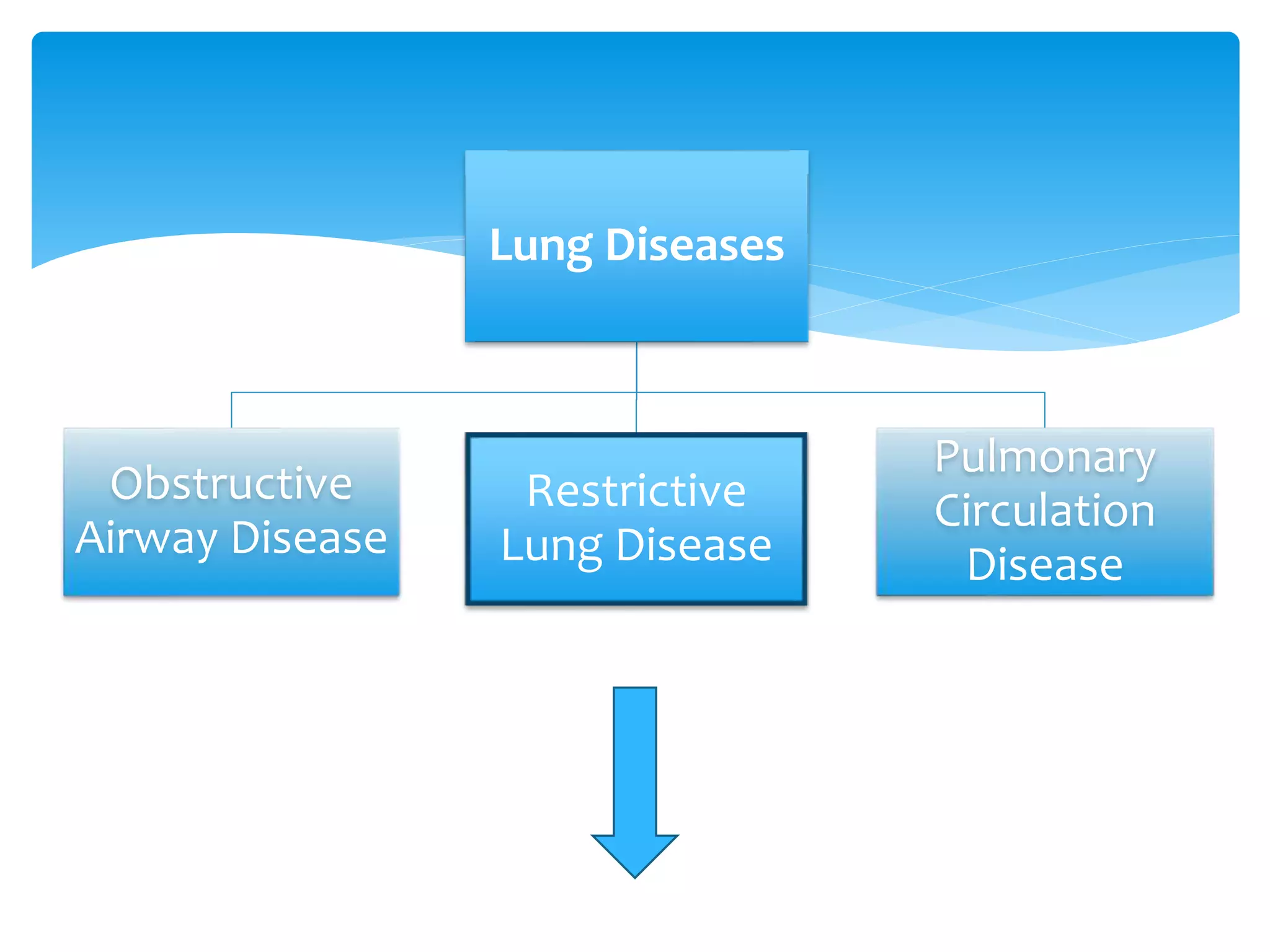
Lung Diseases
Obstructive
Airway Disease
Restrictive
Lung Disease
Pulmonary
Circulation
Disease
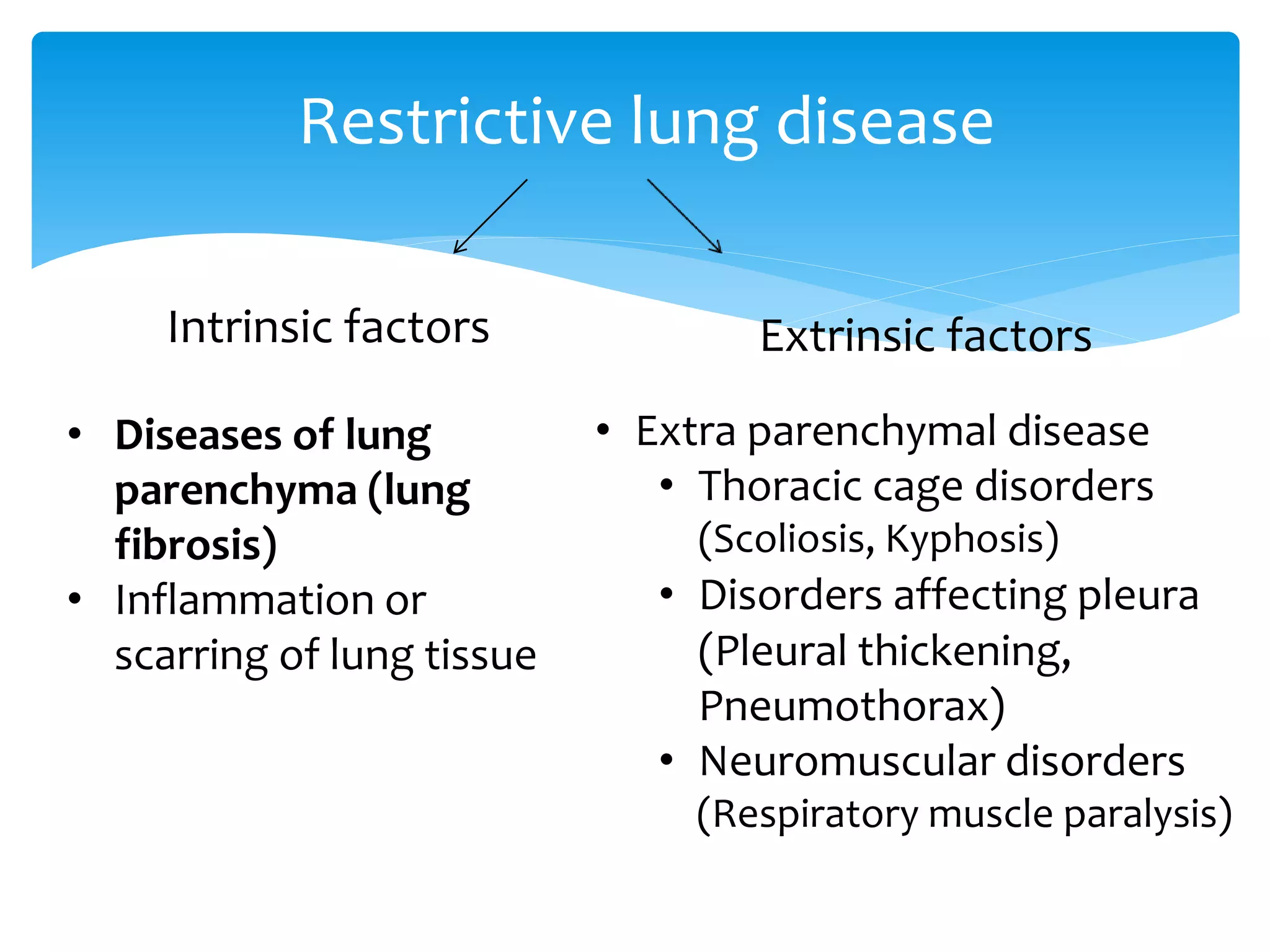
Restrictive lung disease
Intrinsic factors
• Diseases of lung
parenchyma (lung
fibrosis)
• Inflammation or
scarring of lung tissue
Extrinsic factors
• Extra parenchymal disease
• Thoracic cage disorders
(Scoliosis, Kyphosis)
• Disorders affecting pleura
(Pleural thickening,
Pneumothorax)
• Neuromuscular disorders
(Respiratory muscle paralysis)
• Occupational and environmental factors
silica dust - silicosis
asbestos fibers - asbestosis
• Radiation treatment
• Smoking
Factors that affect lung tissue
• Medications
chemotherapy drugs - methotrexate
antiarrhythmic drug - amiodarone
• Medical conditions
Pneumonia
Tuberculosis
Rheumatoid arthritis
Factors that affect lung tissue contd.
Pulmonary fibrosis occurs when lung tissue
becomes damaged and scarred. This thickened,
stiff tissue makes it more difficult for lungs to
expand
Because of lung fibrosis
elasticity
compliance
Intrinsic factors
Lung compliance in pulmonary fibrosis
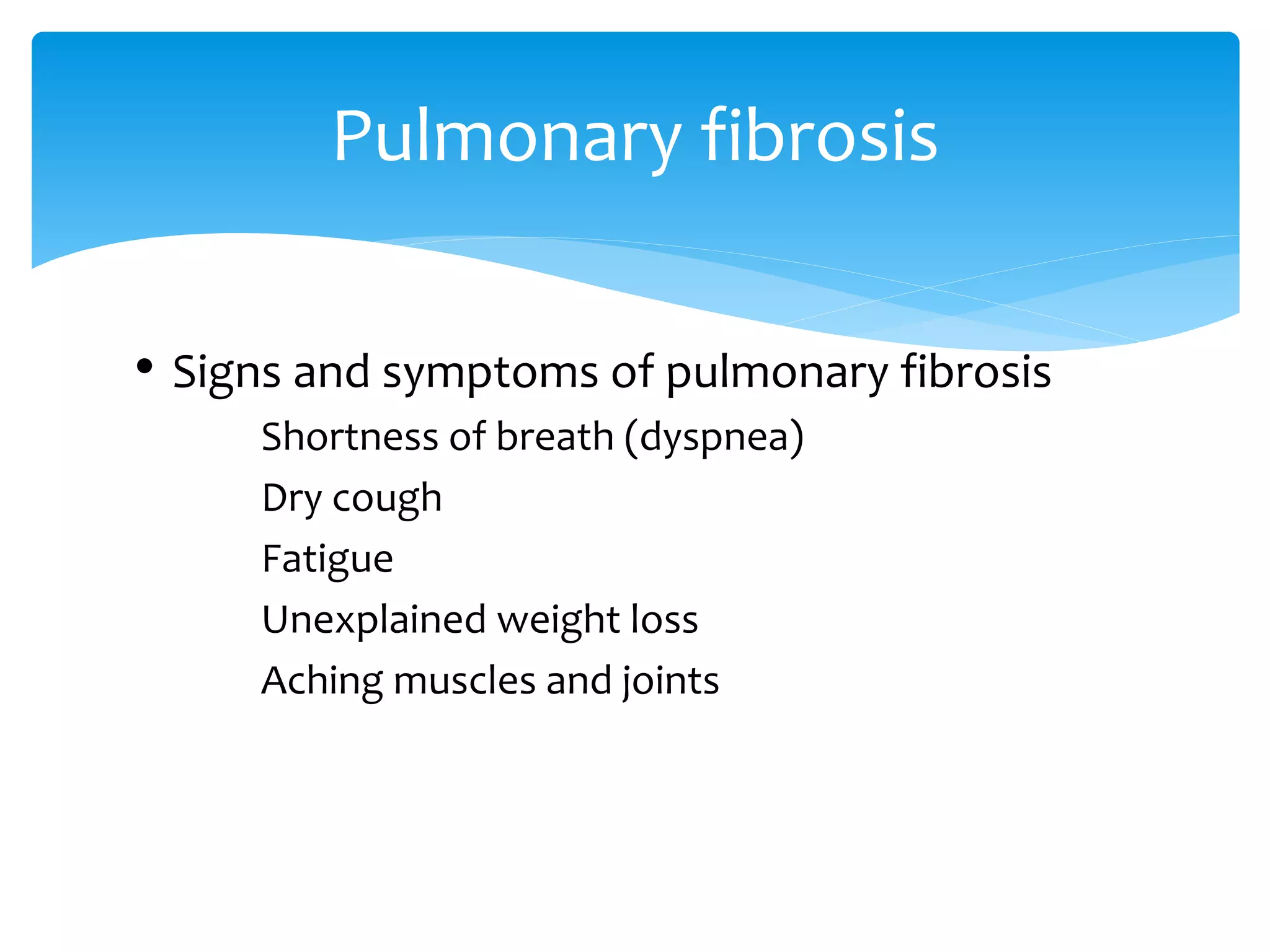
• Signs and symptoms of pulmonary fibrosis
Shortness of breath (dyspnea)
Dry cough
Fatigue
Unexplained weight loss
Aching muscles and joints
Pulmonary fibrosis
• Complications
Pulmonary hypertension
Right heart failure
Respiratory failure
Lung cancer
Pulmonary fibrosis contd.
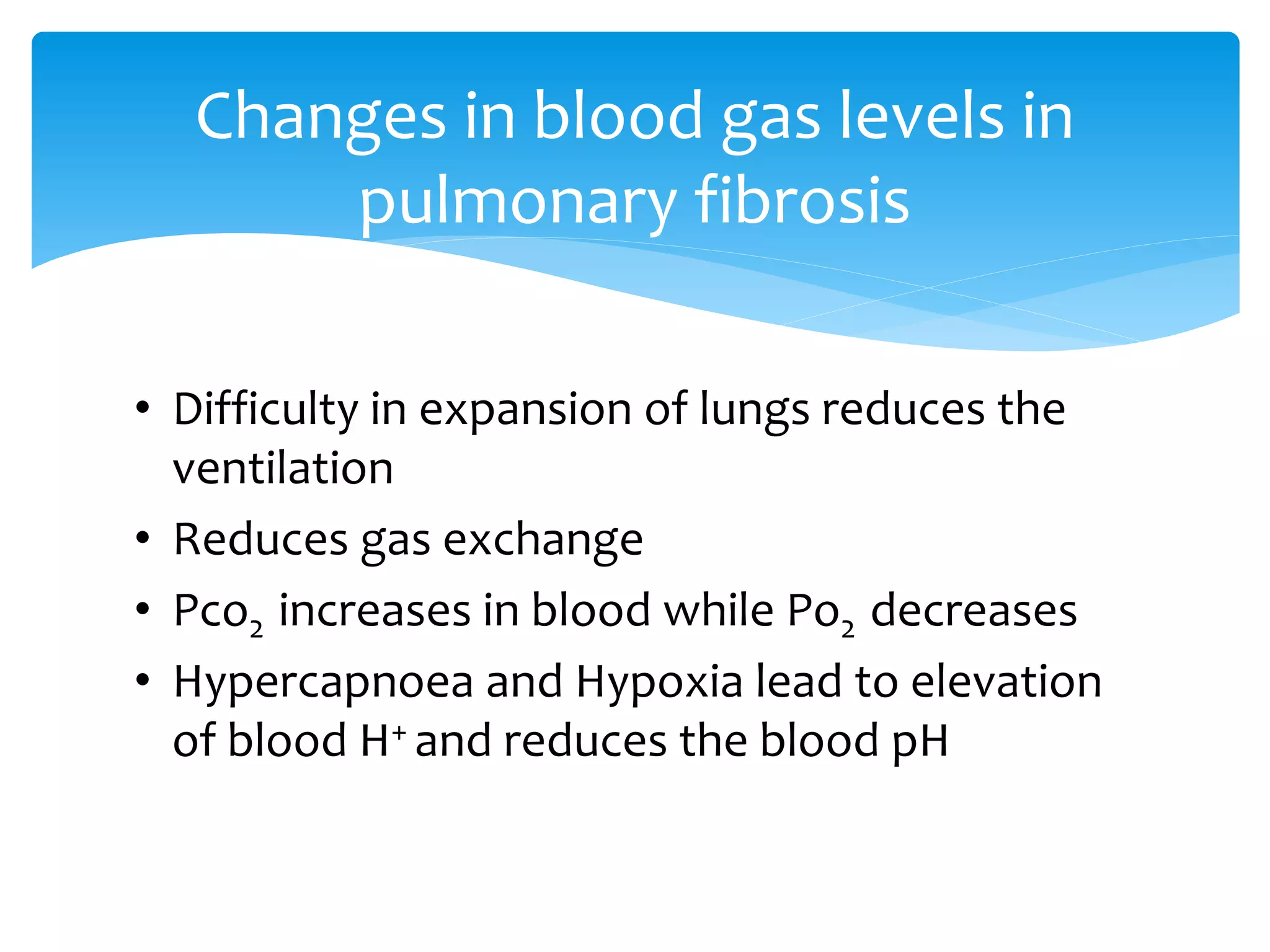
• Difficulty in expansion of lungs reduces the
ventilation
• Reduces gas exchange
• Pco2 increases in blood while Po2 decreases
• Hypercapnoea and Hypoxia lead to elevation
of blood H+ and reduces the blood pH
Changes in blood gas levels in
pulmonary fibrosis
Diagnosis
•Chest X-ray
•Lung function test
•CT scan
•Echocardiogram
•Lung biopsy
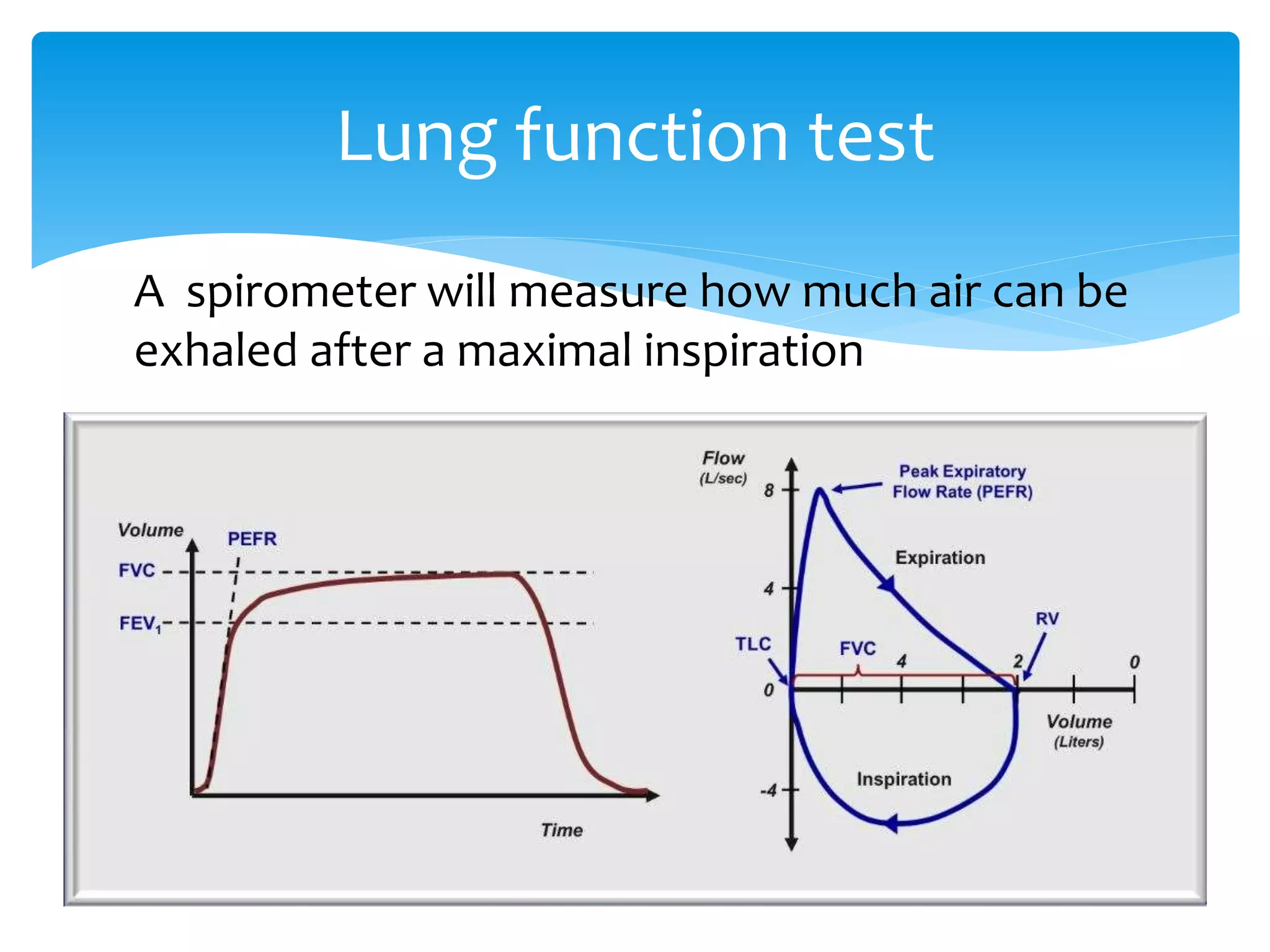
A spirometer will measure how much air can be
exhaled after a maximal inspiration
Lung function test
 Restricted lung expansion effectively reduce
 Total lung capacity (TLC)
 Vital capacity (VC)
 Forced vital capacity (FVC)
 Forced expiratory volume in 1 second (FEV1)
Lung function test in lung fibrosis
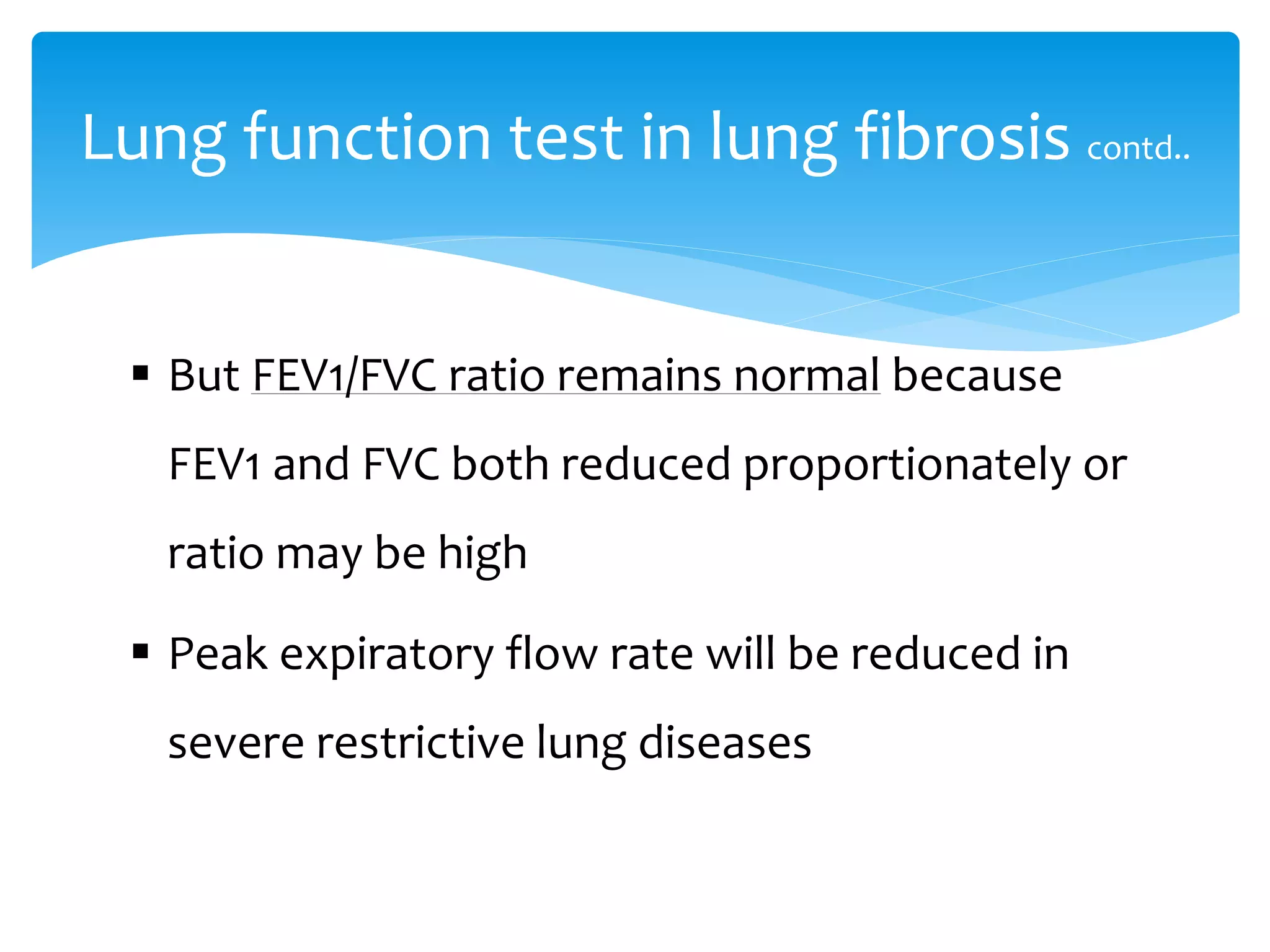
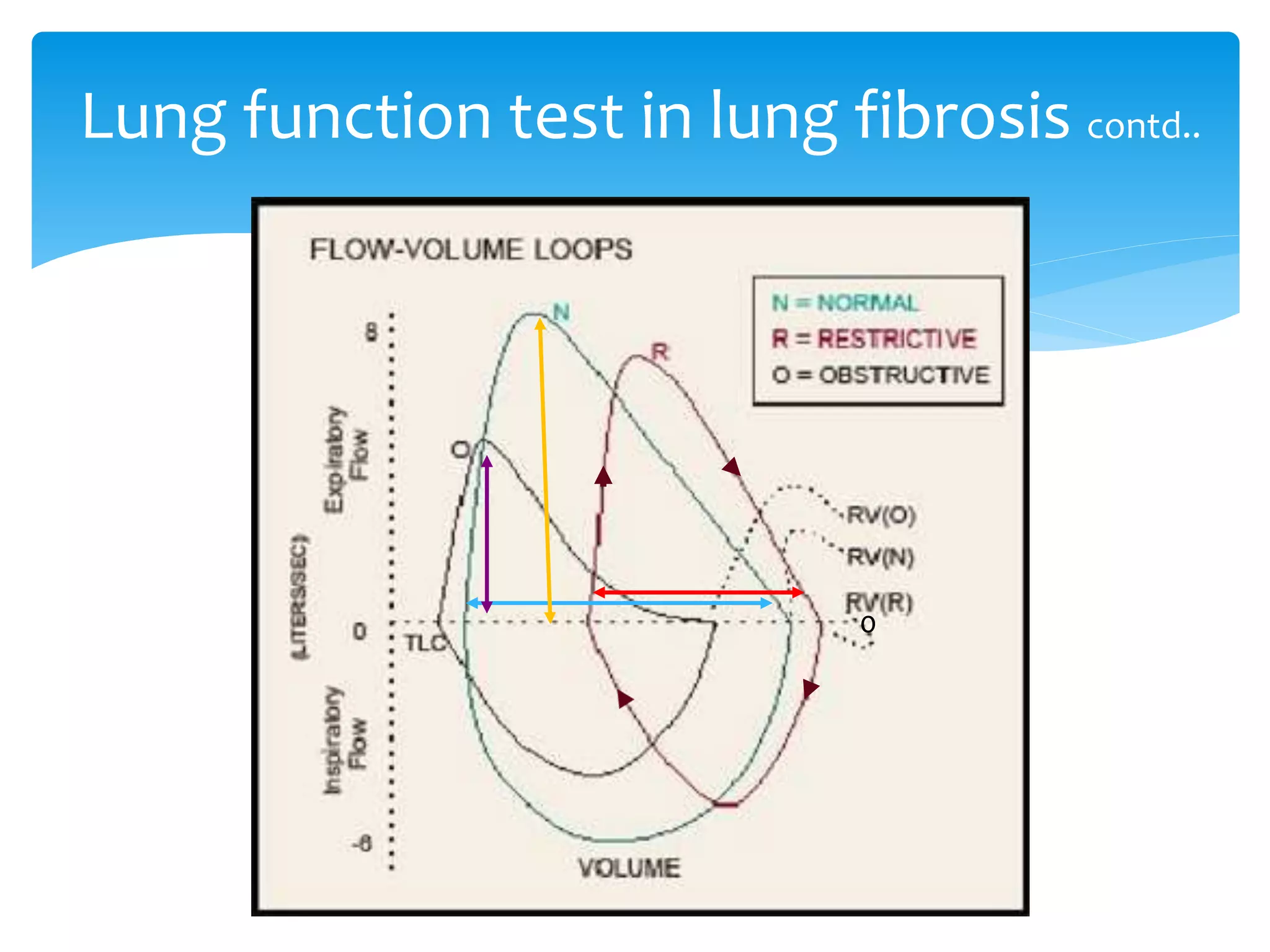
 But FEV1/FVC ratio remains normal because
FEV1 and FVC both reduced proportionately or
ratio may be high
 Peak expiratory flow rate will be reduced in
severe restrictive lung diseases
Lung function test in lung fibrosis contd..
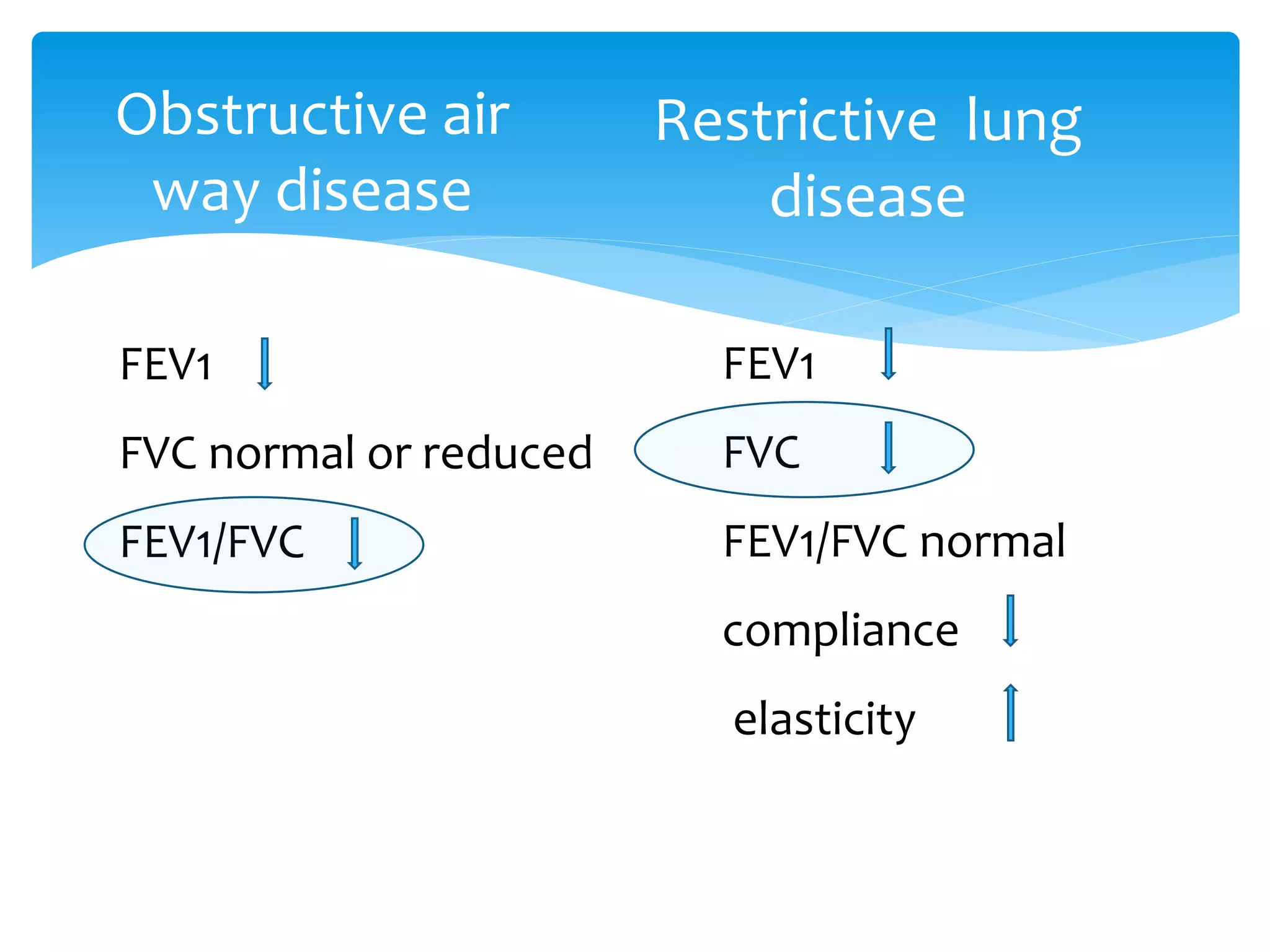
Obstructive air
way disease
Restrictive lung
disease
FEV1
FVC
FEV1/FVC normal
compliance
elasticity
FEV1
FVC normal or reduced
FEV1/FVC
Lung function test in lung fibrosis contd..
0
• Pulmonary fibrosis cannot be reversed
• Some treatments reduce the symptoms and
slow the progress of the disease
Treatments and drugs for lung
fibrosis
• Treatment
Initially treated with a corticosteroid
Sometimes in combination with other drugs that
suppress the immune system
e.g. - cyclosporine
Oxygen therapy (not very effective if the
pulmonary ventilation is significantly reduced)
Treatments and drugs for lung
fibrosis contd.
 Ganong’s Review of Medical Physiology 24th
Edition
 Hutchison’s clinical methods 23rd Edition
 Kumar & Clarks Clinical Medicine
 Guyton and Hall Textbook of Medical Physiology
 http://www.mayoclinic.org/diseases-conditions
 http://www.nlm.nih.gov/pubs/factsheets/pubmed
.html
References
Special thanks to
Dr. Sampath Gunawardena
Senior Lecturer
Department of Physiology
Thank you

Restrictive lung disease final

  • 1.
    Restrictive Lung Disease Deegala S.A. DeemanthiM.N. Dias P.G.N.J. Dilanka I.W.G.M. Dinuraji K.S.H.
  • 2.
     What arethe main types of lung diseases?  Characteristic of the restrictive lung disease  Different causes for restrictive lung disease  Identification of restrictive lung disease by lung function test  Comparison between obstructive airway disease and restrictive lung disease Objectives
  • 3.
    Lung Diseases Obstructive Airway Disease Restrictive LungDisease Pulmonary Circulation Disease
  • 4.
    Restrictive lung disease Intrinsicfactors • Diseases of lung parenchyma (lung fibrosis) • Inflammation or scarring of lung tissue Extrinsic factors • Extra parenchymal disease • Thoracic cage disorders (Scoliosis, Kyphosis) • Disorders affecting pleura (Pleural thickening, Pneumothorax) • Neuromuscular disorders (Respiratory muscle paralysis)
  • 5.
    • Occupational andenvironmental factors silica dust - silicosis asbestos fibers - asbestosis • Radiation treatment • Smoking Factors that affect lung tissue
  • 6.
    • Medications chemotherapy drugs- methotrexate antiarrhythmic drug - amiodarone • Medical conditions Pneumonia Tuberculosis Rheumatoid arthritis Factors that affect lung tissue contd.
  • 7.
    Pulmonary fibrosis occurswhen lung tissue becomes damaged and scarred. This thickened, stiff tissue makes it more difficult for lungs to expand Because of lung fibrosis elasticity compliance Intrinsic factors
  • 8.
    Lung compliance inpulmonary fibrosis
  • 9.
    • Signs andsymptoms of pulmonary fibrosis Shortness of breath (dyspnea) Dry cough Fatigue Unexplained weight loss Aching muscles and joints Pulmonary fibrosis
  • 10.
    • Complications Pulmonary hypertension Rightheart failure Respiratory failure Lung cancer Pulmonary fibrosis contd.
  • 11.
    • Difficulty inexpansion of lungs reduces the ventilation • Reduces gas exchange • Pco2 increases in blood while Po2 decreases • Hypercapnoea and Hypoxia lead to elevation of blood H+ and reduces the blood pH Changes in blood gas levels in pulmonary fibrosis
  • 12.
    Diagnosis •Chest X-ray •Lung functiontest •CT scan •Echocardiogram •Lung biopsy
  • 13.
    A spirometer willmeasure how much air can be exhaled after a maximal inspiration Lung function test
  • 14.
     Restricted lungexpansion effectively reduce  Total lung capacity (TLC)  Vital capacity (VC)  Forced vital capacity (FVC)  Forced expiratory volume in 1 second (FEV1) Lung function test in lung fibrosis
  • 15.
     But FEV1/FVCratio remains normal because FEV1 and FVC both reduced proportionately or ratio may be high  Peak expiratory flow rate will be reduced in severe restrictive lung diseases Lung function test in lung fibrosis contd..
  • 16.
    Lung function testin lung fibrosis contd..
  • 17.
    Obstructive air way disease Restrictivelung disease FEV1 FVC FEV1/FVC normal compliance elasticity FEV1 FVC normal or reduced FEV1/FVC
  • 18.
    Lung function testin lung fibrosis contd.. 0
  • 19.
    • Pulmonary fibrosiscannot be reversed • Some treatments reduce the symptoms and slow the progress of the disease Treatments and drugs for lung fibrosis
  • 20.
    • Treatment Initially treatedwith a corticosteroid Sometimes in combination with other drugs that suppress the immune system e.g. - cyclosporine Oxygen therapy (not very effective if the pulmonary ventilation is significantly reduced) Treatments and drugs for lung fibrosis contd.
  • 21.
     Ganong’s Reviewof Medical Physiology 24th Edition  Hutchison’s clinical methods 23rd Edition  Kumar & Clarks Clinical Medicine  Guyton and Hall Textbook of Medical Physiology  http://www.mayoclinic.org/diseases-conditions  http://www.nlm.nih.gov/pubs/factsheets/pubmed .html References
  • 22.
    Special thanks to Dr.Sampath Gunawardena Senior Lecturer Department of Physiology
  • 23.