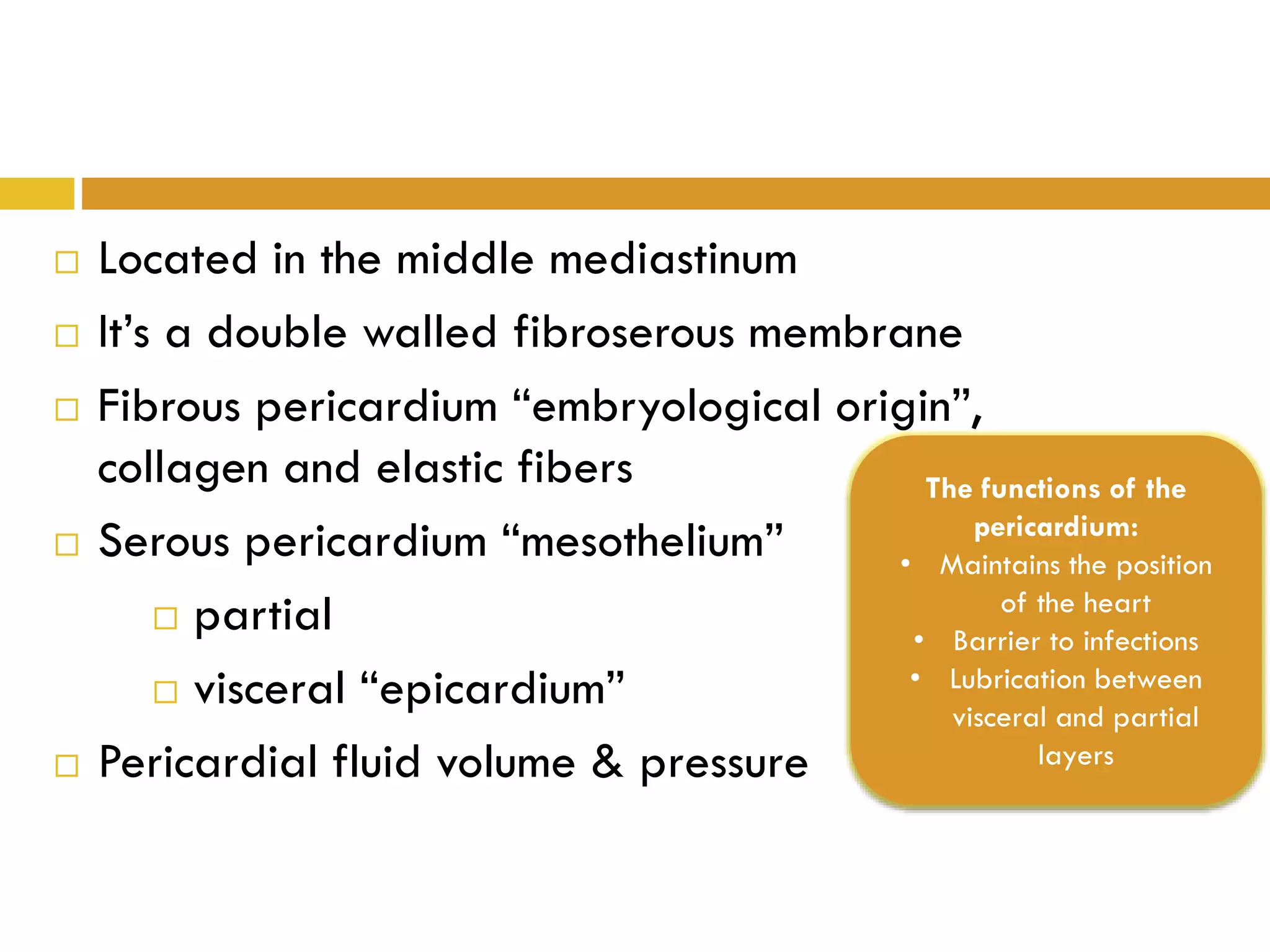
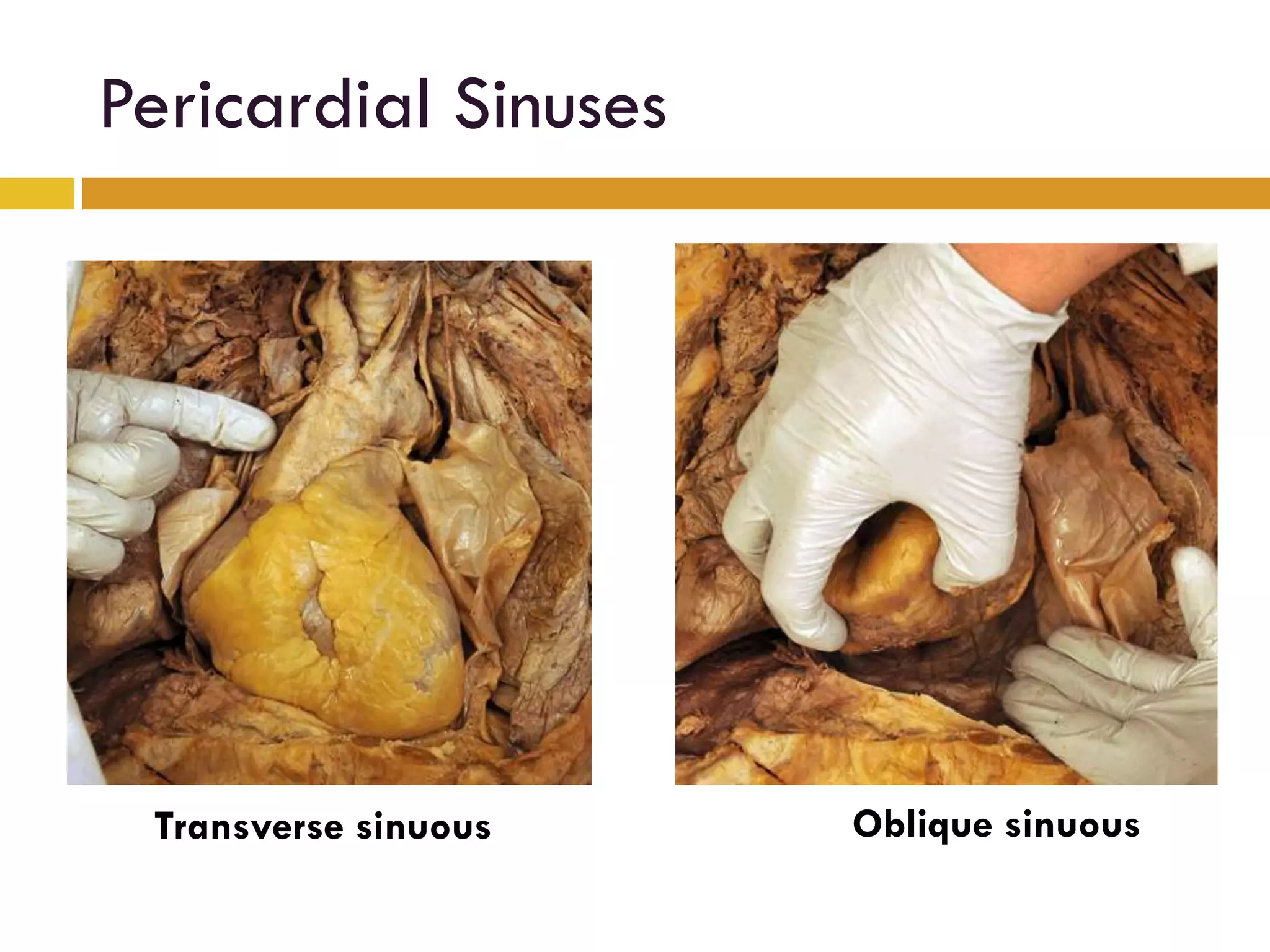
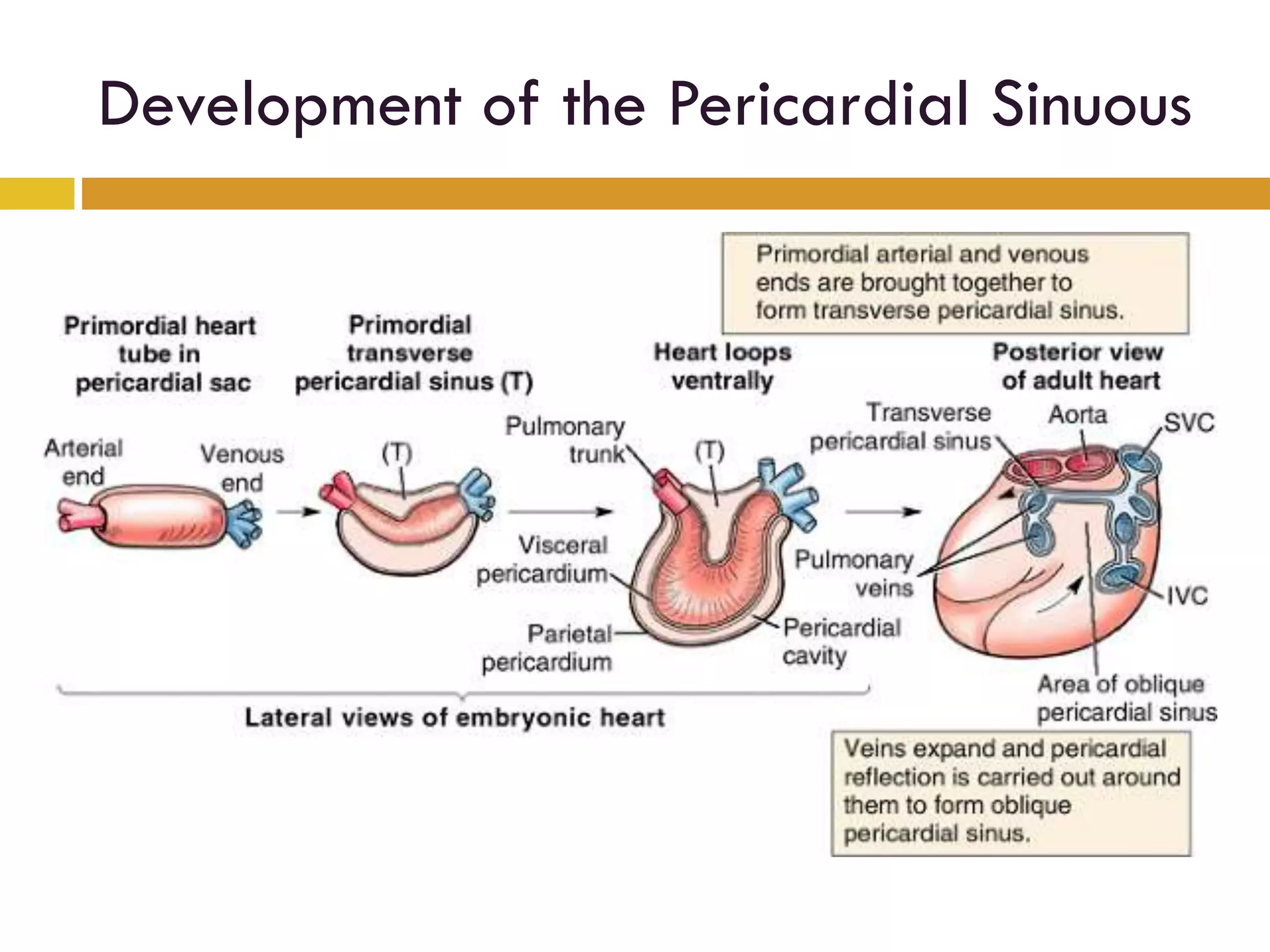
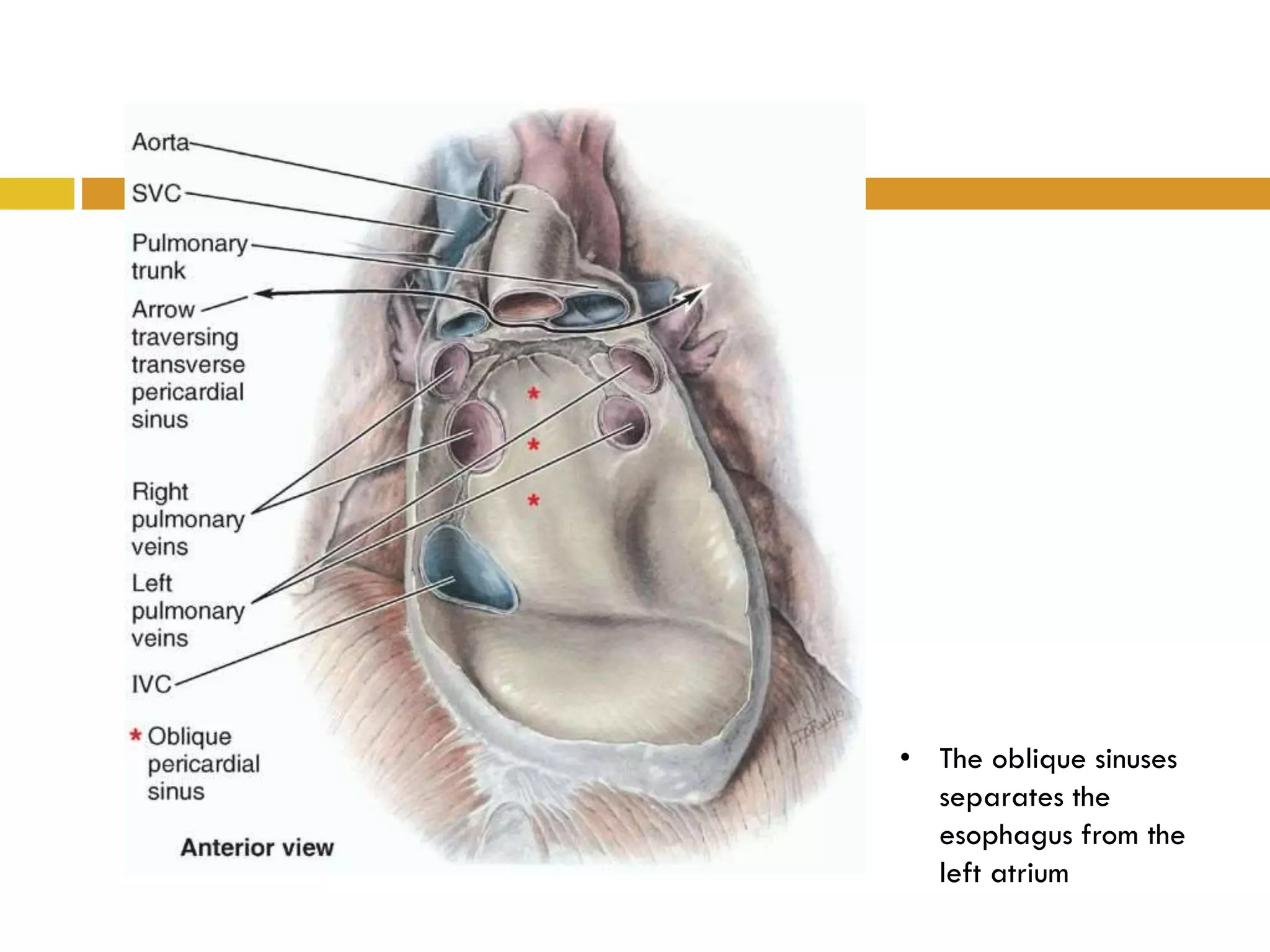
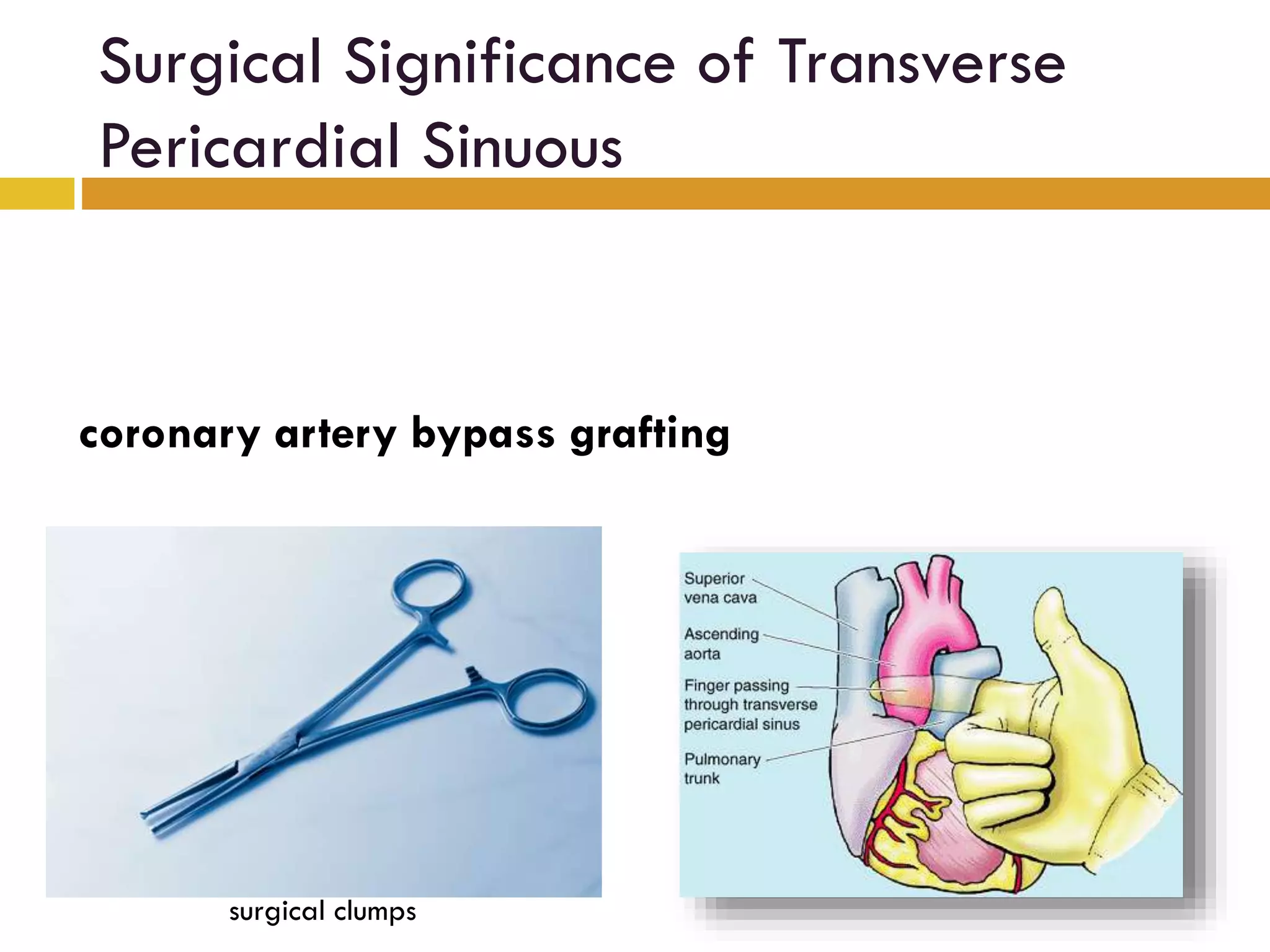
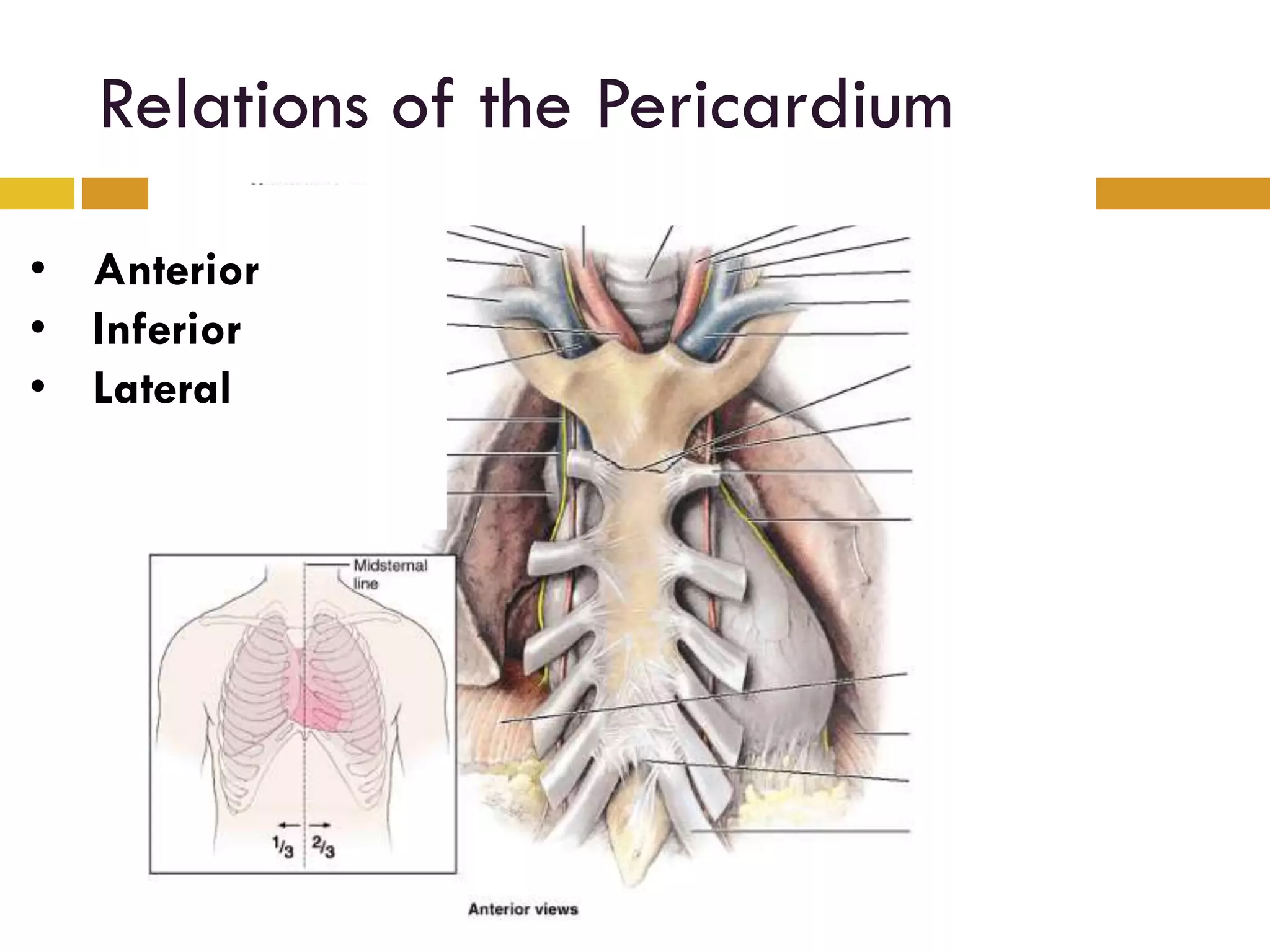
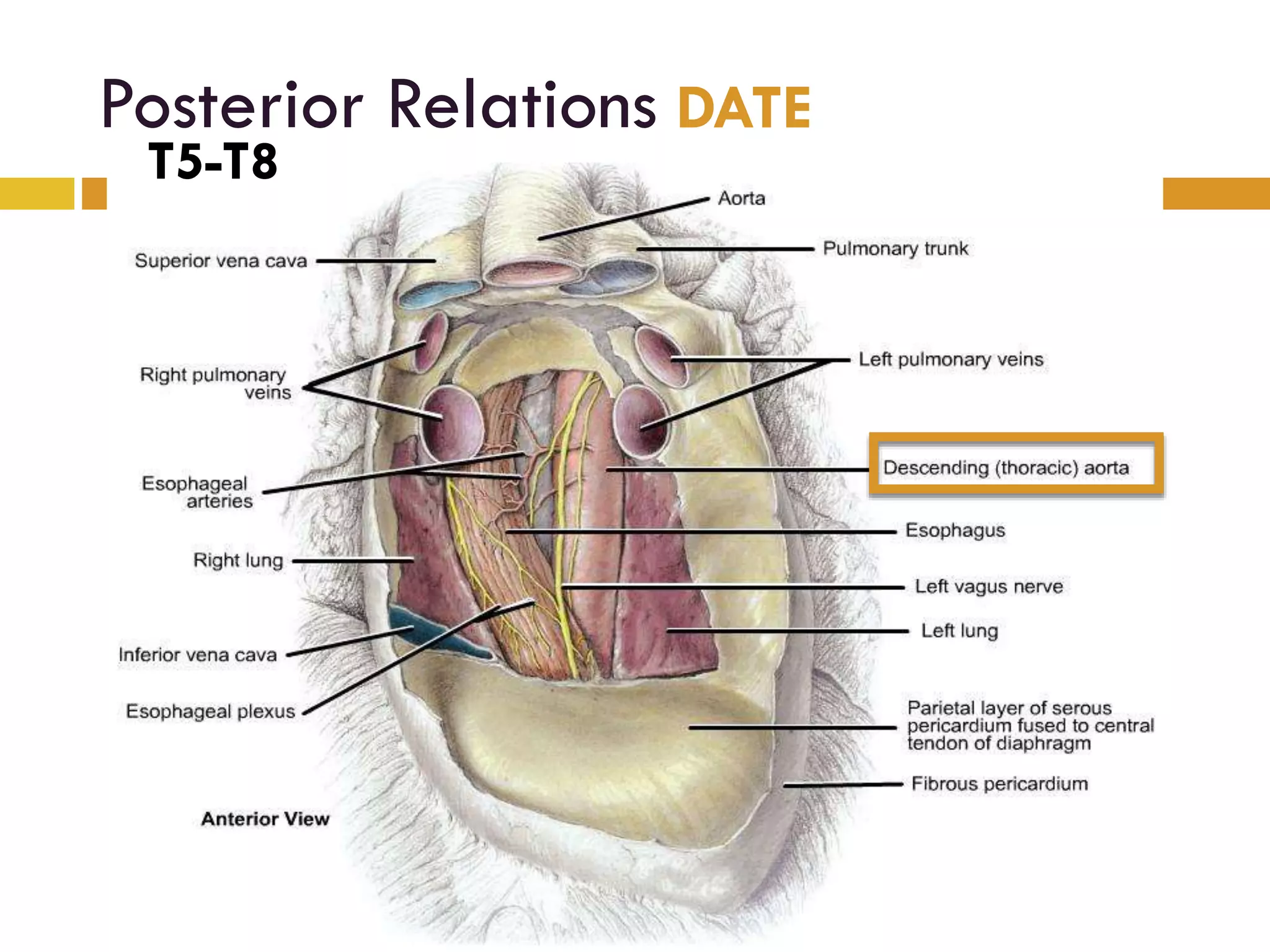
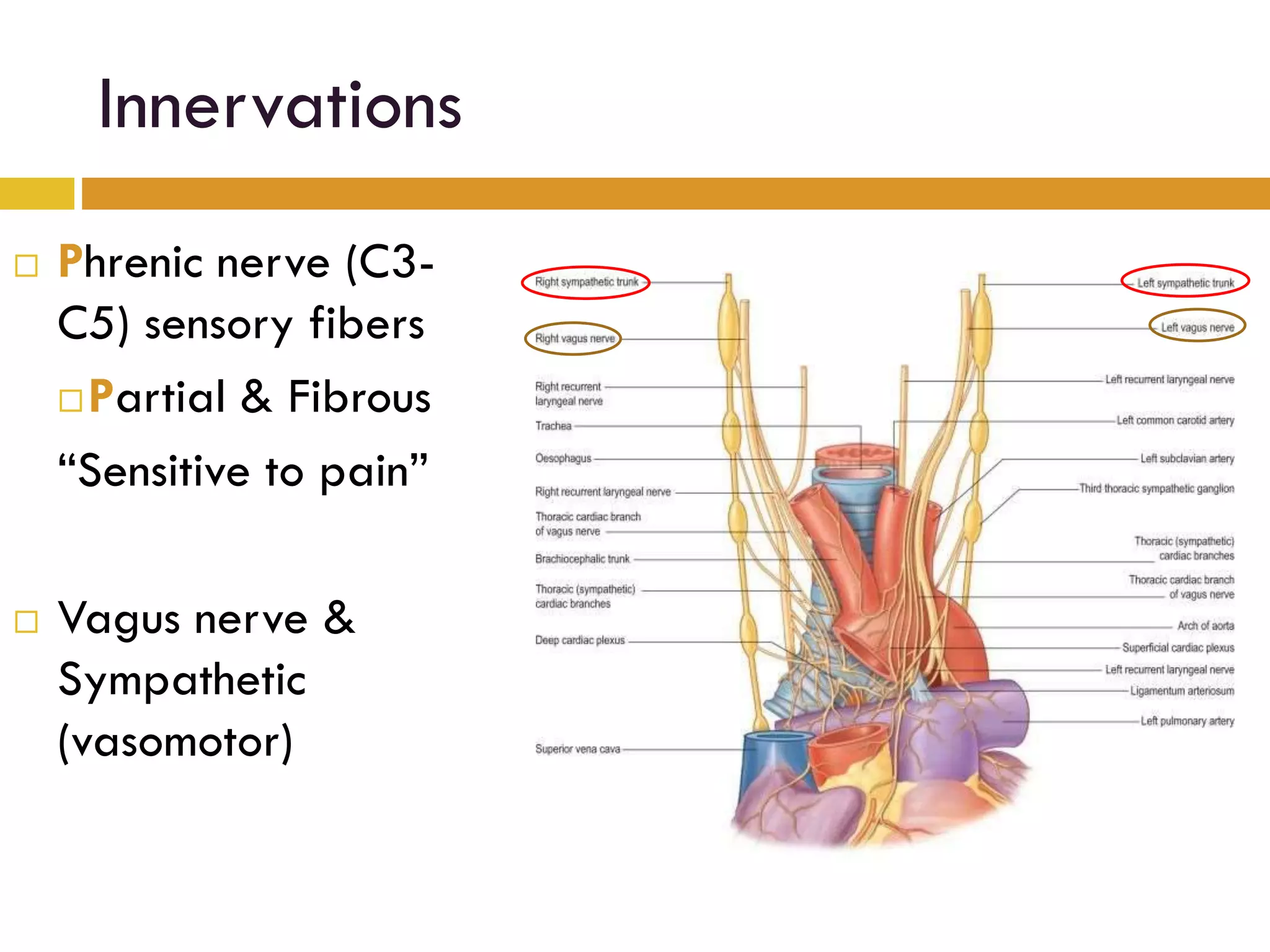
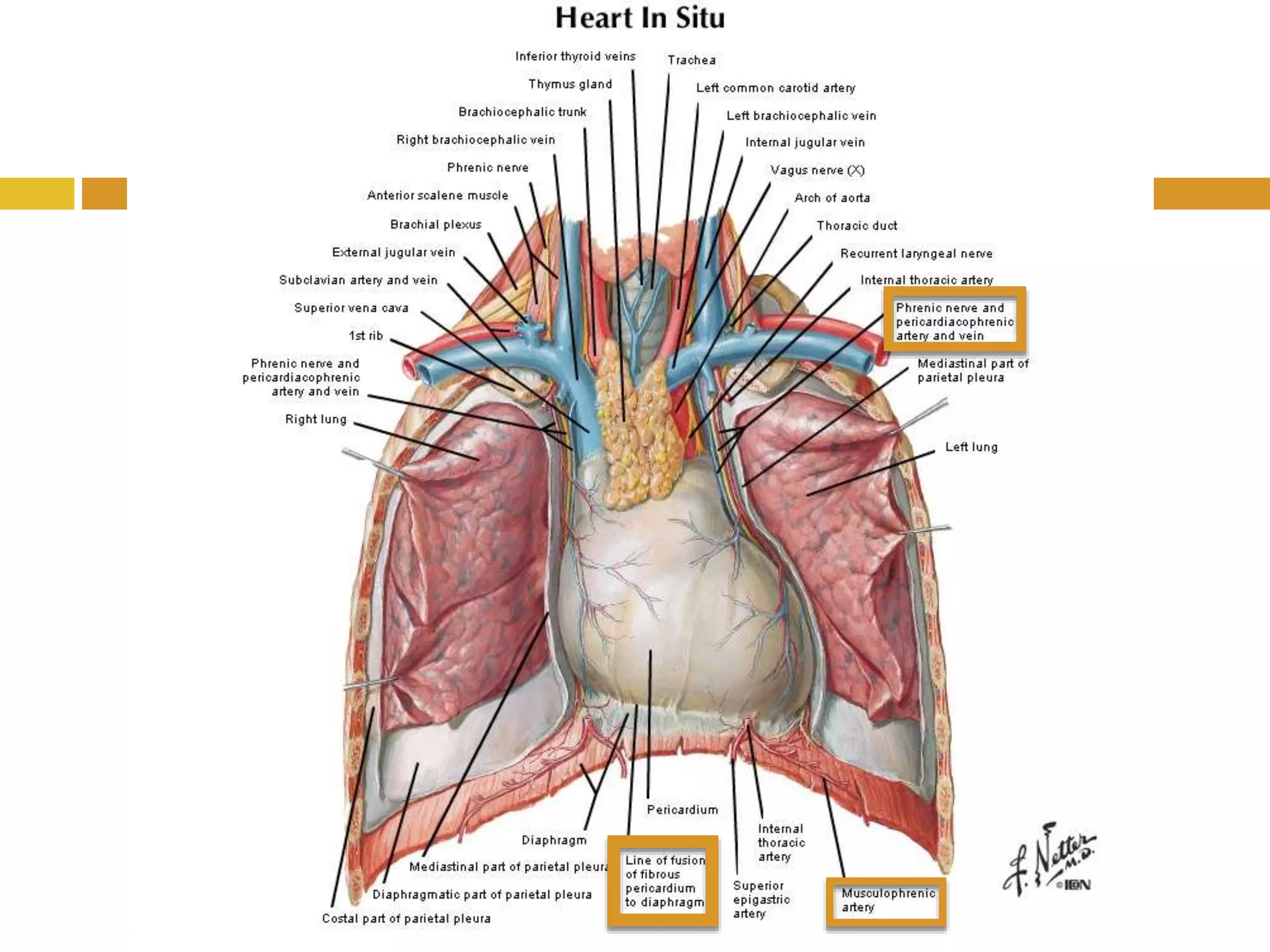
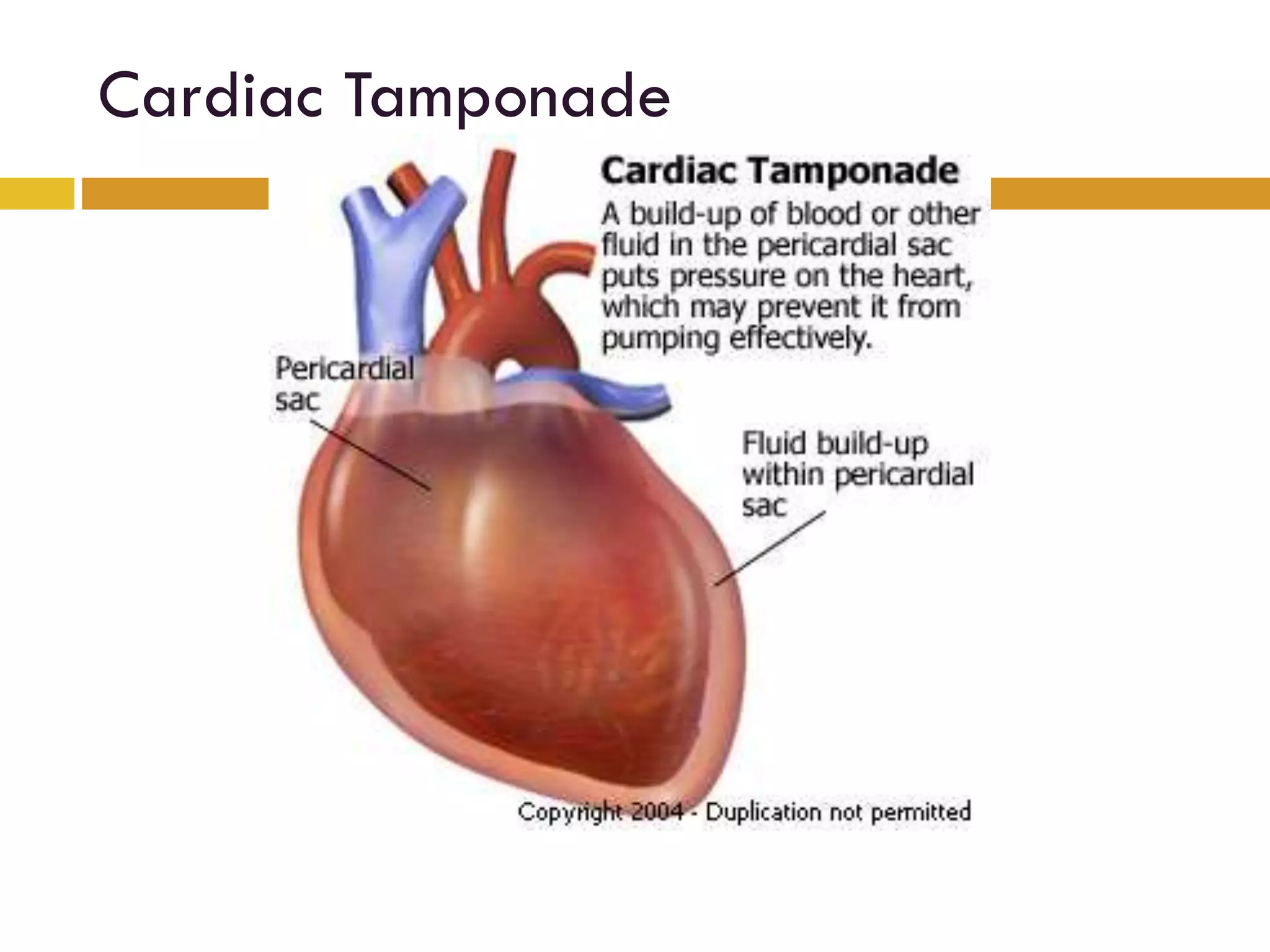
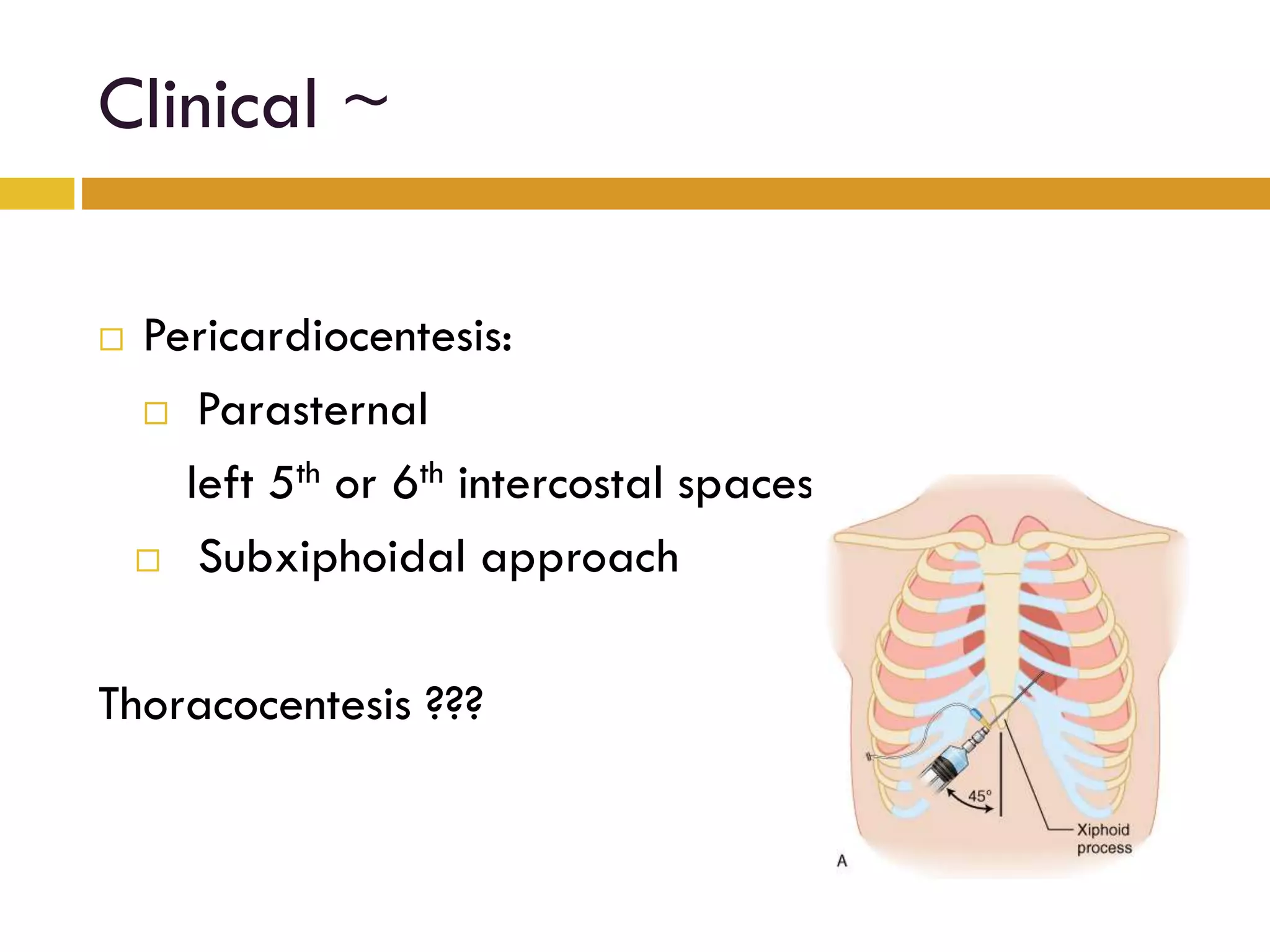
The pericardium is a double-walled fibroserous membrane that surrounds the heart. It has a fibrous outer layer and a serous inner layer known as the epicardium. The pericardium maintains the heart's position, acts as a barrier to infection, and lubricates the space between the layers. It contains pericardial sinuses and has attachments superiorly, inferiorly, and posteriorly in the mediastinum. The pericardium receives its blood supply from branches of the phrenic and intercostal arteries and drains into veins that empty into the azygos system. It is innervated by the phrenic nerve and vagus nerve. Card