Pharmacotherapy of Infectious Diseases A Case-Based Approach 
Pharmacotherapy of Infectious Diseases 
A Case-Based Approach 
Acute Bronchitis 
Anas Bahnassi PhD 
Anas Bahnassi 2014
Pharmacotherapy of Infectious Diseases A Case-Based Approach 
Introduction 
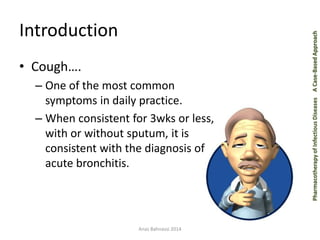
• Cough…. 
– One of the most common 
symptoms in daily practice. 
– When consistent for 3wks or less, 
with or without sputum, it is 
consistent with the diagnosis of 
acute bronchitis. 
Anas Bahnassi 2014
Pharmacotherapy of Infectious Diseases A Case-Based Approach 
Introduction 
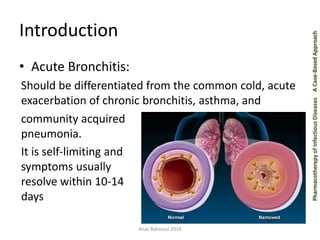
• Acute Bronchitis: 
Should be differentiated from the common cold, acute 
exacerbation of chronic bronchitis, asthma, and 
Anas Bahnassi 2014 
community acquired 
pneumonia. 
It is self-limiting and 
symptoms usually 
resolve within 10-14 
days
Pharmacotherapy of Infectious Diseases A Case-Based Approach 
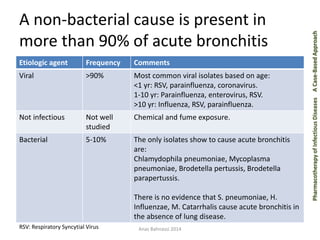
A non-bacterial cause is present in 
more than 90% of acute bronchitis 
Etiologic agent Frequency Comments 
Viral >90% Most common viral isolates based on age: 
<1 yr: RSV, parainfluenza, coronavirus. 
1-10 yr: Parainfluenza, enterovirus, RSV. 
>10 yr: Influenza, RSV, parainfluenza. 
Anas Bahnassi 2014 
Not infectious Not well 
studied 
Chemical and fume exposure. 
Bacterial 5-10% The only isolates show to cause acute bronchitis 
are: 
Chlamydophila pneumoniae, Mycoplasma 
pneumoniae, Brodetella pertussis, Brodetella 
parapertussis. 
There is no evidence that S. pneumoniae, H. 
Influenzae, M. Catarrhalis cause acute bronchitis in 
the absence of lung disease. 
RSV: Respiratory Syncytial Virus
Pharmacotherapy of Infectious Diseases A Case-Based Approach 
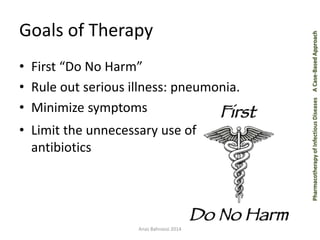
Goals of Therapy 
• First “Do No Harm” 
• Rule out serious illness: pneumonia. 
• Minimize symptoms 
• Limit the unnecessary use of 
antibiotics 
Anas Bahnassi 2014
Pharmacotherapy of Infectious Diseases A Case-Based Approach 
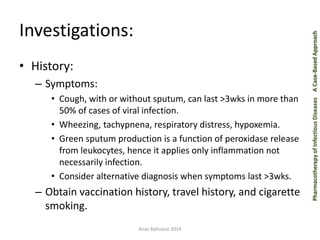
Investigations: 
• History: 
– Symptoms: 
• Cough, with or without sputum, can last >3wks in more than 
50% of cases of viral infection. 
• Wheezing, tachypnena, respiratory distress, hypoxemia. 
• Green sputum production is a function of peroxidase release 
from leukocytes, hence it applies only inflammation not 
necessarily infection. 
• Consider alternative diagnosis when symptoms last >3wks. 
– Obtain vaccination history, travel history, and cigarette 
smoking. 
Anas Bahnassi 2014
Pharmacotherapy of Infectious Diseases A Case-Based Approach 
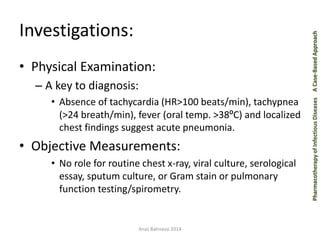
Investigations: 
• Physical Examination: 
– A key to diagnosis: 
• Absence of tachycardia (HR>100 beats/min), tachypnea 
(>24 breath/min), fever (oral temp. >38ºC) and localized 
chest findings suggest acute pneumonia. 
• Objective Measurements: 
• No role for routine chest x-ray, viral culture, serological 
essay, sputum culture, or Gram stain or pulmonary 
function testing/spirometry. 
Anas Bahnassi 2014
Pharmacotherapy of Infectious Diseases A Case-Based Approach 
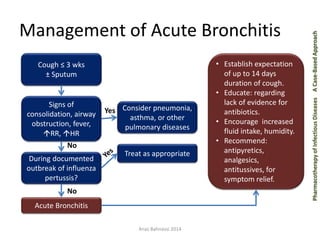
Management of Acute Bronchitis 
Anas Bahnassi 2014 
Cough ≤ 3 wks 
± Sputum 
Signs of 
consolidation, airway 
obstruction, fever, 
RR, HR 
During documented 
outbreak of influenza 
pertussis? 
Acute Bronchitis 
Consider pneumonia, 
asthma, or other 
pulmonary diseases 
Treat as appropriate 
• Establish expectation 
of up to 14 days 
duration of cough. 
• Educate: regarding 
lack of evidence for 
antibiotics. 
• Encourage increased 
fluid intake, humidity. 
• Recommend: 
antipyretics, 
analgesics, 
antitussives, for 
symptom relief. 
No 
No 
Yes
Pharmacotherapy of Infectious Diseases A Case-Based Approach 
Therapeutic Choices 
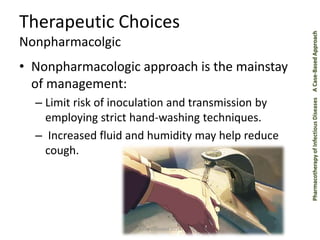
Nonpharmacolgic 
• Nonpharmacologic approach is the mainstay 
of management: 
– Limit risk of inoculation and transmission by 
employing strict hand-washing techniques. 
– Increased fluid and humidity may help reduce 
cough. 
Anas Bahnassi 2014
Pharmacotherapy of Infectious Diseases A Case-Based Approach 
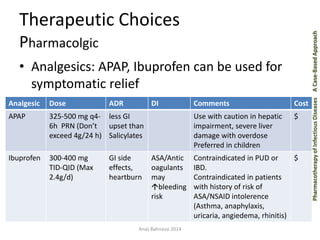
Analgesic Dose ADR DI Comments Cost 
APAP 325-500 mg q4- 
6h PRN (Don’t 
exceed 4g/24 h) 
less GI 
upset than 
Salicylates 
Use with caution in hepatic 
impairment, severe liver 
damage with overdose 
Preferred in children 
$ 
Ibuprofen 300-400 mg 
TID-QID (Max 
2.4g/d) 
GI side 
effects, 
heartburn 
ASA/Antic 
oagulants 
may 
bleeding 
risk 
Contraindicated in PUD or 
IBD. 
Contraindicated in patients 
with history of risk of 
ASA/NSAID intolerence 
(Asthma, anaphylaxis, 
uricaria, angiedema, rhinitis) 
$ 
Therapeutic Choices 
Pharmacolgic 
• Analgesics: APAP, Ibuprofen can be used for 
symptomatic relief 
Anas Bahnassi 2014
Pharmacotherapy of Infectious Diseases A Case-Based Approach 
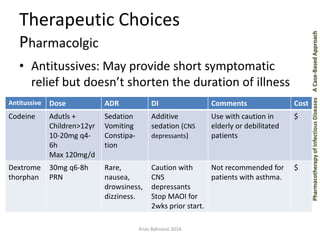
Antitussive Dose ADR DI Comments Cost 
Codeine Adutls + 
Children>12yr 
10-20mg q4- 
6h 
Max 120mg/d 
Sedation 
Vomiting 
Constipa-tion 
Additive 
sedation (CNS 
depressants) 
Use with caution in 
elderly or debilitated 
patients 
$ 
Dextrome 
thorphan 
30mg q6-8h 
PRN 
Rare, 
nausea, 
drowsiness, 
dizziness. 
Caution with 
CNS 
depressants 
Stop MAOI for 
2wks prior start. 
Not recommended for 
patients with asthma. 
$ 
Therapeutic Choices 
Pharmacolgic 
• Antitussives: May provide short symptomatic 
relief but doesn’t shorten the duration of illness 
Anas Bahnassi 2014
Pharmacotherapy of Infectious Diseases A Case-Based Approach 
Therapeutic Choices 
Pharmacolgic 
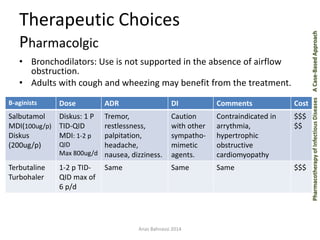
• Bronchodilators: Use is not supported in the absence of airflow 
B-aginists Dose ADR DI Comments Cost 
Salbutamol 
MDI(100ug/p) 
Diskus 
(200ug/p) 
Diskus: 1 P 
TID-QID 
MDI: 1-2 p 
QID 
Max 800ug/d 
Tremor, 
restlessness, 
palpitation, 
headache, 
nausea, dizziness. 
Caution 
with other 
sympatho-mimetic 
agents. 
Contraindicated in 
arrythmia, 
hypertrophic 
obstructive 
cardiomyopathy 
$$$ 
$$ 
Terbutaline 
Turbohaler 
1-2 p TID-QID 
max of 
6 p/d 
Same Same Same $$$ 
obstruction. 
• Adults with cough and wheezing may benefit from the treatment. 
Anas Bahnassi 2014
Pharmacotherapy of Infectious Diseases A Case-Based Approach 
Therapeutic Choices 
Pharmacolgic 
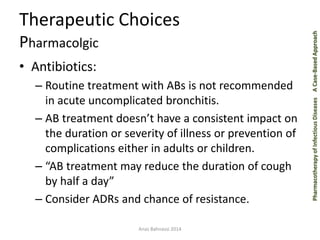
• Antibiotics: 
– Routine treatment with ABs is not recommended 
in acute uncomplicated bronchitis. 
– AB treatment doesn’t have a consistent impact on 
the duration or severity of illness or prevention of 
complications either in adults or children. 
– “AB treatment may reduce the duration of cough 
by half a day” 
– Consider ADRs and chance of resistance. 
Anas Bahnassi 2014
Pharmacotherapy of Infectious Diseases A Case-Based Approach 
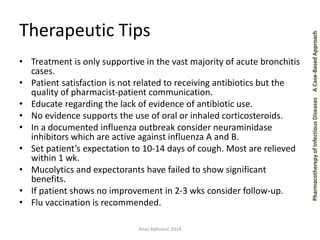
Therapeutic Tips 
• Treatment is only supportive in the vast majority of acute bronchitis 
cases. 
• Patient satisfaction is not related to receiving antibiotics but the 
quality of pharmacist-patient communication. 
• Educate regarding the lack of evidence of antibiotic use. 
• No evidence supports the use of oral or inhaled corticosteroids. 
• In a documented influenza outbreak consider neuraminidase 
inhibitors which are active against influenza A and B. 
• Set patient’s expectation to 10-14 days of cough. Most are relieved 
within 1 wk. 
• Mucolytics and expectorants have failed to show significant 
benefits. 
• If patient shows no improvement in 2-3 wks consider follow-up. 
• Flu vaccination is recommended. 
Anas Bahnassi 2014
Pharmacotherapy of Infectious Diseases A Case-Based Approach 
Pharmacotherapy: 
Infectious Diseases: 
Anas Bahnassi PhD 
abahnassi@gmail.com 
http://www.twitter.com/abpharm 
http://www.facebook.com/pharmaprof 
http://www.linkedin.com/in/abahnassi 
Anas Bahnassi 2014

Acute bronchitis

  • 1.
    Pharmacotherapy of InfectiousDiseases A Case-Based Approach Pharmacotherapy of Infectious Diseases A Case-Based Approach Acute Bronchitis Anas Bahnassi PhD Anas Bahnassi 2014
  • 2.
    Pharmacotherapy of InfectiousDiseases A Case-Based Approach Introduction • Cough…. – One of the most common symptoms in daily practice. – When consistent for 3wks or less, with or without sputum, it is consistent with the diagnosis of acute bronchitis. Anas Bahnassi 2014
  • 3.
    Pharmacotherapy of InfectiousDiseases A Case-Based Approach Introduction • Acute Bronchitis: Should be differentiated from the common cold, acute exacerbation of chronic bronchitis, asthma, and Anas Bahnassi 2014 community acquired pneumonia. It is self-limiting and symptoms usually resolve within 10-14 days
  • 4.
    Pharmacotherapy of InfectiousDiseases A Case-Based Approach A non-bacterial cause is present in more than 90% of acute bronchitis Etiologic agent Frequency Comments Viral >90% Most common viral isolates based on age: <1 yr: RSV, parainfluenza, coronavirus. 1-10 yr: Parainfluenza, enterovirus, RSV. >10 yr: Influenza, RSV, parainfluenza. Anas Bahnassi 2014 Not infectious Not well studied Chemical and fume exposure. Bacterial 5-10% The only isolates show to cause acute bronchitis are: Chlamydophila pneumoniae, Mycoplasma pneumoniae, Brodetella pertussis, Brodetella parapertussis. There is no evidence that S. pneumoniae, H. Influenzae, M. Catarrhalis cause acute bronchitis in the absence of lung disease. RSV: Respiratory Syncytial Virus
  • 5.
    Pharmacotherapy of InfectiousDiseases A Case-Based Approach Goals of Therapy • First “Do No Harm” • Rule out serious illness: pneumonia. • Minimize symptoms • Limit the unnecessary use of antibiotics Anas Bahnassi 2014
  • 6.
    Pharmacotherapy of InfectiousDiseases A Case-Based Approach Investigations: • History: – Symptoms: • Cough, with or without sputum, can last >3wks in more than 50% of cases of viral infection. • Wheezing, tachypnena, respiratory distress, hypoxemia. • Green sputum production is a function of peroxidase release from leukocytes, hence it applies only inflammation not necessarily infection. • Consider alternative diagnosis when symptoms last >3wks. – Obtain vaccination history, travel history, and cigarette smoking. Anas Bahnassi 2014
  • 7.
    Pharmacotherapy of InfectiousDiseases A Case-Based Approach Investigations: • Physical Examination: – A key to diagnosis: • Absence of tachycardia (HR>100 beats/min), tachypnea (>24 breath/min), fever (oral temp. >38ºC) and localized chest findings suggest acute pneumonia. • Objective Measurements: • No role for routine chest x-ray, viral culture, serological essay, sputum culture, or Gram stain or pulmonary function testing/spirometry. Anas Bahnassi 2014
  • 8.
    Pharmacotherapy of InfectiousDiseases A Case-Based Approach Management of Acute Bronchitis Anas Bahnassi 2014 Cough ≤ 3 wks ± Sputum Signs of consolidation, airway obstruction, fever, RR, HR During documented outbreak of influenza pertussis? Acute Bronchitis Consider pneumonia, asthma, or other pulmonary diseases Treat as appropriate • Establish expectation of up to 14 days duration of cough. • Educate: regarding lack of evidence for antibiotics. • Encourage increased fluid intake, humidity. • Recommend: antipyretics, analgesics, antitussives, for symptom relief. No No Yes
  • 9.
    Pharmacotherapy of InfectiousDiseases A Case-Based Approach Therapeutic Choices Nonpharmacolgic • Nonpharmacologic approach is the mainstay of management: – Limit risk of inoculation and transmission by employing strict hand-washing techniques. – Increased fluid and humidity may help reduce cough. Anas Bahnassi 2014
  • 10.
    Pharmacotherapy of InfectiousDiseases A Case-Based Approach Analgesic Dose ADR DI Comments Cost APAP 325-500 mg q4- 6h PRN (Don’t exceed 4g/24 h) less GI upset than Salicylates Use with caution in hepatic impairment, severe liver damage with overdose Preferred in children $ Ibuprofen 300-400 mg TID-QID (Max 2.4g/d) GI side effects, heartburn ASA/Antic oagulants may bleeding risk Contraindicated in PUD or IBD. Contraindicated in patients with history of risk of ASA/NSAID intolerence (Asthma, anaphylaxis, uricaria, angiedema, rhinitis) $ Therapeutic Choices Pharmacolgic • Analgesics: APAP, Ibuprofen can be used for symptomatic relief Anas Bahnassi 2014
  • 11.
    Pharmacotherapy of InfectiousDiseases A Case-Based Approach Antitussive Dose ADR DI Comments Cost Codeine Adutls + Children>12yr 10-20mg q4- 6h Max 120mg/d Sedation Vomiting Constipa-tion Additive sedation (CNS depressants) Use with caution in elderly or debilitated patients $ Dextrome thorphan 30mg q6-8h PRN Rare, nausea, drowsiness, dizziness. Caution with CNS depressants Stop MAOI for 2wks prior start. Not recommended for patients with asthma. $ Therapeutic Choices Pharmacolgic • Antitussives: May provide short symptomatic relief but doesn’t shorten the duration of illness Anas Bahnassi 2014
  • 12.
    Pharmacotherapy of InfectiousDiseases A Case-Based Approach Therapeutic Choices Pharmacolgic • Bronchodilators: Use is not supported in the absence of airflow B-aginists Dose ADR DI Comments Cost Salbutamol MDI(100ug/p) Diskus (200ug/p) Diskus: 1 P TID-QID MDI: 1-2 p QID Max 800ug/d Tremor, restlessness, palpitation, headache, nausea, dizziness. Caution with other sympatho-mimetic agents. Contraindicated in arrythmia, hypertrophic obstructive cardiomyopathy $$$ $$ Terbutaline Turbohaler 1-2 p TID-QID max of 6 p/d Same Same Same $$$ obstruction. • Adults with cough and wheezing may benefit from the treatment. Anas Bahnassi 2014
  • 13.
    Pharmacotherapy of InfectiousDiseases A Case-Based Approach Therapeutic Choices Pharmacolgic • Antibiotics: – Routine treatment with ABs is not recommended in acute uncomplicated bronchitis. – AB treatment doesn’t have a consistent impact on the duration or severity of illness or prevention of complications either in adults or children. – “AB treatment may reduce the duration of cough by half a day” – Consider ADRs and chance of resistance. Anas Bahnassi 2014
  • 14.
    Pharmacotherapy of InfectiousDiseases A Case-Based Approach Therapeutic Tips • Treatment is only supportive in the vast majority of acute bronchitis cases. • Patient satisfaction is not related to receiving antibiotics but the quality of pharmacist-patient communication. • Educate regarding the lack of evidence of antibiotic use. • No evidence supports the use of oral or inhaled corticosteroids. • In a documented influenza outbreak consider neuraminidase inhibitors which are active against influenza A and B. • Set patient’s expectation to 10-14 days of cough. Most are relieved within 1 wk. • Mucolytics and expectorants have failed to show significant benefits. • If patient shows no improvement in 2-3 wks consider follow-up. • Flu vaccination is recommended. Anas Bahnassi 2014
  • 15.
    Pharmacotherapy of InfectiousDiseases A Case-Based Approach Pharmacotherapy: Infectious Diseases: Anas Bahnassi PhD abahnassi@gmail.com http://www.twitter.com/abpharm http://www.facebook.com/pharmaprof http://www.linkedin.com/in/abahnassi Anas Bahnassi 2014