Structural characteristics
of the airway passage
structure division
Trachea
Main bronchi
Lobar bronchi
Segmental bronchi
Small bronchi
Bronchioles & terminal
bronchioles
Respiratory bronchioles
Alveolar duct
Alveolar sacs
 0
 1
 2-3
 4
 5-11
 12-16
 17-19
 20-22
3
Bronchitis
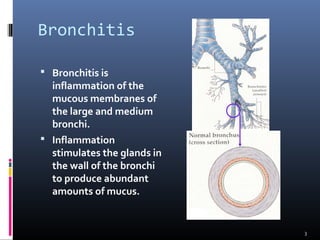
 Bronchitis is
inflammation of the
mucous membranes of
the large and medium
bronchi.
 Inflammation
stimulates the glands in
the wall of the bronchi
to produce abundant
amounts of mucus.
4
Bronchitis
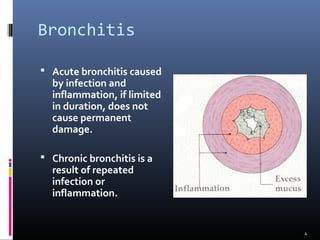
 Acute bronchitis caused
by infection and
inflammation, if limited
in duration, does not
cause permanent
damage.
 Chronic bronchitis is a
result of repeated
infection or
inflammation.
5
Acute Bronchitis
 Symptoms
 Phlegm producing cough.
 Mild fever
 Possible wheezing
 Treatment
 Medications to reduce mucus production --
antihistamines.
 If the cough produces green or yellow phlegm, the
doctor will prescribe antibiotics.
6
Healthy Bronchi
 Mucus produced by
goblet cells and mucus
glands forms a thin
protective layer on the
inside of each bronchi.
 The mucus traps inhaled
particles and small hair
like protrusions called
cilia move the mucus
upward to be coughed
out or swallowed.
7
Acute Bronchitis
 Limiting the infection
 Cilia (fine hairs) lining the
airways transport mucus
upward, preventing
infection of the lung.
 The infection may spread
to the lungs in young
children, older people,
people with compromised
immune systems, or
diseased lungs.
Cilia Goblet Cells
8
Chronic Bronchitis
 Repeated infection or
inflammation (caused
by irritating smoke)
causes increased mucus
production.
 Mucus glands and goblet
cells increase in number.
 Cigarette smoke
damages the cilia and
reduces their ability to
move mucus upward.
More goblet
cells
More mucous
glands
Damaged
Cilia
9
Chronic Bronchitis
 When cilia can no longer
move excess mucus, it
stays in the airways,
narrowing them.
 Retained mucus
encourages bacterial
growth which increases
inflammation.
Retained Mucous Bacteria
10
Chronic Bronchitis
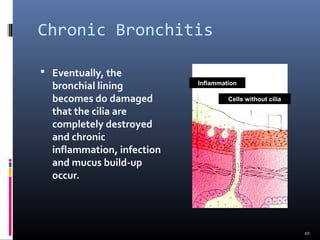
 Eventually, the
bronchial lining
becomes do damaged
that the cilia are
completely destroyed
and chronic
inflammation, infection
and mucus build-up
occur.
Inflammation
Cells without cilia
Normal versus Diseased Bronchi
Simple type
of Chronic
Bronchitis
(without
gasping)
Cough
Sputum expectoration
Chronic
Bronchitis
with
gasping
Cough
Sputum expectoration
Gasping
Classification of Chronic
Bronchitis
Stages Time Courses
Exacerbation In a week
Chronic lag
phase
One month or longer
stable Lasts for two months
Stages of Chronic
Bronchitis
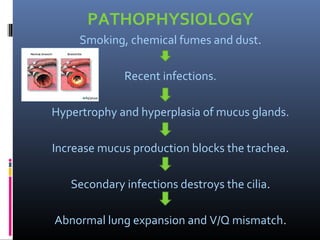
PATHOPHYSIOLOGY
Smoking, chemical fumes and dust.
Recent infections.
Hypertrophy and hyperplasia of mucus glands.
Increase mucus production blocks the trachea.
Secondary infections destroys the cilia.
Abnormal lung expansion and V/Q mismatch.
CLINICAL FEATURES
Cough :- . severity increases every yr
. initially without sputum
. later with sputum
Wheezing :- . Early morning
. Both inspiratory and expiratory
Sputum :- .mainly mucoid and tenacious
. Mucopurulent during infective
exacerbations.
Dyspnea :- .early morning
Deformity :- .barrel chest due to hyperinflation.
Cyanosis :- . central cyanosis.
. Presence of desaturated Hb
INVESTIGATIONS
PFTs
ABG analysis
Chest X ray
MRI
ECG
CT scan
Bronchoscopy
Exercise testing
 Figure 11-2. Chest X-ray film of a patient with chronic bronchitis. Note the translucent (dark) lung
fields, depressed diaphragms, and long and narrow heart.
This condition , usually called as “blue bloaters”
 “Blue bloaters” often
have a severely low
blood oxygen level that
gives their lips and
tongue a blue
appearance.
 They tend to be
overweight, breathless,
and have swollen ankles
and abdomens from fluid
retention.
Overweight and bloated
COMPLICATIONS(core pulmonale)
TREATMENT
 Smoking cessation
 Medications :- pneumococcal and influenza
vaccines
Beta 2 agonists
Bronchodilators
Corticosteroids
 Avoidance of environmental irritants
 Avoidance of beta adrenergic blockers and
antihistamines
 Early treatment of infections
 O2 therapy
MESSAGE
A cigarette is a pinch of tobacco,
Rolled in a paper
With the fire on one end and………..
………………a fool on another end.
Thank you all for listening
 THE END

Chronic Bronchitis

  • 2.
    Structural characteristics of theairway passage structure division Trachea Main bronchi Lobar bronchi Segmental bronchi Small bronchi Bronchioles & terminal bronchioles Respiratory bronchioles Alveolar duct Alveolar sacs  0  1  2-3  4  5-11  12-16  17-19  20-22
  • 3.
    3 Bronchitis  Bronchitis is inflammationof the mucous membranes of the large and medium bronchi.  Inflammation stimulates the glands in the wall of the bronchi to produce abundant amounts of mucus.
  • 4.
    4 Bronchitis  Acute bronchitiscaused by infection and inflammation, if limited in duration, does not cause permanent damage.  Chronic bronchitis is a result of repeated infection or inflammation.
  • 5.
    5 Acute Bronchitis  Symptoms Phlegm producing cough.  Mild fever  Possible wheezing  Treatment  Medications to reduce mucus production -- antihistamines.  If the cough produces green or yellow phlegm, the doctor will prescribe antibiotics.
  • 6.
    6 Healthy Bronchi  Mucusproduced by goblet cells and mucus glands forms a thin protective layer on the inside of each bronchi.  The mucus traps inhaled particles and small hair like protrusions called cilia move the mucus upward to be coughed out or swallowed.
  • 7.
    7 Acute Bronchitis  Limitingthe infection  Cilia (fine hairs) lining the airways transport mucus upward, preventing infection of the lung.  The infection may spread to the lungs in young children, older people, people with compromised immune systems, or diseased lungs. Cilia Goblet Cells
  • 8.
    8 Chronic Bronchitis  Repeatedinfection or inflammation (caused by irritating smoke) causes increased mucus production.  Mucus glands and goblet cells increase in number.  Cigarette smoke damages the cilia and reduces their ability to move mucus upward. More goblet cells More mucous glands Damaged Cilia
  • 9.
    9 Chronic Bronchitis  Whencilia can no longer move excess mucus, it stays in the airways, narrowing them.  Retained mucus encourages bacterial growth which increases inflammation. Retained Mucous Bacteria
  • 10.
    10 Chronic Bronchitis  Eventually,the bronchial lining becomes do damaged that the cilia are completely destroyed and chronic inflammation, infection and mucus build-up occur. Inflammation Cells without cilia
  • 12.
  • 13.
    Simple type of Chronic Bronchitis (without gasping) Cough Sputumexpectoration Chronic Bronchitis with gasping Cough Sputum expectoration Gasping Classification of Chronic Bronchitis
  • 14.
    Stages Time Courses ExacerbationIn a week Chronic lag phase One month or longer stable Lasts for two months Stages of Chronic Bronchitis
  • 16.
    PATHOPHYSIOLOGY Smoking, chemical fumesand dust. Recent infections. Hypertrophy and hyperplasia of mucus glands. Increase mucus production blocks the trachea. Secondary infections destroys the cilia. Abnormal lung expansion and V/Q mismatch.
  • 17.
    CLINICAL FEATURES Cough :-. severity increases every yr . initially without sputum . later with sputum Wheezing :- . Early morning . Both inspiratory and expiratory Sputum :- .mainly mucoid and tenacious . Mucopurulent during infective exacerbations. Dyspnea :- .early morning Deformity :- .barrel chest due to hyperinflation. Cyanosis :- . central cyanosis. . Presence of desaturated Hb
  • 18.
    INVESTIGATIONS PFTs ABG analysis Chest Xray MRI ECG CT scan Bronchoscopy Exercise testing
  • 19.
     Figure 11-2.Chest X-ray film of a patient with chronic bronchitis. Note the translucent (dark) lung fields, depressed diaphragms, and long and narrow heart.
  • 20.
    This condition ,usually called as “blue bloaters”
  • 21.
     “Blue bloaters”often have a severely low blood oxygen level that gives their lips and tongue a blue appearance.  They tend to be overweight, breathless, and have swollen ankles and abdomens from fluid retention. Overweight and bloated
  • 22.
  • 23.
    TREATMENT  Smoking cessation Medications :- pneumococcal and influenza vaccines Beta 2 agonists Bronchodilators Corticosteroids  Avoidance of environmental irritants  Avoidance of beta adrenergic blockers and antihistamines  Early treatment of infections  O2 therapy
  • 24.
    MESSAGE A cigarette isa pinch of tobacco, Rolled in a paper With the fire on one end and……….. ………………a fool on another end.
  • 25.
    Thank you allfor listening  THE END

Editor's Notes

  • #5 Acute bronchitis often occurs when a person has an upper respiratory tract infection, such as a common cold. It can also be a complication of measles or influenza. Acute bronchitis is often mild and is usually caused by a respiratory virus. Invasion by bacteria, such as Streptococcus pneumoniae or Haemophilus influenzae, may follow and complicate the initial virus infection.