CHRONIC OBSTRUCTIVE
PULMONARY DISEASE
Ms. Jyoti Chand
MS.C Nursing
DEFINITION
• COPD is also known as chronic obstructive lung disease.
• COPD is a chronic inflammatory lung disease that causes
obstruction to the airflow from the lungs. It is caused by long-term
exposure to irritating gases or particulate matter, most often from
cigarette smoke.
OR
COPD is a disease characterized by airflow obstruction, which is
progressive & irreversible, it includes:
Emphysema
Chronic Bronchitis
Emphysema
• It is long- term, progressive, irreversible disease of lungs that
affects the respiratory system. Emphysema is a condition that
involves damage to the walls of the air sacs (alveoli) of the lung
making it difficult to breath.
Causes
Causes of emphysema are:
Cigarette smoking- commonest
Deficiency of alfa 1 antitrypsin enzyme
Occupational exposure to chemical irritants
Pollution exposure
Poorly ventilated house
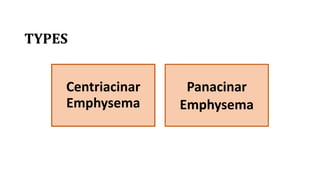
TYPES
Centriacinar
Emphysema
Panacinar
Emphysema
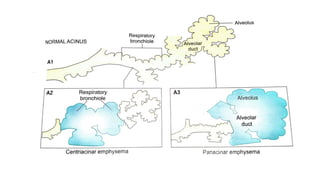
1) Centriacinar:
• It affects the respiratory bronchioles and involves the upper lobes.
It is associated with smoking.
2) Pan acinar :
• it affects the alveoli & alveolar ducts and eventually the respiratory
bronchioles , involves the lower lobes.
Clinical Features
Dyspnea
Tachypnoea
Pink Puffer
Barrel chest
Cough
Weight loss
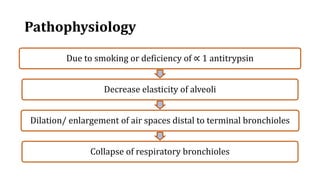
Pathophysiology
Due to smoking or deficiency of ∝ 1 antitrypsin
Decrease elasticity of alveoli
Dilation/ enlargement of air spaces distal to terminal bronchioles
Collapse of respiratory bronchioles
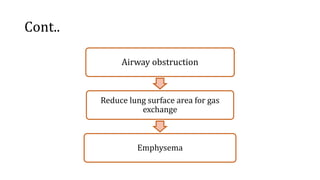
Cont..
Airway obstruction
Reduce lung surface area for gas
exchange
Emphysema
Diagnostic evaluation
• History collection
• Physical examination
• Chest x-ray
• CT scan
• ABG Analysis
• Complete blood count
• Sputum examination
• Pulmonary function test
Management
• Oxygen therapy
• Bronchodilators (salbutamol)
• Cortico-steroids (Betamethasone)
• Postural Drainage
• Deep breathing exercises
Surgical Management
• Bullectomy: enlarge air spaces which does not participants in
gases exchange are surgically removes.
• Lung volume reduction: Part of affected airway is removed
which enhance the gas exchange in healthy tissue.
• Lobectomy: removal of affected lobe.
Nursing Management
• Monitor vital signs, oxygen saturation, breath sounds, and arterial blood
gases.
• Emphasize smoking cessation and avoidance of other external irritants (e.g.,
dust and allergens).
• Supervise respiratory exercises, such as pursed-lip breathing.
• Provide orthopenic position.
• Encourage fluids to maintain hydration.
• Teach use of inhalers and other special equipment (e.g., spacer, peak
expiratory flow meter)
CHRONIC BRONCHITIS
DEFINITION
• Chronic bronchitis is one of the obstructive airway disorders,
commonly seen in smokers. Chronic bronchitis is defined clinically
as persistent cough with sputum production for at least 3 months
in at least 2 consecutive years.
• Chronic bronchitis patients are often referred as “ blue bloaters”.
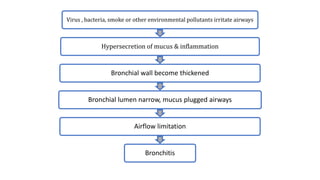
Pathophysiology
Virus , bacteria, smoke or other environmental pollutants irritate airways
Hypersecretion of mucus & inflammation
Bronchial wall become thickened
Bronchial lumen narrow, mucus plugged airways
Airflow limitation
Bronchitis
Pathology
Gross: Edematous mucosa with excessive mucous secretion
Microscopic: There is hypertrophy of submucosal glands,
accumulation of alveolar macrophages and lymphocytes.
Complications
• Obstruction of the airway by mucus, leading to bronchiectasis or
atelectasis.
• Pulmonary hypertension

CHRONIC OBSTRUCTIVE PULMONARY DISEASE.pptx

  • 1.
  • 2.
    DEFINITION • COPD isalso known as chronic obstructive lung disease. • COPD is a chronic inflammatory lung disease that causes obstruction to the airflow from the lungs. It is caused by long-term exposure to irritating gases or particulate matter, most often from cigarette smoke.
  • 3.
    OR COPD is adisease characterized by airflow obstruction, which is progressive & irreversible, it includes: Emphysema Chronic Bronchitis
  • 4.
    Emphysema • It islong- term, progressive, irreversible disease of lungs that affects the respiratory system. Emphysema is a condition that involves damage to the walls of the air sacs (alveoli) of the lung making it difficult to breath.
  • 5.
    Causes Causes of emphysemaare: Cigarette smoking- commonest Deficiency of alfa 1 antitrypsin enzyme Occupational exposure to chemical irritants Pollution exposure Poorly ventilated house
  • 6.
  • 8.
    1) Centriacinar: • Itaffects the respiratory bronchioles and involves the upper lobes. It is associated with smoking. 2) Pan acinar : • it affects the alveoli & alveolar ducts and eventually the respiratory bronchioles , involves the lower lobes.
  • 9.
  • 10.
    Pathophysiology Due to smokingor deficiency of ∝ 1 antitrypsin Decrease elasticity of alveoli Dilation/ enlargement of air spaces distal to terminal bronchioles Collapse of respiratory bronchioles
  • 11.
    Cont.. Airway obstruction Reduce lungsurface area for gas exchange Emphysema
  • 12.
    Diagnostic evaluation • Historycollection • Physical examination • Chest x-ray • CT scan • ABG Analysis • Complete blood count • Sputum examination • Pulmonary function test
  • 13.
    Management • Oxygen therapy •Bronchodilators (salbutamol) • Cortico-steroids (Betamethasone) • Postural Drainage • Deep breathing exercises
  • 14.
    Surgical Management • Bullectomy:enlarge air spaces which does not participants in gases exchange are surgically removes. • Lung volume reduction: Part of affected airway is removed which enhance the gas exchange in healthy tissue. • Lobectomy: removal of affected lobe.
  • 15.
    Nursing Management • Monitorvital signs, oxygen saturation, breath sounds, and arterial blood gases. • Emphasize smoking cessation and avoidance of other external irritants (e.g., dust and allergens). • Supervise respiratory exercises, such as pursed-lip breathing. • Provide orthopenic position. • Encourage fluids to maintain hydration. • Teach use of inhalers and other special equipment (e.g., spacer, peak expiratory flow meter)
  • 16.
  • 17.
    DEFINITION • Chronic bronchitisis one of the obstructive airway disorders, commonly seen in smokers. Chronic bronchitis is defined clinically as persistent cough with sputum production for at least 3 months in at least 2 consecutive years. • Chronic bronchitis patients are often referred as “ blue bloaters”.
  • 18.
  • 19.
    Virus , bacteria,smoke or other environmental pollutants irritate airways Hypersecretion of mucus & inflammation Bronchial wall become thickened Bronchial lumen narrow, mucus plugged airways Airflow limitation Bronchitis
  • 20.
    Pathology Gross: Edematous mucosawith excessive mucous secretion Microscopic: There is hypertrophy of submucosal glands, accumulation of alveolar macrophages and lymphocytes.
  • 21.
    Complications • Obstruction ofthe airway by mucus, leading to bronchiectasis or atelectasis. • Pulmonary hypertension