Web 2.0 and Social
    Media for Business
Chapter 1: Introduction to Web 2.0: Part B


           Roger McHaney, Kansas State University
Content Sharing
Content sharing using Web
2.0 ideas has grown in
importance and
acceptance in the business
world. Businesses are getting
their message out into the
world by sharing their
materials.
Innovative ways to
leverage existing
content have been
developed and
promoted with Creative
Commons attribution
More About Content Sharing
•   Has overlap and integration with social media.
•   Web sites like YouTube are social media primarily
    focused on video sharing.
•   Content sharing important to business includes sites
    that promote text, photos, videos, multimedia, e-
    books, business presentations and artifacts.
•   Materials often posted to gain recognition in particular
    areas.
Flickr is a popular example of content sharing
Matt McGee Suggests Business Uses for Flickr
Matt McGee Suggestions (con’t)
Photo Sharing
•   Many photo sharing sites
    offer photo hosting. A
    photo on their site can be
    displayed on a business
    blog or Web site without
    the photo being on the
    business server. Reduces
    storage space required
    on a site.
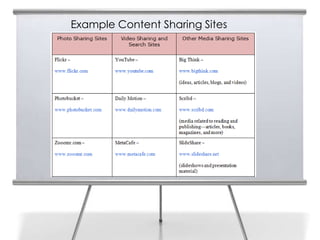
Example Content Sharing Sites
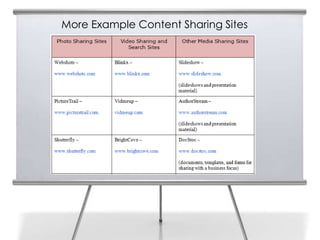
More Example Content Sharing Sites
Scribd Hosts Business Documents
DocStoc Provides Documents for Small Businesses
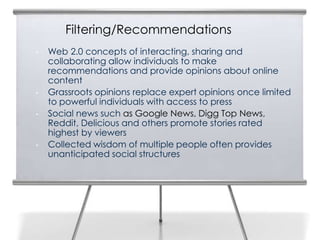
Filtering/Recommendations
•   Web 2.0 concepts of interacting, sharing and
    collaborating allow individuals to make
    recommendations and provide opinions about online
    content
•   Grassroots opinions replace expert opinions once limited
    to powerful individuals with access to press
•   Social news such as Google News, Digg Top News,
    Reddit, Delicious and others promote stories rated
    highest by viewers
•   Collected wisdom of multiple people often provides
    unanticipated social structures
Reddit Relies on Social Recommendations
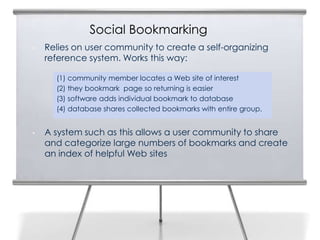
Social Bookmarking
•   Relies on user community to create a self-organizing
    reference system. Works this way:

      (1) community member locates a Web site of interest
      (2) they bookmark page so returning is easier
      (3) software adds individual bookmark to database
      (4) database shares collected bookmarks with entire group.


•   A system such as this allows a user community to share
    and categorize large numbers of bookmarks and create
    an index of helpful Web sites
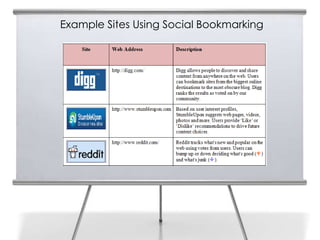
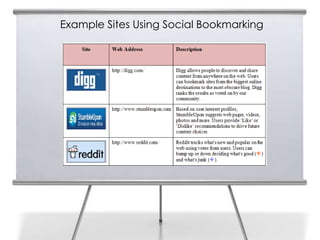
Example Sites Using Social Bookmarking
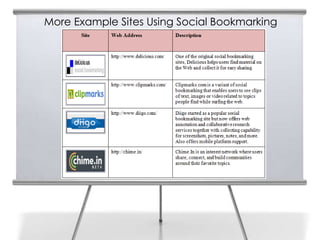
More Example Sites Using Social Bookmarking
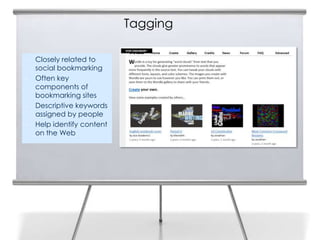
Tagging

•   Closely related to
    social bookmarking
•   Often key
    components of
    bookmarking sites
•   Descriptive keywords
    assigned by people
•   Help identify content
    on the Web
Geo-Tagging


Tagging is not limited to virtual
applications. Tagging is used by owners
of mobile devices to describe real world
geographic locations, features, and
other objects
Web Applications
Apps are an amazing proliferation of easy-to-use, low-cost
tools.
Used for business, pleasure, or individual productivity.
Hundreds of thousands of cross-platform applications
readily available for nearly every imaginable use.
Business users can visit the Apple or Android App store and
find tools for tasks using mobile devices.
Summary
•   Business practices are transformed
    by emerging capabilities of Internet
    and Web
•   Recent changes are related to
    Web 2.0 and the use of mobile
    smart devices
•   Web 2.0 includes: (1) social media,
    (2) filtering and recommendations,
    (3) content sharing, and (4) Web
    apps
•   These technologies force
    organizations to rethink their
    business operations and how to
    connect with customers,
    employees and stakeholders
Slide Media from:
Slides Prepared by Professor Roger McHaney
Kansas State University                      PresenterMedia.com
Twitter: @mchaney                            support@presentermedia.com
Blog: http://mchaney.com
Email : mchaney@ksu.edu
                                             4416 S. Technology Dr
                                             Sioux Falls, SD 57106

Chapter1b McHaney

  • 1.
    Web 2.0 andSocial Media for Business Chapter 1: Introduction to Web 2.0: Part B Roger McHaney, Kansas State University
  • 2.
    Content Sharing Content sharingusing Web 2.0 ideas has grown in importance and acceptance in the business world. Businesses are getting their message out into the world by sharing their materials.
  • 3.
    Innovative ways to leverageexisting content have been developed and promoted with Creative Commons attribution
  • 4.
    More About ContentSharing • Has overlap and integration with social media. • Web sites like YouTube are social media primarily focused on video sharing. • Content sharing important to business includes sites that promote text, photos, videos, multimedia, e- books, business presentations and artifacts. • Materials often posted to gain recognition in particular areas.
  • 5.
    Flickr is apopular example of content sharing
  • 6.
    Matt McGee SuggestsBusiness Uses for Flickr
  • 7.
  • 8.
    Photo Sharing • Many photo sharing sites offer photo hosting. A photo on their site can be displayed on a business blog or Web site without the photo being on the business server. Reduces storage space required on a site.
  • 9.
  • 10.
    More Example ContentSharing Sites
  • 11.
  • 12.
    DocStoc Provides Documentsfor Small Businesses
  • 13.
    Filtering/Recommendations • Web 2.0 concepts of interacting, sharing and collaborating allow individuals to make recommendations and provide opinions about online content • Grassroots opinions replace expert opinions once limited to powerful individuals with access to press • Social news such as Google News, Digg Top News, Reddit, Delicious and others promote stories rated highest by viewers • Collected wisdom of multiple people often provides unanticipated social structures
  • 14.
    Reddit Relies onSocial Recommendations
  • 15.
    Social Bookmarking • Relies on user community to create a self-organizing reference system. Works this way: (1) community member locates a Web site of interest (2) they bookmark page so returning is easier (3) software adds individual bookmark to database (4) database shares collected bookmarks with entire group. • A system such as this allows a user community to share and categorize large numbers of bookmarks and create an index of helpful Web sites
  • 16.
    Example Sites UsingSocial Bookmarking
  • 17.
    Example Sites UsingSocial Bookmarking
  • 18.
    More Example SitesUsing Social Bookmarking
  • 19.
    Tagging • Closely related to social bookmarking • Often key components of bookmarking sites • Descriptive keywords assigned by people • Help identify content on the Web
  • 20.
    Geo-Tagging Tagging is notlimited to virtual applications. Tagging is used by owners of mobile devices to describe real world geographic locations, features, and other objects
  • 21.
    Web Applications Apps arean amazing proliferation of easy-to-use, low-cost tools. Used for business, pleasure, or individual productivity. Hundreds of thousands of cross-platform applications readily available for nearly every imaginable use. Business users can visit the Apple or Android App store and find tools for tasks using mobile devices.
  • 22.
    Summary • Business practices are transformed by emerging capabilities of Internet and Web • Recent changes are related to Web 2.0 and the use of mobile smart devices • Web 2.0 includes: (1) social media, (2) filtering and recommendations, (3) content sharing, and (4) Web apps • These technologies force organizations to rethink their business operations and how to connect with customers, employees and stakeholders
  • 23.
    Slide Media from: SlidesPrepared by Professor Roger McHaney Kansas State University PresenterMedia.com Twitter: @mchaney support@presentermedia.com Blog: http://mchaney.com Email : mchaney@ksu.edu 4416 S. Technology Dr Sioux Falls, SD 57106