Web 2.0: An Introduction

By: Daryll Johnson & Shawn Roner
         http://edbuzz.org
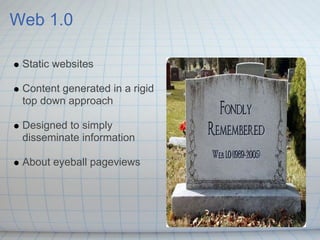
Web 1.0

 Static websites

 Content generated in a rigid
 top down approach

 Designed to simply
 disseminate information

 About eyeball pageviews
What is Web 2.0?
 Term coined by O'Reilly Media - 2004

 Refers to a perceived second generation of Web-based
 services that involve a read-write orientation
    Social Networking Sites
    Wikis
    Communication Tools
    Folksonomies (tagging of information)

 Content distributed, sorted, combined, and displayed in
 formats unanticipated by the content creators

 Web-based technology that promotes information sharing,
 interoperability, and is user-centered
Web 2.0 - The Beginning

 Blogging is where it all began.
    Breaking down of traditional barriers to participation
    Commenting & crowd interaction
    Power is in the hands of individual users

 It's really all about flow & collaboration
Some Helpful Tools

 Blogs                 Moodle

 Delicious and Diigo   Ning

 Facebook              Podcasting

 Flickr                Twitter

 Google Apps           Wikipedia

 Skype                 VoiceThread
Teachers & Students
 On-demand access to information never previously available
    videos, lectures, data

 Collaboration opportunities
    Teacher Collaboration
    Student-Teacher Collaboration
     Student Collaboration
     Parent-Teacher Collaboration
     School-Community Collaboration

 New ways to mashup or interact with data
Administrators
  Improve communication
     Using social media to improve school communication
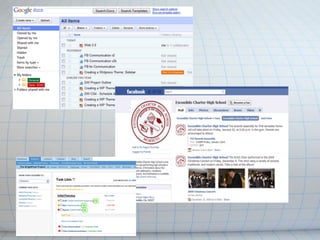
     Using cloud computing to enhance faculty
     communication
     Using Web 2.0 to enhance the teaching and learning
     experience

  Improve professional development
    Use social networking tools, like Ning, to manage
    professional development

  Use Web 2.0 products to effectively manage projects
Who Moved my Cheese?

  Reevaluate traditional delivery methods or formats

  Embrace crowdsourcing and open source development

  Rethink student management and accountability systems


For more info visit http://edbuzz.org

Web 2 0: An Introduction

  • 1.
    Web 2.0: AnIntroduction By: Daryll Johnson & Shawn Roner http://edbuzz.org
  • 2.
    Web 1.0 Staticwebsites Content generated in a rigid top down approach Designed to simply disseminate information About eyeball pageviews
  • 3.
    What is Web2.0? Term coined by O'Reilly Media - 2004 Refers to a perceived second generation of Web-based services that involve a read-write orientation Social Networking Sites Wikis Communication Tools Folksonomies (tagging of information) Content distributed, sorted, combined, and displayed in formats unanticipated by the content creators Web-based technology that promotes information sharing, interoperability, and is user-centered
  • 4.
    Web 2.0 -The Beginning Blogging is where it all began. Breaking down of traditional barriers to participation Commenting & crowd interaction Power is in the hands of individual users It's really all about flow & collaboration
  • 5.
    Some Helpful Tools Blogs Moodle Delicious and Diigo Ning Facebook Podcasting Flickr Twitter Google Apps Wikipedia Skype VoiceThread
  • 7.
    Teachers & Students On-demand access to information never previously available videos, lectures, data Collaboration opportunities Teacher Collaboration Student-Teacher Collaboration Student Collaboration Parent-Teacher Collaboration School-Community Collaboration New ways to mashup or interact with data
  • 9.
    Administrators Improvecommunication Using social media to improve school communication Using cloud computing to enhance faculty communication Using Web 2.0 to enhance the teaching and learning experience Improve professional development Use social networking tools, like Ning, to manage professional development Use Web 2.0 products to effectively manage projects
  • 11.
    Who Moved myCheese? Reevaluate traditional delivery methods or formats Embrace crowdsourcing and open source development Rethink student management and accountability systems For more info visit http://edbuzz.org