INTRODUCTION TO
BLOOD COLLECTION
Blood Collection: A Short Course
Learning Objectives
 State the importance of correct blood
collection techniques in managing total
patient care.
 List the factors that influence the integrity
of a blood specimen.
 Discuss safety precautions as related to
blood collection.
 Differentiate between whole blood,
plasma, and serum.
Learning Objectives
 Explain the action of anticoagulants to
prevent blood coagulation.
 Describe the appearance of a hemolyzed,
icteric, and lipemic specimen.
 Differentiate between arterial, venous, and
capillary blood.
 State the purpose of quality assurance in
blood collection.
Redesigning the
Healthcare System
 Shifting of phlebotomy responsibility.
 New skills required.
Blood Collection: A Short Course
Purpose
 Collection of quality specimens
 Instructive information
 Technique
 Procedures in accordance with the
Clinical and Laboratory Standards
Institute, (CLSI) (Standard H3-A6) and
Occupational Safety & Health
Administration (OSHA) guidelines
Blood Collection: A Short Course
Course Overview
 Equipment
 Site selection
 Technique
 Complications
 Specimen handling
 Phlebotomy errors
 Venipuncture practice
IMPORTANCE OF CORRECT SPECIMEN
COLLECTION AND HANDLING
QUALITY SPECIMENS =
QUALITY RESULTS
 Diagnosis
 Treatment
 Monitoring
 Laboratory results constitute 70% of the
objective information for health-care providers
IMPORTANCE OF CORRECT SPECIMEN
COLLECTION AND HANDLING
Specimen Integrity
 Laboratory guidelines
 Never hesitate to check with
laboratory
 Clinical Laboratory Improvement
Amendments of 1988 (CLIA, 1988)
 Laboratory is responsible
IMPORTANCE OF CORRECT SPECIMEN
COLLECTION AND HANDLING
Preanalytical Factors
 56% of lab errors occur before the
specimen is tested
 Monitoring of specimen ordering
 Patient identification
 Patient communication and safety
 Patient preparation
 Timing of collections
 Collection technique
 Specimen labeling
 Specimen handling and transport
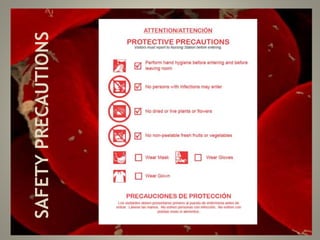
SAFETY PRECAUTIONS
Standard Precautions
 Personal protective equipment (PPE)
 Isolation Procedures
 Hand washing
 Properly activating needle safety devices
 Biohazard disposal
 Decontamination
 Sodium hypochlorite (1:10)
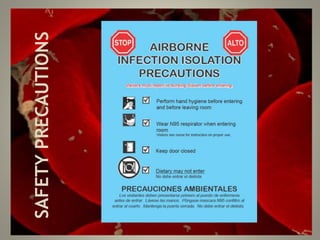
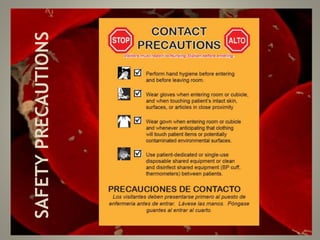
SAFETYPRECAUTIONS
SAFETYPRECAUTIONS
SAFETYPRECAUTIONS
SAFETYPRECAUTIONS
SAFETY PRECAUTIONS
Accidental Puncture
 Significant exposure potential
 Report all needlesticks
 Follow institution’s protocol for
source and employee testing
SAFETY PRECAUTIONS
Syringe-To-Tube Transfer
 Recommended procedure
 Use blood-transfer device
 Removal of stoppers not
recommended
 Direct puncture of tube with syringe
needle not recommended
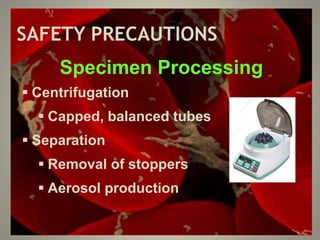
SAFETY PRECAUTIONS
Specimen Processing
 Centrifugation
 Capped, balanced tubes
 Separation
 Removal of stoppers
 Aerosol production
SAFETY PRECAUTIONS
Specimen Transport
 Primary container
 Secondary container
 Labeling
TYPES OF SPECIMENS
Whole Blood
 Consists of:
 Erythrocytes
 Leukocytes
 Platelets
 Plasma
 Use anticoagulated (unclotted)
specimen
TYPES OF SPECIMENS
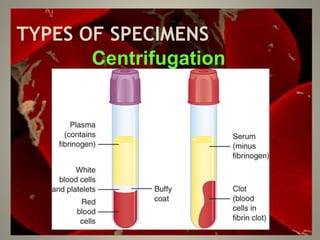
Plasma
 Liquid portion of unclotted blood
 Contains fibrinogen
 Use anticoagulated specimen
TYPES OF SPECIMENS
Serum
 Clotted blood
 Does not contain fibrinogen
 Use “clot” tube
TYPES OF SPECIMENS
Centrifugation
TYPES OF SPECIMENS
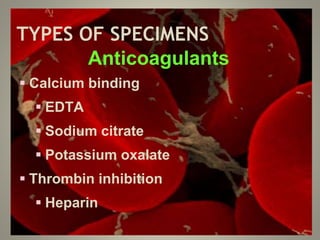
Anticoagulants
 Calcium binding
 EDTA
 Sodium citrate
 Potassium oxalate
 Thrombin inhibition
 Heparin
TYPES OF SPECIMENS
MIX ANTICOAGULATED
SPECIMENS THOROUGHLY
IMMEDIATELY AFTER
COLLECTION
TYPES OF SPECIMENS
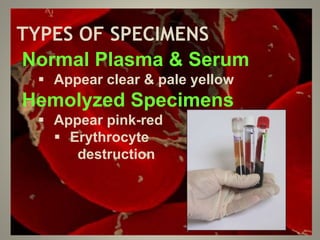
Normal Plasma & Serum
 Appear clear & pale yellow
Hemolyzed Specimens
 Appear pink-red
 Erythrocyte
destruction
TYPES OF SPECIMENS
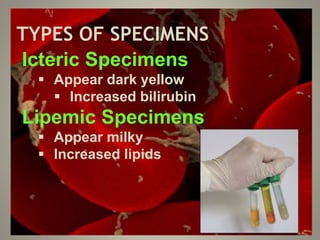
Icteric Specimens
 Appear dark yellow
 Increased bilirubin
Lipemic Specimens
 Appear milky
 Increased lipids
TYPES OF SPECIMENS
Venous Blood
 Specimen of choice
 Used to establish Normal values
Arterial Blood
 Blood gases
 Require special collection training
TYPES OF SPECIMENS
Capillary Blood
 Dermal puncture collection
 Mixture of arterial and venous blood
 Note on requisition if blood is collected by
dermal puncture

Chapter one introduction to blood collection

  • 1.
    INTRODUCTION TO BLOOD COLLECTION BloodCollection: A Short Course
  • 2.
    Learning Objectives  Statethe importance of correct blood collection techniques in managing total patient care.  List the factors that influence the integrity of a blood specimen.  Discuss safety precautions as related to blood collection.  Differentiate between whole blood, plasma, and serum.
  • 3.
    Learning Objectives  Explainthe action of anticoagulants to prevent blood coagulation.  Describe the appearance of a hemolyzed, icteric, and lipemic specimen.  Differentiate between arterial, venous, and capillary blood.  State the purpose of quality assurance in blood collection.
  • 4.
    Redesigning the Healthcare System Shifting of phlebotomy responsibility.  New skills required.
  • 5.
    Blood Collection: AShort Course Purpose  Collection of quality specimens  Instructive information  Technique  Procedures in accordance with the Clinical and Laboratory Standards Institute, (CLSI) (Standard H3-A6) and Occupational Safety & Health Administration (OSHA) guidelines
  • 6.
    Blood Collection: AShort Course Course Overview  Equipment  Site selection  Technique  Complications  Specimen handling  Phlebotomy errors  Venipuncture practice
  • 7.
    IMPORTANCE OF CORRECTSPECIMEN COLLECTION AND HANDLING QUALITY SPECIMENS = QUALITY RESULTS  Diagnosis  Treatment  Monitoring  Laboratory results constitute 70% of the objective information for health-care providers
  • 8.
    IMPORTANCE OF CORRECTSPECIMEN COLLECTION AND HANDLING Specimen Integrity  Laboratory guidelines  Never hesitate to check with laboratory  Clinical Laboratory Improvement Amendments of 1988 (CLIA, 1988)  Laboratory is responsible
  • 9.
    IMPORTANCE OF CORRECTSPECIMEN COLLECTION AND HANDLING Preanalytical Factors  56% of lab errors occur before the specimen is tested  Monitoring of specimen ordering  Patient identification  Patient communication and safety  Patient preparation  Timing of collections  Collection technique  Specimen labeling  Specimen handling and transport
  • 10.
    SAFETY PRECAUTIONS Standard Precautions Personal protective equipment (PPE)  Isolation Procedures  Hand washing  Properly activating needle safety devices  Biohazard disposal  Decontamination  Sodium hypochlorite (1:10)
  • 11.
  • 12.
  • 13.
  • 14.
  • 15.
    SAFETY PRECAUTIONS Accidental Puncture Significant exposure potential  Report all needlesticks  Follow institution’s protocol for source and employee testing
  • 16.
    SAFETY PRECAUTIONS Syringe-To-Tube Transfer Recommended procedure  Use blood-transfer device  Removal of stoppers not recommended  Direct puncture of tube with syringe needle not recommended
  • 17.
    SAFETY PRECAUTIONS Specimen Processing Centrifugation  Capped, balanced tubes  Separation  Removal of stoppers  Aerosol production
  • 18.
    SAFETY PRECAUTIONS Specimen Transport Primary container  Secondary container  Labeling
  • 19.
    TYPES OF SPECIMENS WholeBlood  Consists of:  Erythrocytes  Leukocytes  Platelets  Plasma  Use anticoagulated (unclotted) specimen
  • 20.
    TYPES OF SPECIMENS Plasma Liquid portion of unclotted blood  Contains fibrinogen  Use anticoagulated specimen
  • 21.
    TYPES OF SPECIMENS Serum Clotted blood  Does not contain fibrinogen  Use “clot” tube
  • 22.
  • 23.
    TYPES OF SPECIMENS Anticoagulants Calcium binding  EDTA  Sodium citrate  Potassium oxalate  Thrombin inhibition  Heparin
  • 24.
    TYPES OF SPECIMENS MIXANTICOAGULATED SPECIMENS THOROUGHLY IMMEDIATELY AFTER COLLECTION
  • 25.
    TYPES OF SPECIMENS NormalPlasma & Serum  Appear clear & pale yellow Hemolyzed Specimens  Appear pink-red  Erythrocyte destruction
  • 26.
    TYPES OF SPECIMENS IctericSpecimens  Appear dark yellow  Increased bilirubin Lipemic Specimens  Appear milky  Increased lipids
  • 27.
    TYPES OF SPECIMENS VenousBlood  Specimen of choice  Used to establish Normal values Arterial Blood  Blood gases  Require special collection training
  • 28.
    TYPES OF SPECIMENS CapillaryBlood  Dermal puncture collection  Mixture of arterial and venous blood  Note on requisition if blood is collected by dermal puncture