
1
PIPETTE TERMS
 Adjustment - altering the pipette so that the
dispensed volume is within the specifications.
 Aspirate - to draw up the sample.
 Blow-out - to empty the tip completely.
 Calibration check - checking the difference between
the dispensed volume and the selected volume.
 Dispense - to deliver the sample.
2
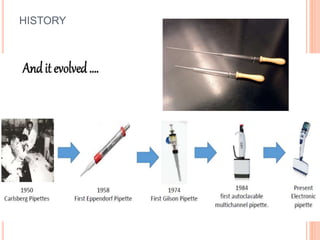
HISTORY
3
DEFINITION
Pipette (sometimes spelled pipet) is a laboratory
tool commonly used in chemistry, biology and
medicine to transport a measured volume of liquid,
often as a media dispenser.
Based on volume/capacity to dispense
 Micropipettes – dispense between 1-1000μl
 Macropippete – dispense greater volumes
4
5
TYPES
 Air Displacement Micropipettes:
 Positive Displacement Pipette:
 Volumetric Pipette:
 Pasteur Pipette:
6
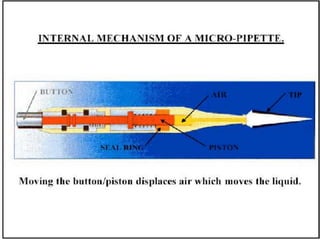
AIR DISPLACEMENT PIPETTES
 Meant for general use with aqueous solutions. In air
displacement pipettes, a certain volume of air remains
between the piston and the liquid.
 These pipettes are capable of being very precise and
accurate.
USES
 Serology
 Virology
7
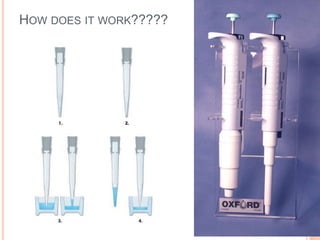
HOW DOES IT WORK?????
8
DISADV
 Since they rely on air displacement, they are subject to
inaccuracies caused by the changing environment,
particularly temperature and user technique.
 For these reasons
 equipment must be carefully maintained and
calibrated
 Training to exercise correct and consistent technique.
9
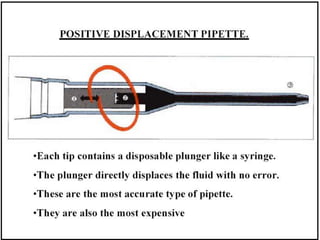
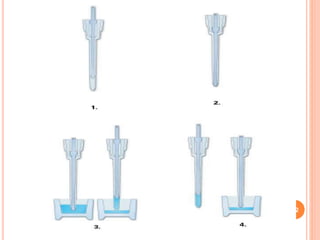
POSITIVE DISPLACEMENT PIPETTE
 Positive Displacement Pipette, is used for applications like
PCR and other DNA amplification techniques.
 These are similar to air displacement pipettes
 The micro-syringe tips used in positive displacement
pipettes are disposable.
 Helps to avoid sample-to-sample cross-contamination
(also known as sample carry-over),
 Avoids contamination due to the aerosol effect.
10
11
12
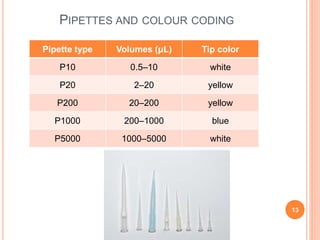
PIPETTES AND COLOUR CODING
Pipette type Volumes (μL) Tip color
P10 0.5–10 white
P20 2–20 yellow
P200 20–200 yellow
P1000 200–1000 blue
P5000 1000–5000 white
13
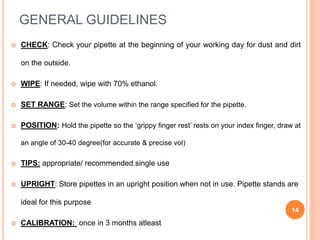
GENERAL GUIDELINES
 CHECK: Check your pipette at the beginning of your working day for dust and dirt
on the outside.
 WIPE: If needed, wipe with 70% ethanol.
 SET RANGE: Set the volume within the range specified for the pipette.
 POSITION: Hold the pipette so the ‘grippy finger rest’ rests on your index finger, draw at
an angle of 30-40 degree(for accurate & precise vol)
 TIPS: appropriate/ recommended.single use
 UPRIGHT: Store pipettes in an upright position when not in use. Pipette stands are
ideal for this purpose
 CALIBRATION: once in 3 months atleast
14
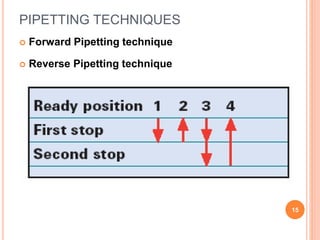
PIPETTING TECHNIQUES
15
 Forward Pipetting technique
 Reverse Pipetting technique
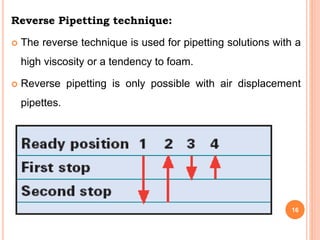
Reverse Pipetting technique:
 The reverse technique is used for pipetting solutions with a
high viscosity or a tendency to foam.
 Reverse pipetting is only possible with air displacement
pipettes.
16
FOR Nucleic acids: DNA & RNA solutions
 Pipette + tip combination: choose an air displacement
pipette and a filter tip or a positive displacement pipette
and tip.
 Technique: use the forward pipetting technique
17
PREVENTING CROSS-CONTAMINATION
Pipette-to-sample
 A contaminated pipette or contaminated tips can cause
contamination of samples.
 Prevention:
 Use sterilized tips or sterilized filter tips and if possible
autoclave the pipette.
 Change the tip after pipetting of each sample.
18
Sample-to-pipette
 Samples or aerosols from samples can enter the cone of
the pipette.
 Prevention:
 Keep the pipette vertical when pipetting in order to
prevent liquid from running into the pipette body.
 Release the push-button slowly.
 To avoid aerosol contamination, use filter tips or use a
positive displacement pipette and tips.
 Store the pipette vertically. 19
Sample-to-sample (carry-over)
 The remains of sample A can mix with next sample B
inside the tip and may cause a false test result.
 Prevention:
 Change the tip after each sample.
 If you suspect that your pipette is contaminated,
autoclave or clean your pipette
20
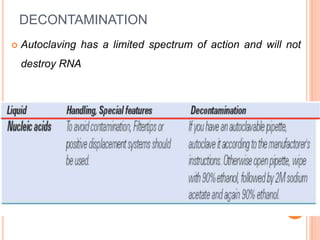
DECONTAMINATION
 Autoclaving has a limited spectrum of action and will not
destroy RNA
21
22

Pipetting techniques

  • 1.
  • 2.
    PIPETTE TERMS  Adjustment- altering the pipette so that the dispensed volume is within the specifications.  Aspirate - to draw up the sample.  Blow-out - to empty the tip completely.  Calibration check - checking the difference between the dispensed volume and the selected volume.  Dispense - to deliver the sample. 2
  • 3.
  • 4.
    DEFINITION Pipette (sometimes spelledpipet) is a laboratory tool commonly used in chemistry, biology and medicine to transport a measured volume of liquid, often as a media dispenser. Based on volume/capacity to dispense  Micropipettes – dispense between 1-1000μl  Macropippete – dispense greater volumes 4
  • 5.
  • 6.
    TYPES  Air DisplacementMicropipettes:  Positive Displacement Pipette:  Volumetric Pipette:  Pasteur Pipette: 6
  • 7.
    AIR DISPLACEMENT PIPETTES Meant for general use with aqueous solutions. In air displacement pipettes, a certain volume of air remains between the piston and the liquid.  These pipettes are capable of being very precise and accurate. USES  Serology  Virology 7
  • 8.
    HOW DOES ITWORK????? 8
  • 9.
    DISADV  Since theyrely on air displacement, they are subject to inaccuracies caused by the changing environment, particularly temperature and user technique.  For these reasons  equipment must be carefully maintained and calibrated  Training to exercise correct and consistent technique. 9
  • 10.
    POSITIVE DISPLACEMENT PIPETTE Positive Displacement Pipette, is used for applications like PCR and other DNA amplification techniques.  These are similar to air displacement pipettes  The micro-syringe tips used in positive displacement pipettes are disposable.  Helps to avoid sample-to-sample cross-contamination (also known as sample carry-over),  Avoids contamination due to the aerosol effect. 10
  • 11.
  • 12.
  • 13.
    PIPETTES AND COLOURCODING Pipette type Volumes (μL) Tip color P10 0.5–10 white P20 2–20 yellow P200 20–200 yellow P1000 200–1000 blue P5000 1000–5000 white 13
  • 14.
    GENERAL GUIDELINES  CHECK:Check your pipette at the beginning of your working day for dust and dirt on the outside.  WIPE: If needed, wipe with 70% ethanol.  SET RANGE: Set the volume within the range specified for the pipette.  POSITION: Hold the pipette so the ‘grippy finger rest’ rests on your index finger, draw at an angle of 30-40 degree(for accurate & precise vol)  TIPS: appropriate/ recommended.single use  UPRIGHT: Store pipettes in an upright position when not in use. Pipette stands are ideal for this purpose  CALIBRATION: once in 3 months atleast 14
  • 15.
    PIPETTING TECHNIQUES 15  ForwardPipetting technique  Reverse Pipetting technique
  • 16.
    Reverse Pipetting technique: The reverse technique is used for pipetting solutions with a high viscosity or a tendency to foam.  Reverse pipetting is only possible with air displacement pipettes. 16
  • 17.
    FOR Nucleic acids:DNA & RNA solutions  Pipette + tip combination: choose an air displacement pipette and a filter tip or a positive displacement pipette and tip.  Technique: use the forward pipetting technique 17
  • 18.
    PREVENTING CROSS-CONTAMINATION Pipette-to-sample  Acontaminated pipette or contaminated tips can cause contamination of samples.  Prevention:  Use sterilized tips or sterilized filter tips and if possible autoclave the pipette.  Change the tip after pipetting of each sample. 18
  • 19.
    Sample-to-pipette  Samples oraerosols from samples can enter the cone of the pipette.  Prevention:  Keep the pipette vertical when pipetting in order to prevent liquid from running into the pipette body.  Release the push-button slowly.  To avoid aerosol contamination, use filter tips or use a positive displacement pipette and tips.  Store the pipette vertically. 19
  • 20.
    Sample-to-sample (carry-over)  Theremains of sample A can mix with next sample B inside the tip and may cause a false test result.  Prevention:  Change the tip after each sample.  If you suspect that your pipette is contaminated, autoclave or clean your pipette 20
  • 21.
    DECONTAMINATION  Autoclaving hasa limited spectrum of action and will not destroy RNA 21
  • 22.