Collection of Blood
Samples
Prepared by Madam Emmanuela
Learning Objectives
By the end of this session, you are expected to be
able to:
Define phlebotomy
Identify the upper limb sites for venipuncture
Identify different instruments for common
laboratory procedure’s blood collection
Describe the procedure for collection of blood
sample
Describe proper disposal of sharps and other
infectious materials after the procedure
 Explain the handling techniques of the specimen
after collection
Definition of Terms
Phlebotomy:
Is the procedure of opening the blood vessel and drawing
blood from it.
 It comes from two Greek words:
Phlebo = veins
tomy = cutting
Blood is commonly collected from:
i. The veins (venous samples)
ii. Capillaries (capillary samples by a finger prick)
iii. Arteries (arterial samples; not routinely done
except for specialized investigations)
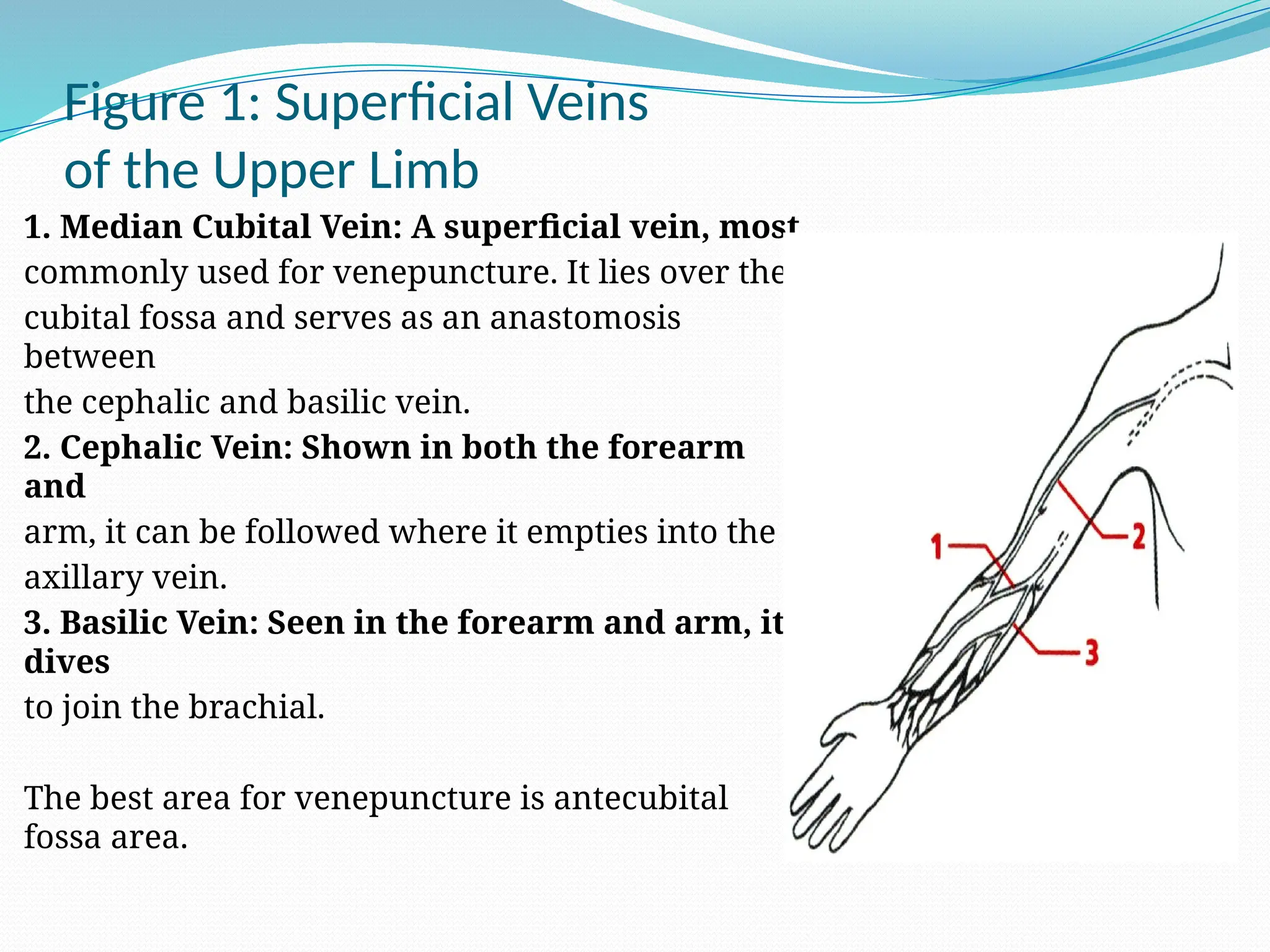
Figure 1: Superficial Veins
of the Upper Limb
1. Median Cubital Vein: A superficial vein, most
commonly used for venepuncture. It lies over the
cubital fossa and serves as an anastomosis
between
the cephalic and basilic vein.
2. Cephalic Vein: Shown in both the forearm
and
arm, it can be followed where it empties into the
axillary vein.
3. Basilic Vein: Seen in the forearm and arm, it
dives
to join the brachial.
The best area for venepuncture is antecubital
fossa area.
Preparations for Taking a Venous Blood Sample
Health worker preparation
It is important for the health worker to be adequately prepared
before clients are called in the phlebotomy room.
This includes the assembly of all equipment and supplies necessary
for the procedure
 Educating the patient.
It is important to put the patient at ease when drawing blood.
The providers should:
 Explain that the supplies are sterile and have never been used on
another person
 Describe the procedure and how much time is needed for the
results to be available
 Assure them that the procedure is safe and results of the test are
confidential
Different instruments for common laboratory procedure’s blood
collection
Specimen containers
 Specific container depends on which test will be
done
 Correct specimen bottle can be identified by the
colour of its top or the label they carry
 Vacutainer tubes identified by the label on it
Tourniquet
Needles and syringes
Small bore needles
Cont………………………………..
Gloves
 Aprons or laboratory coats
 Alcohol swabs
 Cotton Gauze/Wool
 Hand towels (Preferably disposable)
 Waste disposal containers
Cont……………………………..
Sharps bin (For disposal of sharps)
 Infectious waste bin (For disposal of non sharp
infectious materials)
 Non infectious bean (For disposal of non
infectious materials
Marker pen for marking or labeling of
specimen and forms
 Disinfectant (e.g. Jik, Clorox)
 Antiseptic for hand washing
Bandages or plasters
Collection of Blood Sample from Patients:
Safety Precautions:
Always follow standard safety precautions when drawing
blood
Consider every person (patient or staff) as potentially
infectious and susceptible to infection
 Wash hands before and after taking a sample from each
patient
Put on new gloves before collecting blood
If blood is spilled, mop and disinfect area immediately
Keep work area organized, clean, and disinfected
Discard all used items in appropriate containers
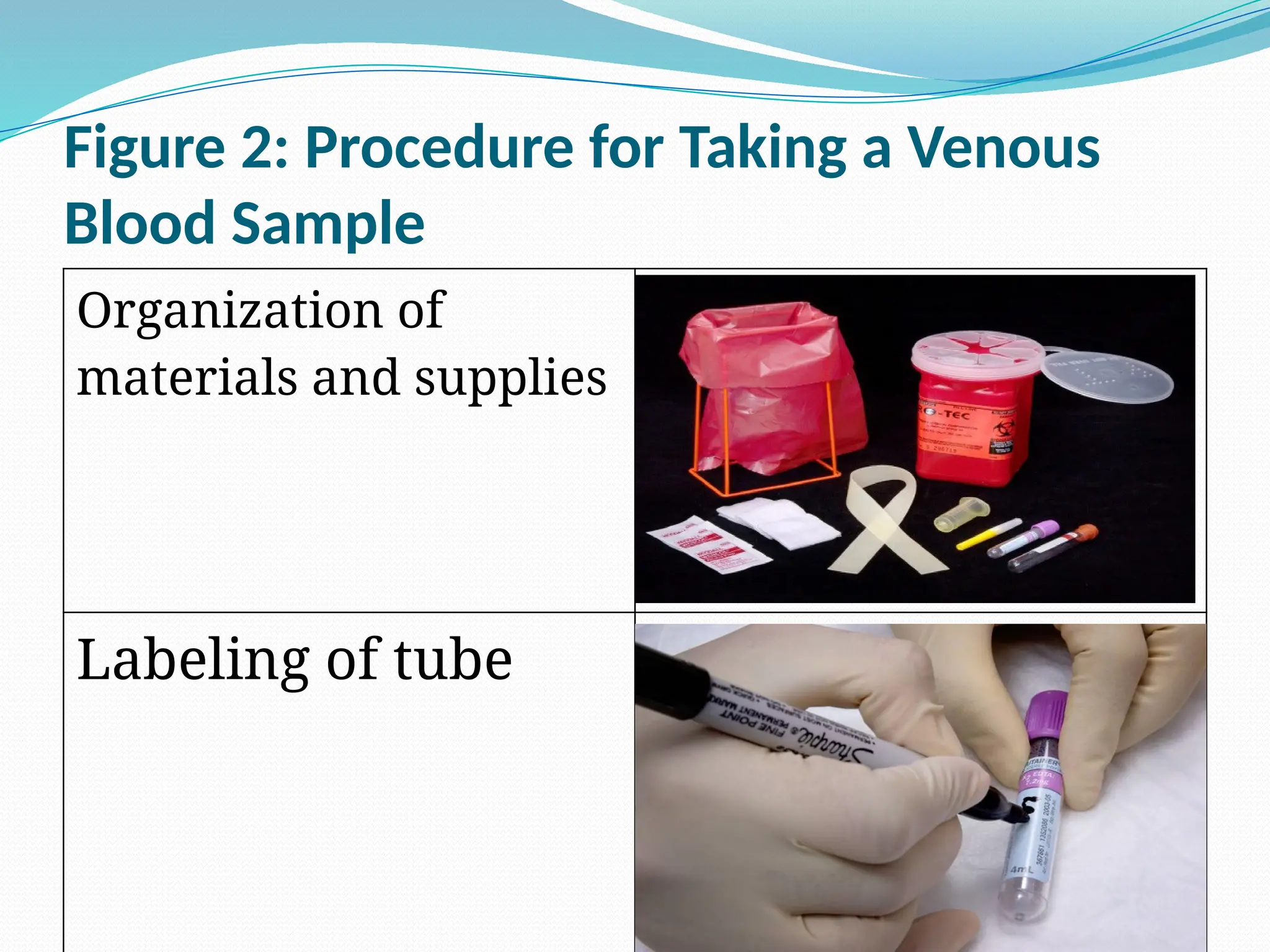
Figure 2: Procedure for Taking a Venous
Blood Sample
Organization of
materials and supplies
Labeling of tube
Cont………………………..
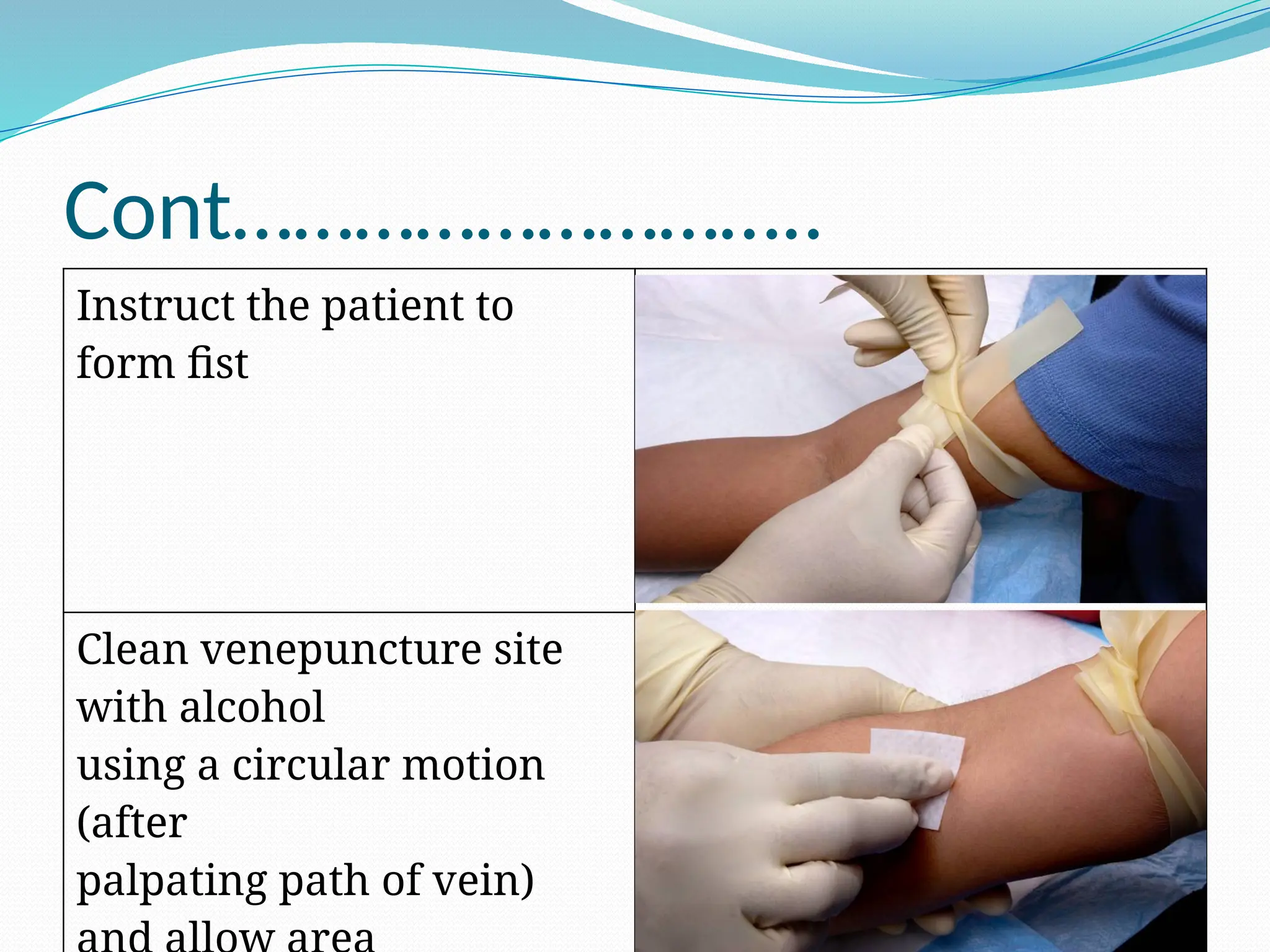
Instruct the patient to
form fist
Clean venepuncture site
with alcohol
using a circular motion
(after
palpating path of vein)
Cont…………………………….
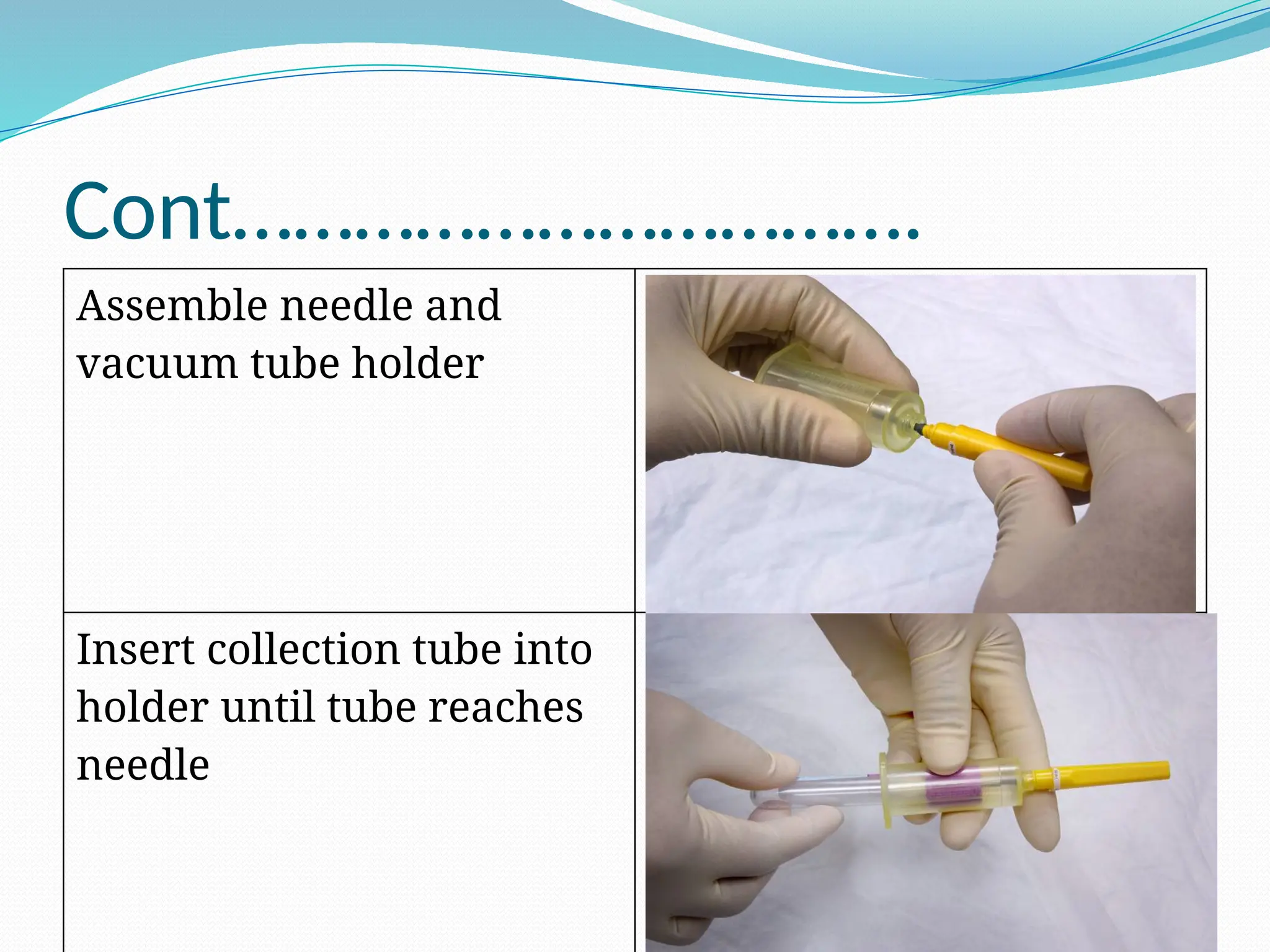
Assemble needle and
vacuum tube holder
Insert collection tube into
holder until tube reaches
needle
Cont…………………………..
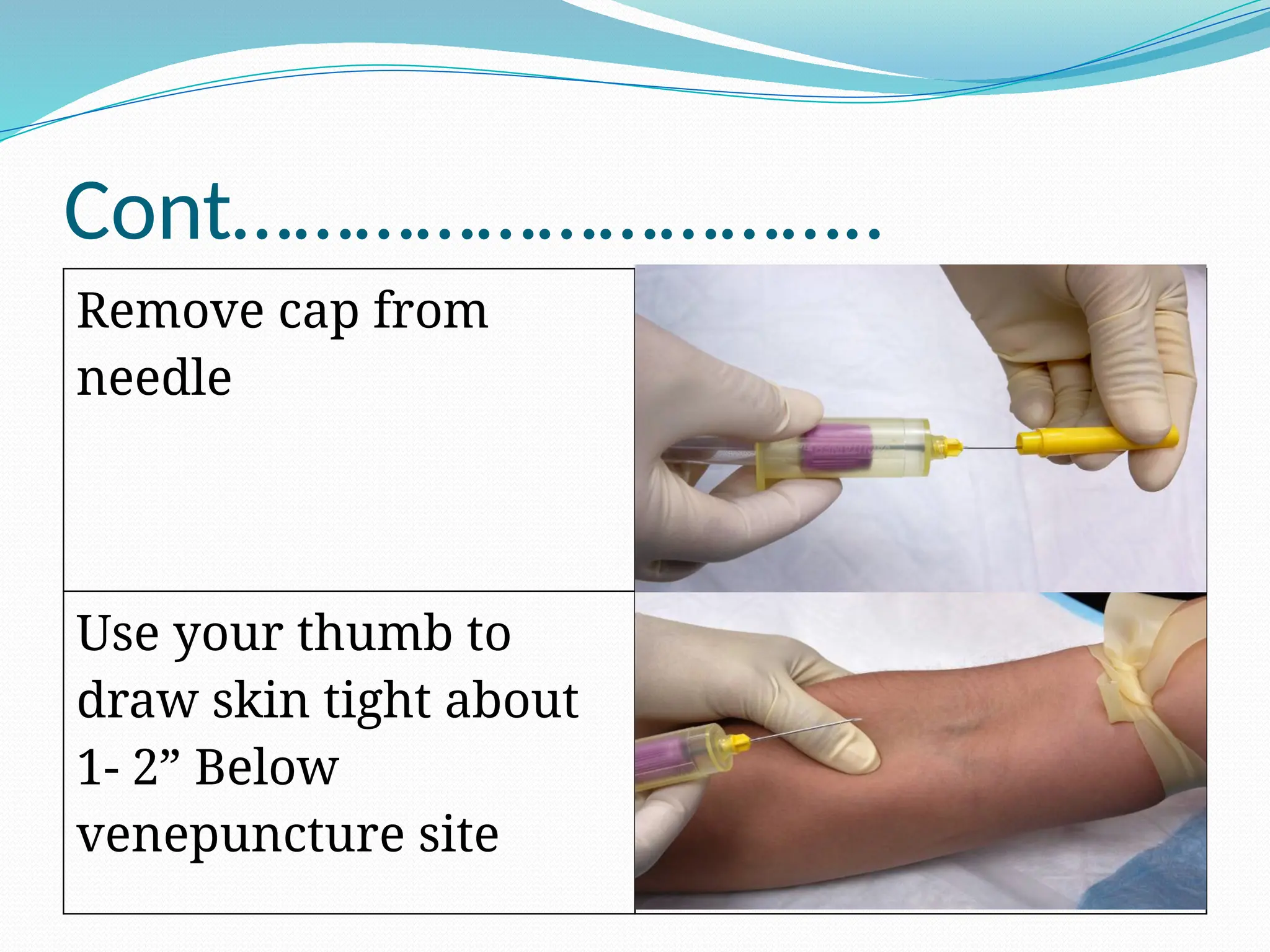
Remove cap from
needle
Use your thumb to
draw skin tight about
1- 2” Below
venepuncture site
Cont……………………..
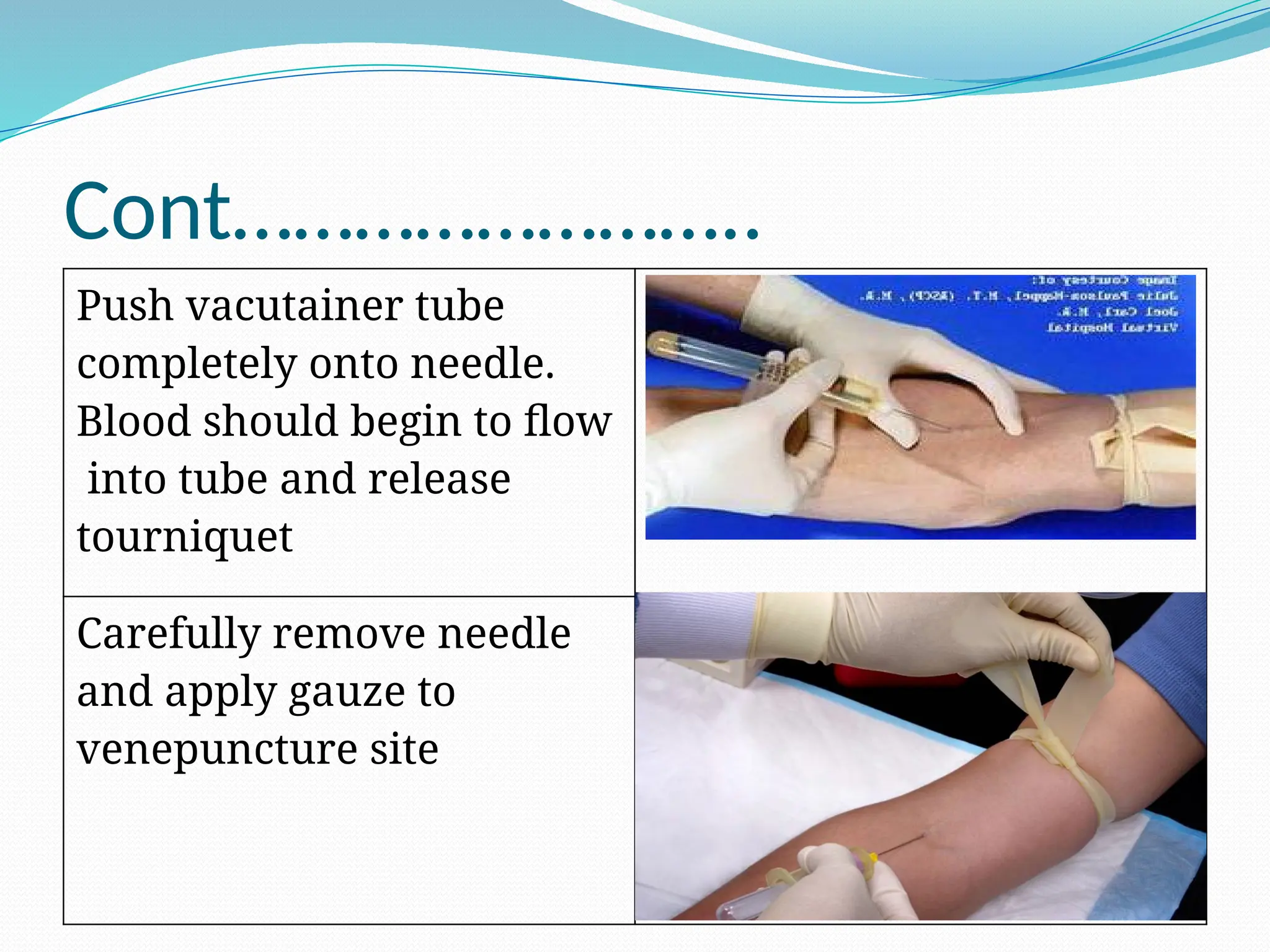
Push vacutainer tube
completely onto needle.
Blood should begin to flow
into tube and release
tourniquet
Carefully remove needle
and apply gauze to
venepuncture site
Cont…………………………………..
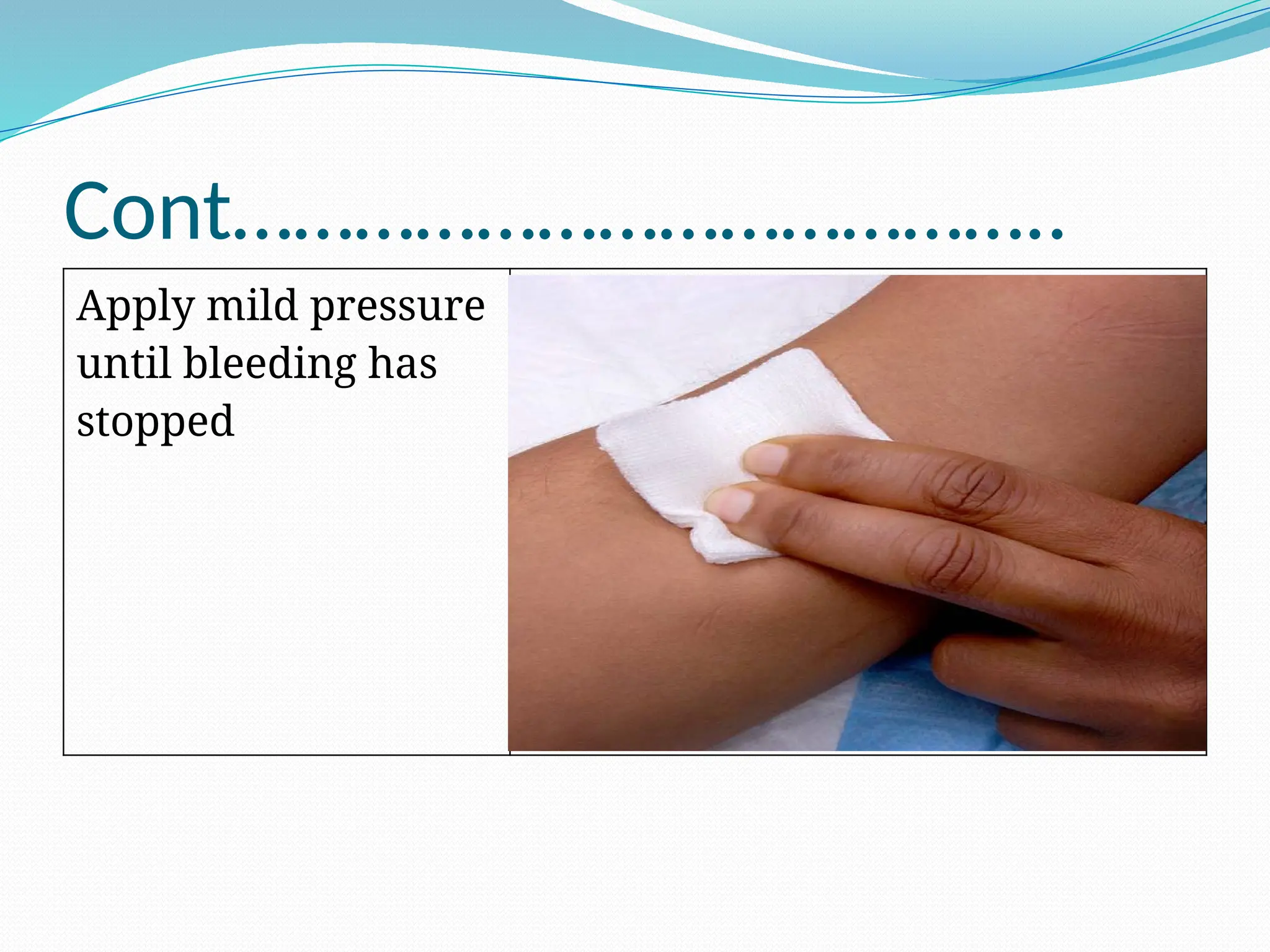
Apply mild pressure
until bleeding has
stopped
Proper Handling of Specimen:
Specimens must be properly handled from point
of collection to delivery in the laboratory
Results of laboratory investigations are only as
good as the sample received by the laboratory.
Use appropriate collection containers for specific
testing needs
Store specimens upright, in racks at the
appropriate temperature
Note the time of taking the specimens to ensure
processing in the correct timeframe
Transporting the Specimen:
Check samples and forms before they leave
the phlebotomy area
Before the samples leave the clinic they
should be checked for errors:
Are sample tubes labelled correctly?
 Are the forms completed correctly?
Is there a form for every sample?
Is there a sample for every form?
Does the information on the form match
that of the corresponding sample?
 This check is critical because once a sample
leaves clinic it may be impossible to correct
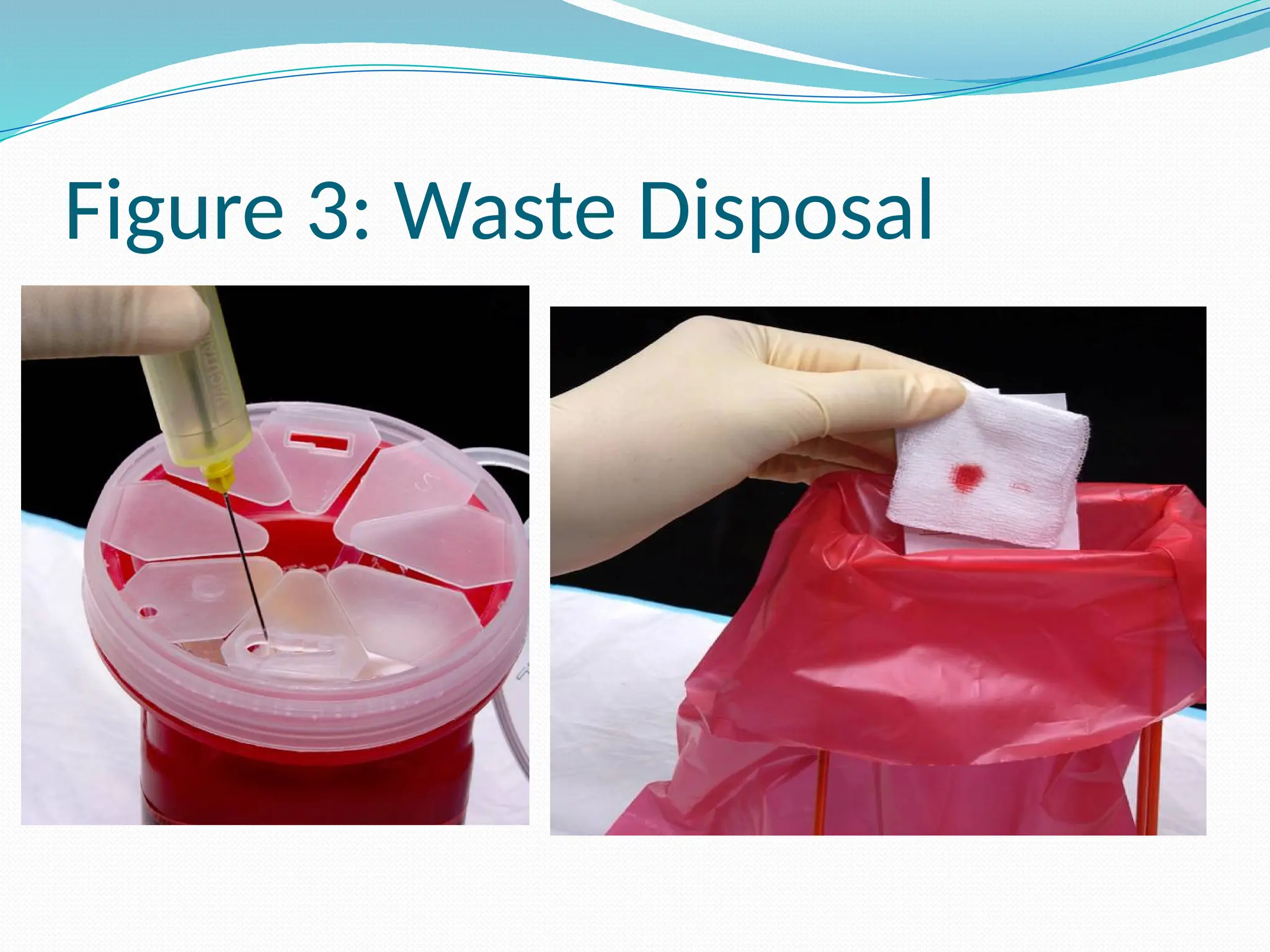
Proper Disposal of Used Materials
Proper waste disposal is important in order to
prevent potential harm and transmission of
diseases with a contaminated sharp object.
It is important to always dispose sharps in a
puncture-resistant container and other
infectious materials in an appropriate container
with a non-leaking plastic bag inside.
Sharp and wet materials should be disposed
separately
Figure 3: Waste Disposal
Key Points:
Taking a blood sample from a patient is a
procedure that requires the preparation of
relevant materials and supplies before it can be
performed.
Explaining the procedure to the patient can put
them at ease
Always follow standard safety precautions when
collecting blood
Proper waste disposal is important to prevent the
spread of infection to both the patient and
healthcare worker and the community.
Proper sample handling is essential for getting
quality results
Evaluation
 What is phlebotomy?
 What is the best area of the arm for collecting
blood?
 What are the procedures involved in the
collection of blood sample?
 What are the types of waste disposal containers
used during phlebotomy?
Reference

Becker F.J & Silverton R.E (1985). Introduction to Medical Laboratory
Technology. (6th ed.) London: Butterworth.
 Carter, J. & Iema, O. (1994).Practical Laboratory Manual for Health
Centres In Eastern Africa. Nairobi, Kenya: AMREF.
 CDC (2009). DPDx, Laboratory Identification of Parasites of Public
Health Concern. Atlanta, Georgia: Centers for Disease Control.
Retrieved (date unknown) at:
http://www.dpd.cdc.gov/dpdx/HTML/Image_Library.htm/
 Cheesbrough M.C. (1987). Medical Laboratory Manual for Tropical
Countries, Vol I. (2nd ed). London: Butterworth, Heinemann Ltd.
 Cheesbrough M.C. (2000). District Laboratory Practice in Tropical
Countries –Part 2. Tropical Health Technology. Cambridge,
UK:Cambirige University Press.
 Cheesbrough, M.C. (1998). District Laboratory Practice in Tropical
Countries – Part 1. Tropical Health Technology. Cambridge: Tropical
Health Technology.
BLOOD SMEAR PREPARATION
DEFINITION
Blood smears
Are simple procedures to perform aiming at
demonstrating and acquiring information on blood cells,
qualitatively and quantitatively.
Quantitative importance enables the numbering of blood
cells while the qualitative function is to demonstrate and
identify the cell morphologies, including types of
leukocytes, erythrocytes, monocytes, and platelets.
 Blood smears have also been used in detecting
hematological disorders i.e. by observing the morphologies
and quantifying the cell numbers.
A well-prepared blood smear is important to
produce good results on analysis after doing a
Giemsa stain, in identifying blood cells or/and
demonstrating the presence of parasites in a
sample. Below, we discuss the procedures for
preparing both thin and thick smear for Giemsa
staining technique, Importance, and
applications of blood smears, in detail.
Blood smears are mostly done for Differential
Leukocyte count (DLC)i.e it quantifies the white
blood cells and specifies the morphologies of
each leukocyte. Normally, peripheral blood is
used to prepare smears and depending on the
function of the smear, two types of smear can be
prepared.
TYPES OF BLOOD SMEAR
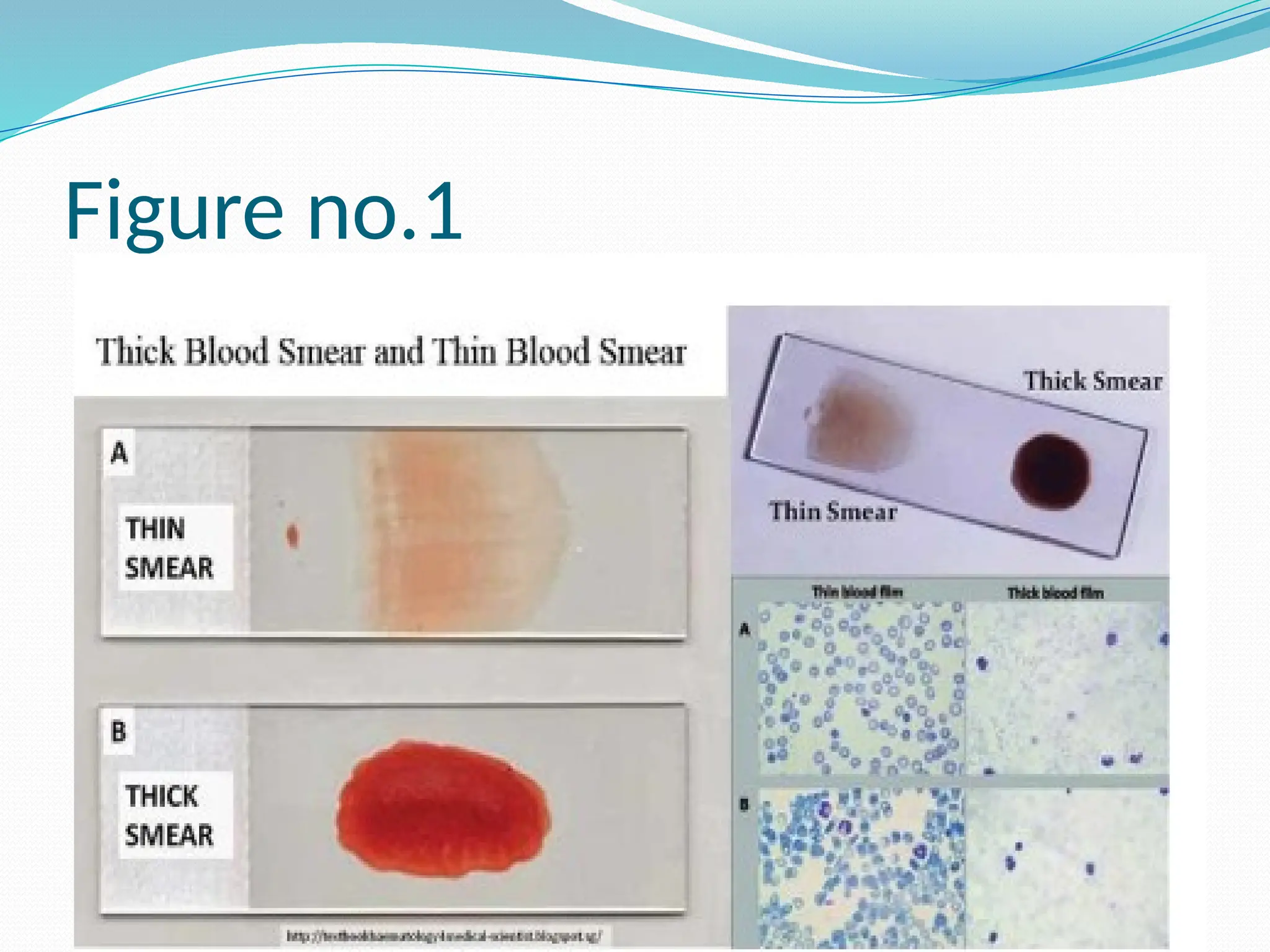
a. Thin blood smear – for species identification,
demonstration and differentiation of leukocytes.
b. Thick blood smear – for diagnosis of blood
protozoan parasites (Malaria) and blood
abnormalities e.g. anemia.
NOTE: Dry smears are the best for staining, so
ensure your smear is completely dry before
applying a staining technique.
Figure no.1
Objectives
To prepare a thin blood smear
To prepare a thick blood smear
Instruments
Sterile syringe & needle
EDTA vials
70% isopropyl alcohol
An applicator stick
Microscopic glass slides
Equipments
Microscope
Tourniquet
Thick Blood Smear Preparation
Specimen: Venous blood sample
Principle
Thick blood smears require larger volumes of
blood than the thin blood smears. this allows
them to be used for the detection of blood
parasites in the blood samples. A thick blood
smear is made by spreading a large blood drop
in a small area of about 1 cm which provides a
better opportunity to detect various parasitic
forms against a more transparent background.
Procedure
 Collect blood sample by venipuncture and put in a
clean test tube
 Using a capillary tube collects blood from the tube
and put two large drops at the center of a sterile
microscopic slide.
 Holding the slide between your thumb and index
finger, gently shake the slide to spread the blood
about 10mm in diameter.
 Air-dry the smear for 20-30 minutes till its
completely dry then apply the appropriate
Romanowski stain.
Thin Blood Smear Preparation
Specimen: Venous Blood sample
Principle
The Thin Blood smear is prepared by making a drop
of well-mixed venous blood, 2mm in diameter at the
center of a sterilized microscopic glass slide. Some
borders are left around the smear for easy counting
and differentiating of the cells. A second glass slide
is used as a spreader, streaking the blood into a thin
film across the glass slide. This preparation is
allowed to dry and then fixed with an appropriate
Romanowski stain, depending on your objective.
Procedure
 Using a sterile pricking needle, make a prick on the index
finger
 apply some pressure on the finger and put two drops of blood
at the edge, leaving a margin on a sterile Microscopic slide.
 Place the edge of the sterile microscopic slide over the drops
of blood, at an angle of 30-450
, and make two streaks rapidly
but smoothly forward from the blood sample and spread it.
This will leave a thin film of blood resembling a tongue-
shape.
 Allow the slide to air dry and stain with an appropriate
staining technique.
Applications of blood smears
 For classification of blood disorders including
types of anemia, bleeding disorders
 To characterize blood-related disorders such as
leukemia's
 To detect immune-mediated inflammatory
disorders and infections
 To detect protozoa parasites: Plasmodium
falciparum, Mycoplasma spp (Mycoplasma
haemofelis and Mycoplasms haemominutus and
Bacteria such as Bartonella spp.
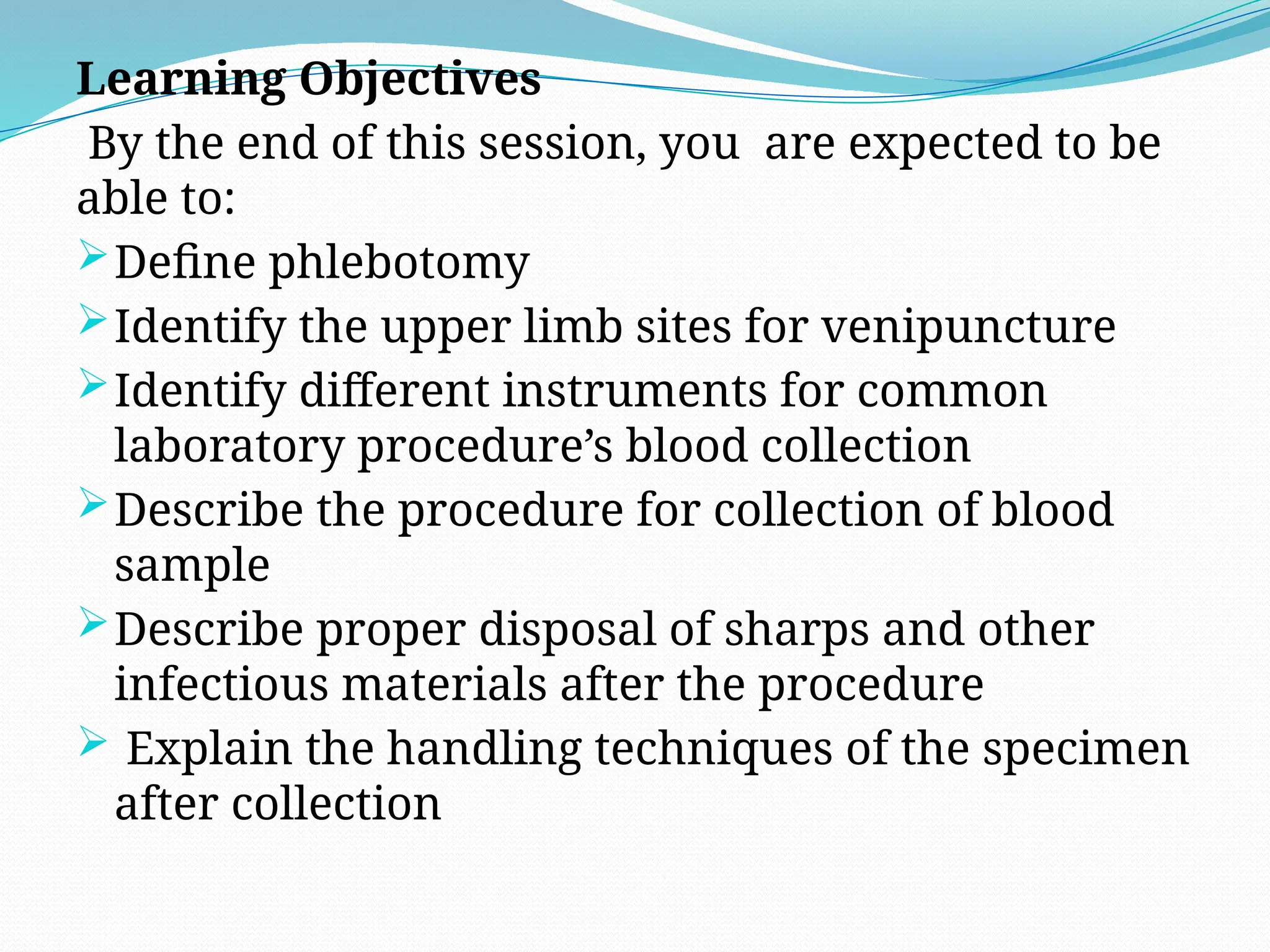
Advantages
 It is a rapid simple technique which requires basic
equipment
 It can be performed with very small volumes of blood.
Disadvantages
 Use clean slides to avoid the formation of grease spots
(holes in the smear).
 Rapid air drying of smear to preserve cell
morphologies
 Regular use of the technique to produce useful blood
smears
Best of luck

SESSION 3.pptx stunent management notice

  • 1.
  • 2.
    Learning Objectives By theend of this session, you are expected to be able to: Define phlebotomy Identify the upper limb sites for venipuncture Identify different instruments for common laboratory procedure’s blood collection Describe the procedure for collection of blood sample Describe proper disposal of sharps and other infectious materials after the procedure  Explain the handling techniques of the specimen after collection
  • 3.
    Definition of Terms Phlebotomy: Isthe procedure of opening the blood vessel and drawing blood from it.  It comes from two Greek words: Phlebo = veins tomy = cutting Blood is commonly collected from: i. The veins (venous samples) ii. Capillaries (capillary samples by a finger prick) iii. Arteries (arterial samples; not routinely done except for specialized investigations)
  • 4.
    Figure 1: SuperficialVeins of the Upper Limb 1. Median Cubital Vein: A superficial vein, most commonly used for venepuncture. It lies over the cubital fossa and serves as an anastomosis between the cephalic and basilic vein. 2. Cephalic Vein: Shown in both the forearm and arm, it can be followed where it empties into the axillary vein. 3. Basilic Vein: Seen in the forearm and arm, it dives to join the brachial. The best area for venepuncture is antecubital fossa area.
  • 5.
    Preparations for Takinga Venous Blood Sample Health worker preparation It is important for the health worker to be adequately prepared before clients are called in the phlebotomy room. This includes the assembly of all equipment and supplies necessary for the procedure  Educating the patient. It is important to put the patient at ease when drawing blood. The providers should:  Explain that the supplies are sterile and have never been used on another person  Describe the procedure and how much time is needed for the results to be available  Assure them that the procedure is safe and results of the test are confidential
  • 6.
    Different instruments forcommon laboratory procedure’s blood collection Specimen containers  Specific container depends on which test will be done  Correct specimen bottle can be identified by the colour of its top or the label they carry  Vacutainer tubes identified by the label on it Tourniquet Needles and syringes Small bore needles
  • 7.
    Cont……………………………….. Gloves  Aprons orlaboratory coats  Alcohol swabs  Cotton Gauze/Wool  Hand towels (Preferably disposable)  Waste disposal containers
  • 8.
    Cont…………………………….. Sharps bin (Fordisposal of sharps)  Infectious waste bin (For disposal of non sharp infectious materials)  Non infectious bean (For disposal of non infectious materials Marker pen for marking or labeling of specimen and forms  Disinfectant (e.g. Jik, Clorox)  Antiseptic for hand washing Bandages or plasters
  • 9.
    Collection of BloodSample from Patients: Safety Precautions: Always follow standard safety precautions when drawing blood Consider every person (patient or staff) as potentially infectious and susceptible to infection  Wash hands before and after taking a sample from each patient Put on new gloves before collecting blood If blood is spilled, mop and disinfect area immediately Keep work area organized, clean, and disinfected Discard all used items in appropriate containers
  • 10.
    Figure 2: Procedurefor Taking a Venous Blood Sample Organization of materials and supplies Labeling of tube
  • 11.
    Cont……………………….. Instruct the patientto form fist Clean venepuncture site with alcohol using a circular motion (after palpating path of vein)
  • 12.
    Cont……………………………. Assemble needle and vacuumtube holder Insert collection tube into holder until tube reaches needle
  • 13.
    Cont………………………….. Remove cap from needle Useyour thumb to draw skin tight about 1- 2” Below venepuncture site
  • 14.
    Cont…………………….. Push vacutainer tube completelyonto needle. Blood should begin to flow into tube and release tourniquet Carefully remove needle and apply gauze to venepuncture site
  • 15.
  • 16.
    Proper Handling ofSpecimen: Specimens must be properly handled from point of collection to delivery in the laboratory Results of laboratory investigations are only as good as the sample received by the laboratory. Use appropriate collection containers for specific testing needs Store specimens upright, in racks at the appropriate temperature Note the time of taking the specimens to ensure processing in the correct timeframe
  • 17.
    Transporting the Specimen: Checksamples and forms before they leave the phlebotomy area Before the samples leave the clinic they should be checked for errors: Are sample tubes labelled correctly?  Are the forms completed correctly? Is there a form for every sample? Is there a sample for every form? Does the information on the form match that of the corresponding sample?  This check is critical because once a sample leaves clinic it may be impossible to correct
  • 18.
    Proper Disposal ofUsed Materials Proper waste disposal is important in order to prevent potential harm and transmission of diseases with a contaminated sharp object. It is important to always dispose sharps in a puncture-resistant container and other infectious materials in an appropriate container with a non-leaking plastic bag inside. Sharp and wet materials should be disposed separately
  • 19.
  • 20.
    Key Points: Taking ablood sample from a patient is a procedure that requires the preparation of relevant materials and supplies before it can be performed. Explaining the procedure to the patient can put them at ease Always follow standard safety precautions when collecting blood Proper waste disposal is important to prevent the spread of infection to both the patient and healthcare worker and the community. Proper sample handling is essential for getting quality results
  • 21.
    Evaluation  What isphlebotomy?  What is the best area of the arm for collecting blood?  What are the procedures involved in the collection of blood sample?  What are the types of waste disposal containers used during phlebotomy?
  • 22.
    Reference  Becker F.J &Silverton R.E (1985). Introduction to Medical Laboratory Technology. (6th ed.) London: Butterworth.  Carter, J. & Iema, O. (1994).Practical Laboratory Manual for Health Centres In Eastern Africa. Nairobi, Kenya: AMREF.  CDC (2009). DPDx, Laboratory Identification of Parasites of Public Health Concern. Atlanta, Georgia: Centers for Disease Control. Retrieved (date unknown) at: http://www.dpd.cdc.gov/dpdx/HTML/Image_Library.htm/  Cheesbrough M.C. (1987). Medical Laboratory Manual for Tropical Countries, Vol I. (2nd ed). London: Butterworth, Heinemann Ltd.  Cheesbrough M.C. (2000). District Laboratory Practice in Tropical Countries –Part 2. Tropical Health Technology. Cambridge, UK:Cambirige University Press.  Cheesbrough, M.C. (1998). District Laboratory Practice in Tropical Countries – Part 1. Tropical Health Technology. Cambridge: Tropical Health Technology.
  • 23.
  • 24.
    DEFINITION Blood smears Are simpleprocedures to perform aiming at demonstrating and acquiring information on blood cells, qualitatively and quantitatively. Quantitative importance enables the numbering of blood cells while the qualitative function is to demonstrate and identify the cell morphologies, including types of leukocytes, erythrocytes, monocytes, and platelets.  Blood smears have also been used in detecting hematological disorders i.e. by observing the morphologies and quantifying the cell numbers.
  • 25.
    A well-prepared bloodsmear is important to produce good results on analysis after doing a Giemsa stain, in identifying blood cells or/and demonstrating the presence of parasites in a sample. Below, we discuss the procedures for preparing both thin and thick smear for Giemsa staining technique, Importance, and applications of blood smears, in detail. Blood smears are mostly done for Differential Leukocyte count (DLC)i.e it quantifies the white blood cells and specifies the morphologies of each leukocyte. Normally, peripheral blood is used to prepare smears and depending on the function of the smear, two types of smear can be prepared.
  • 26.
    TYPES OF BLOODSMEAR a. Thin blood smear – for species identification, demonstration and differentiation of leukocytes. b. Thick blood smear – for diagnosis of blood protozoan parasites (Malaria) and blood abnormalities e.g. anemia. NOTE: Dry smears are the best for staining, so ensure your smear is completely dry before applying a staining technique.
  • 27.
  • 28.
    Objectives To prepare athin blood smear To prepare a thick blood smear Instruments Sterile syringe & needle EDTA vials 70% isopropyl alcohol An applicator stick Microscopic glass slides
  • 29.
    Equipments Microscope Tourniquet Thick Blood SmearPreparation Specimen: Venous blood sample
  • 30.
    Principle Thick blood smearsrequire larger volumes of blood than the thin blood smears. this allows them to be used for the detection of blood parasites in the blood samples. A thick blood smear is made by spreading a large blood drop in a small area of about 1 cm which provides a better opportunity to detect various parasitic forms against a more transparent background.
  • 31.
    Procedure  Collect bloodsample by venipuncture and put in a clean test tube  Using a capillary tube collects blood from the tube and put two large drops at the center of a sterile microscopic slide.  Holding the slide between your thumb and index finger, gently shake the slide to spread the blood about 10mm in diameter.  Air-dry the smear for 20-30 minutes till its completely dry then apply the appropriate Romanowski stain.
  • 32.
    Thin Blood SmearPreparation Specimen: Venous Blood sample Principle The Thin Blood smear is prepared by making a drop of well-mixed venous blood, 2mm in diameter at the center of a sterilized microscopic glass slide. Some borders are left around the smear for easy counting and differentiating of the cells. A second glass slide is used as a spreader, streaking the blood into a thin film across the glass slide. This preparation is allowed to dry and then fixed with an appropriate Romanowski stain, depending on your objective.
  • 33.
    Procedure  Using asterile pricking needle, make a prick on the index finger  apply some pressure on the finger and put two drops of blood at the edge, leaving a margin on a sterile Microscopic slide.  Place the edge of the sterile microscopic slide over the drops of blood, at an angle of 30-450 , and make two streaks rapidly but smoothly forward from the blood sample and spread it. This will leave a thin film of blood resembling a tongue- shape.  Allow the slide to air dry and stain with an appropriate staining technique.
  • 34.
    Applications of bloodsmears  For classification of blood disorders including types of anemia, bleeding disorders  To characterize blood-related disorders such as leukemia's  To detect immune-mediated inflammatory disorders and infections  To detect protozoa parasites: Plasmodium falciparum, Mycoplasma spp (Mycoplasma haemofelis and Mycoplasms haemominutus and Bacteria such as Bartonella spp.
  • 35.
    Advantages  It isa rapid simple technique which requires basic equipment  It can be performed with very small volumes of blood. Disadvantages  Use clean slides to avoid the formation of grease spots (holes in the smear).  Rapid air drying of smear to preserve cell morphologies  Regular use of the technique to produce useful blood smears
  • 36.