NATCEP Day Thirty Three
Objectives
 Define depression
 Identify signs and symptoms
 Describe possible causes
 Identifies the nurse aide’s role and
responsibility in caring for the resident
with depression
 Possible nurse aide interventions
Definition
 An emotional disorder that involves
the body, mood, and thoughts. The
person loses interest in daily
activities.
 Most commonly overlooked disorder in
the elderly
 Misdiagnosised as a cognitive disorder
 Can mimic physical illness
Signs & Symptoms
 Sadness
 Inactivity
 Difficulty thinking
 Problems concentrating
 Feelings of despair
 Problems sleeping
 Changes in appetite
 Fatigue
 Agitation
 Withdrawn
 Thoughts of death or suicide
 Pain
 Irritability
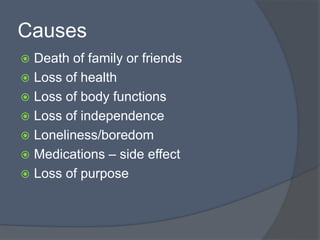
Causes
 Death of family or friends
 Loss of health
 Loss of body functions
 Loss of independence
 Loneliness/boredom
 Medications – side effect
 Loss of purpose
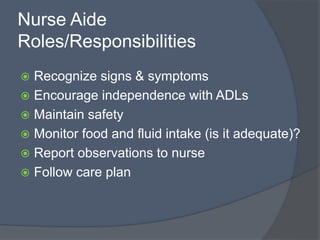
Nurse Aide
Roles/Responsibilities
 Recognize signs & symptoms
 Encourage independence with ADLs
 Maintain safety
 Monitor food and fluid intake (is it adequate)?
 Report observations to nurse
 Follow care plan
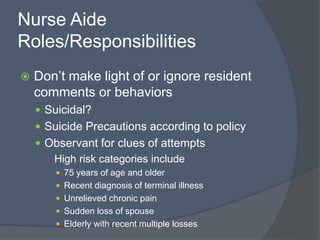
Nurse Aide
Roles/Responsibilities
 Don’t make light of or ignore resident
comments or behaviors
 Suicidal?
 Suicide Precautions according to policy
 Observant for clues of attempts
○ High risk categories include
 75 years of age and older
 Recent diagnosis of terminal illness
 Unrelieved chronic pain
 Sudden loss of spouse
 Elderly with recent multiple losses
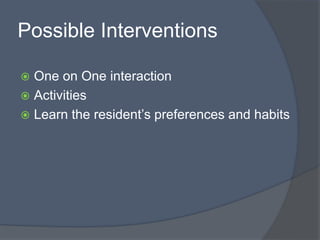
Possible Interventions
 One on One interaction
 Activities
 Learn the resident’s preferences and habits
NATCEP Day Thirty Three
Objectives
 Identify possible causes of confusion
 Identify symptoms that indicate a resident
may be confused
 Discuss implications of confusion for the
resident
 Identify ways in which some of the causes
of confusion may be minimized
 Identify behaviors hat may be seen
 Describe appropriate therapeutic
interventions
Possible Causes of
Confusion Medical issues
 Chronic illnesses
 Surgery & injury
 Degenerative brain diseases – Alzheimers,
dementia, arteriosclerosis
 Poor nutrition
 Poor fluid intake
 Medication
 Reaction
 Combo of meds
 Social Isolation
 Hearing & Vision Loss
 Changes in the usual environment
Symptoms of Confusion
 Does not know self or others
 Talks incoherently
 Forgetful
 Does not pay attention
 Does not understand when someone else
is speaking
 Sleep disorders
 Hallucinates – visual or auditory
 Hostile/combative
 SUNDOWNING
Implications
 The resident may be
 Frightened, unhappy, bewildered or angry
 Unaware of environment – doesn’t
recognize danger
 Reduced contact with others
 Less self expression
 Less independence
 Insecure
 Verbal or physical aggression
 Socially inappropriate behavior
Ways to reduce confusion
 Treat medical condition
 Improve nutrition & hydration
 Change prescribed medications
 Encouraging socialization
 Avoid overstimulation
 Calm, relaxed and peaceful setting
 Hearing aids and glasses
Behaviors
 Combative
 Withdrawn
 Socially inappropriate
 Verbal or physical aggression
 Wandering
 Abnormal sexual behavior
 Repetitive behaviors
 Catastrophic reactions
Therapeutic Interventions
 Reality orientation to maintain reality contact
 Reminiscing = life review
 Validation therapy
 Focuses on responding to the affect or emotion
expressed by the patient rather than the actual
content, which may be distorted. Rather than correct
and attempt to reorient a disoriented person, positive
reinforcement is continually given.
 Helps them feel more secure and oriented within their
own reality
Therapeutic Interventions
 Begin conversation by identifying yourself
 Do not ask if they remember you
 Eye level with eye contact
 Pleasant facial expression
 Place hand on resident’s arm or hand unless it causes
agitation
 Control background noise – be sure they can hear you
 Lower tone of voice
 Short, common words; short, simple sentences
 Give resident time to respond
 One question at a time – if need to repeat, say same
way
 Ask resident to do only one task at a time
Therapeutic Interventions
 Dementia: eventually unable to understand verbal
communication
 Use pictures and point, touch, or hand the resident items
 Demonstrate an action when you want resident to complete
a task
 Resident may use word substitutes
 Consistent – find out what they mean & use yourself
 Avoid abstract, common expressions
 “You can hop into bed now”
 Repeat resident’s last words to help stay on track
during conversation
 Do not try to “make” resident understand = agitation
 Use nonverbal praise freely and always respect
resident’s feelings

NATCEP Day 33 Presentation

  • 1.
  • 2.
    Objectives  Define depression Identify signs and symptoms  Describe possible causes  Identifies the nurse aide’s role and responsibility in caring for the resident with depression  Possible nurse aide interventions
  • 3.
    Definition  An emotionaldisorder that involves the body, mood, and thoughts. The person loses interest in daily activities.  Most commonly overlooked disorder in the elderly  Misdiagnosised as a cognitive disorder  Can mimic physical illness
  • 4.
    Signs & Symptoms Sadness  Inactivity  Difficulty thinking  Problems concentrating  Feelings of despair  Problems sleeping  Changes in appetite  Fatigue  Agitation  Withdrawn  Thoughts of death or suicide  Pain  Irritability
  • 5.
    Causes  Death offamily or friends  Loss of health  Loss of body functions  Loss of independence  Loneliness/boredom  Medications – side effect  Loss of purpose
  • 6.
    Nurse Aide Roles/Responsibilities  Recognizesigns & symptoms  Encourage independence with ADLs  Maintain safety  Monitor food and fluid intake (is it adequate)?  Report observations to nurse  Follow care plan
  • 7.
    Nurse Aide Roles/Responsibilities  Don’tmake light of or ignore resident comments or behaviors  Suicidal?  Suicide Precautions according to policy  Observant for clues of attempts ○ High risk categories include  75 years of age and older  Recent diagnosis of terminal illness  Unrelieved chronic pain  Sudden loss of spouse  Elderly with recent multiple losses
  • 8.
    Possible Interventions  Oneon One interaction  Activities  Learn the resident’s preferences and habits
  • 9.
  • 10.
    Objectives  Identify possiblecauses of confusion  Identify symptoms that indicate a resident may be confused  Discuss implications of confusion for the resident  Identify ways in which some of the causes of confusion may be minimized  Identify behaviors hat may be seen  Describe appropriate therapeutic interventions
  • 11.
    Possible Causes of ConfusionMedical issues  Chronic illnesses  Surgery & injury  Degenerative brain diseases – Alzheimers, dementia, arteriosclerosis  Poor nutrition  Poor fluid intake  Medication  Reaction  Combo of meds  Social Isolation  Hearing & Vision Loss  Changes in the usual environment
  • 12.
    Symptoms of Confusion Does not know self or others  Talks incoherently  Forgetful  Does not pay attention  Does not understand when someone else is speaking  Sleep disorders  Hallucinates – visual or auditory  Hostile/combative  SUNDOWNING
  • 13.
    Implications  The residentmay be  Frightened, unhappy, bewildered or angry  Unaware of environment – doesn’t recognize danger  Reduced contact with others  Less self expression  Less independence  Insecure  Verbal or physical aggression  Socially inappropriate behavior
  • 14.
    Ways to reduceconfusion  Treat medical condition  Improve nutrition & hydration  Change prescribed medications  Encouraging socialization  Avoid overstimulation  Calm, relaxed and peaceful setting  Hearing aids and glasses
  • 15.
    Behaviors  Combative  Withdrawn Socially inappropriate  Verbal or physical aggression  Wandering  Abnormal sexual behavior  Repetitive behaviors  Catastrophic reactions
  • 16.
    Therapeutic Interventions  Realityorientation to maintain reality contact  Reminiscing = life review  Validation therapy  Focuses on responding to the affect or emotion expressed by the patient rather than the actual content, which may be distorted. Rather than correct and attempt to reorient a disoriented person, positive reinforcement is continually given.  Helps them feel more secure and oriented within their own reality
  • 17.
    Therapeutic Interventions  Beginconversation by identifying yourself  Do not ask if they remember you  Eye level with eye contact  Pleasant facial expression  Place hand on resident’s arm or hand unless it causes agitation  Control background noise – be sure they can hear you  Lower tone of voice  Short, common words; short, simple sentences  Give resident time to respond  One question at a time – if need to repeat, say same way  Ask resident to do only one task at a time
  • 18.
    Therapeutic Interventions  Dementia:eventually unable to understand verbal communication  Use pictures and point, touch, or hand the resident items  Demonstrate an action when you want resident to complete a task  Resident may use word substitutes  Consistent – find out what they mean & use yourself  Avoid abstract, common expressions  “You can hop into bed now”  Repeat resident’s last words to help stay on track during conversation  Do not try to “make” resident understand = agitation  Use nonverbal praise freely and always respect resident’s feelings