

MANAGEMENT OF BIPOLAR
DISORDER IN ADULTS
Updates of practice guidlines
Presented by ;
Dr.Ahmad Rifaat Daebes
Consultant of Psychiatry
Director of Tanta Psychiatry & Addiction Hospital
Declaration of Interest
None of the slides were
provided by any
pharmaceutical company.
Objectives
• Be able to make a differential diagnosis for
Bipolar Disorder & other comorbidities.
• Be familiar with common co-occurring
illnesses with bipolar disorder, including
anxiety disorders.
• Be familiar with most recent guidelines for
management and treatment of bipolar
disorder.
The Extraordinary Toll of Medical
Illness in Bipolar Disorder
• People with serious mental illness die 25
years earlier than the general population
• Much attributed to smoking, obesity,
substance abuse, and inadequate access to
medical care
• WHO lists Bipolar Disorder as 6th
worldwide
all cause morbidity and mortality
Colton C & Manderscheid R. Prev Chronic Dis 2006;3(2):1-10.
Digestive
disorder (6%)
Musculoskeletal
disorders (4%)
Endocrine
(4%)
Neuropsychiatric
disorders (28%)
Cancer (11%)
Cardiovascular
disease (22%)
Sense
organ
impairment
(10%)
Other
non-communicable
diseases (7%)
Respiratory
disease (8%)
Schizophrenia
Bipolar disorder
Dementia
Substance-use and
alcohol-use disorders
Other mental disorders
Epilepsy
Other neurological
disorders
Other neuropsychiatric
disorders
MDD
Prince et al. Lancet 2007. 859-877
Disability associated with bipolar disorder
Contribution (%) by different non-communicable diseases
to disability-adjusted life-years worldwide in 2005
2%
10%
2%
2%
4%
3%
1%
2%
3%
Bipolar Disorder
• Also known as manic depression, a
mental illness that causes a person’s
moods to be labile and sometimes swing
from extremely happy and energized
(mania) to extremely sad (depression)
• Chronic illness; can be life-threatening
• Most often diagnosed in adolescence or
early adulthood
It is as if my life were
magically run by
two electric currents:
joyous positive and
despairing negative -
whichever is running
at the moment
dominates my life,
floods it.
Historical background
• Hippocrates and Areteus were the first to
describe manic–depressive illness.
• In modern times, bipolar disorder was first
defined as an illness by Falret in
1851 (‘folie circulaire’-circular insanity).
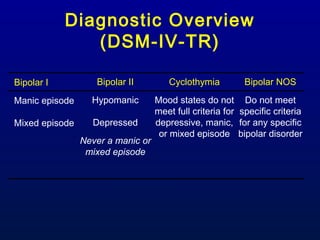
Diagnostic Overview
(DSM-IV-TR)
Bipolar I
Manic episode
Mixed episode
Bipolar II
Hypomanic
Depressed
Never a manic or
mixed episode
Cyclothymia
Mood states do not
meet full criteria for
depressive, manic,
or mixed episode
Bipolar NOS
Do not meet
specific criteria
for any specific
bipolar disorder
Mood disorders
Bipolar disorders Depressive disorders
Bipolar I
disorder
Bipolar II
disorder
Bipolar
disorder
NOS
Cyclothymic
disorder
Recurrent
Depressive
disorder
NOS
Single
episode
Persistent
Depressive
disorder
(Dysthymia)
Major
depressive
disorder
Goodwin & Jamison 2004
DSM-V
Brain regions involved in BD
Prefrontal cortex
emotional & cognitive
aspects of depression
Hippocampus
long-term memoryAmygdala
processing of emotion
Hypothalamus
sleep, appetite,
energy, libido
Striatum
emotional memory,
drive
Ventral tegmental area
reward, fear,
motivation
Noradrenaline, serotonin and dopamine
in mood symptoms
Serotonin
Dopamine
Drive
Noradrenaline
Interest
Energy Anxiety
Irritability
Mood
Emotion
Cognitive
function
Motivation
Appetite
Aggression
Impulse
Blier 2001
Potential mediators of efficacy of current
treatments: psychosis / mania
 Dopamine
 GABA
 Glutamate
 Neurogenesis
Potential mediators of efficacy of current
treatments: depression
 Dopamine
 Serotonin (5-HT)
 Norepinephrine
 GABA
 Glutamate
 Second messenger signalling pathways
 Neurogenesis
Diverse Episodes, Frequencies, Patterns
A Mood Chart Is Worth 1000 Words
Hypomania
Severe
Moderate
Mild
Mild
Moderate
Severe
Mania*
Depression
Minor
depression
Euthymia
Hypomania
* Euphoric or mixed mania
Mania
Depression
The flavours of bipolar spectrum 1
Adapted from Akiskal & Pinto 1999
Bipolar I
≥ 4 DaysBipolar II
Bipolar NOS
‘Bipolar III’ Antidepressant-related hypomania
< 4 Days
≥ 1 week
The bipolar spectrum 2
Hyperthymic ‘Bipolar IV’
Depressive mixed state ‘IV ½’
Highly recurrent depression ‘bipolar V’
Adapted from Akiskal & Pinto 1999
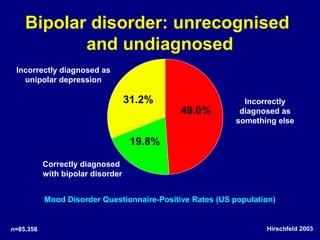
Bipolar disorder: unrecognised
and undiagnosed
Hirschfeld 2003
Correctly diagnosed
with bipolar disorder
Incorrectly diagnosed as
unipolar depression
Incorrectly
diagnosed as
something else
31.2%
19.8%
49.0%
Mood Disorder Questionnaire-Positive Rates (US population)
n=85,358
Underdiagnosis of Bipolar Disorder
- 600 patients with bipolar disorder; retrospective
diagnostic history.
- 69% of patients previously misdiagnosed
Most common alternative primary diagnoses:
Depression 60%
Anxiety Disorder 26%
Schizophrenia 18%
Borderline/Antisocial PD 17%
- Patients were misdiagnosed 3.5 times on average
- 4 physicians were consulted prior to diagnosis
Hirschfield et al. J Clin Psychiatry 2003;64:161-174.
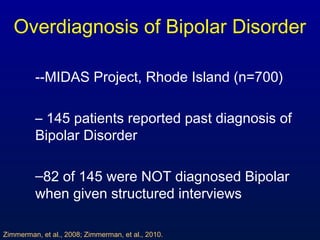
Overdiagnosis of Bipolar Disorder
--MIDAS Project, Rhode Island (n=700)
– 145 patients reported past diagnosis of
Bipolar Disorder
–82 of 145 were NOT diagnosed Bipolar
when given structured interviews
Zimmerman, et al., 2008; Zimmerman, et al., 2010.
DSM 5
• One of the goals on the Mood Disorder
committee is to decrease false positives
• Proposed changes for mood disorders to
emphasize: episodic nature of symptoms;
importance of activity/energy change in
hypo/mania; and evaluating for clusters of
symptoms
Comorbidity and Symptom Sharing
MANIA DEPRESSION ANXIETY
Elated Mood
Irritability Irritability Irritability
Increased Energy Agitation
Restlessness/Agit
ation
Distractibility
Poor
Concentration
Difficulty in
Concentration
Flight of Ideas
Grandiosity
Poor Judgment
Reduced Sleep Insomnia Insomnia
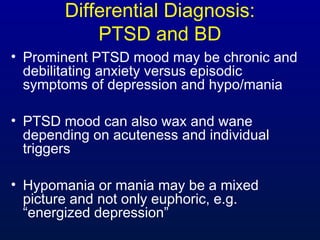
Differential Diagnosis:
PTSD and BD
• Prominent PTSD mood may be chronic and
debilitating anxiety versus episodic
symptoms of depression and hypo/mania
• PTSD mood can also wax and wane
depending on acuteness and individual
triggers
• Hypomania or mania may be a mixed
picture and not only euphoric, e.g.
“energized depression”
cont’d
• Careful history taking regarding insomnia
and energy levels is key
• Bipolar hypo/mania will have less sleep
but more energy
• Always evaluate for CLUSTERS of
symptoms to make the differential or
diagnose co-occurring conditions
cont’d
• Increased arousal associated with PTSD
can mimic hypo/mania; numbing and
avoidance can appear as depression
• In many cases, symptoms of anxiety may
co-exist with those of bipolar disorder
• Extensive co-occurrence of anxiety
disorders, including PTSD, and bipolar
disorder
Psychiatric Co-Occurrence in
Bipolar Disorder
• Common psychiatric co-occurrences
– Substance abuse
– Anxiety disorders
– Eating disorders
• Co-occurrence is a marker for bipolarity
Prevalence of Psychiatric
Co-Occurrence: STEP-BD 1000
Simon et al. J Clin Psychopharmacol 2004.
• Number of Co-occurring Disorders: 1 – 72%; 2 – 20%; 3 – 15%; 4 – 17%
Co-existing Disabilities
 Attention-deficit/Hyperactivity Disorder
(AD/HD)
Rates range between 11% and 75%
 Oppositional Defiant Disorder
Rates range between 46.4% and 75%
 Conduct Disorder
Rates range between 5.6 and 37%
 Anxiety Disorders
Rates range betwee12.5% and 56%
 Substance Abuse Disorders
Rates range between 0 to 40%
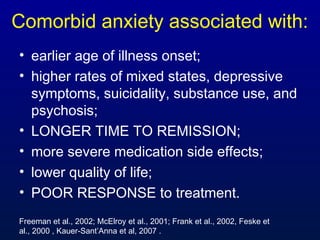
Comorbid anxiety associated with:
• earlier age of illness onset;
• higher rates of mixed states, depressive
symptoms, suicidality, substance use, and
psychosis;
• LONGER TIME TO REMISSION;
• more severe medication side effects;
• lower quality of life;
• POOR RESPONSE to treatment.
Freeman et al., 2002; McElroy et al., 2001; Frank et al., 2002, Feske et
al., 2000 , Kauer-Sant’Anna et al, 2007 .
When depression is BIPOLAR ?
B ; BAD …..
behavioral, aggression & disinhibition
I ; Irritable mood (rather than depressed)
P ; psychotic feat. , pressure of thoughts
O; early onset (adolescence)
L ; lability of mood
A ; Atypicality, ADHD , Abuse , Anxiety
R ; response to AD (poor)
Increased Risk of Suicide
• Patients with BD + anxiety are at higher
risk of suicide.
MacKinnon et al. Bipolar Disord 2005; Kilbane et al. J Affect Disord 2009; Kaplan et al. J Epidemiol
Community Health 2007; McCarthy et al. Am J Epidemiol 2009.
Akiskal.Akiskal. J Clin Psychopharmacol.J Clin Psychopharmacol. 1996;16(suppl 1):4S-14S.1996;16(suppl 1):4S-14S.
Predictors of Suicide in Bipolar
Disorder
• High Impulsivity
• Alcohol and Substance Abuse
• DEPRESSION and MIXED Episodes
• History of Abuse in Childhood
• Exacerbated by incorrect treatment
0
5
10
15
20
25
30NeoplasmCardiovascular
Cerebrovascular
Accidents
Suicide
O
ther
Allcauses
Mortality rates in patients with untreated
and treated bipolar disorder
Angst et al 2002
Mortality
ratio relative
to general
population
*p<0.05; ***p<0.001 vs treated patients
n=220
Untreated
***
*** *** * *** ***
Treated
Why treatment guidelines?
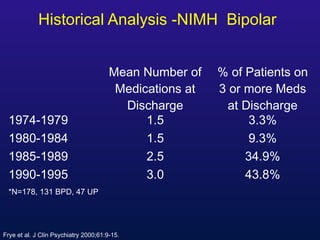
Historical Analysis -NIMH Bipolar
Frye et al. J Clin Psychiatry 2000;61:9-15.
*N=178, 131 BPD, 47 UP
Mean Number of
Medications at
Discharge
% of Patients on
3 or more Meds
at Discharge
1974-1979 1.5 3.3%
1980-1984 1.5 9.3%
1985-1989 2.5 34.9%
1990-1995 3.0 43.8%
Everyone “Just Doing Their Best”
Guidelines: Aligning the Arrows
What are treatment guidelines?
• Treatment options based on research evidence,
clinical experience, and/or expert opinion.
• Can include pharmacological, psychosocial, or
other treatment approaches.
• Published guidelines vary in their organization,
commitment to evidence-base, and flexibility.
• Guidelines must be updated regularly to reflect
changes in available evidence.
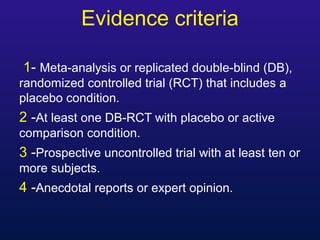
Evidence criteria
1- Meta-analysis or replicated double-blind (DB),
randomized controlled trial (RCT) that includes a
placebo condition.
2 -At least one DB-RCT with placebo or active
comparison condition.
3 -Prospective uncontrolled trial with at least ten or
more subjects.
4 -Anecdotal reports or expert opinion.
Evidence Rating System
SR (Strength of Recommendation)
A A strong recommendation that clinicians provide the
intervention to eligible patients.
B A recommendation that clinicians provide (the service) to
eligible patients.
C No recommendation for or against the routine provision
of the intervention is made.
D Recommendation is made against routinely providing the
intervention to asymptomatic patients.
I The conclusion is that the evidence is insufficient to
recommend for or against routinely providing
the intervention.
Clinical elements relatively unique to
bipolar disorder
• Majority of patients on 3-5 medications.
Combinations often necessary to achieve
mood stabilization.
• Drug holidays never recommended.
• Other medical and co-occurring illness must
be considered throughout period of treatment
Akiskal.Akiskal. J Clin Psychopharmacol.J Clin Psychopharmacol. 1996;16(suppl 1):4S-14S.1996;16(suppl 1):4S-14S.
Treatment Challenges in Bipolar Disorder
• Often unrecognized
• Often untreated
• Often misdiagnosed
• Often undertreated
• Exacerbated by incorrect treatment
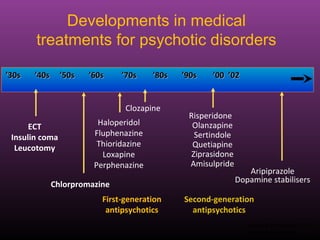
Developments in medical
treatments for psychotic disorders
’’30s ’40s ’50s ’60s30s ’40s ’50s ’60s ’70s ’80s ’90s ’00 ’02’70s ’80s ’90s ’00 ’02
ECT
Insulin coma
Leucotomy
Chlorpromazine
Haloperidol
Fluphenazine
Thioridazine
Loxapine
Perphenazine
First-generation
antipsychotics
Second-generation
antipsychotics
Risperidone
Olanzapine
Sertindole
Quetiapine
Ziprasidone
Amisulpride
Aripiprazole
Dopamine stabilisers
Kapur & Remington 2001;
Worrel et al, 2000
Clozapine
Latest ;
 Palperidone
Date of Approval: December 19, 2006
Schizophrenia
Schizoaffective disorder --- Adults & adolescents (13–17 years)
Bipolar disorder (acute manic) ---- Adults, children, and
adolescents (10–17 years)
 Palperidone LAI
November 13, 2014
Asenapine (Sublingual Tablets)
Aug 14, 2009 first FDA approval in Schiz for Adults
Mar 13, 2015 recieves FDA app for pediatric use in Bipolar
• Acute schizophrenia----Adults
• Bipolar disorder type 1 (manic/mixed)---- Adults & pedia
Iloperidone
Acute schizophrenia----Adults
Schizophrenia ----- Adults
Bipolar disorder (manic/mixed)------ Adults and adolescents
(13–17 years)
Abilify Maintena
• Date of Approval: February 28, 2013
• Schizophrenia ----- adults Sept 2015
Lurasidone
Schizophrenia & Bipolar depression --- Adults
Recommendations for
Pharmacological
treatment of Acute
Mania
Likely to be Beneficial [SR] Trade off
between Benefit
and Harm [SR]
Mania Monotherapy; lithium, divalproex ER,
olanzapine, risperidone, quetiapine,
quetiapine XR, aripiprazole, ziprasidone,
asenapine , paliperidone ER[A]
Combining (lithium or valproate) with
risperidone, quetiapine, olanzapine,
aripiprazole, asenapine [A]
Monotherapy:
carbamazepine,
carbamazepine ER,
Clozapine [I]
Oxcarbazepine [I] ECT,
haloperidol (A)
Combination therapy:
lithium + divalproex
Mixed
Episode
Valproate, carbamazepine,
aripiprazole, olanzapine,
risperidone, or ziprasidone [A]
Clozapine [I]
Oxcarbazepine [I]
Quetiapine [I]
Lithium [I]
Unlikely to be Beneficial OR May
be Harmful [SR]
Mania Monotherapy: gabapentin, topiramate, lamotrigine,
verapamil, tiagabine
Combination therapy: risperidone +
carbamazepine, olanzapine + carbamazepine
Mixed Episode Lamotrigine [D]
Topiramate [D]
Gabapentin [D]
• Zotepine is an antipsychotic agent that has
been approved in some European countries
and in Japan for the treatment of
schizophrenia.
• In a four-week, single-blind trial, adjunctive
zotepine added to lithium or divalproex therapy
in 45 inpatients with moderate-to-severe mania
was as effective as adjunctive haloperidol in
improving mania scores .
• Two RCTs have now demonstrated the efficacy
of adjunctive allopurinol for the treatment of
acute mania (level 1) .
Akhondzadeh S et al , Bipolar Disord 2006
• Preliminary evidence previously suggested
antimanic efficacy associated with tamoxifen
(1).
• A six-week, placebo-controlled RCT has now
demonstrated significantly greater
improvements in mania scores with tamoxifen
as an adjunct to lithium in 40 inpatients with
acute mania compared to lithium alone (level
2) .
Amrollahi Z et al , J Affect Disord 2011
Pharmacology for Patients
experiencing Mania, Hypomania or
Mixed Episodes
• Stop manic-inducing medications;
• Use medication proven to effectively treat
manic and mixed symptoms;
• Consider using the agent(s) that have
been effective in treating prior episodes;
Cont’d
• Consider other psychiatric and medical
conditions and try to avoid exacerbating
them;
• If diabetes or obesity are present,
consider the risk and benefit of utilizing
medications that are associated with
weight gain.
If mania/mixed symptoms are
severe, with or without psychosis:
• Use a combination of an antipsychotic and
either Li or DVP.
• If severe mania - olanzapine, quetiapine,
aripiprazole, or risperidone [B]
• If severe mixed - aripiprazole, olanzapine,
risperidone, or haloperidol [B] and
quetiapine .
If monotherapy is insufficient…
• ADJUST medications if there is no response
within 2 – 4 weeks on an adequate dose;
• Consider SWITCHING to another monotherapy
[I];
• Consider COMBINATION therapy (see
guidelines for choices for severe mania and/or
mixed symptoms);
Cont’d
• Consider Clozapine, particularly if it has been
successful in the past or if other antipsychotics
have failed [I];
• Electroconvulsive therapy (ECT) may be
considered [C];
• Risks and benefits of specific long-term
pharmacotherapy should be discussed prior to
starting medication and throughout all treatment
[A]
Summary of 15 Acute Mania
Monotherapy Studies
Response Rates
Atypical AntipsychoticsMood Stabilizers
0
10
20
30
40
50
60
Carbamazepine
707
mg/d
N = 223
Risperidone
4.9
mg/d
N = 273
Quetiapine
575
mg/d
N = 208
Ziprasidone
121
mg/d
N = 268
Aripiprazole
28
mg/d
N = 260
Placebo
N = 1265
Olanzapine
16
mg/d
N = 304
Divalproex
1694
mg/d
N = 255
Lithium
1950
mg/d
N = 134
Percentresponders
(≥50%maniaratingdecrease)
Placebo
Ketter TA (ed). Advances in the Treatment of Bipolar Disorders. APA Press (2005).
Recommendations for
Pharmacological
treatment of
Acute Bipolar Depression
Bipolar Depression
• Patients should be treated with medications
with demonstrated efficacy in depressive
episodes - minimizing the risk of switch;
• Consider agent(s) effective in treating
prior episodes;
• Risk for mood destabilization to
mania should be monitored closely for
emergent symptoms [I];
• For patients with psychotic features, an
antipsychotic should be started [I];
cont’d
• Consider adding an evidence based
psychotherapeutic intervention to improve
adherence and patient outcome [B];
• Consider other psychiatric and medical
conditions and try to avoid exacerbating
them;
• If diabetes or obesity are present, consider
the risk and benefit of utilizing medications
that are less associated with weight gain.
Likely to be
Beneficial [SR]
Trade off between
Benefit and Harm [SR]
Acute
Depressive
Episodes
Monotherapy: lithium (B),
lamotrigine, quetiapine,
quetiapine XR (A)
Combination therapy:
Lithium with adjunctive
lamotrigine [A]
lithium or divalproex +
SSRIb,
olanzapine + SSRIb,
lithium + divalproex,
lithium or divalproex +
bupropion
Monotherapy: divalproex,
lurasidone(c)
Combination therapy:
quetiapine + SSRIb,
adjunctive modafinil, lithium or
divalproex + lamotriginec,
lithium or divalproex +
lurasidone(c )
Unknown Unlikely to be
Beneficial OR May be
Harmful [SR]
Acute
Depressive
Episode
Monotherapy:
carbamazepine,
olanzapine, ECT(D)
Combination therapy:
lithium +carbamazepine,
lithium + pramipexole,
lithium or divalproex +
venlafaxine,
lithium + MAOI,
lithium or divalproex or
AAP + TCA,
lithium or divalproex or
carbamazepine + SSRIb
+
lamotrigine, quetiapine +
Monotherapy: gabapentin,
aripiprazole, ziprasidone (c)
Combination therapy:
adjunctive ziprasidone,
adjunctive levetiracetam(c)
*
*
*
*
* * * *
*
*
*
* *
* * *
*
P < 0.001 vs placebo
1 2 43 65 7 8
Study Week
MeanChangefromBaseline
Quetiapine 600 mg (n = 170)
Quetiapine 300 mg (n = 172)
Placebo (n = 169)



-20
-15
-10
-5
0
Quetiapine vs Placebo
in BD Depression
• Quetiapine recommended in Stage 2 based on a single, robust, large, well-
designed randomized clinical trial, with the proviso that replication studies
are needed.
Intent to treat (ITT); last observation carried forward (LOCF)
Calabrese JR et al. APA 2004.
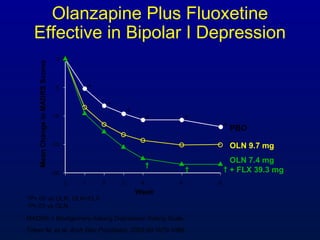
OLN 9.7 mg
PBO
OLN 7.4 mg
+ FLX 39.3 mg
Week
0 1 2 3 4 6 8
MeanChangeinMADRSScores
-20
-15
-10
-5
0
*
*
*
*
*
*
†
† †
*P<.05 vs OLN, OLN+FLX.
†
P<.05 vs OLN.
MADRS = Montgomery-Asberg Depression Rating Scale.
Tohen M, et al. Arch Gen Psychiatry. 2003;60:1079-1088.
Olanzapine Plus Fluoxetine
Effective in Bipolar I Depression
The coadministration of i.v. ketamine with
mood stabilizing drugs was found to have
rapid antidepressant effect and
improvement of suicidal ideation in patients
with treatment-resistant bipolar depression.
Recommendations for Treatment of
Depressive Episodes
• If patient is having intolerable side effects switch
to another effective treatment [I];
• Ensure that medication(s) are in therapeutic
range, and raise until improvement, side effects
or the dose manufacturer’s suggested upper
limits [I];
• If no response within 2 – 4 weeks on a good
dose then augment, switch, or consider ECT;
Cont’d
• Any discontinuation of medication should be
tapered and the patient should be monitored
for mood destabilization [I];
• If mania/hypomania/mixed symptoms occur,
go to Module A [I];
• Risks and benefits of long term
pharmacotherapy should be discussed prior
to starting medication and throughout
treatment [A].
Likely to be Beneficial [SR] Trade off between
Benefit and Harm [SR]
Monotherapy: lithium, lamotrigine (limited
efficacy in preventing mania), divalproex,
olanzapine a,
quetiapine, risperidone LAI b, aripiprazole b
Combination therapy with lithium or
divalproex: quetiapine, risperidone LAI b,
aripiprazole b, ziprasidone b
Monotherapy: carbamazepine,
palideridone ER c
Combination therapy: lithium +
divalproex, lithium +
carbamazepine, lithium or
divalproex + olanzapine,
lithium + risperidone, lithium +
lamotrigine, olanzapine +
fluoxetine
Maintenance Treatments
Maintenance Recommendations
(continued)
Maintenance benefit
unknown
Unlikely to be Beneficial
OR May be Harmful [SR]
Monotherapy: asenapine c
Combination therapy: phenytoin,
clozapine, ECT, topiramate,
omega-3-fatty acids,
oxcarbazepine,
gabapentin, asenapinec
Monotherapy: gabapentin,
topiramate, or antidepressants (d)
Combination therapy: flupenthixol
Maintenance Therapy
• A structured approach is recommended [A];
• Patients who have had an acute manic episode
should be treated for at least 6 months after the
initial episode is controlled and encouraged to
continue on life-long prophylactic treatment [A];
• Risks and benefits of long term pharmacotherapy
should be discussed prior to starting medication
and should be continued throughout treatment
[C];
Cont’d
• Patients who have had >1 manic
episode, or 1 manic and depressive
episode, or >2 depressive episodes,
should be encouraged to continue on
life-long prophylactic treatment, as the
benefits outweigh the risks [A];
• If medications are to be discontinued, they
should be slowly and GRADUALLY
TAPERED over at least a 2 to 4 week
period, unless medically contraindicated, to
prevent a “REBOUND” episode of bipolar
disorder and/or increase the risk of
suicide [B].
FDA-approved treatments
Physicians’ Desk Reference 2007
Mania Mixed Maintenance Depression
Mania Depression Bipolar I Bipolar II
Mood stabiliser
Lithium  –  – – –
Divalproex DR  – – – – –
Divalproex ER   – – – –
Carbamazepine ER   – – – –
Atypical antipsychotics
Risperidone   – – – –
Olanzapine    – – –
Quetiapine  – – –  
Ziprasidone   – – – –
Aripiprazole    – – –
Other
Lamotrigine – –   – –
Olanzapine/fluoxetine – – – –  –
Non pharmacological
therapies
• (Salmon)
omega-3 fatty acids may be treatment,
implying signal transduction mechanisms
Non pharmacological therapies, cont.
• Treatment alliance;
develop reasonable relationship with your patient
• Education;
help patients understand early symptoms of their episodes
• Monitoring
General guidance for psychology:
Healthy lifestyle, relapse prevention
• Advice on sleep and daily routine
• Risks of shift work, long hours, flights
• Methods of self-monitoring
• Extra support after difficult life events
• Collaborative relapse prevention strategy
• Patients in remission should be seen every 1 to 3 months
with ongoing assessment of recent symptoms [I];
• All patients on medication should be monitored for potential
adverse effects [B];
• Monitor serum concentrations (as appropriate) and other
appropriate blood work every 3 to 6 months to maintain
efficacy and avoid toxicity [A/B];
• For those on APs, monitor weight, waist circumference,
blood pressure, BMI, plasma glucose and fasting lipids
[C].
• Adherence to medication therapy should be routinely
evaluated at each visit [A];
• Assess any changes in patient’s family and community
support [C].
Adjunctive Psychoeducation
• Psychoeducation should emphasize [B]:
– The importance of active involvement in
treatment
– The nature and course of their bipolar illness
– The potential benefit and adverse effects of
treatment options
– The recognition of early signs of relapse
– Behavioral interventions that can lessen the
likelihood of relapse including careful
attention to sleep regulation and avoidance of
substance misuse.
Cont’d
• With the patient’s permission, family
members or significant other should be
involved in the psychoeducation process
[C];
• A structured group format in providing
psychoeducation and care management
for patients with clinically significant mood
symptoms should be considered [A].
Adjunctive Psychotherapies
• CBT for those who have achieved remission
from an acute manic episode and who have had
<12 previous acute episodes [A];
• IPSRT for those who have achieved remission
from an acute manic episode and are
maintained on prophylactic medication [B];
Cont’d
• Structured Family therapy can be
considered for couples and families who
are coping with BD [C];
• Patients may benefit from chronic care
model-based interventions [B], especially
when more symptomatic or recently
hospitalized [A].
Summary
 Bipolar disorder is a lifelong illness and is
associated with a substantial health, social and
economic burden
 Accurate diagnosis of bipolar disorder is
essential to initiate effective treatment and
prevent relapse
 Evidence supports a range of treatments for
the improvement of manic and depressive
symptoms in bipolar disorder
Ideal treatment would achieve mood stabilisation by
effectively treating mania and depression and
preventing relapse among patients with bipolar I and II
disorder and rapid cyclers
Psychiatrist Prayer
 Lord, protect me from all the institutions that want to guard me from harm
—Congress, academics, journal publishers, and even my APA.
 They fear I will be brainwashed. They fear -heaven forefend- I may use
drugs “off-label.”
 I hesitate to inform you—it’s too late! I already prescribe medications off-
label, and I do it every day but we do so not because were brainwashed,
but because we want to help our patients,
 We are smart & ethical a labelled mug or a free pizza will not cause me to
abandon my Hippocrates oath.
 Attempts to protect us have only interfered with our goals to accumulate
more clinically useful information for the benefit of our patients.
Bipolar management
Bipolar management

Bipolar management

  • 1.
    MANAGEMENT OF BIPOLAR DISORDERIN ADULTS Updates of practice guidlines Presented by ; Dr.Ahmad Rifaat Daebes Consultant of Psychiatry Director of Tanta Psychiatry & Addiction Hospital
  • 2.
    Declaration of Interest Noneof the slides were provided by any pharmaceutical company.
  • 3.
    Objectives • Be ableto make a differential diagnosis for Bipolar Disorder & other comorbidities. • Be familiar with common co-occurring illnesses with bipolar disorder, including anxiety disorders. • Be familiar with most recent guidelines for management and treatment of bipolar disorder.
  • 4.
    The Extraordinary Tollof Medical Illness in Bipolar Disorder • People with serious mental illness die 25 years earlier than the general population • Much attributed to smoking, obesity, substance abuse, and inadequate access to medical care • WHO lists Bipolar Disorder as 6th worldwide all cause morbidity and mortality Colton C & Manderscheid R. Prev Chronic Dis 2006;3(2):1-10.
  • 5.
    Digestive disorder (6%) Musculoskeletal disorders (4%) Endocrine (4%) Neuropsychiatric disorders(28%) Cancer (11%) Cardiovascular disease (22%) Sense organ impairment (10%) Other non-communicable diseases (7%) Respiratory disease (8%) Schizophrenia Bipolar disorder Dementia Substance-use and alcohol-use disorders Other mental disorders Epilepsy Other neurological disorders Other neuropsychiatric disorders MDD Prince et al. Lancet 2007. 859-877 Disability associated with bipolar disorder Contribution (%) by different non-communicable diseases to disability-adjusted life-years worldwide in 2005 2% 10% 2% 2% 4% 3% 1% 2% 3%
  • 6.
    Bipolar Disorder • Alsoknown as manic depression, a mental illness that causes a person’s moods to be labile and sometimes swing from extremely happy and energized (mania) to extremely sad (depression) • Chronic illness; can be life-threatening • Most often diagnosed in adolescence or early adulthood
  • 8.
    It is asif my life were magically run by two electric currents: joyous positive and despairing negative - whichever is running at the moment dominates my life, floods it.
  • 9.
    Historical background • Hippocratesand Areteus were the first to describe manic–depressive illness. • In modern times, bipolar disorder was first defined as an illness by Falret in 1851 (‘folie circulaire’-circular insanity).
  • 10.
    Diagnostic Overview (DSM-IV-TR) Bipolar I Manicepisode Mixed episode Bipolar II Hypomanic Depressed Never a manic or mixed episode Cyclothymia Mood states do not meet full criteria for depressive, manic, or mixed episode Bipolar NOS Do not meet specific criteria for any specific bipolar disorder
  • 11.
    Mood disorders Bipolar disordersDepressive disorders Bipolar I disorder Bipolar II disorder Bipolar disorder NOS Cyclothymic disorder Recurrent Depressive disorder NOS Single episode Persistent Depressive disorder (Dysthymia) Major depressive disorder Goodwin & Jamison 2004 DSM-V
  • 12.
    Brain regions involvedin BD Prefrontal cortex emotional & cognitive aspects of depression Hippocampus long-term memoryAmygdala processing of emotion Hypothalamus sleep, appetite, energy, libido Striatum emotional memory, drive Ventral tegmental area reward, fear, motivation
  • 13.
    Noradrenaline, serotonin anddopamine in mood symptoms Serotonin Dopamine Drive Noradrenaline Interest Energy Anxiety Irritability Mood Emotion Cognitive function Motivation Appetite Aggression Impulse Blier 2001
  • 14.
    Potential mediators ofefficacy of current treatments: psychosis / mania  Dopamine  GABA  Glutamate  Neurogenesis
  • 15.
    Potential mediators ofefficacy of current treatments: depression  Dopamine  Serotonin (5-HT)  Norepinephrine  GABA  Glutamate  Second messenger signalling pathways  Neurogenesis
  • 16.
    Diverse Episodes, Frequencies,Patterns A Mood Chart Is Worth 1000 Words Hypomania Severe Moderate Mild Mild Moderate Severe Mania* Depression Minor depression Euthymia Hypomania * Euphoric or mixed mania Mania Depression
  • 18.
    The flavours ofbipolar spectrum 1 Adapted from Akiskal & Pinto 1999 Bipolar I ≥ 4 DaysBipolar II Bipolar NOS ‘Bipolar III’ Antidepressant-related hypomania < 4 Days ≥ 1 week
  • 19.
    The bipolar spectrum2 Hyperthymic ‘Bipolar IV’ Depressive mixed state ‘IV ½’ Highly recurrent depression ‘bipolar V’ Adapted from Akiskal & Pinto 1999
  • 20.
    Bipolar disorder: unrecognised andundiagnosed Hirschfeld 2003 Correctly diagnosed with bipolar disorder Incorrectly diagnosed as unipolar depression Incorrectly diagnosed as something else 31.2% 19.8% 49.0% Mood Disorder Questionnaire-Positive Rates (US population) n=85,358
  • 21.
    Underdiagnosis of BipolarDisorder - 600 patients with bipolar disorder; retrospective diagnostic history. - 69% of patients previously misdiagnosed Most common alternative primary diagnoses: Depression 60% Anxiety Disorder 26% Schizophrenia 18% Borderline/Antisocial PD 17% - Patients were misdiagnosed 3.5 times on average - 4 physicians were consulted prior to diagnosis Hirschfield et al. J Clin Psychiatry 2003;64:161-174.
  • 22.
    Overdiagnosis of BipolarDisorder --MIDAS Project, Rhode Island (n=700) – 145 patients reported past diagnosis of Bipolar Disorder –82 of 145 were NOT diagnosed Bipolar when given structured interviews Zimmerman, et al., 2008; Zimmerman, et al., 2010.
  • 23.
    DSM 5 • Oneof the goals on the Mood Disorder committee is to decrease false positives • Proposed changes for mood disorders to emphasize: episodic nature of symptoms; importance of activity/energy change in hypo/mania; and evaluating for clusters of symptoms
  • 24.
    Comorbidity and SymptomSharing MANIA DEPRESSION ANXIETY Elated Mood Irritability Irritability Irritability Increased Energy Agitation Restlessness/Agit ation Distractibility Poor Concentration Difficulty in Concentration Flight of Ideas Grandiosity Poor Judgment Reduced Sleep Insomnia Insomnia
  • 25.
    Differential Diagnosis: PTSD andBD • Prominent PTSD mood may be chronic and debilitating anxiety versus episodic symptoms of depression and hypo/mania • PTSD mood can also wax and wane depending on acuteness and individual triggers • Hypomania or mania may be a mixed picture and not only euphoric, e.g. “energized depression”
  • 26.
    cont’d • Careful historytaking regarding insomnia and energy levels is key • Bipolar hypo/mania will have less sleep but more energy • Always evaluate for CLUSTERS of symptoms to make the differential or diagnose co-occurring conditions
  • 27.
    cont’d • Increased arousalassociated with PTSD can mimic hypo/mania; numbing and avoidance can appear as depression • In many cases, symptoms of anxiety may co-exist with those of bipolar disorder • Extensive co-occurrence of anxiety disorders, including PTSD, and bipolar disorder
  • 28.
    Psychiatric Co-Occurrence in BipolarDisorder • Common psychiatric co-occurrences – Substance abuse – Anxiety disorders – Eating disorders • Co-occurrence is a marker for bipolarity
  • 30.
    Prevalence of Psychiatric Co-Occurrence:STEP-BD 1000 Simon et al. J Clin Psychopharmacol 2004. • Number of Co-occurring Disorders: 1 – 72%; 2 – 20%; 3 – 15%; 4 – 17%
  • 31.
    Co-existing Disabilities  Attention-deficit/HyperactivityDisorder (AD/HD) Rates range between 11% and 75%  Oppositional Defiant Disorder Rates range between 46.4% and 75%  Conduct Disorder Rates range between 5.6 and 37%  Anxiety Disorders Rates range betwee12.5% and 56%  Substance Abuse Disorders Rates range between 0 to 40%
  • 32.
    Comorbid anxiety associatedwith: • earlier age of illness onset; • higher rates of mixed states, depressive symptoms, suicidality, substance use, and psychosis; • LONGER TIME TO REMISSION; • more severe medication side effects; • lower quality of life; • POOR RESPONSE to treatment. Freeman et al., 2002; McElroy et al., 2001; Frank et al., 2002, Feske et al., 2000 , Kauer-Sant’Anna et al, 2007 .
  • 33.
    When depression isBIPOLAR ? B ; BAD ….. behavioral, aggression & disinhibition I ; Irritable mood (rather than depressed) P ; psychotic feat. , pressure of thoughts O; early onset (adolescence) L ; lability of mood A ; Atypicality, ADHD , Abuse , Anxiety R ; response to AD (poor)
  • 34.
    Increased Risk ofSuicide • Patients with BD + anxiety are at higher risk of suicide. MacKinnon et al. Bipolar Disord 2005; Kilbane et al. J Affect Disord 2009; Kaplan et al. J Epidemiol Community Health 2007; McCarthy et al. Am J Epidemiol 2009.
  • 35.
    Akiskal.Akiskal. J ClinPsychopharmacol.J Clin Psychopharmacol. 1996;16(suppl 1):4S-14S.1996;16(suppl 1):4S-14S. Predictors of Suicide in Bipolar Disorder • High Impulsivity • Alcohol and Substance Abuse • DEPRESSION and MIXED Episodes • History of Abuse in Childhood • Exacerbated by incorrect treatment
  • 36.
    0 5 10 15 20 25 30NeoplasmCardiovascular Cerebrovascular Accidents Suicide O ther Allcauses Mortality rates inpatients with untreated and treated bipolar disorder Angst et al 2002 Mortality ratio relative to general population *p<0.05; ***p<0.001 vs treated patients n=220 Untreated *** *** *** * *** *** Treated
  • 38.
  • 39.
    Historical Analysis -NIMHBipolar Frye et al. J Clin Psychiatry 2000;61:9-15. *N=178, 131 BPD, 47 UP Mean Number of Medications at Discharge % of Patients on 3 or more Meds at Discharge 1974-1979 1.5 3.3% 1980-1984 1.5 9.3% 1985-1989 2.5 34.9% 1990-1995 3.0 43.8%
  • 40.
  • 41.
  • 42.
    What are treatmentguidelines? • Treatment options based on research evidence, clinical experience, and/or expert opinion. • Can include pharmacological, psychosocial, or other treatment approaches. • Published guidelines vary in their organization, commitment to evidence-base, and flexibility. • Guidelines must be updated regularly to reflect changes in available evidence.
  • 43.
    Evidence criteria 1- Meta-analysisor replicated double-blind (DB), randomized controlled trial (RCT) that includes a placebo condition. 2 -At least one DB-RCT with placebo or active comparison condition. 3 -Prospective uncontrolled trial with at least ten or more subjects. 4 -Anecdotal reports or expert opinion.
  • 44.
    Evidence Rating System SR(Strength of Recommendation) A A strong recommendation that clinicians provide the intervention to eligible patients. B A recommendation that clinicians provide (the service) to eligible patients. C No recommendation for or against the routine provision of the intervention is made. D Recommendation is made against routinely providing the intervention to asymptomatic patients. I The conclusion is that the evidence is insufficient to recommend for or against routinely providing the intervention.
  • 45.
    Clinical elements relativelyunique to bipolar disorder • Majority of patients on 3-5 medications. Combinations often necessary to achieve mood stabilization. • Drug holidays never recommended. • Other medical and co-occurring illness must be considered throughout period of treatment
  • 46.
    Akiskal.Akiskal. J ClinPsychopharmacol.J Clin Psychopharmacol. 1996;16(suppl 1):4S-14S.1996;16(suppl 1):4S-14S. Treatment Challenges in Bipolar Disorder • Often unrecognized • Often untreated • Often misdiagnosed • Often undertreated • Exacerbated by incorrect treatment
  • 47.
    Developments in medical treatmentsfor psychotic disorders ’’30s ’40s ’50s ’60s30s ’40s ’50s ’60s ’70s ’80s ’90s ’00 ’02’70s ’80s ’90s ’00 ’02 ECT Insulin coma Leucotomy Chlorpromazine Haloperidol Fluphenazine Thioridazine Loxapine Perphenazine First-generation antipsychotics Second-generation antipsychotics Risperidone Olanzapine Sertindole Quetiapine Ziprasidone Amisulpride Aripiprazole Dopamine stabilisers Kapur & Remington 2001; Worrel et al, 2000 Clozapine
  • 48.
    Latest ;  Palperidone Dateof Approval: December 19, 2006 Schizophrenia Schizoaffective disorder --- Adults & adolescents (13–17 years) Bipolar disorder (acute manic) ---- Adults, children, and adolescents (10–17 years)  Palperidone LAI November 13, 2014
  • 49.
    Asenapine (Sublingual Tablets) Aug14, 2009 first FDA approval in Schiz for Adults Mar 13, 2015 recieves FDA app for pediatric use in Bipolar • Acute schizophrenia----Adults • Bipolar disorder type 1 (manic/mixed)---- Adults & pedia Iloperidone Acute schizophrenia----Adults Schizophrenia ----- Adults Bipolar disorder (manic/mixed)------ Adults and adolescents (13–17 years)
  • 50.
    Abilify Maintena • Dateof Approval: February 28, 2013 • Schizophrenia ----- adults Sept 2015 Lurasidone Schizophrenia & Bipolar depression --- Adults
  • 51.
  • 52.
    Likely to beBeneficial [SR] Trade off between Benefit and Harm [SR] Mania Monotherapy; lithium, divalproex ER, olanzapine, risperidone, quetiapine, quetiapine XR, aripiprazole, ziprasidone, asenapine , paliperidone ER[A] Combining (lithium or valproate) with risperidone, quetiapine, olanzapine, aripiprazole, asenapine [A] Monotherapy: carbamazepine, carbamazepine ER, Clozapine [I] Oxcarbazepine [I] ECT, haloperidol (A) Combination therapy: lithium + divalproex Mixed Episode Valproate, carbamazepine, aripiprazole, olanzapine, risperidone, or ziprasidone [A] Clozapine [I] Oxcarbazepine [I] Quetiapine [I] Lithium [I]
  • 53.
    Unlikely to beBeneficial OR May be Harmful [SR] Mania Monotherapy: gabapentin, topiramate, lamotrigine, verapamil, tiagabine Combination therapy: risperidone + carbamazepine, olanzapine + carbamazepine Mixed Episode Lamotrigine [D] Topiramate [D] Gabapentin [D]
  • 54.
    • Zotepine isan antipsychotic agent that has been approved in some European countries and in Japan for the treatment of schizophrenia. • In a four-week, single-blind trial, adjunctive zotepine added to lithium or divalproex therapy in 45 inpatients with moderate-to-severe mania was as effective as adjunctive haloperidol in improving mania scores .
  • 55.
    • Two RCTshave now demonstrated the efficacy of adjunctive allopurinol for the treatment of acute mania (level 1) . Akhondzadeh S et al , Bipolar Disord 2006
  • 56.
    • Preliminary evidencepreviously suggested antimanic efficacy associated with tamoxifen (1). • A six-week, placebo-controlled RCT has now demonstrated significantly greater improvements in mania scores with tamoxifen as an adjunct to lithium in 40 inpatients with acute mania compared to lithium alone (level 2) . Amrollahi Z et al , J Affect Disord 2011
  • 57.
    Pharmacology for Patients experiencingMania, Hypomania or Mixed Episodes • Stop manic-inducing medications; • Use medication proven to effectively treat manic and mixed symptoms; • Consider using the agent(s) that have been effective in treating prior episodes;
  • 58.
    Cont’d • Consider otherpsychiatric and medical conditions and try to avoid exacerbating them; • If diabetes or obesity are present, consider the risk and benefit of utilizing medications that are associated with weight gain.
  • 59.
    If mania/mixed symptomsare severe, with or without psychosis: • Use a combination of an antipsychotic and either Li or DVP. • If severe mania - olanzapine, quetiapine, aripiprazole, or risperidone [B] • If severe mixed - aripiprazole, olanzapine, risperidone, or haloperidol [B] and quetiapine .
  • 60.
    If monotherapy isinsufficient… • ADJUST medications if there is no response within 2 – 4 weeks on an adequate dose; • Consider SWITCHING to another monotherapy [I]; • Consider COMBINATION therapy (see guidelines for choices for severe mania and/or mixed symptoms);
  • 61.
    Cont’d • Consider Clozapine,particularly if it has been successful in the past or if other antipsychotics have failed [I]; • Electroconvulsive therapy (ECT) may be considered [C]; • Risks and benefits of specific long-term pharmacotherapy should be discussed prior to starting medication and throughout all treatment [A]
  • 62.
    Summary of 15Acute Mania Monotherapy Studies Response Rates Atypical AntipsychoticsMood Stabilizers 0 10 20 30 40 50 60 Carbamazepine 707 mg/d N = 223 Risperidone 4.9 mg/d N = 273 Quetiapine 575 mg/d N = 208 Ziprasidone 121 mg/d N = 268 Aripiprazole 28 mg/d N = 260 Placebo N = 1265 Olanzapine 16 mg/d N = 304 Divalproex 1694 mg/d N = 255 Lithium 1950 mg/d N = 134 Percentresponders (≥50%maniaratingdecrease) Placebo Ketter TA (ed). Advances in the Treatment of Bipolar Disorders. APA Press (2005).
  • 63.
  • 64.
    Bipolar Depression • Patientsshould be treated with medications with demonstrated efficacy in depressive episodes - minimizing the risk of switch;
  • 65.
    • Consider agent(s)effective in treating prior episodes; • Risk for mood destabilization to mania should be monitored closely for emergent symptoms [I]; • For patients with psychotic features, an antipsychotic should be started [I];
  • 66.
    cont’d • Consider addingan evidence based psychotherapeutic intervention to improve adherence and patient outcome [B]; • Consider other psychiatric and medical conditions and try to avoid exacerbating them; • If diabetes or obesity are present, consider the risk and benefit of utilizing medications that are less associated with weight gain.
  • 67.
    Likely to be Beneficial[SR] Trade off between Benefit and Harm [SR] Acute Depressive Episodes Monotherapy: lithium (B), lamotrigine, quetiapine, quetiapine XR (A) Combination therapy: Lithium with adjunctive lamotrigine [A] lithium or divalproex + SSRIb, olanzapine + SSRIb, lithium + divalproex, lithium or divalproex + bupropion Monotherapy: divalproex, lurasidone(c) Combination therapy: quetiapine + SSRIb, adjunctive modafinil, lithium or divalproex + lamotriginec, lithium or divalproex + lurasidone(c )
  • 68.
    Unknown Unlikely tobe Beneficial OR May be Harmful [SR] Acute Depressive Episode Monotherapy: carbamazepine, olanzapine, ECT(D) Combination therapy: lithium +carbamazepine, lithium + pramipexole, lithium or divalproex + venlafaxine, lithium + MAOI, lithium or divalproex or AAP + TCA, lithium or divalproex or carbamazepine + SSRIb + lamotrigine, quetiapine + Monotherapy: gabapentin, aripiprazole, ziprasidone (c) Combination therapy: adjunctive ziprasidone, adjunctive levetiracetam(c)
  • 70.
    * * * * * * ** * * * * * * * * * P < 0.001 vs placebo 1 2 43 65 7 8 Study Week MeanChangefromBaseline Quetiapine 600 mg (n = 170) Quetiapine 300 mg (n = 172) Placebo (n = 169)    -20 -15 -10 -5 0 Quetiapine vs Placebo in BD Depression • Quetiapine recommended in Stage 2 based on a single, robust, large, well- designed randomized clinical trial, with the proviso that replication studies are needed. Intent to treat (ITT); last observation carried forward (LOCF) Calabrese JR et al. APA 2004.
  • 71.
    OLN 9.7 mg PBO OLN7.4 mg + FLX 39.3 mg Week 0 1 2 3 4 6 8 MeanChangeinMADRSScores -20 -15 -10 -5 0 * * * * * * † † † *P<.05 vs OLN, OLN+FLX. † P<.05 vs OLN. MADRS = Montgomery-Asberg Depression Rating Scale. Tohen M, et al. Arch Gen Psychiatry. 2003;60:1079-1088. Olanzapine Plus Fluoxetine Effective in Bipolar I Depression
  • 72.
    The coadministration ofi.v. ketamine with mood stabilizing drugs was found to have rapid antidepressant effect and improvement of suicidal ideation in patients with treatment-resistant bipolar depression.
  • 73.
    Recommendations for Treatmentof Depressive Episodes • If patient is having intolerable side effects switch to another effective treatment [I]; • Ensure that medication(s) are in therapeutic range, and raise until improvement, side effects or the dose manufacturer’s suggested upper limits [I]; • If no response within 2 – 4 weeks on a good dose then augment, switch, or consider ECT;
  • 74.
    Cont’d • Any discontinuationof medication should be tapered and the patient should be monitored for mood destabilization [I]; • If mania/hypomania/mixed symptoms occur, go to Module A [I]; • Risks and benefits of long term pharmacotherapy should be discussed prior to starting medication and throughout treatment [A].
  • 75.
    Likely to beBeneficial [SR] Trade off between Benefit and Harm [SR] Monotherapy: lithium, lamotrigine (limited efficacy in preventing mania), divalproex, olanzapine a, quetiapine, risperidone LAI b, aripiprazole b Combination therapy with lithium or divalproex: quetiapine, risperidone LAI b, aripiprazole b, ziprasidone b Monotherapy: carbamazepine, palideridone ER c Combination therapy: lithium + divalproex, lithium + carbamazepine, lithium or divalproex + olanzapine, lithium + risperidone, lithium + lamotrigine, olanzapine + fluoxetine Maintenance Treatments
  • 76.
    Maintenance Recommendations (continued) Maintenance benefit unknown Unlikelyto be Beneficial OR May be Harmful [SR] Monotherapy: asenapine c Combination therapy: phenytoin, clozapine, ECT, topiramate, omega-3-fatty acids, oxcarbazepine, gabapentin, asenapinec Monotherapy: gabapentin, topiramate, or antidepressants (d) Combination therapy: flupenthixol
  • 77.
    Maintenance Therapy • Astructured approach is recommended [A]; • Patients who have had an acute manic episode should be treated for at least 6 months after the initial episode is controlled and encouraged to continue on life-long prophylactic treatment [A]; • Risks and benefits of long term pharmacotherapy should be discussed prior to starting medication and should be continued throughout treatment [C];
  • 78.
    Cont’d • Patients whohave had >1 manic episode, or 1 manic and depressive episode, or >2 depressive episodes, should be encouraged to continue on life-long prophylactic treatment, as the benefits outweigh the risks [A];
  • 79.
    • If medicationsare to be discontinued, they should be slowly and GRADUALLY TAPERED over at least a 2 to 4 week period, unless medically contraindicated, to prevent a “REBOUND” episode of bipolar disorder and/or increase the risk of suicide [B].
  • 80.
    FDA-approved treatments Physicians’ DeskReference 2007 Mania Mixed Maintenance Depression Mania Depression Bipolar I Bipolar II Mood stabiliser Lithium  –  – – – Divalproex DR  – – – – – Divalproex ER   – – – – Carbamazepine ER   – – – – Atypical antipsychotics Risperidone   – – – – Olanzapine    – – – Quetiapine  – – –   Ziprasidone   – – – – Aripiprazole    – – – Other Lamotrigine – –   – – Olanzapine/fluoxetine – – – –  –
  • 81.
    Non pharmacological therapies • (Salmon) omega-3fatty acids may be treatment, implying signal transduction mechanisms
  • 82.
    Non pharmacological therapies,cont. • Treatment alliance; develop reasonable relationship with your patient • Education; help patients understand early symptoms of their episodes • Monitoring
  • 83.
    General guidance forpsychology: Healthy lifestyle, relapse prevention • Advice on sleep and daily routine • Risks of shift work, long hours, flights • Methods of self-monitoring • Extra support after difficult life events • Collaborative relapse prevention strategy
  • 84.
    • Patients inremission should be seen every 1 to 3 months with ongoing assessment of recent symptoms [I]; • All patients on medication should be monitored for potential adverse effects [B]; • Monitor serum concentrations (as appropriate) and other appropriate blood work every 3 to 6 months to maintain efficacy and avoid toxicity [A/B];
  • 85.
    • For thoseon APs, monitor weight, waist circumference, blood pressure, BMI, plasma glucose and fasting lipids [C]. • Adherence to medication therapy should be routinely evaluated at each visit [A]; • Assess any changes in patient’s family and community support [C].
  • 86.
    Adjunctive Psychoeducation • Psychoeducationshould emphasize [B]: – The importance of active involvement in treatment – The nature and course of their bipolar illness – The potential benefit and adverse effects of treatment options – The recognition of early signs of relapse – Behavioral interventions that can lessen the likelihood of relapse including careful attention to sleep regulation and avoidance of substance misuse.
  • 87.
    Cont’d • With thepatient’s permission, family members or significant other should be involved in the psychoeducation process [C]; • A structured group format in providing psychoeducation and care management for patients with clinically significant mood symptoms should be considered [A].
  • 88.
    Adjunctive Psychotherapies • CBTfor those who have achieved remission from an acute manic episode and who have had <12 previous acute episodes [A]; • IPSRT for those who have achieved remission from an acute manic episode and are maintained on prophylactic medication [B];
  • 89.
    Cont’d • Structured Familytherapy can be considered for couples and families who are coping with BD [C]; • Patients may benefit from chronic care model-based interventions [B], especially when more symptomatic or recently hospitalized [A].
  • 90.
    Summary  Bipolar disorderis a lifelong illness and is associated with a substantial health, social and economic burden  Accurate diagnosis of bipolar disorder is essential to initiate effective treatment and prevent relapse  Evidence supports a range of treatments for the improvement of manic and depressive symptoms in bipolar disorder Ideal treatment would achieve mood stabilisation by effectively treating mania and depression and preventing relapse among patients with bipolar I and II disorder and rapid cyclers
  • 91.
    Psychiatrist Prayer  Lord,protect me from all the institutions that want to guard me from harm —Congress, academics, journal publishers, and even my APA.  They fear I will be brainwashed. They fear -heaven forefend- I may use drugs “off-label.”  I hesitate to inform you—it’s too late! I already prescribe medications off- label, and I do it every day but we do so not because were brainwashed, but because we want to help our patients,  We are smart & ethical a labelled mug or a free pizza will not cause me to abandon my Hippocrates oath.  Attempts to protect us have only interfered with our goals to accumulate more clinically useful information for the benefit of our patients.

Editor's Notes

  • #11 Diagnostic overview (DSM-IV-TR) {163;} Several systems have been developed to diagnose psychiatric disorders. The DSM (Diagnostic and Statistical Manual of Mental Disorders) and the ICD (International Statistical Classification of Diseases and Related Health Problems World Health Organization, Geneva, 1992) are the most common diagnostic criteria used for defining patient populations, for clinical studies and in clinical practice. Reviewed here are the DSM-IV-TR (DSM Fourth Edition, Text Revision) diagnostic classifications for bipolar disorder. Patients with bipolar I disorder, are defined as those who have experienced at least one manic or mixed episode. These individuals may have also had one or more major depressive episodes. Bipolar II disorder is diagnosed when an individual experiences one or more major depressive episodes with at least one hypomanic episode. Patients with bipolar II disorder have never experienced a manic or mixed episode. Cyclothymic disorder is a chronic, fluctuating mood disturbance. Patients with cyclothymia experience numerous periods of hypomanic and depressive symptoms. These mood periods may meet criteria for hypomanic episode but are not sufficient in number, severity, duration, or pervasiveness to satisfy criteria for manic or major depressive episodes, as defined for bipolar I and II disorders. The required duration of this pattern of mood symptoms is 2 years (1 year in children/adolescents) for the DSM-IV diagnosis. Bipolar disorder not otherwise specified (NOS) is a category that includes patients who experience bipolar features that do not meet criteria for a particular bipolar disorder, as outlined above. Examples include: - Recurrent hypomanic episodes without intercurrent depressive episodes - A manic or mixed episode superimposed on schizophrenia, delusional disorder, or psychotic disorder NOS - Situations in which a clinician concludes that bipolar disorder is present but cannot determine whether it is primary or secondary to a medical condition or substance abuse
  • #17 This slide shows a schematic of the untreated disease course of a patient with bipolar I disorder. Bipolar disorder is characterized by dramatic mood swings between manic and depressive episodes, with intervening periods of normal mood often interrupted by subsyndromal symptoms. These can include subsyndromal mania/hypomania or hyperthymia (extreme overactivity), subsyndromal depressive symptoms, or dysthymia (depression or depressed mood with no major depression). In a mixed manic state, patients meet the criteria for both a manic and a depressive episode.
  • #21 Bipolar disorder: unrecognised and undiagnosed Hirschfeld and colleagues conducted a study to estimate the rate of positive screens for bipolar I and II disorder in the general population of the USA. The Mood Disorder Questionnaire, which is a validated screening tool for bipolar I and II, was sent to 127,800 people (aged ≥18 years) in the USA. Overall 66.8% of people responded (n=85,358). Of the people with a positive screen for bipolar disorder, 19.8% reported that they had previously received a diagnosis of bipolar disorder from a physician; 31.2% of those screened positive for bipolar disorder reported a physician diagnosis of unipolar depression. 49.0% reported no diagnosis of either bipolar disorder or unipolar depression. Reference Hirschfeld RM et al. Screening for bipolar disorder in the community. J Clin Psychiatry 2003; 64: 53-59.
  • #37 Mortality rates in patients with untreated and treated bipolar disorder Mortality rates in patients with bipolar disorder is high, and the elevated mortality is mainly explained by suicide. In a study by Angst and colleagues, 220 patients with bipolar disorder (depressive or manic) who were hospitalised between 1959 and 1963 were followed up prospectively for 22 years or more. Of these 220 patients, 62% were treated. Patients who had been treated had a considerably lower standardised mortality rate (SMR; observed deaths/expected deaths) for suicide compared with non-treated patients. Reference Angst F et al. Mortality of patients with mood disorders: follow-up over 34-38 years. J Affect Dis 2002; 68: 167-181.
  • #48 The efficacy and safety of Serdolect® have been evaluated in more than 110 studies, mainly post-marketing epidemiological studies, including more than 10,000 patients during the 1990s. A total of &amp;gt;5,000 patients have received sertindole in Phase II and Phase III studies, with a total of &amp;gt;3,000 patient-years of exposure. To consolidate evidence supporting the benefit of Serdolect® to patients 2 post-marketing surveillance studies – the Sertindole Cohort Prospective (SCoP) study and the Sertindole observational study – were initiated in 2002. The SCoP study is a very large randomised, comparative study versus risperidone. The objective of the studies is to further expand safety knowledge on Serdolect® with prospective data focused on the product’s use under normal conditions for the treatment of schizophrenia. H. Lundbeck A/S. Data on file.
  • #55 vs haloperidol
  • #71 MADRS: Change From Baseline Primary endpoint: change from baseline to final assessment in MADRS score. Quetiapine was statistically significantly superior to placebo from the first assessment (Week 1) onward (p&amp;lt;0.001), with continued improvement at every assessment through to study end (Week 8). Mean change in MADRS at Week 8: quetiapine 600 mg/d, -16.73; quetiapine 300 mg/d, -16.39; placebo, -10.26. Effect size in the quetiapine groups: 0.75 for 600 mg and 0.64 for 300 mg, using MMRM analysis. Mean baseline MADRS score was 30.3 for both quetiapine groups and 30.6 for placebo.
  • #81 FDA-approved treatments [Please note that this chart does not imply comparable efficacy or safety profiles] Reference Physicians’ Desk Research. PDR: Guide to drug interactions, side effects and indications. Thompson Healthcare; 62nd Annual Edition, 2007.
  • #89 Interpersonal and Social Rhythm Therapy (IPSRT)
  • #91 Summary