LABORATORY
HANDBOOK
Sample Management-Module 5
THE LABORATORY HANDBOOK
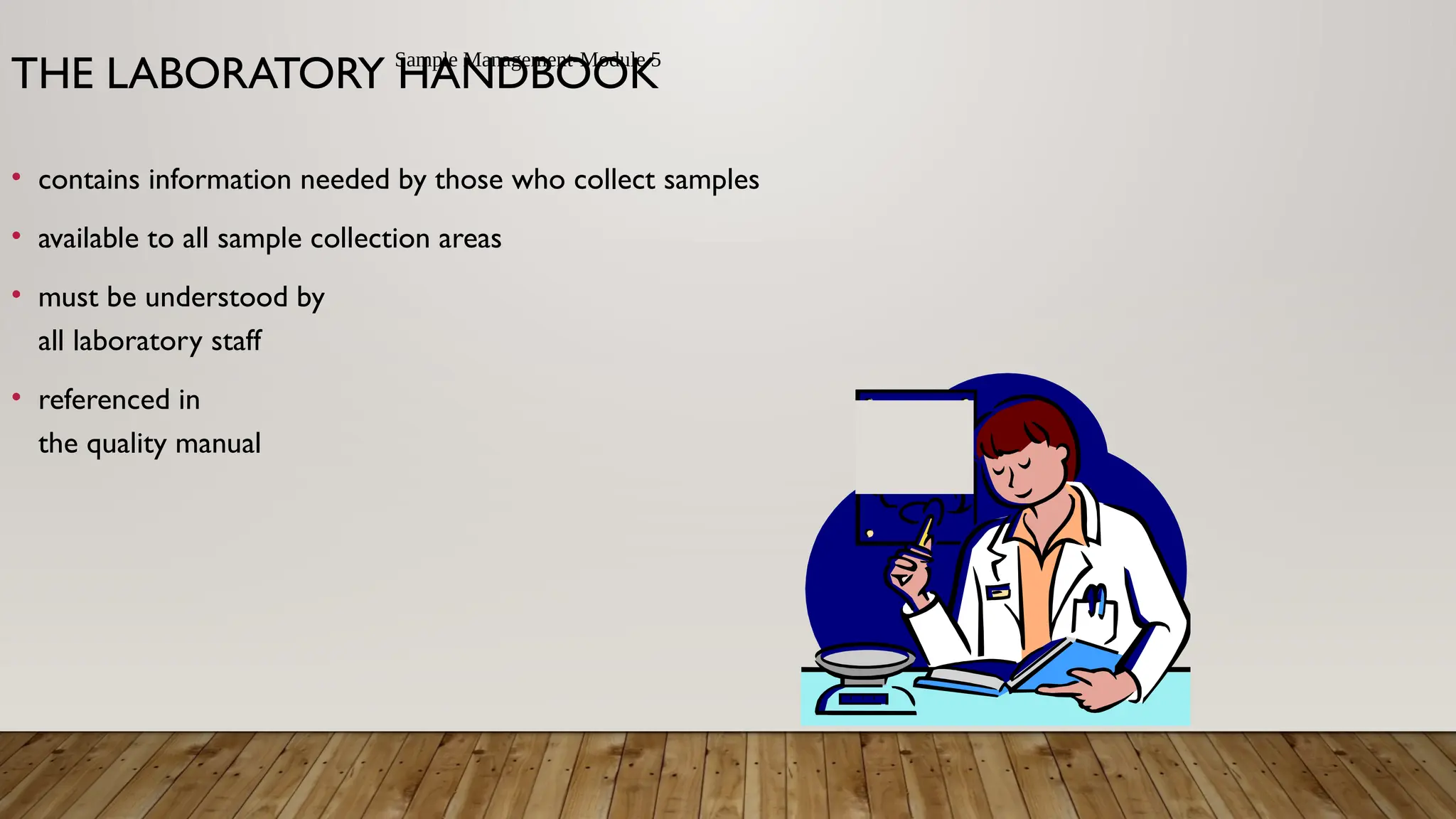
• contains information needed by those who collect samples
• available to all sample collection areas
• must be understood by
all laboratory staff
• referenced in
the quality manual
Sample Management-Module 5
LABORATORY HANDBOOK CONTENTS
 name and address of laboratory
 contact names and telephone numbers
 hours of operation
 list of tests that can be ordered
 sample collection procedures
 sample transport procedures
 expected turn around times (TAT)
 how urgent requests are handled
Sample Management-Module 5
4
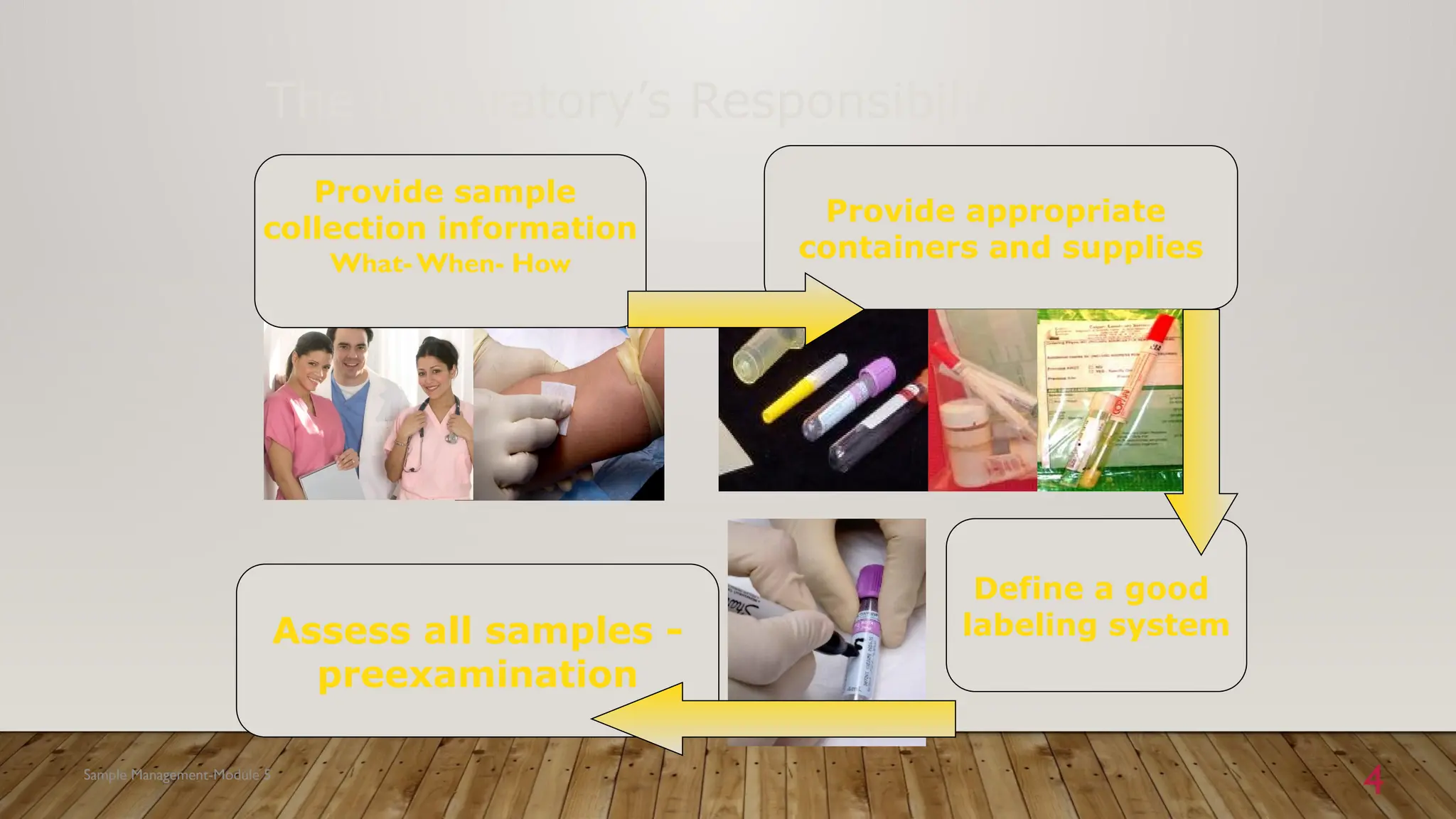
Define a good
labeling system
Assess all samples -
preexamination
Provide sample
collection information
What-When- How
The Laboratory’s Responsibilities
Provide appropriate
containers and supplies
OUTLINE
BACKGROUND
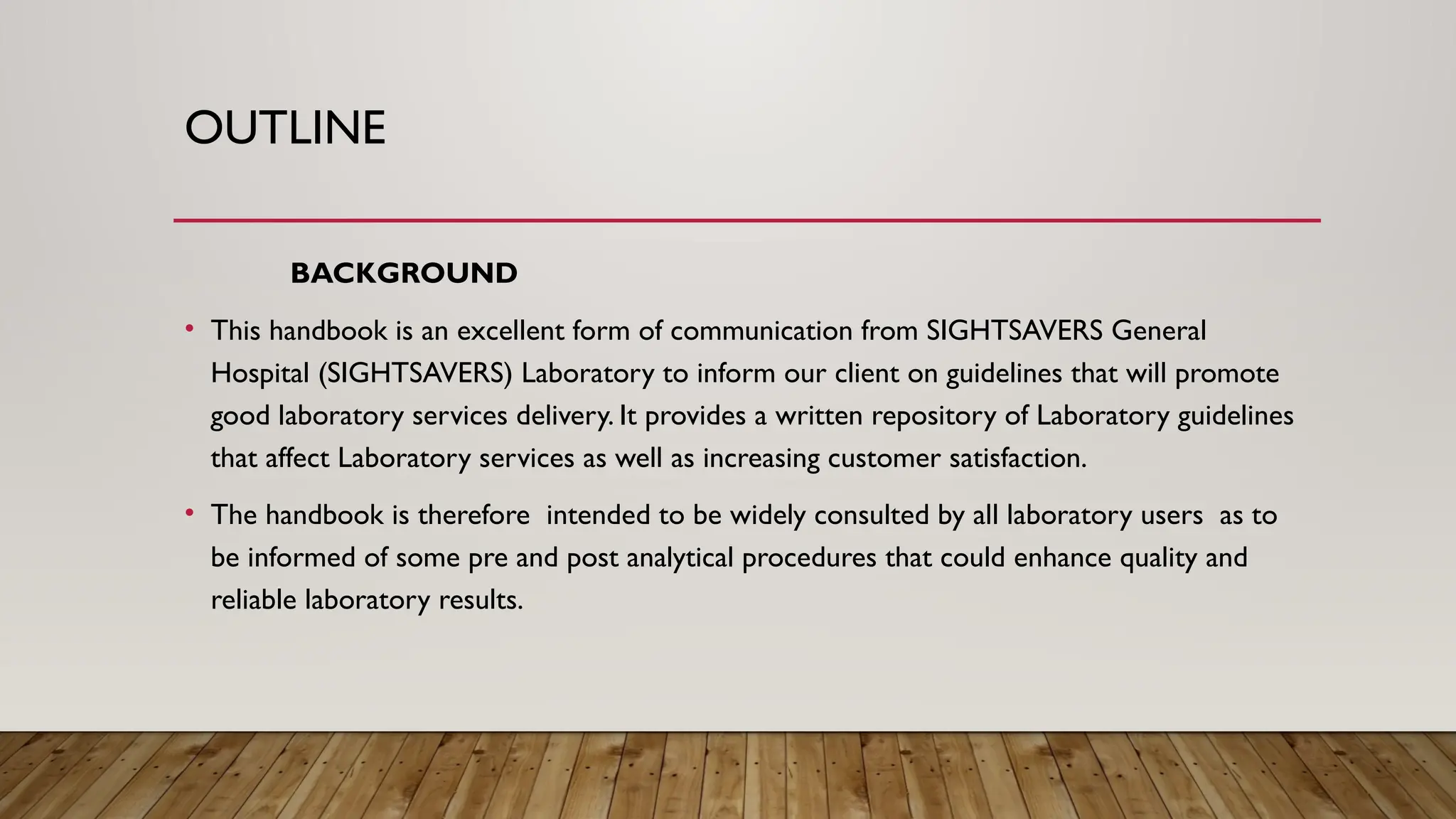
• This handbook is an excellent form of communication from SIGHTSAVERS General
Hospital (SIGHTSAVERS) Laboratory to inform our client on guidelines that will promote
good laboratory services delivery. It provides a written repository of Laboratory guidelines
that affect Laboratory services as well as increasing customer satisfaction.
• The handbook is therefore intended to be widely consulted by all laboratory users as to
be informed of some pre and post analytical procedures that could enhance quality and
reliable laboratory results.
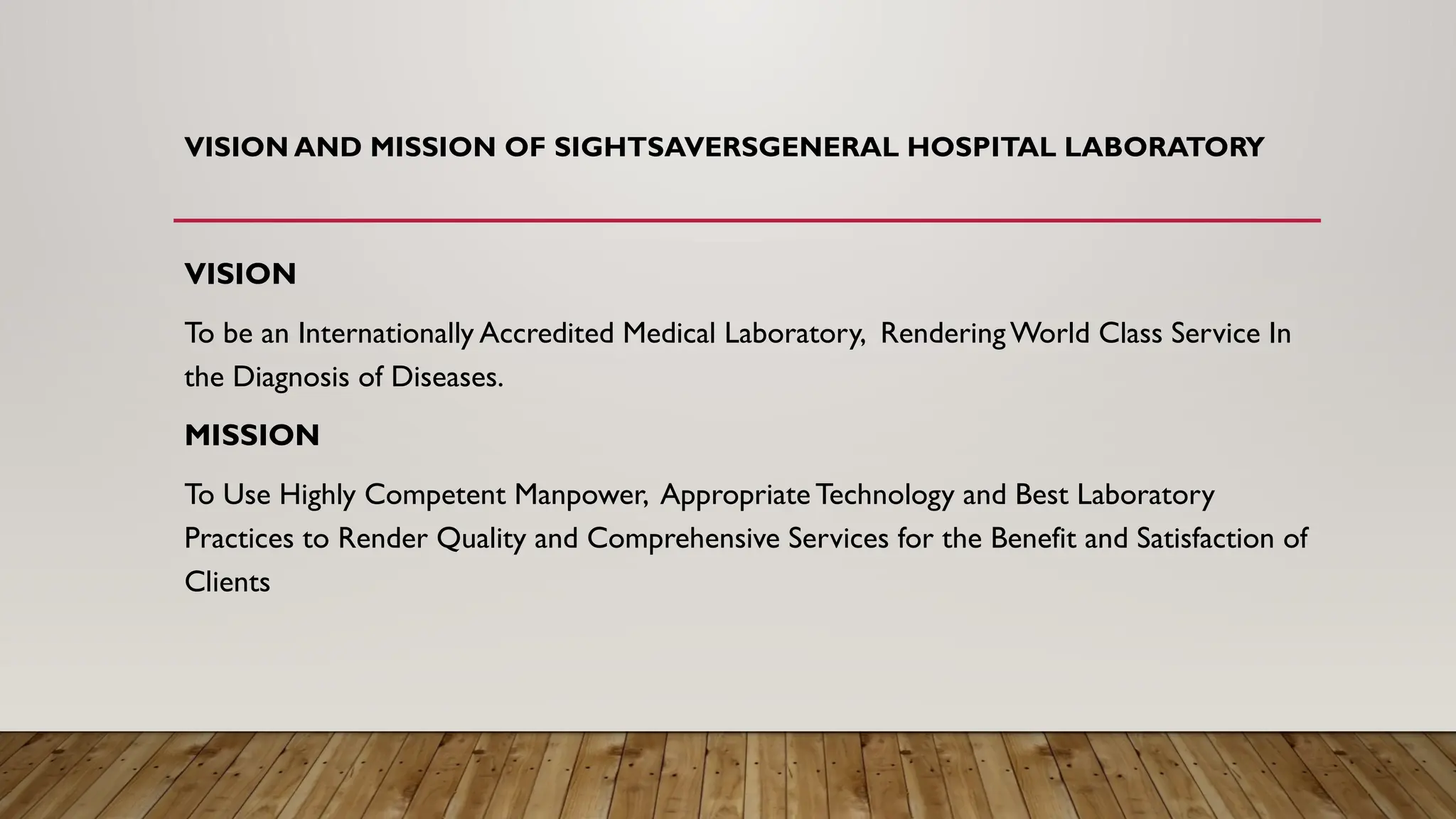
VISION AND MISSION OF SIGHTSAVERSGENERAL HOSPITAL LABORATORY
VISION
To be an Internationally Accredited Medical Laboratory, RenderingWorld Class Service In
the Diagnosis of Diseases.
MISSION
To Use Highly Competent Manpower, Appropriate Technology and Best Laboratory
Practices to Render Quality and Comprehensive Services for the Benefit and Satisfaction of
Clients
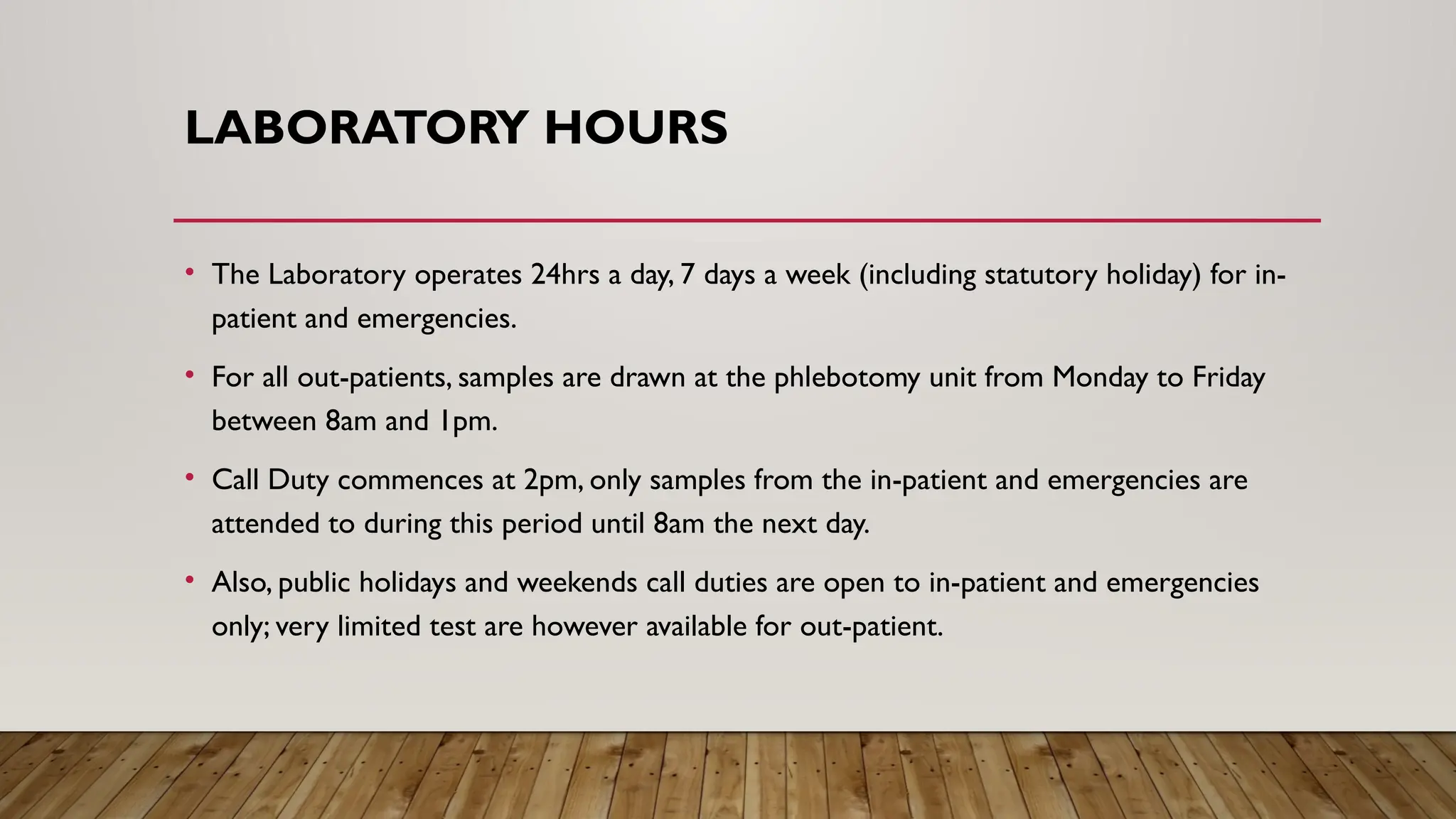
LABORATORY HOURS
• The Laboratory operates 24hrs a day, 7 days a week (including statutory holiday) for in-
patient and emergencies.
• For all out-patients, samples are drawn at the phlebotomy unit from Monday to Friday
between 8am and 1pm.
• Call Duty commences at 2pm, only samples from the in-patient and emergencies are
attended to during this period until 8am the next day.
• Also, public holidays and weekends call duties are open to in-patient and emergencies
only; very limited test are however available for out-patient.
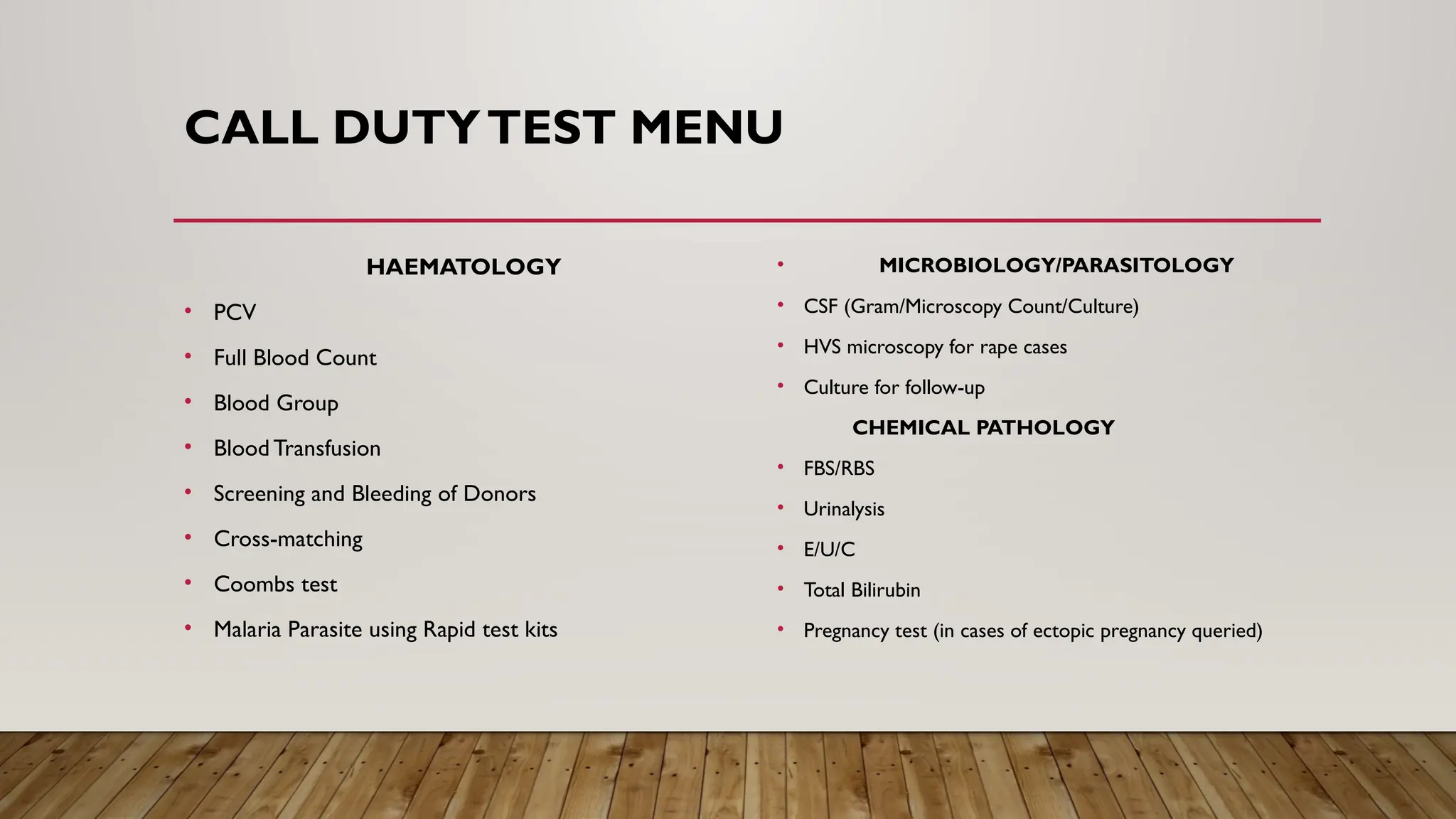
CALL DUTYTEST MENU
HAEMATOLOGY
• PCV
• Full Blood Count
• Blood Group
• Blood Transfusion
• Screening and Bleeding of Donors
• Cross-matching
• Coombs test
• Malaria Parasite using Rapid test kits
• MICROBIOLOGY/PARASITOLOGY
• CSF (Gram/Microscopy Count/Culture)
• HVS microscopy for rape cases
• Culture for follow-up
CHEMICAL PATHOLOGY
• FBS/RBS
• Urinalysis
• E/U/C
• Total Bilirubin
• Pregnancy test (in cases of ectopic pregnancy queried)
SPECIMEN COLLECTION, PROCESSING AND HANDLING
• Patients must have a valid SIGHTSAVERSGeneral Hospital’s card
• Peak hours are between 8am and 11am when one to one and a half hour wait can be
expected..Test cannot be performed without a valid requisition.
• 24 hours urine collections, swab and stool samples maybe dropped off at the specimens
collection centre, but please ensure that the specimen containers are correctly labelled.
• Fasting generally means no food or drinks are to be ingested for 8-12hours. Patients are
to consult their physicians regarding any medication they may be taking
BLOOD SPECIMEN
• Samples for laboratory requests from the wards will be collected by the clinician’s on
duty in the wards.
• The out-patients will visit the laboratory, where the phlebotomist collect blood sample
into the appropriate specimen bottle, for any laboratory investigations between 8am to
1pm Mondays to Fridays.
SITE SELECTION FOR BLOOD COLLECTION:APPROVED SITES
• Ante-cubital area of the arm: the cephalic, median cubital and basillic vein are the three most common veins for
use when drawing blood. These are found in the ante-cubital focal area of the arm.The median cubital, which is
preferred, is found close to the centre.The basillic vein is found on the medial or inner part of the ante-cubital
area and the cephalic is found on the outer or lateral section.
• Back of the hand or side of the wrist.
• Back of the hand or side of the wrist below the lock.
• Antecubital area of the arm above the lock.
• Back of the hand or side of the wrist below the I.V. line. I.V. must be turned off by the physician/nurse for a
minimum of three (3) minutes prior to collection.
• Foot and ankle only with written permission of physician/nurse
IDENTIFICATION OF PATIENTS
• Proper identification of patient is the most essential step that must take place before blood
collection can be done. If the wrong patient’s blood is drawn, the results can be harmful.A patient may
be treated for a condition that he or she does not have, leading to serious harm.
• A phlebotomist will identify the in-patient for blood collection by the use of hospital identification
number or unique ID, name ,sex and age of the patient.
• The phlebotomist will identify an out-patient by courteously asking them to state their full name, age,
as well as by confirming the hospital no. on the requisition form.
• Paediatric patients may be identified by their patient/guardian and with details on the requisition form.
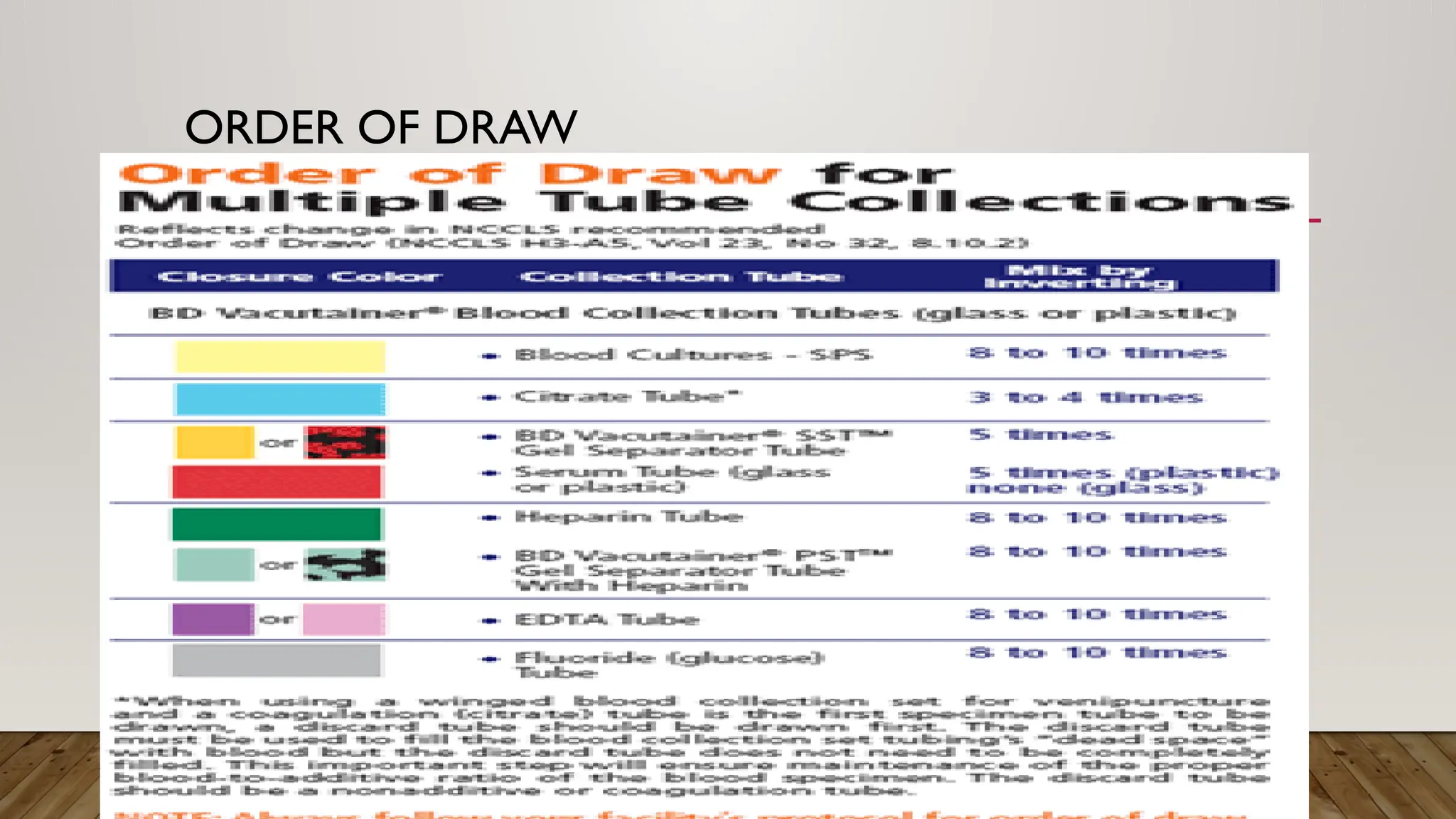
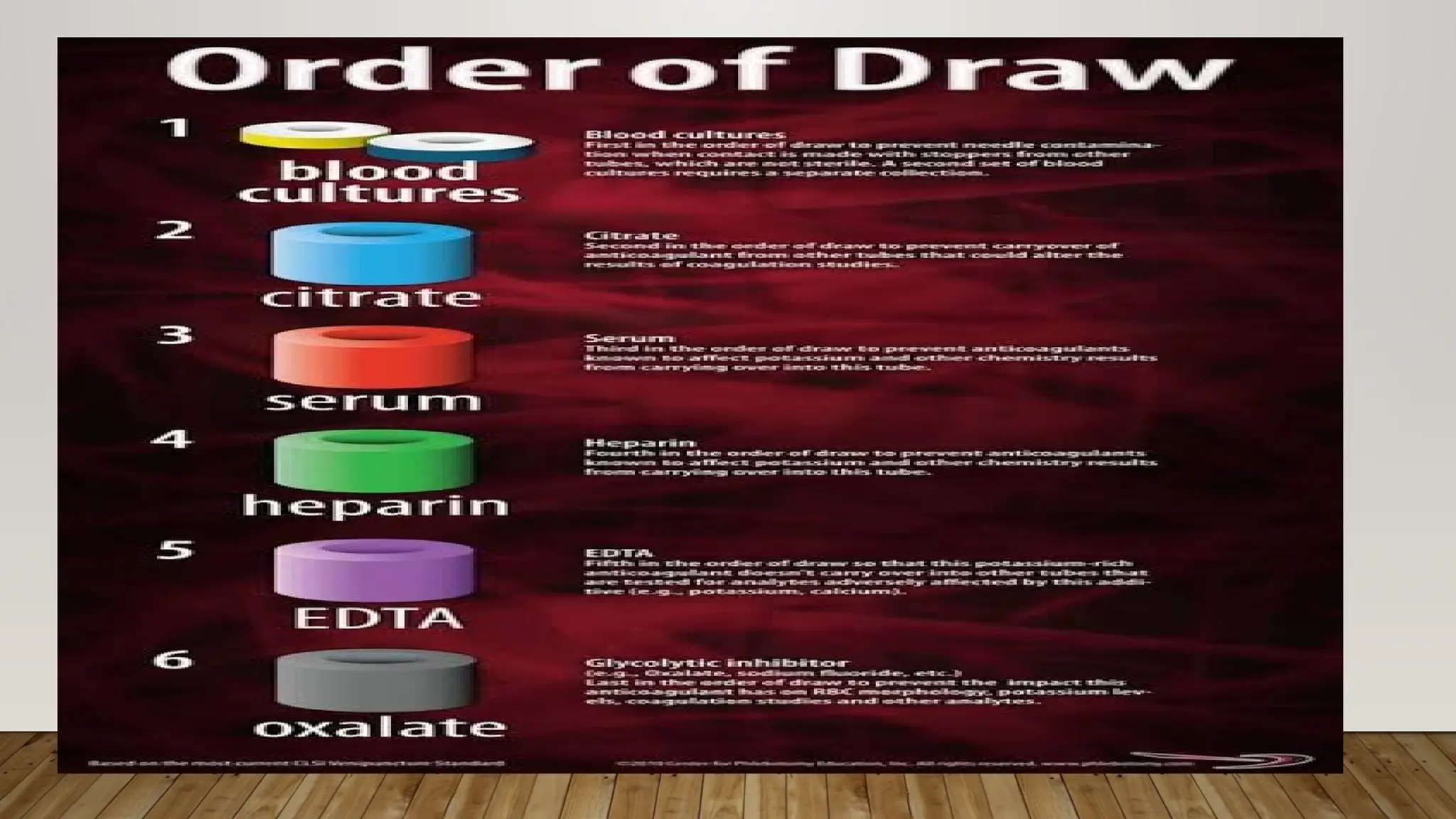
ORDER OF DRAW
LABELLING OF SAMPLE
Specimen containers must be labelled legibly.A properly labelled sample is essential so that the result of the test
matches the patient.
• The key elements in labelling are:
• i. Patient’s surname, first name
• ii. Laboratory ID no.
• NOTE: Both MUST match the same on the requisition form.
• iii. Date, time of collection and initials of the phlebotomist must be on the label of each bottle.
• iv. The above must match the request.
• v. All specimens collected must be in the laboratory within an hour of collection for processing.
NECESSARY PRECAUTIONS
• i. Universal precautions must be observed during phlebotomy
• ii. Wear your personal protective equipment (PPE):- laboratory coats, disposable gloves, eyes goggles where necessary,
covered toed shoes and thoroughly wash your hand afterwards.
• iii. Do not smoke, eat or drink in areas in which blood are handled.
• iv. Clean and disinfect all spills using disinfectant such as 0.5% sodium hypochlorite (BLEACH SOLUTION) or other suitable
disinfectants.
• v. Blood collection must be by aseptic methods utilizing a sterile system and a single venepuncture.
• vi. Gently invert bottle 5 times to allow blood to mix with the anticoagulant additives.Vigorous shaking can cause haemolysis).
• vii. Avoid drawing blood from a haematoma, select another draw site.
• viii. Make sure the venepuncture site is dry before proceeding with draw.
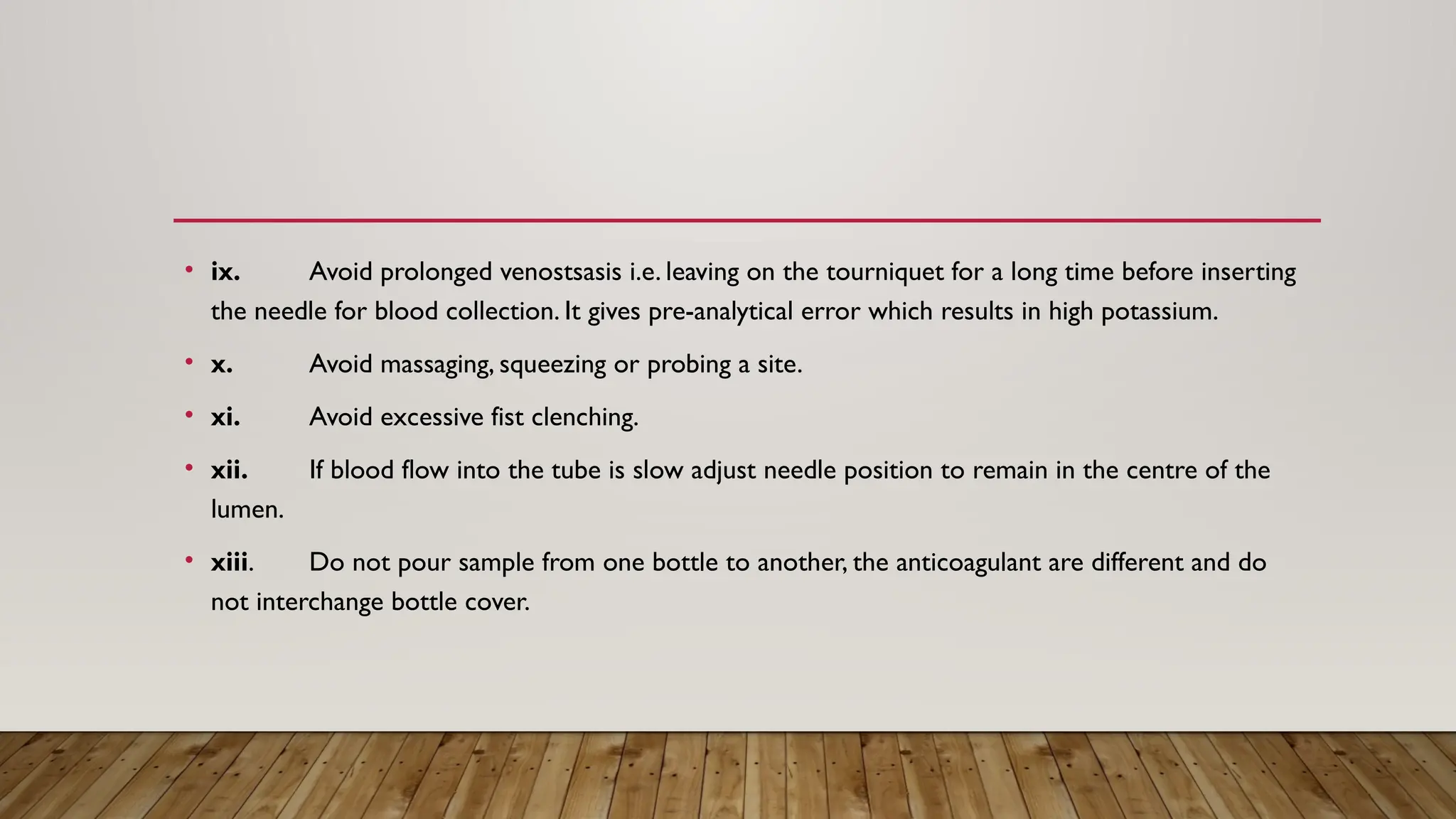
• ix. Avoid prolonged venostsasis i.e. leaving on the tourniquet for a long time before inserting
the needle for blood collection. It gives pre-analytical error which results in high potassium.
• x. Avoid massaging, squeezing or probing a site.
• xi. Avoid excessive fist clenching.
• xii. If blood flow into the tube is slow adjust needle position to remain in the centre of the
lumen.
• xiii. Do not pour sample from one bottle to another, the anticoagulant are different and do
not interchange bottle cover.
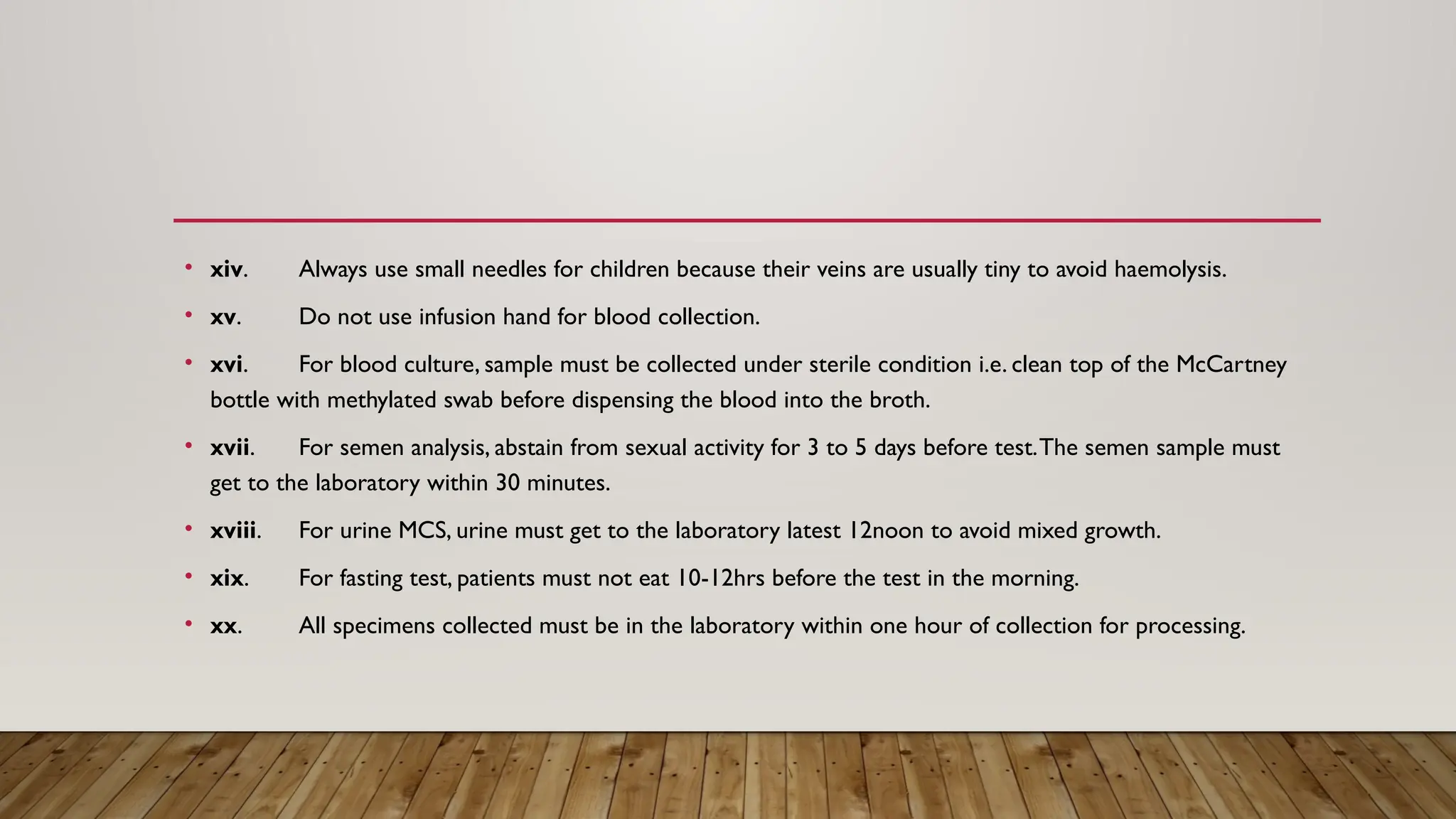
• xiv. Always use small needles for children because their veins are usually tiny to avoid haemolysis.
• xv. Do not use infusion hand for blood collection.
• xvi. For blood culture, sample must be collected under sterile condition i.e. clean top of the McCartney
bottle with methylated swab before dispensing the blood into the broth.
• xvii. For semen analysis, abstain from sexual activity for 3 to 5 days before test.The semen sample must
get to the laboratory within 30 minutes.
• xviii. For urine MCS, urine must get to the laboratory latest 12noon to avoid mixed growth.
• xix. For fasting test, patients must not eat 10-12hrs before the test in the morning.
• xx. All specimens collected must be in the laboratory within one hour of collection for processing.
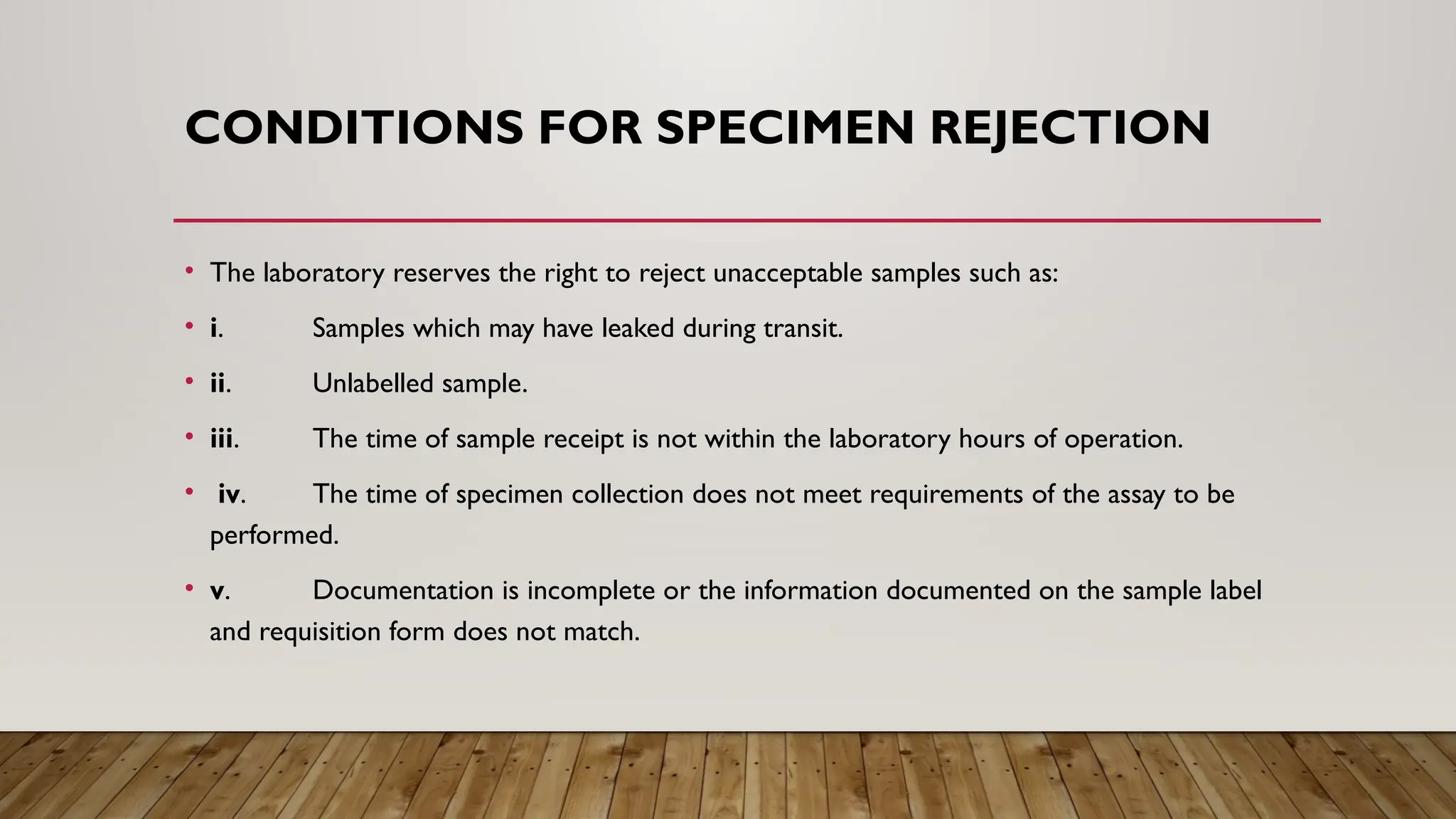
CONDITIONS FOR SPECIMEN REJECTION
• The laboratory reserves the right to reject unacceptable samples such as:
• i. Samples which may have leaked during transit.
• ii. Unlabelled sample.
• iii. The time of sample receipt is not within the laboratory hours of operation.
• iv. The time of specimen collection does not meet requirements of the assay to be
performed.
• v. Documentation is incomplete or the information documented on the sample label
and requisition form does not match.
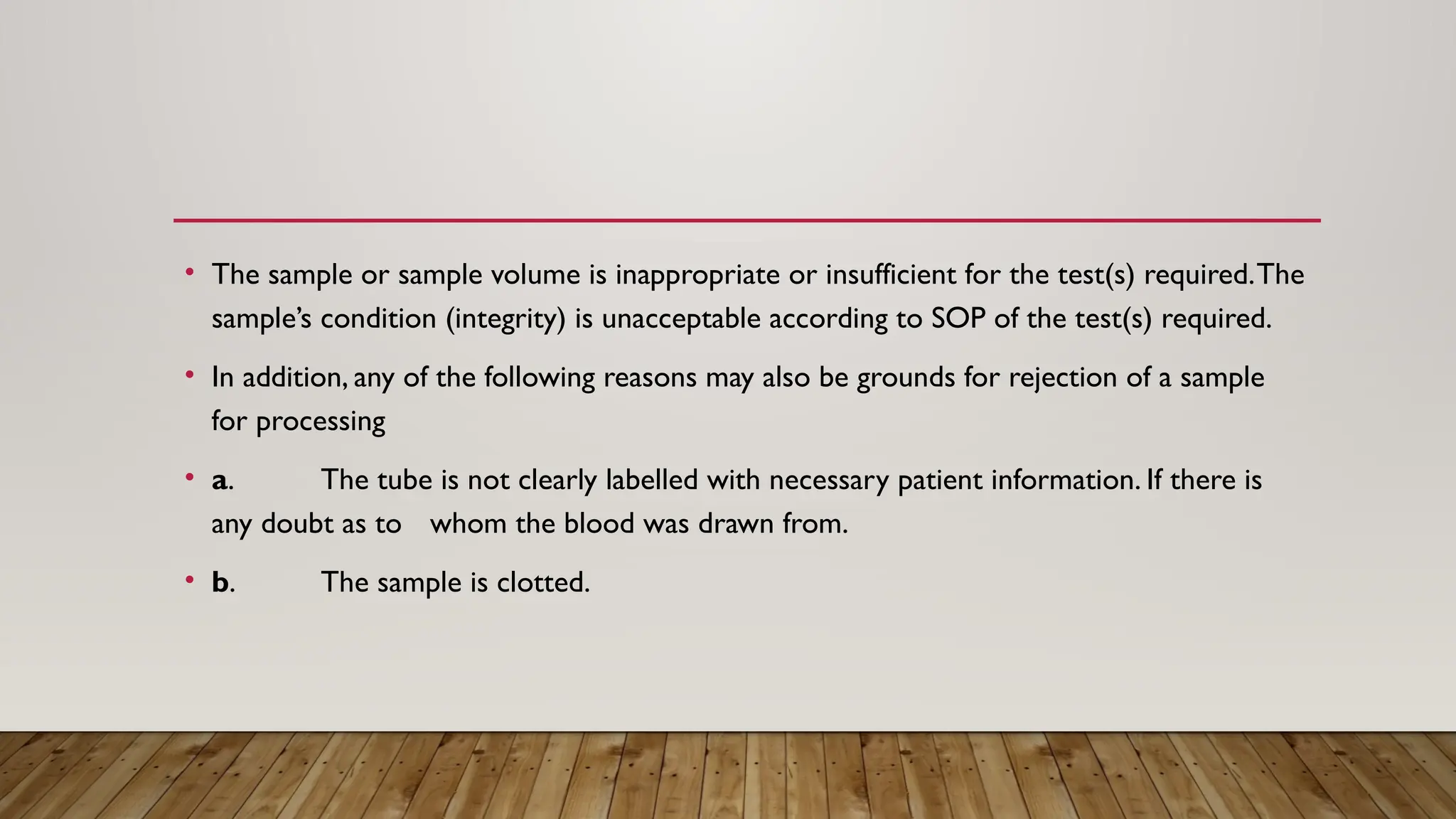
• The sample or sample volume is inappropriate or insufficient for the test(s) required.The
sample’s condition (integrity) is unacceptable according to SOP of the test(s) required.
• In addition, any of the following reasons may also be grounds for rejection of a sample
for processing
• a. The tube is not clearly labelled with necessary patient information. If there is
any doubt as to whom the blood was drawn from.
• b. The sample is clotted.
• c. If the integrity of the sample has been contaminated or compromised in any way.The
following are several ways that this could occur:
• i. If the blood tube was not sterile prior to use.
• ii. If the blood sample from several patients could have been contaminated with other
blood.
• iii. There was broken specimen container.
• iv. There was a delay between collection of specimen and arrival in the laboratory.
• v. Sample for haematology and CD4 assay which may contain CLOT will not be accepted.
REQUISITION FORM
• The requisition form must be completed appropriately.The following patient information must be recorded:
• a. Hospital number
• b. Surname and First name
• c. Date of birth/Age
• d. Gender
• The physician details must be recorded
• e. Name of physician
• f. Location: Clinic Ward
• The following specimen information must be recorded
• i. Date of sample collection
• ii. Time of collection
• iii. Check the box corresponding to the required test
• iv. Additional tests can be requested in the space indicated
TESTING
TESTING
• All testing procedures are performed within the laboratory.
BACKUP/REFERAL PROCEDURE
• Effective backup procedures have been put in place in case of eventuality without compromise of
standard or quality.
• In case of equipment breakdown, stock out of reagent,
• etc.Wuse General Hospital will be used back up or referral.
BIOHAZARD SPECIMEN BAG
• i. Tubes containing blood must be placed in a specimen biohazard bag.
• ii. Urine specimen and other biological fluids must be placed in separate biohazard bags.
• iii. Ensure that the urine container is tightly closed before being placed in the bags.
• iv. The requisition accompanying the specimen must be folded and placed in the pouch on the outside of the bag.
• v. The label identifying the patient must be placed directly on the specimen container and not in the bag.
• vi. Specimens identified only on the bag will be regarded as not identified and will be rejected by the laboratory.
• vii. Make sure the bags are tightly closed.
• viii. Only use one bag per patient.
SPECIMEN DELIVERY/TRANSPORT
• Triple packaging is used to reduce the risk when carrying infectious/blood borne/diagnostic samples.The
system consists of three layers.
• Primary Receptacle: A labelled primary watertight, leak-proof receptacle to containing the specimen.
The receptacle is wrapped in enough absorbent material to absorb all fluids in case of breakage.
• Secondary receptacle: A second durable water-tight, leak-proof receptacle to enclose and protect the
primary receptacle(s). Several wrapped primary receptacles may be placed in one secondary receptacle.
Sufficient additional absorbent material must be used to cushion multiple primary receptacles.
• Outer shipping package: The secondary receptacle is placed in an outer shipping package which
protects it and its content from outside influences such as physical damage or water while in transit.
RESULT REPORTING
• i. As soon as test results are authenticated in the laboratory, they are posted for
collection by patients or by the clinicians.
• ii. Critical results may be phoned to the clinicians or the patients, while hard copies are
also made available to them on request
• iii. For out-patients confirmations of result posting starts by 9am.
• iv. Whilst laboratory performs internal and external assurance throughout the day, it is
possible for random errors to occur. Following technical validation, it is therefore possible for
inaccurate results to be released even though they have passed through various checks and flags.
VARIOUSTEST REQUIRING SPECIAL PRECAUTION
COLLECTION
GlucoseTolerantTest/FBS/RBS
• This test is generally performed 10-12hours after an overnight fast. We suggest fasting from 9pm previous
day, and then present to the laboratory the following morning by 8am.The test must be performed before
10am for proper interpretation.
• Patients are required to bring along a small size of glucose D, a clean wide mouthed cup, a clean spoon and
bottled water.
• No calorie intake should be taken 10hours before the first blood sample is taken and throughout the test.
• Do not engage in strenuous activity for 8-14hours before the first sample is taken.The test lasts for two (2)
hours; patients are required to remain seated at the test centre without smoking
• What affects the test?
• i. Acute stress (surgery, injection, emotional cause Or fever) or vigorous exercise.
• ii. Certain medications as well as alcohol.
• iii. Low carbohydrates diet in the days before the test.
• iv. Vomiting during test may also cause inaccurate results
PATIENTS INSTRUCTION FOR A MID-STREAM URINE SPECIMEN
• Container used: Sterile container
• i. Never collect urine from a bed pan or urinal
• ii. Thoroughly clean the genital area prior to collection procedures to ensure that
the specimen obtained is not contaminated who the skin bacteria.
• iii. Transport specimen to the laboratory within one (1) hour of collection. If this is
not possible, the urine specimen should be refrigerated and transported within 24hours.
• iv. Make sure the specimen is clearly labelled with the name and other necessary
information.
PATIENTS INSTRUCTION FOR STOOL COLLECTION
• Container used: Sterile container with spoon
• To ensure that the best quality specimen is collected, the following must be adhered to
• i. Stool must not be contaminated with urine or water from toilet bowl.
• ii. Do not use toilet paper to collect the stool sample.
• iii. The following medication might interfere with the results of the stool test, therefore you should wait
seven days before providing a specimen if you have taken any medication of the following:-
• a. Bismuth
• b. Magnesium
• c. Mineral oil
• d. Barium meal or Barium enema test
PROCEDURE FOR PASSING STOOL
• i. Pass the stool sample directly into a sterile, wide mouth, leak proof container with a tight fitting lid.
• ii. To prevent stool from mixing with water, either place an aluminium pie plate in the bowl or place
saran wrap over the toilet seat to collect stool sample.
• iii. With a cardboard stick or with the spoon provided in the white top container provided, spoon out
an egg size portion and place it into the sterile container.
• iv. It is important to bring he stool specimen to the laboratory the same day and preferably within 2
hours after collection. If a delay of more than 2 hours is anticipated place the specimen in your refrigerator
prior to bringing it to the laboratory.
• v. If your doctor asks you to collect 2 or 3 stools, wait 48hours between samples.
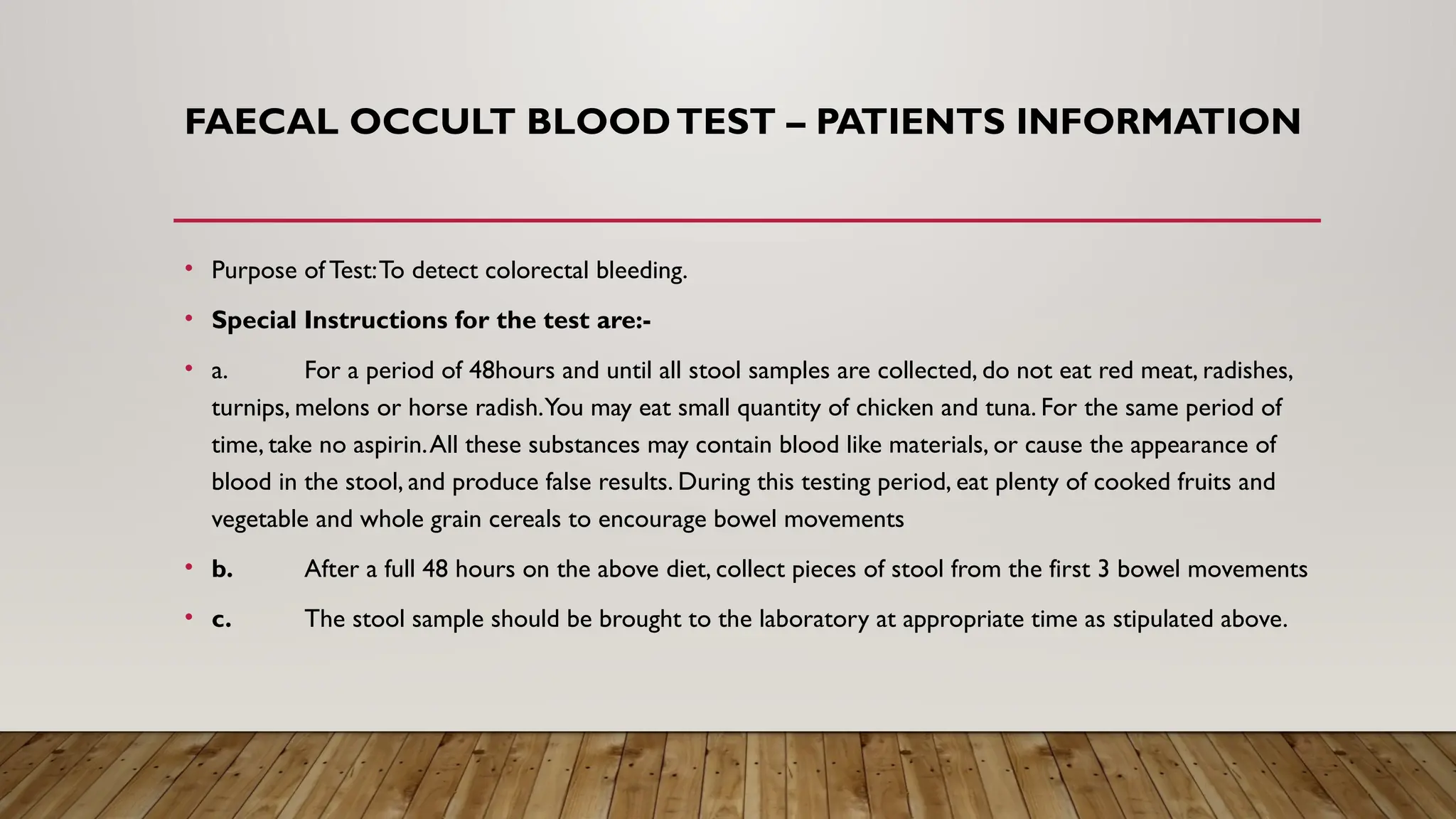
FAECAL OCCULT BLOODTEST – PATIENTS INFORMATION
• Purpose of Test:To detect colorectal bleeding.
• Special Instructions for the test are:-
• a. For a period of 48hours and until all stool samples are collected, do not eat red meat, radishes,
turnips, melons or horse radish.You may eat small quantity of chicken and tuna. For the same period of
time, take no aspirin.All these substances may contain blood like materials, or cause the appearance of
blood in the stool, and produce false results. During this testing period, eat plenty of cooked fruits and
vegetable and whole grain cereals to encourage bowel movements
• b. After a full 48 hours on the above diet, collect pieces of stool from the first 3 bowel movements
• c. The stool sample should be brought to the laboratory at appropriate time as stipulated above.
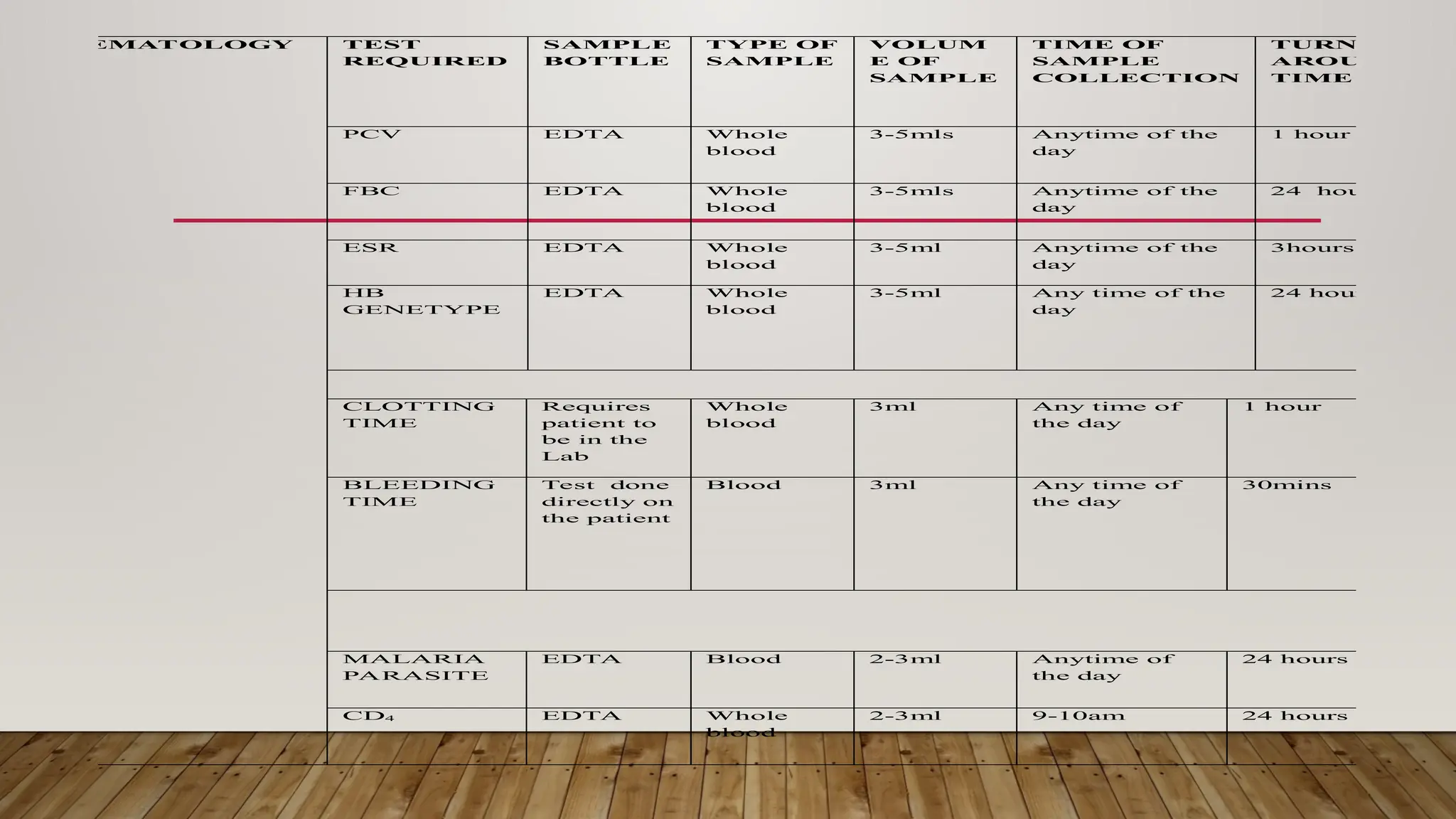
HAEMATOLOGY TEST
REQUIRED
SAMPLE
BOTTLE
TYPE OF
SAMPLE
VOLUM
E OF
SAMPLE
TIME OF
SAMPLE
COLLECTION
TURN
AROUND
TIME
PCV EDTA Whole
blood
3-5mls Anytime of the
day
1 hour
FBC EDTA Whole
blood
3-5mls Anytime of the
day
24 hours
ESR EDTA Whole
blood
3-5ml Anytime of the
day
3hours
HB
GENETYPE
EDTA Whole
blood
3-5ml Any time of the
day
24 hours
CLOTTING
TIME
Requires
patient to
be in the
Lab
Whole
blood
3ml Any time of
the day
1 hour
BLEEDING
TIME
Test done
directly on
the patient
Blood 3ml Any time of
the day
30mins
MALARIA
PARASITE
EDTA Blood 2-3ml Anytime of
the day
24 hours
CD4 EDTA Whole
blood
2-3ml 9-10am 24 hours
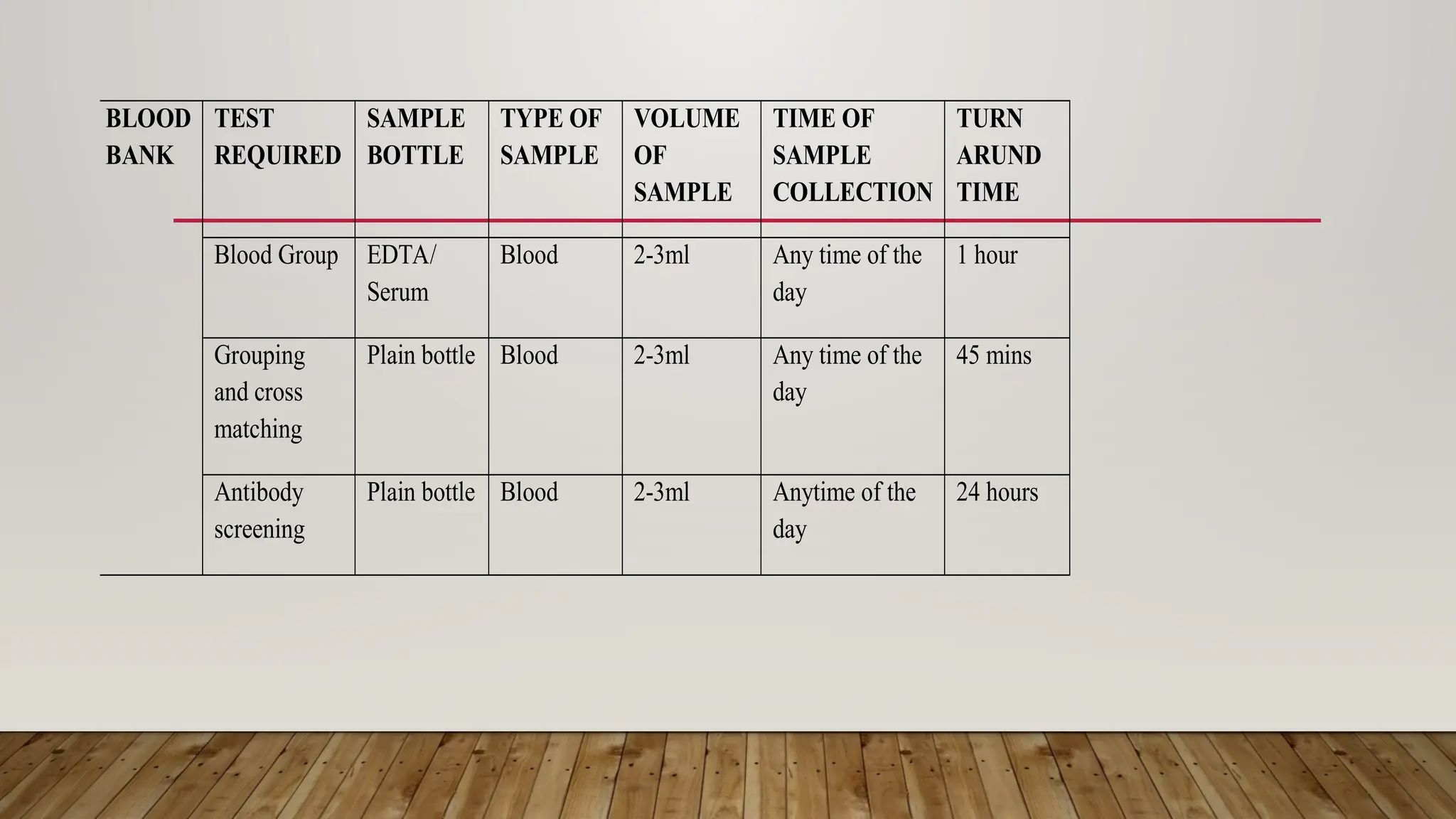
BLOOD
BANK
TEST
REQUIRED
SAMPLE
BOTTLE
TYPE OF
SAMPLE
VOLUME
OF
SAMPLE
TIME OF
SAMPLE
COLLECTION
TURN
ARUND
TIME
Blood Group EDTA/
Serum
Blood 2-3ml Any time of the
day
1 hour
Grouping
and cross
matching
Plain bottle Blood 2-3ml Any time of the
day
45 mins
Antibody
screening
Plain bottle Blood 2-3ml Anytime of the
day
24 hours
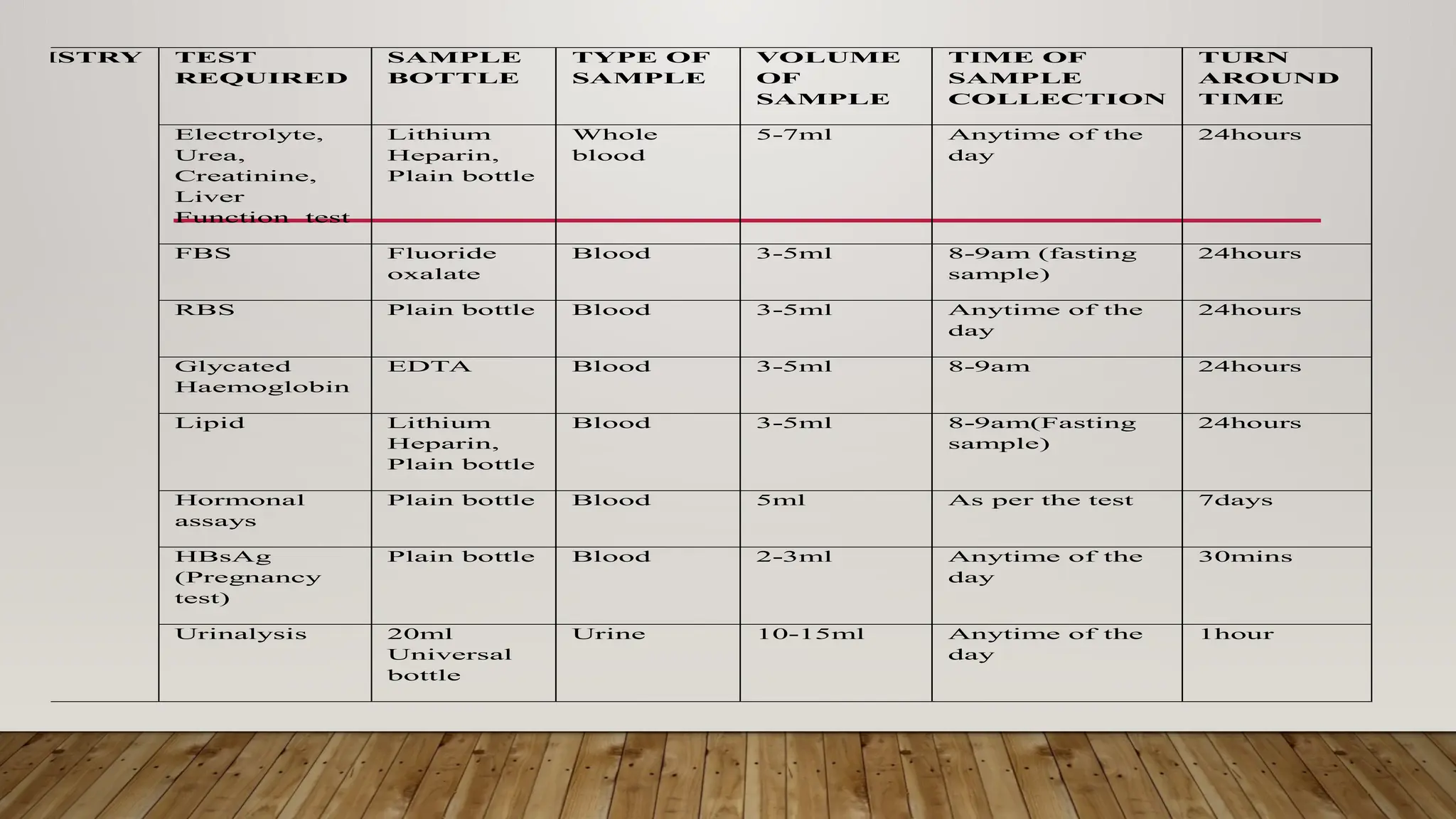
EMISTRY TEST
REQUIRED
SAMPLE
BOTTLE
TYPE OF
SAMPLE
VOLUME
OF
SAMPLE
TIME OF
SAMPLE
COLLECTION
TURN
AROUND
TIME
Electrolyte,
Urea,
Creatinine,
Liver
Function test
Lithium
Heparin,
Plain bottle
Whole
blood
5-7ml Anytime of the
day
24hours
FBS Fluoride
oxalate
Blood 3-5ml 8-9am (fasting
sample)
24hours
RBS Plain bottle Blood 3-5ml Anytime of the
day
24hours
Glycated
Haemoglobin
EDTA Blood 3-5ml 8-9am 24hours
Lipid Lithium
Heparin,
Plain bottle
Blood 3-5ml 8-9am(Fasting
sample)
24hours
Hormonal
assays
Plain bottle Blood 5ml As per the test 7days
HBsAg
(Pregnancy
test)
Plain bottle Blood 2-3ml Anytime of the
day
30mins
Urinalysis 20ml
Universal
bottle
Urine 10-15ml Anytime of the
day
1hour

LABORATORY HANDBOOK FOR MEDICAL LABORATORY

  • 1.
  • 2.
    Sample Management-Module 5 THELABORATORY HANDBOOK • contains information needed by those who collect samples • available to all sample collection areas • must be understood by all laboratory staff • referenced in the quality manual
  • 3.
    Sample Management-Module 5 LABORATORYHANDBOOK CONTENTS  name and address of laboratory  contact names and telephone numbers  hours of operation  list of tests that can be ordered  sample collection procedures  sample transport procedures  expected turn around times (TAT)  how urgent requests are handled
  • 4.
    Sample Management-Module 5 4 Definea good labeling system Assess all samples - preexamination Provide sample collection information What-When- How The Laboratory’s Responsibilities Provide appropriate containers and supplies
  • 5.
    OUTLINE BACKGROUND • This handbookis an excellent form of communication from SIGHTSAVERS General Hospital (SIGHTSAVERS) Laboratory to inform our client on guidelines that will promote good laboratory services delivery. It provides a written repository of Laboratory guidelines that affect Laboratory services as well as increasing customer satisfaction. • The handbook is therefore intended to be widely consulted by all laboratory users as to be informed of some pre and post analytical procedures that could enhance quality and reliable laboratory results.
  • 6.
    VISION AND MISSIONOF SIGHTSAVERSGENERAL HOSPITAL LABORATORY VISION To be an Internationally Accredited Medical Laboratory, RenderingWorld Class Service In the Diagnosis of Diseases. MISSION To Use Highly Competent Manpower, Appropriate Technology and Best Laboratory Practices to Render Quality and Comprehensive Services for the Benefit and Satisfaction of Clients
  • 7.
    LABORATORY HOURS • TheLaboratory operates 24hrs a day, 7 days a week (including statutory holiday) for in- patient and emergencies. • For all out-patients, samples are drawn at the phlebotomy unit from Monday to Friday between 8am and 1pm. • Call Duty commences at 2pm, only samples from the in-patient and emergencies are attended to during this period until 8am the next day. • Also, public holidays and weekends call duties are open to in-patient and emergencies only; very limited test are however available for out-patient.
  • 8.
    CALL DUTYTEST MENU HAEMATOLOGY •PCV • Full Blood Count • Blood Group • Blood Transfusion • Screening and Bleeding of Donors • Cross-matching • Coombs test • Malaria Parasite using Rapid test kits • MICROBIOLOGY/PARASITOLOGY • CSF (Gram/Microscopy Count/Culture) • HVS microscopy for rape cases • Culture for follow-up CHEMICAL PATHOLOGY • FBS/RBS • Urinalysis • E/U/C • Total Bilirubin • Pregnancy test (in cases of ectopic pregnancy queried)
  • 9.
    SPECIMEN COLLECTION, PROCESSINGAND HANDLING • Patients must have a valid SIGHTSAVERSGeneral Hospital’s card • Peak hours are between 8am and 11am when one to one and a half hour wait can be expected..Test cannot be performed without a valid requisition. • 24 hours urine collections, swab and stool samples maybe dropped off at the specimens collection centre, but please ensure that the specimen containers are correctly labelled. • Fasting generally means no food or drinks are to be ingested for 8-12hours. Patients are to consult their physicians regarding any medication they may be taking
  • 10.
    BLOOD SPECIMEN • Samplesfor laboratory requests from the wards will be collected by the clinician’s on duty in the wards. • The out-patients will visit the laboratory, where the phlebotomist collect blood sample into the appropriate specimen bottle, for any laboratory investigations between 8am to 1pm Mondays to Fridays.
  • 11.
    SITE SELECTION FORBLOOD COLLECTION:APPROVED SITES • Ante-cubital area of the arm: the cephalic, median cubital and basillic vein are the three most common veins for use when drawing blood. These are found in the ante-cubital focal area of the arm.The median cubital, which is preferred, is found close to the centre.The basillic vein is found on the medial or inner part of the ante-cubital area and the cephalic is found on the outer or lateral section. • Back of the hand or side of the wrist. • Back of the hand or side of the wrist below the lock. • Antecubital area of the arm above the lock. • Back of the hand or side of the wrist below the I.V. line. I.V. must be turned off by the physician/nurse for a minimum of three (3) minutes prior to collection. • Foot and ankle only with written permission of physician/nurse
  • 12.
    IDENTIFICATION OF PATIENTS •Proper identification of patient is the most essential step that must take place before blood collection can be done. If the wrong patient’s blood is drawn, the results can be harmful.A patient may be treated for a condition that he or she does not have, leading to serious harm. • A phlebotomist will identify the in-patient for blood collection by the use of hospital identification number or unique ID, name ,sex and age of the patient. • The phlebotomist will identify an out-patient by courteously asking them to state their full name, age, as well as by confirming the hospital no. on the requisition form. • Paediatric patients may be identified by their patient/guardian and with details on the requisition form.
  • 13.
  • 15.
    LABELLING OF SAMPLE Specimencontainers must be labelled legibly.A properly labelled sample is essential so that the result of the test matches the patient. • The key elements in labelling are: • i. Patient’s surname, first name • ii. Laboratory ID no. • NOTE: Both MUST match the same on the requisition form. • iii. Date, time of collection and initials of the phlebotomist must be on the label of each bottle. • iv. The above must match the request. • v. All specimens collected must be in the laboratory within an hour of collection for processing.
  • 16.
    NECESSARY PRECAUTIONS • i.Universal precautions must be observed during phlebotomy • ii. Wear your personal protective equipment (PPE):- laboratory coats, disposable gloves, eyes goggles where necessary, covered toed shoes and thoroughly wash your hand afterwards. • iii. Do not smoke, eat or drink in areas in which blood are handled. • iv. Clean and disinfect all spills using disinfectant such as 0.5% sodium hypochlorite (BLEACH SOLUTION) or other suitable disinfectants. • v. Blood collection must be by aseptic methods utilizing a sterile system and a single venepuncture. • vi. Gently invert bottle 5 times to allow blood to mix with the anticoagulant additives.Vigorous shaking can cause haemolysis). • vii. Avoid drawing blood from a haematoma, select another draw site. • viii. Make sure the venepuncture site is dry before proceeding with draw.
  • 17.
    • ix. Avoidprolonged venostsasis i.e. leaving on the tourniquet for a long time before inserting the needle for blood collection. It gives pre-analytical error which results in high potassium. • x. Avoid massaging, squeezing or probing a site. • xi. Avoid excessive fist clenching. • xii. If blood flow into the tube is slow adjust needle position to remain in the centre of the lumen. • xiii. Do not pour sample from one bottle to another, the anticoagulant are different and do not interchange bottle cover.
  • 18.
    • xiv. Alwaysuse small needles for children because their veins are usually tiny to avoid haemolysis. • xv. Do not use infusion hand for blood collection. • xvi. For blood culture, sample must be collected under sterile condition i.e. clean top of the McCartney bottle with methylated swab before dispensing the blood into the broth. • xvii. For semen analysis, abstain from sexual activity for 3 to 5 days before test.The semen sample must get to the laboratory within 30 minutes. • xviii. For urine MCS, urine must get to the laboratory latest 12noon to avoid mixed growth. • xix. For fasting test, patients must not eat 10-12hrs before the test in the morning. • xx. All specimens collected must be in the laboratory within one hour of collection for processing.
  • 19.
    CONDITIONS FOR SPECIMENREJECTION • The laboratory reserves the right to reject unacceptable samples such as: • i. Samples which may have leaked during transit. • ii. Unlabelled sample. • iii. The time of sample receipt is not within the laboratory hours of operation. • iv. The time of specimen collection does not meet requirements of the assay to be performed. • v. Documentation is incomplete or the information documented on the sample label and requisition form does not match.
  • 20.
    • The sampleor sample volume is inappropriate or insufficient for the test(s) required.The sample’s condition (integrity) is unacceptable according to SOP of the test(s) required. • In addition, any of the following reasons may also be grounds for rejection of a sample for processing • a. The tube is not clearly labelled with necessary patient information. If there is any doubt as to whom the blood was drawn from. • b. The sample is clotted.
  • 21.
    • c. Ifthe integrity of the sample has been contaminated or compromised in any way.The following are several ways that this could occur: • i. If the blood tube was not sterile prior to use. • ii. If the blood sample from several patients could have been contaminated with other blood. • iii. There was broken specimen container. • iv. There was a delay between collection of specimen and arrival in the laboratory. • v. Sample for haematology and CD4 assay which may contain CLOT will not be accepted.
  • 22.
    REQUISITION FORM • Therequisition form must be completed appropriately.The following patient information must be recorded: • a. Hospital number • b. Surname and First name • c. Date of birth/Age • d. Gender • The physician details must be recorded • e. Name of physician • f. Location: Clinic Ward • The following specimen information must be recorded • i. Date of sample collection • ii. Time of collection • iii. Check the box corresponding to the required test • iv. Additional tests can be requested in the space indicated
  • 23.
    TESTING TESTING • All testingprocedures are performed within the laboratory. BACKUP/REFERAL PROCEDURE • Effective backup procedures have been put in place in case of eventuality without compromise of standard or quality. • In case of equipment breakdown, stock out of reagent, • etc.Wuse General Hospital will be used back up or referral.
  • 24.
    BIOHAZARD SPECIMEN BAG •i. Tubes containing blood must be placed in a specimen biohazard bag. • ii. Urine specimen and other biological fluids must be placed in separate biohazard bags. • iii. Ensure that the urine container is tightly closed before being placed in the bags. • iv. The requisition accompanying the specimen must be folded and placed in the pouch on the outside of the bag. • v. The label identifying the patient must be placed directly on the specimen container and not in the bag. • vi. Specimens identified only on the bag will be regarded as not identified and will be rejected by the laboratory. • vii. Make sure the bags are tightly closed. • viii. Only use one bag per patient.
  • 25.
    SPECIMEN DELIVERY/TRANSPORT • Triplepackaging is used to reduce the risk when carrying infectious/blood borne/diagnostic samples.The system consists of three layers. • Primary Receptacle: A labelled primary watertight, leak-proof receptacle to containing the specimen. The receptacle is wrapped in enough absorbent material to absorb all fluids in case of breakage. • Secondary receptacle: A second durable water-tight, leak-proof receptacle to enclose and protect the primary receptacle(s). Several wrapped primary receptacles may be placed in one secondary receptacle. Sufficient additional absorbent material must be used to cushion multiple primary receptacles. • Outer shipping package: The secondary receptacle is placed in an outer shipping package which protects it and its content from outside influences such as physical damage or water while in transit.
  • 27.
    RESULT REPORTING • i.As soon as test results are authenticated in the laboratory, they are posted for collection by patients or by the clinicians. • ii. Critical results may be phoned to the clinicians or the patients, while hard copies are also made available to them on request • iii. For out-patients confirmations of result posting starts by 9am. • iv. Whilst laboratory performs internal and external assurance throughout the day, it is possible for random errors to occur. Following technical validation, it is therefore possible for inaccurate results to be released even though they have passed through various checks and flags.
  • 28.
    VARIOUSTEST REQUIRING SPECIALPRECAUTION COLLECTION GlucoseTolerantTest/FBS/RBS • This test is generally performed 10-12hours after an overnight fast. We suggest fasting from 9pm previous day, and then present to the laboratory the following morning by 8am.The test must be performed before 10am for proper interpretation. • Patients are required to bring along a small size of glucose D, a clean wide mouthed cup, a clean spoon and bottled water. • No calorie intake should be taken 10hours before the first blood sample is taken and throughout the test. • Do not engage in strenuous activity for 8-14hours before the first sample is taken.The test lasts for two (2) hours; patients are required to remain seated at the test centre without smoking
  • 29.
    • What affectsthe test? • i. Acute stress (surgery, injection, emotional cause Or fever) or vigorous exercise. • ii. Certain medications as well as alcohol. • iii. Low carbohydrates diet in the days before the test. • iv. Vomiting during test may also cause inaccurate results
  • 30.
    PATIENTS INSTRUCTION FORA MID-STREAM URINE SPECIMEN • Container used: Sterile container • i. Never collect urine from a bed pan or urinal • ii. Thoroughly clean the genital area prior to collection procedures to ensure that the specimen obtained is not contaminated who the skin bacteria. • iii. Transport specimen to the laboratory within one (1) hour of collection. If this is not possible, the urine specimen should be refrigerated and transported within 24hours. • iv. Make sure the specimen is clearly labelled with the name and other necessary information.
  • 31.
    PATIENTS INSTRUCTION FORSTOOL COLLECTION • Container used: Sterile container with spoon • To ensure that the best quality specimen is collected, the following must be adhered to • i. Stool must not be contaminated with urine or water from toilet bowl. • ii. Do not use toilet paper to collect the stool sample. • iii. The following medication might interfere with the results of the stool test, therefore you should wait seven days before providing a specimen if you have taken any medication of the following:- • a. Bismuth • b. Magnesium • c. Mineral oil • d. Barium meal or Barium enema test
  • 32.
    PROCEDURE FOR PASSINGSTOOL • i. Pass the stool sample directly into a sterile, wide mouth, leak proof container with a tight fitting lid. • ii. To prevent stool from mixing with water, either place an aluminium pie plate in the bowl or place saran wrap over the toilet seat to collect stool sample. • iii. With a cardboard stick or with the spoon provided in the white top container provided, spoon out an egg size portion and place it into the sterile container. • iv. It is important to bring he stool specimen to the laboratory the same day and preferably within 2 hours after collection. If a delay of more than 2 hours is anticipated place the specimen in your refrigerator prior to bringing it to the laboratory. • v. If your doctor asks you to collect 2 or 3 stools, wait 48hours between samples.
  • 33.
    FAECAL OCCULT BLOODTEST– PATIENTS INFORMATION • Purpose of Test:To detect colorectal bleeding. • Special Instructions for the test are:- • a. For a period of 48hours and until all stool samples are collected, do not eat red meat, radishes, turnips, melons or horse radish.You may eat small quantity of chicken and tuna. For the same period of time, take no aspirin.All these substances may contain blood like materials, or cause the appearance of blood in the stool, and produce false results. During this testing period, eat plenty of cooked fruits and vegetable and whole grain cereals to encourage bowel movements • b. After a full 48 hours on the above diet, collect pieces of stool from the first 3 bowel movements • c. The stool sample should be brought to the laboratory at appropriate time as stipulated above.
  • 34.
    HAEMATOLOGY TEST REQUIRED SAMPLE BOTTLE TYPE OF SAMPLE VOLUM EOF SAMPLE TIME OF SAMPLE COLLECTION TURN AROUND TIME PCV EDTA Whole blood 3-5mls Anytime of the day 1 hour FBC EDTA Whole blood 3-5mls Anytime of the day 24 hours ESR EDTA Whole blood 3-5ml Anytime of the day 3hours HB GENETYPE EDTA Whole blood 3-5ml Any time of the day 24 hours CLOTTING TIME Requires patient to be in the Lab Whole blood 3ml Any time of the day 1 hour BLEEDING TIME Test done directly on the patient Blood 3ml Any time of the day 30mins MALARIA PARASITE EDTA Blood 2-3ml Anytime of the day 24 hours CD4 EDTA Whole blood 2-3ml 9-10am 24 hours
  • 35.
    BLOOD BANK TEST REQUIRED SAMPLE BOTTLE TYPE OF SAMPLE VOLUME OF SAMPLE TIME OF SAMPLE COLLECTION TURN ARUND TIME BloodGroup EDTA/ Serum Blood 2-3ml Any time of the day 1 hour Grouping and cross matching Plain bottle Blood 2-3ml Any time of the day 45 mins Antibody screening Plain bottle Blood 2-3ml Anytime of the day 24 hours
  • 36.
    EMISTRY TEST REQUIRED SAMPLE BOTTLE TYPE OF SAMPLE VOLUME OF SAMPLE TIMEOF SAMPLE COLLECTION TURN AROUND TIME Electrolyte, Urea, Creatinine, Liver Function test Lithium Heparin, Plain bottle Whole blood 5-7ml Anytime of the day 24hours FBS Fluoride oxalate Blood 3-5ml 8-9am (fasting sample) 24hours RBS Plain bottle Blood 3-5ml Anytime of the day 24hours Glycated Haemoglobin EDTA Blood 3-5ml 8-9am 24hours Lipid Lithium Heparin, Plain bottle Blood 3-5ml 8-9am(Fasting sample) 24hours Hormonal assays Plain bottle Blood 5ml As per the test 7days HBsAg (Pregnancy test) Plain bottle Blood 2-3ml Anytime of the day 30mins Urinalysis 20ml Universal bottle Urine 10-15ml Anytime of the day 1hour