Chapter 7 Electricity
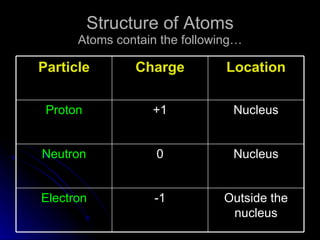
Structure of Atoms Atoms contain the following… Location Charge Particle Outside the nucleus -1 Electron Nucleus 0 Neutron Nucleus +1 Proton
Positive and Negative Charges In most atoms, the negative charge cancels out the positive charge.  These atoms are said to be  electrically neutral .
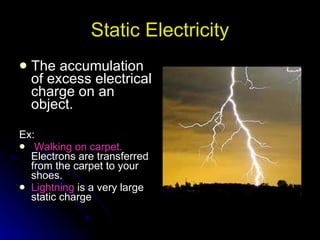
Static Electricity The accumulation of excess electrical charge on an object. Ex: Walking on carpet.   Electrons are transferred from the carpet to your shoes. Lightning  is a very large static charge
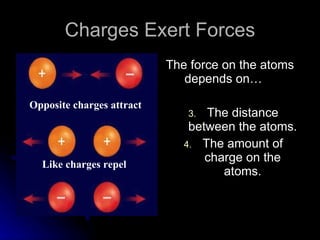
Charges Exert Forces The force on the atoms depends on… The distance between the atoms. The amount of charge on the atoms. Opposite charges attract Like charges repel
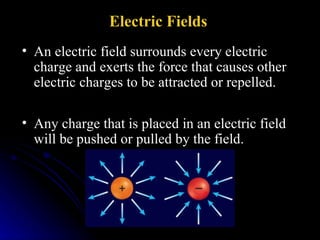
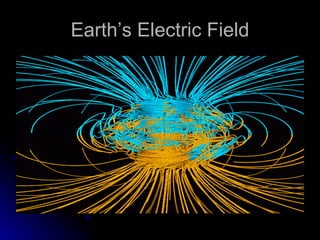
An electric field surrounds every electric charge and exerts the force that causes other electric charges to be attracted or repelled.   Any charge that is placed in an electric field will be pushed or pulled by the field.   Electric Fields
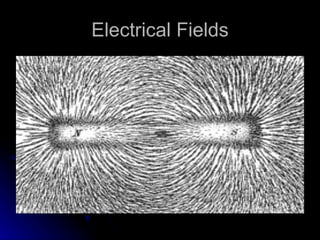
Electrical Fields
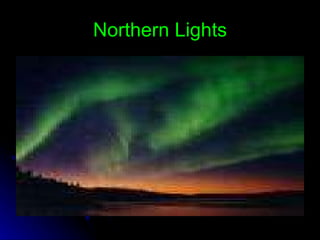
Northern Lights
Earth’s Electric Field
Law of Conservation of Charge A charge can be transferred from object to object, but cannot be created or destroyed.
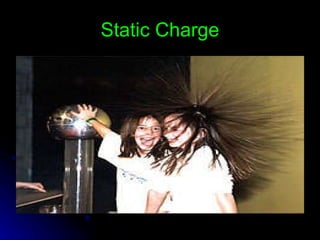
Static Charge
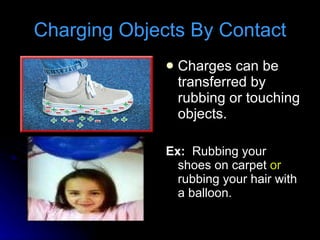
Charging Objects By Contact Charges can be transferred by rubbing or touching objects. Ex:   Rubbing your shoes on carpet  or  rubbing your hair with a balloon.
Charging By Induction   (Charging at a distance) Charged objects brought near a neutral object will cause electrons to rearrange their positions on the neutral object.
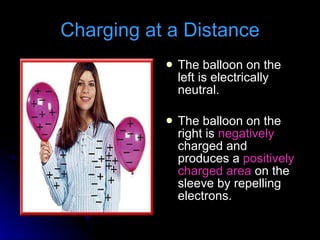
Charging at a Distance The balloon on the left is electrically neutral. The balloon on the right is  negatively  charged and produces a  positively charged area  on the sleeve by repelling electrons.
Lightning is a  large static discharge.   Lightning  A static discharge is a transfer of charge between two objects because of a buildup of static electricity. A thundercloud is a mighty generator of static electricity.  As air masses move and swirl in the cloud,  areas of  positive  and  negative  charge build up.
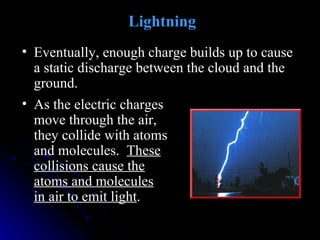
Eventually, enough charge builds up to cause a static discharge between the cloud and the ground.   Lightning   As the electric charges move through the air, they collide with atoms and molecules.  These collisions cause the atoms and molecules in air to emit light .
Thunder  Lightning also generates powerful sound waves.   The electrical energy in a lightning bolt rips electrons off atoms in the atmosphere and produces great amounts of heat.   The heat causes air in the bolt's path to expand rapidly, producing sound waves that you hear as thunder.
Grounding Connecting an object to Earth. Providing a path for a charge to reach the Earth  prevents an excess charge from building up.
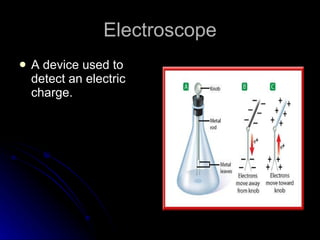
Electroscope A device used to detect an electric charge.
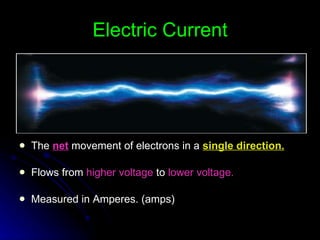
Electric Current The  net  movement of electrons in a  single direction. Flows from  higher voltage  to  lower voltage. Measured in Amperes. (amps)
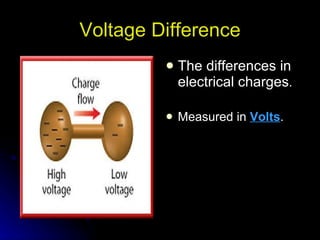
Voltage Difference The differences in electrical charges . Measured in  Volts .
Circuits A closed path that the electric current follows. 2-Types
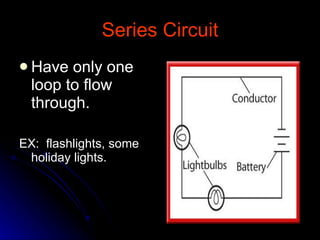
Series Circuit Have only one loop to flow through. EX:  flashlights, some holiday lights.
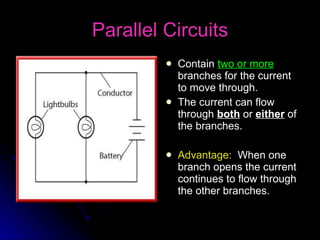
Parallel Circuits Contain  two or more  branches for the current to move through. The current can flow through  both  or  either  of the branches. Advantage:   When one branch opens the current continues to flow through the other branches.
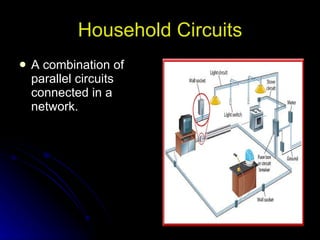
Household Circuits A combination of parallel circuits connected in a network.
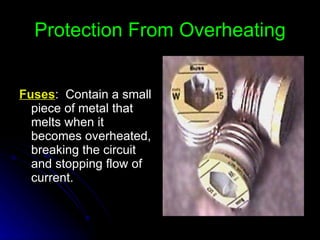
Protection From Overheating Fuses :  Contain a small piece of metal that melts when it becomes overheated, breaking the circuit and stopping flow of current.
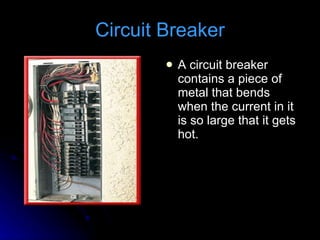
Circuit Breaker A circuit breaker contains a piece of metal that bends when the current in it is so large that it gets hot.
Electric Power The rate at which electrical energy is converted to another form of energy. The unit for power is the watt (W).  (Often expressed in kilowatts (kW).)
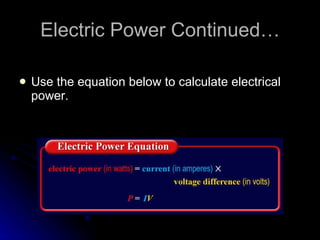
Electric Power Continued… Use the equation below to calculate electrical power.
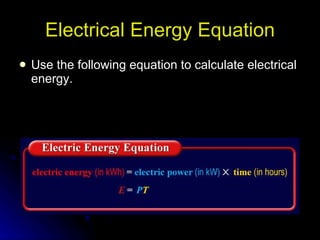
Electrical Energy Equation Use the following equation to calculate electrical energy.

Chapter 7 Physical science

  • 1.
  • 2.
    Structure of AtomsAtoms contain the following… Location Charge Particle Outside the nucleus -1 Electron Nucleus 0 Neutron Nucleus +1 Proton
  • 3.
    Positive and NegativeCharges In most atoms, the negative charge cancels out the positive charge. These atoms are said to be electrically neutral .
  • 4.
    Static Electricity Theaccumulation of excess electrical charge on an object. Ex: Walking on carpet. Electrons are transferred from the carpet to your shoes. Lightning is a very large static charge
  • 5.
    Charges Exert ForcesThe force on the atoms depends on… The distance between the atoms. The amount of charge on the atoms. Opposite charges attract Like charges repel
  • 6.
    An electric fieldsurrounds every electric charge and exerts the force that causes other electric charges to be attracted or repelled. Any charge that is placed in an electric field will be pushed or pulled by the field. Electric Fields
  • 7.
  • 8.
  • 9.
  • 10.
    Law of Conservationof Charge A charge can be transferred from object to object, but cannot be created or destroyed.
  • 11.
  • 12.
    Charging Objects ByContact Charges can be transferred by rubbing or touching objects. Ex: Rubbing your shoes on carpet or rubbing your hair with a balloon.
  • 13.
    Charging By Induction (Charging at a distance) Charged objects brought near a neutral object will cause electrons to rearrange their positions on the neutral object.
  • 14.
    Charging at aDistance The balloon on the left is electrically neutral. The balloon on the right is negatively charged and produces a positively charged area on the sleeve by repelling electrons.
  • 15.
    Lightning is a large static discharge. Lightning A static discharge is a transfer of charge between two objects because of a buildup of static electricity. A thundercloud is a mighty generator of static electricity. As air masses move and swirl in the cloud, areas of positive and negative charge build up.
  • 16.
    Eventually, enough chargebuilds up to cause a static discharge between the cloud and the ground. Lightning As the electric charges move through the air, they collide with atoms and molecules. These collisions cause the atoms and molecules in air to emit light .
  • 17.
    Thunder Lightningalso generates powerful sound waves. The electrical energy in a lightning bolt rips electrons off atoms in the atmosphere and produces great amounts of heat. The heat causes air in the bolt's path to expand rapidly, producing sound waves that you hear as thunder.
  • 18.
    Grounding Connecting anobject to Earth. Providing a path for a charge to reach the Earth prevents an excess charge from building up.
  • 19.
    Electroscope A deviceused to detect an electric charge.
  • 20.
    Electric Current The net movement of electrons in a single direction. Flows from higher voltage to lower voltage. Measured in Amperes. (amps)
  • 21.
    Voltage Difference Thedifferences in electrical charges . Measured in Volts .
  • 22.
    Circuits A closedpath that the electric current follows. 2-Types
  • 23.
    Series Circuit Haveonly one loop to flow through. EX: flashlights, some holiday lights.
  • 24.
    Parallel Circuits Contain two or more branches for the current to move through. The current can flow through both or either of the branches. Advantage: When one branch opens the current continues to flow through the other branches.
  • 25.
    Household Circuits Acombination of parallel circuits connected in a network.
  • 26.
    Protection From OverheatingFuses : Contain a small piece of metal that melts when it becomes overheated, breaking the circuit and stopping flow of current.
  • 27.
    Circuit Breaker Acircuit breaker contains a piece of metal that bends when the current in it is so large that it gets hot.
  • 28.
    Electric Power Therate at which electrical energy is converted to another form of energy. The unit for power is the watt (W). (Often expressed in kilowatts (kW).)
  • 29.
    Electric Power Continued…Use the equation below to calculate electrical power.
  • 30.
    Electrical Energy EquationUse the following equation to calculate electrical energy.