www.drecart.com 
Electrical Energy 
Sarah Jones
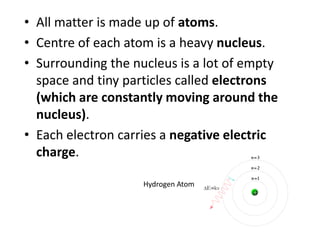
• All matter is made up of atoms. 
• Centre of each atom is a heavy nucleus. 
• Surrounding the nucleus is a lot of empty space 
and tiny particles called electrons (which are 
constantly moving). 
• Each electron carries a negative electric charge. 
Oxygen Atom
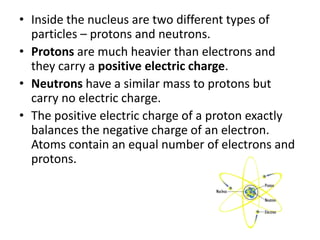
• Inside the nucleus are two different particles – 
protons and neutrons. 
• Protons are much heavier than electrons and 
they carry a positive electric charge. 
• Neutrons have a similar mass to protons but 
carry no electric charge. 
sciencewithme.com
The positive electric charge of a proton exactly 
balances the negative charge of an electron. 
Atoms contain an equal number of electrons 
and protons.
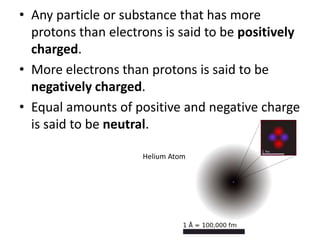
• Any particle or substance that has more 
protons than electrons is said to be positively 
charged. 
• More electrons than protons is said to be 
negatively charged. 
• Equal amounts of positive and negative charge 
is said to be neutral. 
Helium Atom
Static Electricity 
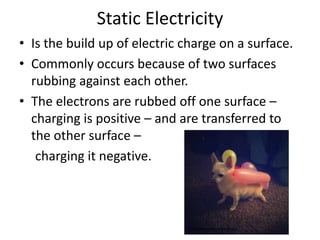
• Is the build up of electric charge on a surface. 
• Commonly occurs because of two surfaces 
rubbing against each other. 
homeschooljabber.blogspot.com
The electrons are rubbed off one surface – 
charging is positive – and are transferred to the 
other surface – charging it negative. 
www.aapt.org
Current Electricity 
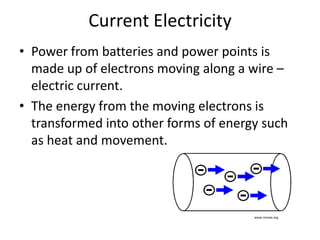
• Power from batteries and power points is 
made up of electrons moving along a wire – 
electric current. 
• The energy from the moving electrons is 
transformed into other forms of energy such 
as heat and movement. 
www.nmsea.org
Measuring Electricity 
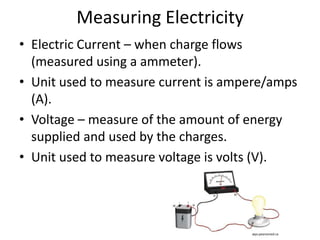
• Electric Current – when charge flows (measured 
using a ammeter). 
• Unit used to measure current is ampere/amps (A). 
• Voltage – measure of the amount of energy 
supplied and used by the charges. 
• Unit used to measure voltage is volts (V). 
wps.pearsoned.ca
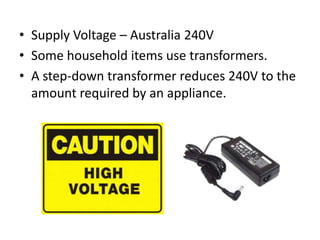
• Supply Voltage – Australia 240V 
• Some household items use transformers. 
• A step-down transformer reduces 240V to the 
amount required by an appliance.
Batteries 
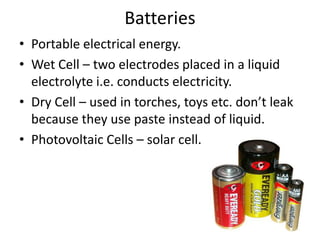
• Portable electrical energy. 
• Wet Cell – two electrodes placed in a liquid 
electrolyte i.e. conducts electricity. 
• Dry Cell – used in torches, toys etc. don’t leak 
because they use paste instead of liquid. 
• Photovoltaic Cells – solar cell.
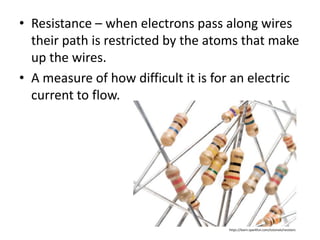
• Resistance – when electrons pass along wires 
their path is restricted by the atoms that make 
up the wires. 
• A measure of how difficult it is for an electric 
current to flow. 
https://learn.sparkfun.com/tutorials/resistors
Conductors and Insulators 
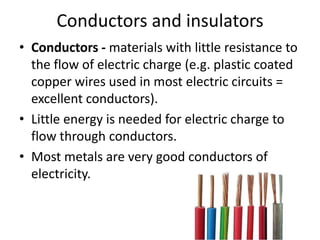
• Conductors - materials with little 
resistance to the flow of electric charge 
(e.g. copper wires used in most electric 
circuits). 
• Little energy is needed for electric charge 
to flow through conductors. 
• Most metals are very good conductors of 
electricity.
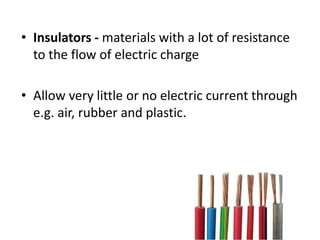
• Insulators - materials with a lot of resistance 
to the flow of electric charge 
• Allow very little or no electric current through 
e.g. air, rubber and plastic.
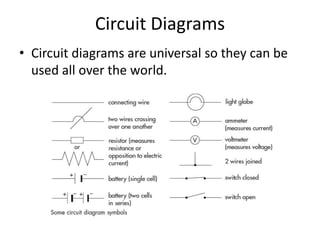
Circuit Diagrams 
Circuit diagrams are universal so they can be 
used all over the world.
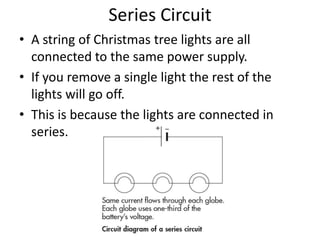
Series Circuit 
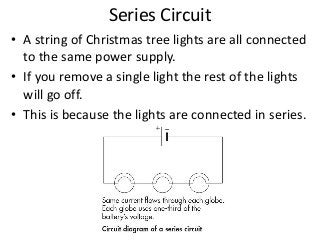
• A string of Christmas tree lights are all connected 
to the same power supply. 
• If you remove a single light the rest of the lights 
will go off. 
• This is because the lights are connected in series.
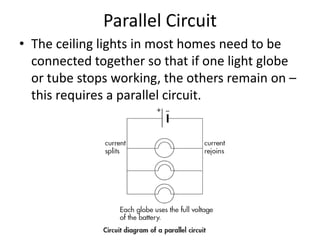
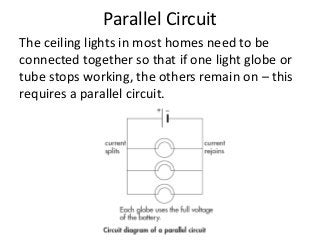
Parallel Circuit 
The ceiling lights in most homes need to be 
connected together so that if one light globe or 
tube stops working, the others remain on – this 
requires a parallel circuit.

Electrical Energy

  • 1.
  • 2.
    • All matteris made up of atoms. • Centre of each atom is a heavy nucleus. • Surrounding the nucleus is a lot of empty space and tiny particles called electrons (which are constantly moving). • Each electron carries a negative electric charge. Oxygen Atom
  • 3.
    • Inside thenucleus are two different particles – protons and neutrons. • Protons are much heavier than electrons and they carry a positive electric charge. • Neutrons have a similar mass to protons but carry no electric charge. sciencewithme.com
  • 4.
    The positive electriccharge of a proton exactly balances the negative charge of an electron. Atoms contain an equal number of electrons and protons.
  • 5.
    • Any particleor substance that has more protons than electrons is said to be positively charged. • More electrons than protons is said to be negatively charged. • Equal amounts of positive and negative charge is said to be neutral. Helium Atom
  • 6.
    Static Electricity •Is the build up of electric charge on a surface. • Commonly occurs because of two surfaces rubbing against each other. homeschooljabber.blogspot.com
  • 7.
    The electrons arerubbed off one surface – charging is positive – and are transferred to the other surface – charging it negative. www.aapt.org
  • 8.
    Current Electricity •Power from batteries and power points is made up of electrons moving along a wire – electric current. • The energy from the moving electrons is transformed into other forms of energy such as heat and movement. www.nmsea.org
  • 9.
    Measuring Electricity •Electric Current – when charge flows (measured using a ammeter). • Unit used to measure current is ampere/amps (A). • Voltage – measure of the amount of energy supplied and used by the charges. • Unit used to measure voltage is volts (V). wps.pearsoned.ca
  • 10.
    • Supply Voltage– Australia 240V • Some household items use transformers. • A step-down transformer reduces 240V to the amount required by an appliance.
  • 11.
    Batteries • Portableelectrical energy. • Wet Cell – two electrodes placed in a liquid electrolyte i.e. conducts electricity. • Dry Cell – used in torches, toys etc. don’t leak because they use paste instead of liquid. • Photovoltaic Cells – solar cell.
  • 12.
    • Resistance –when electrons pass along wires their path is restricted by the atoms that make up the wires. • A measure of how difficult it is for an electric current to flow. https://learn.sparkfun.com/tutorials/resistors
  • 13.
    Conductors and Insulators • Conductors - materials with little resistance to the flow of electric charge (e.g. copper wires used in most electric circuits). • Little energy is needed for electric charge to flow through conductors. • Most metals are very good conductors of electricity.
  • 14.
    • Insulators -materials with a lot of resistance to the flow of electric charge • Allow very little or no electric current through e.g. air, rubber and plastic.
  • 15.
    Circuit Diagrams Circuitdiagrams are universal so they can be used all over the world.
  • 16.
    Series Circuit •A string of Christmas tree lights are all connected to the same power supply. • If you remove a single light the rest of the lights will go off. • This is because the lights are connected in series.
  • 17.
    Parallel Circuit Theceiling lights in most homes need to be connected together so that if one light globe or tube stops working, the others remain on – this requires a parallel circuit.