Chapter 11 DNA Structure, Protein Production, And Mutations
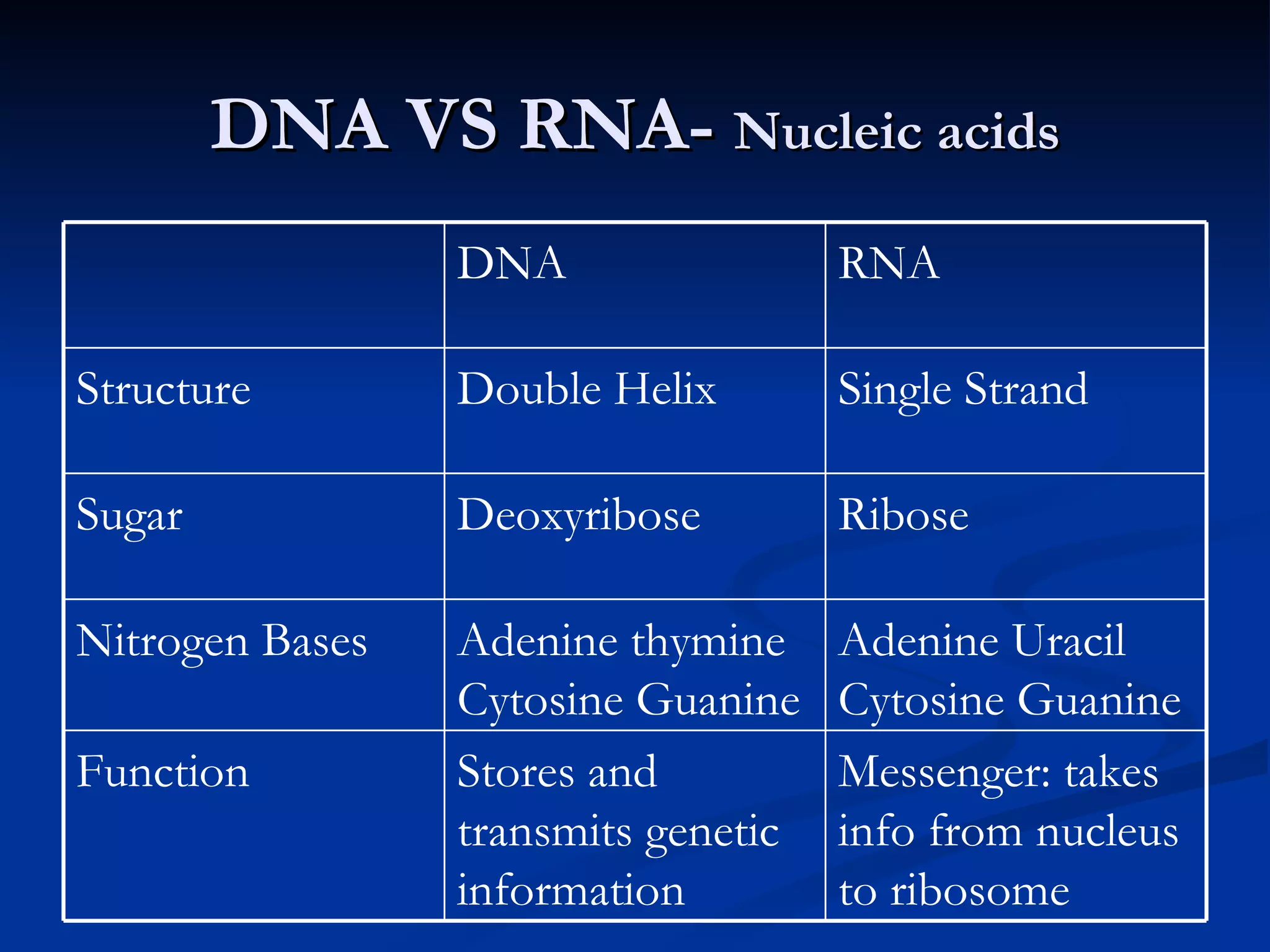
DNA VS RNA-  Nucleic acids Messenger: takes info from nucleus to ribosome Stores and transmits genetic information Function Adenine Uracil Cytosine Guanine Adenine thymine Cytosine Guanine Nitrogen Bases Ribose Deoxyribose Sugar Single Strand Double Helix Structure RNA DNA
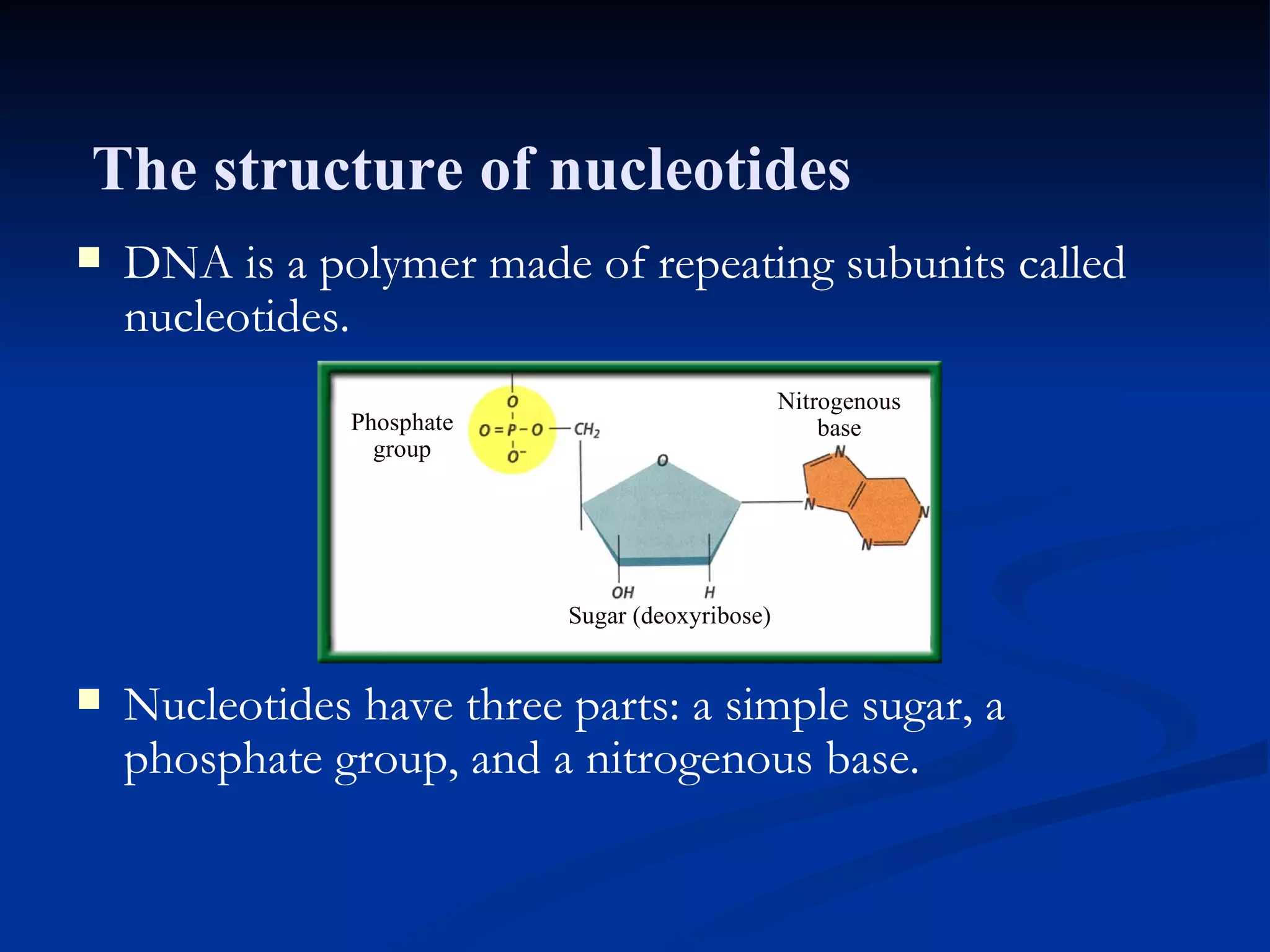
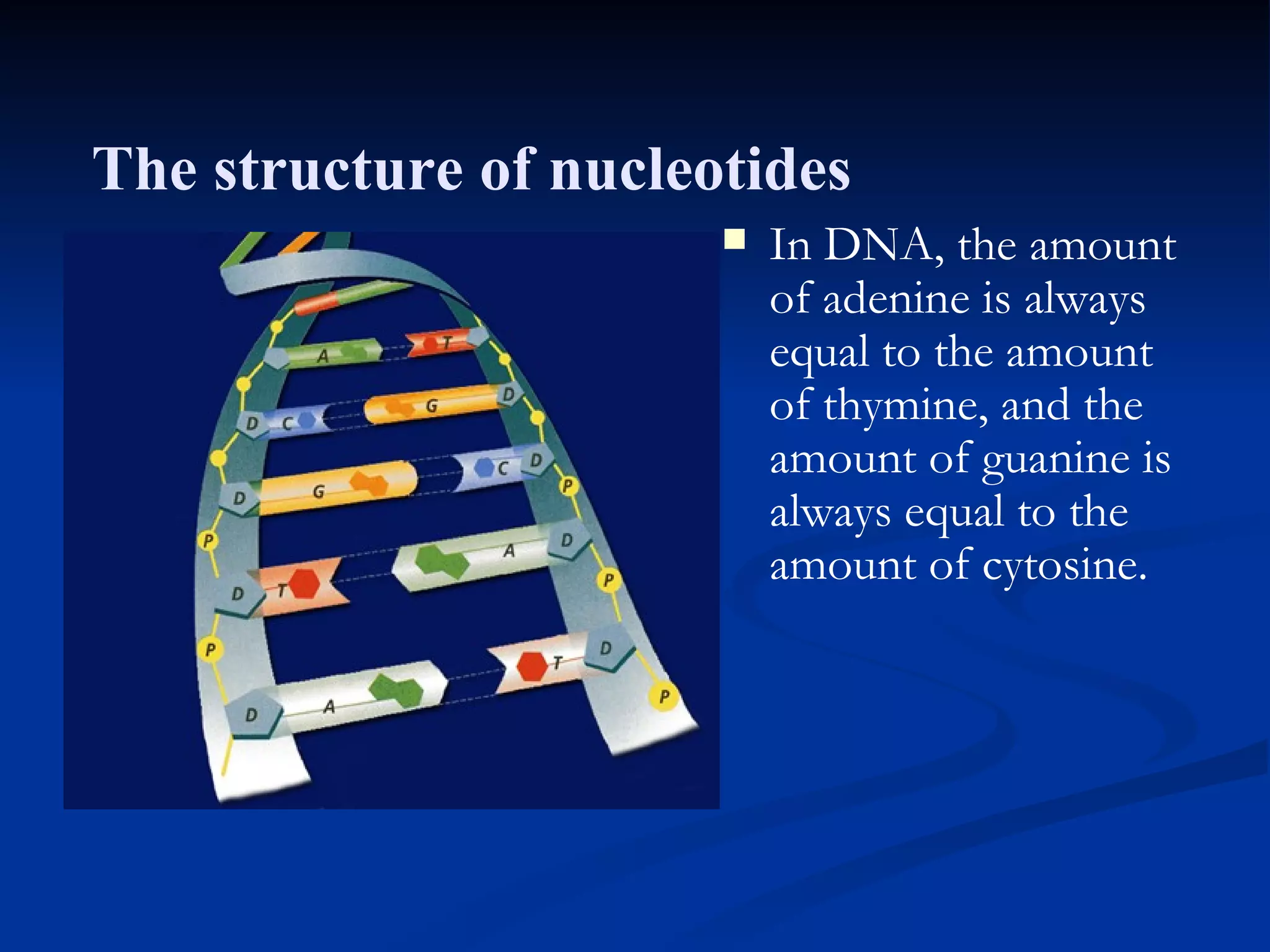
Section 11.1 Summary – pages 281 - 287 DNA is a polymer made of repeating subunits called nucleotides. Nucleotides have three parts: a simple sugar, a phosphate group, and a nitrogenous base. Phosphate group Sugar (deoxyribose) Nitrogenous base The structure of nucleotides
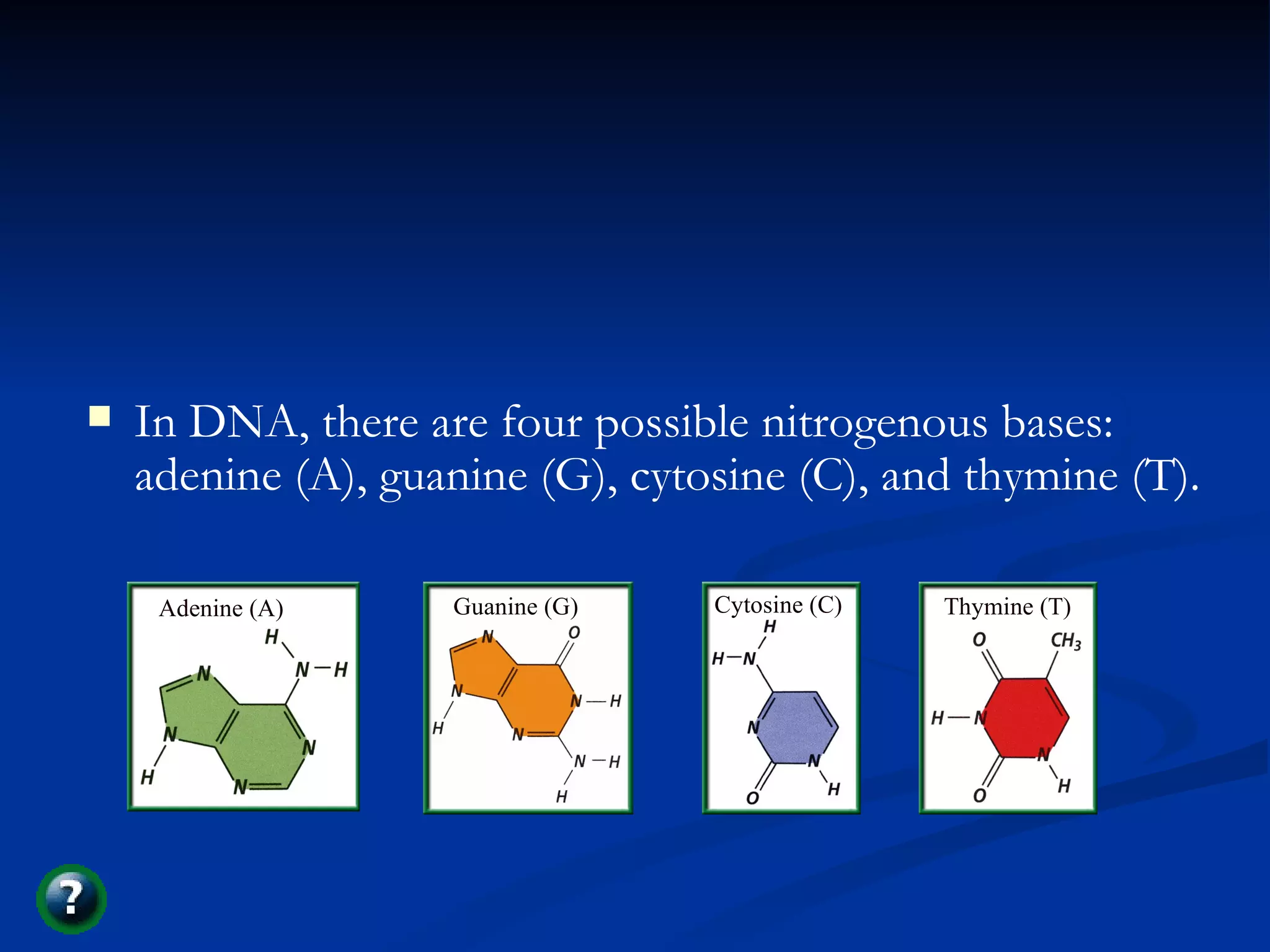
Section 11.1 Summary – pages 281 - 287 In DNA, there are four possible nitrogenous bases: adenine (A), guanine (G), cytosine (C), and thymine (T). Adenine (A) Guanine (G) Thymine (T) Cytosine (C)
Base Pairing Rule A lways  T ogether A denine  always pairs with  T hymine C ytosine  always pairs with  G uanine
Section 11.1 Summary – pages 281 - 287 In DNA, the amount of adenine is always equal to the amount of thymine, and the amount of guanine is always equal to the amount of cytosine. The structure of nucleotides
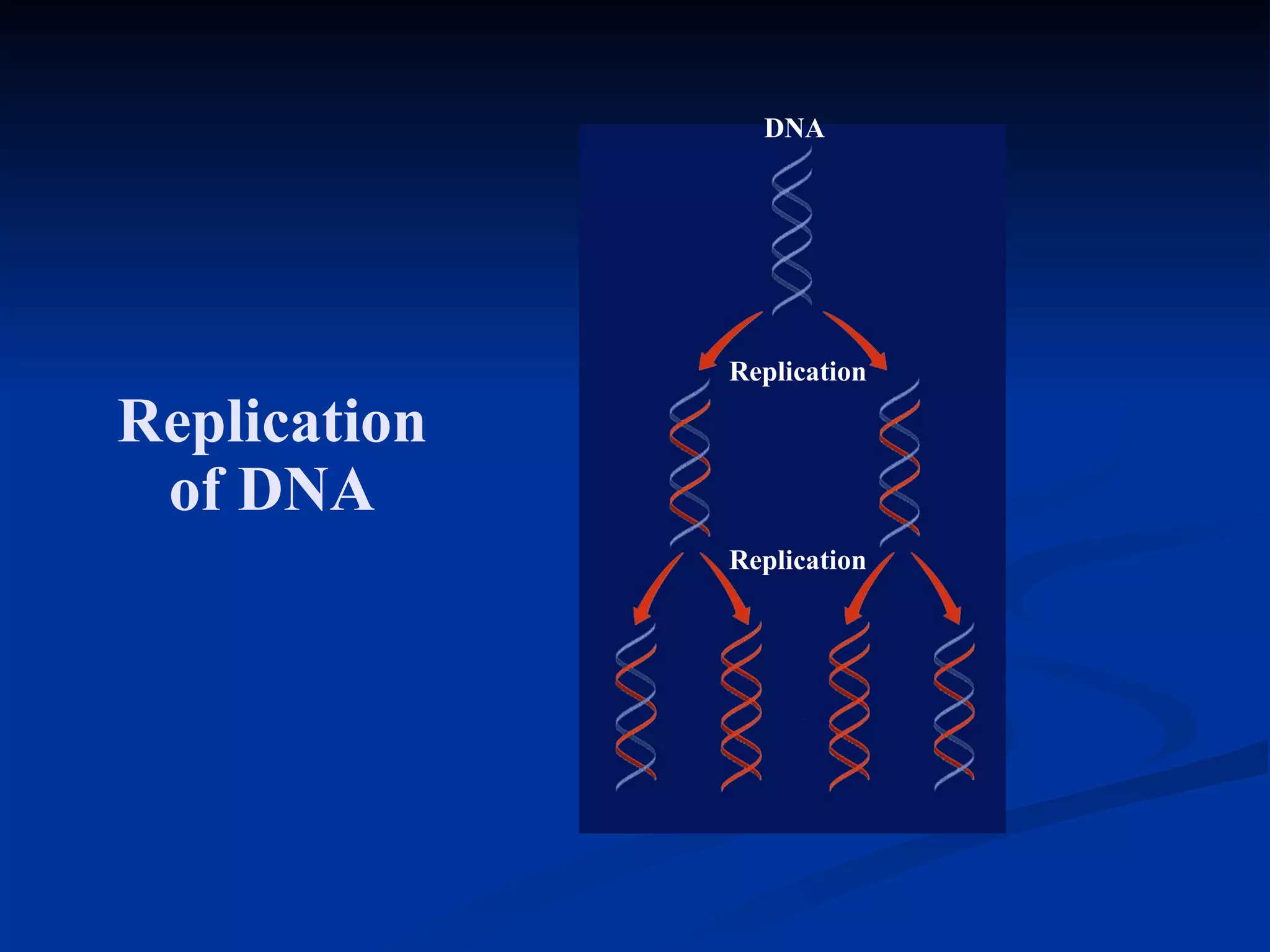
DNA Replication The process in which DNA makes an identical copy of itself. An enzyme unzips the DNA molecule, complementary base pairs are added to each side of the separated strands producing two identical DNA molecules.
Section 11.1 Summary – pages 281 - 287 Replication of DNA DNA Replication Replication
Protein production DNA contains the information used to produce proteins. Proteins are long chains of amino acids The sequence of nucleotides in each gene contains information for assembling the string of amino acids that make up a single protein.
3-Types of RNA Messenger RNA (mRNA)  Takes info from nucleus to the ribosome. Contains the  codon . Transfer RNA (tRNA)  Brings amino acids with complementary base pairs to the mRna at the ribosome.  Contains the  anticodon . Ribosomal RNA (rRNA)   Makes up one of the subunits of the ribosomes
Protein Synthesis- 2 Processes   1.  Transcription:   A mRNA strand is made using the DNA for a pattern and transfers that information to the ribosome for assembly 2. Translation:   tRNA molecules bring the amino acids that have the complementary bases to the ribosome and a chain of amino acids is assembled
RNA Processing Before the mRNA strand can leave the nucleus following transcription, the introns (parts that do not code) are cut out leaving only the exons (parts that code for proteins)
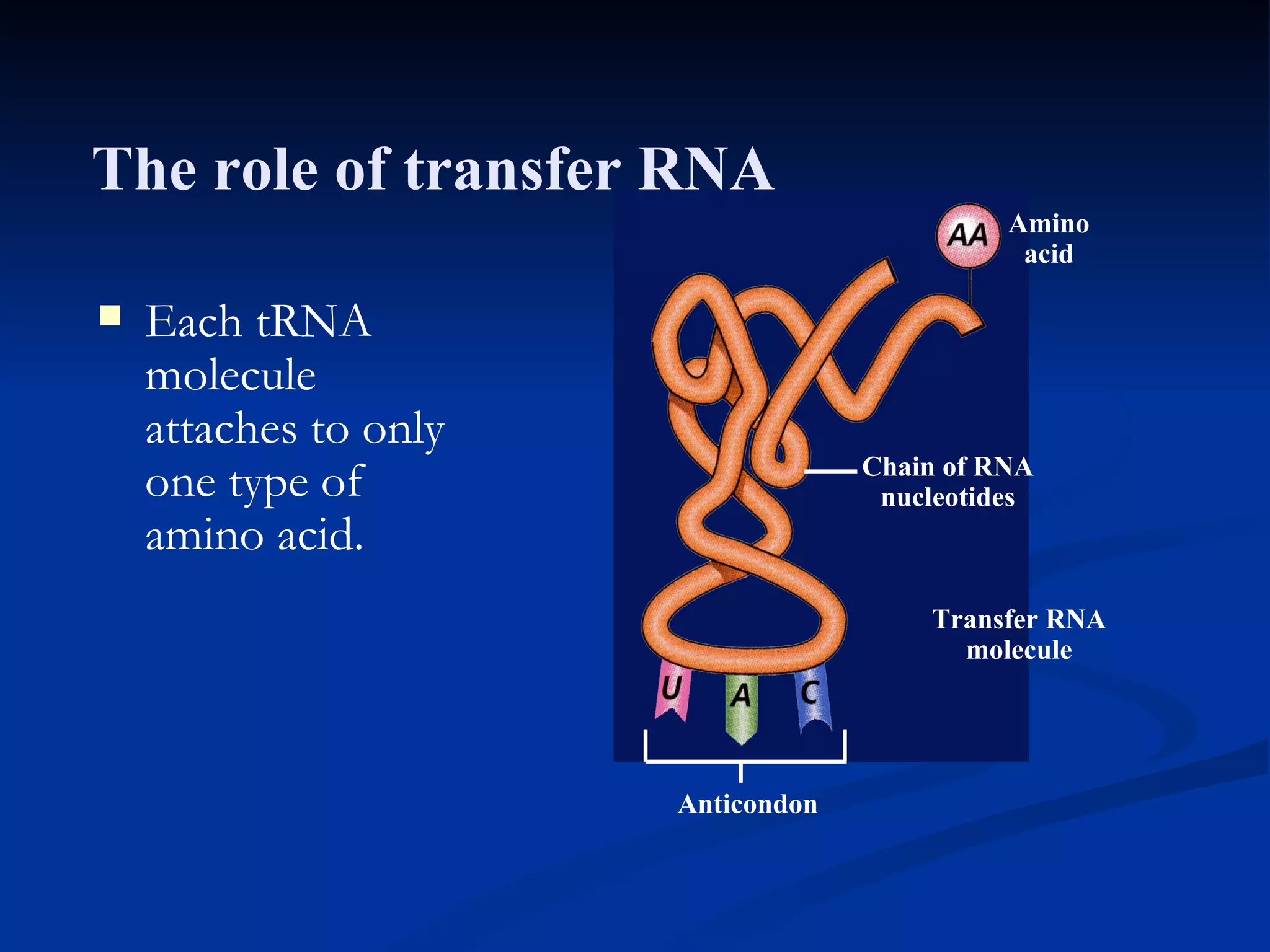
Section 11.2 Summary – pages 288 - 295 Each tRNA molecule attaches to only one type of amino acid. Amino acid Chain of RNA nucleotides Transfer RNA molecule Anticondon The role of transfer RNA
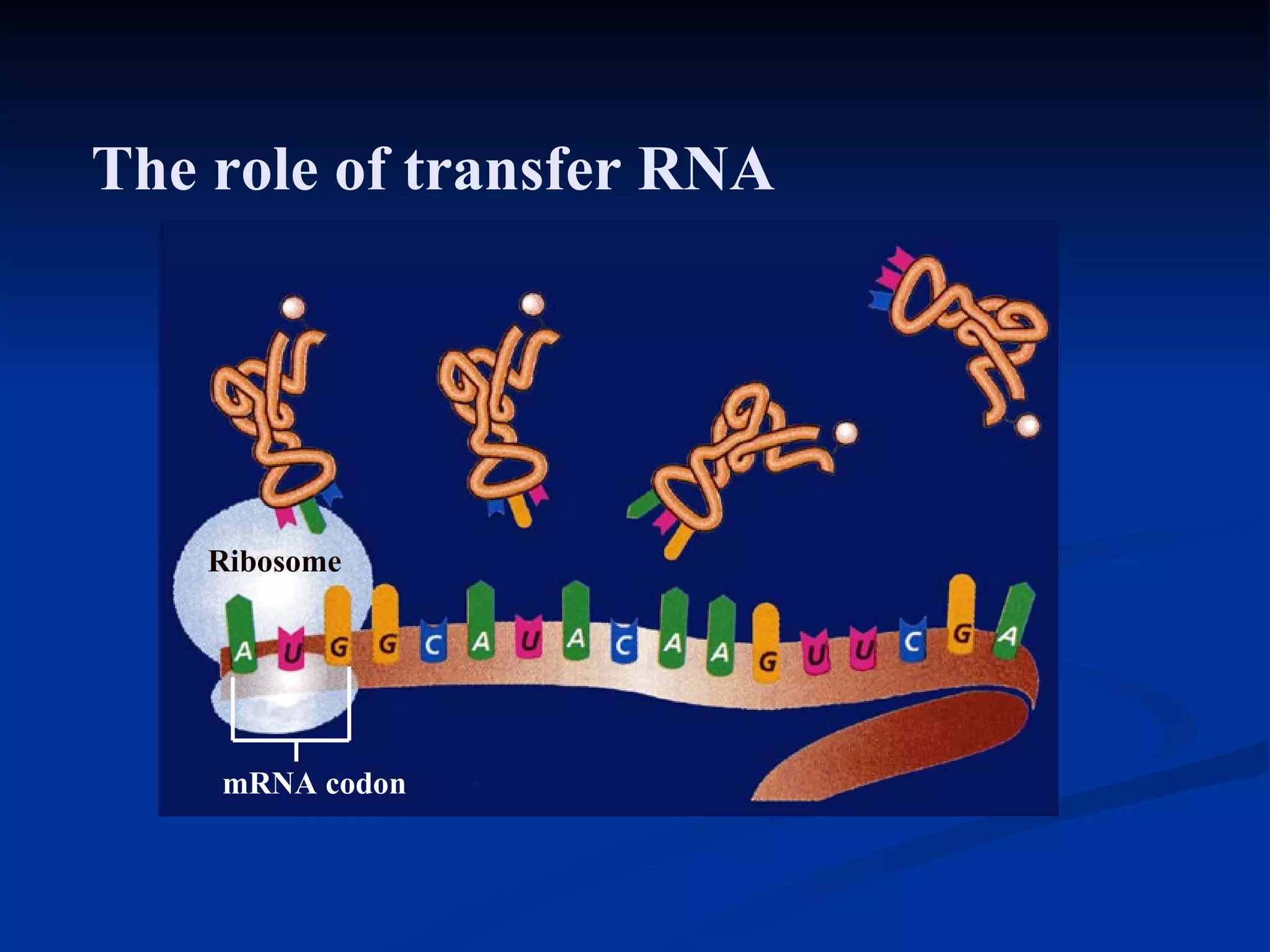
Section 11.2 Summary – pages 288 - 295 The role of transfer RNA Ribosome mRNA codon
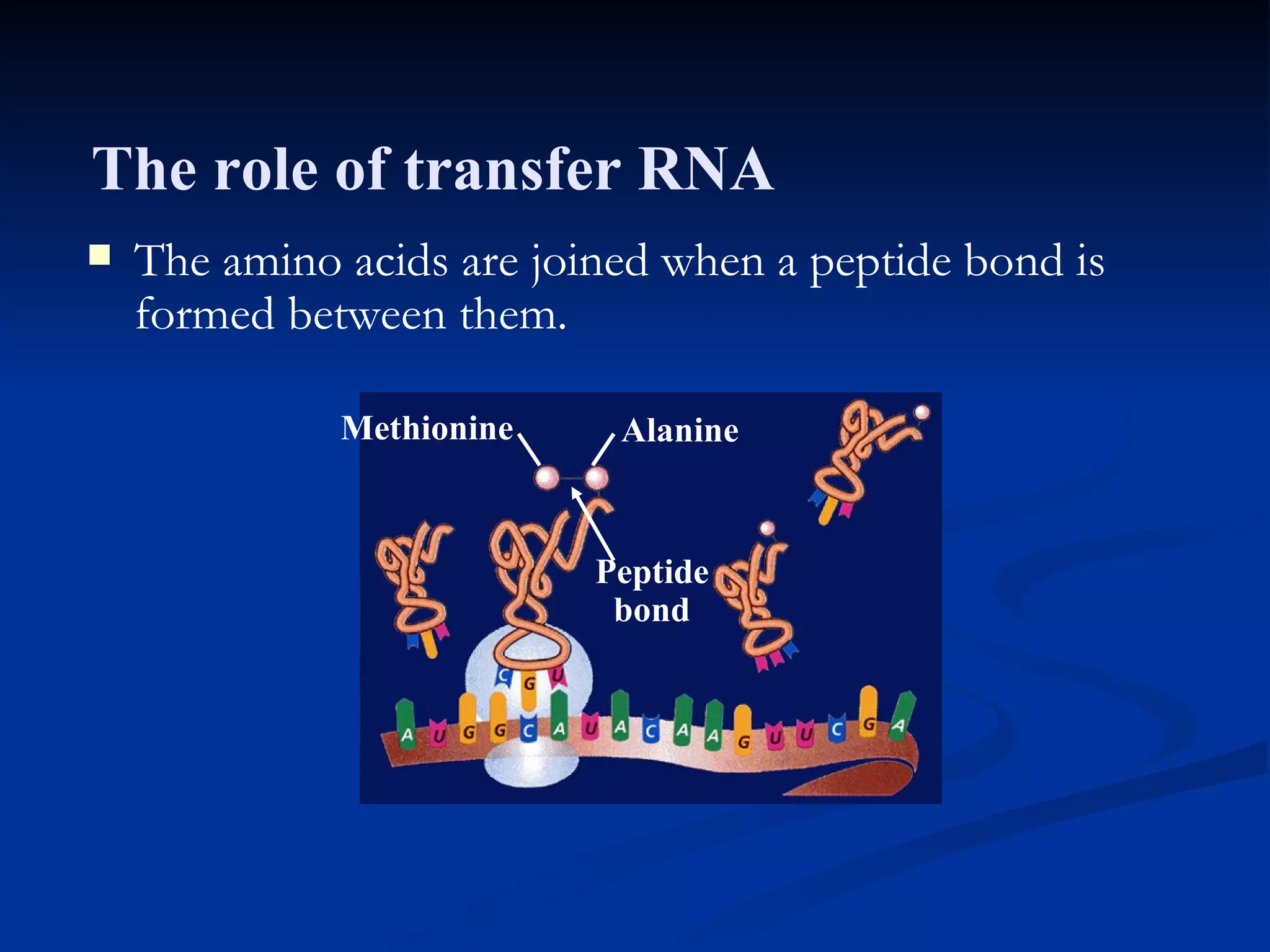
Section 11.2 Summary – pages 288- 295 The amino acids are joined when a peptide bond is formed between them. Alanine Methionine Peptide bond The role of transfer RNA
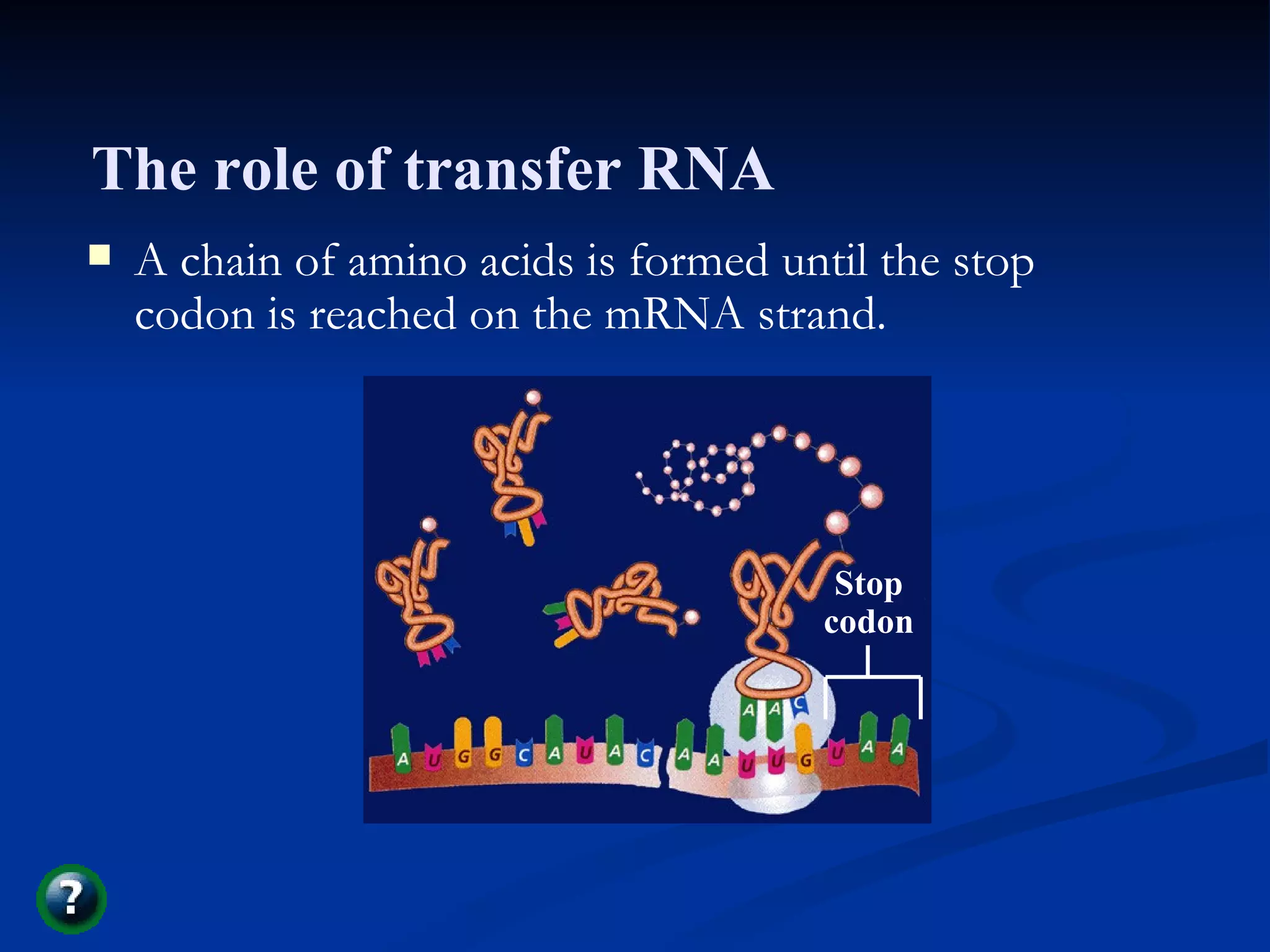
Section 11.2 Summary – pages 288 - 295 A chain of amino acids is formed until the stop codon is reached on the mRNA strand. Stop codon The role of transfer RNA
Mutation A change in the number or structure of a chromosome. 2-Types 1.  gene mutations 2.Chromosomal mutations
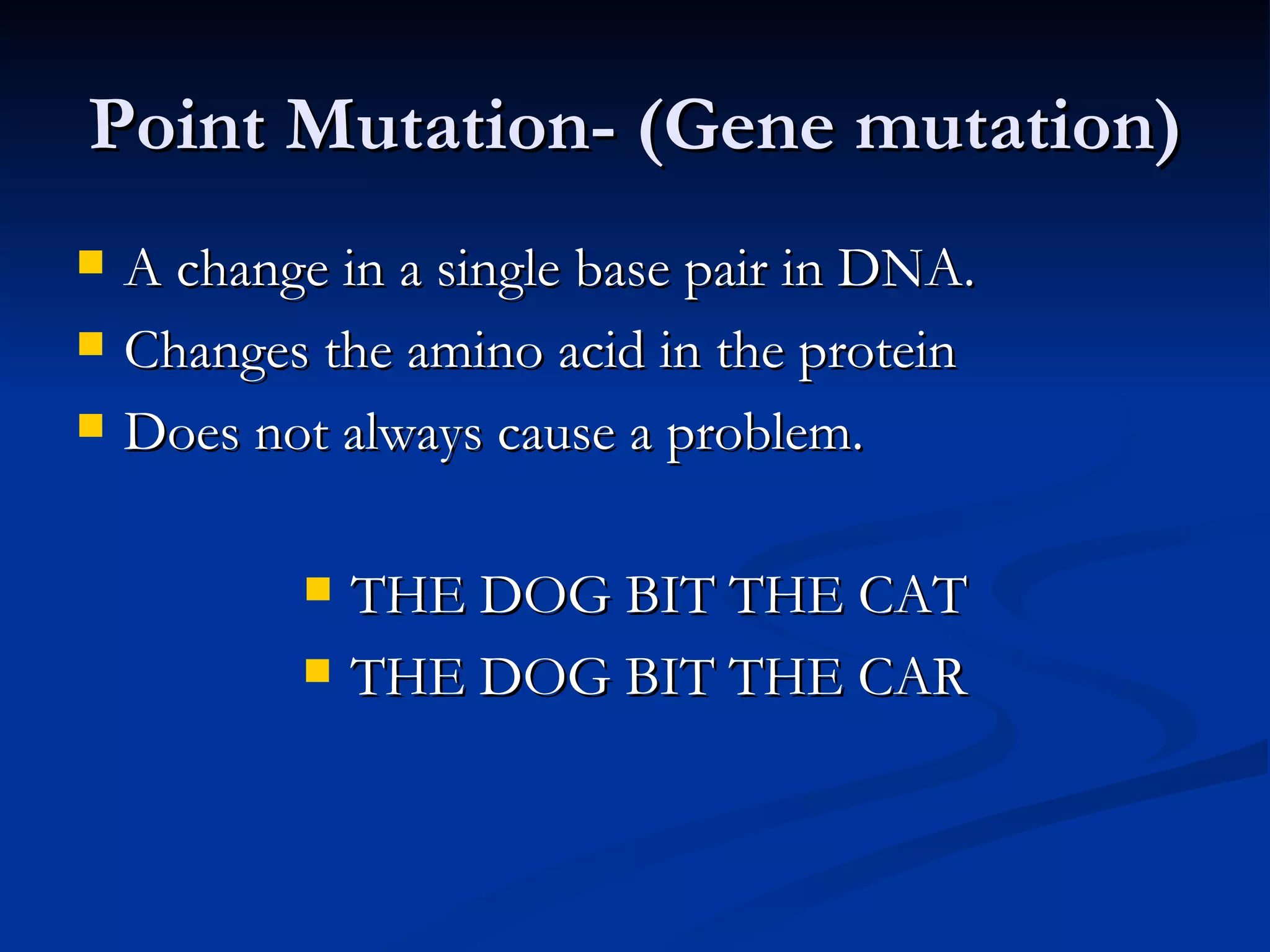
Point Mutation- (Gene mutation) A change in a single base pair in DNA. Changes the amino acid in the protein Does not always cause a problem. THE DOG BIT THE CAT THE DOG BIT THE CAR
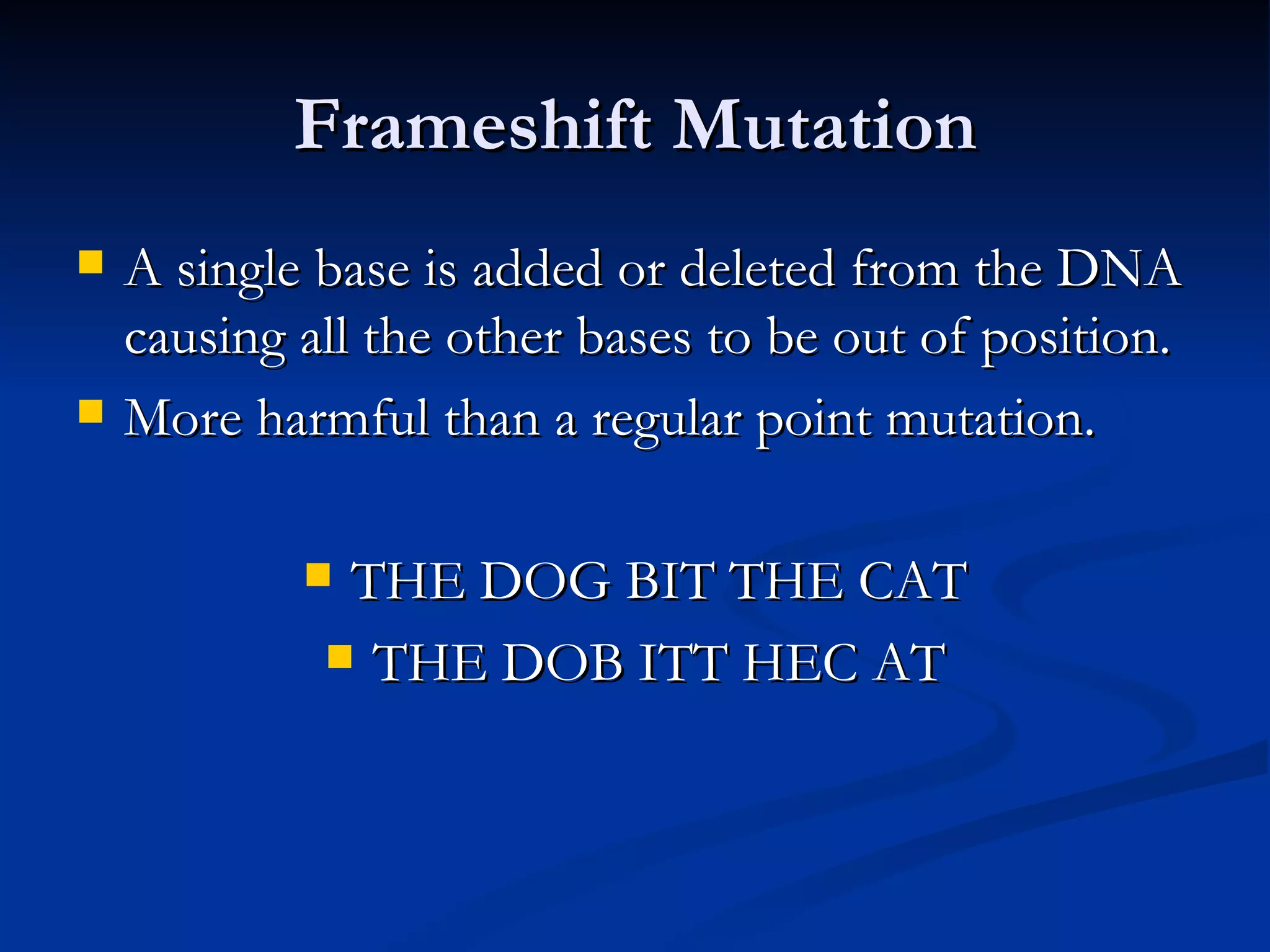
Frameshift Mutation A single base is added or deleted from the DNA causing all the other bases to be out of position. More harmful than a regular point mutation. THE DOG BIT THE CAT THE DOB ITT HEC AT
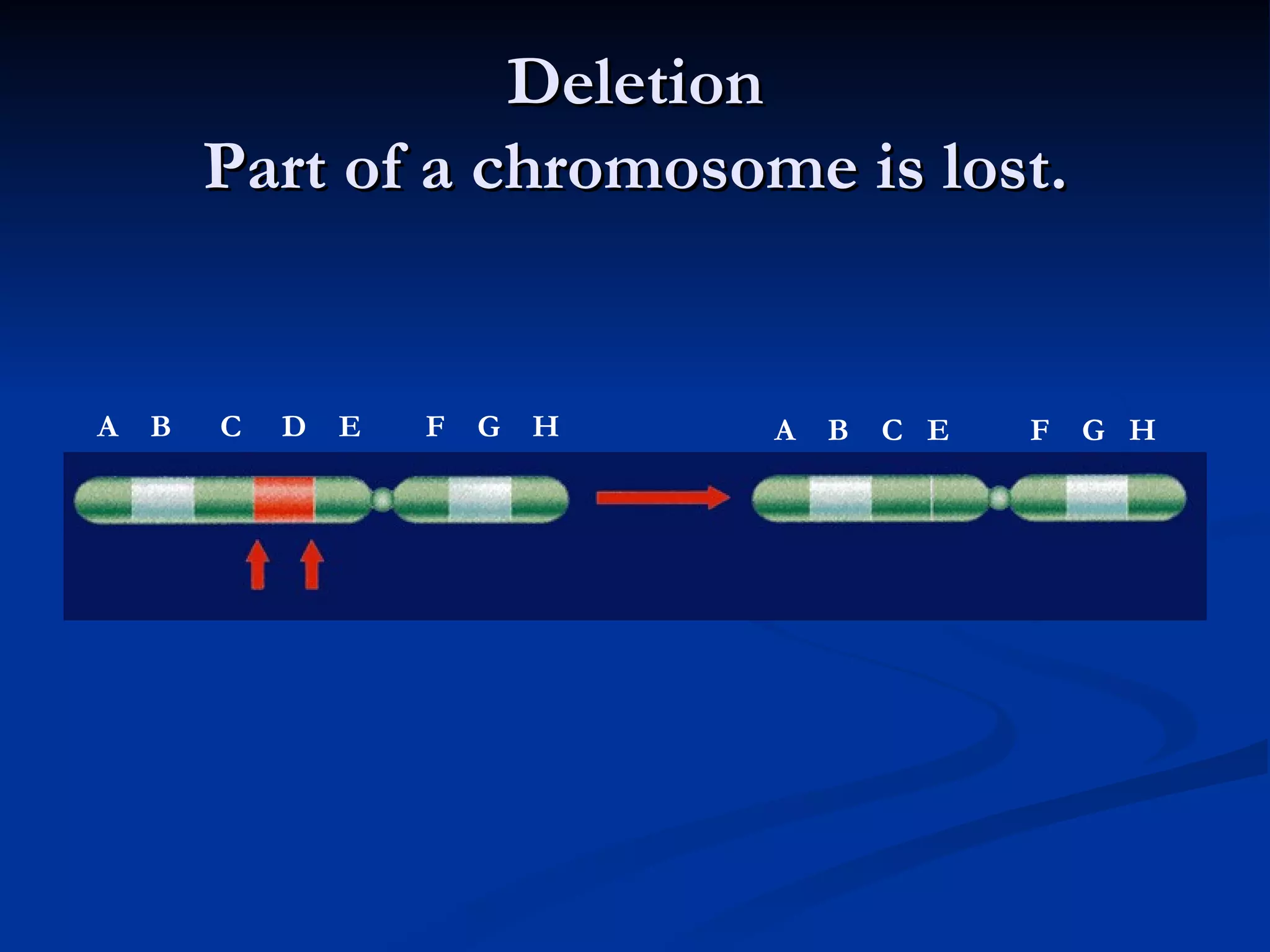
Deletion Part of a chromosome is lost. A   B   C   D   E   F   G   H A  B  C  E  F  G  H
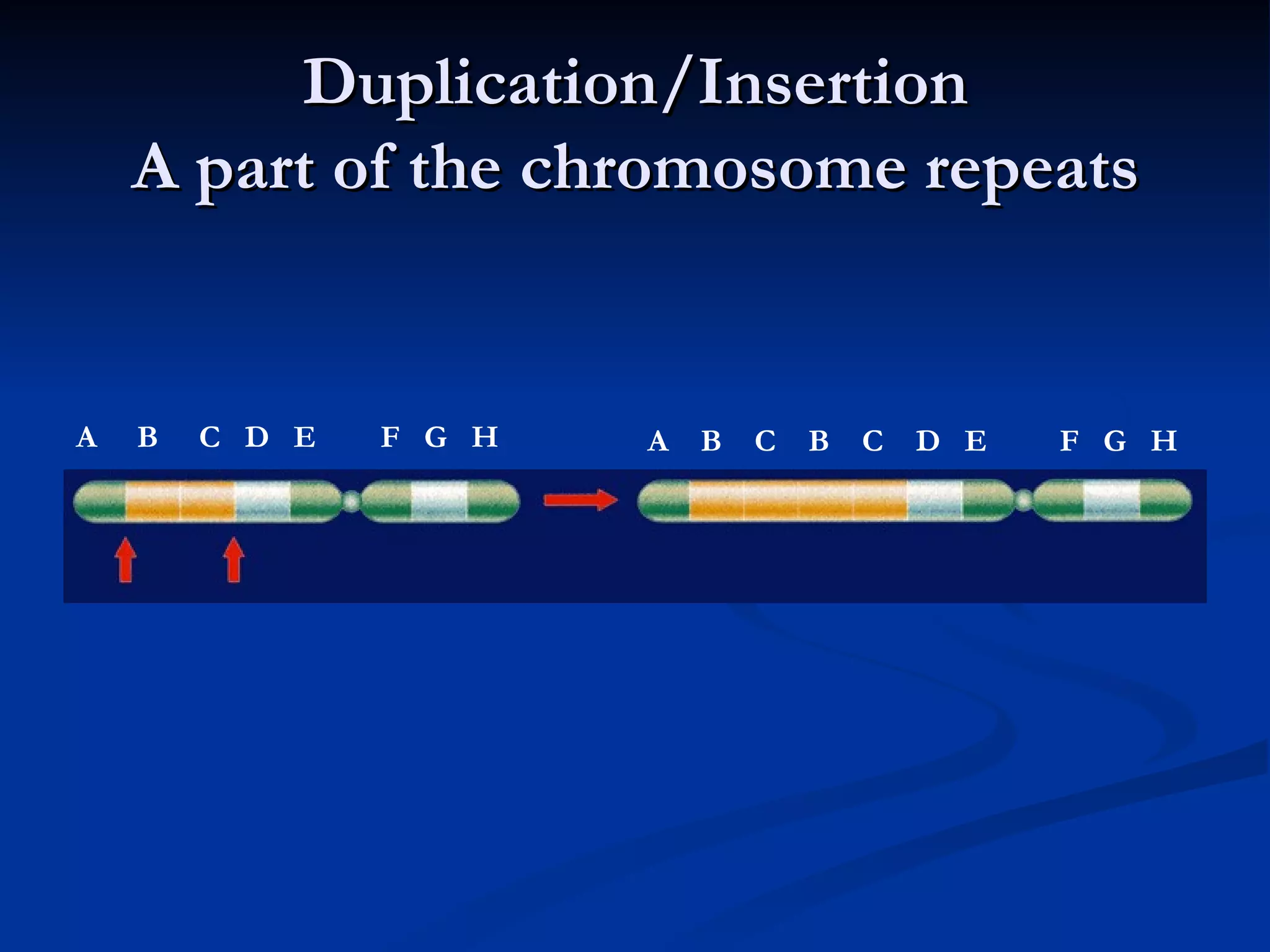
Duplication/Insertion A part of the chromosome repeats A  B  C  D  E  F  G  H A  B  C  B  C  D  E  F  G  H
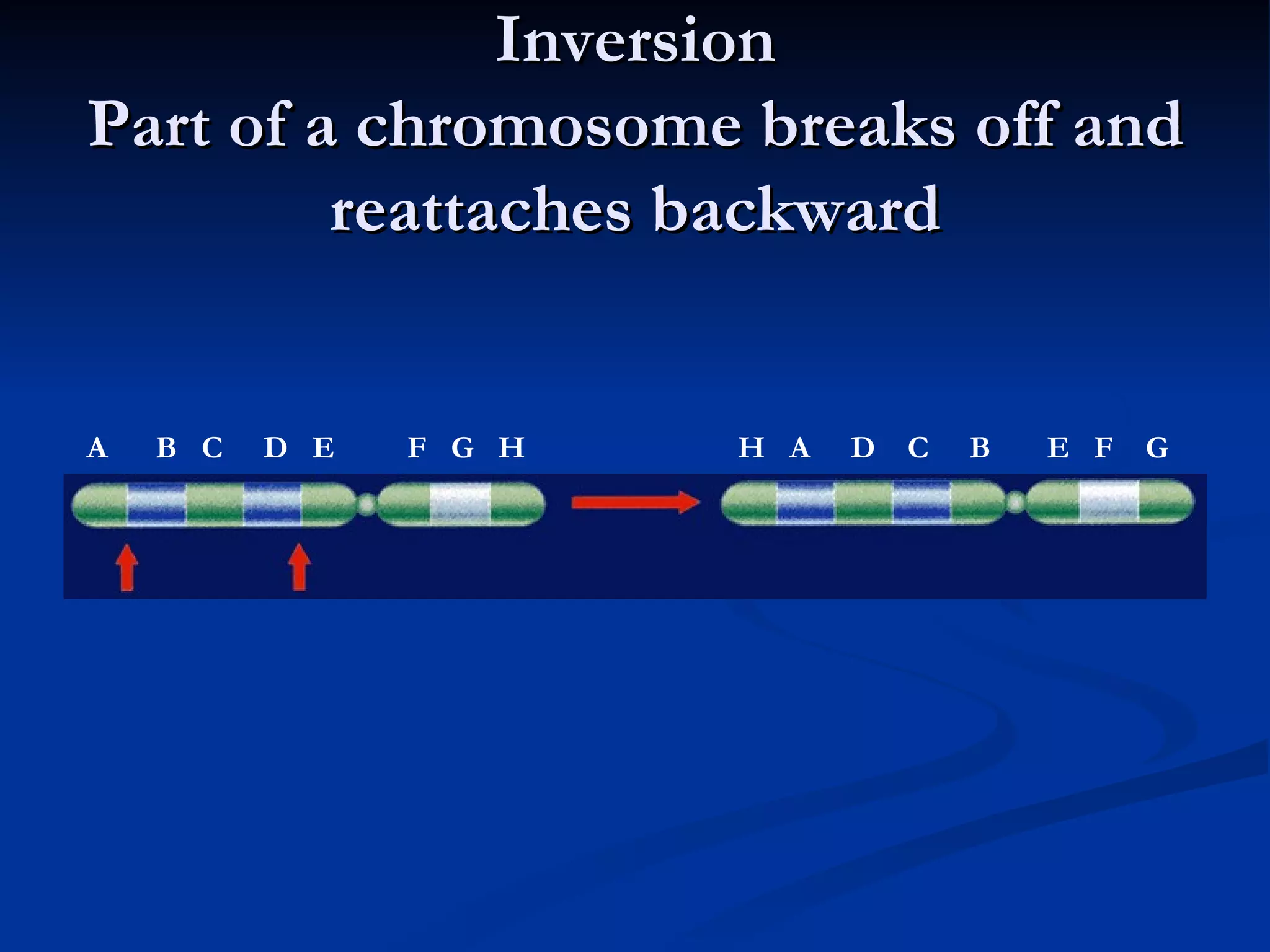
Inversion Part of a chromosome breaks off and reattaches backward A  B  C  D  E  F  G  H H  A  D  C  B  E  F  G
Translocation Part of a chromosome breaks off and attaches to a different chromosome W X Y Z Y Z Translocation A B E F D C B X A W C H G G E H D F W X Y Z Y Z Translocation
11.3 Section Summary 6.3 – pages 296 - 301 Any agent that can cause a change in DNA is called a  mutagen . Mutagens include radiation, chemicals, and even high temperatures. Forms of radiation, such as X rays, cosmic rays, ultraviolet light, and nuclear radiation, are dangerous mutagens because the energy they contain can damage or break apart DNA. Causes of Mutations

Chapter 11 Notes - Biology I

  • 1.
    Chapter 11 DNAStructure, Protein Production, And Mutations
  • 2.
    DNA VS RNA- Nucleic acids Messenger: takes info from nucleus to ribosome Stores and transmits genetic information Function Adenine Uracil Cytosine Guanine Adenine thymine Cytosine Guanine Nitrogen Bases Ribose Deoxyribose Sugar Single Strand Double Helix Structure RNA DNA
  • 3.
    Section 11.1 Summary– pages 281 - 287 DNA is a polymer made of repeating subunits called nucleotides. Nucleotides have three parts: a simple sugar, a phosphate group, and a nitrogenous base. Phosphate group Sugar (deoxyribose) Nitrogenous base The structure of nucleotides
  • 4.
    Section 11.1 Summary– pages 281 - 287 In DNA, there are four possible nitrogenous bases: adenine (A), guanine (G), cytosine (C), and thymine (T). Adenine (A) Guanine (G) Thymine (T) Cytosine (C)
  • 5.
    Base Pairing RuleA lways T ogether A denine always pairs with T hymine C ytosine always pairs with G uanine
  • 6.
    Section 11.1 Summary– pages 281 - 287 In DNA, the amount of adenine is always equal to the amount of thymine, and the amount of guanine is always equal to the amount of cytosine. The structure of nucleotides
  • 7.
    DNA Replication Theprocess in which DNA makes an identical copy of itself. An enzyme unzips the DNA molecule, complementary base pairs are added to each side of the separated strands producing two identical DNA molecules.
  • 8.
    Section 11.1 Summary– pages 281 - 287 Replication of DNA DNA Replication Replication
  • 9.
    Protein production DNAcontains the information used to produce proteins. Proteins are long chains of amino acids The sequence of nucleotides in each gene contains information for assembling the string of amino acids that make up a single protein.
  • 10.
    3-Types of RNAMessenger RNA (mRNA) Takes info from nucleus to the ribosome. Contains the codon . Transfer RNA (tRNA) Brings amino acids with complementary base pairs to the mRna at the ribosome. Contains the anticodon . Ribosomal RNA (rRNA) Makes up one of the subunits of the ribosomes
  • 11.
    Protein Synthesis- 2Processes 1. Transcription: A mRNA strand is made using the DNA for a pattern and transfers that information to the ribosome for assembly 2. Translation: tRNA molecules bring the amino acids that have the complementary bases to the ribosome and a chain of amino acids is assembled
  • 12.
    RNA Processing Beforethe mRNA strand can leave the nucleus following transcription, the introns (parts that do not code) are cut out leaving only the exons (parts that code for proteins)
  • 13.
    Section 11.2 Summary– pages 288 - 295 Each tRNA molecule attaches to only one type of amino acid. Amino acid Chain of RNA nucleotides Transfer RNA molecule Anticondon The role of transfer RNA
  • 14.
    Section 11.2 Summary– pages 288 - 295 The role of transfer RNA Ribosome mRNA codon
  • 15.
    Section 11.2 Summary– pages 288- 295 The amino acids are joined when a peptide bond is formed between them. Alanine Methionine Peptide bond The role of transfer RNA
  • 16.
    Section 11.2 Summary– pages 288 - 295 A chain of amino acids is formed until the stop codon is reached on the mRNA strand. Stop codon The role of transfer RNA
  • 17.
    Mutation A changein the number or structure of a chromosome. 2-Types 1. gene mutations 2.Chromosomal mutations
  • 18.
    Point Mutation- (Genemutation) A change in a single base pair in DNA. Changes the amino acid in the protein Does not always cause a problem. THE DOG BIT THE CAT THE DOG BIT THE CAR
  • 19.
    Frameshift Mutation Asingle base is added or deleted from the DNA causing all the other bases to be out of position. More harmful than a regular point mutation. THE DOG BIT THE CAT THE DOB ITT HEC AT
  • 20.
    Deletion Part ofa chromosome is lost. A B C D E F G H A B C E F G H
  • 21.
    Duplication/Insertion A partof the chromosome repeats A B C D E F G H A B C B C D E F G H
  • 22.
    Inversion Part ofa chromosome breaks off and reattaches backward A B C D E F G H H A D C B E F G
  • 23.
    Translocation Part ofa chromosome breaks off and attaches to a different chromosome W X Y Z Y Z Translocation A B E F D C B X A W C H G G E H D F W X Y Z Y Z Translocation
  • 24.
    11.3 Section Summary6.3 – pages 296 - 301 Any agent that can cause a change in DNA is called a mutagen . Mutagens include radiation, chemicals, and even high temperatures. Forms of radiation, such as X rays, cosmic rays, ultraviolet light, and nuclear radiation, are dangerous mutagens because the energy they contain can damage or break apart DNA. Causes of Mutations