Plant Reproduction
Reproduction of plants


                             Plants


                                                 Non-
           Flowering
                                              flowering


 By Flowers &      Vegetative           Spores
                                                          Cones
    Seeds         reproduction        formation
Plant Asexual Reproduction

 Above ground Stems arch over and
  take root at the tips, forming new
  plants (Forsythia, Raspberry and
  Strawberry)
 Horizontal above ground stems are
  called stolons
Plant Asexual Reproduction

 Underground stems that serve for food storage
  and reproduction. Rhizomes, bulbs, corms and
  tubers
Plant Asexual Reproduction

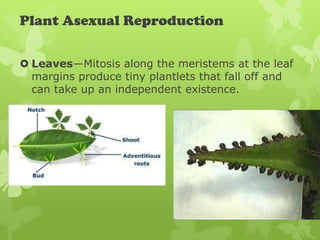
 Leaves—Mitosis along the meristems at the leaf
  margins produce tiny plantlets that fall off and
  can take up an independent existence.
Advantages Of
Vegetative Propagation
 The young plant uses the food resources
  of the parent plant, while it is developing.
 Only one parent plant is involved.
 Good and desirable parental characters
  are retained in the offspring.
 The new plant formed matures more
  rapidly than the plant which grows from
  seeds.
 A large number of desired varieties of
  plant are produced in a very short time.
Disadvantages Of
Vegetative Propagation
 No new varieties are produced.
 Over crowding of the vegetative produced
  plants leads to severe competition for
  survival among them.
 Lack of variety leads to reduce resistance
  to disease and changes in the
  environment.
 Colonization of the new localities is
  unlikely. Thus the plants are not widely
  distributed.
The life cycle of a
flowering plant
                                 4. Pollination

   3. Flower
    blossom                                           5. Fertilization


   2. Plant
development &
  maturation
                                                                   6. Seed/Fruit
                                                                     formation


                1. Germination
                                           7. Seed
                                          dispersal
Seed Structure

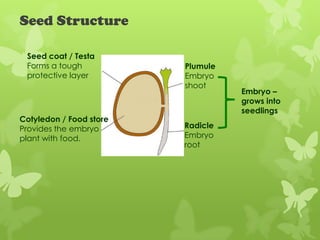
 Seed coat / Testa
 Forms a tough           Plumule
 protective layer        Embryo
                         shoot
                                   Embryo –
                                   grows into
                                   seedlings
Cotyledon / Food store
Provides the embryo      Radicle
plant with food.         Embryo
                         root
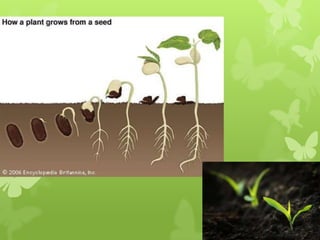
Seed Germination
Plant grow & mature
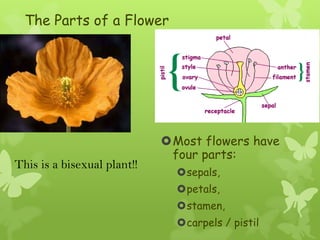
The Parts of a Flower


                             Most flowers have
                              four parts:
This is a bisexual plant!!
                               sepals,
                               petals,
                               stamen,
                               carpels / pistil
Carpel


         Stamen
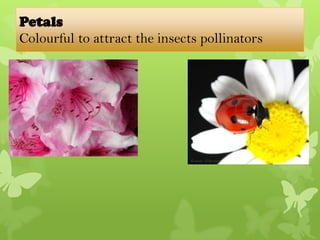
Petals
Colourful to attract the insects pollinators
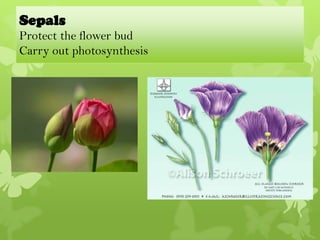
Sepals
Protect the flower bud
Carry out photosynthesis
Nectaries
give out sugary liquid to attract insects
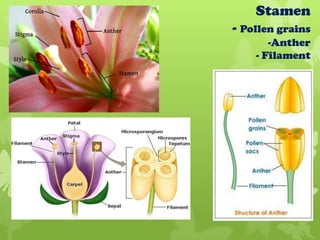
Stamen
- Pollen grains
       -Anther
    - Filament
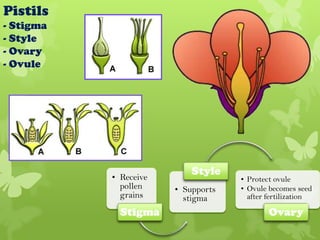
Pistils
- Stigma
- Style
- Ovary
- Ovule


           • Receive
                           Style
                                    • Protect ovule
             pollen    • Supports   • Ovule becomes seed
             grains      stigma       after fertilization

             Stigma                         Ovary
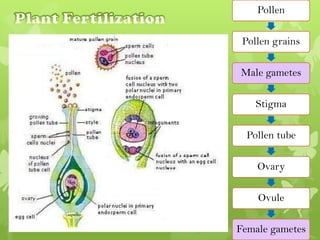
Pollen

 Pollen grains

Male gametes

    Stigma

  Pollen tube

    Ovary

    Ovule

Female gametes
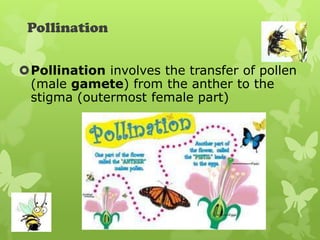
Pollination

Pollination involves the transfer of pollen
 (male gamete) from the anther to the
 stigma (outermost female part)
Types of pollination
Self pollination

No variation
Types of pollination
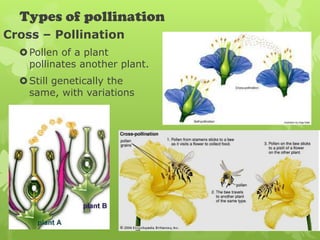
Cross – Pollination
   Pollen of a plant
    pollinates another plant.
   Still genetically the
    same, with variations
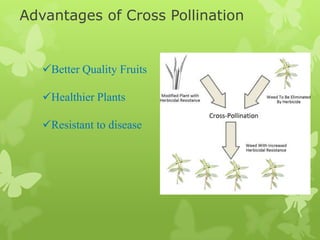
Advantages of Cross Pollination


   Better Quality Fruits

   Healthier Plants

   Resistant to disease
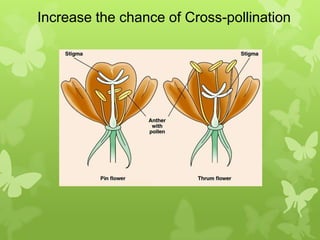
Increase the chance of Cross-pollination
Plant pollinators - Animals
Plant pollinators - Wind
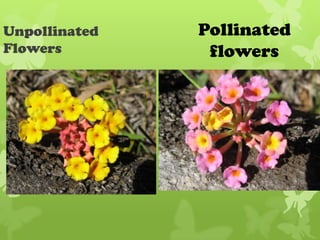
Unpollinated   Pollinated
Flowers         flowers
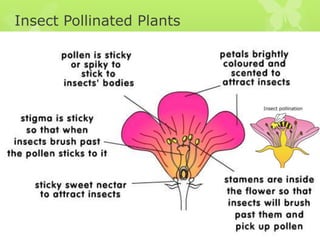
Insect Pollinated Plants
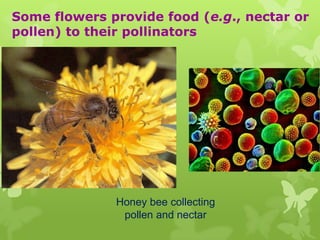
Some flowers provide food (e.g., nectar or
pollen) to their pollinators


              Honey bee collecting
               pollen and nectar
Wind Pollinated Plants
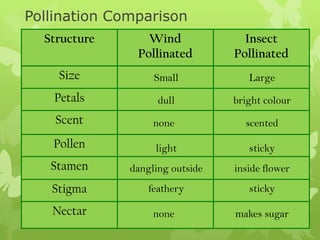
Pollination Comparison
  Structure      Wind              Insect
               Pollinated        Pollinated
    Size           Small            Large
   Petals           dull         bright colour
    Scent          none            scented
   Pollen          light            sticky
   Stamen     dangling outside   inside flower
   Stigma         feathery          sticky

   Nectar          none          makes sugar
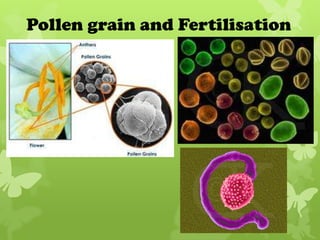
Pollen grain and Fertilisation
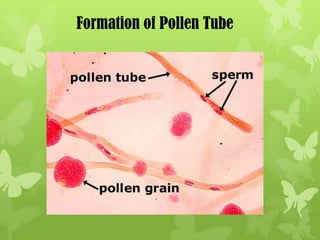
Formation of Pollen Tube
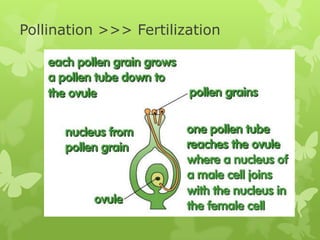
Pollination >>> Fertilization
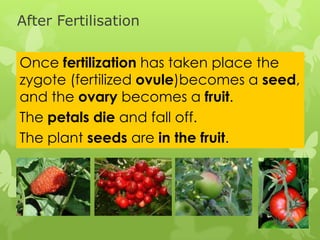
After Fertilisation

Once fertilization has taken place the
zygote (fertilized ovule)becomes a seed,
and the ovary becomes a fruit.
The petals die and fall off.
The plant seeds are in the fruit.
Development of the seed and fruit

       Ovule >>>> seed

 Tissues of the ovary >>>> fruit
Development of the seed and fruit

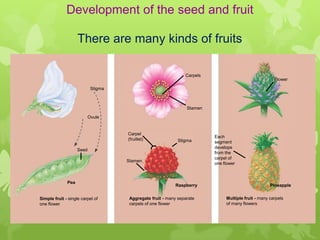
                    There are many kinds of fruits

                                                                Carpels
                                                                                                       Flower

                            Stigma


                                                                 Stamen

                           Ovule


                                     Carpel
                                                                          Each
                                     (fruitlet)              Stigma       segment
                                                                          develops
                    Seed
                                                                          from the
                                                                          carpel of
                                     Stamen
                                                                          one flower


              Pea
                                                            Raspberry                                Pineapple


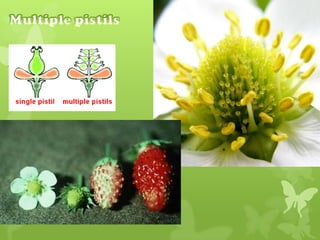
Simple fruit - single carpel of       Aggregate fruit - many separate          Multiple fruit - many carpels
one flower                            carpels of one flower                    of many flowers
What are fruits like?

The fruits can be:
              - soft & fleshy
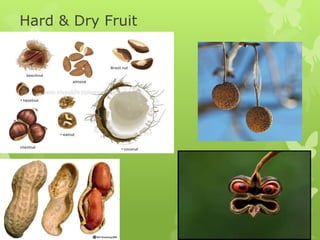
              - hard & dry
• What fruits can you think of?
• What are their seeds like?
Soft & Fleshy Fruits
Hard & Dry Fruit
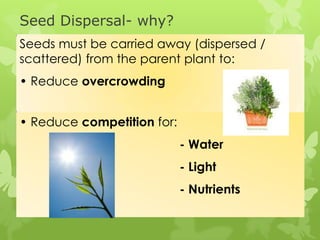
Seed Dispersal- why?
Seeds must be carried away (dispersed /
scattered) from the parent plant to:
• Reduce overcrowding


• Reduce competition for:
                            - Water
                            - Light
                            - Nutrients
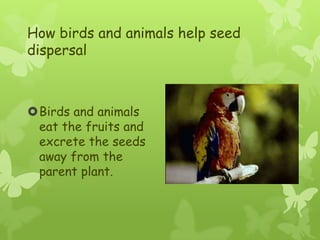
How birds and animals help seed
dispersal


Birds and animals
 eat the fruits and
 excrete the seeds
 away from the
 parent plant.
Development of the seed and fruit

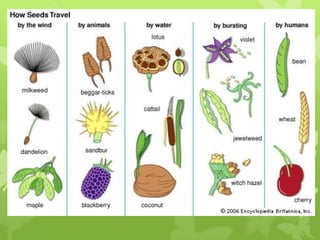
    Fruits aid seed dispersal

Many dry fruits are wind dispersed
Development of the seed and fruit

      Fruits aid seed dispersal

Some dry fruits are animal dispersed
Development of the seed and fruit

       Fruits aid seed dispersal

Many fleshy fruits are animal dispersed
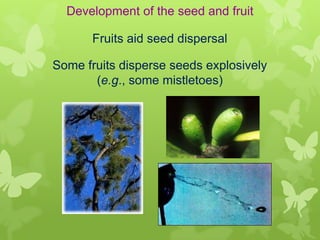
Development of the seed and fruit

       Fruits aid seed dispersal

Some fruits disperse seeds explosively
       (e.g., some mistletoes)
Development of the seed and fruit

    Fruits aid seed dispersal

Some fruits make seeds buoyant,
   to aid dispersal by water
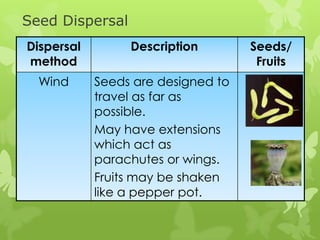
Seed Dispersal
Dispersal        Description        Seeds/
method                               Fruits
  Wind      Seeds are designed to
            travel as far as
            possible.
            May have extensions
            which act as
            parachutes or wings.
            Fruits may be shaken
            like a pepper pot.
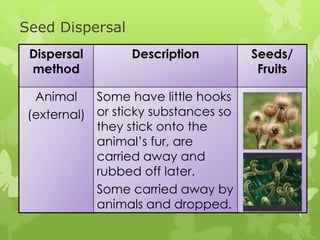
Seed Dispersal
 Dispersal        Description         Seeds/
 method                                Fruits

  Animal    Some have little hooks
 (external) or sticky substances so
            they stick onto the
            animal’s fur, are
            carried away and
            rubbed off later.
            Some carried away by
            animals and dropped.
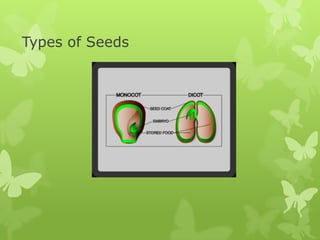
Types of Seeds
Dicotyledonous Seed
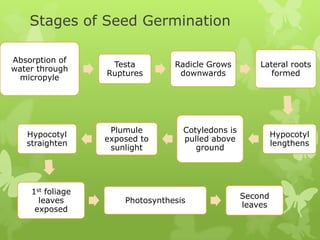
Stages of Seed Germination

Absorption of
                   Testa         Radicle Grows         Lateral roots
water through
                  Ruptures        downwards               formed
 micropyle


                   Plumule         Cotyledons is
   Hypocotyl                                                Hypocotyl
                  exposed to       pulled above
   straighten                                               lengthens
                   sunlight           ground


    1st foliage
                                                   Second
      leaves          Photosynthesis
                                                   leaves
     exposed
Seed Germination Process
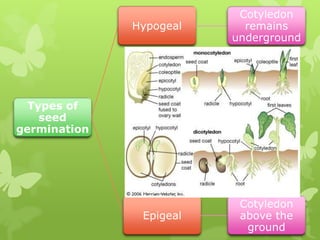
Cotyledon
              Hypogeal     remains
                         underground


  Types of
    seed
germination


                          Cotyledon
               Epigeal    above the
                           ground
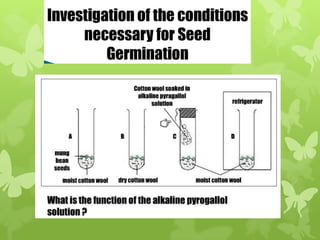
Conditions for Seed Germination
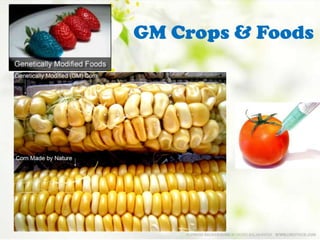
GM Crops & Foods
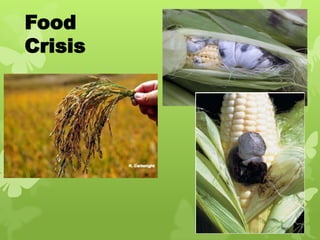
Food
Crisis
Advantages of GM foods
(1) Pesticide alternative Crop loss due to pests can be financially
crippling for farmers which is the reason most farmers use
pesticides. As an alternative to pesticides, crops such as corn and
soybeans can be genetically altered to resist pests - making the
farmer, the consumer and the environmentalist happy.
(2) Disease resistance There are many diseases - including
fungi, viruses and bacteria - that can attack crops. With new GM
technology, scientists can create crops that are genetically resistant to
these attackers.
(3) Cold tolerance In order to prevent cold temperatures from killing
crops, scientists can take a gene that causes cold water fish to produce
"antifreeze", and place it into certain plants that are susceptible to
frost.
(4) Drought resistance Genetically altering crops to resist drought
and grow in otherwise non-ideal conditions (like poor soil
quality), farmers are able to grow crops in areas that were previously
unsuitable for agriculture.
(5) Adding nutritional value Scientists are able to identify
nutritional deficiencies in specific parts of the world, and genetically
enhance the corn in order to satisfy the nutritional need.

Form 3 PMR Science Chapter 4 Plant Reproduction

  • 1.
  • 2.
    Reproduction of plants Plants Non- Flowering flowering By Flowers & Vegetative Spores Cones Seeds reproduction formation
  • 3.
    Plant Asexual Reproduction Above ground Stems arch over and take root at the tips, forming new plants (Forsythia, Raspberry and Strawberry) Horizontal above ground stems are called stolons
  • 4.
    Plant Asexual Reproduction Underground stems that serve for food storage and reproduction. Rhizomes, bulbs, corms and tubers
  • 5.
    Plant Asexual Reproduction Leaves—Mitosis along the meristems at the leaf margins produce tiny plantlets that fall off and can take up an independent existence.
  • 6.
    Advantages Of Vegetative Propagation The young plant uses the food resources of the parent plant, while it is developing.  Only one parent plant is involved.  Good and desirable parental characters are retained in the offspring.  The new plant formed matures more rapidly than the plant which grows from seeds.  A large number of desired varieties of plant are produced in a very short time.
  • 7.
    Disadvantages Of Vegetative Propagation No new varieties are produced.  Over crowding of the vegetative produced plants leads to severe competition for survival among them.  Lack of variety leads to reduce resistance to disease and changes in the environment.  Colonization of the new localities is unlikely. Thus the plants are not widely distributed.
  • 9.
    The life cycleof a flowering plant 4. Pollination 3. Flower blossom 5. Fertilization 2. Plant development & maturation 6. Seed/Fruit formation 1. Germination 7. Seed dispersal
  • 10.
    Seed Structure Seedcoat / Testa Forms a tough Plumule protective layer Embryo shoot Embryo – grows into seedlings Cotyledon / Food store Provides the embryo Radicle plant with food. Embryo root
  • 11.
  • 12.
  • 13.
    The Parts ofa Flower Most flowers have four parts: This is a bisexual plant!! sepals, petals, stamen, carpels / pistil
  • 14.
    Carpel Stamen
  • 15.
    Petals Colourful to attractthe insects pollinators
  • 16.
    Sepals Protect the flowerbud Carry out photosynthesis
  • 17.
    Nectaries give out sugaryliquid to attract insects
  • 18.
    Stamen - Pollen grains -Anther - Filament
  • 19.
    Pistils - Stigma - Style -Ovary - Ovule • Receive Style • Protect ovule pollen • Supports • Ovule becomes seed grains stigma after fertilization Stigma Ovary
  • 21.
    Pollen Pollen grains Malegametes Stigma Pollen tube Ovary Ovule Female gametes
  • 22.
    Pollination Pollination involves thetransfer of pollen (male gamete) from the anther to the stigma (outermost female part)
  • 23.
  • 24.
  • 25.
    Types of pollination Cross– Pollination  Pollen of a plant pollinates another plant.  Still genetically the same, with variations
  • 26.
    Advantages of CrossPollination Better Quality Fruits Healthier Plants Resistant to disease
  • 27.
    Increase the chanceof Cross-pollination
  • 28.
  • 29.
  • 30.
    Unpollinated Pollinated Flowers flowers
  • 31.
  • 32.
    Some flowers providefood (e.g., nectar or pollen) to their pollinators Honey bee collecting pollen and nectar
  • 33.
  • 34.
    Pollination Comparison Structure Wind Insect Pollinated Pollinated Size Small Large Petals dull bright colour Scent none scented Pollen light sticky Stamen dangling outside inside flower Stigma feathery sticky Nectar none makes sugar
  • 35.
    Pollen grain andFertilisation
  • 36.
  • 37.
  • 38.
    After Fertilisation Once fertilizationhas taken place the zygote (fertilized ovule)becomes a seed, and the ovary becomes a fruit. The petals die and fall off. The plant seeds are in the fruit.
  • 39.
    Development of theseed and fruit Ovule >>>> seed Tissues of the ovary >>>> fruit
  • 40.
    Development of theseed and fruit
  • 41.
    Development of theseed and fruit There are many kinds of fruits Carpels Flower Stigma Stamen Ovule Carpel Each (fruitlet) Stigma segment develops Seed from the carpel of Stamen one flower Pea Raspberry Pineapple Simple fruit - single carpel of Aggregate fruit - many separate Multiple fruit - many carpels one flower carpels of one flower of many flowers
  • 42.
    What are fruitslike? The fruits can be: - soft & fleshy - hard & dry • What fruits can you think of? • What are their seeds like?
  • 43.
  • 44.
  • 45.
    Seed Dispersal- why? Seedsmust be carried away (dispersed / scattered) from the parent plant to: • Reduce overcrowding • Reduce competition for: - Water - Light - Nutrients
  • 47.
    How birds andanimals help seed dispersal Birds and animals eat the fruits and excrete the seeds away from the parent plant.
  • 48.
    Development of theseed and fruit Fruits aid seed dispersal Many dry fruits are wind dispersed
  • 49.
    Development of theseed and fruit Fruits aid seed dispersal Some dry fruits are animal dispersed
  • 50.
    Development of theseed and fruit Fruits aid seed dispersal Many fleshy fruits are animal dispersed
  • 51.
    Development of theseed and fruit Fruits aid seed dispersal Some fruits disperse seeds explosively (e.g., some mistletoes)
  • 52.
    Development of theseed and fruit Fruits aid seed dispersal Some fruits make seeds buoyant, to aid dispersal by water
  • 53.
    Seed Dispersal Dispersal Description Seeds/ method Fruits Wind Seeds are designed to travel as far as possible. May have extensions which act as parachutes or wings. Fruits may be shaken like a pepper pot.
  • 54.
    Seed Dispersal Dispersal Description Seeds/ method Fruits Animal Some have little hooks (external) or sticky substances so they stick onto the animal’s fur, are carried away and rubbed off later. Some carried away by animals and dropped.
  • 55.
  • 56.
  • 58.
    Stages of SeedGermination Absorption of Testa Radicle Grows Lateral roots water through Ruptures downwards formed micropyle Plumule Cotyledons is Hypocotyl Hypocotyl exposed to pulled above straighten lengthens sunlight ground 1st foliage Second leaves Photosynthesis leaves exposed
  • 59.
  • 61.
    Cotyledon Hypogeal remains underground Types of seed germination Cotyledon Epigeal above the ground
  • 62.
  • 66.
  • 67.
  • 68.
    Advantages of GMfoods (1) Pesticide alternative Crop loss due to pests can be financially crippling for farmers which is the reason most farmers use pesticides. As an alternative to pesticides, crops such as corn and soybeans can be genetically altered to resist pests - making the farmer, the consumer and the environmentalist happy. (2) Disease resistance There are many diseases - including fungi, viruses and bacteria - that can attack crops. With new GM technology, scientists can create crops that are genetically resistant to these attackers. (3) Cold tolerance In order to prevent cold temperatures from killing crops, scientists can take a gene that causes cold water fish to produce "antifreeze", and place it into certain plants that are susceptible to frost. (4) Drought resistance Genetically altering crops to resist drought and grow in otherwise non-ideal conditions (like poor soil quality), farmers are able to grow crops in areas that were previously unsuitable for agriculture. (5) Adding nutritional value Scientists are able to identify nutritional deficiencies in specific parts of the world, and genetically enhance the corn in order to satisfy the nutritional need.

Editor's Notes