Solutions, Suspensions, and Colloids
It’s all about the particles!
• The size of the particles has a great effect on the
properties of a mixture.
• You must observe a mixture’s properties before
deciding whether it is heterogeneous or homogeneous.
• Mixtures is also classified as solutions, suspensions,
or colloids based on particle size.
Solutions
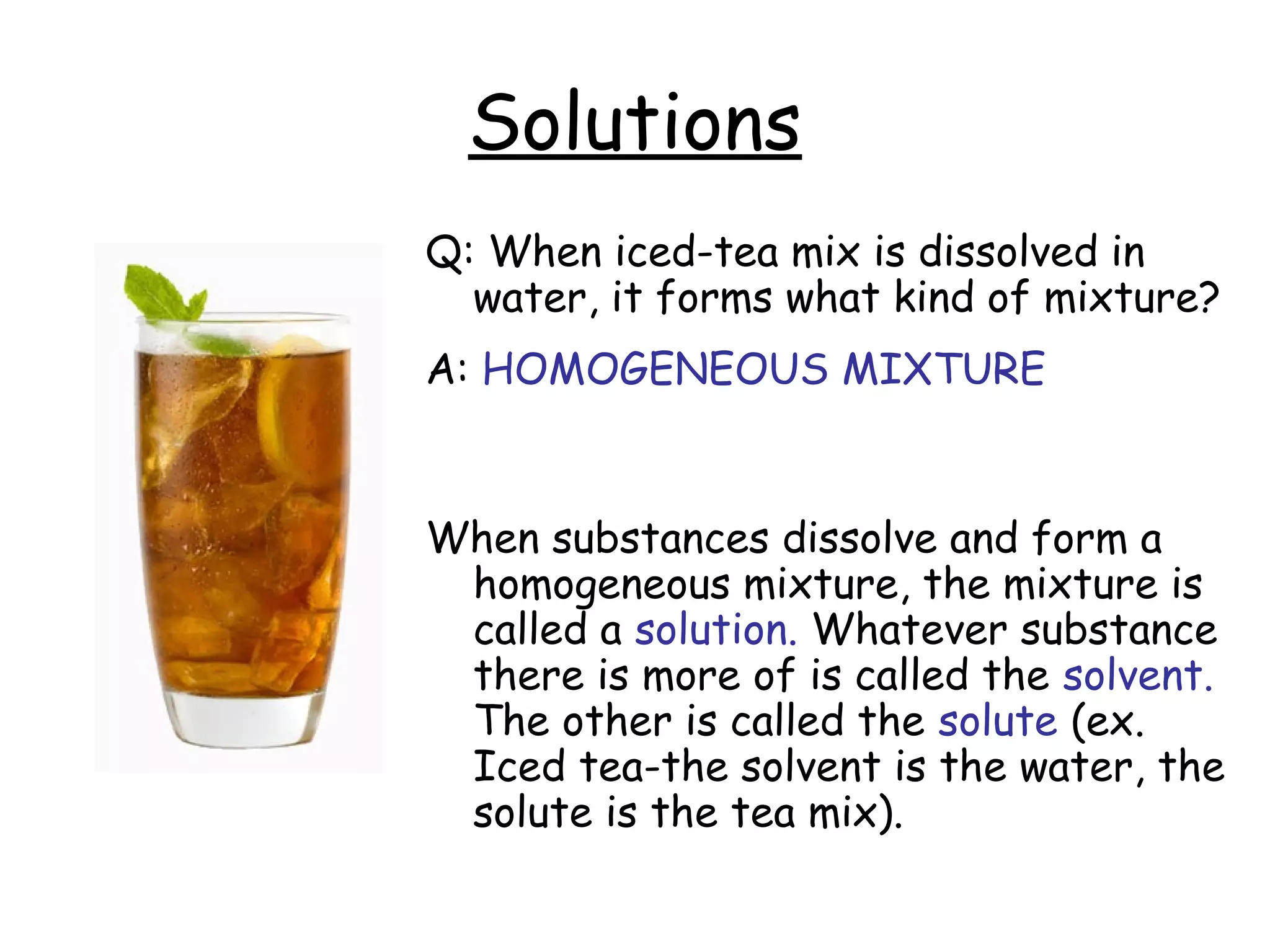
Q: When iced-tea mix is dissolved in
water, it forms what kind of mixture?
A: HOMOGENEOUS MIXTURE
When substances dissolve and form a
homogeneous mixture, the mixture is
called a solution. Whatever substance
there is more of is called the solvent.
The other is called the solute (ex.
Iced tea-the solvent is the water, the
solute is the tea mix).
Properties of a Solution
• They do not separate into layers over
time.
• If they are poured through a filter,
none of the substances will get trapped.
• Light passes through them.
All of the particles in a solution are too
small to become separated, filter out,
or scatter light.
Suspensions
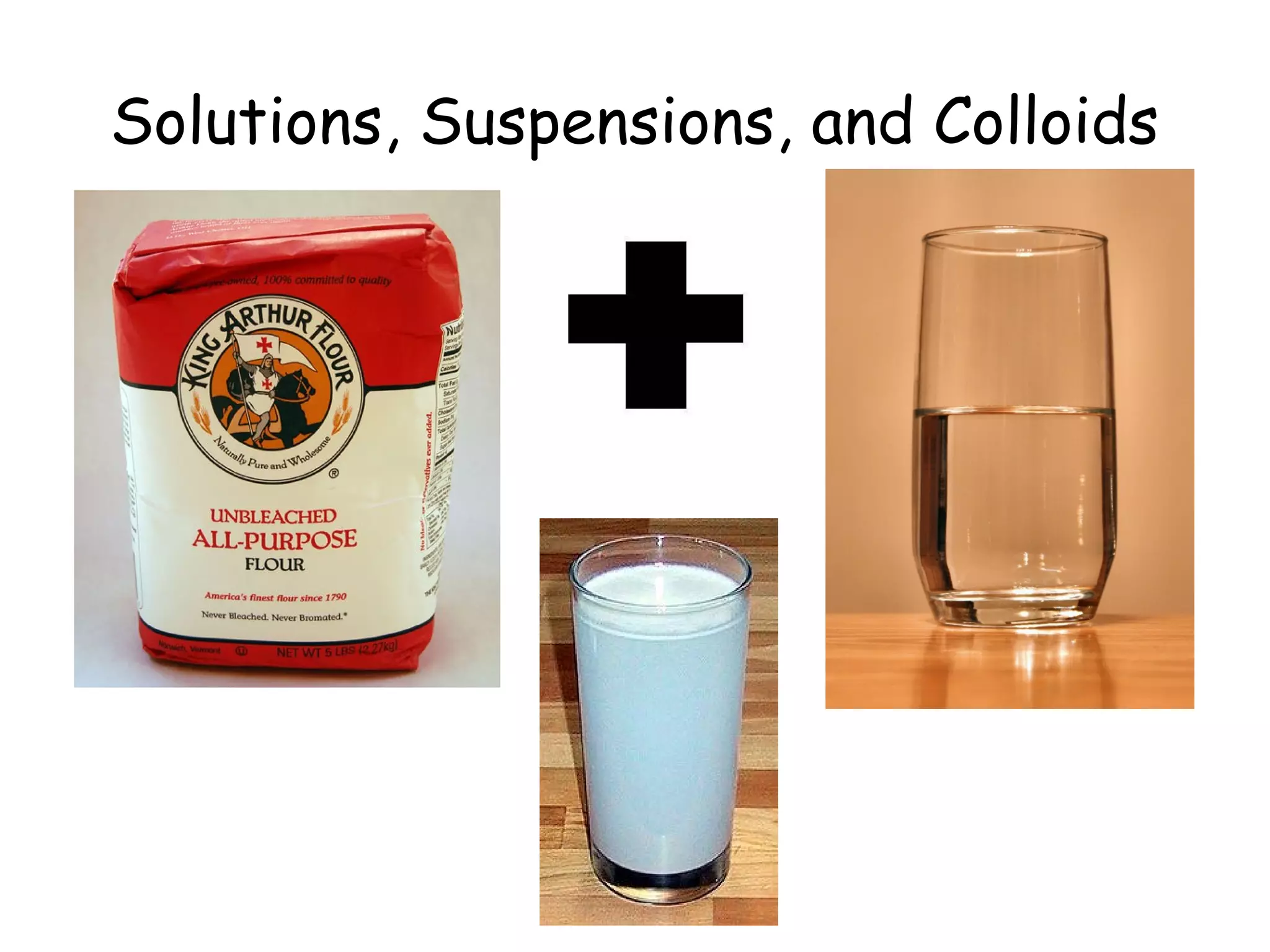
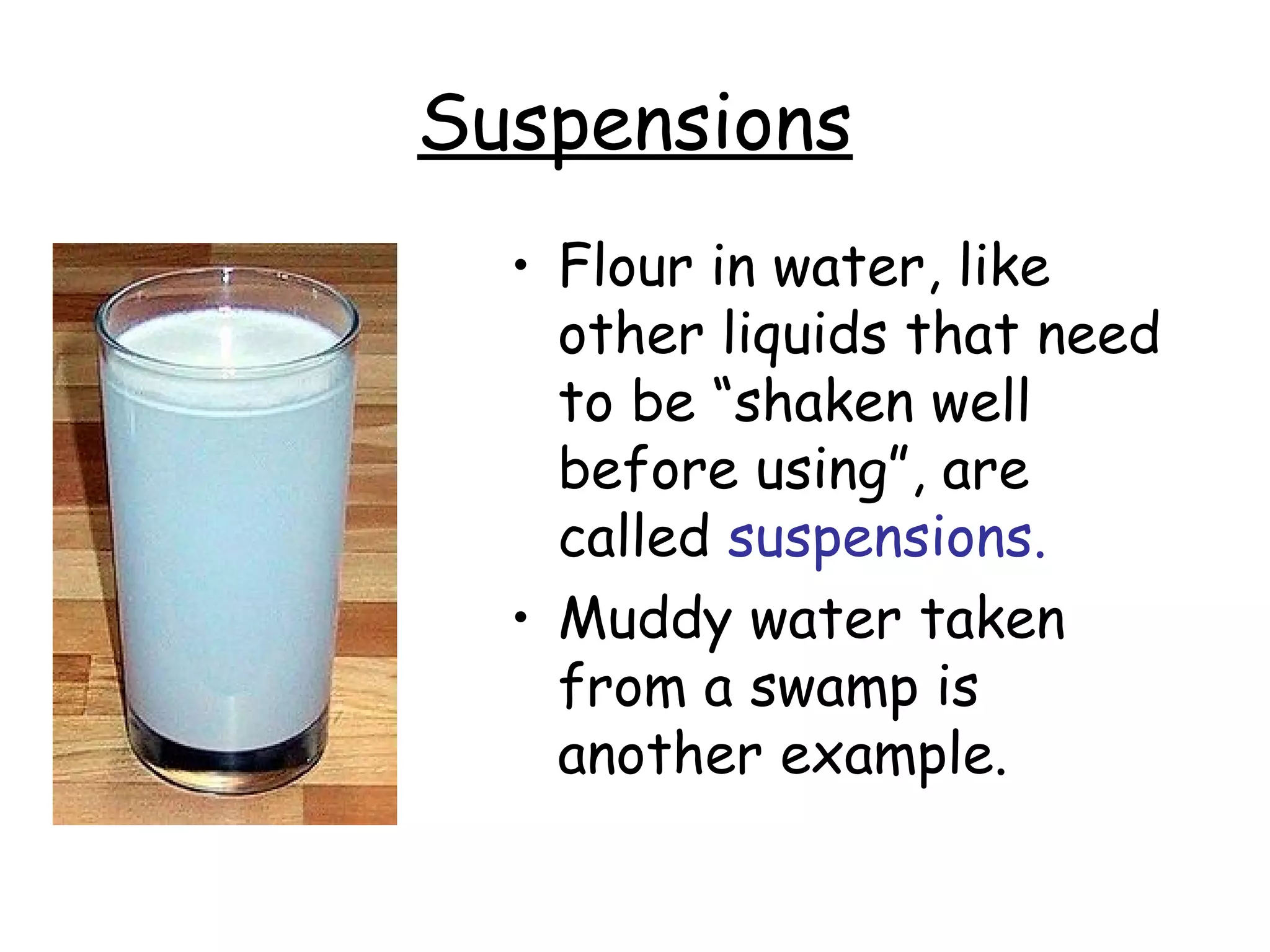
• Flour in water, like
other liquids that need
to be “shaken well
before using”, are
called suspensions.
• Muddy water taken
from a swamp is
another example.
Properties of a Suspension
• Heterogeneous mixture
• Separates into layers over time.
• Filters can separate particles that make up a
suspension.
• Particles are larger than those in a solution.
• Scatter light.
Suspended particles settle out of a suspension.
Colloids
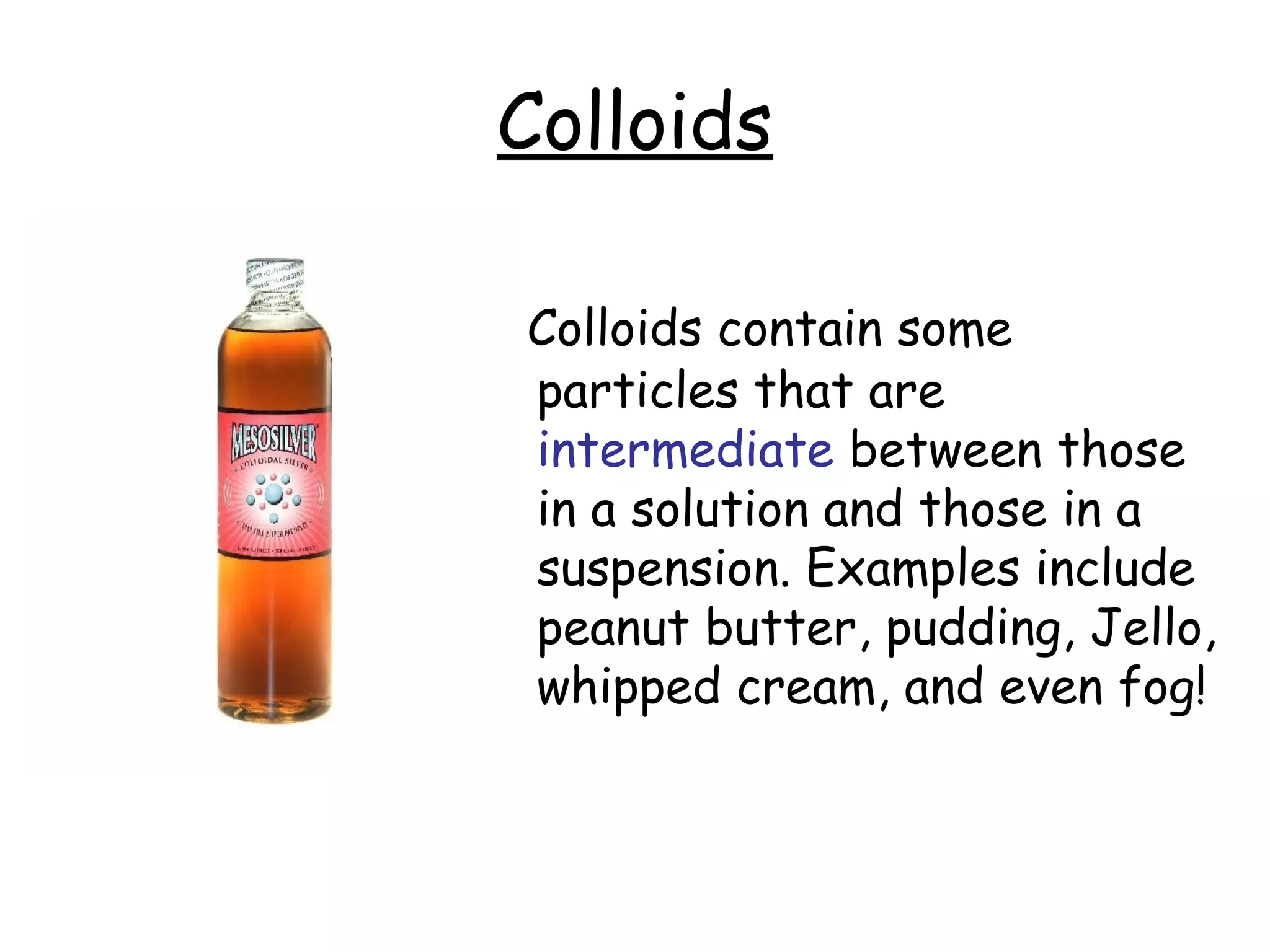
Colloids contain some
particles that are
intermediate between those
in a solution and those in a
suspension. Examples include
peanut butter, pudding, Jello,
whipped cream, and even fog!
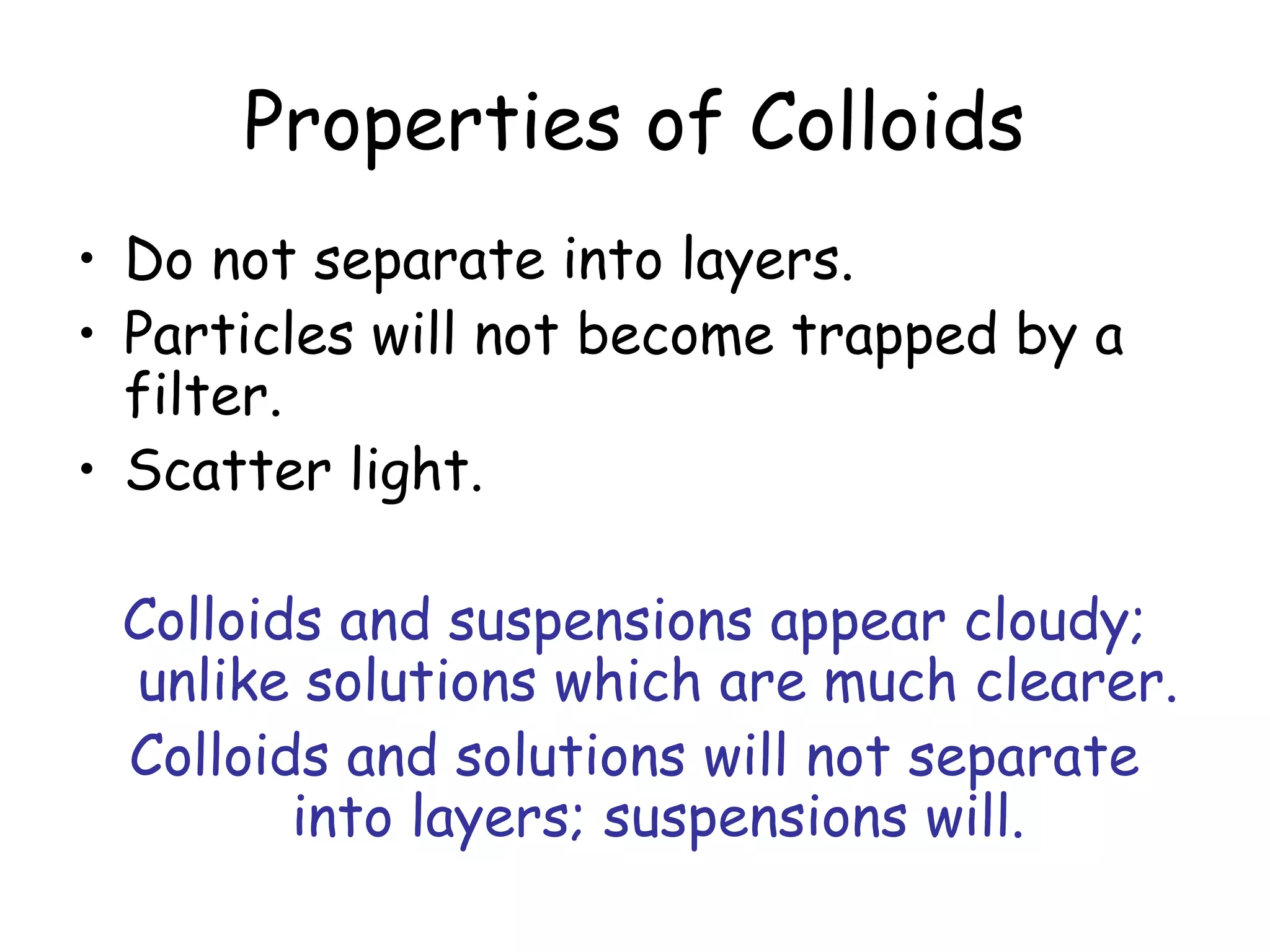
Properties of Colloids
• Do not separate into layers.
• Particles will not become trapped by a
filter.
• Scatter light.
Colloids and suspensions appear cloudy;
unlike solutions which are much clearer.
Colloids and solutions will not separate
into layers; suspensions will.
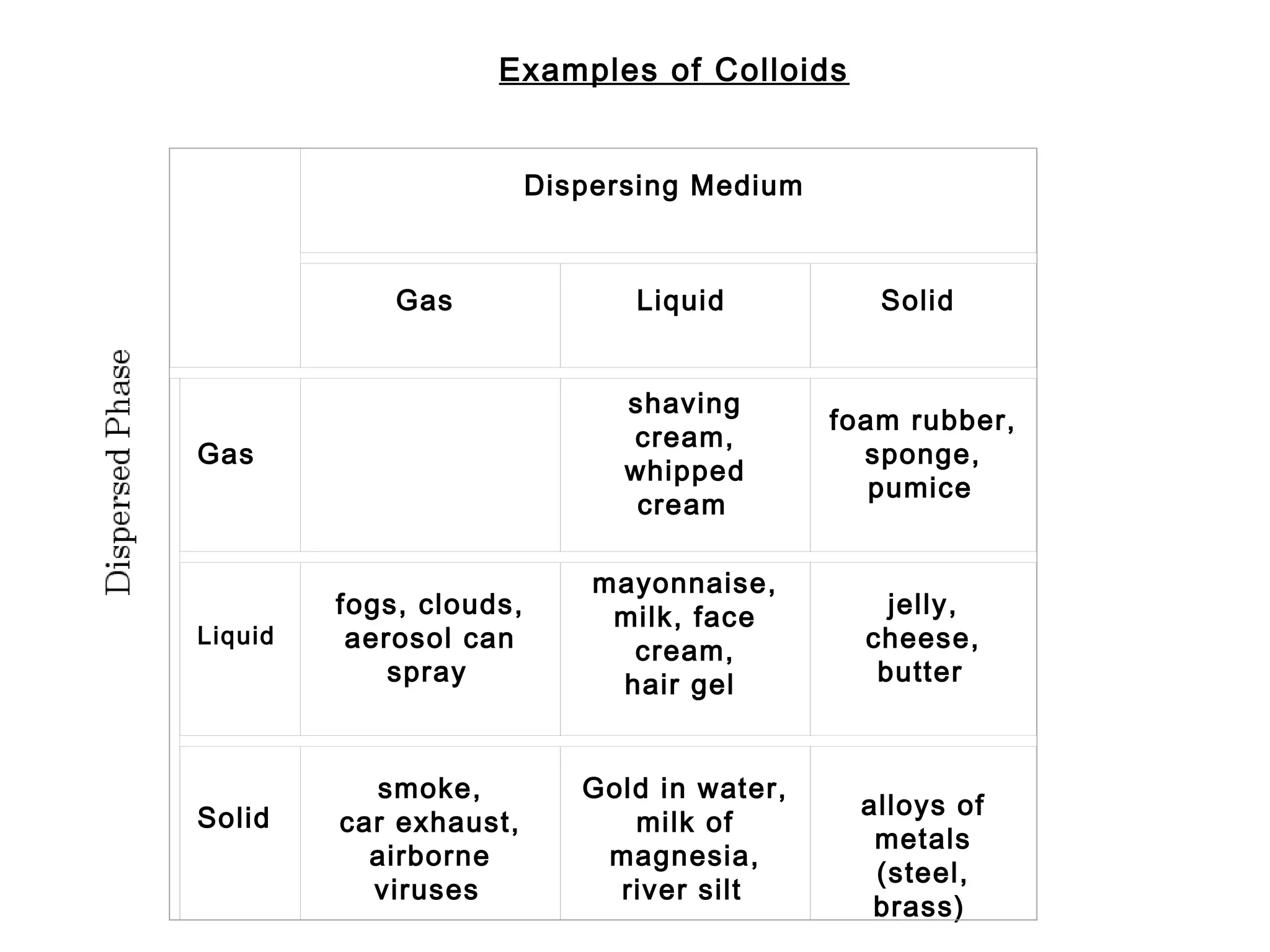
Examples of Colloids
 
Dispersing Medium
Gas Liquid Solid
Gas  
shaving
cream,
whipped
cream
foam rubber,
sponge,
pumice
Liquid
fogs, clouds,
aerosol can
spray
mayonnaise,
milk, face
cream,
hair gel
jelly,
cheese,
butter
Solid
smoke,
car exhaust,
airborne
viruses
Gold in water,
milk of
magnesia,
river silt
alloys of
metals
(steel,
brass)

Iccs science6 solutionssuspensionsandcolloids 110212065006-phpapp01

  • 1.
  • 3.
    It’s all aboutthe particles! • The size of the particles has a great effect on the properties of a mixture. • You must observe a mixture’s properties before deciding whether it is heterogeneous or homogeneous. • Mixtures is also classified as solutions, suspensions, or colloids based on particle size.
  • 4.
    Solutions Q: When iced-teamix is dissolved in water, it forms what kind of mixture? A: HOMOGENEOUS MIXTURE When substances dissolve and form a homogeneous mixture, the mixture is called a solution. Whatever substance there is more of is called the solvent. The other is called the solute (ex. Iced tea-the solvent is the water, the solute is the tea mix).
  • 5.
    Properties of aSolution • They do not separate into layers over time. • If they are poured through a filter, none of the substances will get trapped. • Light passes through them. All of the particles in a solution are too small to become separated, filter out, or scatter light.
  • 6.
    Suspensions • Flour inwater, like other liquids that need to be “shaken well before using”, are called suspensions. • Muddy water taken from a swamp is another example.
  • 7.
    Properties of aSuspension • Heterogeneous mixture • Separates into layers over time. • Filters can separate particles that make up a suspension. • Particles are larger than those in a solution. • Scatter light. Suspended particles settle out of a suspension.
  • 8.
    Colloids Colloids contain some particlesthat are intermediate between those in a solution and those in a suspension. Examples include peanut butter, pudding, Jello, whipped cream, and even fog!
  • 9.
    Properties of Colloids •Do not separate into layers. • Particles will not become trapped by a filter. • Scatter light. Colloids and suspensions appear cloudy; unlike solutions which are much clearer. Colloids and solutions will not separate into layers; suspensions will.
  • 10.
    Examples of Colloids   DispersingMedium Gas Liquid Solid Gas   shaving cream, whipped cream foam rubber, sponge, pumice Liquid fogs, clouds, aerosol can spray mayonnaise, milk, face cream, hair gel jelly, cheese, butter Solid smoke, car exhaust, airborne viruses Gold in water, milk of magnesia, river silt alloys of metals (steel, brass)