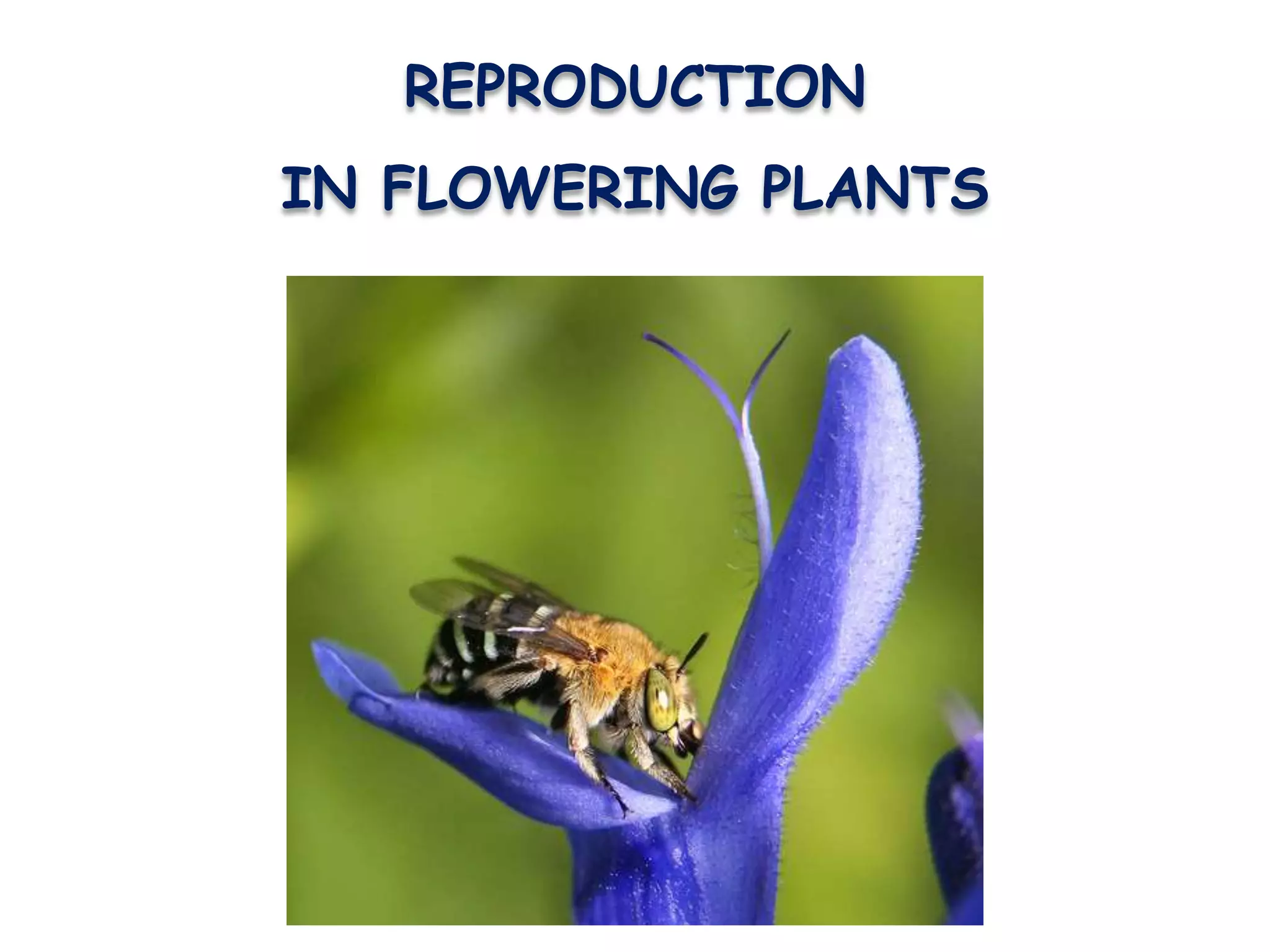
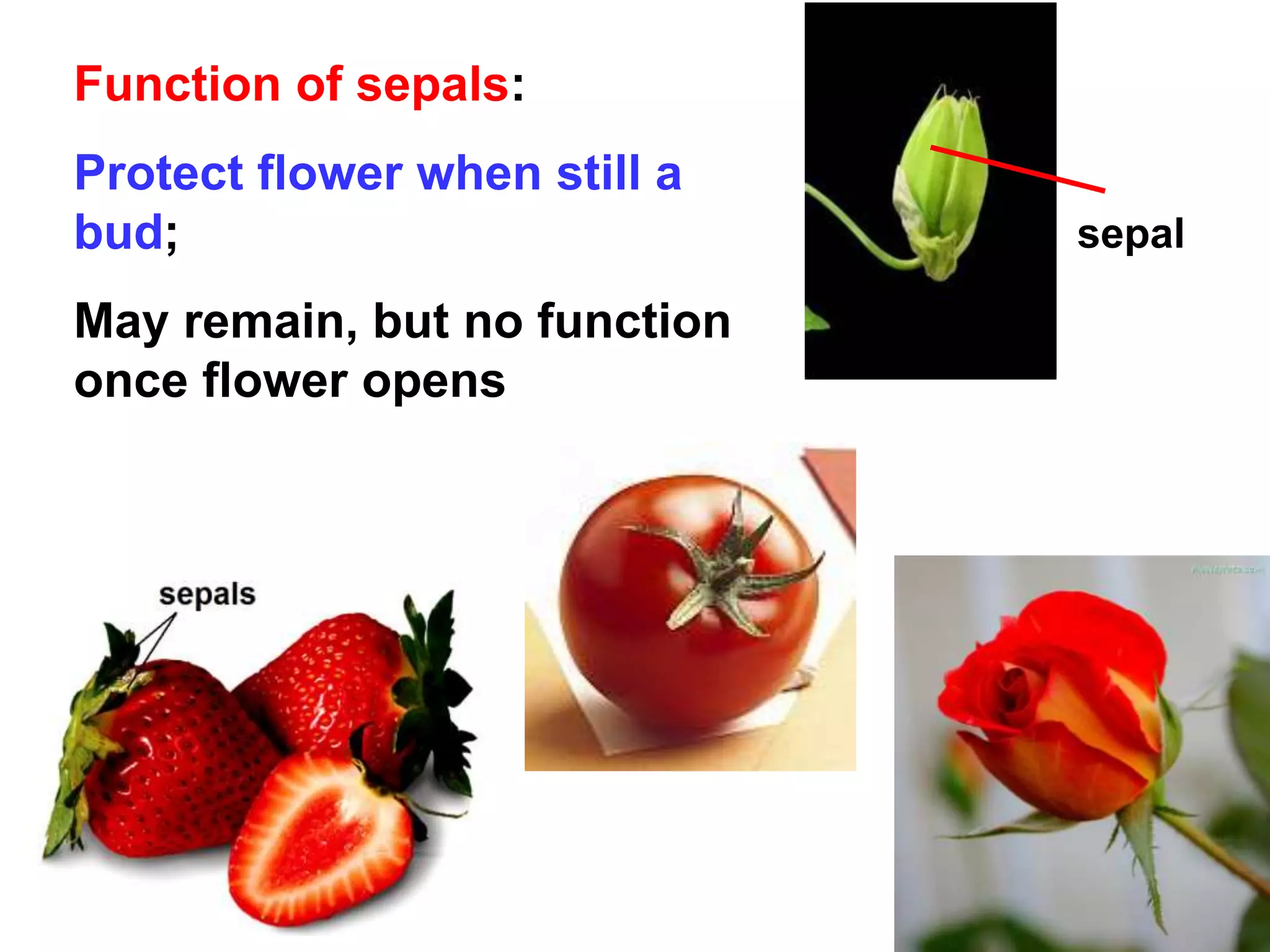
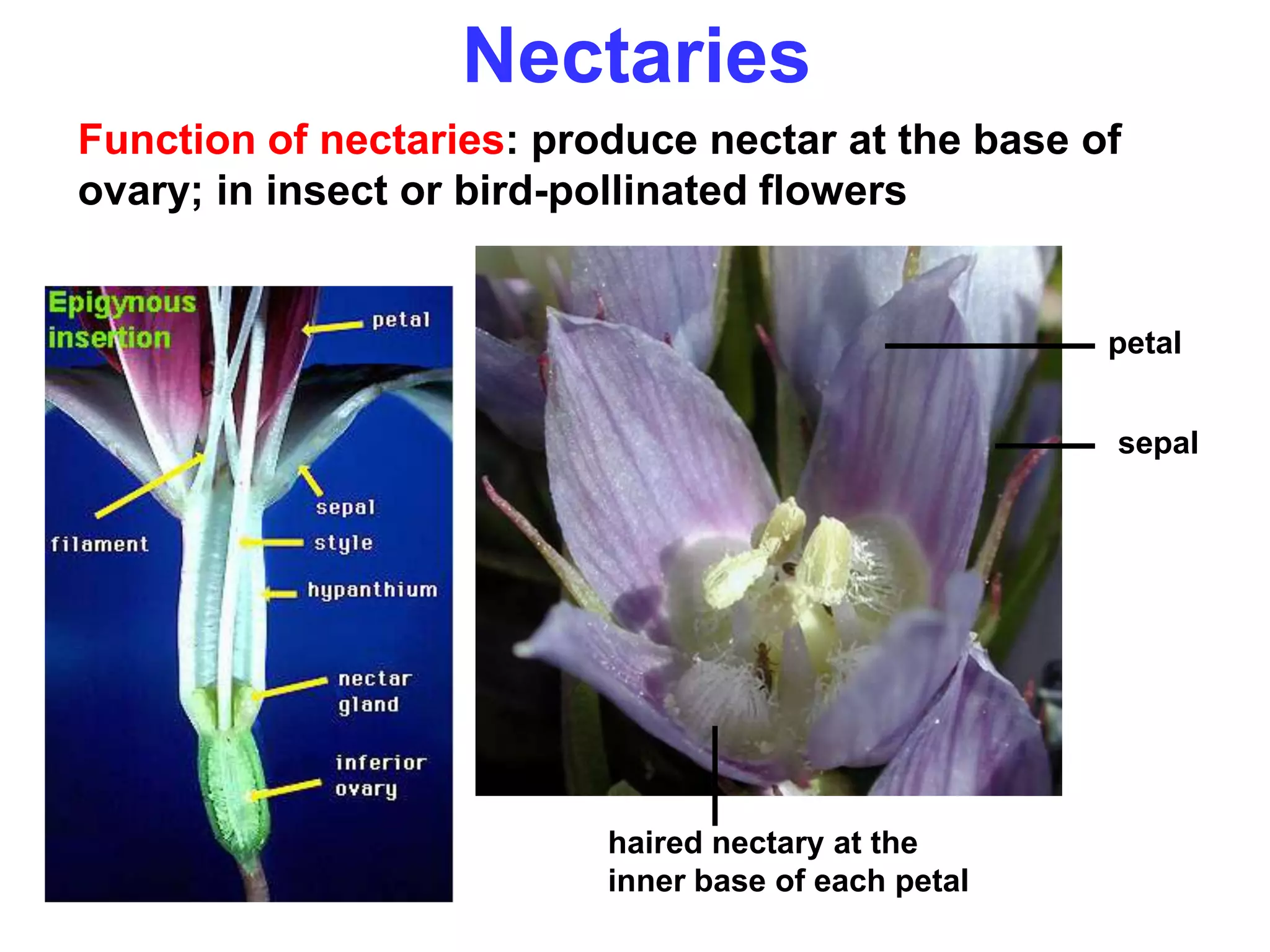
Flowering plants have evolved various reproductive structures and processes to facilitate reproduction. Flowers produce male pollen and female ovules that are necessary for fertilization. Key flower parts include sepals, petals, stamens, and carpels. Pollination involves the transfer of pollen grains between flower stamens to carpels. This leads to fertilization within the ovule and formation of seeds. Seeds contain embryos and food reserves to allow for dispersal and germination into new plants under suitable conditions of water, oxygen, and temperature. Seed dispersal mechanisms include wind, animals, water, and mechanical forces. Germination begins with water uptake and radicle emergence from the seed.




![Mark with an
‘X’ two places
where meiosis
occurs.
X
[Meiosis occurs
to produce
pollen grains &
egg cells]](https://image.slidesharecdn.com/plantreproduction-121028114038-phpapp01/75/Plant-reproduction-15-2048.jpg)




![Wall of ovule develops into the seed
coat [testa]](https://image.slidesharecdn.com/plantreproduction-121028114038-phpapp01/75/Plant-reproduction-49-2048.jpg)


![Broad bean seed [learn to draw]
Function of micropyle: water
enters before germination
Testa: a thick seed coat which protects the seed
from drying up and attack by microbes](https://image.slidesharecdn.com/plantreproduction-121028114038-phpapp01/75/Plant-reproduction-54-2048.jpg)


![Question: MAY, 2006 [II A]
The seeds of the Squirting
Cucumber (Faqqus il-Hmir)
develop in large oval fruits
which when ripe, shoot out their
seed on a slight disturbance.
a) What type of seed dispersal
is this and what is its
importance? (3)](https://image.slidesharecdn.com/plantreproduction-121028114038-phpapp01/75/Plant-reproduction-71-2048.jpg)
![Question: MAY, 2006 [II A]
i) Name TWO other methods of seed dispersal
and for each name ONE type of plant that
disperses its seeds using the method you
mentioned. (4)
Animal dispersal: burdock
Wind dispersal: dandelion
Water dispersal: coconut
dandelion](https://image.slidesharecdn.com/plantreproduction-121028114038-phpapp01/75/Plant-reproduction-72-2048.jpg)

![Seed of extinct date palm sprouts after
2,000 years [news published in 2005]
The date tree that was successfully
germinated from a 2000 year old seed found
in Israel.](https://image.slidesharecdn.com/plantreproduction-121028114038-phpapp01/75/Plant-reproduction-74-2048.jpg)


![Which structure elongates in:
Hypogeal Epigeal germination
germination [bean]: [sunflower]:
Epicotyl elongates Hypocotyl elongates](https://image.slidesharecdn.com/plantreproduction-121028114038-phpapp01/75/Plant-reproduction-86-2048.jpg)


![Hypogeal germination [learn to
draw ]
Epicotyl
elongates](https://image.slidesharecdn.com/plantreproduction-121028114038-phpapp01/75/Plant-reproduction-89-2048.jpg)


