Clean up time!!
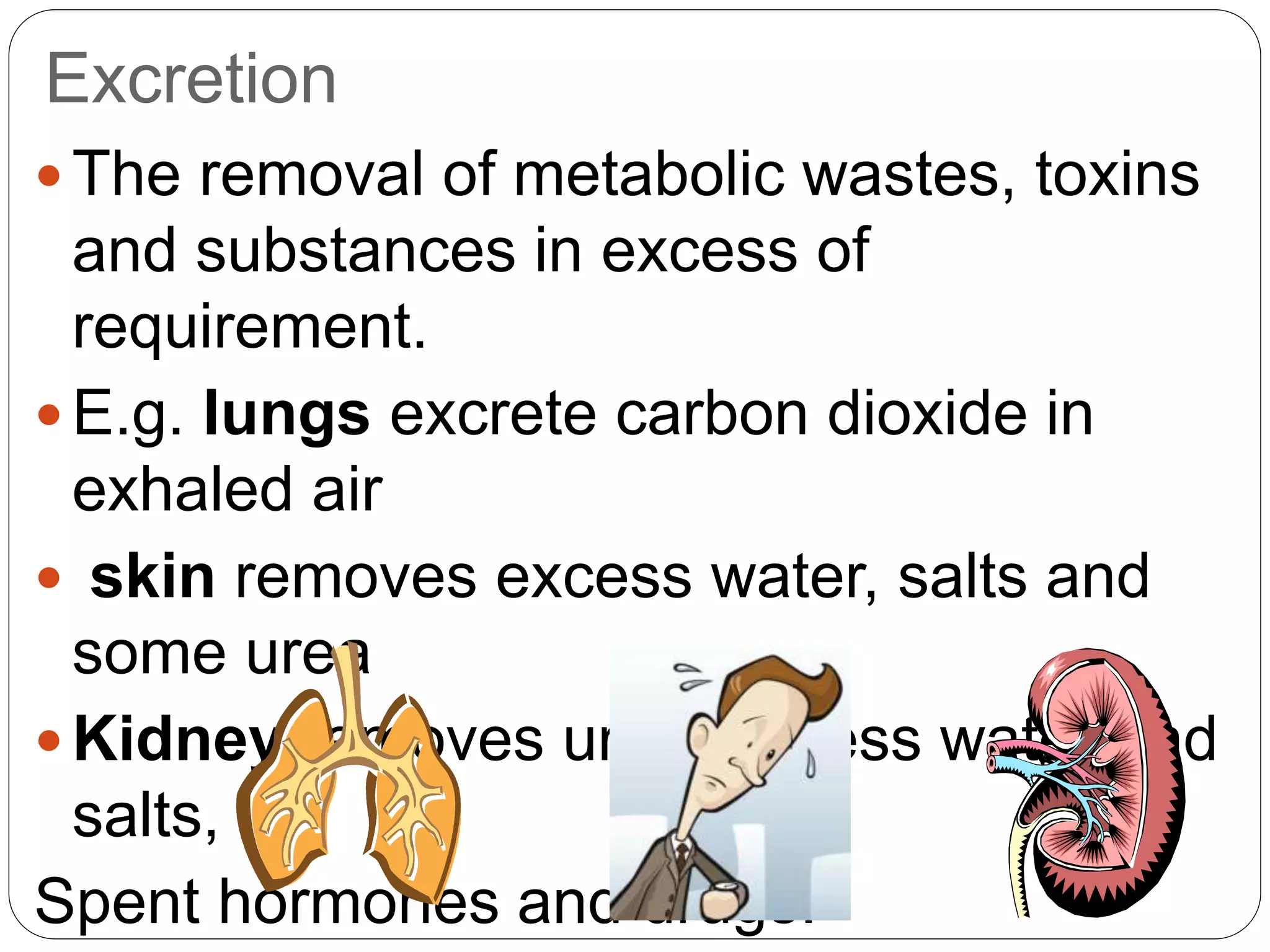
Excretion
Excretion
 The removal of metabolic wastes, toxins
and substances in excess of
requirement.
 E.g. lungs excrete carbon dioxide in
exhaled air
 skin removes excess water, salts and
some urea
 Kidney removes urea, excess water and
salts,
Spent hormones and drugs.
What is urea?
 Excess amino acids cannot be
stored by the body.
 The liver removes the
nitrogen part (Amine)of the
excess amino acids to form the
urea molecule, the remainder
of the amino acid contains C,H
&O and can be used to release
energy. This is called de-
amination.
 Urea leaves the liver in the
blood (hepatic vein) it travels
with the blood stream till it
reaches the kidney.
The excretory system
Nephron: the building unit of kidney 10
How does the nephron work? 10
Nephron parts & their functions
Part Function
Glomerulus Filtration of blood; water, urea, glucose,
amino acids, salts can pass out but plasma
proteins and cells cannot
Renal capsule Collects the filtrate
First convoluted
tubule
Selective reabsorption of water, glucose,
amino acids by active transport
Loop of Henle Reabsoption of water and salts
Second convoluted
tubule
Secretion of wastes into the filtrate
Collecting duct Reabsorption of water, passes urine to pelvis
10
Normal constituents of urine
 Urine is composed of mostly water, dissolved urea,
salts, spent hormones, alcohol and drugs.
 Proteins are large molecules that cannot pass
through the capillaries. If they are found in urine this
person may be suffering from a kidney disease, or
has kidney failure.
 Glucose is normally reabsorbed completely, its
presence in urine indicated that the person is
suffering from diabetes.
EXHB
EXHB
10
Kidney Dialysis machine 10

Ch12 homeostasis & excretion 2019

  • 1.
  • 2.
    Excretion  The removalof metabolic wastes, toxins and substances in excess of requirement.  E.g. lungs excrete carbon dioxide in exhaled air  skin removes excess water, salts and some urea  Kidney removes urea, excess water and salts, Spent hormones and drugs.
  • 3.
    What is urea? Excess amino acids cannot be stored by the body.  The liver removes the nitrogen part (Amine)of the excess amino acids to form the urea molecule, the remainder of the amino acid contains C,H &O and can be used to release energy. This is called de- amination.  Urea leaves the liver in the blood (hepatic vein) it travels with the blood stream till it reaches the kidney.
  • 4.
  • 5.
    Nephron: the buildingunit of kidney 10
  • 6.
    How does thenephron work? 10
  • 7.
    Nephron parts &their functions Part Function Glomerulus Filtration of blood; water, urea, glucose, amino acids, salts can pass out but plasma proteins and cells cannot Renal capsule Collects the filtrate First convoluted tubule Selective reabsorption of water, glucose, amino acids by active transport Loop of Henle Reabsoption of water and salts Second convoluted tubule Secretion of wastes into the filtrate Collecting duct Reabsorption of water, passes urine to pelvis 10
  • 8.
    Normal constituents ofurine  Urine is composed of mostly water, dissolved urea, salts, spent hormones, alcohol and drugs.  Proteins are large molecules that cannot pass through the capillaries. If they are found in urine this person may be suffering from a kidney disease, or has kidney failure.  Glucose is normally reabsorbed completely, its presence in urine indicated that the person is suffering from diabetes.
  • 9.
  • 10.
  • 11.
  • 12.