Big Idea: To be able to identify organisms
in the Plant Kingdom classified into
vascular and non-vascular based on
specific structures.
Vascular
What does it mean?
2
Vascular
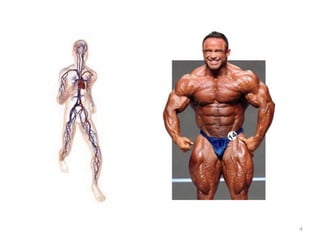
• People: of, relating to, affecting, or
consisting of a vessel or vessels, especially
those that carry blood
• Plants: relating to the plant tissues (xylem
and phloem) that conduct water, sap, and
nutrients
3
4
5
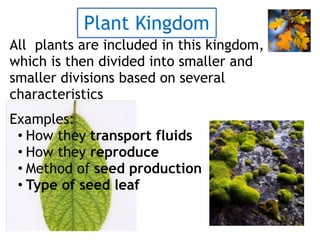
Plant Kingdom
All plants are included in this kingdom,
which is then divided into smaller and
smaller divisions based on several
characteristics
Examples:
• How they transport fluids
• How they reproduce
• Method of seed production
• Type of seed leaf


Plants are placed in two major groups
based on their internal structure. 


The two groups are:
• Vascular plants - which have special
cells to transport food and water
• Nonvascular plants -which do not
have the same structures for
transport
Vascular vs Nonvascular
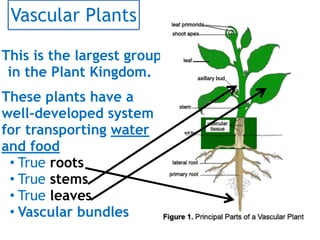
Vascular Plants
This is the largest group
in the Plant Kingdom.
These plants have a
well-developed system
for transporting water
and food
• True roots
• True stems
• True leaves
• Vascular bundles
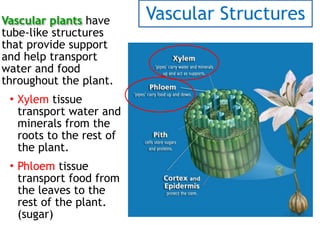
Vascular StructuresVascular plants have
tube-like structures
that provide support
and help transport
water and food
throughout the plant.
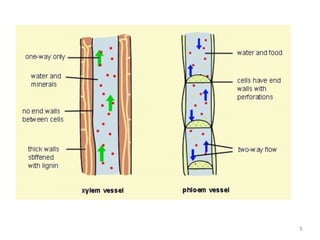
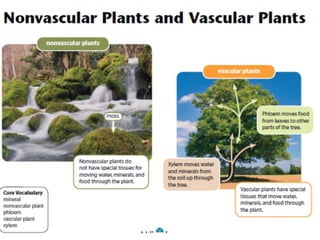
• Xylem tissue
transport water and
minerals from the
roots to the rest of
the plant.
• Phloem tissue
transport food from
the leaves to the
rest of the plant.
(sugar)
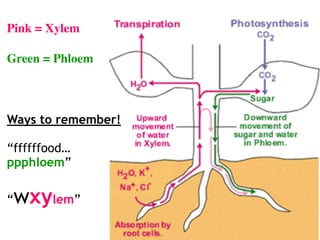
Pink = Xylem
Green = Phloem
Ways to remember!
“ffffffood…
ppphloem”
“wxylem”
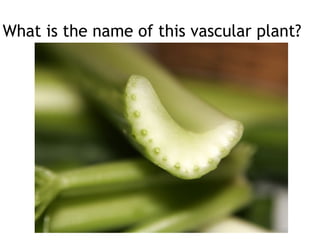
What is the name of this vascular plant?
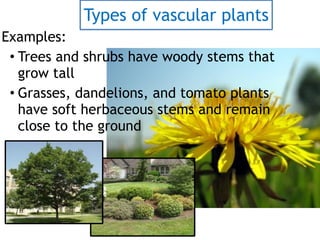
Types of vascular plants
Examples:
• Trees and shrubs have woody stems that
grow tall
• Grasses, dandelions, and tomato plants
have soft herbaceous stems and remain
close to the ground
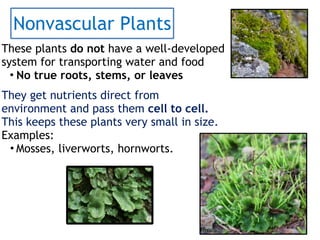
Nonvascular Plants
These plants do not have a well-developed
system for transporting water and food
• No true roots, stems, or leaves
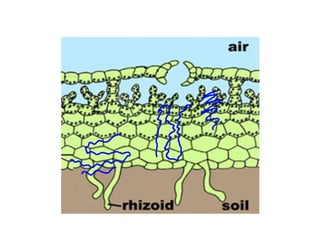
They get nutrients direct from
environment and pass them cell to cell.
This keeps these plants very small in size.
Examples:
• Mosses, liverworts, hornworts.
 
Vascular vs Nonvascular Key Concepts
• Minerals are natural substances that all
plants need to grow.
• Vascular plants have special tissues
called xylem and phloem that form tube-
like pathways so that water, minerals,
and food can move through plants.
• Nonvascular plants do not have these
special tissues. In nonvascular plants,
materials must travel from one cell to
the next cell.
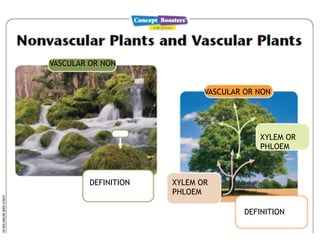
DEFINITION
DEFINITION
XYLEM OR
PHLOEM
XYLEM OR
PHLOEM
VASCULAR OR NON
VASCULAR OR NON
Vascular and Non Vascular Plants

Vascular and Non Vascular Plants

  • 1.
    Big Idea: Tobe able to identify organisms in the Plant Kingdom classified into vascular and non-vascular based on specific structures.
  • 2.
  • 3.
    Vascular • People: of,relating to, affecting, or consisting of a vessel or vessels, especially those that carry blood • Plants: relating to the plant tissues (xylem and phloem) that conduct water, sap, and nutrients 3
  • 4.
  • 5.
  • 6.
    Plant Kingdom All plantsare included in this kingdom, which is then divided into smaller and smaller divisions based on several characteristics Examples: • How they transport fluids • How they reproduce • Method of seed production • Type of seed leaf
  • 7.
    
  
 Plants are placedin two major groups based on their internal structure. 
 
 The two groups are: • Vascular plants - which have special cells to transport food and water • Nonvascular plants -which do not have the same structures for transport Vascular vs Nonvascular
  • 8.
    Vascular Plants This isthe largest group in the Plant Kingdom. These plants have a well-developed system for transporting water and food • True roots • True stems • True leaves • Vascular bundles
  • 9.
    Vascular StructuresVascular plantshave tube-like structures that provide support and help transport water and food throughout the plant. • Xylem tissue transport water and minerals from the roots to the rest of the plant. • Phloem tissue transport food from the leaves to the rest of the plant. (sugar)
  • 10.
    Pink = Xylem Green= Phloem Ways to remember! “ffffffood… ppphloem” “wxylem”
  • 11.
    What is thename of this vascular plant?
  • 12.
    Types of vascularplants Examples: • Trees and shrubs have woody stems that grow tall • Grasses, dandelions, and tomato plants have soft herbaceous stems and remain close to the ground
  • 13.
    Nonvascular Plants These plantsdo not have a well-developed system for transporting water and food • No true roots, stems, or leaves They get nutrients direct from environment and pass them cell to cell. This keeps these plants very small in size. Examples: • Mosses, liverworts, hornworts.  
  • 15.
    Vascular vs NonvascularKey Concepts • Minerals are natural substances that all plants need to grow. • Vascular plants have special tissues called xylem and phloem that form tube- like pathways so that water, minerals, and food can move through plants. • Nonvascular plants do not have these special tissues. In nonvascular plants, materials must travel from one cell to the next cell.
  • 16.