CHAPTER 2
BLOOD CIRCULATION AND
TRANSPORT
2.1 The Transport System in Human
   Being
 Internal transport system is needed to deliver useful
  materials to body cells and remove waste materials
 Internal transport system  Circulatory system
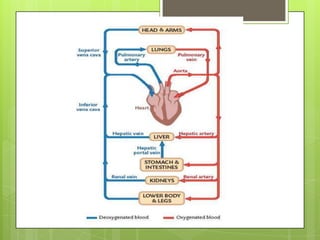
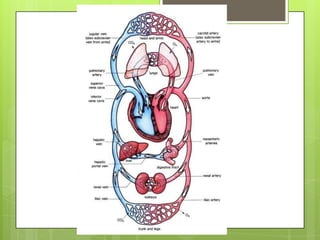
 Human circulatory system Double circulatory
  system
     Blood must flow through heart twice
     Pulmonary circulation
       Transport   blood between heart and lungs
     Systematic circulation
       Transport   blood between the heart and all other parts of
        body
Characteristics of circulatory
system
•   Circulating fluid
       Blood
       Transports useful and waste materials
    Pumping device
        Heart
        Move through body by muscular contractions of heart
    Blood vessels
        3 main types of blood vessels: arteries, veins and
         capillaries
    Valves
        Present in some blood vessels
        Prevent backflow
        Ensure blood flows in 1 direction only
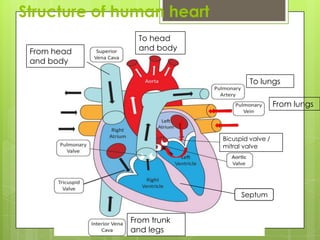
Structure of human heart
                To head
 From head      and body
 and body

                                    To lungs

                                              From lungs


                           Bicuspid valve /
                           mitral valve


                                 Septum


              From trunk
              and legs
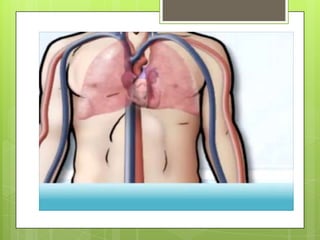
Blood Vessels and Their
Functions
3   types of blood vessels:
    Arteries
    Veins
    Capillaries
 Human  circulatory system is called a
 closed system
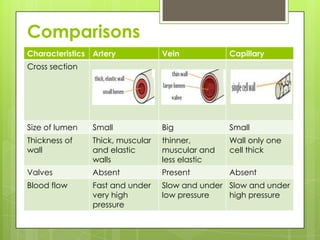
Comparisons
Characteristics Artery            Vein           Capillary
Cross section


Size of lumen   Small             Big            Small
Thickness of    Thick, muscular   thinner,       Wall only one
wall            and elastic       muscular and   cell thick
                walls             less elastic
Valves          Absent            Present        Absent
Blood flow      Fast and under    Slow and under Slow and under
                very high         low pressure   high pressure
                pressure
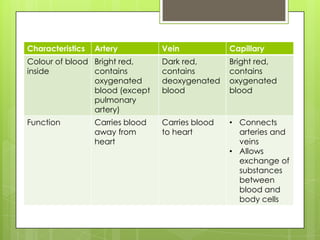
Characteristics   Artery          Vein            Capillary
Colour of blood Bright red,       Dark red,       Bright red,
inside          contains          contains        contains
                oxygenated        deoxygenated    oxygenated
                blood (except     blood           blood
                pulmonary
                artery)
Function          Carries blood   Carries blood   • Connects
                  away from       to heart          arteries and
                  heart                             veins
                                                  • Allows
                                                    exchange of
                                                    substances
                                                    between
                                                    blood and
                                                    body cells
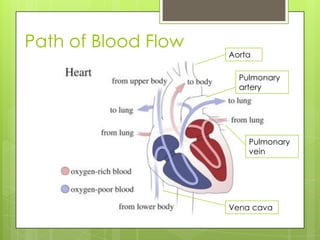
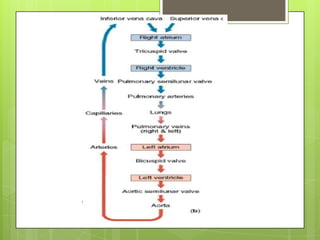
Path of Blood Flow
                     Aorta

                       Pulmonary
                       artery


                         Pulmonary
                         vein


                     Vena cava
Maintaining a healthy heart
 Factors
        that increase risk of getting heart
 disease:
    Heredity
    Cholesterol and obesity
    Lack of exercise
    Smoking
    Stress
    Alcohol
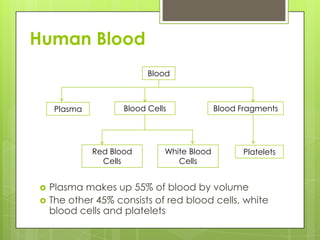
Human Blood
                           Blood


     Plasma          Blood Cells             Blood Fragments


              Red Blood        White Blood         Platelets
                Cells             Cells


   Plasma makes up 55% of blood by volume
   The other 45% consists of red blood cells, white
    blood cells and platelets
Plasma
 Yellow liquid in blood
 90% of plasma is water
 10% of plasma include:
    Nutrients: glucose, amino acids and
     vitamins
    Proteins:
     antibodies, hormones, enzymes, albumins
     and fibrinogen
    Inorganic ions: sodium, calcium, chlorides
     and phosphates
 Main   functions of plasma:
    To transport nutrients to tissues
    To remove waste products from tissues
    To distribute hormones, enzymes, antibodies
     and other proteins
    To distribute heat energy from liver and
     muscles to all other parts of body
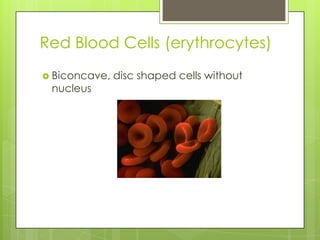
Red Blood Cells (erythrocytes)
 Biconcave,   disc shaped cells without
 nucleus
 Transport   oxygen from the lungs to all parts
  of body
 Contain a red pigment called haemoglobin
  which combines with oxygen molecules to
  form oxyhaemoglobin
 Carry carbon dioxide from body cells to
  lungs
 RBC are produced in bone marrow
 Lifespan: 120 days
 When RBC are worn out, they are destroyed
  in liver and spleen
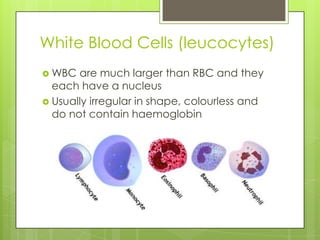
White Blood Cells (leucocytes)
 WBC  are much larger than RBC and they
  each have a nucleus
 Usually irregular in shape, colourless and
  do not contain haemoglobin
 Produced   from bone marrow cells
 Lifespan of WBC depends on type of
  WBC. It varies from a few hours to a few
  months
 Play a vital role in body’s defense against
  diseases
     Produce antibodies
 WBC  can squeeze through walls of blood
 capillaries into the space among the cells
 to destroy the bacteria
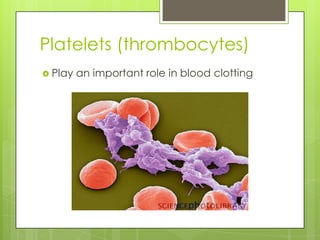
Platelets (thrombocytes)
 Play   an important role in blood clotting
Blood groups
  ABO   system classifies the human blood
   into 4 groups called A, B, AB and O.
  During blood transfusion, donor’s blood
   must be compatible with the recipient’s
   blood
  When an incompatible type of blood is
   transfused, RBC of donated blood will
   agglutinate and cause fatal blockages in
   recipient’s blood vessels
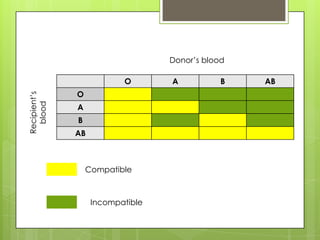
Donor’s blood

                          O       A           B   AB
              O
Recipient’s
  blood


              A
              B
              AB


                  Compatible


                   Incompatible
 Blood group O can safely donate blood,
  in small quantities, to anyone. People with
  group O are called universal donors
 Blood group AB can safely receive blood
  from anyone. Group AB people are
  called universal recipients
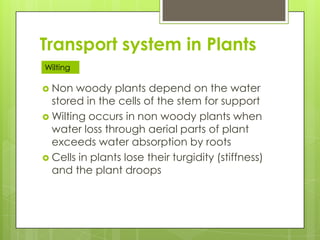
Transport system in Plants
Wilting

 Non   woody plants depend on the water
  stored in the cells of the stem for support
 Wilting occurs in non woody plants when
  water loss through aerial parts of plant
  exceeds water absorption by roots
 Cells in plants lose their turgidity (stiffness)
  and the plant droops
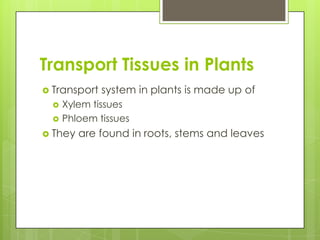
Transport Tissues in Plants
 Transport   system in plants is made up of
     Xylem tissues
     Phloem tissues
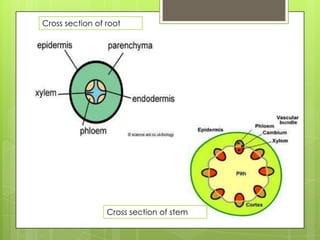
 They   are found in roots, stems and leaves
Cross section of root


                 Cross section of stem
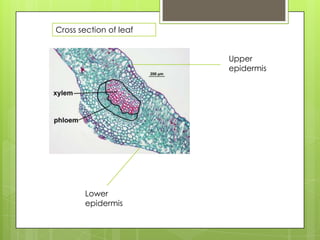
Cross section of leaf


                        Upper
                        epidermis


       Lower
       epidermis
Xylem tissues
 Made   up of xylem vessels
    Form woody tissues of plants and give
     support
    Transport water and dissolved minerals from
     roots, up the stems and to the leaves
Phloem tissues
 Transportfood substances from leaves to
  the stems and roots
 Xylem and phloem tissues form vascular
  bundles

Chapter 2 Blood Circulation & Transport

  • 1.
  • 2.
    2.1 The TransportSystem in Human Being  Internal transport system is needed to deliver useful materials to body cells and remove waste materials  Internal transport system  Circulatory system  Human circulatory system Double circulatory system  Blood must flow through heart twice  Pulmonary circulation  Transport blood between heart and lungs  Systematic circulation  Transport blood between the heart and all other parts of body
  • 4.
    Characteristics of circulatory system • Circulating fluid  Blood  Transports useful and waste materials  Pumping device  Heart  Move through body by muscular contractions of heart  Blood vessels  3 main types of blood vessels: arteries, veins and capillaries  Valves  Present in some blood vessels  Prevent backflow  Ensure blood flows in 1 direction only
  • 5.
    Structure of humanheart To head From head and body and body To lungs From lungs Bicuspid valve / mitral valve Septum From trunk and legs
  • 6.
    Blood Vessels andTheir Functions 3 types of blood vessels:  Arteries  Veins  Capillaries  Human circulatory system is called a closed system
  • 9.
    Comparisons Characteristics Artery Vein Capillary Cross section Size of lumen Small Big Small Thickness of Thick, muscular thinner, Wall only one wall and elastic muscular and cell thick walls less elastic Valves Absent Present Absent Blood flow Fast and under Slow and under Slow and under very high low pressure high pressure pressure
  • 10.
    Characteristics Artery Vein Capillary Colour of blood Bright red, Dark red, Bright red, inside contains contains contains oxygenated deoxygenated oxygenated blood (except blood blood pulmonary artery) Function Carries blood Carries blood • Connects away from to heart arteries and heart veins • Allows exchange of substances between blood and body cells
  • 11.
    Path of BloodFlow Aorta Pulmonary artery Pulmonary vein Vena cava
  • 13.
    Maintaining a healthyheart  Factors that increase risk of getting heart disease:  Heredity  Cholesterol and obesity  Lack of exercise  Smoking  Stress  Alcohol
  • 14.
    Human Blood Blood Plasma Blood Cells Blood Fragments Red Blood White Blood Platelets Cells Cells  Plasma makes up 55% of blood by volume  The other 45% consists of red blood cells, white blood cells and platelets
  • 15.
    Plasma  Yellow liquidin blood  90% of plasma is water  10% of plasma include:  Nutrients: glucose, amino acids and vitamins  Proteins: antibodies, hormones, enzymes, albumins and fibrinogen  Inorganic ions: sodium, calcium, chlorides and phosphates
  • 16.
     Main functions of plasma:  To transport nutrients to tissues  To remove waste products from tissues  To distribute hormones, enzymes, antibodies and other proteins  To distribute heat energy from liver and muscles to all other parts of body
  • 17.
    Red Blood Cells(erythrocytes)  Biconcave, disc shaped cells without nucleus
  • 18.
     Transport oxygen from the lungs to all parts of body  Contain a red pigment called haemoglobin which combines with oxygen molecules to form oxyhaemoglobin  Carry carbon dioxide from body cells to lungs  RBC are produced in bone marrow  Lifespan: 120 days  When RBC are worn out, they are destroyed in liver and spleen
  • 19.
    White Blood Cells(leucocytes)  WBC are much larger than RBC and they each have a nucleus  Usually irregular in shape, colourless and do not contain haemoglobin
  • 20.
     Produced from bone marrow cells  Lifespan of WBC depends on type of WBC. It varies from a few hours to a few months  Play a vital role in body’s defense against diseases  Produce antibodies  WBC can squeeze through walls of blood capillaries into the space among the cells to destroy the bacteria
  • 21.
    Platelets (thrombocytes)  Play an important role in blood clotting
  • 22.
    Blood groups ABO system classifies the human blood into 4 groups called A, B, AB and O.  During blood transfusion, donor’s blood must be compatible with the recipient’s blood  When an incompatible type of blood is transfused, RBC of donated blood will agglutinate and cause fatal blockages in recipient’s blood vessels
  • 23.
    Donor’s blood O A B AB O Recipient’s blood A B AB Compatible Incompatible
  • 24.
     Blood groupO can safely donate blood, in small quantities, to anyone. People with group O are called universal donors  Blood group AB can safely receive blood from anyone. Group AB people are called universal recipients
  • 25.
    Transport system inPlants Wilting  Non woody plants depend on the water stored in the cells of the stem for support  Wilting occurs in non woody plants when water loss through aerial parts of plant exceeds water absorption by roots  Cells in plants lose their turgidity (stiffness) and the plant droops
  • 26.
    Transport Tissues inPlants  Transport system in plants is made up of  Xylem tissues  Phloem tissues  They are found in roots, stems and leaves
  • 27.
    Cross section ofroot Cross section of stem
  • 28.
    Cross section ofleaf Upper epidermis Lower epidermis
  • 29.
    Xylem tissues  Made up of xylem vessels  Form woody tissues of plants and give support  Transport water and dissolved minerals from roots, up the stems and to the leaves
  • 30.
    Phloem tissues  Transportfoodsubstances from leaves to the stems and roots  Xylem and phloem tissues form vascular bundles