Written By
          Ng Chee Kin
       B.Sc.(Hons.), MBA
    ngcheekin@gmail.com
  mrcheekin@blogspot.com.au

All Rights Reserved ©2012 Ng Chee Kin
Page 1


                           PREsSS
                       E X p r e�����


                                                                                                                                                        u
                                                                                                                                                .a
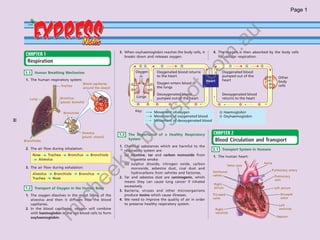
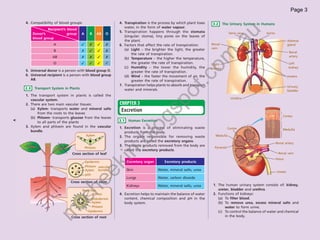
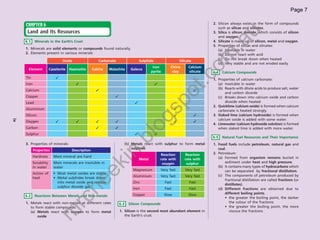
                                                                              3. When oxyhaemoglobin reaches the body cells, it      4. The oxygen is then absorbed by the body cells
                CHAPTER 1


                                                                                                                              om
                                                                                 breaks down and releases oxygen.                       for cellular respiration.
                 Respiration

               1.1    Human Breathing Mechanism                                        Oxygen      Oxygenated blood returns                   Oxygenated blood


                                                                                                                    t.c
                                                                                                   to the heart                               pumped out of the                Other
                1. The human respiratory system:                                                                                  Heart       heart
                                                                                                   Oxygen enters blood in                                                      body
                                                         Blood capillaries
                                         Trachea                                                   the lungs                                                                   cells
                                                         around the alveoli


                                                                                                          po
                                                                                                   Deoxygenated blood                         Deoxygenated blood
                                         Bronchus                                       Lungs      pumped out of the heart                    returns to the heart
                   Lung
                                         (plural: bronchi)


                                                                                                gs
                                                                                       Key:      Movement of oxygen                            Haemoglobin
                                           Bronchiole
                                                                                                 Movement of oxygenated blood                  Oxyhaemoglobin
     iii


                                                                                                 Movement of deoxygenated blood


                                                                                         lo
                                                        Alveolus
                                                                              1.3   The Importance of a Healthy Respiratory           CHAPTER 2
                                                        (plural: alveoli)
              Bronchioles                                                           .b
                                                                                    System                                            Blood Circulation and Transport
                                                                              1. Chemical substances which are harmful to the
                2. The air flow during inhalation:                                                                                   2.1      Transport System in Humans
                                                                                 respiratory system are:
                                                                              in
                     Nose    Trachea          Bronchus        Bronchiole         (a) nicotine, tar and carbon monoxide from          1. The human heart:
                        Alveolus                                                     cigarette smoke
                                                                                 (b) sulphur dioxide, nitrogen oxide, carbon                                         Aorta
                                                                    ek

                                                                                                                                                  Vena cava
                3. The air flow during exhalation:                                   monoxide, asbestos dust, coal dust and                                                Pulmonary artery
                                                                                     hydrocarbons from vehicles and factories.       Semilunar
                     Alveolus        Bronchiole       Bronchus                                                                       valves
                                                                              2. Tar and asbestos dust are carcinogenic, which                                               Pulmonary
                     Trachea         Nose                                                                                                                                    vein
                                                        he


                                                                                 means they can cause lung cancer if inhaled
                                                                                                                                      Right
                                                                                 excessively.                                         atrium
               1.2    Transport of Oxygen in the Human Body                                                                                                                  Left atrium
                                                                              3. Bacteria, viruses and other microorganisms
                1. The oxygen dissolves in the moist lining of the               produce toxins which cause illnesses.               Tricuspid                                   Bicuspid
                                             rc


                                                                                                                                     valve                                       valve
                   alveolus and then it diffuses into the blood               4. We need to improve the quality of air in order
                   capillaries.                                                  to preserve healthy respiratory system.                                                        Left
                2. In the blood capillaries, oxygen will combine                                                                          Right                                 ventricle
                                     m


                   with haemoglobin in the red blood cells to form                                                                        ventricle
                   oxyhaemoglobin.                                                                                                                                            Septum


TWB Sci F3 (Exp Note) A 2nd.indd 3                                                                                                                                                         5/26/2009 4:12:56 PM
Page 2

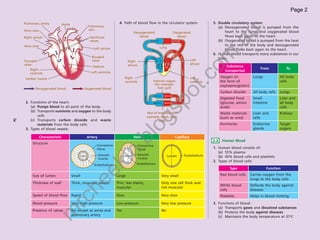
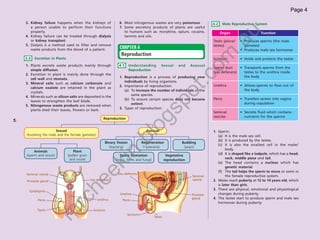
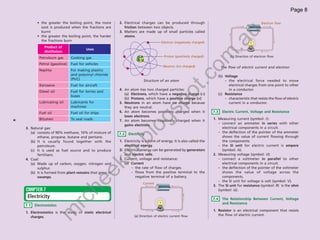
              Pulmonary artery             Aorta                                        4. Path of blood flow in the circulator system:                  5. Double circulatory system:
                                                                   Pulmonary                                                                                (a) Deoxygenated blood is pumped from the
              Vena cava                                            vein
                                                                                                                                                                heart to the lungs and oxygenated blood


                                                                                                                                                                           u
                                                                                                    Deoxygenated               Oxygenated
              Right atrium                                          Semilunar                          blood                     blood                          flows back again to the heart.
                                                                                                                                                            (b) Oxygenated blood is pumped from the heat


                                                                                                                                                                 .a
                                                                    valves
              Vena cava                                                                                                                                         to the rest of the body and deoxygenated
                                                                      Left atrium                                     Lung
                                                                                                                                                                blood flows back again to the heart.
                                                                                                                                                         6. Human blood transports many substances in our


                                                                                                                                                         om
                                                                     Bicuspid                                                                               body.
              Tricuspid                                              valve                     Right                                         Left
              valve                                                                            atrium                                        atrium
                                                                      Septum                                                                                       Substance
                   Right                                                                                                                                                               From           To
                                                                     Left ventricle                                                                               transported
                   ventricle


                                                                                                                                       t.c
                                                                                             Right                                           Left              Oxygen (in         Lungs            All body
               Cardiac muscle
                                                                                             ventricle            Internal organs            ventricle         the form of                         cells
                                                                                                                   (for example,                               oxyhaemoglobin)
                       Deoxygenated blood                    Oxygenated blood                                        liver, gut)
                                                                                                                                                               Carbon dioxide     All body cells   Lungs


                                                                                                                             po
                                                                                                                                                               Digested food      Small            Liver and
                2. Functions of the heart:                                                                                                                     (glucose, amino    intestine        all body
                   (a) Pumps blood to all parts of the body.                                                                                                   acids)                              cells


                                                                                                                  gs
                   (b) Transports nutrients and oxygen to the body                                            Rest of the body (for                            Waste materials    Liver and        Kidneys
                       cells.                                                                                 example, head, arms,                             (such as urea)     cells
                   (c) Transports carbon dioxide and waste
     iv


                                                                                                                       legs)
                       materials from the body cells.                                                                                                          Hormones           Endocrine        Target


                                                                                                          lo
                3. Types of blood vessels:                                                                                                                                        glands           organs

                          Characteristic                           Artery                           Vein                         Capillary
                     Structure
                                                                         Connective
                                                                         tissue
                                                                                              .b         Connective
                                                                                                         tissue
                                                                                                                                                         2.2    Human Blood
                                                                                                                                                         1. Human blood consists of:
                                                                                      in
                                                                                                                                                            (a) 55% plasma
                                                           Lumen            Smooth          Lumen        Smooth             Lumen     Endothelium
                                                                                                         muscle                                             (b) 45% blood cells and platelets
                                                                            muscle
                                                                                                                                                         2. Types of blood cells:
                                                                            ek

                                                                       Endothelium                   Endothelium
                                                                                                                                                                    Type                  Function

                     Size of lumen                 Small                              Large                            Very small                              Red blood cells   Carries oxygen from the
                                                                                                                                                                                 lungs to the body cells
                                                        he


                     Thickness of wall             Thick, muscular, elastic           Thin, less elastic,              Only one cell thick and
                                                                                                                                                               White blood       Defends the body against
                                                                                      muscular                         not muscular
                                                                                                                                                               cells             diseases
                     Speed of blood flow           Rapid                              Slow                             Very slow                               Platelets         Helps in blood clotting
                                              rc


                     Blood pressure                Very high pressure                 Low pressure                     Very low pressure                 3. Functions of blood:
                                                                                                                                                            (a) Transports gases and dissolved substances
                     Presence of valves            No except at aorta and             Yes                              No
                                     m


                                                                                                                                                            (b) Protects the body against diseases
                                                   pulmonary artery                                                                                         (c) Maintains the body temperature at 37oC


TWB Sci F3 (Exp Note) A 2nd.indd 4                                                                                                                                                                         5/26/2009 4:12:58 PM
Page 3

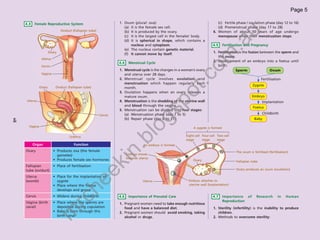
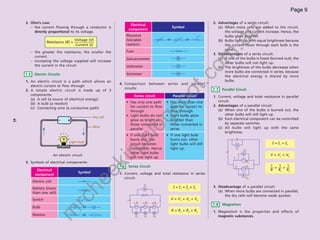
                4. Compatibility of blood groups:                        4. Transpiration is the process by which plant loses    3.2      The Urinary System in Humans
                                                                            water, in the form of water vapour.
                             Recipient’s blood
                                                                         5. Transpiration happens through the stomata


                                                                                                                                                      u
                     Donor’s             group     A     B      AB   O                                                                       Vena cava           Aorta
                                                                            (singular: stoma), tiny pores on the leaves of
                     blood group
                                                                            the plant.


                                                                                                                                           .a
                                                                                                                                                                                  Adrenal
                                     A                               6. Factors that affect the rate of transpiration:       Renal                                            gland
                                                                            (a) Light – the brighter the light, the greater      vein
                                     B                                                                                                                                         Renal
                                                                                the rate of transpiration.


                                                                                                                               om
                                     AB                                                                                                                                        artery
                                                                            (b) Temperature – the higher the temperature,
                                     O                                      the greater the rate of transpiration.           Right                                             Left
                                                                            (c) Humidity – the lower the humidity, the           kidney                                            kidney
                5. Universal donor is a person with blood group O.              greater the rate of transpiration.
                6. Universal recipient is a person with blood group


                                                                                                                  t.c
                                                                            (d) Wind – the faster the movement of air, the                                                        Ureters
                   AB.                                                          greater the rate of transpiration.
                                                                         7. Transpiration helps plants to absorb and transport                                                    Urinary
               2.3    Transport System in Plants                            water and minerals.                                                                                   bladder


                                                                                                        po
                1. The transport system in plants is called the
                                                                                                                                              Urethra
                   vascular system.
                2. There are two main vascular tissues:                  CHAPTER 3
                   (a) Xylem- transports water and mineral salts
                                                                          Excretion


                                                                                             gs
                       from the roots to the leaves                                                                                                                         
                                                                                                                                                                              Cortex
                   (b) Phloem- transports glucose from the leaves                                                                                                           
                                                                         3.1    Human Excretion
     v


                       to all parts of the plants                                                                                                                           
                                                                                                                                                                            


                                                                                         lo
                3. Xylem and phloem are found in the vascular            1. Excretion is a process of eliminating waste                      Cortex                         
                                                                                                                                                                              Medulla
                   bundle.                                                  products from the body.                                                                         
                                                       Xylem                                                                       Medulla                                  
                                                                         2. The organs responsible for removing waste                                                       


                                                                                                                                                  
                                                                               .b


                                                                                                                                                  
                                                                            products are called the excretory organs.


                                                                                                                                                      
                                                                                                                                                      
                                                                                                                                                                         Renal artery


                                                                                                                                                          
                                                                                                                                                          
                                                                         3. The waste products removed from the body are
                                                       Phloem                                                                      Pyramid
                                                                            called the excretory products.
                                                                         in
                                           Cross section of leaf                                                                                                          Renal vein
                                                                                                                                                                         Pelvis
                                                       Epidermis               Excretory organ        Excretory products
                                                                ek

                                                       Phloem vascular
                                                       Xylem bundle            Skin               Water, mineral salts, urea
                                                                                                                                                                         Ureter
                                                       pith
                                                                               Lungs              Water, carbon dioxide
                                                   he


                                          Cross section of stem
                                                                               Kidneys            Water, mineral salts, urea      1. The human urinary system consists of: kidney,
                                                   Root hair                                                                         ureter, bladder and urethra.
                                                         Cortex          4. Excretion helps to maintain the balance of water      2. Functions of kidneys:
                                          rc


                                                          Endodermis        content, chemical composition and pH in the              (a) To filter blood.
                                                           Xylem            body system.                                             (b) To remove urea, excess mineral salts and
                                                           Phloem                                                                        water to form urine.
                                     m


                                                         Epidermis                                                                   (c) To control the balance of water and chemical
                                           Cross section of root                                                                         in the body.


TWB Sci F3 (Exp Note) A 2nd.indd 5                                                                                                                                                  5/26/2009 4:13:02 PM
Page 4

                3. Kidney failure happens when the kidneys of                 6. Most nitrogenous wastes are very poisonous.            4.2     Male Reproductive System
                   a person unable to perform their functions                 7. Some excretory products of plants are useful
                   properly.                                                     to humans such as: morphine, opium, cocaine,


                                                                                                                                                          u
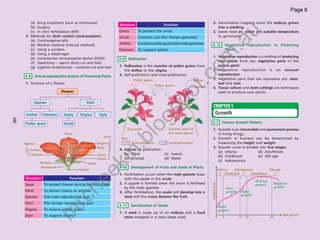
                                                                                                                                              Organ                   Function
                4. Kidney failure can be treated through dialysis                tannins and oils.
                   or kidney transplant.


                                                                                                                                                 .a
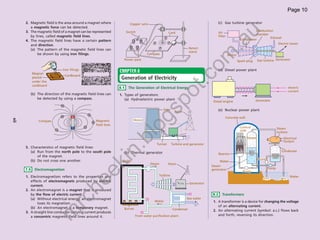
                                                                                                                                        Testis (plural:   • Produces sperms (the male
                5. Dialysis is a method used to filter and remove                                                                       testes)             gametes)
                   waste products from the blood of a patient.                CHAPTER 4                                                                   • Produces male sex hormones
                                                                               Reproduction


                                                                                                                                    om
               3.3    Excretion in Plants                                                                                               Scrotum           • Holds and protects the testes
                1. Plants excrete waste products mainly through              4.1      Understanding       Sexual      and    Asexual
                                                                                                                                        Sperm duct        • Transports sperms from the
                   simple diffusion.                                                  Reproduction
                                                                                                                                        (vas deferens)      testes to the urethra inside
                2. Excretion in plant is mainly done through the


                                                                                                                             t.c
                                                                              1. Reproduction is a process of producing new                                 the body
                   cell wall and stomata.
                                                                                 individuals by living organisms.
                3. Mineral salts such as calcium carbonate and
                                                                              2. Importance of reproduction:                            Urethra           • Allows sperms to flow out of
                   calcium oxalate are retained in the plant as
                                                                                 (a) To increase the number of individuals of the                           the body
                   crystals.


                                                                                                                po
                                                                                     same species.
                4. Minerals such as silicon salts are deposited in the
                                                                                 (b) To ensure certain species does not become          Penis             • Transfers semen into vagina
                   leaves to strengthen the leaf blade.
                                                                                     extinct.                                                               during copulation
                5. Nitrogenous waste products are removed when
                                                                              3. Types of reproduction:


                                                                                                     gs
                   plants shed their leaves, flowers or bark.
                                                                                                                                        Seminal           • Secrete fluid which contains
                                                                                                                                        vesicles            nutrients for the sperms
                                                                    Reproduction
     vi


                                                                                             lo
                                   Sexual                                                      Asexual                                  1. Sperm:
                (Involving the male and the female gametes)                                                                                (a) It is the male sex cell.


                     Animals                    Plant
                                                                     Binary fission
                                                                        (bacteria)
                                                                                   .b        Regeneration
                                                                                               (planaria)
                                                                                                                        Budding
                                                                                                                         (yeast)
                                                                                                                                           (b) It is produced by the testes.
                                                                                                                                           (c) It is also the smallest cell in the males’
                                                                                                                                                body.
                                                                           in
                (sperm and ovum)            (pollen grain                    Spore formation                   Vegetative                  (d) It is shaped like a tadpole, which has a head,
                                             and ovule)                    (moss, ferns and fungi)            reproduction                      neck, middle piece and tail.
                                                                                                                                           (e) The head contains a nucleus which has
                                                                ek

                                                                                                                                                genetic material.
                                                                                                                                           (f) The tail helps the sperm to move or swim in
                Seminal vesicle                                              Vas deferens
                                                                                                                              Seminal           the female reproductive system.
                                                            Vas deferens                                                      vesicle   2. Males reach puberty at 12 to 14 years old, which
                                                    he


                 Prostate gland
                                                                                                                                           is later than girls.
                                                                                                                                        3. There are physical, emotional and physiological
                   Epididymis
                                                                              Urethra                                        Prostate      changes during puberty.
                                            rc


                                                                Urethra                                                      gland      4. The testes start to produce sperm and male sex
                         Penis                                                  Penis
                                                                                                                                           hormones during puberty.

                         Testis                               Scrotum
                                     m


                                                                                   Scrotum
                                                                                                     Testis


TWB Sci F3 (Exp Note) A 2nd.indd 6                                                                                                                                                         5/26/2009 4:13:03 PM
Page 5

               4.3    Female Reproductive System                              1. Ovum (plural: ova):                                       (c) Fertile phase / ovulation phase (day 12 to 16)
                                                                                 (a) It is the female sex cell.                            (d) Premenstrual phase (day 17 to 28)
                                          Oviduct (Fallopian tube)               (b) It is produced by the ovary.                       6. Women of about 50 years of age undergo


                                                                                                                                                        u
                                                                                 (c) It is the largest cell in the females’ body.          menopause when their menstruation stops.
                                                                                 (d) It is spherical in shape, which contains a


                                                                                                                                                 .a
                                                                                     nucleus and cytoplasm.                             4.5     Fertilisation and Pregnancy
                                                                                 (e) The nucleus contain genetic material.
                                  Ovary
                                                                                 (f) It cannot move by itself.                          1. Fertilisation is the fusion between the sperm and


                                                                                                                                  om
                                                                                                                                           the ovum.
                           Uterus
                                                                              4.4    Menstrual Cycle                                    2. Development of an embryo into a foetus until
                           Cervix                                                                                                          birth:
                                                                              1. Menstrual cycle is the changes in a woman’s ovary                     Sperm                Ovum
                           Vagina                                                and uterus over 28 days.


                                                                                                                      t.c
                                                                              2. Menstrual cycle involves ovulation and                                                   Fertilisation
                                                                                 menstruation which happen regularly each
                                                                                                                                                                   Zygote
                          Ovary       Oviduct (Fallopian tube)                   month.
                                                                              3. Ovulation happens when an ovary releases a


                                                                                                             po
                                                                                 mature ovum.                                                                      Embryo
                 Uterus                                                       4. Menstruation is the shedding of the uterine wall                                         Implantation
                                                                                 and blood through the vagina.
                                                                                                                                                                    Foetus


                                                                                                     gs
                                                                              5. Menstruation can be divided into four stages:
                                                                     Cervix      (a) Menstruation phase (day 1 to 5)                                                      Childbirth
                                                                                 (b) Repair phase (day 6 to 11)                                                      Baby
     vii


                                                                                            lo
                  Vagina                                                                                                   A zygote is formed

                                               Urethra                                                                Eight-cell Four-cell Two-cell


                Ovary
                     Organ                        Function
                                     • Produces ova (the female
                                                                                    .b        An embryo is formed
                                                                                                                      stage      stage     stage
                                                                              in
                                                                                                                                                        The ovum is fertilised (fertilisation)
                                       gametes)                                     Embryo moves
                                                                                    towards uterus
                                     • Produces female sex hormones                                                       Ovary                         Fallopian tube
                                                                     ek

                Fallopian      • Place of fertilisation
                tube (oviduct)                                                                                                                          Ovary produces an ovum (ovulation)

                Uterus               • Place for the implantation of
                                                       he


                (womb)                 zygote                                                 Uterus                    Embryo attaches to
                                     • Place where the foetus                                                           uterine wall (implantation)
                                       develops and grows
                Cervix               • Widens during childbirth               4.6    Importance of Prenatal Care                        4.7     Importance of         Research        in    Human
                                              rc


                Vagina (birth        • Place where the sperms are                                                                               Reproduction
                                                                              1. Pregnant women need to take enough nutritious
                canal)                 deposited during copulation               food and have a balanced diet.                         1. Sterility (infertility) is the inability to produce
                                     m


                                     • Baby is born through this              2. Pregnant women should avoid smoking, taking               children.
                                       birth canal                               alcohol or drugs.                                      2. Methods to overcome sterility:


TWB Sci F3 (Exp Note) A 2nd.indd 7                                                                                                                                                               5/26/2009 4:13:06 PM
Page 6

                   (a) Drug treatment (such as hormones)                                                                                            2. Germination happens when the embryo grows
                                                                               Structure                        Function
                   (b) Surgery                                                                                                                         into a seedling.
                   (c) In vitro fertilisation (IVF)                            Ovary         To protect the ovule                                   3. Seeds need air, water and suitable temperature


                                                                                                                                                                               u
                3. Methods for birth control (contraception):                  Ovule         Contains ova (the female gametes)                         to germinate.
                   (a) Contraceptive pills


                                                                                                                                                                      .a
                   (b) Rhythm method (natural method)                          Anther        Contains pollen grains (the male gametes)             4.12               Vegetative reproduction in Flowering
                   (c) Using a condom                                          Filament      To support anther                                                        Plants
                   (d) Using a diaphragm


                                                                                                                                            om
                                                                                                                                                    1. Vegetative reproduction is a method of producing
                   (e) Intrauterine contraceptive device (IUCD)                4.9     Pollination
                                                                                                                                                       new plants from any vegetative parts of the
                   (f) Vasectomy – sperm ducts cut and tied
                                                                               1. Pollination is the transfer of pollen grains from                    parent plant.
                   (g) Ligation (tubectomy) – oviducts cut and tied
                                                                                  the anther to the stigma.                                         2. Vegetative reproduction is an asexual
                                                                               2. Self-pollination and cross-pollination:                              reproduction.


                                                                                                                               t.c
               4.8      Sexual reproductive System of Flowering Plants
                                                                                          Pollen grains                             Stigma          3. Vegetative parts that can reproduce are: stem,
                1. Struture of a flower:                                                                                                               leaf and root.
                                                                                                           Pollen grains                Anther      4. Tissue culture and stem cuttings are techniques
                                        Flower                                                                                                         used to produce new plants.


                                                                                                                    po
                        Stamen                           Pistil
                                                                                                                                                    CHAPTER 5


                                                                                                      gs
                Anther      Filament      Ovary     Stigma         Style                                                                                 Growth
     viii


                Pollen grain              Ovule                                                                                                   5.1             Human Growth Pattern


                                                                                              lo
                                                                                      One plant                     Another plant of                1. Growth is an irreversible and permanent process
                                          Petal                                                                     the same species                   in living things.
                                                                      Pistil    Key:                                                                2. Growth in humans can be determined by
              Stamen

                   Anther
                                                                  Stigma
                                                                  Style
                                                                                     .b Self-pollination

                                                                               4. Agents of pollination:
                                                                                                                    Cross-pollination                  measuring the height and weight.
                                                                                                                                                    3. Growth curve is divided into five stages:
                                                                                                                                                       (a) Infancy              (d) Adulthood
                                                                               in
                   Filament                                       Ovary           (a) Wind               (c) Insects
                                                                                                                                                       (b) Childhood            (e) Old age
                                                                  Ovule           (b) Animals            (d) Water
                                                                                                                                                       (c) Adolescence
                           Nectary                        Sepal
                                                                  ek

                           Receptacle                                          4.10     Development of Fruits and Seeds in Plants
                                                   Pedicel                                                                                                     Infancy    Adolescence         Old age
                                                                               1. Fertilisation occurs when the male gamete fuses                                   Childhood       Adulthood
               Structure                     Function                             with the ovum in the ovule.
                                                    he


                                                                                                                                                                                         Minimal
               Sepal          To protect flower during the bud stage           2. A zygote is formed when the ovum is fertilised                                                                        Negative


                                                                                                                                                 Height (cm)
                                                                                                                                                                                         growth
                                                                                  by the male gamete.                                                                 Slow                              growth
               Petal          To attract insects or animals                    3. After fertilisation, the ovule will develop into a                                  growth    Rapid
                                                                                                                                                                                growth
               Stamen         The male reproductive part                          seed and the ovary become the fruit.
                                            rc


               Pistil         The female reproductive part
                                                                               4.11     Germination of Seeds                                                   Rapid
               Stigma         To receive pollen grains                                                                                                         growth
                                     m


                                                                               1. A seed is made up of an embryo and a food
               Style          To support stigma                                                                                                                                                              Age (years)
                                                                                  store wrapped in a testa (seed coat).                                   0       3            13   20             65


TWB Sci F3 (Exp Note) A 2nd.indd 8                                                                                                                                                                                 5/26/2009 4:13:08 PM
Page 7

                                                                                                                                         2. Silicon always exists in the form of compounds
                CHAPTER 6
                                                                                                                                            such as silicas and silicates.
                 Land and Its Resources


                                                                                                                                                        u
                                                                                                                                         3. Silica is silicon dioxide, which consists of silicon
                                                                                                                                            and oxygen.


                                                                                                                                                .a
               6.1      Minerals in the Earth’s Crust                                                                                    4. Silicate is made up of silicon, metal and oxygen.
                                                                                                                                         5. Properties of silicas and silicates:
                1. Minerals are solid elements or compounds found naturally.                                                                (a) Insoluble in water
                2. Elements present in various minerals:


                                                                                                                                         om
                                                                                                                                            (b) Do not react with acid
                                                                                                                                            (c) Do not break down when heated
                                          Oxide                   Carbonate                 Sulphide                    Silicate
                                                                                                                                            (d) Very stable and are not eroded easily
                                                                                                     Iron        China        Calcium
                  Element          Cassiterite Haematite      Calcite   Malachite     Galena
                                                                                                    pyrite        clay        silicate   6.4   Calcium Compounds


                                                                                                                            t.c
                Tin                                                                                                                     1. Properties of calcium carbonate:
                Iron                                                                                                                      (a) Insoluble in water
                                                                                                                                            (b) Reacts with dilute acids to produce salt, water
                Calcium                                                                                                           


                                                                                                               po
                                                                                                                                                 and carbon dioxide
                Copper                                                                                                                     (c) Breaks down into calcium oxide and carbon
                Lead                                                                                                                            dioxide when heated
                                                                                                                                         2. Quicklime (calcium oxide) is formed when calcium
                Aluminium                                                                                           


                                                                                                    gs
                                                                                                                                            carbonate is heated strongly.
                Silicon                                                                                                                3. Slaked lime (calcium hydroxide) is formed when
                                                                                                                                            calcium oxide is added with some water.
     ix


                Oxygen                                                                                                        
                                                                                                                                         4. Limewater (calcium hydroxide solution) is formed


                                                                                            lo
                Carbon                                                                                                                    when slaked lime is added with more water.
                Sulphur                                                                               
                                                                                                                                         6.5   Natural Fuel Resources and Their Importance
                3. Properties of minerals:
                       Properties               Description
                                                                                     .b
                                                                                 (b) Metals react with sulphur to form metal
                                                                                     sulphide
                                                                                                                                         1. Fossil fuels include petroleum, natural gas and
                                                                                                                                            coal.
                                                                          in
                                                                                                           Reaction        Reaction      2. Petroleum:
                      Hardness       Most mineral are hard                                                                                  (a) Formed from organism remains buried in
                                                                                            Metal          rate with       rate with
                      Solubility     Most minerals are insoluble in                                         oxygen          sulphur             sediment under heat and high pressure.
                                                                 ek

                      in water       water                                                                                                  (b) It contains many types of hydrocarbons which
                                                                                       Magnesium           Very fast       Very fast            can be separated by fractional distillation.
                      Action of      • Most metal oxides are stable
                                                                                       Aluminium           Very fast       Very fast        (c) The components of petroleum produced by
                      heat           • Metal sulphides break down
                                                                                                                                                fractional distillation are called fractions (or
                                                      he


                                       into metal oxide and release                    Zinc                  Fast             Fast
                                                                                                                                                distillates).
                                       sulphur dioxide gas                             Iron                  Fast             Fast          (d) Different fractions are obtained due to
                                                                                       Copper                Slow             Slow              different boiling points.
               6.2      Reactions Between Metals and Non-metals
                                                                                                                                                • the greater the boiling point, the darker
                                             rc


                1. Metals react with non-metals at different rates             6.3   Silicon Compounds                                              the colour of the fractions
                   to form stable compounds:                                                                                                    • the greater the boiling point, the more
                                                                               1. Silicon is the second most abundant element in                    viscous the fractions
                                      m


                   (a) Metals react with oxygen to form metal
                       oxide                                                      the Earth’s crust.


TWB Sci F3 (Exp Note) A 2nd.indd 9                                                                                                                                                        5/26/2009 4:13:08 PM
Page 8

                        • the greater the boiling point, the more      2. Electrical charges can be produced through                                               Electron flow
                          soot is produced when the fractions are         friction between two objects.
                          burnt                                        3. Matters are made up of small particles called


                                                                                                                                                   u
                        • the greater the boiling point, the harder       atoms.
                          the fractions burn


                                                                                                                                           .a
                                                                                                   Electron (negatively charged)
                              Product of
                                                       Uses
                              distillation


                                                                                                                               om
                          Petroleum gas       Cooking gas                                            Proton (positively charged)              (b) Direction of electron flow

                          Petrol (gasoline)   Fuel for vehicles
                                                                                                    Neutron (no charged)                 The flow of electric current and electron
                          Naphta              For making plastics
                                              and polyvinyl chloride


                                                                                                                    t.c
                                                                                                                                     (b) Voltage
                                              (PVC)                                    Structure of an atom                              – the electrical force needed to move
                          Kerosene            Fuel for aircraft                                                                            electrical charges from one point to other
                                                                       4. An atom has two charged particles:                               in a conductor.
                          Diesel oil          Fuel for lorries and


                                                                                                        po
                                                                          (a) Electrons, which have a negative charge (–)            (c) Resistance
                                              buses
                                                                          (b) Protons, which have a positive charge (+)                  – characteristic that resists the flow of electric
                          Lubricating oil     Lubricants for           5. Neutrons in an atom have no charge because                       current in a conductor.
                                              machines                    they are neutral.


                                                                                            gs
                          Fuel oil            Fuel oil for ships       6. An atom becomes positively charged when it               7.3   Electric Current, Voltage and Resistance
                                                                          loses electrons.
                          Bitumen             To seal roads                                                                        1. Measuring current (symbol: I):
                                                                       7. An atom becomes negatively charged when it
     x


                                                                                                                                      – connect an ammeter in series with other
                                                                          gains electrons.


                                                                                    lo
                3. Natural gas:                                                                                                          electrical components in a circuit.
                   (a) consists of 90% methane, 10% of mixture of                                                                     – the deflection of the pointer of the ammeter
                                                                       7.2   Electricity
                       ethane, propane, butane and pentane.                                                                              shows the value of current flowing through
                   (b) It is usually found together with the
                       petroleum.
                   (c) It is used as fuel source and to produce
                                                                             .b
                                                                       1. Electricity is a form of energy. It is also called the
                                                                          electrical energy.
                                                                       2. Electrical energy can be generated by generators
                                                                                                                                         the components.
                                                                                                                                      – the SI unit for electric current is ampere
                                                                                                                                         (symbol: A).
                                                                       in
                       fertilisers.                                       and electric cells.                                      2. Measuring voltage (symbol: V):
                4. Coal:                                               3. Current, voltage and resistance:                            – connect a voltmeter in parallel to other
                   (a) Made up of carbon, oxygen, nitrogen and            (a) Current                                                    electrical components in a circuit.
                                                                  ek

                       sulphur.                                               – the rate of flow of charges.                          – the deflection of the pointer of the voltmeter
                   (b) It is formed from plant remains that grew in           – flows from the positive terminal to the                  shows the value of voltage across the
                       swamps.                                                   negative terminal of a battery.                         components.
                                                    he


                                                                                                                                      – the SI unit for voltage is volt (symbol: V).
                                                                                      Current
                                                                                                                                   3. The SI unit for resistance (symbol: R) is the ohm
                CHAPTER 7                                                                                                             (symbol: Ω).
                 Electricity
                                              rc


                                                                                                                                   7.4   The Relationship Between Current, Voltage
                                                                                                                                         and Resistance
               7.1    Electrostatics
                                                                                                                                   1. Resistor is an electrical component that resists
                                      m


                1. Electrostatics is the study of static electrical
                                                                                (a) Direction of electric current flow                the flow of electric current.
                   charges.


TWB Sci F3 (Exp Note) B 2nd.indd 10                                                                                                                                                  5/26/2009 4:12:30 PM
Page 9

                2. Ohm’s Law:                                                                                                            2. Advantages of a series circuit:
                                                                                       Electrical
                   – the current flowing through a conductor is                                                    Symbol                   (a) When more cells are added to the circuit,
                                                                                      component
                     directly proportional to its voltage.                                                                                      the voltage and current increase. Hence, the


                                                                                                                                                            u
                                                                                  Rheostat                                                      bulbs glow brighter.
                                                 Voltage (V)                      (Variable                   or            or              (b) Bulbs light up with equal brightness because


                                                                                                                                                .a
                                Resistance (R) = —————–
                                                 Current (I)                      resistor)                                                     the current flows through each bulb is the
                                                                                                                                                same.
                   – the greater the resistance, the smaller the                  Fuse
                                                                                                                                         3. Disadvantages of a series circuit:


                                                                                                                                       om
                     current.
                                                                                  Galvanometer                        G
                                                                                                                      G
                                                                                                                                            (a) If one of the bulbs is fused (burned out), the
                   – increasing the voltage supplied will increase                                                    G
                                                                                                                      V
                                                                                                                                                other bulbs will not light up.
                     the current in the circuit.                                  Voltmeter                           V
                                                                                                                      V                     (b) The brightness of the bulbs decreases when
                                                                                                                      A                         more bulbs are connected in series, because
                                                                                                                      A
                                                                                                                      A
               7.5    Electric Circuits                                           Ammeter


                                                                                                                             t.c
                                                                                                                                                the electrical energy is shared by more
                1. An electric circuit is a path which allows an                                                                                bulbs.
                                                                            4. Comparison between series and parallel
                   electric current to flow through.
                                                                               circuits:                                                 7.7   Parallel Circuit
                2. A simple electric circuit is made up of 3


                                                                                                               po
                   components:                                                           Series circuit            Parallel circuit      1. Current, voltage and total resistance in parallel
                   (a) A cell (a source of electrical energy)
                                                                                  • Has only one path         • Has more than one           circuit:
                   (b) A bulb (a resistor)
                                                                                    for current to flow         path for currect to      2. Advantages of a parallel circuit:
                   (c) Connecting wire (a conductive path)


                                                                                                       gs
                                                                                    through                     flow through                (a) When one of the bulbs is burned out, the
                                                                                  • Light bulbs do not        • Light bulbs glow                 other bulbs will still light up.
                                                                 Dry cell
                                                                                    glow as bright as           brighter than               (b) Each electrical component can be controlled
     xi


                                                                                    those connected in          those connected in               by separate switches.


                                                                                                lo
                                                                 Wire                                                                       (c) All bulbs will light up with the same
                                                                                    parallel                    series
                                                                                                                                                 brightness.
                                                                                  • If one light bulb         • If one light bulb
                                                Light bulb                        .bburns out, the
                                                                                    circuit becomes
                                                                                    incomplete. Hence,
                                                                                                                burns out, other
                                                                                                                light bulbs will still
                                                                                                                light up.
                                                                                                                                                           V
                                                                                                                                                           V   V1
                                                                                                                                                                             I = I1 + I2
                                                                            in
                                                                                    other light bulbs                                            I
                                      An electric circuit                                                                                                      V            V = V1 = V2
                                                                                    will not light up.                                                I1
                3. Symbols of electrical components:                                                                                                               R1
                                                                    ek

                                                                            7.6    Series Circuit                                                      I2          R2       1 1  1
                                                                                                                                                                            —=—+—
                       Electrical                                                                                                                                           R R1 R2
                                                      Symbol                1. Current, voltage and total resistance in series
                      component                                                                                                                                V
                                                                               circuit:                                                                            V2
                                                       he


                     Electric cell
                                                                                                V
                     Battery (more                                                                                  I = I1 = I2 = I3     3. Disadvantage of a parallel circuit:
                                                                                                V
                     than one cell)                                                                                                         (a) When more bulbs are connected in parallel,
                                                                                                                                                the dry cells will become weak quicker.
                                               rc


                     Switch                                                       I
                                                                                                                V = V1 + V2 + V3
                                                                                         I1R1   I2R2   I3R3
                                                                                                                                         7.8   Magnetism
                     Bulb                                   or
                                                                                                                   R = R1 + R2 + R3
                                      m


                                                                                         V      V      V                                 1. Magnetism is the properties and effects of
                     Resistor                               or                           V1     V2     V3                                   magnetic substances.


TWB Sci F3 (Exp Note) B 2nd.indd 11                                                                                                                                                        5/26/2009 4:12:34 PM
Page 10

                2. Magnetic field is the area around a magnet where               Copper wire                                              (c) Gas turbine generator
                   a magnetic force can be detected.
                3. The magnetic field of a magnet can be represented                                                                                                    Combustion


                                                                                                                                                              u
                                                                                Switch                      Card                             Air
                                                                                                                                                                        chamber
                   by lines, called magnetic field lines.                                                                                    filter
                                                                                                                                                                                Exhaust
                4. The magnetic field lines have a certain pattern                                                                                             Compressor


                                                                                                                                                 .a
                                                                                                                                                                                    Electric tower
                   and direction.
                   (a) The pattern of the magnetic field lines can                                                         Retort
                                                                                                                           stand
                       be shown by using iron filings.


                                                                                                                                     om
                                                                                             Compass                                                  Motor
                                                                            Power pack                                                                        Spark plug    Gas turbine Generator

                                       Iron filings
                                                                          CHAPTER 8                                                        (d) Diesel power plant
                     Magnet
                                         Cardboard


                                                                                                                         t.c
                     placed                                                Generation of Electricity
                     under the
                     cardboard
                                                                          8.1    The Generation of Electrical Energy                                                                                electric
                                                                                                                                                                                                    current


                                                                                                            po
                   (b) The direction of the magnetic field lines can      1. Types of generators:
                       be detected by using a compass.                       (a) Hydroelectric power plant
                                                                                                                                        Diesel engine                      Generator


                                                                                                gs
                                                                                                        Dam                                (e) Nuclear power plant
                                                                                                                 Pylon
                                             N                                                                                                    Concrete wall
     xii


                         Compass                            Magnetic                 Water
                                                            field lines


                                                                                         lo
                                             S                                                                                                                 Control                    Steam
                                                                                                                                                               rods
                                                                                                                                                                                          turbine
                                                                                                                                                                    Steam                     Electrical

                5. Characterstics of magnetic field lines:
                   (a) Run from the north pole to the south pole
                                                                                .b                 Tunnel      Turbine and generator
                                                                                                                                                                                              Output


                                                                                                                                                                                             Condenser
                                                                          in
                                                                             (b) Thermal generator                                           Reactor
                       of the magnet.
                   (b) Do not cross one another.                                                                                                                            Pump
                                                                            Boiler                                                          Water
                                                             ek

                                                                                                Steam       Pylon
                                                                                                                                       Steam
               7.9    Electromagnetism                                                                                                 generator                                   Pump
                                                                                                                                                                 Pump
                1. Electromagnetism refers to the properties and                                     Turbine                                                                                         Water
                                                                                                                                                                               27ºC         38ºC
                                                      he


                   effects of electromagnets produced by electric
                                                                                                                           Generator
                   current.
                2. An electromagnet is a magnet that is produced
                   by the flow of electric current.                                                                                    8.2      Transformers
                                          rc


                   (a) Without electrical energy, an electromagnet                                                       Sea water
                                                                                                  Water                                 1. A transformer is a device for changing the voltage
                        loses its megnetism.
                                                                                                                                           of an alternating current.
                   (b) An electromagnet is a temporary magnet.              Burner                             Condenser                2. An alternating current (symbol: a.c.) flows back
                                      m


                3. A straight line conductor carrying current produces
                                                                                     From water purification plant                         and forth, reversing its direction.
                   a concentric magnetic field lines around it.


TWB Sci F3 (Exp Note) B 2nd.indd 12                                                                                                                                                                   5/26/2009 4:12:37 PM
Page 11

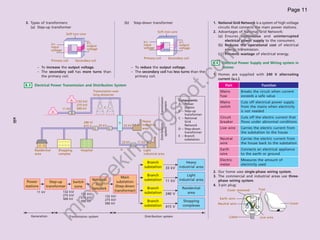
                3. Types of transformers:                                                         (b)     Step-down transformer                                      1. National Grid Network is a system of high voltage
                   (a) Step-up transformer                                                                                                                              circuits that connects the main power stations.
                                                                                                                            Soft iron core                           2. Advantages of National Grid Network:


                                                                                                                                                                                           u
                                                  Soft iron core
                                                                                                                                                                        (a) Ensures continuous and uninterrupted
                                                                                                                                                                             electrical power supply to the consumers.


                                                                                                                                                                             .a
                                                                     a.c.                                       a.c.                               a.c.
                                      a.c.                                                                      input                              output               (b) Reduces the operational cost of electrical
                                      input                          output
                                                                     voltage                                    voltage                            voltage
                                      voltage                                                                                                                                energy transmission.
                                                                                                                                                                        (c) Prevents wastage of electrical energy.


                                                                                                                                                                    om
                                                                                                                Primary coil                Secondary coil
                                      Primary coil           Secondary coil
                                                                                                                                                                     8.4    Electrical Power Supply and Wiring system in
                        – To increase the output voltage.                                                – To reduce the output voltage.                                    Homes
                        – The secondary coil has more turns than                                         – The secondary coil has less turns than the
                                                                                                                                                                     1. Homes are supplied with 240 V alternating


                                                                                                                                                       t.c
                          the primary coil.                                                                primary coil.
                                                                                                                                                                        current (a.c.).
               8.3     Electrical Power Transmission and Distribution System                                                                                                  Part                     Function
                                                                           Transmission over                                                                               Mains           Breaks the circuit when current


                                                                                                                                            po
                                                                           long distances                                                                                  fuse            exceeds a safe value


                                                                                                                             Transmission
                                                     A        132 kV/                                                                             Components:
                                                                                                                                                                           Mains           Cuts off electrical power supply


                                                                                                                                system
                                                              275 kV/                                                                             A – Power
                                                                                  C                                                                   station              switch          from the mains when electricity
                                                11 kV         500 kV


                                                                                                                      gs
                                      A                                                                                                           B – Step-up                              is not needed
                                                        B                                                                                             transformer
                                                                                                                                                  C – National             Circuit         Cuts off the electric current that
     xiii


                                                                  240 V/                                       Heavy                                  Grid                 breaker         flows under abnormal conditions
                                                                                             D


                                                                                                                             Distribution
                                                                  415 V        33 kV              33 kV        industrial                             Network


                                                                                                              lo
                                                                           E           E                       area                                                        Live wire       Carries the electric current from


                                                                                                                                system
                                                                                                                                                  D – Step-down
                                                                                                                                                      transformer                          the substation to the house
                                                                                                                                                  E – Branch
                                                                                                                                                                           Neutral         Carries the electric current from


                       Residential         Shopping             Hospital
                                                                                                   .b
                                                                                                 33 kV      11 kV

                                                                                                                Light
                                                                                                                                                      substation
                                                                                                                                                                           wire
                                                                                                                                                                           Earth
                                                                                                                                                                                           the house back to the substation
                                                                                                                                                                                           Connects an electrical appliance
                                                                                           in
                       area                complex                                                              industrial area                                            wire            to the earth or ground
                                                                                                                                                                           Electric        Measures the amount of
                                                                                                                  Branch                               Heavy
                                                                               ek

                                                                                                                                                                           meter           electricity used
                                                                                                                substation           33 kV         industrial area
                                                                                                                                                                     2. Our home uses single-phase wiring system.
                                                                                                                  Branch                               Light         3. The commercial and industrial areas use three-
                                                                                               Main
                                                                          National                              substation                         industrial area      phase wiring system.
                                                                he


                Power             Step-up                   Switch                           substation                              11 kV
                                                                            Grid                                                                                     4. 3-pin plug:
               stations         transformer                  zone                           (Step-down
                                                                          Network                                 Branch                             Residential                                     Fuse
                                                                                           transformer)                                                                        Cover removed
                        11 kV                   132 kV/                                                         substation                              area
                                                275 kV/         132 kV/                                                              240 V
                                                                275 kV/           132 kV/
                                                  rc


                                                500 kV                            275 kV/                                                                                  Earth wire
                                                                500 kV                                            Branch                             Shopping
                                                                                  500 kV                                                                               Neutral wire                                      Cover
                                                                                                                substation           415 V           complexes
                                       m


                     Generation                      Transmission system                                         Distribution system                                               Cable              Live wire


TWB Sci F3 (Exp Note) B 2nd.indd 13                                                                                                                                                                                      5/26/2009 4:12:38 PM
Page 12

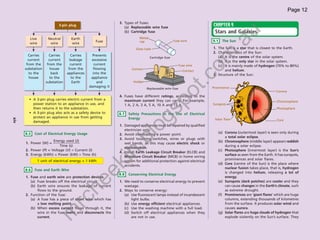
                                                                       3. Types of fuses:
                                      3-pin plug
                                                                          (a) Replaceable wire fuse
                                                                                                                                CHAPTER 9
                                                                          (b) Cartridge fuse                                     Stars and Galaxies


                                                                                                                                                u
                   Live         Neutral       Earth                                Metal
                                                                                                                                9.1   The Sun


                                                                                                                                       .a
                                                            Fuse                   cap                      Fuse wire
                   wire          wire         wire
                                                                                 Glass tube                                     1. The Sun is a star that is closest to the Earth.
                                                                                                                                2. Characteristics of the Sun:


                                                                                                                             om
                 Carries         Carries       Carries     Prevents                                                                (a) It is the centre of the solar system.
                                                                                           Cartridge fuse
                 current         current      leakage     excessive                                                                (b) It is the only star in the solar system.
                from the        from the       current      current                                              Fuse wire         (c) It is mainly made of hydrogen (70% to 80%)
               substation         house      from the      flowing             Contact                                                 and helium.
                                                                                                                   Contact
                  to the           back     appliances     into the                                                             3. Structure of the Sun:


                                                                                                                     t.c
                  house           to the        to the    appliance
                               substation        Earth        and              Holder
                                                         damaging it                                                            Prominence
                                                                                         Replaceable wire fuse
                                                                                                                                                                        Corona


                                                                                                       po
                                                                       4. Fuses have different ratings, according to the
                  • A 3-pin plug carries electric current from a          maximum current they can carry. For example,                                                  Chromosphere
                    power station to an appliance in use, and             1 A, 2 A, 3 A, 5 A, 10 A and 13 A.                    Sunspots
                    then returns it to the substation.                                                                                                                  Photosphere


                                                                                              gs
                  • A 3-pin plug also acts as a safety device to       8.7   Safety Precautions in the Use of Electrical
                    protect an appliance in use from getting                 Energy
     xiv


                                                                                                                                 Solar flare                            Core
                    damaged.
                                                                       1. Damaged appliances must be repaired by qualified


                                                                                   lo
                                                                          electrician only.
               8.5    Cost of Electrical Energy Usage                                                                              (a) Corona (outermost layer) is seen only during
                                                                       2. Avoid overloading a power point.
                                                                                                                                       a total solar eclipse.
                                Energy used (J)
                1. Power (W) = ———————–
                                    Time (s)
                2. Power (P) = Voltage (V) × Current (I)
                                                                             .b
                                                                       3. Avoid touching switches, wires or plugs with
                                                                          wet hands, as this may cause electric shock or
                                                                          electrocution.
                                                                                                                                   (b) Chromosphere (middle layer) appears reddish
                                                                                                                                       during a solar eclipse.
                                                                                                                                   (c) Photosphere (innermost layer) is the Sun’s
                                                                       in
                                                                       4. Install Earth Leakage Circuit Breaker (ELCB) and
                3. Energy (kWh) = Power (kW) × Time (h)                                                                                surface as seen from the Earth. It has sunspots,
                                                                          Miniature Circuit Breaker (MCB) in home wiring
                                                                                                                                       prominences and solar flares.
                          1 unit of electrical energy = 1 kWh             system for additional protection against electrical
                                                                                                                                   (d) Core (centre of the Sun) is the place where
                                                                ek

                                                                          accidents.
                                                                                                                                       nuclear fusion takes place, that is, hydrogen
               8.6    Fuse and Earth Wire
                                                                                                                                       is changed into helium, releasing a lot of
                                                                       8.8   Conserving Electrical Energy
                1. Fuse and earth wire are protection devices.                                                                         energy.
                                                      he


                   (a) Fuse breaks off the electrical circuit.         1. We need to conserve electrical energy to prevent         (e) Sunspots (dark patches) are cooler and they
                   (b) Earth wire ensures the leakage of current          wastage.                                                     can cause changes in the Earth’s climate, such
                       flows to the ground.                            2. Ways to conserve energy:                                     as extreme drought.
                2. Function of the fuse:                                  (a) Use fluorescent lamps instead of incandescent        (f) Prominences are ‘giant flares’ which are huge
                                            rc


                   (a) A fuse has a piece of short wire which has             light bulbs.                                             columns, extending thousands of kilometres
                       a low melting point.                               (b) Use energy efficient electrical appliances.              from the surface. It produces solar wind and
                   (b) When excess current flows through it, the          (c) Use the washing machine with a full load.                causes aurora.
                                      m


                       wire in the fuse melts and disconnects the         (d) Switch off electrical appliances when they           (g) Solar flares are huge clouds of hydrogen that
                       current.                                               are not in use.                                          explode violently on the Sun’s surface. They


TWB Sci F3 (Exp Note) B 2nd.indd 14                                                                                                                                               5/26/2009 4:12:41 PM
Page 13

                        also change the Earth’s climate and affect          (e) The death of a large star:
                                                                                                                                            Types                  Description
                        the telecommunication systems on Earth.
                                                                                 Red giant → Supergiant → Supernova →                Irregular-shaped   • It has a diameter between


                                                                                                                                                    u
                                                                                 Neutron star                                        galaxy               25 000 and 32 000 light
               9.2    Stars and Galaxies in the Universe
                                                                            (f) The death of a super-large star:                                          years.


                                                                                                                                             .a
                1. Stars:                                                                                                                               • It does not have a definite
                   (a) Made up of dust and gases (such as hydrogen               Red giant → Supergiant → Supernova →                                     pattern or shape.
                       and helium).                                              Black hole                                                             • It exists in various different


                                                                                                                                om
                   (b) Generate heat and light through nuclear                                                                                            forms and is usually made
                                                                         6. Galaxies:
                       fusion.                                                                                                                            up of young stars that are
                                                                            (a) Are collection of billions of stars, planets, dust
                   (c) Differ in size, brightness, colour and                                                                                             very hot.
                                                                                and gases held together by a gravitational
                       temperature.                                                                                                                     • Example: Large Magellanic
                                                                                force
                2. Arrangement of stars in ascending order of                                                                                             Cloud


                                                                                                                     t.c
                                                                            (b) Types of galaxies:
                   temperature:
                     Red → Yellow → White → Whitish-blue → Blue                Types                    Description                  7. The Milky Way:
                                                                         Elliptical-shaped   • It has a diameter between                (a) It is a spiral-shaped galaxy.
                3. Arrangement of stars in ascending order of


                                                                                                         po
                                                                         galaxy                3000 and 10 000 light years.             (b) The solar system is located in the Milky
                   size:                                                                                                                    Way.
                                                                                             • It looks like a smooth,
                     Neutron star → White dwarf star → Dwarf star                              round and oval-shaped disc,           8. The Universe:
                     → Giant star → Supergiant star                                            and has no arms.                         (a) It consists of all the matter, energy and space


                                                                                              gs
                                                                                             • It is the brightest at the                   that exist.
                4. Formation of stars:                                                                                                  (b) It has billions of galaxies, stars, planets and
                                                                                               core and gradually fades
                   (a) Stars are formed from nebulae (singular:                                                                             particles.
     xv


                                                                                               towards the edge.
                       nebula), which are made of clouds of dust                                                                        (c) Its size is infinitive and unknown.
                                                                                             • It is made up of old yellow


                                                                                       lo
                       and gases.
                                                                                               stars and does not contain
                   (b) The nebula contracts when the gases and                                                                       9.3    The Universe as a Gift from God
                                                                                               gas and dust, so new stars
                       dust exert a strong gravitational force on
                                                                                               are not formed.
                       each other.
                   (c) Further contraction causes the ball to become
                       denser until hydrogen atoms fuse to form
                                                                             .b              • Example: M87 in the centre
                                                                                               of Virgo cluster.
                                                                                                                                     1. The Universe is a unique creation of God.
                                                                                                                                     2. Everything that exists in the Universe is not
                                                                                                                                        permanent: Stars are born and die out, new stars
                                                                         in
                       helium atoms – a nuclear fusion reaction.         Spiral-shaped       • It has a diameter of about               are formed to replace them.
                   (d) The reaction causes the temperature to rise       galaxy                20 000 to 100 000 light years.
                       and causes the star to expand.                                        • It is disc-shaped and made
                                                             ek

                   (e) The balance between the contraction and                                 up of stars gathering in              CHAPTER 10
                       expansion of star will form a stable star, such                         a whorl with spiral arms
                       as the Sun.                                                             at the edges. These arms               Space Exploration
                                                                                               contain dust and gases.
                                                  he


                5. The death of stars:                                                                                               10.1    Developments in the Field of Astronomy and
                   (a) When nuclear fusion no longer takes place,                            • It has a bright centre. Its
                                                                                                                                             Space Exploration
                       the size of the core of the star will reduce.                           centre has older stars. Its
                   (b) The size of a star determines its lifespan.                             arms have younger stars,              1. Astronomy is the study of objects in the
                                                                                               while dwarf stars and
                                          rc


                   (c) Massive stars have longer lifespan than                                                                          Universe.
                       smaller ones.                                                           nebulae. The arms rotate              2. The Greeks:
                   (d) The death of a medium-sized star:                                       around its centre.                       (a) The first people to study astronomy.
                                      m


                                                                                             • Example: The Milky Way,                  (b) First to declare that the Earth is spherical,
                          Red giant → White dwarf → Black dwarf                                Andromeda                                    and the orbits of the planets are circular.


TWB Sci F3 (Exp Note) B 2nd.indd 15                                                                                                                                                  5/26/2009 4:12:41 PM
Page 14

                3. The Islamic astronomers studied the rotation of
                   the Earth and the eclipses of the Sun and the
                   Moon.


                                                                                                             u
                4. Other developments:
                   (a) Hans Lippershey invested a telescope.


                                                                                                     .a
                   (b) Galileo Galilei was the first man to observe
                       objects in space with a telescope.
                   (c) Yuri Gagarin was the first person in space.


                                                                                             om
                   (d) Neil Armstrong was the first human to set
                       foot on the Moon.
                   (e) Aristotle believed wrongly that the Earth was
                       the centre of the Universe.
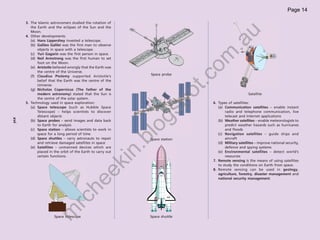
                                                                            Space probe


                                                                                            t.c
                   (f) Claudius Ptolemy supported Aristotle’s
                       belief that the Earth was the centre of the
                       Universe.
                   (g) Nicholas Copernicus (The father of the


                                                                                      po
                       modern astronomy) stated that the Sun is                                                     Satellite
                       the centre of the solar system.
                5. Technology used in space exploration:                                      6. Types of satellites:
                   (a) Space telescope (such as Hubble Space                                     (a) Communication satellites – enable instant


                                                                             gs
                       Telescope) – helps scientists to discover                                     radio and telephone communication, live
                       distant objects                                                               telecast and Internet applications
     xvi


                   (b) Space probes – send images and data back                                  (b) Weather satellites – enable meteorologists to
                       to Earth for analysis                                                         predict weather hazards such as hurricanes


                                                                            lo
                   (c) Space station – allows scientists to work in                                  and floods
                       space for a long period of time                                           (c) Navigation satellites – guide ships and
                   (d) Space shuttles – carry astronauts to repair                                   aircraft
                       and retrieve damaged satellites in space
                   (e) Satellites – unmanned devices which are
                       placed in the orbit of the Earth to carry out
                                                                        .b  Space station
                                                                                                 (d) Military satellites – improve national security,
                                                                                                     defence and spying systems
                                                                                                 (e) Environmental satellites – detect world’s
                                                                       in
                       certain functions.                                                            resources
                                                                                              7. Remote sensing is the means of using satellites
                                                           ek

                                                                                                 to study the conditions on Earth from space.
                                                                                              8. Remote sensing can be used in geology,
                                                                                                 agriculture, forestry, disaster management and
                                                                                                 national security management.
                                                    he
                                             rc
                                      m


                                      Space telescope                       Space shuttle


TWB Sci F3 (Exp Note) B 2nd.indd 16                                                                                                            5/26/2009 4:12:42 PM

Express Notes Science Form 3

  • 1.
    Written By Ng Chee Kin B.Sc.(Hons.), MBA ngcheekin@gmail.com mrcheekin@blogspot.com.au All Rights Reserved ©2012 Ng Chee Kin
  • 2.
    Page 1 PREsSS E X p r e����� u .a 3. When oxyhaemoglobin reaches the body cells, it 4. The oxygen is then absorbed by the body cells CHAPTER 1 om breaks down and releases oxygen. for cellular respiration. Respiration 1.1 Human Breathing Mechanism Oxygen Oxygenated blood returns Oxygenated blood t.c to the heart pumped out of the Other 1. The human respiratory system: Heart heart Oxygen enters blood in body Blood capillaries Trachea the lungs cells around the alveoli po Deoxygenated blood Deoxygenated blood Bronchus Lungs pumped out of the heart returns to the heart Lung (plural: bronchi) gs Key: Movement of oxygen Haemoglobin Bronchiole Movement of oxygenated blood Oxyhaemoglobin iii Movement of deoxygenated blood lo Alveolus 1.3 The Importance of a Healthy Respiratory CHAPTER 2 (plural: alveoli) Bronchioles .b System Blood Circulation and Transport 1. Chemical substances which are harmful to the 2. The air flow during inhalation: 2.1 Transport System in Humans respiratory system are: in Nose Trachea Bronchus Bronchiole (a) nicotine, tar and carbon monoxide from 1. The human heart: Alveolus cigarette smoke (b) sulphur dioxide, nitrogen oxide, carbon Aorta ek Vena cava 3. The air flow during exhalation: monoxide, asbestos dust, coal dust and Pulmonary artery hydrocarbons from vehicles and factories. Semilunar Alveolus Bronchiole Bronchus valves 2. Tar and asbestos dust are carcinogenic, which Pulmonary Trachea Nose vein he means they can cause lung cancer if inhaled Right excessively. atrium 1.2 Transport of Oxygen in the Human Body Left atrium 3. Bacteria, viruses and other microorganisms 1. The oxygen dissolves in the moist lining of the produce toxins which cause illnesses. Tricuspid Bicuspid rc valve valve alveolus and then it diffuses into the blood 4. We need to improve the quality of air in order capillaries. to preserve healthy respiratory system. Left 2. In the blood capillaries, oxygen will combine Right ventricle m with haemoglobin in the red blood cells to form ventricle oxyhaemoglobin. Septum TWB Sci F3 (Exp Note) A 2nd.indd 3 5/26/2009 4:12:56 PM
  • 3.
    Page 2 Pulmonary artery Aorta 4. Path of blood flow in the circulator system: 5. Double circulatory system: Pulmonary (a) Deoxygenated blood is pumped from the Vena cava vein heart to the lungs and oxygenated blood u Deoxygenated Oxygenated Right atrium Semilunar blood blood flows back again to the heart. (b) Oxygenated blood is pumped from the heat .a valves Vena cava to the rest of the body and deoxygenated Left atrium Lung blood flows back again to the heart. 6. Human blood transports many substances in our om Bicuspid body. Tricuspid valve Right Left valve atrium atrium Septum Substance Right From To Left ventricle transported ventricle t.c Right Left Oxygen (in Lungs All body Cardiac muscle ventricle Internal organs ventricle the form of cells (for example, oxyhaemoglobin) Deoxygenated blood Oxygenated blood liver, gut) Carbon dioxide All body cells Lungs po Digested food Small Liver and 2. Functions of the heart: (glucose, amino intestine all body (a) Pumps blood to all parts of the body. acids) cells gs (b) Transports nutrients and oxygen to the body Rest of the body (for Waste materials Liver and Kidneys cells. example, head, arms, (such as urea) cells (c) Transports carbon dioxide and waste iv legs) materials from the body cells. Hormones Endocrine Target lo 3. Types of blood vessels: glands organs Characteristic Artery Vein Capillary Structure Connective tissue .b Connective tissue 2.2 Human Blood 1. Human blood consists of: in (a) 55% plasma Lumen Smooth Lumen Smooth Lumen Endothelium muscle (b) 45% blood cells and platelets muscle 2. Types of blood cells: ek Endothelium Endothelium Type Function Size of lumen Small Large Very small Red blood cells Carries oxygen from the lungs to the body cells he Thickness of wall Thick, muscular, elastic Thin, less elastic, Only one cell thick and White blood Defends the body against muscular not muscular cells diseases Speed of blood flow Rapid Slow Very slow Platelets Helps in blood clotting rc Blood pressure Very high pressure Low pressure Very low pressure 3. Functions of blood: (a) Transports gases and dissolved substances Presence of valves No except at aorta and Yes No m (b) Protects the body against diseases pulmonary artery (c) Maintains the body temperature at 37oC TWB Sci F3 (Exp Note) A 2nd.indd 4 5/26/2009 4:12:58 PM
  • 4.
    Page 3 4. Compatibility of blood groups: 4. Transpiration is the process by which plant loses 3.2 The Urinary System in Humans water, in the form of water vapour. Recipient’s blood 5. Transpiration happens through the stomata u Donor’s group A B AB O Vena cava Aorta (singular: stoma), tiny pores on the leaves of blood group the plant. .a Adrenal A     6. Factors that affect the rate of transpiration: Renal gland (a) Light – the brighter the light, the greater vein B     Renal the rate of transpiration. om AB     artery (b) Temperature – the higher the temperature, O     the greater the rate of transpiration. Right Left (c) Humidity – the lower the humidity, the kidney kidney 5. Universal donor is a person with blood group O. greater the rate of transpiration. 6. Universal recipient is a person with blood group t.c (d) Wind – the faster the movement of air, the Ureters AB. greater the rate of transpiration. 7. Transpiration helps plants to absorb and transport Urinary 2.3 Transport System in Plants water and minerals. bladder po 1. The transport system in plants is called the Urethra vascular system. 2. There are two main vascular tissues: CHAPTER 3 (a) Xylem- transports water and mineral salts Excretion gs from the roots to the leaves  Cortex (b) Phloem- transports glucose from the leaves  3.1 Human Excretion v to all parts of the plants   lo 3. Xylem and phloem are found in the vascular 1. Excretion is a process of eliminating waste Cortex  Medulla bundle. products from the body.  Xylem Medulla  2. The organs responsible for removing waste   .b  products are called the excretory organs.   Renal artery   3. The waste products removed from the body are Phloem Pyramid called the excretory products. in Cross section of leaf Renal vein Pelvis Epidermis Excretory organ Excretory products ek Phloem vascular Xylem bundle Skin Water, mineral salts, urea Ureter pith Lungs Water, carbon dioxide he Cross section of stem Kidneys Water, mineral salts, urea 1. The human urinary system consists of: kidney, Root hair ureter, bladder and urethra. Cortex 4. Excretion helps to maintain the balance of water 2. Functions of kidneys: rc Endodermis content, chemical composition and pH in the (a) To filter blood. Xylem body system. (b) To remove urea, excess mineral salts and Phloem water to form urine. m Epidermis (c) To control the balance of water and chemical Cross section of root in the body. TWB Sci F3 (Exp Note) A 2nd.indd 5 5/26/2009 4:13:02 PM
  • 5.
    Page 4 3. Kidney failure happens when the kidneys of 6. Most nitrogenous wastes are very poisonous. 4.2 Male Reproductive System a person unable to perform their functions 7. Some excretory products of plants are useful properly. to humans such as: morphine, opium, cocaine, u Organ Function 4. Kidney failure can be treated through dialysis tannins and oils. or kidney transplant. .a Testis (plural: • Produces sperms (the male 5. Dialysis is a method used to filter and remove testes) gametes) waste products from the blood of a patient. CHAPTER 4 • Produces male sex hormones Reproduction om 3.3 Excretion in Plants Scrotum • Holds and protects the testes 1. Plants excrete waste products mainly through 4.1 Understanding Sexual and Asexual Sperm duct • Transports sperms from the simple diffusion. Reproduction (vas deferens) testes to the urethra inside 2. Excretion in plant is mainly done through the t.c 1. Reproduction is a process of producing new the body cell wall and stomata. individuals by living organisms. 3. Mineral salts such as calcium carbonate and 2. Importance of reproduction: Urethra • Allows sperms to flow out of calcium oxalate are retained in the plant as (a) To increase the number of individuals of the the body crystals. po same species. 4. Minerals such as silicon salts are deposited in the (b) To ensure certain species does not become Penis • Transfers semen into vagina leaves to strengthen the leaf blade. extinct. during copulation 5. Nitrogenous waste products are removed when 3. Types of reproduction: gs plants shed their leaves, flowers or bark. Seminal • Secrete fluid which contains vesicles nutrients for the sperms Reproduction vi lo Sexual Asexual 1. Sperm: (Involving the male and the female gametes) (a) It is the male sex cell. Animals Plant Binary fission (bacteria) .b Regeneration (planaria) Budding (yeast) (b) It is produced by the testes. (c) It is also the smallest cell in the males’ body. in (sperm and ovum) (pollen grain Spore formation Vegetative (d) It is shaped like a tadpole, which has a head, and ovule) (moss, ferns and fungi) reproduction neck, middle piece and tail. (e) The head contains a nucleus which has ek genetic material. (f) The tail helps the sperm to move or swim in Seminal vesicle Vas deferens Seminal the female reproductive system. Vas deferens vesicle 2. Males reach puberty at 12 to 14 years old, which he Prostate gland is later than girls. 3. There are physical, emotional and physiological Epididymis Urethra Prostate changes during puberty. rc Urethra gland 4. The testes start to produce sperm and male sex Penis Penis hormones during puberty. Testis Scrotum m Scrotum Testis TWB Sci F3 (Exp Note) A 2nd.indd 6 5/26/2009 4:13:03 PM
  • 6.
    Page 5 4.3 Female Reproductive System 1. Ovum (plural: ova): (c) Fertile phase / ovulation phase (day 12 to 16) (a) It is the female sex cell. (d) Premenstrual phase (day 17 to 28) Oviduct (Fallopian tube) (b) It is produced by the ovary. 6. Women of about 50 years of age undergo u (c) It is the largest cell in the females’ body. menopause when their menstruation stops. (d) It is spherical in shape, which contains a .a nucleus and cytoplasm. 4.5 Fertilisation and Pregnancy (e) The nucleus contain genetic material. Ovary (f) It cannot move by itself. 1. Fertilisation is the fusion between the sperm and om the ovum. Uterus 4.4 Menstrual Cycle 2. Development of an embryo into a foetus until Cervix birth: 1. Menstrual cycle is the changes in a woman’s ovary Sperm Ovum Vagina and uterus over 28 days. t.c 2. Menstrual cycle involves ovulation and Fertilisation menstruation which happen regularly each Zygote Ovary Oviduct (Fallopian tube) month. 3. Ovulation happens when an ovary releases a po mature ovum. Embryo Uterus 4. Menstruation is the shedding of the uterine wall Implantation and blood through the vagina. Foetus gs 5. Menstruation can be divided into four stages: Cervix (a) Menstruation phase (day 1 to 5) Childbirth (b) Repair phase (day 6 to 11) Baby vii lo Vagina A zygote is formed Urethra Eight-cell Four-cell Two-cell Ovary Organ Function • Produces ova (the female .b An embryo is formed stage stage stage in The ovum is fertilised (fertilisation) gametes) Embryo moves towards uterus • Produces female sex hormones Ovary Fallopian tube ek Fallopian • Place of fertilisation tube (oviduct) Ovary produces an ovum (ovulation) Uterus • Place for the implantation of he (womb) zygote Uterus Embryo attaches to • Place where the foetus uterine wall (implantation) develops and grows Cervix • Widens during childbirth 4.6 Importance of Prenatal Care 4.7 Importance of Research in Human rc Vagina (birth • Place where the sperms are Reproduction 1. Pregnant women need to take enough nutritious canal) deposited during copulation food and have a balanced diet. 1. Sterility (infertility) is the inability to produce m • Baby is born through this 2. Pregnant women should avoid smoking, taking children. birth canal alcohol or drugs. 2. Methods to overcome sterility: TWB Sci F3 (Exp Note) A 2nd.indd 7 5/26/2009 4:13:06 PM
  • 7.
    Page 6 (a) Drug treatment (such as hormones) 2. Germination happens when the embryo grows Structure Function (b) Surgery into a seedling. (c) In vitro fertilisation (IVF) Ovary To protect the ovule 3. Seeds need air, water and suitable temperature u 3. Methods for birth control (contraception): Ovule Contains ova (the female gametes) to germinate. (a) Contraceptive pills .a (b) Rhythm method (natural method) Anther Contains pollen grains (the male gametes) 4.12 Vegetative reproduction in Flowering (c) Using a condom Filament To support anther Plants (d) Using a diaphragm om 1. Vegetative reproduction is a method of producing (e) Intrauterine contraceptive device (IUCD) 4.9 Pollination new plants from any vegetative parts of the (f) Vasectomy – sperm ducts cut and tied 1. Pollination is the transfer of pollen grains from parent plant. (g) Ligation (tubectomy) – oviducts cut and tied the anther to the stigma. 2. Vegetative reproduction is an asexual 2. Self-pollination and cross-pollination: reproduction. t.c 4.8 Sexual reproductive System of Flowering Plants Pollen grains Stigma 3. Vegetative parts that can reproduce are: stem, 1. Struture of a flower: leaf and root. Pollen grains Anther 4. Tissue culture and stem cuttings are techniques Flower used to produce new plants. po Stamen Pistil CHAPTER 5 gs Anther Filament Ovary Stigma Style Growth viii Pollen grain Ovule 5.1 Human Growth Pattern lo One plant Another plant of 1. Growth is an irreversible and permanent process Petal the same species in living things. Pistil Key: 2. Growth in humans can be determined by Stamen Anther Stigma Style .b Self-pollination 4. Agents of pollination: Cross-pollination measuring the height and weight. 3. Growth curve is divided into five stages: (a) Infancy (d) Adulthood in Filament Ovary (a) Wind (c) Insects (b) Childhood (e) Old age Ovule (b) Animals (d) Water (c) Adolescence Nectary Sepal ek Receptacle 4.10 Development of Fruits and Seeds in Plants Pedicel Infancy Adolescence Old age 1. Fertilisation occurs when the male gamete fuses Childhood Adulthood Structure Function with the ovum in the ovule. he Minimal Sepal To protect flower during the bud stage 2. A zygote is formed when the ovum is fertilised Negative Height (cm) growth by the male gamete. Slow growth Petal To attract insects or animals 3. After fertilisation, the ovule will develop into a growth Rapid growth Stamen The male reproductive part seed and the ovary become the fruit. rc Pistil The female reproductive part 4.11 Germination of Seeds Rapid Stigma To receive pollen grains growth m 1. A seed is made up of an embryo and a food Style To support stigma Age (years) store wrapped in a testa (seed coat). 0 3 13 20 65 TWB Sci F3 (Exp Note) A 2nd.indd 8 5/26/2009 4:13:08 PM
  • 8.
    Page 7 2. Silicon always exists in the form of compounds CHAPTER 6 such as silicas and silicates. Land and Its Resources u 3. Silica is silicon dioxide, which consists of silicon and oxygen. .a 6.1 Minerals in the Earth’s Crust 4. Silicate is made up of silicon, metal and oxygen. 5. Properties of silicas and silicates: 1. Minerals are solid elements or compounds found naturally. (a) Insoluble in water 2. Elements present in various minerals: om (b) Do not react with acid (c) Do not break down when heated Oxide Carbonate Sulphide Silicate (d) Very stable and are not eroded easily Iron China Calcium Element Cassiterite Haematite Calcite Malachite Galena pyrite clay silicate 6.4 Calcium Compounds t.c Tin  1. Properties of calcium carbonate: Iron   (a) Insoluble in water (b) Reacts with dilute acids to produce salt, water Calcium   po and carbon dioxide Copper  (c) Breaks down into calcium oxide and carbon Lead  dioxide when heated 2. Quicklime (calcium oxide) is formed when calcium Aluminium  gs carbonate is heated strongly. Silicon   3. Slaked lime (calcium hydroxide) is formed when calcium oxide is added with some water. ix Oxygen       4. Limewater (calcium hydroxide solution) is formed lo Carbon   when slaked lime is added with more water. Sulphur   6.5 Natural Fuel Resources and Their Importance 3. Properties of minerals: Properties Description .b (b) Metals react with sulphur to form metal sulphide 1. Fossil fuels include petroleum, natural gas and coal. in Reaction Reaction 2. Petroleum: Hardness Most mineral are hard (a) Formed from organism remains buried in Metal rate with rate with Solubility Most minerals are insoluble in oxygen sulphur sediment under heat and high pressure. ek in water water (b) It contains many types of hydrocarbons which Magnesium Very fast Very fast can be separated by fractional distillation. Action of • Most metal oxides are stable Aluminium Very fast Very fast (c) The components of petroleum produced by heat • Metal sulphides break down fractional distillation are called fractions (or he into metal oxide and release Zinc Fast Fast distillates). sulphur dioxide gas Iron Fast Fast (d) Different fractions are obtained due to Copper Slow Slow different boiling points. 6.2 Reactions Between Metals and Non-metals • the greater the boiling point, the darker rc 1. Metals react with non-metals at different rates 6.3 Silicon Compounds the colour of the fractions to form stable compounds: • the greater the boiling point, the more 1. Silicon is the second most abundant element in viscous the fractions m (a) Metals react with oxygen to form metal oxide the Earth’s crust. TWB Sci F3 (Exp Note) A 2nd.indd 9 5/26/2009 4:13:08 PM
  • 9.
    Page 8 • the greater the boiling point, the more 2. Electrical charges can be produced through Electron flow soot is produced when the fractions are friction between two objects. burnt 3. Matters are made up of small particles called u • the greater the boiling point, the harder atoms. the fractions burn .a Electron (negatively charged) Product of Uses distillation om Petroleum gas Cooking gas Proton (positively charged) (b) Direction of electron flow Petrol (gasoline) Fuel for vehicles Neutron (no charged) The flow of electric current and electron Naphta For making plastics and polyvinyl chloride t.c (b) Voltage (PVC) Structure of an atom – the electrical force needed to move Kerosene Fuel for aircraft electrical charges from one point to other 4. An atom has two charged particles: in a conductor. Diesel oil Fuel for lorries and po (a) Electrons, which have a negative charge (–) (c) Resistance buses (b) Protons, which have a positive charge (+) – characteristic that resists the flow of electric Lubricating oil Lubricants for 5. Neutrons in an atom have no charge because current in a conductor. machines they are neutral. gs Fuel oil Fuel oil for ships 6. An atom becomes positively charged when it 7.3 Electric Current, Voltage and Resistance loses electrons. Bitumen To seal roads 1. Measuring current (symbol: I): 7. An atom becomes negatively charged when it x – connect an ammeter in series with other gains electrons. lo 3. Natural gas: electrical components in a circuit. (a) consists of 90% methane, 10% of mixture of – the deflection of the pointer of the ammeter 7.2 Electricity ethane, propane, butane and pentane. shows the value of current flowing through (b) It is usually found together with the petroleum. (c) It is used as fuel source and to produce .b 1. Electricity is a form of energy. It is also called the electrical energy. 2. Electrical energy can be generated by generators the components. – the SI unit for electric current is ampere (symbol: A). in fertilisers. and electric cells. 2. Measuring voltage (symbol: V): 4. Coal: 3. Current, voltage and resistance: – connect a voltmeter in parallel to other (a) Made up of carbon, oxygen, nitrogen and (a) Current electrical components in a circuit. ek sulphur. – the rate of flow of charges. – the deflection of the pointer of the voltmeter (b) It is formed from plant remains that grew in – flows from the positive terminal to the shows the value of voltage across the swamps. negative terminal of a battery. components. he – the SI unit for voltage is volt (symbol: V). Current 3. The SI unit for resistance (symbol: R) is the ohm CHAPTER 7 (symbol: Ω). Electricity rc 7.4 The Relationship Between Current, Voltage and Resistance 7.1 Electrostatics 1. Resistor is an electrical component that resists m 1. Electrostatics is the study of static electrical (a) Direction of electric current flow the flow of electric current. charges. TWB Sci F3 (Exp Note) B 2nd.indd 10 5/26/2009 4:12:30 PM
  • 10.
    Page 9 2. Ohm’s Law: 2. Advantages of a series circuit: Electrical – the current flowing through a conductor is Symbol (a) When more cells are added to the circuit, component directly proportional to its voltage. the voltage and current increase. Hence, the u Rheostat bulbs glow brighter. Voltage (V) (Variable or or (b) Bulbs light up with equal brightness because .a Resistance (R) = —————– Current (I) resistor) the current flows through each bulb is the same. – the greater the resistance, the smaller the Fuse 3. Disadvantages of a series circuit: om current. Galvanometer G G (a) If one of the bulbs is fused (burned out), the – increasing the voltage supplied will increase G V other bulbs will not light up. the current in the circuit. Voltmeter V V (b) The brightness of the bulbs decreases when A more bulbs are connected in series, because A A 7.5 Electric Circuits Ammeter t.c the electrical energy is shared by more 1. An electric circuit is a path which allows an bulbs. 4. Comparison between series and parallel electric current to flow through. circuits: 7.7 Parallel Circuit 2. A simple electric circuit is made up of 3 po components: Series circuit Parallel circuit 1. Current, voltage and total resistance in parallel (a) A cell (a source of electrical energy) • Has only one path • Has more than one circuit: (b) A bulb (a resistor) for current to flow path for currect to 2. Advantages of a parallel circuit: (c) Connecting wire (a conductive path) gs through flow through (a) When one of the bulbs is burned out, the • Light bulbs do not • Light bulbs glow other bulbs will still light up. Dry cell glow as bright as brighter than (b) Each electrical component can be controlled xi those connected in those connected in by separate switches. lo Wire (c) All bulbs will light up with the same parallel series brightness. • If one light bulb • If one light bulb Light bulb .bburns out, the circuit becomes incomplete. Hence, burns out, other light bulbs will still light up. V V V1 I = I1 + I2 in other light bulbs I An electric circuit V V = V1 = V2 will not light up. I1 3. Symbols of electrical components: R1 ek 7.6 Series Circuit I2 R2 1 1 1 —=—+— Electrical R R1 R2 Symbol 1. Current, voltage and total resistance in series component V circuit: V2 he Electric cell V Battery (more I = I1 = I2 = I3 3. Disadvantage of a parallel circuit: V than one cell) (a) When more bulbs are connected in parallel, the dry cells will become weak quicker. rc Switch I V = V1 + V2 + V3 I1R1 I2R2 I3R3 7.8 Magnetism Bulb or R = R1 + R2 + R3 m V V V 1. Magnetism is the properties and effects of Resistor or V1 V2 V3 magnetic substances. TWB Sci F3 (Exp Note) B 2nd.indd 11 5/26/2009 4:12:34 PM
  • 11.
    Page 10 2. Magnetic field is the area around a magnet where Copper wire (c) Gas turbine generator a magnetic force can be detected. 3. The magnetic field of a magnet can be represented Combustion u Switch Card Air chamber by lines, called magnetic field lines. filter Exhaust 4. The magnetic field lines have a certain pattern Compressor .a Electric tower and direction. (a) The pattern of the magnetic field lines can Retort stand be shown by using iron filings. om Compass Motor Power pack Spark plug Gas turbine Generator Iron filings CHAPTER 8 (d) Diesel power plant Magnet Cardboard t.c placed Generation of Electricity under the cardboard 8.1 The Generation of Electrical Energy electric current po (b) The direction of the magnetic field lines can 1. Types of generators: be detected by using a compass. (a) Hydroelectric power plant Diesel engine Generator gs Dam (e) Nuclear power plant Pylon N Concrete wall xii Compass Magnetic Water field lines lo S Control Steam rods turbine Steam Electrical 5. Characterstics of magnetic field lines: (a) Run from the north pole to the south pole .b Tunnel Turbine and generator Output Condenser in (b) Thermal generator Reactor of the magnet. (b) Do not cross one another. Pump Boiler Water ek Steam Pylon Steam 7.9 Electromagnetism generator Pump Pump 1. Electromagnetism refers to the properties and Turbine Water 27ºC 38ºC he effects of electromagnets produced by electric Generator current. 2. An electromagnet is a magnet that is produced by the flow of electric current. 8.2 Transformers rc (a) Without electrical energy, an electromagnet Sea water Water 1. A transformer is a device for changing the voltage loses its megnetism. of an alternating current. (b) An electromagnet is a temporary magnet. Burner Condenser 2. An alternating current (symbol: a.c.) flows back m 3. A straight line conductor carrying current produces From water purification plant and forth, reversing its direction. a concentric magnetic field lines around it. TWB Sci F3 (Exp Note) B 2nd.indd 12 5/26/2009 4:12:37 PM
  • 12.
    Page 11 3. Types of transformers: (b) Step-down transformer 1. National Grid Network is a system of high voltage (a) Step-up transformer circuits that connects the main power stations. Soft iron core 2. Advantages of National Grid Network: u Soft iron core (a) Ensures continuous and uninterrupted electrical power supply to the consumers. .a a.c. a.c. a.c. a.c. input output (b) Reduces the operational cost of electrical input output voltage voltage voltage voltage energy transmission. (c) Prevents wastage of electrical energy. om Primary coil Secondary coil Primary coil Secondary coil 8.4 Electrical Power Supply and Wiring system in – To increase the output voltage. – To reduce the output voltage. Homes – The secondary coil has more turns than – The secondary coil has less turns than the 1. Homes are supplied with 240 V alternating t.c the primary coil. primary coil. current (a.c.). 8.3 Electrical Power Transmission and Distribution System Part Function Transmission over Mains Breaks the circuit when current po long distances fuse exceeds a safe value Transmission A 132 kV/ Components: Mains Cuts off electrical power supply system 275 kV/ A – Power C station switch from the mains when electricity 11 kV 500 kV gs A B – Step-up is not needed B transformer C – National Circuit Cuts off the electric current that xiii 240 V/ Heavy Grid breaker flows under abnormal conditions D Distribution 415 V 33 kV 33 kV industrial Network lo E E area Live wire Carries the electric current from system D – Step-down transformer the substation to the house E – Branch Neutral Carries the electric current from Residential Shopping Hospital .b 33 kV 11 kV Light substation wire Earth the house back to the substation Connects an electrical appliance in area complex industrial area wire to the earth or ground Electric Measures the amount of Branch Heavy ek meter electricity used substation 33 kV industrial area 2. Our home uses single-phase wiring system. Branch Light 3. The commercial and industrial areas use three- Main National substation industrial area phase wiring system. he Power Step-up Switch substation 11 kV Grid 4. 3-pin plug: stations transformer zone (Step-down Network Branch Residential Fuse transformer) Cover removed 11 kV 132 kV/ substation area 275 kV/ 132 kV/ 240 V 275 kV/ 132 kV/ rc 500 kV 275 kV/ Earth wire 500 kV Branch Shopping 500 kV Neutral wire Cover substation 415 V complexes m Generation Transmission system Distribution system Cable Live wire TWB Sci F3 (Exp Note) B 2nd.indd 13 5/26/2009 4:12:38 PM
  • 13.
    Page 12 3. Types of fuses: 3-pin plug (a) Replaceable wire fuse CHAPTER 9 (b) Cartridge fuse Stars and Galaxies u Live Neutral Earth Metal 9.1 The Sun .a Fuse cap Fuse wire wire wire wire Glass tube 1. The Sun is a star that is closest to the Earth. 2. Characteristics of the Sun: om Carries Carries Carries Prevents (a) It is the centre of the solar system. Cartridge fuse current current leakage excessive (b) It is the only star in the solar system. from the from the current current Fuse wire (c) It is mainly made of hydrogen (70% to 80%) substation house from the flowing Contact and helium. Contact to the back appliances into the 3. Structure of the Sun: t.c house to the to the appliance substation Earth and Holder damaging it Prominence Replaceable wire fuse Corona po 4. Fuses have different ratings, according to the • A 3-pin plug carries electric current from a maximum current they can carry. For example, Chromosphere power station to an appliance in use, and 1 A, 2 A, 3 A, 5 A, 10 A and 13 A. Sunspots then returns it to the substation. Photosphere gs • A 3-pin plug also acts as a safety device to 8.7 Safety Precautions in the Use of Electrical protect an appliance in use from getting Energy xiv Solar flare Core damaged. 1. Damaged appliances must be repaired by qualified lo electrician only. 8.5 Cost of Electrical Energy Usage (a) Corona (outermost layer) is seen only during 2. Avoid overloading a power point. a total solar eclipse. Energy used (J) 1. Power (W) = ———————– Time (s) 2. Power (P) = Voltage (V) × Current (I) .b 3. Avoid touching switches, wires or plugs with wet hands, as this may cause electric shock or electrocution. (b) Chromosphere (middle layer) appears reddish during a solar eclipse. (c) Photosphere (innermost layer) is the Sun’s in 4. Install Earth Leakage Circuit Breaker (ELCB) and 3. Energy (kWh) = Power (kW) × Time (h) surface as seen from the Earth. It has sunspots, Miniature Circuit Breaker (MCB) in home wiring prominences and solar flares. 1 unit of electrical energy = 1 kWh system for additional protection against electrical (d) Core (centre of the Sun) is the place where ek accidents. nuclear fusion takes place, that is, hydrogen 8.6 Fuse and Earth Wire is changed into helium, releasing a lot of 8.8 Conserving Electrical Energy 1. Fuse and earth wire are protection devices. energy. he (a) Fuse breaks off the electrical circuit. 1. We need to conserve electrical energy to prevent (e) Sunspots (dark patches) are cooler and they (b) Earth wire ensures the leakage of current wastage. can cause changes in the Earth’s climate, such flows to the ground. 2. Ways to conserve energy: as extreme drought. 2. Function of the fuse: (a) Use fluorescent lamps instead of incandescent (f) Prominences are ‘giant flares’ which are huge rc (a) A fuse has a piece of short wire which has light bulbs. columns, extending thousands of kilometres a low melting point. (b) Use energy efficient electrical appliances. from the surface. It produces solar wind and (b) When excess current flows through it, the (c) Use the washing machine with a full load. causes aurora. m wire in the fuse melts and disconnects the (d) Switch off electrical appliances when they (g) Solar flares are huge clouds of hydrogen that current. are not in use. explode violently on the Sun’s surface. They TWB Sci F3 (Exp Note) B 2nd.indd 14 5/26/2009 4:12:41 PM
  • 14.
    Page 13 also change the Earth’s climate and affect (e) The death of a large star: Types Description the telecommunication systems on Earth. Red giant → Supergiant → Supernova → Irregular-shaped • It has a diameter between u Neutron star galaxy 25 000 and 32 000 light 9.2 Stars and Galaxies in the Universe (f) The death of a super-large star: years. .a 1. Stars: • It does not have a definite (a) Made up of dust and gases (such as hydrogen Red giant → Supergiant → Supernova → pattern or shape. and helium). Black hole • It exists in various different om (b) Generate heat and light through nuclear forms and is usually made 6. Galaxies: fusion. up of young stars that are (a) Are collection of billions of stars, planets, dust (c) Differ in size, brightness, colour and very hot. and gases held together by a gravitational temperature. • Example: Large Magellanic force 2. Arrangement of stars in ascending order of Cloud t.c (b) Types of galaxies: temperature: Red → Yellow → White → Whitish-blue → Blue Types Description 7. The Milky Way: Elliptical-shaped • It has a diameter between (a) It is a spiral-shaped galaxy. 3. Arrangement of stars in ascending order of po galaxy 3000 and 10 000 light years. (b) The solar system is located in the Milky size: Way. • It looks like a smooth, Neutron star → White dwarf star → Dwarf star round and oval-shaped disc, 8. The Universe: → Giant star → Supergiant star and has no arms. (a) It consists of all the matter, energy and space gs • It is the brightest at the that exist. 4. Formation of stars: (b) It has billions of galaxies, stars, planets and core and gradually fades (a) Stars are formed from nebulae (singular: particles. xv towards the edge. nebula), which are made of clouds of dust (c) Its size is infinitive and unknown. • It is made up of old yellow lo and gases. stars and does not contain (b) The nebula contracts when the gases and 9.3 The Universe as a Gift from God gas and dust, so new stars dust exert a strong gravitational force on are not formed. each other. (c) Further contraction causes the ball to become denser until hydrogen atoms fuse to form .b • Example: M87 in the centre of Virgo cluster. 1. The Universe is a unique creation of God. 2. Everything that exists in the Universe is not permanent: Stars are born and die out, new stars in helium atoms – a nuclear fusion reaction. Spiral-shaped • It has a diameter of about are formed to replace them. (d) The reaction causes the temperature to rise galaxy 20 000 to 100 000 light years. and causes the star to expand. • It is disc-shaped and made ek (e) The balance between the contraction and up of stars gathering in CHAPTER 10 expansion of star will form a stable star, such a whorl with spiral arms as the Sun. at the edges. These arms Space Exploration contain dust and gases. he 5. The death of stars: 10.1 Developments in the Field of Astronomy and (a) When nuclear fusion no longer takes place, • It has a bright centre. Its Space Exploration the size of the core of the star will reduce. centre has older stars. Its (b) The size of a star determines its lifespan. arms have younger stars, 1. Astronomy is the study of objects in the while dwarf stars and rc (c) Massive stars have longer lifespan than Universe. smaller ones. nebulae. The arms rotate 2. The Greeks: (d) The death of a medium-sized star: around its centre. (a) The first people to study astronomy. m • Example: The Milky Way, (b) First to declare that the Earth is spherical, Red giant → White dwarf → Black dwarf Andromeda and the orbits of the planets are circular. TWB Sci F3 (Exp Note) B 2nd.indd 15 5/26/2009 4:12:41 PM
  • 15.
    Page 14 3. The Islamic astronomers studied the rotation of the Earth and the eclipses of the Sun and the Moon. u 4. Other developments: (a) Hans Lippershey invested a telescope. .a (b) Galileo Galilei was the first man to observe objects in space with a telescope. (c) Yuri Gagarin was the first person in space. om (d) Neil Armstrong was the first human to set foot on the Moon. (e) Aristotle believed wrongly that the Earth was the centre of the Universe. Space probe t.c (f) Claudius Ptolemy supported Aristotle’s belief that the Earth was the centre of the Universe. (g) Nicholas Copernicus (The father of the po modern astronomy) stated that the Sun is Satellite the centre of the solar system. 5. Technology used in space exploration: 6. Types of satellites: (a) Space telescope (such as Hubble Space (a) Communication satellites – enable instant gs Telescope) – helps scientists to discover radio and telephone communication, live distant objects telecast and Internet applications xvi (b) Space probes – send images and data back (b) Weather satellites – enable meteorologists to to Earth for analysis predict weather hazards such as hurricanes lo (c) Space station – allows scientists to work in and floods space for a long period of time (c) Navigation satellites – guide ships and (d) Space shuttles – carry astronauts to repair aircraft and retrieve damaged satellites in space (e) Satellites – unmanned devices which are placed in the orbit of the Earth to carry out .b Space station (d) Military satellites – improve national security, defence and spying systems (e) Environmental satellites – detect world’s in certain functions. resources 7. Remote sensing is the means of using satellites ek to study the conditions on Earth from space. 8. Remote sensing can be used in geology, agriculture, forestry, disaster management and national security management. he rc m Space telescope Space shuttle TWB Sci F3 (Exp Note) B 2nd.indd 16 5/26/2009 4:12:42 PM