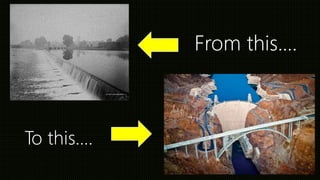
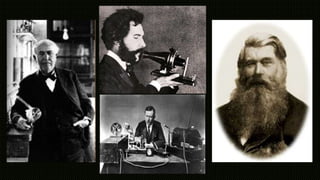

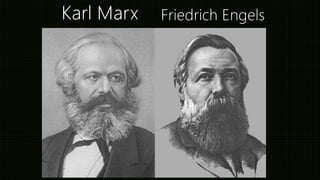
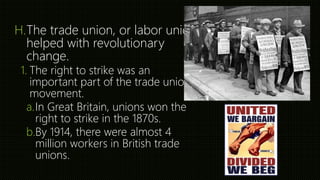

The Second Industrial Revolution saw major technological advancements that transformed industry in the late 19th century. New processes like the Bessemer method revolutionized steel production. Electricity emerged as a valuable new energy source, powering inventions like lightbulbs and enabling round-the-clock factory production. The internal combustion engine provided new sources of transportation power. However, industrialization also led to difficult working conditions and low wages for many. Workers organized unions and socialist political parties to advocate for better treatment and an end to capitalism, with the goal of establishing a classless society as outlined by Karl Marx.


