Chapter 12 Section 1
Jason Hauck
World War I Begins
I. Causes of the War
A.The system of nation-states in Europe led not to
cooperation but rather to competition.
1. Each European nation-state regarded itself as subject to
no higher interest or authority.
2. Each state was guided by its own self-interests and
success.
a. Most leaders thought that war was an acceptable way to preserve
power.
B. The imperialist expansion of the last half of the nineteenth
century also played a role in the coming of war.
1. The competition for lands led to conflict and rivalries among
European states.
C.Nationalism- Not all ethnic groups had become nations in
Europe.
1. Slavic minorities in the Balkans and the Austro-Hungarian Empire
still dreamed of their own national states.
2. The Irish in the British Empire.
3. Poles in the Russian Empire.
D.Industrialization offered new methods of
shipbuilding and the use of iron, steel, and
chemicals for new weapons.
1. The growth of mass armies and navies after 1900
heightened tensions in Europe.
E.Most Western countries had established
conscription, as a regular practice before 1914.
1. European armies doubled in size between 1890 and 1914.
a. Russian army had 1.3 million men.
b. The French and German armies had 900,000 soldiers each.
c. The British, Italian, and Austro-Hungarian had between 250,000
and 500,000.
F.Militarism—the aggressive preparation for war—
was growing.
1. In 1914, countries made decisions for military instead of
political reasons.
G.A system of alliances intensified the dangers of
militarism.
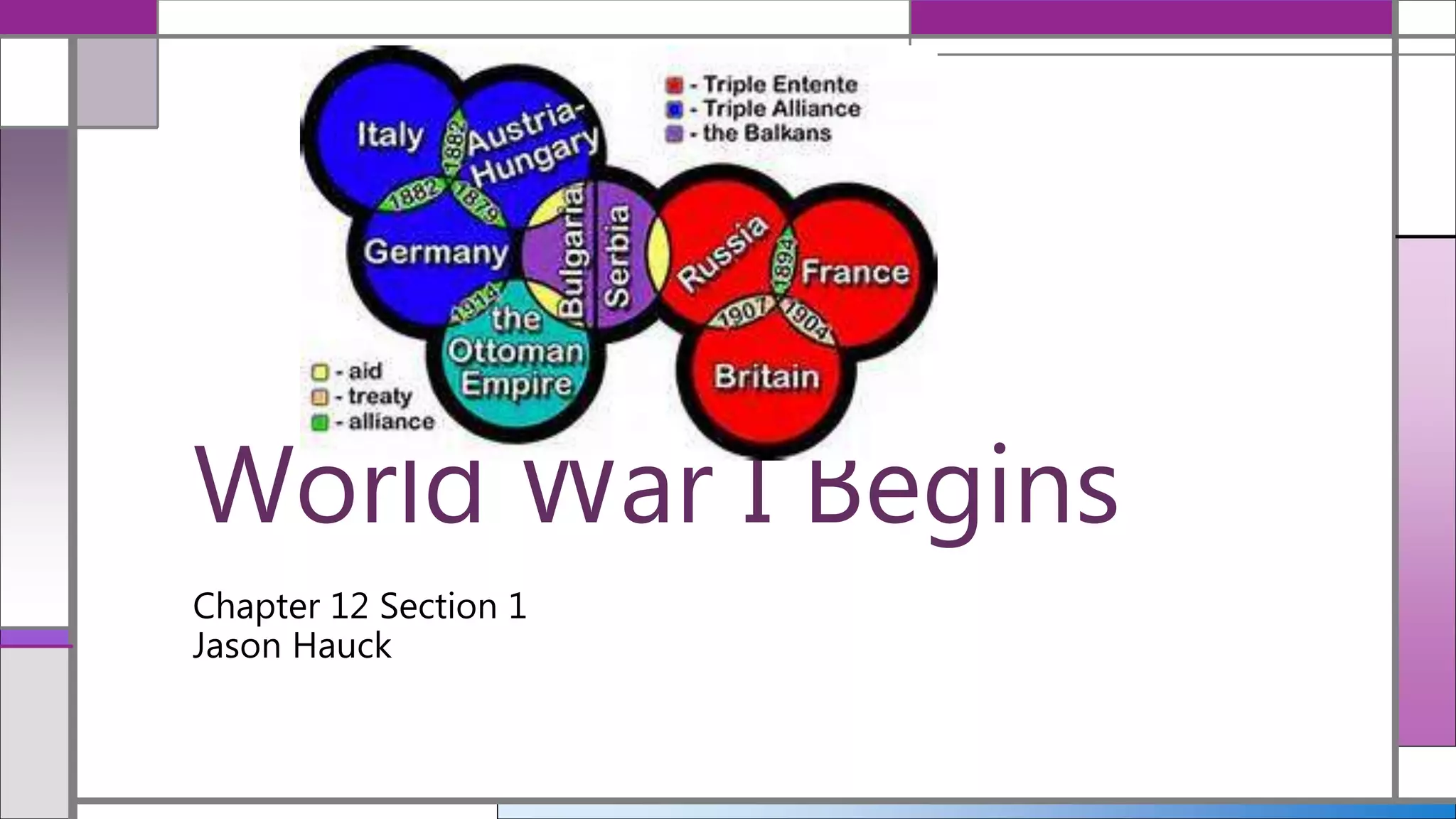
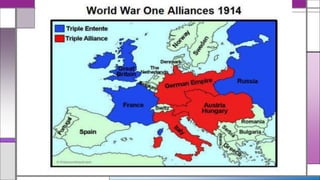
1. Europe had been divided into two loose political alliances.
a. Germany, Austria-Hungary, and Italy formed the Triple Alliance.
b. France, Great Britain, and Russia created the Triple Entente.
H.A series of crises tested these alliances.
1. In the Balkans between 1908 and 1913.
a. Left European states angry at each other and eager for revenge.
b. They were willing to use war to preserve their power and the
power of their allies.
II. The Outbreak of War
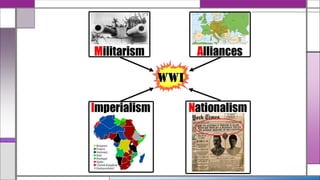
A.Nationalism and imperialism, militarism and
alliances, and the desire to stifle internal dissent
might all have played a role in starting World War I.
1. However, it was the crisis in the Balkans that led directly
to conflict.
B.By 1914 Serbia, supported by Russia, was
determined to create a large, independent Slavic
state in the Balkans.
1. Austria-Hungary was determined to prevent that from
happening.
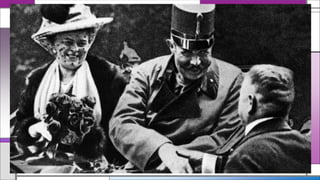
C.On June 28, 1914, Archduke Francis
Ferdinand, the heir to the Hapsburg
throne of Austria-Hungary, and his wife
Sophia visited the city of Sarajevo in
Bosnia.
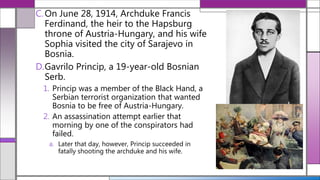
D.Gavrilo Princip, a 19-year-old Bosnian
Serb.
1. Princip was a member of the Black Hand, a
Serbian terrorist organization that wanted
Bosnia to be free of Austria-Hungary.
2. An assassination attempt earlier that
morning by one of the conspirators had
failed.
a. Later that day, however, Princip succeeded in
fatally shooting the archduke and his wife.
E. The Austro-Hungarian government blamed the Serbian
government.
1. They saw it as an opportunity to attack Serbia.
a. They feared that Russia would intervene on Serbia's behalf.
2. Austria-Hungary signed an alliance with Germany.
a. Germany promised full support if war broke out between Russia and
Austria-Hungary.
3. On July 28, Austria-Hungary declared war on Serbia.
F. Russia was determined to support Serbia's cause.
1. On July 28, Czar Nicholas II ordered partial mobilization of the Russian
army against Austria-Hungary.
G.Since Russia’s mobilization plans were based on a war against
both Germany and Austria-Hungary, the czar ordered full
mobilization of the Russian army on July 29.
1. He realized that Germany would consider this order an act of war.
I. The German government warned Russia that it must halt its
mobilization within 12 hours.
1. When Russia ignored this warning, Germany declared war on
Russia on August 1.
J. The Germans had a military plan known as the Schlieffen
Plan.
1. It called for a two-front war with France and Russia.
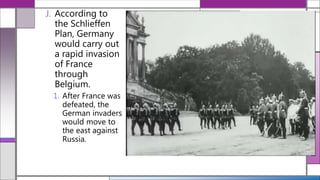
J. According to
the Schlieffen
Plan, Germany
would carry out
a rapid invasion
of France
through
Belgium.
1. After France was
defeated, the
German invaders
would move to
the east against
Russia.
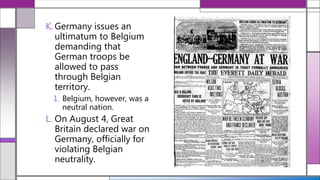
K. Germany issues an
ultimatum to Belgium
demanding that
German troops be
allowed to pass
through Belgian
territory.
1. Belgium, however, was a
neutral nation.
L. On August 4, Great
Britain declared war on
Germany, officially for
violating Belgian
neutrality.

Chapter 14 section 1 power point

  • 1.
    Chapter 12 Section1 Jason Hauck World War I Begins
  • 2.
    I. Causes ofthe War A.The system of nation-states in Europe led not to cooperation but rather to competition. 1. Each European nation-state regarded itself as subject to no higher interest or authority. 2. Each state was guided by its own self-interests and success. a. Most leaders thought that war was an acceptable way to preserve power.
  • 4.
    B. The imperialistexpansion of the last half of the nineteenth century also played a role in the coming of war. 1. The competition for lands led to conflict and rivalries among European states. C.Nationalism- Not all ethnic groups had become nations in Europe. 1. Slavic minorities in the Balkans and the Austro-Hungarian Empire still dreamed of their own national states. 2. The Irish in the British Empire. 3. Poles in the Russian Empire.
  • 5.
    D.Industrialization offered newmethods of shipbuilding and the use of iron, steel, and chemicals for new weapons. 1. The growth of mass armies and navies after 1900 heightened tensions in Europe. E.Most Western countries had established conscription, as a regular practice before 1914. 1. European armies doubled in size between 1890 and 1914. a. Russian army had 1.3 million men. b. The French and German armies had 900,000 soldiers each. c. The British, Italian, and Austro-Hungarian had between 250,000 and 500,000.
  • 6.
    F.Militarism—the aggressive preparationfor war— was growing. 1. In 1914, countries made decisions for military instead of political reasons. G.A system of alliances intensified the dangers of militarism. 1. Europe had been divided into two loose political alliances. a. Germany, Austria-Hungary, and Italy formed the Triple Alliance. b. France, Great Britain, and Russia created the Triple Entente.
  • 8.
    H.A series ofcrises tested these alliances. 1. In the Balkans between 1908 and 1913. a. Left European states angry at each other and eager for revenge. b. They were willing to use war to preserve their power and the power of their allies.
  • 9.
    II. The Outbreakof War A.Nationalism and imperialism, militarism and alliances, and the desire to stifle internal dissent might all have played a role in starting World War I. 1. However, it was the crisis in the Balkans that led directly to conflict. B.By 1914 Serbia, supported by Russia, was determined to create a large, independent Slavic state in the Balkans. 1. Austria-Hungary was determined to prevent that from happening.
  • 11.
    C.On June 28,1914, Archduke Francis Ferdinand, the heir to the Hapsburg throne of Austria-Hungary, and his wife Sophia visited the city of Sarajevo in Bosnia. D.Gavrilo Princip, a 19-year-old Bosnian Serb. 1. Princip was a member of the Black Hand, a Serbian terrorist organization that wanted Bosnia to be free of Austria-Hungary. 2. An assassination attempt earlier that morning by one of the conspirators had failed. a. Later that day, however, Princip succeeded in fatally shooting the archduke and his wife.
  • 12.
    E. The Austro-Hungariangovernment blamed the Serbian government. 1. They saw it as an opportunity to attack Serbia. a. They feared that Russia would intervene on Serbia's behalf. 2. Austria-Hungary signed an alliance with Germany. a. Germany promised full support if war broke out between Russia and Austria-Hungary. 3. On July 28, Austria-Hungary declared war on Serbia. F. Russia was determined to support Serbia's cause. 1. On July 28, Czar Nicholas II ordered partial mobilization of the Russian army against Austria-Hungary. G.Since Russia’s mobilization plans were based on a war against both Germany and Austria-Hungary, the czar ordered full mobilization of the Russian army on July 29. 1. He realized that Germany would consider this order an act of war.
  • 13.
    I. The Germangovernment warned Russia that it must halt its mobilization within 12 hours. 1. When Russia ignored this warning, Germany declared war on Russia on August 1. J. The Germans had a military plan known as the Schlieffen Plan. 1. It called for a two-front war with France and Russia.
  • 14.
    J. According to theSchlieffen Plan, Germany would carry out a rapid invasion of France through Belgium. 1. After France was defeated, the German invaders would move to the east against Russia.
  • 15.
    K. Germany issuesan ultimatum to Belgium demanding that German troops be allowed to pass through Belgian territory. 1. Belgium, however, was a neutral nation. L. On August 4, Great Britain declared war on Germany, officially for violating Belgian neutrality.