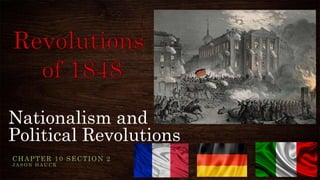
Nationalism and
Political Revolutions
CHAPTER 10 SECTION 2
J A S O N H A U C K
I. The Revolutions of the 1830s
A.Beginning in 1830, liberalism and nationalism—
began to break through the conservative
domination of Europe.
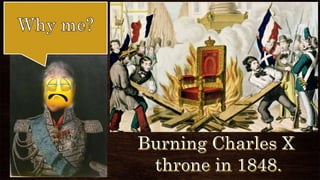
B.In France the Bourbon monarch Charles X,
attempted to censor the press and take away voting
rights from much of the middle class.
1.Liberals overthrew Charles X in 1830 and established a
constitutional monarchy.
C.In the same year, three more revolutions
occurred in Europe.
1.Nationalism was the chief force in all three of
them.
a.Belgium, rebelled and created an independent state.
b.Both Poland and Italy, made efforts to break free from
foreign powers.
i. They were unsuccessful.
ii.Russian and Austrian troops put down these revolts.
II.The Revolutions of 1848
A.By 1850, the conservative order still dominated much of
Europe.
1.However, the forces of liberalism and nationalism continued to
grow.
B.Severe economic problems beginning in 1846 brought
untold hardship in France.
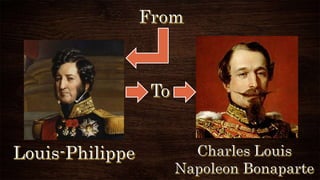
1.Louis-Philippe refused to make changes and opposition grew.
C.The monarchy was finally overthrown in 1848.
1.A group of moderate and radical republicans set up a
provisional, or temporary, government.
a. The republicans were people who wanted France to be a republic.
D.A Constituent Assembly to draw up a new
constitution.
1.Election would be determined by universal male suffrage.
2.The provisional government also set up national
workshops to provide work for the unemployed.
3.The number of unemployed enrolled rose from about
66,000 to almost 120,000.
a.This emptied the treasury and frightened the moderates.
i. Reacted by closing the workshops.
E.The workers refused to accept this decision to close
down the workshops.
1.After four days of protest the government forces crushed
the working-class revolt.
a.Thousands were killed and thousands more were sent to
prison.
F.The new French constitution, ratified on November
4, 1848, set up a republic called the Second
Republic.
1.Single legislature elected by universal male suffrage.
2.An elected president that served for four years. In the
elections for the presidency held in December 1848,
a.Charles Louis Napoleon Bonaparte, the nephew of Napoleon,
was the new president.
G.News of the 1848 revolution in France led to
upheaval in other parts of Europe.
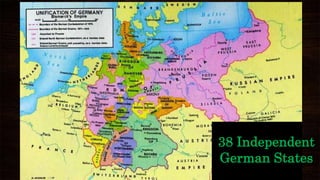
1.The Congress of Vienna recognized the existence of 38
independent German states.
H.In 1848 cries for change led many German rulers
to promise constitutions, a free press, jury trials,
and other liberal reforms.
1.The Frankfurt Assembly prepared a constitution for a
new united Germany.
a.It provided for a parliamentary government and an emperor
ruling under a limited monarchy.
b.The constitution also allowed for direct election of deputies to
the parliament by universal male suffrage.
38 Independent
German States
I. The Frankfurt Assembly failed since Frederick William IV
of Prussia, refused to accept the crown.
1.German unification was not achieved.
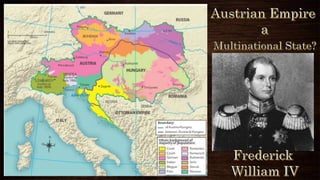
J. The Austrian Empire also had its problems.
1.It was a multinational state— a collection of different peoples.
K.In March 1848, demonstrations erupted in the major
cities.
1.To calm the demonstrators, the Hapsburg court dismissed
Metternich, who fled to England.
2.In Vienna, revolutionary forces took control of the capital and
demanded a liberal constitution.
L. Austrian officials made concessions to appease the
revolutionaries but were determined to reestablish their
control over the empire.
1.In June 1848, Austrian military forces crushed the Czech rebels
in Prague.
2.The rebels in Vienna were defeated with the help of a Russians
army.
3.The revolutions in the Austrian Empire had failed.
M.The Congress of Vienna had set up nine states in
Italy.
N.In 1848 a revolt broke out against the Austrians in
Lombardy and Venetia.
1.Other Italian states sought to create liberal
constitutions and a unified Italy.
2.By 1849, however, the Austrians had reestablished
complete control over Lombardy and Venetia.
O.The unity of the revolutionaries had made the
revolutions possible.
1.However, moderate liberals and more radical
revolutionaries were soon divided over their goals;
therefore, conservative rule was reestablished.
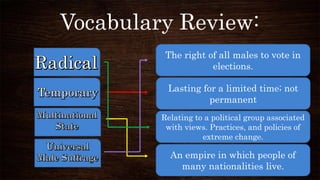
Vocabulary Review:
The right of all males to vote in
elections.
Lasting for a limited time; not
permanent
Relating to a political group associated
with views. Practices, and policies of
extreme change.
An empire in which people of
many nationalities live.

Chapter 10 section 2 power point

  • 1.
    Nationalism and Political Revolutions CHAPTER10 SECTION 2 J A S O N H A U C K
  • 2.
    I. The Revolutionsof the 1830s A.Beginning in 1830, liberalism and nationalism— began to break through the conservative domination of Europe. B.In France the Bourbon monarch Charles X, attempted to censor the press and take away voting rights from much of the middle class. 1.Liberals overthrew Charles X in 1830 and established a constitutional monarchy.
  • 4.
    C.In the sameyear, three more revolutions occurred in Europe. 1.Nationalism was the chief force in all three of them. a.Belgium, rebelled and created an independent state. b.Both Poland and Italy, made efforts to break free from foreign powers. i. They were unsuccessful. ii.Russian and Austrian troops put down these revolts.
  • 5.
    II.The Revolutions of1848 A.By 1850, the conservative order still dominated much of Europe. 1.However, the forces of liberalism and nationalism continued to grow. B.Severe economic problems beginning in 1846 brought untold hardship in France. 1.Louis-Philippe refused to make changes and opposition grew. C.The monarchy was finally overthrown in 1848. 1.A group of moderate and radical republicans set up a provisional, or temporary, government. a. The republicans were people who wanted France to be a republic.
  • 6.
    D.A Constituent Assemblyto draw up a new constitution. 1.Election would be determined by universal male suffrage. 2.The provisional government also set up national workshops to provide work for the unemployed. 3.The number of unemployed enrolled rose from about 66,000 to almost 120,000. a.This emptied the treasury and frightened the moderates. i. Reacted by closing the workshops.
  • 7.
    E.The workers refusedto accept this decision to close down the workshops. 1.After four days of protest the government forces crushed the working-class revolt. a.Thousands were killed and thousands more were sent to prison. F.The new French constitution, ratified on November 4, 1848, set up a republic called the Second Republic. 1.Single legislature elected by universal male suffrage. 2.An elected president that served for four years. In the elections for the presidency held in December 1848, a.Charles Louis Napoleon Bonaparte, the nephew of Napoleon, was the new president.
  • 9.
    G.News of the1848 revolution in France led to upheaval in other parts of Europe. 1.The Congress of Vienna recognized the existence of 38 independent German states. H.In 1848 cries for change led many German rulers to promise constitutions, a free press, jury trials, and other liberal reforms. 1.The Frankfurt Assembly prepared a constitution for a new united Germany. a.It provided for a parliamentary government and an emperor ruling under a limited monarchy. b.The constitution also allowed for direct election of deputies to the parliament by universal male suffrage.
  • 10.
  • 11.
    I. The FrankfurtAssembly failed since Frederick William IV of Prussia, refused to accept the crown. 1.German unification was not achieved. J. The Austrian Empire also had its problems. 1.It was a multinational state— a collection of different peoples. K.In March 1848, demonstrations erupted in the major cities. 1.To calm the demonstrators, the Hapsburg court dismissed Metternich, who fled to England. 2.In Vienna, revolutionary forces took control of the capital and demanded a liberal constitution.
  • 13.
    L. Austrian officialsmade concessions to appease the revolutionaries but were determined to reestablish their control over the empire. 1.In June 1848, Austrian military forces crushed the Czech rebels in Prague. 2.The rebels in Vienna were defeated with the help of a Russians army. 3.The revolutions in the Austrian Empire had failed.
  • 14.
    M.The Congress ofVienna had set up nine states in Italy. N.In 1848 a revolt broke out against the Austrians in Lombardy and Venetia. 1.Other Italian states sought to create liberal constitutions and a unified Italy. 2.By 1849, however, the Austrians had reestablished complete control over Lombardy and Venetia. O.The unity of the revolutionaries had made the revolutions possible. 1.However, moderate liberals and more radical revolutionaries were soon divided over their goals; therefore, conservative rule was reestablished.
  • 15.
    Vocabulary Review: The rightof all males to vote in elections. Lasting for a limited time; not permanent Relating to a political group associated with views. Practices, and policies of extreme change. An empire in which people of many nationalities live.