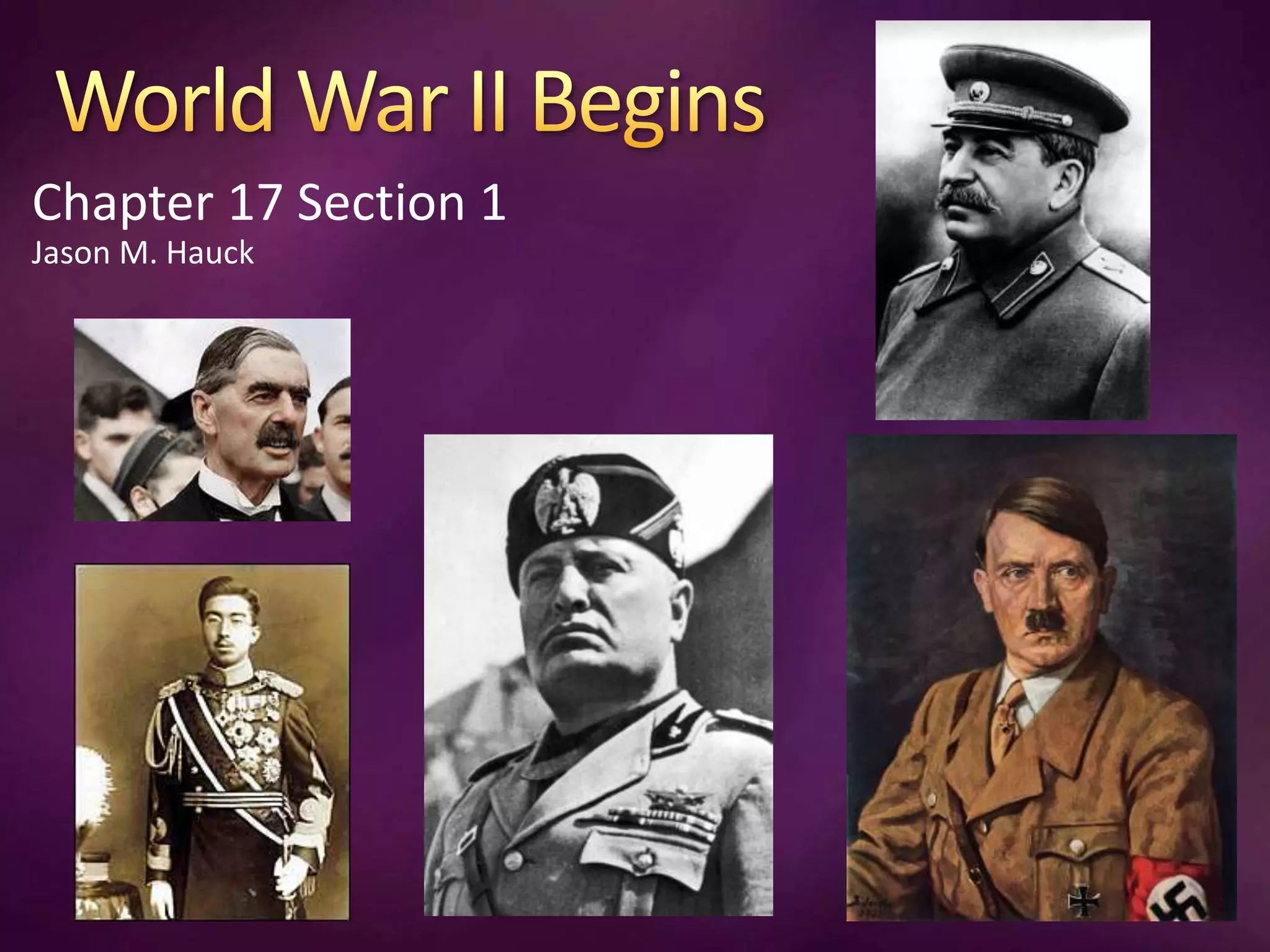
Chapter 17 Section 1
Jason M. Hauck
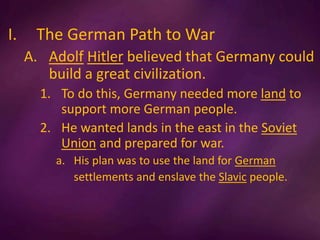
I. The German Path to War
A. Adolf Hitler believed that Germany could
build a great civilization.
1. To do this, Germany needed more land to
support more German people.
2. He wanted lands in the east in the Soviet
Union and prepared for war.
a. His plan was to use the land for German
settlements and enslave the Slavic people.
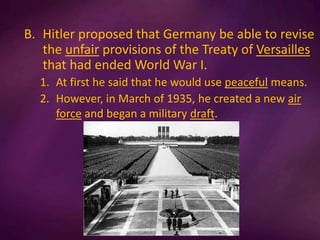
B. Hitler proposed that Germany be able to revise
the unfair provisions of the Treaty of Versailles
that had ended World War I.
1. At first he said that he would use peaceful means.
2. However, in March of 1935, he created a new air
force and began a military draft.
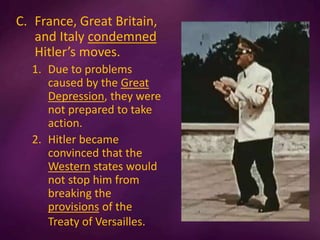
C. France, Great Britain,
and Italy condemned
Hitler’s moves.
1. Due to problems
caused by the Great
Depression, they were
not prepared to take
action.
2. Hitler became
convinced that the
Western states would
not stop him from
breaking the
provisions of the
Treaty of Versailles.
D. In March of 1936, Hitler sent German troops
into the Rhineland, which was supposed to be
a demilitarized area.
1. France would not oppose Germany for this treaty
violation without British support.
2. G.B. saw this action as reasonable and did not call
for military response.
a. Beginning of the policy of appeasement.
i. Policy of satisfying the demands of the dissatisfied
states, the dissatisfied states would be content and
peace would be preserved.
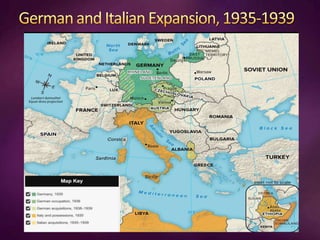
E. Hitler gained new allies, Benito Mussolini
Fascist leader of Italy.
1. Italy with the help of the Germans, invaded
Ethiopia in 1935.
2. In 1936, Italy and Germany sent troops to Spain to
support Francisco Franco.
a. Rome-Berlin Axis—Germany/Italy Alliance.
b. Anti-Comintern Pact—Germany/Japan alliance against
communism.
F. By 1937, Germany had
become a very powerful
nation.
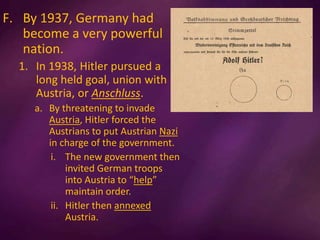
1. In 1938, Hitler pursued a
long held goal, union with
Austria, or Anschluss.
a. By threatening to invade
Austria, Hitler forced the
Austrians to put Austrian Nazi
in charge of the government.
i. The new government then
invited German troops
into Austria to “help”
maintain order.
ii. Hitler then annexed
Austria.
G. In 1938, Hitler demanded that the
Sudetenland in NW Czechoslovakia be given to
Germany.
1. GB, France, and Italy met in Munich; they all gave
in to Hitler’s demands.
2. Neville Chamberlin believed Hitler would make no
more demands.
H. After Munich, Hitler was even more convinced
that France and Great Britain would not fight.
1. In March of 1939, Hitler invaded western
Czechoslovakia.
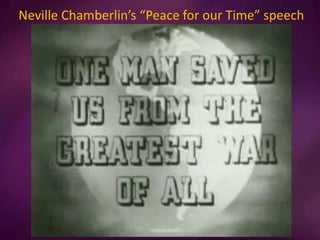
Neville Chamberlin’s “Peace for our Time” speech
I. France and G.B. began to react.
1. G.B. said it would protect Poland if Hitler invaded.
a. France and G.B. began negotiations with Stalin.
b. They knew that they would need the Soviet Union to
help contain the Nazis.
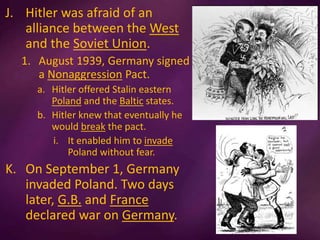
J. Hitler was afraid of an
alliance between the West
and the Soviet Union.
1. August 1939, Germany signed
a Nonaggression Pact.
a. Hitler offered Stalin eastern
Poland and the Baltic states.
b. Hitler knew that eventually he
would break the pact.
i. It enabled him to invade
Poland without fear.
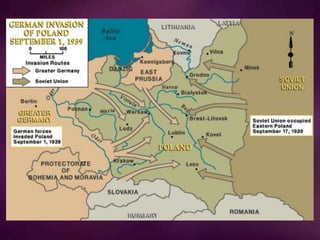
K. On September 1, Germany
invaded Poland. Two days
later, G.B. and France
declared war on Germany.
II. The Japanese Path to
War
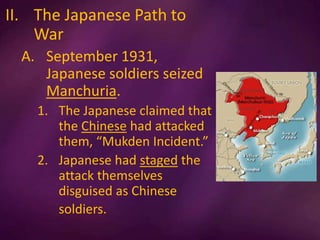
A. September 1931,
Japanese soldiers seized
Manchuria.
1. The Japanese claimed that
the Chinese had attacked
them, “Mukden Incident.”
2. Japanese had staged the
attack themselves
disguised as Chinese
soldiers.
B. When the League of Nations investigated and
condemned the attack Japan withdrew from the
league.
1. Japan then strengthened its hold on Manchuria, which it
renamed Manchukuo.
C. Chiang Kai-shek tried to avoid war with Japan.
1. Believed Chinese Communists were a bigger threat.
2. Allowed Japan to occupy parts of N. China.
3. July 1937, Japanese seized the capital of Nanjing.
a. Chiang Kai-shek refused to surrender and moved the
capital.
D. Japanese military leaders wanted to
establish a New Order in East Asia.
1. The order included Japan, Manchuria, and
China.
a. Japan believed they would modernize the other
countries.
E. The Japanese planned to seize Soviet Siberia.
1. During the 1930’s Japan began to cooperate with
Nazi Germany.
2. The Japanese thought that they could defeat the
Soviet Union and divide its resources.
a. Nazi-Soviet Nonaggression Pact forced Japan to rethink
its goals.
F. In 1940, Japan began to exploit French
Indochina’s resources.
1. U.S. responded by imposing economic sanctions,
or restrictions on trade, unless Japan withdrew to
its borders of 1931.
G. The Japanese badly needed oil and scrap iron
from the U.S.
1. The economic sanctions were a very real threat.
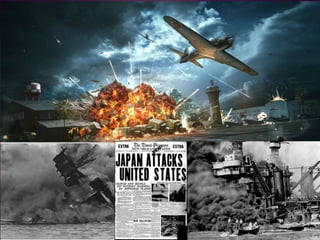
2. After long debate, Japan decided to launch a
surprise attack on U.S. and European colonies in
Southeast Asia.
Chapter 17 section 1 power point

Chapter 17 section 1 power point

  • 1.
    Chapter 17 Section1 Jason M. Hauck
  • 2.
    I. The GermanPath to War A. Adolf Hitler believed that Germany could build a great civilization. 1. To do this, Germany needed more land to support more German people. 2. He wanted lands in the east in the Soviet Union and prepared for war. a. His plan was to use the land for German settlements and enslave the Slavic people.
  • 4.
    B. Hitler proposedthat Germany be able to revise the unfair provisions of the Treaty of Versailles that had ended World War I. 1. At first he said that he would use peaceful means. 2. However, in March of 1935, he created a new air force and began a military draft.
  • 5.
    C. France, GreatBritain, and Italy condemned Hitler’s moves. 1. Due to problems caused by the Great Depression, they were not prepared to take action. 2. Hitler became convinced that the Western states would not stop him from breaking the provisions of the Treaty of Versailles.
  • 7.
    D. In Marchof 1936, Hitler sent German troops into the Rhineland, which was supposed to be a demilitarized area. 1. France would not oppose Germany for this treaty violation without British support. 2. G.B. saw this action as reasonable and did not call for military response. a. Beginning of the policy of appeasement. i. Policy of satisfying the demands of the dissatisfied states, the dissatisfied states would be content and peace would be preserved.
  • 8.
    E. Hitler gainednew allies, Benito Mussolini Fascist leader of Italy. 1. Italy with the help of the Germans, invaded Ethiopia in 1935. 2. In 1936, Italy and Germany sent troops to Spain to support Francisco Franco. a. Rome-Berlin Axis—Germany/Italy Alliance. b. Anti-Comintern Pact—Germany/Japan alliance against communism.
  • 9.
    F. By 1937,Germany had become a very powerful nation. 1. In 1938, Hitler pursued a long held goal, union with Austria, or Anschluss. a. By threatening to invade Austria, Hitler forced the Austrians to put Austrian Nazi in charge of the government. i. The new government then invited German troops into Austria to “help” maintain order. ii. Hitler then annexed Austria.
  • 10.
    G. In 1938,Hitler demanded that the Sudetenland in NW Czechoslovakia be given to Germany. 1. GB, France, and Italy met in Munich; they all gave in to Hitler’s demands. 2. Neville Chamberlin believed Hitler would make no more demands. H. After Munich, Hitler was even more convinced that France and Great Britain would not fight. 1. In March of 1939, Hitler invaded western Czechoslovakia.
  • 11.
    Neville Chamberlin’s “Peacefor our Time” speech
  • 12.
    I. France andG.B. began to react. 1. G.B. said it would protect Poland if Hitler invaded. a. France and G.B. began negotiations with Stalin. b. They knew that they would need the Soviet Union to help contain the Nazis.
  • 13.
    J. Hitler wasafraid of an alliance between the West and the Soviet Union. 1. August 1939, Germany signed a Nonaggression Pact. a. Hitler offered Stalin eastern Poland and the Baltic states. b. Hitler knew that eventually he would break the pact. i. It enabled him to invade Poland without fear. K. On September 1, Germany invaded Poland. Two days later, G.B. and France declared war on Germany.
  • 15.
    II. The JapanesePath to War A. September 1931, Japanese soldiers seized Manchuria. 1. The Japanese claimed that the Chinese had attacked them, “Mukden Incident.” 2. Japanese had staged the attack themselves disguised as Chinese soldiers.
  • 16.
    B. When theLeague of Nations investigated and condemned the attack Japan withdrew from the league. 1. Japan then strengthened its hold on Manchuria, which it renamed Manchukuo. C. Chiang Kai-shek tried to avoid war with Japan. 1. Believed Chinese Communists were a bigger threat. 2. Allowed Japan to occupy parts of N. China. 3. July 1937, Japanese seized the capital of Nanjing. a. Chiang Kai-shek refused to surrender and moved the capital.
  • 17.
    D. Japanese militaryleaders wanted to establish a New Order in East Asia. 1. The order included Japan, Manchuria, and China. a. Japan believed they would modernize the other countries.
  • 18.
    E. The Japaneseplanned to seize Soviet Siberia. 1. During the 1930’s Japan began to cooperate with Nazi Germany. 2. The Japanese thought that they could defeat the Soviet Union and divide its resources. a. Nazi-Soviet Nonaggression Pact forced Japan to rethink its goals.
  • 19.
    F. In 1940,Japan began to exploit French Indochina’s resources. 1. U.S. responded by imposing economic sanctions, or restrictions on trade, unless Japan withdrew to its borders of 1931. G. The Japanese badly needed oil and scrap iron from the U.S. 1. The economic sanctions were a very real threat. 2. After long debate, Japan decided to launch a surprise attack on U.S. and European colonies in Southeast Asia.