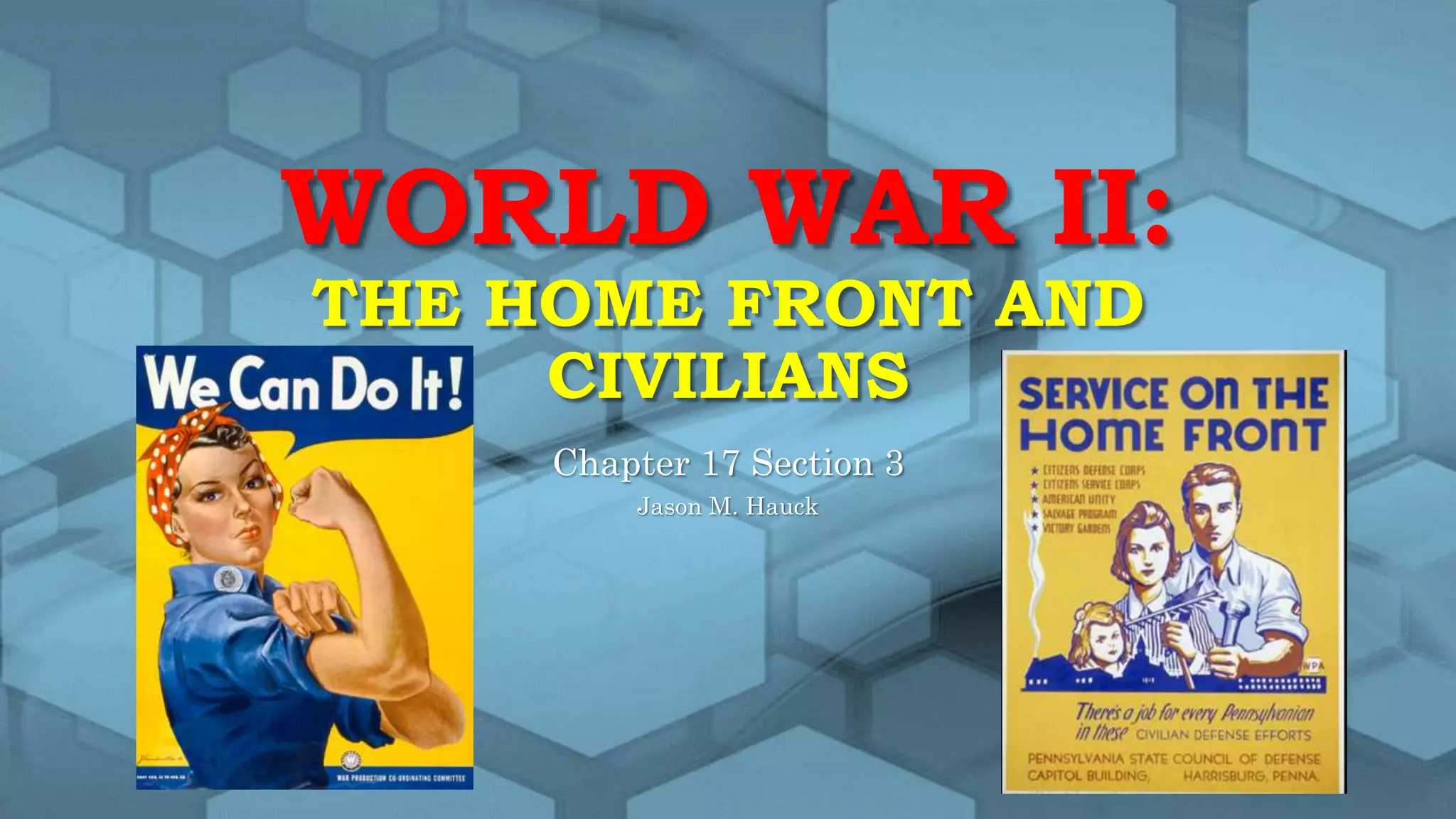
WORLD WAR II:
THE HOME FRONT AND
CIVILIANS
Chapter 17 Section 3
Jason M. Hauck
I. The Mobilization of Peoples: Four Examples
A. Even more than WWI, WWII was a total war.
1. The war had an enormous impact on civilian life in
many parts of the world.
B. In the Soviet Union initial defeats led to drastic
emergency measures.
1. Leningrad was under siege for 900 days.
a. Over one million people died due to food shortages.
b. People had to eat dogs, cats, and mice.
C. Soviet workers dismantled factories in the west and
shipped them to the east, out of the way of the
attacking German army.
1. At times workers ran machines as new factory buildings were
build up around them.
D. Soviet industrialization produced 78,000 tanks and
98,000 pieces of artillery.
1. In 1943 55% of the national income went to war materials.
a. As a result there were severe shortages of food and housing.
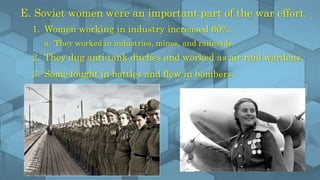
E. Soviet women were an important part of the war effort.
1. Women working in industry increased 60%.
a. They worked in industries, mines, and railroads.
2. They dug anti-tank ditches and worked as air raid wardens.
3. Some fought in battles and flew in bombers.
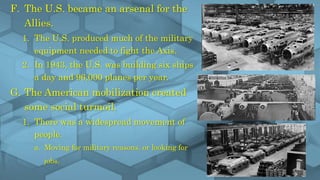
F. The U.S. became an arsenal for the
Allies.
1. The U.S. produced much of the military
equipment needed to fight the Axis.
2. In 1943, the U.S. was building six ships
a day and 96,000 planes per year.
G. The American mobilization created
some social turmoil.
1. There was a widespread movement of
people.
a. Moving for military reasons, or looking for
jobs.
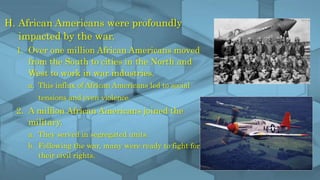
H. African Americans were profoundly
impacted by the war.
1. Over one million African Americans moved
from the South to cities in the North and
West to work in war industries.
a. This influx of African Americans led to social
tensions and even violence.
2. A million African Americans joined the
military.
a. They served in segregated units.
b. Following the war, many were ready to fight for
their civil rights.
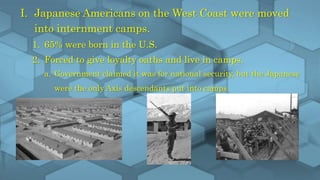
I. Japanese Americans on the West Coast were moved
into internment camps.
1. 65% were born in the U.S.
2. Forced to give loyalty oaths and live in camps.
a. Government claimed it was for national security, but the Japanese
were the only Axis descendants put into camps.
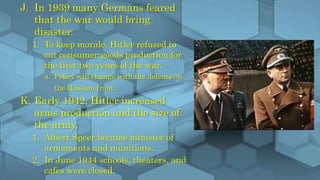
J. In 1939 many Germans feared
that the war would bring
disaster.
1. To keep morale, Hitler refused to
cut consumer-goods production for
the first two years of the war.
a. Policy will change with the defeats on
the Russian front.
K. Early 1942, Hitler increased
arms production and the size of
the army.
1. Albert Speer became minister of
armaments and munitions.
2. In June 1944 schools, theaters, and
cafes were closed.
L. Before the war, the Nazi tried to keep women out of the
job Market.
1. As the war progressed, more and more men had to serve in
the military.
2. The Nazi changed their policies and encouraged women to
work.
a. The number of women working increased very little from 1939-1944.
M.Wartime Japan was a highly mobilized society.
1. The government controlled prices, wages, labor and
resources.
a. Citizens were encouraged to sacrifice for the national cause.
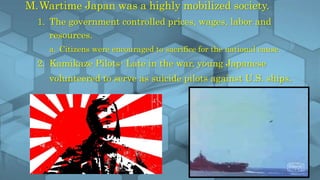
2. Kamikaze Pilots- Late in the war, young Japanese
volunteered to serve as suicide pilots against U.S. ships.
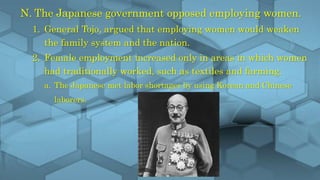
N. The Japanese government opposed employing women.
1. General Tojo, argued that employing women would weaken
the family system and the nation.
2. Female employment increased only in areas in which women
had traditionally worked, such as textiles and farming.
a. The Japanese met labor shortages by using Korean and Chinese
laborers.
II. Frontline Civilians: The Bombing of Cities
A. Bombing was used against military targets, enemy
troops, and civilian populations.
1. WWII first was in which large masses of civilians were
bombed.
B. Following WWI European nations began to think that
bombing civilian targets could be used to force
governments to make peace.
1. During the 1930s, nations developed long-range bombers.
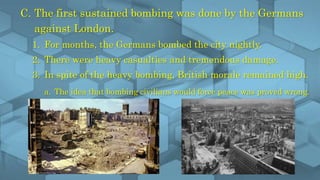
C. The first sustained bombing was done by the Germans
against London.
1. For months, the Germans bombed the city nightly.
2. There were heavy casualties and tremendous damage.
3. In spite of the heavy bombing, British morale remained high.
a. The idea that bombing civilians would force peace was proved wrong.
D. In 1942, the British began
major bombing campaigns
against German cities.
1. They hoped the bombing would
break the morale of the German
people.
a. Ignored their experience.
E. The bombing of Germany
added to civilian terror.
1. They particularly feared
incendiary bombs, which spread
fire when they exploded.
F. The bombing of Germany may have killed a half-million
civilians.
1. In spite of the terrible destruction, the bombing did not seem
to sap the morale of the German people.
2. The destruction of transportation system and fuel supplies
strongly impacted the ability of the Germans to supply their
military forces.
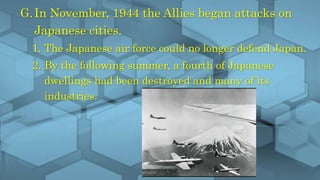
G.In November, 1944 the Allies began attacks on
Japanese cities.
1. The Japanese air force could no longer defend Japan.
2. By the following summer, a fourth of Japanese
dwellings had been destroyed and many of its
industries.

Chapter 17 section 3 power point

  • 1.
    WORLD WAR II: THEHOME FRONT AND CIVILIANS Chapter 17 Section 3 Jason M. Hauck
  • 2.
    I. The Mobilizationof Peoples: Four Examples A. Even more than WWI, WWII was a total war. 1. The war had an enormous impact on civilian life in many parts of the world. B. In the Soviet Union initial defeats led to drastic emergency measures. 1. Leningrad was under siege for 900 days. a. Over one million people died due to food shortages. b. People had to eat dogs, cats, and mice.
  • 3.
    C. Soviet workersdismantled factories in the west and shipped them to the east, out of the way of the attacking German army. 1. At times workers ran machines as new factory buildings were build up around them. D. Soviet industrialization produced 78,000 tanks and 98,000 pieces of artillery. 1. In 1943 55% of the national income went to war materials. a. As a result there were severe shortages of food and housing.
  • 4.
    E. Soviet womenwere an important part of the war effort. 1. Women working in industry increased 60%. a. They worked in industries, mines, and railroads. 2. They dug anti-tank ditches and worked as air raid wardens. 3. Some fought in battles and flew in bombers.
  • 5.
    F. The U.S.became an arsenal for the Allies. 1. The U.S. produced much of the military equipment needed to fight the Axis. 2. In 1943, the U.S. was building six ships a day and 96,000 planes per year. G. The American mobilization created some social turmoil. 1. There was a widespread movement of people. a. Moving for military reasons, or looking for jobs.
  • 6.
    H. African Americanswere profoundly impacted by the war. 1. Over one million African Americans moved from the South to cities in the North and West to work in war industries. a. This influx of African Americans led to social tensions and even violence. 2. A million African Americans joined the military. a. They served in segregated units. b. Following the war, many were ready to fight for their civil rights.
  • 7.
    I. Japanese Americanson the West Coast were moved into internment camps. 1. 65% were born in the U.S. 2. Forced to give loyalty oaths and live in camps. a. Government claimed it was for national security, but the Japanese were the only Axis descendants put into camps.
  • 8.
    J. In 1939many Germans feared that the war would bring disaster. 1. To keep morale, Hitler refused to cut consumer-goods production for the first two years of the war. a. Policy will change with the defeats on the Russian front. K. Early 1942, Hitler increased arms production and the size of the army. 1. Albert Speer became minister of armaments and munitions. 2. In June 1944 schools, theaters, and cafes were closed.
  • 9.
    L. Before thewar, the Nazi tried to keep women out of the job Market. 1. As the war progressed, more and more men had to serve in the military. 2. The Nazi changed their policies and encouraged women to work. a. The number of women working increased very little from 1939-1944.
  • 10.
    M.Wartime Japan wasa highly mobilized society. 1. The government controlled prices, wages, labor and resources. a. Citizens were encouraged to sacrifice for the national cause. 2. Kamikaze Pilots- Late in the war, young Japanese volunteered to serve as suicide pilots against U.S. ships.
  • 11.
    N. The Japanesegovernment opposed employing women. 1. General Tojo, argued that employing women would weaken the family system and the nation. 2. Female employment increased only in areas in which women had traditionally worked, such as textiles and farming. a. The Japanese met labor shortages by using Korean and Chinese laborers.
  • 12.
    II. Frontline Civilians:The Bombing of Cities A. Bombing was used against military targets, enemy troops, and civilian populations. 1. WWII first was in which large masses of civilians were bombed. B. Following WWI European nations began to think that bombing civilian targets could be used to force governments to make peace. 1. During the 1930s, nations developed long-range bombers.
  • 13.
    C. The firstsustained bombing was done by the Germans against London. 1. For months, the Germans bombed the city nightly. 2. There were heavy casualties and tremendous damage. 3. In spite of the heavy bombing, British morale remained high. a. The idea that bombing civilians would force peace was proved wrong.
  • 14.
    D. In 1942,the British began major bombing campaigns against German cities. 1. They hoped the bombing would break the morale of the German people. a. Ignored their experience. E. The bombing of Germany added to civilian terror. 1. They particularly feared incendiary bombs, which spread fire when they exploded.
  • 15.
    F. The bombingof Germany may have killed a half-million civilians. 1. In spite of the terrible destruction, the bombing did not seem to sap the morale of the German people. 2. The destruction of transportation system and fuel supplies strongly impacted the ability of the Germans to supply their military forces.
  • 16.
    G.In November, 1944the Allies began attacks on Japanese cities. 1. The Japanese air force could no longer defend Japan. 2. By the following summer, a fourth of Japanese dwellings had been destroyed and many of its industries.