Combustion Processes   Chapter 3
Objectives Explain the theories underlying combustion processes Describe how fire researchers have identified combustion processes using a variety of different classifications Provide a description of the stages and events of fire as it progresses from the initial stage to its final stage
Objectives (cont’d.) Explain the causes of flame over, flashover, and backdraft and review the procedures to prevent and protect against such events Describe the various methods by which heat and unburned gases move in a confined environment Define the five classes of fires and explain how they are classified
Introduction This chapter: Considers physical and chemical process involved in fire combustion and relates them to procedures of fire services to confine, control, and extinguish uncontrolled fires Emphasizes combustion processes as fires progress Reviews fire classification methods, fire extinguishing agents, and their advantages and disadvantages
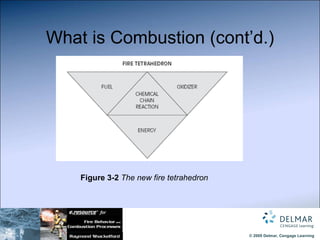
What is Combustion? Planned and controlled, self-sustaining chemical reaction between fuel and oxygen with evolution of heat and light Differs from fire Represented by fire tetrahedron Heat Fuel Oxygen Chemical reaction
What is Combustion (cont’d.) Figure 3-2  The new fire tetrahedron
Spontaneous Combustion Does not require independent ignition source Material heats to piloted ignition temperature   After ignition, flames spread Coal is an example of a porous solid material that when heated, eventually reaches ignition temperature and combustion begins
Methods of Fire Classification Type of combustion Rate of fire growth Available ventilation Type of materials that are burning Stages or phases of a fire
Types of Combustion Three stages Pre-combustion Fuel heated to ignition point Particulates released Entrainment gathers additional oxygen Heat energy radiated back into fuel Smoldering combustion Flaming combustion
Smoldering Combustion Absence of flame Presence of hot materials on surface where oxygen diffuses into fuel Two phases Solid Gas Incompleteness creates very high levels of carbon monoxide
Flaming Combustion Encountered in most emergency incidents Presence of flames Gas or vapor has to be burning Two categories Gaseous fuel premixed with air before ignition Diffusive flaming  Flames are generally yellow due to incomplete burning process Light and heat also emitted
Fire Classification by Type of Substance Burning Class A Fires involving combustion of ordinary cellulosic materials Class B Fires involving flammable liquids Class C Fires involving energized electrical equipment or wires
Fire Classification by Type of Substance Burning (cont’d.) Class D Fires involving combustible metals Class K Fires involving cooking oils Saponification:   process of chemically converting the fatty acid contained in a cooking medium (oil or grease) to soap or foam
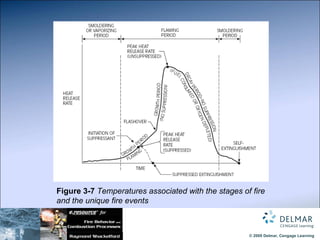
Fire Classification by Stages and Events Fire stages: Ignition stage Growth stage Fully developed stage Decay stage Fire events: Flameover or rollover Flash over Backdraft
Figure 3-7  Temperatures associated with the stages of fire and the unique fire events
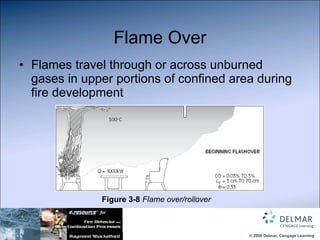
Flame Over Flames travel through or across unburned gases in upper portions of confined area during fire development Figure 3-8  Flame over/rollover
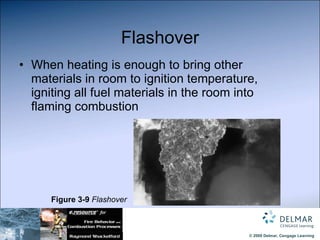
Flashover When heating is enough to bring other materials in room to ignition temperature, igniting all fuel materials in the room into flaming combustion Figure 3-9  Flashover
Backdraft Additional oxygen entering the compartment is heated and expands Increased pressure inside room Windows, walls, and weak points in the building  suddenly pushed outward Firefighters caught in the sudden, explosive rush of fire can be killed instantly
Building Construction and Fire Spread Efficiency declines if fires move vertically through buildings or bypass horizontal construction barriers Pre-WWII concrete construction inhibited vertical movement Post-WWII drywall spreads fires to other areas of building quickly Compartmentation is safe areas in high-rises
Fire Rating of Materials Building’s ability to withstand a fire differ because of: Variations in workmanship Methods of installation Different sets of test methods Sizes of test specimens Rated fire resistance of construction has some but not a substantial impact on the spread of fire
Weather Conditions Impact the burning characteristics of inside building fires and outside fires Stack effect:  temperature difference between the outside temperature of building and temperature inside the building Windy conditions outside can impact horizontal ventilation activities
Relative Humidity Moisture in the form of water vapor Always present Affects amount of moisture in fuel Impacts direction of fire gas movement
Mass/Drying Time Impacts how long it will take source of ignition to raise material to ignition temperature Thicker or heavier mass will take longer to raise the temperature of the material Law of latent heat of vaporization:  heat absorbed when 1 gram of liquid transformed into vapor at boiling point under 1 atmosphere of pressure Result in BTUs per pound or calories per gram
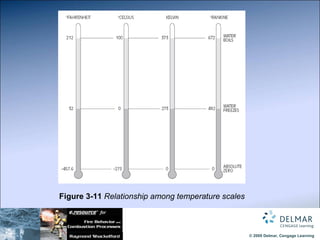
Heat Measurement Heat always flows from higher temperature materials to lower temperature materials Four temperature scales Kelvin Rankin Celsius Fahrenheit
Figure 3-11  Relationship among temperature scales
Heat Transfer Important in all aspects of combustion process Responsible for continuance of combustion process Four methods of transfer: Conduction Convection Radiation Direct flame impingement
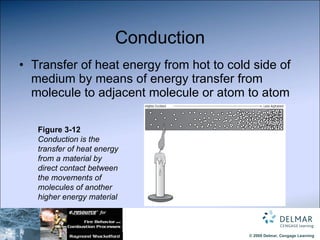
Conduction Transfer of heat energy from hot to cold side of medium by means of energy transfer from molecule to adjacent molecule or atom to atom Figure 3-12  Conduction is the transfer of heat energy from a material by direct contact between the movements of molecules of another higher energy material
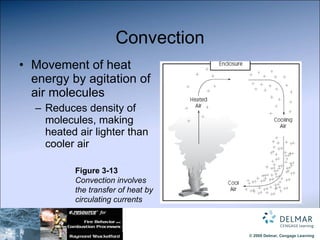
Convection Movement of heat energy by agitation of air molecules Reduces density of molecules, making heated air lighter than cooler air Figure 3-13 Convection involves the transfer of heat by circulating currents
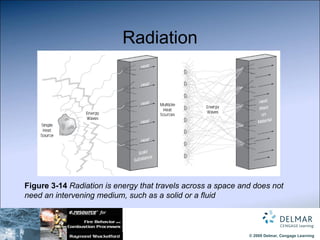
Radiation Figure 3-14  Radiation is energy that travels across a space and does not need an intervening medium, such as a solid or a fluid
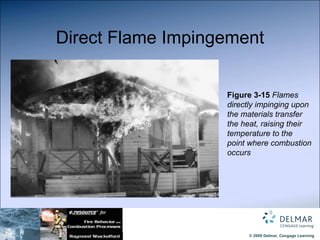
Direct Flame Impingement Figure 3-15  Flames directly impinging upon the materials transfer the heat, raising their temperature to the point where combustion occurs
Summary Combustion process defined by type, rate of fire growth, amount of ventilation, and type of substance that burns Classifications of fires: Class A, B, C, D, and K  Physical and chemical properties of fuels feeding fires affect how a fire will burn, spread, and quickness of burning rate

Chapter 03-Combustion Processes

  • 1.
  • 2.
    Objectives Explain thetheories underlying combustion processes Describe how fire researchers have identified combustion processes using a variety of different classifications Provide a description of the stages and events of fire as it progresses from the initial stage to its final stage
  • 3.
    Objectives (cont’d.) Explainthe causes of flame over, flashover, and backdraft and review the procedures to prevent and protect against such events Describe the various methods by which heat and unburned gases move in a confined environment Define the five classes of fires and explain how they are classified
  • 4.
    Introduction This chapter:Considers physical and chemical process involved in fire combustion and relates them to procedures of fire services to confine, control, and extinguish uncontrolled fires Emphasizes combustion processes as fires progress Reviews fire classification methods, fire extinguishing agents, and their advantages and disadvantages
  • 5.
    What is Combustion?Planned and controlled, self-sustaining chemical reaction between fuel and oxygen with evolution of heat and light Differs from fire Represented by fire tetrahedron Heat Fuel Oxygen Chemical reaction
  • 6.
    What is Combustion(cont’d.) Figure 3-2 The new fire tetrahedron
  • 7.
    Spontaneous Combustion Doesnot require independent ignition source Material heats to piloted ignition temperature After ignition, flames spread Coal is an example of a porous solid material that when heated, eventually reaches ignition temperature and combustion begins
  • 8.
    Methods of FireClassification Type of combustion Rate of fire growth Available ventilation Type of materials that are burning Stages or phases of a fire
  • 9.
    Types of CombustionThree stages Pre-combustion Fuel heated to ignition point Particulates released Entrainment gathers additional oxygen Heat energy radiated back into fuel Smoldering combustion Flaming combustion
  • 10.
    Smoldering Combustion Absenceof flame Presence of hot materials on surface where oxygen diffuses into fuel Two phases Solid Gas Incompleteness creates very high levels of carbon monoxide
  • 11.
    Flaming Combustion Encounteredin most emergency incidents Presence of flames Gas or vapor has to be burning Two categories Gaseous fuel premixed with air before ignition Diffusive flaming Flames are generally yellow due to incomplete burning process Light and heat also emitted
  • 12.
    Fire Classification byType of Substance Burning Class A Fires involving combustion of ordinary cellulosic materials Class B Fires involving flammable liquids Class C Fires involving energized electrical equipment or wires
  • 13.
    Fire Classification byType of Substance Burning (cont’d.) Class D Fires involving combustible metals Class K Fires involving cooking oils Saponification: process of chemically converting the fatty acid contained in a cooking medium (oil or grease) to soap or foam
  • 14.
    Fire Classification byStages and Events Fire stages: Ignition stage Growth stage Fully developed stage Decay stage Fire events: Flameover or rollover Flash over Backdraft
  • 15.
    Figure 3-7 Temperatures associated with the stages of fire and the unique fire events
  • 16.
    Flame Over Flamestravel through or across unburned gases in upper portions of confined area during fire development Figure 3-8 Flame over/rollover
  • 17.
    Flashover When heatingis enough to bring other materials in room to ignition temperature, igniting all fuel materials in the room into flaming combustion Figure 3-9 Flashover
  • 18.
    Backdraft Additional oxygenentering the compartment is heated and expands Increased pressure inside room Windows, walls, and weak points in the building suddenly pushed outward Firefighters caught in the sudden, explosive rush of fire can be killed instantly
  • 19.
    Building Construction andFire Spread Efficiency declines if fires move vertically through buildings or bypass horizontal construction barriers Pre-WWII concrete construction inhibited vertical movement Post-WWII drywall spreads fires to other areas of building quickly Compartmentation is safe areas in high-rises
  • 20.
    Fire Rating ofMaterials Building’s ability to withstand a fire differ because of: Variations in workmanship Methods of installation Different sets of test methods Sizes of test specimens Rated fire resistance of construction has some but not a substantial impact on the spread of fire
  • 21.
    Weather Conditions Impactthe burning characteristics of inside building fires and outside fires Stack effect: temperature difference between the outside temperature of building and temperature inside the building Windy conditions outside can impact horizontal ventilation activities
  • 22.
    Relative Humidity Moisturein the form of water vapor Always present Affects amount of moisture in fuel Impacts direction of fire gas movement
  • 23.
    Mass/Drying Time Impactshow long it will take source of ignition to raise material to ignition temperature Thicker or heavier mass will take longer to raise the temperature of the material Law of latent heat of vaporization: heat absorbed when 1 gram of liquid transformed into vapor at boiling point under 1 atmosphere of pressure Result in BTUs per pound or calories per gram
  • 24.
    Heat Measurement Heatalways flows from higher temperature materials to lower temperature materials Four temperature scales Kelvin Rankin Celsius Fahrenheit
  • 25.
    Figure 3-11 Relationship among temperature scales
  • 26.
    Heat Transfer Importantin all aspects of combustion process Responsible for continuance of combustion process Four methods of transfer: Conduction Convection Radiation Direct flame impingement
  • 27.
    Conduction Transfer ofheat energy from hot to cold side of medium by means of energy transfer from molecule to adjacent molecule or atom to atom Figure 3-12 Conduction is the transfer of heat energy from a material by direct contact between the movements of molecules of another higher energy material
  • 28.
    Convection Movement ofheat energy by agitation of air molecules Reduces density of molecules, making heated air lighter than cooler air Figure 3-13 Convection involves the transfer of heat by circulating currents
  • 29.
    Radiation Figure 3-14 Radiation is energy that travels across a space and does not need an intervening medium, such as a solid or a fluid
  • 30.
    Direct Flame ImpingementFigure 3-15 Flames directly impinging upon the materials transfer the heat, raising their temperature to the point where combustion occurs
  • 31.
    Summary Combustion processdefined by type, rate of fire growth, amount of ventilation, and type of substance that burns Classifications of fires: Class A, B, C, D, and K Physical and chemical properties of fuels feeding fires affect how a fire will burn, spread, and quickness of burning rate