Solid Fuels & its properties
Muhammad Nabeel Bhutta
2K17-CHE-07
Contents
 Introduction
 Ultimate and proximate analysis of coal
 Gross and net calorific value
 Ash content
 Moisture content
 Volatile Matter
 Coal carbonization
 Caking index
 Swelling index
Introduction
• Coal is very important naturally
occurring and cheaper solid fuel.
• Coal varies widely in composition
and properties and they are used in
different conditions.
• Coal characteristics are determined
by various kinds of analytical and
testing data, which are of scientific
,technical and commercial interest.
 Ultimate analysis is the elemental analysis which determines the
percentage composition of carbon, hydrogen, oxygen, nitrogen,
and sulphur by weight.
 These elemental compositions are of pure fuel only, which is free
of moisture and inorganic compounds.
 Proximate analysis reports moisture, volatile matter, ash and
fixed carbon content of a fuel by percentage weight as defined by
ASTM D 121.
 Proximate analysis is the most often used analysis for the
characterization of coals.
 Both the analysis are very important for the determination of
rank or grade of coal.
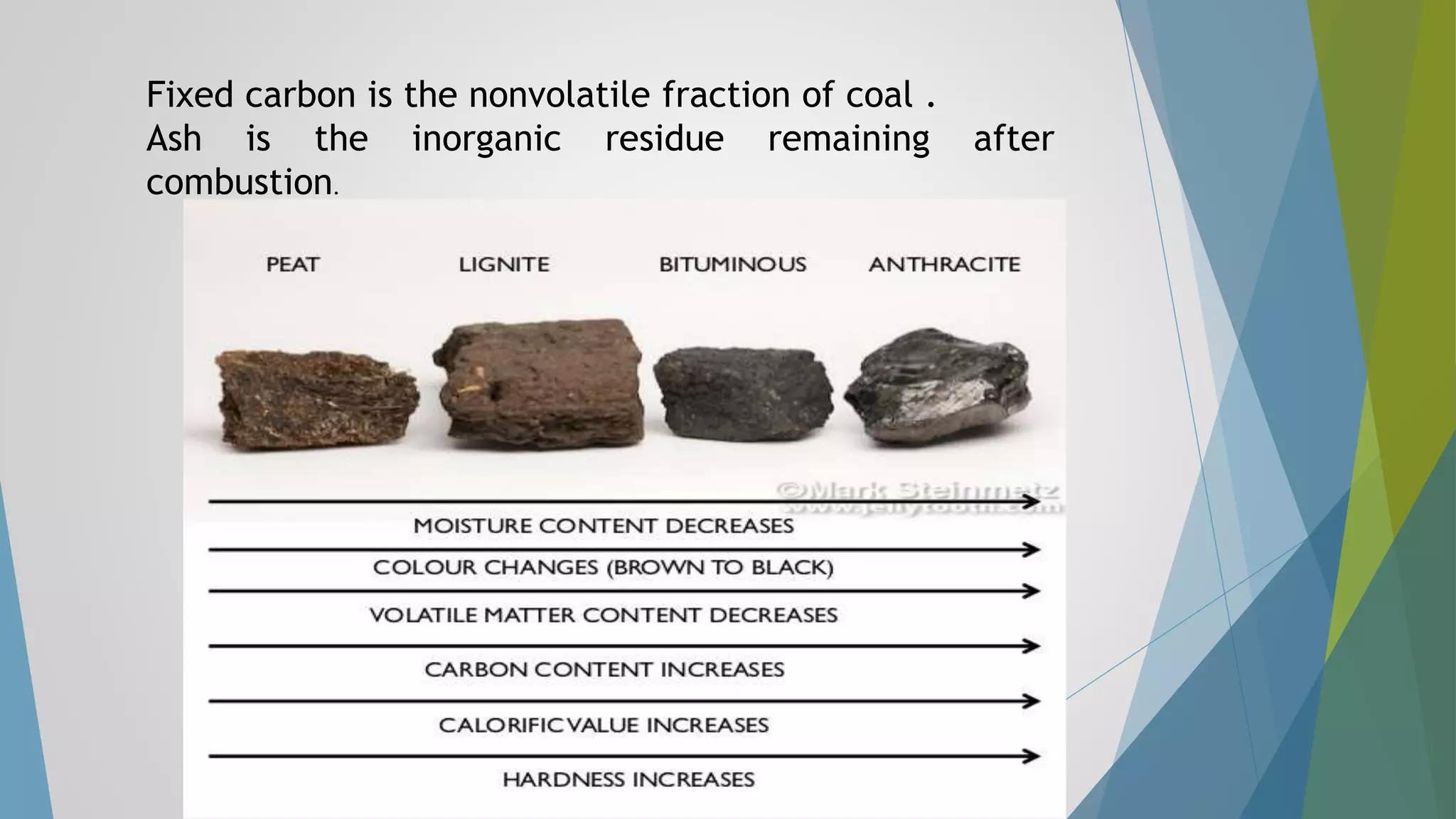
Fixed carbon is the nonvolatile fraction of coal .
Ash is the inorganic residue remaining after
combustion.
Gross and Net calorific value
 When the coal is heated at high temperature in presence
of air, heat liberated per unit weight of fuel is called
heating value, calorific value of that fuel.
 Calorific value can be determined either at constant
volume or constant pressure.
 The heat produced by combustion of unit quantity of a
solid or liquid fuel when burned at constant volume in an
oxygen bomb calorimeter under specified conditions,
with the resulting water condensed to liquid is the gross
calorific value at constant volume.
Cont.
 Gross calorific value at constant pressure is similar to that
of constant volume, only difference is that , the
combustion takes place at constant pressure.
 Net calorific value at constant volume is the amount of
heat liberated by combusting unit weight of coal at
constant volume in an atmosphere of water vapor
saturated oxygen, the original fuel and the final products
of combustion should be in vapor state.
 Net calorific value at constant pressure is that, the
combustion occurs at constant pressure ,not constant
volume.
 Gross calorific value is known as high heating value and
net calorific value is known as low heating value.
Why gross calorific value is greater
than net calorific value?
Water releases heat when it condenses. In net calorific
value, the water produced by combustion remains gaseous.
So, gross calorific value is bigger than net calorific value.
Gross calorific value is known as higher heating value while
net calorific value is known is lower heating value.
Ash content:
 Ash in coal, which is the remains when coal is burnt. Ash is
derived from the mineral matter content of coal.
 The inorganic materials which were actually the part of
plant structures, constitute the inherent mineral matter
of coal, whereas the extraneous mineral matter is that
which was introduced probably as air-borne dusts or water
borne silts at the later stage of coalification.
 Mineral matter of coal predominantly consists of kaolinite,
pyrite, calcite and upon combustion ; results in the oxides
of silicones and metals, such as aluminium, iron and
calcium.
Moisture content:
 Moisture content is an important parameter in coal
analysis.
 Moisture is the amount of water obtained from fuel by
heating.
 Moisture of coal may also become inherent or extraneous.
Continue
 Moisture held within the coal itself is known as inherent
moisture and is analyzed quantitatively.
 It can not be removed by only air drying, it can be
removed when coal is heated above 100°C.
 Extraneous Moisture can be removed by air drying of coal.
Volatile content:
 Volatile matter is the volatile part of coal when coal
undergoes thermal decomposition.
 Volatile matter consists of gases and vapors driven off during
pyrolysis under the specified condition minus moisture.
 Volatile matters are the methane, hydrocarbons, hydrogen
and carbon monoxide, and incombustible gases like carbon
dioxide and nitrogen found in coal.
 Fixed carbon is the non volatile part of organic mass after
decomposition.
Coal carbonization:
 Coal carbonization is the process where coal is heated at high
temperature in the absence of air.
 During carbonization, some gaseous products are also produced.
 When coal is converted to gaseous fuel by heating at
sufficiently high temperature, the process is called gasification
of coal.
Continue.
 By carbonization process we determined if the coal has caking
property or not.
Caking:
During carbonization, some types of coal can produce lumps from
its pulverized form. These lumps are called cake and the process
of cake formation is called caking
Coke:
The residue remained after coal carbonization is “coke”.
Coking:
Coke is prepared in commercial coke oven by the process of
carbonization at more than 1000°C. This carbonization process
is called coking.
Caking index:
 A laboratory method of indicating the degree of caking,
coking, or binding together of a coal when a sample is
heated in a prescribed manner.
Swelling index:
Swelling index is another important property of coal, where
it is heated under specified condition without physical
restrictions.
Conclusion:
 From the above discussion we conclude that coal is
the cheapest solid fuel which is widely used on
industrial scale, rank of coal is determined by
analysis and it is further used for the production of
by-products.
.
Thanks
For
Listening

Solid fuel and its properties

  • 1.
    Solid Fuels &its properties Muhammad Nabeel Bhutta 2K17-CHE-07
  • 2.
    Contents  Introduction  Ultimateand proximate analysis of coal  Gross and net calorific value  Ash content  Moisture content  Volatile Matter  Coal carbonization  Caking index  Swelling index
  • 3.
    Introduction • Coal isvery important naturally occurring and cheaper solid fuel. • Coal varies widely in composition and properties and they are used in different conditions. • Coal characteristics are determined by various kinds of analytical and testing data, which are of scientific ,technical and commercial interest.
  • 5.
     Ultimate analysisis the elemental analysis which determines the percentage composition of carbon, hydrogen, oxygen, nitrogen, and sulphur by weight.  These elemental compositions are of pure fuel only, which is free of moisture and inorganic compounds.  Proximate analysis reports moisture, volatile matter, ash and fixed carbon content of a fuel by percentage weight as defined by ASTM D 121.  Proximate analysis is the most often used analysis for the characterization of coals.  Both the analysis are very important for the determination of rank or grade of coal.
  • 6.
    Fixed carbon isthe nonvolatile fraction of coal . Ash is the inorganic residue remaining after combustion.
  • 7.
    Gross and Netcalorific value  When the coal is heated at high temperature in presence of air, heat liberated per unit weight of fuel is called heating value, calorific value of that fuel.  Calorific value can be determined either at constant volume or constant pressure.  The heat produced by combustion of unit quantity of a solid or liquid fuel when burned at constant volume in an oxygen bomb calorimeter under specified conditions, with the resulting water condensed to liquid is the gross calorific value at constant volume.
  • 8.
    Cont.  Gross calorificvalue at constant pressure is similar to that of constant volume, only difference is that , the combustion takes place at constant pressure.  Net calorific value at constant volume is the amount of heat liberated by combusting unit weight of coal at constant volume in an atmosphere of water vapor saturated oxygen, the original fuel and the final products of combustion should be in vapor state.  Net calorific value at constant pressure is that, the combustion occurs at constant pressure ,not constant volume.  Gross calorific value is known as high heating value and net calorific value is known as low heating value.
  • 9.
    Why gross calorificvalue is greater than net calorific value? Water releases heat when it condenses. In net calorific value, the water produced by combustion remains gaseous. So, gross calorific value is bigger than net calorific value. Gross calorific value is known as higher heating value while net calorific value is known is lower heating value.
  • 10.
    Ash content:  Ashin coal, which is the remains when coal is burnt. Ash is derived from the mineral matter content of coal.  The inorganic materials which were actually the part of plant structures, constitute the inherent mineral matter of coal, whereas the extraneous mineral matter is that which was introduced probably as air-borne dusts or water borne silts at the later stage of coalification.  Mineral matter of coal predominantly consists of kaolinite, pyrite, calcite and upon combustion ; results in the oxides of silicones and metals, such as aluminium, iron and calcium.
  • 11.
    Moisture content:  Moisturecontent is an important parameter in coal analysis.  Moisture is the amount of water obtained from fuel by heating.  Moisture of coal may also become inherent or extraneous.
  • 12.
    Continue  Moisture heldwithin the coal itself is known as inherent moisture and is analyzed quantitatively.  It can not be removed by only air drying, it can be removed when coal is heated above 100°C.  Extraneous Moisture can be removed by air drying of coal.
  • 14.
    Volatile content:  Volatilematter is the volatile part of coal when coal undergoes thermal decomposition.  Volatile matter consists of gases and vapors driven off during pyrolysis under the specified condition minus moisture.  Volatile matters are the methane, hydrocarbons, hydrogen and carbon monoxide, and incombustible gases like carbon dioxide and nitrogen found in coal.  Fixed carbon is the non volatile part of organic mass after decomposition.
  • 16.
    Coal carbonization:  Coalcarbonization is the process where coal is heated at high temperature in the absence of air.  During carbonization, some gaseous products are also produced.  When coal is converted to gaseous fuel by heating at sufficiently high temperature, the process is called gasification of coal.
  • 17.
    Continue.  By carbonizationprocess we determined if the coal has caking property or not. Caking: During carbonization, some types of coal can produce lumps from its pulverized form. These lumps are called cake and the process of cake formation is called caking
  • 18.
    Coke: The residue remainedafter coal carbonization is “coke”. Coking: Coke is prepared in commercial coke oven by the process of carbonization at more than 1000°C. This carbonization process is called coking.
  • 19.
    Caking index:  Alaboratory method of indicating the degree of caking, coking, or binding together of a coal when a sample is heated in a prescribed manner. Swelling index: Swelling index is another important property of coal, where it is heated under specified condition without physical restrictions.
  • 20.
    Conclusion:  From theabove discussion we conclude that coal is the cheapest solid fuel which is widely used on industrial scale, rank of coal is determined by analysis and it is further used for the production of by-products.
  • 22.