Personnel   Chapter 12
Objectives Upon completion of this chapter, you will be able to: Discuss the benefits of staffing fire prevention bureaus with uniformed firefighters, civilian personnel, and a combination of both
Objectives (cont’d.) Discuss the value of national certification for fire prevention bureau staff Name the National Fire Protection Association professional qualifications standards for fire prevention bureau personnel
Objectives (cont’d.) Define the term  job performance requirement  and discuss the impact of job performance requirements on certification Define and contrast  accreditation  and  certification  as they apply to fire prevention bureau personnel
Personnel Essential to select and nurture the best people for the job Fire prevention bureaus often made up of a combination of employees Uniformed: trained firefighters Civilian: specialists with specific skills, education, or training
Uniformed Firefighters Distinct advantage of using personnel with a demonstrated fire service background and a known record of work experience Disadvantage Extensive training: promoted Chief officers have experience in dealing with the public, business community, criminal justice system
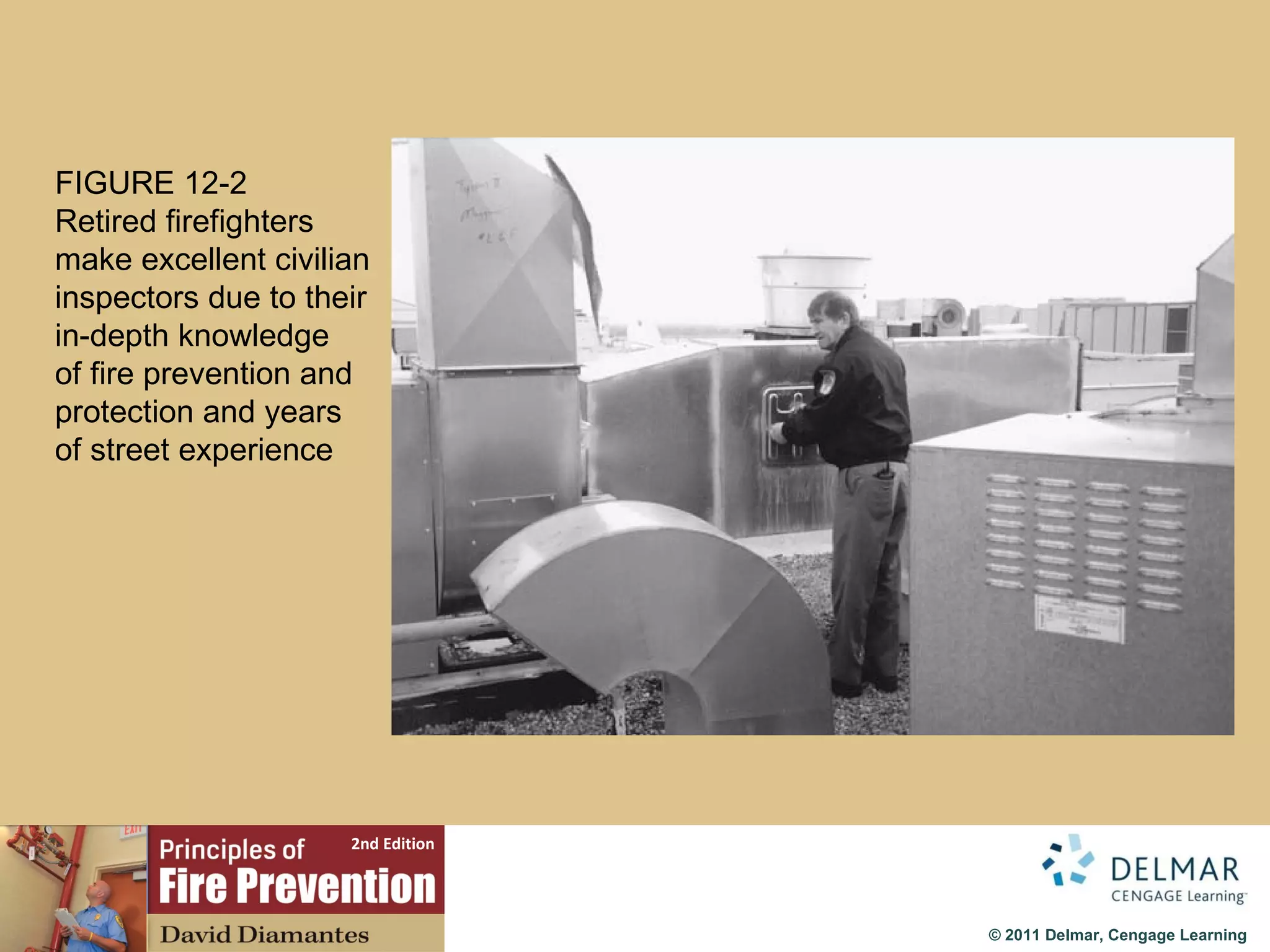
FIGURE 12-2 Retired firefighters make excellent civilian inspectors due to their in-depth knowledge of fire prevention and protection and years of street experience
Light-Duty Assignments Firefighting: rigorous, dangerous, and physically/mentally demanding job Must be ensured that the candidate can perform the necessary tasks Inspectors literally walk miles every day Much of it up and down stairs or ladders Fire investigators work in fire scenes under the worst possible conditions
Civilian Employees Bureaus gained the stability of long-term employees and expertise of engineers Disadvantage: reduced opportunities for firefighters to gain experience in the bureau Interaction with business and political leaders Standard procedures should require inspectors to present their ID
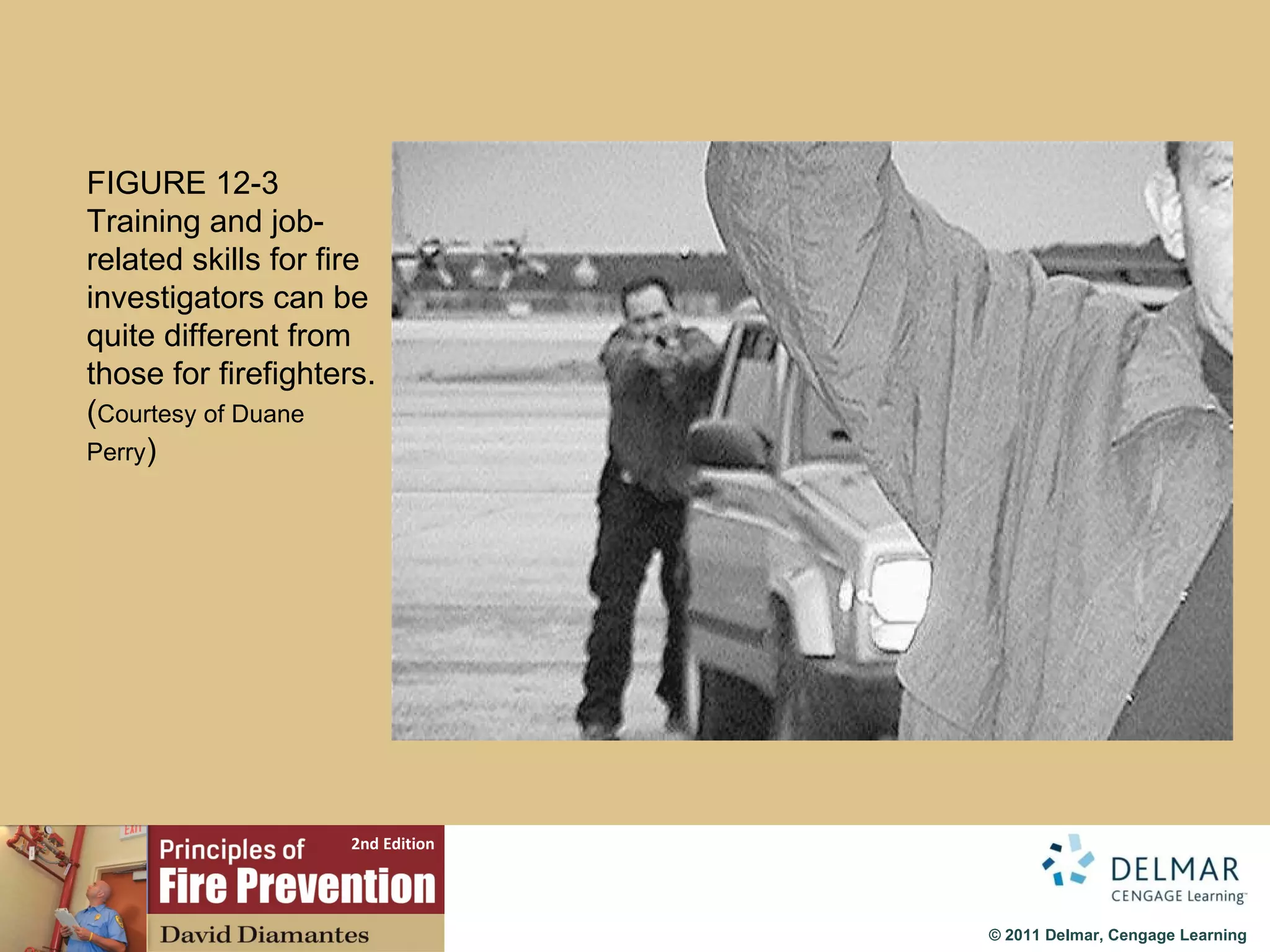
Training and Certification Many duties require job-specific training and, in many cases, certification Most skills required not received as part of firefighters’ standard training Many states mandate initial and refresher training and certification through testing National certification programs proven of real benefit
FIGURE 12-3 Training and job-related skills for fire investigators can be quite different from those for firefighters. ( Courtesy of Duane Perry )
Standards for Professional Qualifications NFPA 1031:  Standard for Professional Qualifications for Fire Inspector and Plan Examiner NFPA 1033:  Standard for Professional Qualifications for Fire Investigator NFPA 1035:  Standard for Professional Qualifications for Public Fire and Life Safety Educator
Standards for Professional Qualifications (cont’d.) JPRs: statement in a certification standard Describes a specific job task Lists the items necessary to complete the task Defines measurable/observable outcomes and evaluation areas Three levels for fire inspector: Fire Inspector I (entry-level personnel), Fire Inspector II (journeyman), Fire Inspector III
Certification For fire prevention personnel: mandated by some states but is always desirable Particularly important for individuals who are called on to testify in legal proceedings Opinions to assist juries in understanding complicated and technical subjects
Certification and Accreditation Certification: approval by an accredited agency that an individual meets the requirements of a standard Accompanied by the issuance of a certificate Accreditation: act of assessing the fitness of an organization to test/certify individuals in accordance with a standard
Certifying Organizations State fire service training agencies, government fire service training agencies, model code organizations, and academic institutions International Association of Arson Investigators (IAAI) and National Association of Fire Investigators (NAFI) Certifications for fire investigators
Certifying Organizations (cont’d.) National Institute for Certification in Engineering Technologies (NICET) Certification in various fire protection fields Sprinkler system layout, inspection and testing of water-based fire protection systems, and fire alarm systems International Code Council (ICC) Certification for fire inspectors and plans examiners and other code-based certifications
Personnel Retention and Advancement Nothing more important for a fire prevention program than its men/women Well-trained and confident employees Great asset to a fire prevention program Retention of the best and brightest: challenge Civilian personnel: significant issue
Summary Traditionally run by uniformed staff Many bureaus establish civilian positions Plans examiners, fire inspectors/investigators, and fire safety educators Enables hiring individuals with specific skills, education, and training Training and certification: of critical importance to effectiveness of programs

Chapter 12

  • 1.
    Personnel Chapter 12
  • 2.
    Objectives Upon completionof this chapter, you will be able to: Discuss the benefits of staffing fire prevention bureaus with uniformed firefighters, civilian personnel, and a combination of both
  • 3.
    Objectives (cont’d.) Discussthe value of national certification for fire prevention bureau staff Name the National Fire Protection Association professional qualifications standards for fire prevention bureau personnel
  • 4.
    Objectives (cont’d.) Definethe term job performance requirement and discuss the impact of job performance requirements on certification Define and contrast accreditation and certification as they apply to fire prevention bureau personnel
  • 5.
    Personnel Essential toselect and nurture the best people for the job Fire prevention bureaus often made up of a combination of employees Uniformed: trained firefighters Civilian: specialists with specific skills, education, or training
  • 6.
    Uniformed Firefighters Distinctadvantage of using personnel with a demonstrated fire service background and a known record of work experience Disadvantage Extensive training: promoted Chief officers have experience in dealing with the public, business community, criminal justice system
  • 7.
    FIGURE 12-2 Retiredfirefighters make excellent civilian inspectors due to their in-depth knowledge of fire prevention and protection and years of street experience
  • 8.
    Light-Duty Assignments Firefighting:rigorous, dangerous, and physically/mentally demanding job Must be ensured that the candidate can perform the necessary tasks Inspectors literally walk miles every day Much of it up and down stairs or ladders Fire investigators work in fire scenes under the worst possible conditions
  • 9.
    Civilian Employees Bureausgained the stability of long-term employees and expertise of engineers Disadvantage: reduced opportunities for firefighters to gain experience in the bureau Interaction with business and political leaders Standard procedures should require inspectors to present their ID
  • 10.
    Training and CertificationMany duties require job-specific training and, in many cases, certification Most skills required not received as part of firefighters’ standard training Many states mandate initial and refresher training and certification through testing National certification programs proven of real benefit
  • 11.
    FIGURE 12-3 Trainingand job-related skills for fire investigators can be quite different from those for firefighters. ( Courtesy of Duane Perry )
  • 12.
    Standards for ProfessionalQualifications NFPA 1031: Standard for Professional Qualifications for Fire Inspector and Plan Examiner NFPA 1033: Standard for Professional Qualifications for Fire Investigator NFPA 1035: Standard for Professional Qualifications for Public Fire and Life Safety Educator
  • 13.
    Standards for ProfessionalQualifications (cont’d.) JPRs: statement in a certification standard Describes a specific job task Lists the items necessary to complete the task Defines measurable/observable outcomes and evaluation areas Three levels for fire inspector: Fire Inspector I (entry-level personnel), Fire Inspector II (journeyman), Fire Inspector III
  • 14.
    Certification For fireprevention personnel: mandated by some states but is always desirable Particularly important for individuals who are called on to testify in legal proceedings Opinions to assist juries in understanding complicated and technical subjects
  • 15.
    Certification and AccreditationCertification: approval by an accredited agency that an individual meets the requirements of a standard Accompanied by the issuance of a certificate Accreditation: act of assessing the fitness of an organization to test/certify individuals in accordance with a standard
  • 16.
    Certifying Organizations Statefire service training agencies, government fire service training agencies, model code organizations, and academic institutions International Association of Arson Investigators (IAAI) and National Association of Fire Investigators (NAFI) Certifications for fire investigators
  • 17.
    Certifying Organizations (cont’d.)National Institute for Certification in Engineering Technologies (NICET) Certification in various fire protection fields Sprinkler system layout, inspection and testing of water-based fire protection systems, and fire alarm systems International Code Council (ICC) Certification for fire inspectors and plans examiners and other code-based certifications
  • 18.
    Personnel Retention andAdvancement Nothing more important for a fire prevention program than its men/women Well-trained and confident employees Great asset to a fire prevention program Retention of the best and brightest: challenge Civilian personnel: significant issue
  • 19.
    Summary Traditionally runby uniformed staff Many bureaus establish civilian positions Plans examiners, fire inspectors/investigators, and fire safety educators Enables hiring individuals with specific skills, education, and training Training and certification: of critical importance to effectiveness of programs