Emerging Technologies  Chapter 14
Learning Objectives Define the terms interoperability and building information modeling Discuss the applications for computer fire modeling and performance-based design Explain the concept behind the use of video cameras as fire detectors Discuss the purpose of mass notification systems
Learning Objectives (continued) Describe the characteristics of a multipurpose piping system Describe the characteristics of compressed-air foam fixed fire suppression systems Describe the characteristics of aerosol fire suppression systems
Introduction Many fire protection systems described in this book have not changed significantly Performed extremely well when properly designed, installed, and maintained New challenges in the built environment Require implementation of innovative designs and technologies to protect life and property Emerging techniques will detect, manage, control and suppress fires in the near future
Building and System Design Interoperability  requires that collaborating organizations use software platform Share information across applications and disciplines Building information modeling : characteristics of a structure composed of intelligent objects Computer fire modeling : helps professionals to understand the fire in the building Performance-based design : determines the viability of the design goal
Fire Alarm and Detection System Technology Alarm and detection systems  Incorporate digital and microprocessor technology Develop new equipment, systems, and methods to detect and communicate information
Fire Detection High-definition video cameras detect smoke and flame Analyze digital images that sense changes in pixels many times faster than ordinary smoke detectors Video camera sees the smoke before the smoke detector senses it Analyze and compare chemical makeup of gases and particulate matter Sensing components that react differently to airborne chemicals by digitizing and processing the readings
System Interface and Communications Internet protocol-related capabilities have merged with fire alarm system technology Fire alarm systems accessible via the Internet Fire alarm systems can interface with communications equipment Retransmit alarm signals and system information Responders determine conditions with sensors, video camera detectors, and other devices
System Interface and Communications (continued) Public fire alarm boxes : digital electronics, computers, radio transmitters Communicate with central stations Mass notification systems : may be separate or integrated into the fire alarm system Fire alarm notification appliances Exit-marking audible notification appliances Addressable notification appliances
Water-Based Fire Suppression Systems Past ten years, new technologies such as dry pipe valves have entered market Do not require opening to reset the clapper valve Greater air to water deferential ratios Emerging technologies related to water-based suppression systems Development of new fire sprinkler heads and nozzles New technologies for some mature applications
Sprinkler Heads and Nozzles Two examples of emerging technologies: Low-flowing sprinkler heads Heads or nozzles with distinct and specialized discharge patterns Ongoing research to deliver specific head pressure for an installation condition On/off sprinkler head that uses alternative sensor/actuator technology Reduces water damage caused by conventional “one-shot” fire sprinklers
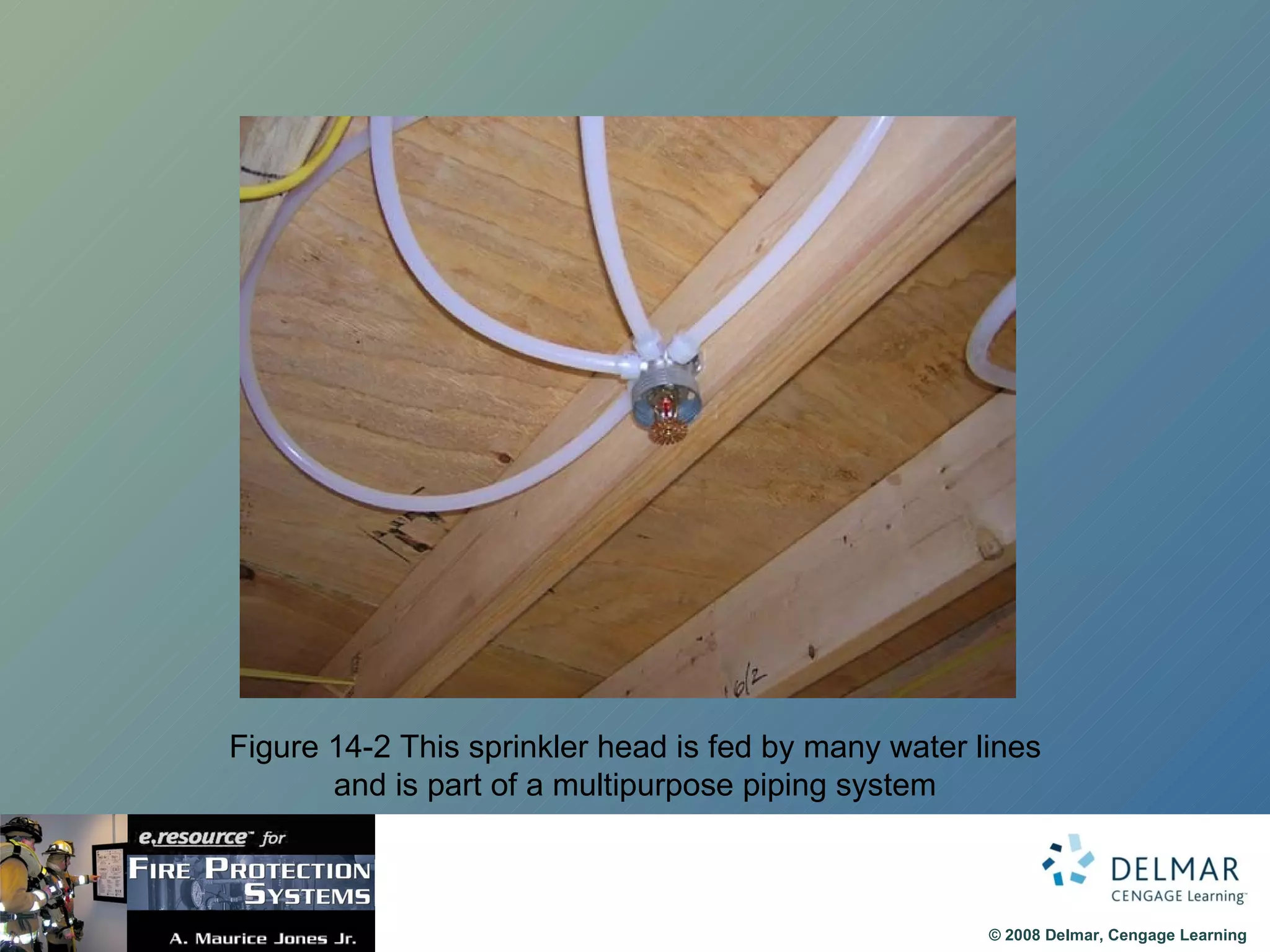
Residential Sprinkler Systems More emphasis on integration of all water systems into one combined system Multipurpose piping systems  combine domestic water and fire sprinkler systems into one network Piping interconnected; water flows from multiple supply lines Becoming more important for  green buildings
Figure 14-2 This sprinkler head is fed by many water lines and is part of a multipurpose piping system
Fire Pumps and Controllers Variable speed controllers: adjust the pump driver speed Fire pump maintains constant output pressure in fire sprinkler and standpipe system Based on the suction pressure and water supply Loss of pressure sensed by a switch starts the controller Once running, pressure switch regulates the driver speed at preset pressure Microprocessor monitors the suction pressure and adjusts the speed accordingly
Compressed-Air Foam Suppression Systems New research has solved the foam generation and agent transportation problems Protect flammable and combustible liquids and electrical transformer hazards Activation by automatic detection or manual operation Ability to penetrate a fire plume Better thermal radiation protection
Aerosol Fire Suppression Systems Alternative to clean agents and specialized water-based fire protection systems Main component: aerosol generator Condensed generator: no pipes, nozzles, or pressure vessels Dispersed generator: particle chemical agent suspended in an inert gas Aerosol product is non-toxic, non-corrosive Remains suspended in the environment Eliminates the possibility of re-ignition
Summary Research and development leads to new technologies Interoperability and building information modeling platforms Improved annunciation capabilities Mass notification systems Sprinkler head technology continues to dominate the industry Aerosol fire suppression systems recognized and are viable technologies

Chapter 14

  • 1.
  • 2.
    Learning Objectives Definethe terms interoperability and building information modeling Discuss the applications for computer fire modeling and performance-based design Explain the concept behind the use of video cameras as fire detectors Discuss the purpose of mass notification systems
  • 3.
    Learning Objectives (continued)Describe the characteristics of a multipurpose piping system Describe the characteristics of compressed-air foam fixed fire suppression systems Describe the characteristics of aerosol fire suppression systems
  • 4.
    Introduction Many fireprotection systems described in this book have not changed significantly Performed extremely well when properly designed, installed, and maintained New challenges in the built environment Require implementation of innovative designs and technologies to protect life and property Emerging techniques will detect, manage, control and suppress fires in the near future
  • 5.
    Building and SystemDesign Interoperability requires that collaborating organizations use software platform Share information across applications and disciplines Building information modeling : characteristics of a structure composed of intelligent objects Computer fire modeling : helps professionals to understand the fire in the building Performance-based design : determines the viability of the design goal
  • 6.
    Fire Alarm andDetection System Technology Alarm and detection systems Incorporate digital and microprocessor technology Develop new equipment, systems, and methods to detect and communicate information
  • 7.
    Fire Detection High-definitionvideo cameras detect smoke and flame Analyze digital images that sense changes in pixels many times faster than ordinary smoke detectors Video camera sees the smoke before the smoke detector senses it Analyze and compare chemical makeup of gases and particulate matter Sensing components that react differently to airborne chemicals by digitizing and processing the readings
  • 8.
    System Interface andCommunications Internet protocol-related capabilities have merged with fire alarm system technology Fire alarm systems accessible via the Internet Fire alarm systems can interface with communications equipment Retransmit alarm signals and system information Responders determine conditions with sensors, video camera detectors, and other devices
  • 9.
    System Interface andCommunications (continued) Public fire alarm boxes : digital electronics, computers, radio transmitters Communicate with central stations Mass notification systems : may be separate or integrated into the fire alarm system Fire alarm notification appliances Exit-marking audible notification appliances Addressable notification appliances
  • 10.
    Water-Based Fire SuppressionSystems Past ten years, new technologies such as dry pipe valves have entered market Do not require opening to reset the clapper valve Greater air to water deferential ratios Emerging technologies related to water-based suppression systems Development of new fire sprinkler heads and nozzles New technologies for some mature applications
  • 11.
    Sprinkler Heads andNozzles Two examples of emerging technologies: Low-flowing sprinkler heads Heads or nozzles with distinct and specialized discharge patterns Ongoing research to deliver specific head pressure for an installation condition On/off sprinkler head that uses alternative sensor/actuator technology Reduces water damage caused by conventional “one-shot” fire sprinklers
  • 12.
    Residential Sprinkler SystemsMore emphasis on integration of all water systems into one combined system Multipurpose piping systems combine domestic water and fire sprinkler systems into one network Piping interconnected; water flows from multiple supply lines Becoming more important for green buildings
  • 13.
    Figure 14-2 Thissprinkler head is fed by many water lines and is part of a multipurpose piping system
  • 14.
    Fire Pumps andControllers Variable speed controllers: adjust the pump driver speed Fire pump maintains constant output pressure in fire sprinkler and standpipe system Based on the suction pressure and water supply Loss of pressure sensed by a switch starts the controller Once running, pressure switch regulates the driver speed at preset pressure Microprocessor monitors the suction pressure and adjusts the speed accordingly
  • 15.
    Compressed-Air Foam SuppressionSystems New research has solved the foam generation and agent transportation problems Protect flammable and combustible liquids and electrical transformer hazards Activation by automatic detection or manual operation Ability to penetrate a fire plume Better thermal radiation protection
  • 16.
    Aerosol Fire SuppressionSystems Alternative to clean agents and specialized water-based fire protection systems Main component: aerosol generator Condensed generator: no pipes, nozzles, or pressure vessels Dispersed generator: particle chemical agent suspended in an inert gas Aerosol product is non-toxic, non-corrosive Remains suspended in the environment Eliminates the possibility of re-ignition
  • 17.
    Summary Research anddevelopment leads to new technologies Interoperability and building information modeling platforms Improved annunciation capabilities Mass notification systems Sprinkler head technology continues to dominate the industry Aerosol fire suppression systems recognized and are viable technologies