A CHEMICAL PROCESS IN 
WHICH A SUBSTANCE 
REACTS WITH THE OXYGEN 
OF AIR TO GIVE HEAT & 
LIGHT IS CALLED 
COMBUSTION.
• SPOTANOEUS COMBUSTION 
• RAPID COMBUSTION 
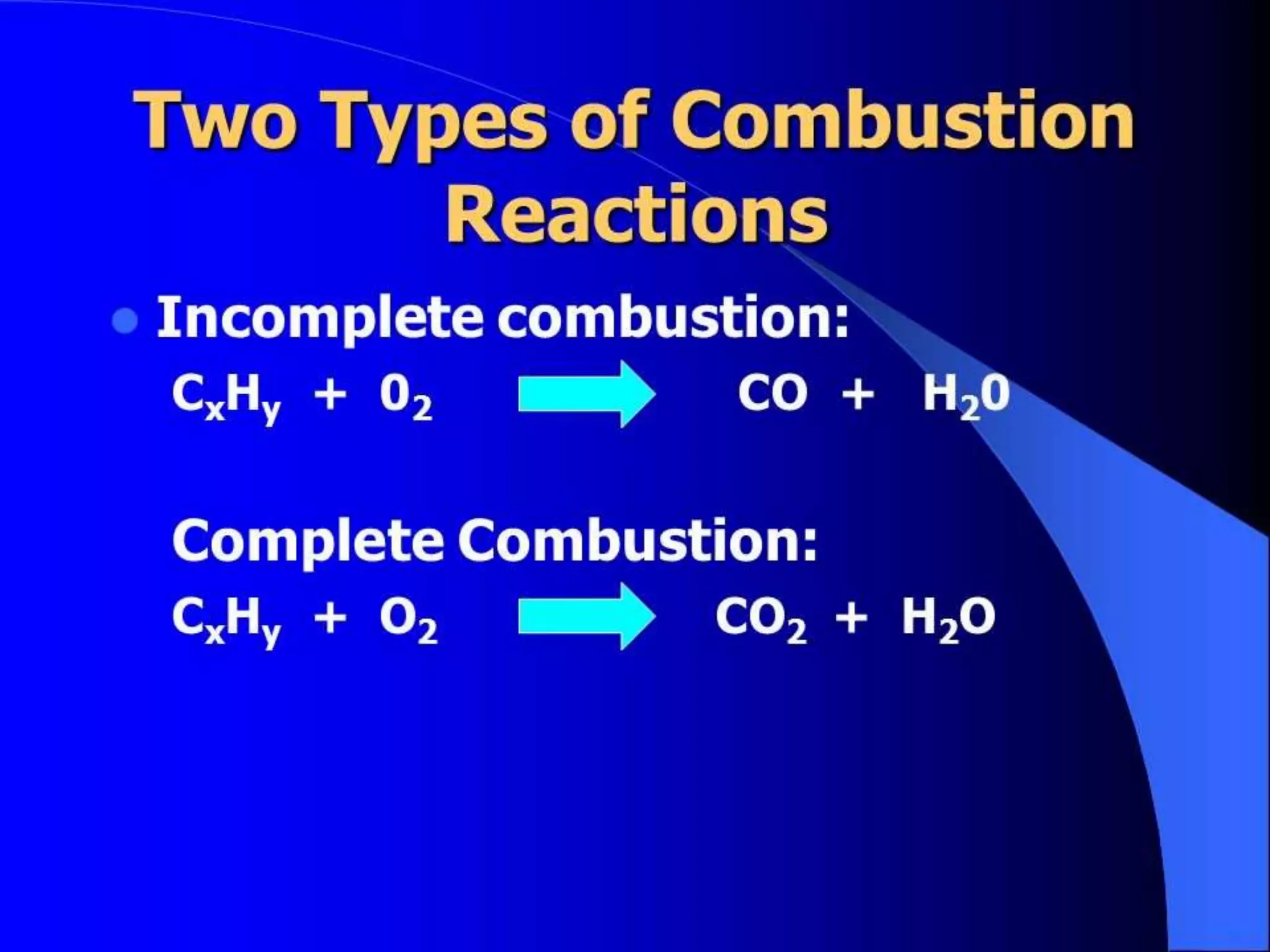
• COMPLETE COMBUSTION 
• INCOMPLETE COMBUSTION 
• EXPLOTION
RAPID COMBUSTION 
•Combustion in which a substance burns 
rapidly and produces heat and flame is 
known as rapid combustion, such as 
combustion of natural gas, LPG, petrol etc. 
• This is usually attained by introducing 
external heat. 
• Substances which undergo rapid 
combustion have lower ignition temperature
• When a substance suddenly starts 
burning into a flame; without the 
supply of any external cause such as 
heating; the combustion is called 
spontaneous combustion. 
• Substances; which have relatively 
low temperature of ignition 
generally burn by spontaneous 
combustion.
• A reaction or process which 
entails only partial burning of a 
fuel. 
• This may be due to a lack of 
oxygen or low temperature, 
preventing the complete chemical 
reaction.
• A reaction or process which 
entails only partial burning of 
a fuel. 
• This may be due to a lack of 
oxygen or low temperature, 
preventing the complete 
chemical reaction. 
• Carbon monoxide is 
produced as a by product from 
incomplete combustion
• When combustion is 
accompanied by sudden 
production of heat, sound 
and large amount of gas, it is 
called explosion. 
• Firecrackers and bombs are 
substances which show 
explosion
• Phosphorous and sulphur start burning 
instantaneously; at room temperature. 
• Haystacks, linseed oil, coal, pyrite, etc. 
sometimes start burning suddenly with 
flame because of increase in 
temperature. 
• In coal mines, fire breaks out many a 
times because of combustion of coal 
dust. 
• Fire often breaks out suddenly 
because of increase in temperature due 
to sun or friction.
•COMBUSTIBLE 
•NON COMBUSTIBLE SUBSTANCES
• SUBSTANCES WHICH CAN BURN ARE 
CALLED AS COMBUSTIBLE 
SUBSTANCES.
COAL 
WOOD LOG
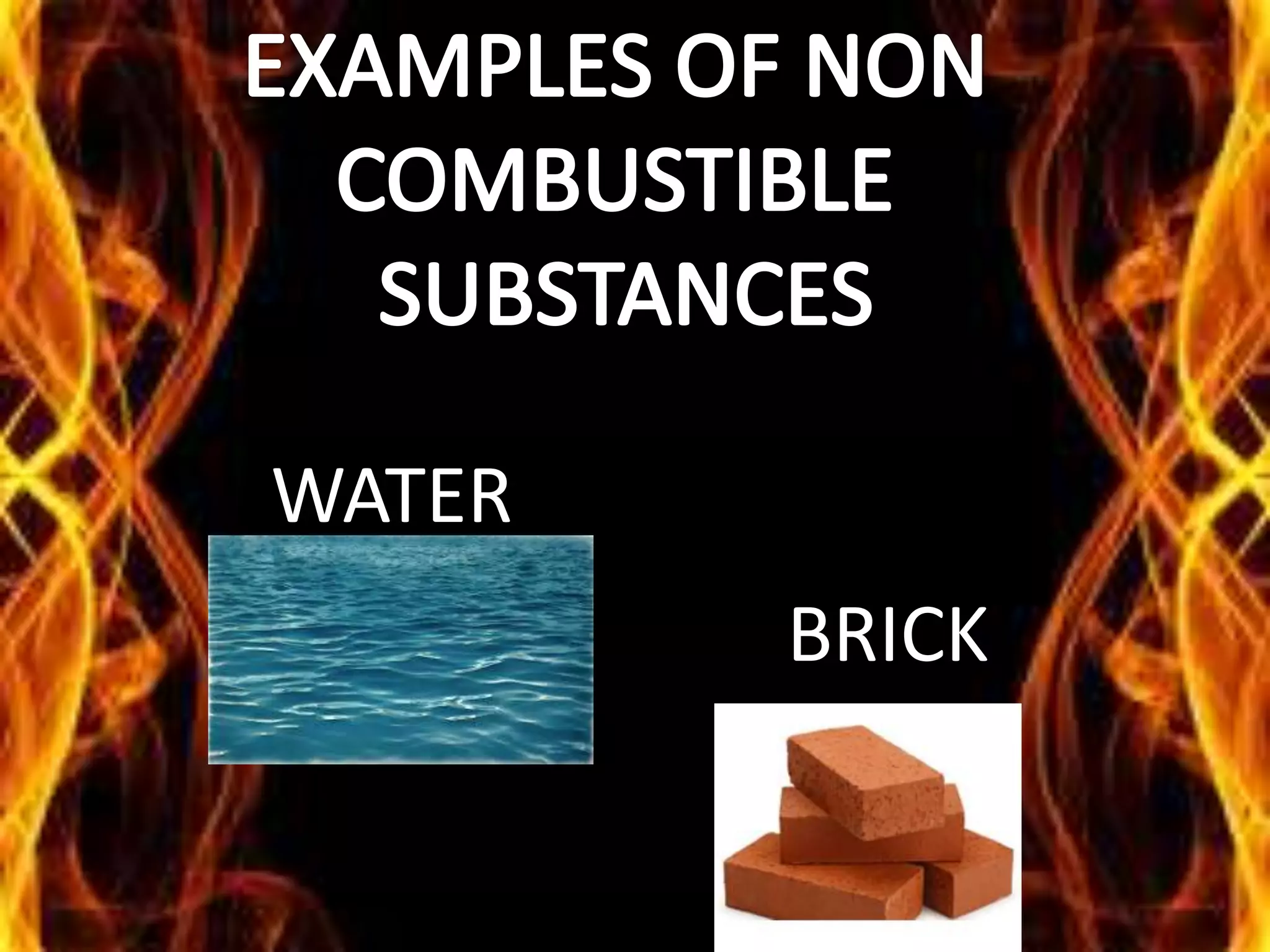
WATER 
BRICK
• SUBSTANCES WHICH DO NOT 
BURN ARE CALLED NONCOMBUSTIBLE 
SUBSTANCES.
CONDITIONS 
NECESSARY FOR COMBUSTION
CONDITIONS 
NECESSARY FOR COMBUSTION 
• PRESENCE OF THE COMBUSTIBLE SUBSTANCES 
( A SUBSTANCE WHICH CAN BURN) 
• PRESENCE OF A SUPPORTER OF OXYGEN ( I.E. 
AIR) 
• HEATING THE COMBUSTIBLE SUBSTANCES TO 
ITS IGNITION TEMPERATURE.
combustion
combustion

combustion

  • 2.
    A CHEMICAL PROCESSIN WHICH A SUBSTANCE REACTS WITH THE OXYGEN OF AIR TO GIVE HEAT & LIGHT IS CALLED COMBUSTION.
  • 3.
    • SPOTANOEUS COMBUSTION • RAPID COMBUSTION • COMPLETE COMBUSTION • INCOMPLETE COMBUSTION • EXPLOTION
  • 4.
    RAPID COMBUSTION •Combustionin which a substance burns rapidly and produces heat and flame is known as rapid combustion, such as combustion of natural gas, LPG, petrol etc. • This is usually attained by introducing external heat. • Substances which undergo rapid combustion have lower ignition temperature
  • 5.
    • When asubstance suddenly starts burning into a flame; without the supply of any external cause such as heating; the combustion is called spontaneous combustion. • Substances; which have relatively low temperature of ignition generally burn by spontaneous combustion.
  • 6.
    • A reactionor process which entails only partial burning of a fuel. • This may be due to a lack of oxygen or low temperature, preventing the complete chemical reaction.
  • 8.
    • A reactionor process which entails only partial burning of a fuel. • This may be due to a lack of oxygen or low temperature, preventing the complete chemical reaction. • Carbon monoxide is produced as a by product from incomplete combustion
  • 10.
    • When combustionis accompanied by sudden production of heat, sound and large amount of gas, it is called explosion. • Firecrackers and bombs are substances which show explosion
  • 11.
    • Phosphorous andsulphur start burning instantaneously; at room temperature. • Haystacks, linseed oil, coal, pyrite, etc. sometimes start burning suddenly with flame because of increase in temperature. • In coal mines, fire breaks out many a times because of combustion of coal dust. • Fire often breaks out suddenly because of increase in temperature due to sun or friction.
  • 13.
  • 14.
    • SUBSTANCES WHICHCAN BURN ARE CALLED AS COMBUSTIBLE SUBSTANCES.
  • 15.
  • 16.
  • 17.
    • SUBSTANCES WHICHDO NOT BURN ARE CALLED NONCOMBUSTIBLE SUBSTANCES.
  • 18.
  • 19.
    CONDITIONS NECESSARY FORCOMBUSTION • PRESENCE OF THE COMBUSTIBLE SUBSTANCES ( A SUBSTANCE WHICH CAN BURN) • PRESENCE OF A SUPPORTER OF OXYGEN ( I.E. AIR) • HEATING THE COMBUSTIBLE SUBSTANCES TO ITS IGNITION TEMPERATURE.