Specialized Water-Based Fire Protection Systems Chapter 6
Learning Objectives State three reasons to install other types of water-based fire protection systems instead of standard automatic fire sprinkler systems Discuss the characteristics and applications for fixed foam systems Discuss the characteristics and applications for water spray fixed systems
Learning Objectives (continued) Discuss the characteristics and applications for foam-water sprinkler and foam-water spray systems Discuss the characteristics and applications for water mist systems Discuss the inspection and test requirements for acceptance of special water-based fire protection systems Recognize the possible impairments to special water-based fire protection systems
Introduction Water-based systems that protect special hazards: Low-, medium-, and high-expansion foam systems Water spray fixed systems Foam-water sprinkler and spray systems Water mist systems Provide protection where other systems would be inadequate Few major differences between these four types
Required Installations Models codes establish requirements based on occupancy conditions and use  Model codes permit alternative suppression systems when approved Hazard evaluation determines the best system to provide appropriate protection Hazard determines the use of a particular type of system Certain systems more appropriate for some hazards
Design and Installation Standards Water-based protection systems similar in many ways Different enough to publish separate standards Standards do not state where to install these systems Design professional determines the type of system that is most appropriate Design professional implements the design and installation
NFPA 11, Standard for Low-, Medium-, and High-Expansion Foam Class B foam best for flammable and combustible liquid fires Standards for foam combine in NFPA 11 Other NFPA standards establish when foam systems are needed to protect a hazard
NFPA 15, Standard for Water Spray Fixed Systems for Fire Protection Water spray fixed systems provide specialized protection to different hazards Transformers, motors, flammable liquids NFPA covers design, installation, inspection, testing, and maintenance of these systems Does not apply to systems in NFPA 13, NFPA 750, monitor nozzles, and explosion suppression
NFPA 16, Standard for the Installation of Foam-Water Sprinkler and Foam-Water Spray Systems Deals with the use of foam NFPA 16 covers foam-water sprinkler and spray systems First published in 1954 Limited to using low-expansion type foam
NFPA 750, Standard on Water Mist Fire Protection Systems Relatively new standard First appeared in mid-1990s Provides minimum requirements for water mist systems Does not establish operational measure or specific guidance on how to extinguish a fire Standard states that it is not a design handbook Design requires verification of its viability
Types of Specialized Water-Based Fire Protection Systems Fixed automatic foam  systems protect flammable and combustible liquid hazards Foam  is an effective agent to meet all objectives Foam is less dense than fuel or water Freely flow over liquid surface Foam concentrate  mixes with water to form a  foam solution If proportioning incorrectly or used with  incompatible equipment, foam will not work
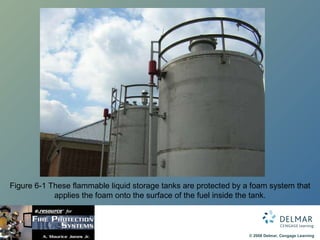
Figure 6-1 These flammable liquid storage tanks are protected by a foam system that applies the foam onto the surface of the fuel inside the tank.
Foam Products Low-expansion  foam increases at a 2:1 to 20:1 ratio Protect outdoor storage tanks, interior flammable liquids, loading racks, diked areas, etc. Medium-expansion  foam increases 20:1 to 200:1 High-expansion  foam increases 200:1 to 1000:1 Medium- and high-expansion protect ordinary combustibles, flammable liquids etc.
Fixed Foam System Components Proportioning methods: Venturi proportioner method Pressure proportioners Balanced pressure proportioner Foam concentrate tank Foam generating/distribution equipment Subsurface injection Oscillating monitor nozzles Foam maker chambers Foam generators and pumps
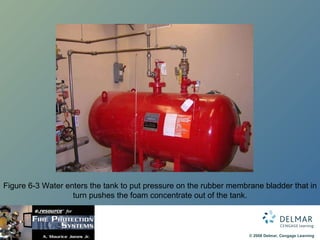
Figure 6-3 Water enters the tank to put pressure on the rubber membrane bladder that in turn pushes the foam concentrate out of the tank.
Water Spray Fixed Systems Fixed piping network with specialized spray nozzles  Designed to: Protect specific equipment Protect structural members surrounding equipment Function as part of an overall fire protection installation System delivers concentrated, directed water spray pattern onto surface of the hazard
Water Spray Fixed Systems (continued) Require at least one adequate automatic water supply Automatic activation is by a device such as heat, flame, gas detectors, etc. Automatic nozzles use the same technology as sprinkler heads Ultra-high-speed water spray system applies water to the hazard within 100 milliseconds
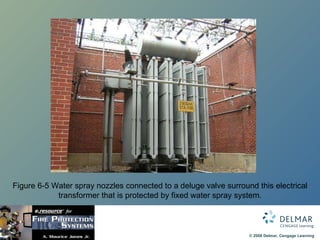
Figure 6-5 Water spray nozzles connected to a deluge valve surround this electrical transformer that is protected by fixed water spray system.
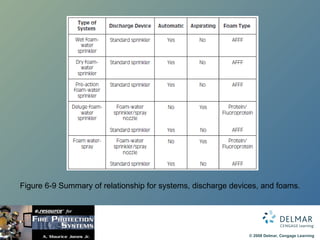
Foam-Water Sprinkler and Foam-Water Spray Systems Protect Class B flammable and combustible liquids Acceptable for use with certain Class A hazards Primary design goal is extinguishment Appropriate for prevention, control, exposure protection Foam and water are companion agents Pre-primed systems have foam and water in the piping
Figure 6-9 Summary of relationship for systems, discharge devices, and foams.
Water Mist Systems Discharges fine spray mist of water droplets out of specialized nozzles 99% of water mist must be 1000 microns or less 25,400 microns equal one inch Droplets extinguish by cooling, displacing oxygen, blocking radiant heat Protect land facilities, marine and offshore facilities Not appropriate for use with materials that react with water
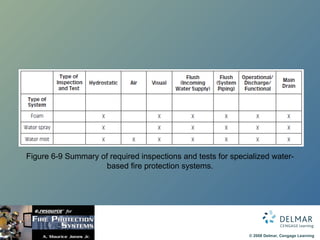
Inspection, Testing, and Maintenance Requirements Similar approval, inspection, and test processes as standard fire sprinkler systems All systems subject to the same acceptance inspections and tests All specialized water-based fire protection systems require flushing Additional requirement to flush or clean the system piping
Figure 6-9 Summary of required inspections and tests for specialized water-based fire protection systems.
Periodic Inspection, Testing, and Maintenance Inspection, testing and maintenance provide a level of confidence in the system Maintenance should be in accordance with established intervals in NFPA 25 Depending on conditions, daily to every five years Subject to impairments Lack of proper inspection, maintenance, component failure, environmental conditions, etc. Piping obstructions occur for many reasons
Summary Specialized water-based systems provide protection when sprinkler systems inadequate Differences from sprinkler systems: Specialized spray nozzles and discharge devices Integration of foam agents with water Use of specialized components for application Different types of foam for different hazards Water mist systems protect land facilities Periodic system verification necessary

Chapter 06

  • 1.
    Specialized Water-Based FireProtection Systems Chapter 6
  • 2.
    Learning Objectives Statethree reasons to install other types of water-based fire protection systems instead of standard automatic fire sprinkler systems Discuss the characteristics and applications for fixed foam systems Discuss the characteristics and applications for water spray fixed systems
  • 3.
    Learning Objectives (continued)Discuss the characteristics and applications for foam-water sprinkler and foam-water spray systems Discuss the characteristics and applications for water mist systems Discuss the inspection and test requirements for acceptance of special water-based fire protection systems Recognize the possible impairments to special water-based fire protection systems
  • 4.
    Introduction Water-based systemsthat protect special hazards: Low-, medium-, and high-expansion foam systems Water spray fixed systems Foam-water sprinkler and spray systems Water mist systems Provide protection where other systems would be inadequate Few major differences between these four types
  • 5.
    Required Installations Modelscodes establish requirements based on occupancy conditions and use Model codes permit alternative suppression systems when approved Hazard evaluation determines the best system to provide appropriate protection Hazard determines the use of a particular type of system Certain systems more appropriate for some hazards
  • 6.
    Design and InstallationStandards Water-based protection systems similar in many ways Different enough to publish separate standards Standards do not state where to install these systems Design professional determines the type of system that is most appropriate Design professional implements the design and installation
  • 7.
    NFPA 11, Standardfor Low-, Medium-, and High-Expansion Foam Class B foam best for flammable and combustible liquid fires Standards for foam combine in NFPA 11 Other NFPA standards establish when foam systems are needed to protect a hazard
  • 8.
    NFPA 15, Standardfor Water Spray Fixed Systems for Fire Protection Water spray fixed systems provide specialized protection to different hazards Transformers, motors, flammable liquids NFPA covers design, installation, inspection, testing, and maintenance of these systems Does not apply to systems in NFPA 13, NFPA 750, monitor nozzles, and explosion suppression
  • 9.
    NFPA 16, Standardfor the Installation of Foam-Water Sprinkler and Foam-Water Spray Systems Deals with the use of foam NFPA 16 covers foam-water sprinkler and spray systems First published in 1954 Limited to using low-expansion type foam
  • 10.
    NFPA 750, Standardon Water Mist Fire Protection Systems Relatively new standard First appeared in mid-1990s Provides minimum requirements for water mist systems Does not establish operational measure or specific guidance on how to extinguish a fire Standard states that it is not a design handbook Design requires verification of its viability
  • 11.
    Types of SpecializedWater-Based Fire Protection Systems Fixed automatic foam systems protect flammable and combustible liquid hazards Foam is an effective agent to meet all objectives Foam is less dense than fuel or water Freely flow over liquid surface Foam concentrate mixes with water to form a foam solution If proportioning incorrectly or used with incompatible equipment, foam will not work
  • 12.
    Figure 6-1 Theseflammable liquid storage tanks are protected by a foam system that applies the foam onto the surface of the fuel inside the tank.
  • 13.
    Foam Products Low-expansion foam increases at a 2:1 to 20:1 ratio Protect outdoor storage tanks, interior flammable liquids, loading racks, diked areas, etc. Medium-expansion foam increases 20:1 to 200:1 High-expansion foam increases 200:1 to 1000:1 Medium- and high-expansion protect ordinary combustibles, flammable liquids etc.
  • 14.
    Fixed Foam SystemComponents Proportioning methods: Venturi proportioner method Pressure proportioners Balanced pressure proportioner Foam concentrate tank Foam generating/distribution equipment Subsurface injection Oscillating monitor nozzles Foam maker chambers Foam generators and pumps
  • 15.
    Figure 6-3 Waterenters the tank to put pressure on the rubber membrane bladder that in turn pushes the foam concentrate out of the tank.
  • 16.
    Water Spray FixedSystems Fixed piping network with specialized spray nozzles Designed to: Protect specific equipment Protect structural members surrounding equipment Function as part of an overall fire protection installation System delivers concentrated, directed water spray pattern onto surface of the hazard
  • 17.
    Water Spray FixedSystems (continued) Require at least one adequate automatic water supply Automatic activation is by a device such as heat, flame, gas detectors, etc. Automatic nozzles use the same technology as sprinkler heads Ultra-high-speed water spray system applies water to the hazard within 100 milliseconds
  • 18.
    Figure 6-5 Waterspray nozzles connected to a deluge valve surround this electrical transformer that is protected by fixed water spray system.
  • 19.
    Foam-Water Sprinkler andFoam-Water Spray Systems Protect Class B flammable and combustible liquids Acceptable for use with certain Class A hazards Primary design goal is extinguishment Appropriate for prevention, control, exposure protection Foam and water are companion agents Pre-primed systems have foam and water in the piping
  • 20.
    Figure 6-9 Summaryof relationship for systems, discharge devices, and foams.
  • 21.
    Water Mist SystemsDischarges fine spray mist of water droplets out of specialized nozzles 99% of water mist must be 1000 microns or less 25,400 microns equal one inch Droplets extinguish by cooling, displacing oxygen, blocking radiant heat Protect land facilities, marine and offshore facilities Not appropriate for use with materials that react with water
  • 22.
    Inspection, Testing, andMaintenance Requirements Similar approval, inspection, and test processes as standard fire sprinkler systems All systems subject to the same acceptance inspections and tests All specialized water-based fire protection systems require flushing Additional requirement to flush or clean the system piping
  • 23.
    Figure 6-9 Summaryof required inspections and tests for specialized water-based fire protection systems.
  • 24.
    Periodic Inspection, Testing,and Maintenance Inspection, testing and maintenance provide a level of confidence in the system Maintenance should be in accordance with established intervals in NFPA 25 Depending on conditions, daily to every five years Subject to impairments Lack of proper inspection, maintenance, component failure, environmental conditions, etc. Piping obstructions occur for many reasons
  • 25.
    Summary Specialized water-basedsystems provide protection when sprinkler systems inadequate Differences from sprinkler systems: Specialized spray nozzles and discharge devices Integration of foam agents with water Use of specialized components for application Different types of foam for different hazards Water mist systems protect land facilities Periodic system verification necessary