Fire Protection Systems Testing   Chapter 7
Objectives Upon completion of this chapter, you will be able to: Describe the fire code official’s role in the inspection and testing of fire protection systems Explain the importance of systems acceptance tests, maintenance and periodic inspections, and retests
Objectives (cont’d.) List four system elements that contribute to reliability Discuss the impact of unreliable fire protection systems on the public, the business community, and the fire service
Active  Fire   Protection Have moving parts and perform operations Improperly designed/installed/maintained fire protection systems cause problems For fire department, owner/occupant, public Public perception that signals are false alarm results in: Genuine public apathy at best Significant public danger at worst
Fire   Protection Systems Active fire protection features Reduce property loss Minimize business interruption Protect lives of building occupants Effectiveness depends on reliability John M. Cholin, P.E.:  Reliability depends on design, equipment, installation, and maintenance
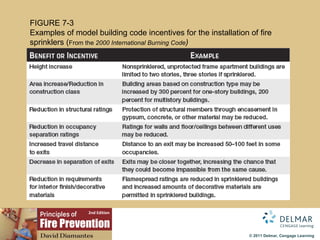
Which Buildings and Why Automatic sprinklers: most cost-effective and efficient method (trade-off incentive) Chances of dying in a fire; average property loss per fire: cut by ½ - ⅔ Completely sprinklered building Additional story in height; larger in size Reduced fire resistance ratings of structural members Increased travel distance to exits
Which Buildings and Why (cont’d.) How much can be safely traded away? Responsibility of local fire prevention bureau Fire protection systems required with: High-risk occupants: hospitals, prisons, schools Large occupant loads: theaters, nightclubs, passenger terminals High fire loads: warehouses, stores
FIGURE 7-3 Examples of model building code incentives for the installation of fire sprinklers ( From the  2000 International Burning Code )
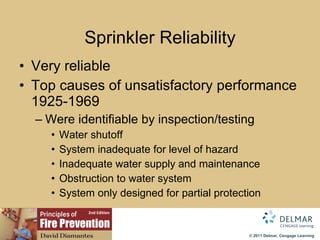
Sprinkler Reliability Very reliable Top causes of unsatisfactory performance 1925-1969 Were identifiable by inspection/testing Water shutoff System inadequate for level of hazard Inadequate water supply and maintenance Obstruction to water system System only designed for partial protection
Fire Departments and Fire Protection System Inspections Fire departments inspecting new fire protection systems: fairly recent Still in some cases, fire departments forced to live with what building department approves
Fire Protection Systems Tests Fire Codes and Acceptance Tests Systems Testing Benefits Maintenance and Retests Contractor Oversight
Fire Codes and Acceptance Tests Mandated by model fire codes for all required fire suppression/alarm systems Acceptance tests Included within the code-referenced standards for installation Contractor’s certification of completion
Systems Testing Benefits Installation in accord with approved plans Conditions in the structure accurately reflect those used to design the system Additional set of eyes: construction safety Interaction between fire department and building department personnel Increased cooperation and safer structures
Systems Testing Benefits (cont’d.) Interaction between fire department inspectors and contractors Better understand expectations/needs Valuable training for firefighters and prospective fire officers Design/operation of fire protection systems
Maintenance and Retests Ensuring that systems are properly designed and installed, not enough Must be adequately maintained and repaired Maintenance is cheaper than extensive repairs or replacement
Contractor Oversight Fire inspector: ensure the contractor performs job in accordance with the code Not tell him how to perform the job
Contractor Oversight (cont’d.) Requirements: clearly spelled out, readily available, and fairly implemented Plan submissions and permits, test protocols and fees, and scheduling procedures Playing favorites: illegal Delays in inspections and approvals slow down construction
Developing an Acceptance Testing Program If contemplating a program for inspection and witnessing of acceptance tests What agency has the oversight responsibility for fire protection systems installation? How many and what type of systems are installed each year? Booms/busts? Will fire department provide necessary personnel, training, and resources?
Summary Active fire protection systems Extinguishing, smoke control, alarm systems Increase level of life safety, and minimize property damage and business interruption If not reliable, systems can have negative impact (false function) Reliability: design, equipment, installation, and maintenance

Chapter 7

  • 1.
    Fire Protection SystemsTesting Chapter 7
  • 2.
    Objectives Upon completionof this chapter, you will be able to: Describe the fire code official’s role in the inspection and testing of fire protection systems Explain the importance of systems acceptance tests, maintenance and periodic inspections, and retests
  • 3.
    Objectives (cont’d.) Listfour system elements that contribute to reliability Discuss the impact of unreliable fire protection systems on the public, the business community, and the fire service
  • 4.
    Active Fire Protection Have moving parts and perform operations Improperly designed/installed/maintained fire protection systems cause problems For fire department, owner/occupant, public Public perception that signals are false alarm results in: Genuine public apathy at best Significant public danger at worst
  • 5.
    Fire Protection Systems Active fire protection features Reduce property loss Minimize business interruption Protect lives of building occupants Effectiveness depends on reliability John M. Cholin, P.E.: Reliability depends on design, equipment, installation, and maintenance
  • 6.
    Which Buildings andWhy Automatic sprinklers: most cost-effective and efficient method (trade-off incentive) Chances of dying in a fire; average property loss per fire: cut by ½ - ⅔ Completely sprinklered building Additional story in height; larger in size Reduced fire resistance ratings of structural members Increased travel distance to exits
  • 7.
    Which Buildings andWhy (cont’d.) How much can be safely traded away? Responsibility of local fire prevention bureau Fire protection systems required with: High-risk occupants: hospitals, prisons, schools Large occupant loads: theaters, nightclubs, passenger terminals High fire loads: warehouses, stores
  • 8.
    FIGURE 7-3 Examplesof model building code incentives for the installation of fire sprinklers ( From the 2000 International Burning Code )
  • 9.
    Sprinkler Reliability Veryreliable Top causes of unsatisfactory performance 1925-1969 Were identifiable by inspection/testing Water shutoff System inadequate for level of hazard Inadequate water supply and maintenance Obstruction to water system System only designed for partial protection
  • 10.
    Fire Departments andFire Protection System Inspections Fire departments inspecting new fire protection systems: fairly recent Still in some cases, fire departments forced to live with what building department approves
  • 11.
    Fire Protection SystemsTests Fire Codes and Acceptance Tests Systems Testing Benefits Maintenance and Retests Contractor Oversight
  • 12.
    Fire Codes andAcceptance Tests Mandated by model fire codes for all required fire suppression/alarm systems Acceptance tests Included within the code-referenced standards for installation Contractor’s certification of completion
  • 13.
    Systems Testing BenefitsInstallation in accord with approved plans Conditions in the structure accurately reflect those used to design the system Additional set of eyes: construction safety Interaction between fire department and building department personnel Increased cooperation and safer structures
  • 14.
    Systems Testing Benefits(cont’d.) Interaction between fire department inspectors and contractors Better understand expectations/needs Valuable training for firefighters and prospective fire officers Design/operation of fire protection systems
  • 15.
    Maintenance and RetestsEnsuring that systems are properly designed and installed, not enough Must be adequately maintained and repaired Maintenance is cheaper than extensive repairs or replacement
  • 16.
    Contractor Oversight Fireinspector: ensure the contractor performs job in accordance with the code Not tell him how to perform the job
  • 17.
    Contractor Oversight (cont’d.)Requirements: clearly spelled out, readily available, and fairly implemented Plan submissions and permits, test protocols and fees, and scheduling procedures Playing favorites: illegal Delays in inspections and approvals slow down construction
  • 18.
    Developing an AcceptanceTesting Program If contemplating a program for inspection and witnessing of acceptance tests What agency has the oversight responsibility for fire protection systems installation? How many and what type of systems are installed each year? Booms/busts? Will fire department provide necessary personnel, training, and resources?
  • 19.
    Summary Active fireprotection systems Extinguishing, smoke control, alarm systems Increase level of life safety, and minimize property damage and business interruption If not reliable, systems can have negative impact (false function) Reliability: design, equipment, installation, and maintenance