Inspection   Chapter 6
Objectives Upon completion of this chapter, you will be able to: Define the term  acceptable risk  and discuss its impact on the level of code enforcement Discuss the potential impact of inspections on a jurisdiction’s fire record
Objectives (cont’d.) Define the term  selective enforcement  as applied to fire codes Describe two methods of determining inspection priorities and discuss the advantages and disadvantages of both
The Value of Inspections The heart of any fire hazard law is INSPECTION, the value of which is generally underestimated as it is not spectacular or colorful “ Report of the Virginia Advisory Legislative Council to the Governor and the General Assembly of Virginia,” Senate Document No. 11, 1948
Demand for Inspections Acceptable risk constantly changes The level of support is constantly evolving The effectiveness of inspections is proven Incidence of fire could be reduced by 50% Inspection is a motivating factor for fire prevention
The Inspections Program The case for inspecting every occupancy is compelling A  finite number of inspections can be conducted 1979 NFPA study demonstrated effectiveness of company inspections Inspection priorities must be established
The Purpose of Fire Inspections 1975 AIA’s  Special Interest Bulletin No. 5 Seven objectives for an inspection program Obtain proper life safety conditions Keep fires from starting Keep fires from spreading Determine adequacy and maintenance of systems Preplan firefighting procedure Stimulate cooperation Ensure compliance with laws, ordinances
Selective Code Enforcement Illegal code enforcement actions based on political or other motives Unethical and illegal Must always be on guard against influences that might lead to the perception of selective enforcement
Establishing Inspection Priorities A well-disciplined approach prioritizes inspections based on: Risk Actual hazards associated with certain occupancy classes  Permit system Determines inspection priorities based on permits required by the model fire codes
The Permit Model 2009  International Fire Code  contains: 46 operational permit categories 12 construction permit categories Relationship between list of permits from the model fire codes and large-loss fires Inspect processes and occupancies requiring permits under the fire code Violating fire code is a misdemeanor
The Inspection Model Method of determining inspection priorities Local officials select the occupancies to be inspected Develop a written plan Inspection warrant: issued by a court commanding an officer to inspect a specific premises
Inspections of Existing Occupancies The fire official: the broadest mandate Most buildings and structures are within the scope of the model fire codes Right of entry clause: fire officials to enter buildings/premises with permission of occupant Hazard must justify what Amendment IV to the Constitution guards against
Routine Inspections S hall: requirement of the code that must be performed; action is mandatory Notice of violation: issued to a property owner or occupant listing Unsafe conditions Applicable code sections Required corrective action Date of follow-up inspection
Seasonal Inspections Holidays pose specific fire hazards to be anticipated Best course is rigid regulation of fireworks sales and sure prosecution of violators Permit application for aerial displays should include Site plans, inventories, operator qualifications, storage/security arrangements, and rain date
Special Inspections Large assembly occupancies Significant potential for loss of life Additional inspections to be conducted when facilities are at peak levels Fire safety strategy approved for a location must be appropriate for residents/structure Defend-in-place strategy: structures for persons where evacuation is unlikely
New Construction Inspections Ensure new structures are constructed in accordance with model codes Job for the building official Renovations of existing structures must comply with current codes Treated much the same as new construction
Coordination to Ensure Fire Operations One construction regulation concern Fire department’s ability to deal with fires and emergencies during construction Regulation for safety: not black and white Code enforcement agencies should speak with one voice
Fire Protection Systems Tests and Inspections Installation and acceptance tests for new fire protection systems essential  Improperly designed or installed systems result in increased false alarms
Special Hazards Modern fire codes address a staggering array of safety concerns Inspectors are not “experts” in every field Some processes require special training Inspectors must have good working knowledge of the basics
Explosives and Blasting To enforce construction blasting and explosives regulation requires varied skills Procedures should be established for rapid response to citizen complaints Preblast survey: inspection in the vicinity of future blasting operations Shot records: blasting operations Seismograph records: vibration/airblast
Fuel Storage Facilities From a few hundred gallons in temporary tanks to millions of gallons in tank farms Tanks are installed above ground, underground, and in buildings/enclosures Regulation of USTs Responsibility of environmental officials Tank installation and maintenance Complex procedures
Company Inspections Inspecting all occupancies lowers fire loss In-service company inspections successful Personnel should be Trained to perform a basic safety inspection Directed to request assistance Goals of in-service inspection program Increasing safety; eliminating fire hazards Improved community relations
Residential Inspections Registration/inspection programs for rented residential occupancies T o prevent urban decay Residential properties are within the scope of the model fire codes Some fire department inspectors are cross-trained Serve as property maintenance inspectors
Residential Inspection Effectiveness Gauging effectiveness of inspection programs: time consuming and difficult Chief Lamb of Niles, Michigan Fire Department: inspections program study 46% decline in fires in tenant-occupied residential occupancies regularly inspected Incidence in owner occupied units that were not inspected remained unchanged
Inspection Tools Tools assist inspectors/ensure consistency Checklists common Digital checklists now available Checklist no substitute for training/experience Untrained/unskilled inspectors cannot perform adequate inspections by using technology
Paper Checklists Code-based checklists easily developed Developing checklist items Good training opportunity Inspectors should carry codebooks Refer to code when issuing notice of violation You cannot enforce a checklist!
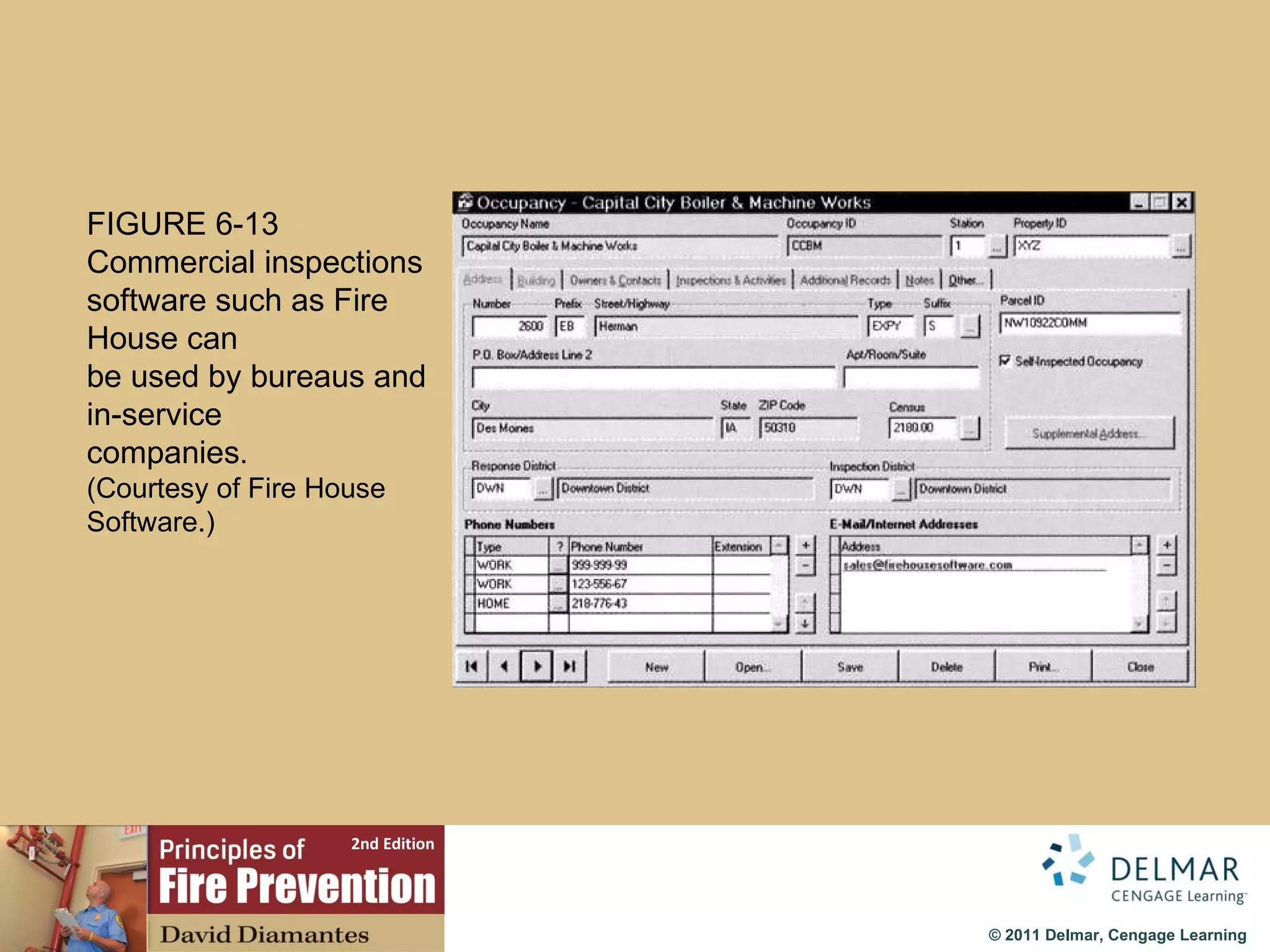
Inspection Software Consider before purchasing a program Developer credentials, program platform Is it based on your code system?  Can changes/updates be performed in house? Does it interface with department programs? Will it meet legal requirements of your code? Is the system user friendly? Can you contact other users?
FIGURE 6-13 Commercial inspections software such as Fire House can be used by bureaus and in-service companies .  (Courtesy of Fire House Software.)
Summary Level of support constantly evolving “ Acceptable risk”: public willing to live with without demanding government action Mission of fire service: preservation of property and protection of the public Inspections effectiveness proven Determine: which occupancies will be inspected, how often, and in what order

Chapter 6

  • 1.
    Inspection Chapter 6
  • 2.
    Objectives Upon completionof this chapter, you will be able to: Define the term acceptable risk and discuss its impact on the level of code enforcement Discuss the potential impact of inspections on a jurisdiction’s fire record
  • 3.
    Objectives (cont’d.) Definethe term selective enforcement as applied to fire codes Describe two methods of determining inspection priorities and discuss the advantages and disadvantages of both
  • 4.
    The Value ofInspections The heart of any fire hazard law is INSPECTION, the value of which is generally underestimated as it is not spectacular or colorful “ Report of the Virginia Advisory Legislative Council to the Governor and the General Assembly of Virginia,” Senate Document No. 11, 1948
  • 5.
    Demand for InspectionsAcceptable risk constantly changes The level of support is constantly evolving The effectiveness of inspections is proven Incidence of fire could be reduced by 50% Inspection is a motivating factor for fire prevention
  • 6.
    The Inspections ProgramThe case for inspecting every occupancy is compelling A finite number of inspections can be conducted 1979 NFPA study demonstrated effectiveness of company inspections Inspection priorities must be established
  • 7.
    The Purpose ofFire Inspections 1975 AIA’s Special Interest Bulletin No. 5 Seven objectives for an inspection program Obtain proper life safety conditions Keep fires from starting Keep fires from spreading Determine adequacy and maintenance of systems Preplan firefighting procedure Stimulate cooperation Ensure compliance with laws, ordinances
  • 8.
    Selective Code EnforcementIllegal code enforcement actions based on political or other motives Unethical and illegal Must always be on guard against influences that might lead to the perception of selective enforcement
  • 9.
    Establishing Inspection PrioritiesA well-disciplined approach prioritizes inspections based on: Risk Actual hazards associated with certain occupancy classes Permit system Determines inspection priorities based on permits required by the model fire codes
  • 10.
    The Permit Model2009 International Fire Code contains: 46 operational permit categories 12 construction permit categories Relationship between list of permits from the model fire codes and large-loss fires Inspect processes and occupancies requiring permits under the fire code Violating fire code is a misdemeanor
  • 11.
    The Inspection ModelMethod of determining inspection priorities Local officials select the occupancies to be inspected Develop a written plan Inspection warrant: issued by a court commanding an officer to inspect a specific premises
  • 12.
    Inspections of ExistingOccupancies The fire official: the broadest mandate Most buildings and structures are within the scope of the model fire codes Right of entry clause: fire officials to enter buildings/premises with permission of occupant Hazard must justify what Amendment IV to the Constitution guards against
  • 13.
    Routine Inspections Shall: requirement of the code that must be performed; action is mandatory Notice of violation: issued to a property owner or occupant listing Unsafe conditions Applicable code sections Required corrective action Date of follow-up inspection
  • 14.
    Seasonal Inspections Holidayspose specific fire hazards to be anticipated Best course is rigid regulation of fireworks sales and sure prosecution of violators Permit application for aerial displays should include Site plans, inventories, operator qualifications, storage/security arrangements, and rain date
  • 15.
    Special Inspections Largeassembly occupancies Significant potential for loss of life Additional inspections to be conducted when facilities are at peak levels Fire safety strategy approved for a location must be appropriate for residents/structure Defend-in-place strategy: structures for persons where evacuation is unlikely
  • 16.
    New Construction InspectionsEnsure new structures are constructed in accordance with model codes Job for the building official Renovations of existing structures must comply with current codes Treated much the same as new construction
  • 17.
    Coordination to EnsureFire Operations One construction regulation concern Fire department’s ability to deal with fires and emergencies during construction Regulation for safety: not black and white Code enforcement agencies should speak with one voice
  • 18.
    Fire Protection SystemsTests and Inspections Installation and acceptance tests for new fire protection systems essential Improperly designed or installed systems result in increased false alarms
  • 19.
    Special Hazards Modernfire codes address a staggering array of safety concerns Inspectors are not “experts” in every field Some processes require special training Inspectors must have good working knowledge of the basics
  • 20.
    Explosives and BlastingTo enforce construction blasting and explosives regulation requires varied skills Procedures should be established for rapid response to citizen complaints Preblast survey: inspection in the vicinity of future blasting operations Shot records: blasting operations Seismograph records: vibration/airblast
  • 21.
    Fuel Storage FacilitiesFrom a few hundred gallons in temporary tanks to millions of gallons in tank farms Tanks are installed above ground, underground, and in buildings/enclosures Regulation of USTs Responsibility of environmental officials Tank installation and maintenance Complex procedures
  • 22.
    Company Inspections Inspectingall occupancies lowers fire loss In-service company inspections successful Personnel should be Trained to perform a basic safety inspection Directed to request assistance Goals of in-service inspection program Increasing safety; eliminating fire hazards Improved community relations
  • 23.
    Residential Inspections Registration/inspectionprograms for rented residential occupancies T o prevent urban decay Residential properties are within the scope of the model fire codes Some fire department inspectors are cross-trained Serve as property maintenance inspectors
  • 24.
    Residential Inspection EffectivenessGauging effectiveness of inspection programs: time consuming and difficult Chief Lamb of Niles, Michigan Fire Department: inspections program study 46% decline in fires in tenant-occupied residential occupancies regularly inspected Incidence in owner occupied units that were not inspected remained unchanged
  • 25.
    Inspection Tools Toolsassist inspectors/ensure consistency Checklists common Digital checklists now available Checklist no substitute for training/experience Untrained/unskilled inspectors cannot perform adequate inspections by using technology
  • 26.
    Paper Checklists Code-basedchecklists easily developed Developing checklist items Good training opportunity Inspectors should carry codebooks Refer to code when issuing notice of violation You cannot enforce a checklist!
  • 27.
    Inspection Software Considerbefore purchasing a program Developer credentials, program platform Is it based on your code system? Can changes/updates be performed in house? Does it interface with department programs? Will it meet legal requirements of your code? Is the system user friendly? Can you contact other users?
  • 28.
    FIGURE 6-13 Commercialinspections software such as Fire House can be used by bureaus and in-service companies . (Courtesy of Fire House Software.)
  • 29.
    Summary Level ofsupport constantly evolving “ Acceptable risk”: public willing to live with without demanding government action Mission of fire service: preservation of property and protection of the public Inspections effectiveness proven Determine: which occupancies will be inspected, how often, and in what order