Fire Prevention Records and Record Keeping   Chapter 11
Objectives Upon completion of this chapter, you will be able to: Describe what is meant by the terms  public  record and retention schedule Describe the Freedom of Information Act (FOIA) and its impact on the day-to-day  working of  government
Objectives (cont’d.) Discuss the reasons for the exemptions included in the  FOIA Discuss the benefits of electronic information management systems (IMS) in the operation of a fire prevention program Discuss the potential impact of poor planning and implementation of an electronic IMS
Legal Requirements for Record Keeping Public records: generated by and in possession of fire prevention bureaus Legal term Not   necessarily   open to public view Fire investigation reports Witness statements Fire scene photographs Autopsy reports
Freedom of Information and Public Access Laws Provide for public access to government documents and meetings Government entities required to make information public, within certain limitations Freedom of Information Act  (FOIA),   1967 Workings of government open to public Press access to agencies and their information significantly increased
Exceptions Ongoing criminal investigations Medical records Personnel records Items affecting national security Trade secrets Attorney–client communications Copyrighted materials may be accessible for viewing, but photocopying is prohibited
Practical Application Jurisdictions must have policies to ensure compliance while maintaining safeguards When in doubt, the jurisdiction’s legal representative should be contacted Discussions must take place in public at the appointed time All interested parties have the opportunity to observe the proceedings
Record Retention and Storage Maintenance of records by fire bureaus governed by regulations Promulgated under state statutes by a state entity that serves as the state archivist Failure to retain the records in accordance with the regulations is a  criminal  act
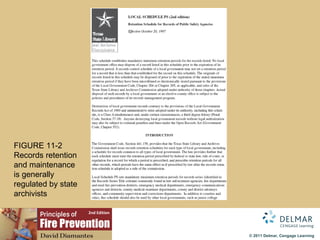
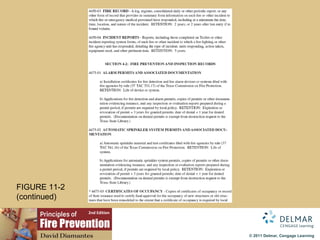
FIGURE 11-2 Records retention and maintenance is generally regulated by state archivists
FIGURE 11-2 (continued)
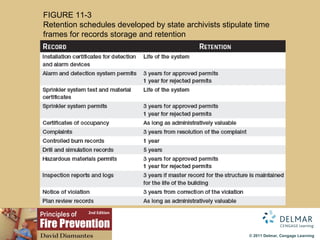
FIGURE 11-3 Retention schedules developed by state archivists stipulate time frames for records storage and retention
Records Management Systems Essential: effective fire prevention program Cases can be won or lost based on a single report or on the inability to find a single report Skill in performing “business” functions As important as preventing/extinguishing fires Carefully identify: easily tracked and clearly defined useful information elements
Records Management Systems  (cont’d.) Importance of accurate statistics cannot be overstated Justify additional staff and resources Track employee performance Use as a basis for cost recovery or user fees Potential value of sharing information is enormous
Types of Records Management Systems System used   must be: Efficient, effective, and sustainable Information gathered should reflect the mission of the organization Collecting and maintaining statistics should not become the mission Complex does not necessarily mean better
Manual Systems Most organizations maintain at least some records manually Paper Pros Transportable and cheap; used in power failures; looked at in private; does not take expertise to use Cons Takes up considerable space; must be manually filed/searched; harder statistical study
Electronic Information Management Systems Fine line between useful data collection  and  useless   information overload If system cannot meet legal requirements (inspection process), worse than useless Without proper planning/implementation: Going high tech can quickly derail any activity
Electronic Information Management Systems (cont’d.) Operational needs Compare with capabilities of proposed system Conform to legal requirements Elements should meet requirements Adaptable to normal operating procedures “ Smart” system will not compensate poor training Technical support Life expectancy of data storage media More time spent up front, greater success chance
Financial Records Must be generated and maintained in accordance with appropriate regulations In addition to state laws, system used should conform to parent organization’s system Designed to keep honest people honest and facilitate the audit process
Summary Records generated by and in the custody of fire prevention bureaus are public Regulated by state or federal laws and regulations Maintained within some type  of IMS Must be developed/implemented to complement normal operating procedure Deliberation by public bodies prohibited except at duly authorized public meetings

Chapter 11

  • 1.
    Fire Prevention Recordsand Record Keeping Chapter 11
  • 2.
    Objectives Upon completionof this chapter, you will be able to: Describe what is meant by the terms public record and retention schedule Describe the Freedom of Information Act (FOIA) and its impact on the day-to-day working of government
  • 3.
    Objectives (cont’d.) Discussthe reasons for the exemptions included in the FOIA Discuss the benefits of electronic information management systems (IMS) in the operation of a fire prevention program Discuss the potential impact of poor planning and implementation of an electronic IMS
  • 4.
    Legal Requirements forRecord Keeping Public records: generated by and in possession of fire prevention bureaus Legal term Not necessarily open to public view Fire investigation reports Witness statements Fire scene photographs Autopsy reports
  • 5.
    Freedom of Informationand Public Access Laws Provide for public access to government documents and meetings Government entities required to make information public, within certain limitations Freedom of Information Act (FOIA), 1967 Workings of government open to public Press access to agencies and their information significantly increased
  • 6.
    Exceptions Ongoing criminalinvestigations Medical records Personnel records Items affecting national security Trade secrets Attorney–client communications Copyrighted materials may be accessible for viewing, but photocopying is prohibited
  • 7.
    Practical Application Jurisdictionsmust have policies to ensure compliance while maintaining safeguards When in doubt, the jurisdiction’s legal representative should be contacted Discussions must take place in public at the appointed time All interested parties have the opportunity to observe the proceedings
  • 8.
    Record Retention andStorage Maintenance of records by fire bureaus governed by regulations Promulgated under state statutes by a state entity that serves as the state archivist Failure to retain the records in accordance with the regulations is a criminal act
  • 9.
    FIGURE 11-2 Recordsretention and maintenance is generally regulated by state archivists
  • 10.
  • 11.
    FIGURE 11-3 Retentionschedules developed by state archivists stipulate time frames for records storage and retention
  • 12.
    Records Management SystemsEssential: effective fire prevention program Cases can be won or lost based on a single report or on the inability to find a single report Skill in performing “business” functions As important as preventing/extinguishing fires Carefully identify: easily tracked and clearly defined useful information elements
  • 13.
    Records Management Systems (cont’d.) Importance of accurate statistics cannot be overstated Justify additional staff and resources Track employee performance Use as a basis for cost recovery or user fees Potential value of sharing information is enormous
  • 14.
    Types of RecordsManagement Systems System used must be: Efficient, effective, and sustainable Information gathered should reflect the mission of the organization Collecting and maintaining statistics should not become the mission Complex does not necessarily mean better
  • 15.
    Manual Systems Mostorganizations maintain at least some records manually Paper Pros Transportable and cheap; used in power failures; looked at in private; does not take expertise to use Cons Takes up considerable space; must be manually filed/searched; harder statistical study
  • 16.
    Electronic Information ManagementSystems Fine line between useful data collection and useless information overload If system cannot meet legal requirements (inspection process), worse than useless Without proper planning/implementation: Going high tech can quickly derail any activity
  • 17.
    Electronic Information ManagementSystems (cont’d.) Operational needs Compare with capabilities of proposed system Conform to legal requirements Elements should meet requirements Adaptable to normal operating procedures “ Smart” system will not compensate poor training Technical support Life expectancy of data storage media More time spent up front, greater success chance
  • 18.
    Financial Records Mustbe generated and maintained in accordance with appropriate regulations In addition to state laws, system used should conform to parent organization’s system Designed to keep honest people honest and facilitate the audit process
  • 19.
    Summary Records generatedby and in the custody of fire prevention bureaus are public Regulated by state or federal laws and regulations Maintained within some type of IMS Must be developed/implemented to complement normal operating procedure Deliberation by public bodies prohibited except at duly authorized public meetings