1/29/2014
1
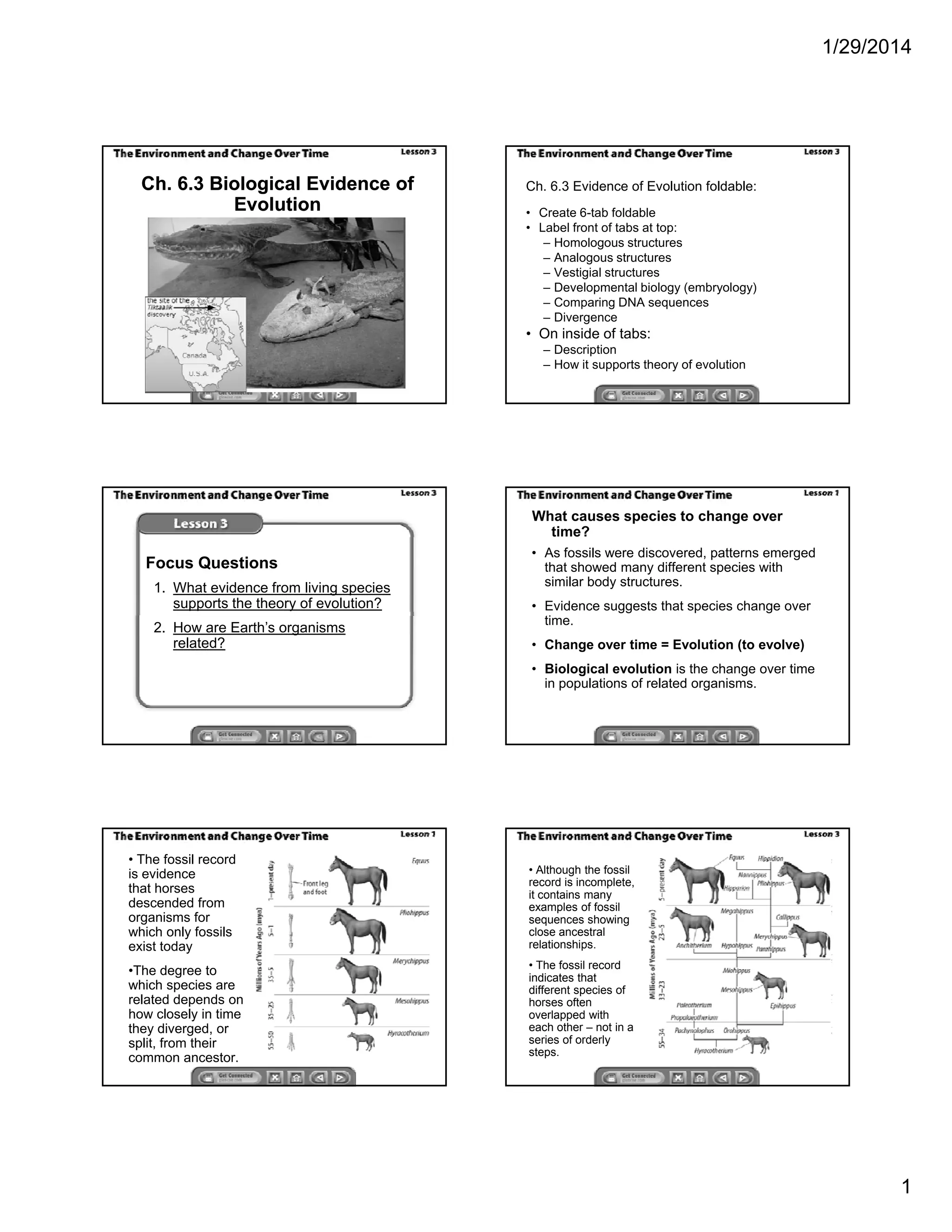
Ch. 6.3 Biological Evidence ofCh. 6.3 Biological Evidence of
EvolutionEvolution
Ch. 6.3 Evidence of Evolution foldable:
• Create 6-tab foldable
• Label front of tabs at top:
– Homologous structures
– Analogous structures
– Vestigial structuresVestigial structures
– Developmental biology (embryology)
– Comparing DNA sequences
– Divergence
• On inside of tabs:
– Description
– How it supports theory of evolution
1. What evidence from living species
supports the theory of evolution?
Focus Questions
2. How are Earth’s organisms
related?
• As fossils were discovered, patterns emerged
that showed many different species with
similar body structures.
• Evidence suggests that species change over
ti
What causes species to change over
time?
time.
• Change over time = Evolution (to evolve)
• Biological evolution is the change over time
in populations of related organisms.
• The fossil record
is evidence
that horses
descended from
organisms for
which only fossils
exist today
•The degree to
which species are
related depends on
how closely in time
they diverged, or
split, from their
common ancestor.
• Although the fossil
record is incomplete,
it contains many
examples of fossil
sequences showing
close ancestral
relationships.
• The fossil record
indicates that
different species of
horses often
overlapped with
each other – not in a
series of orderly
steps.
1/29/2014
2
How do we know evolution happens?
http://www.pbs.org/wgbh/evolution/educators/course/session3/engage_a.html
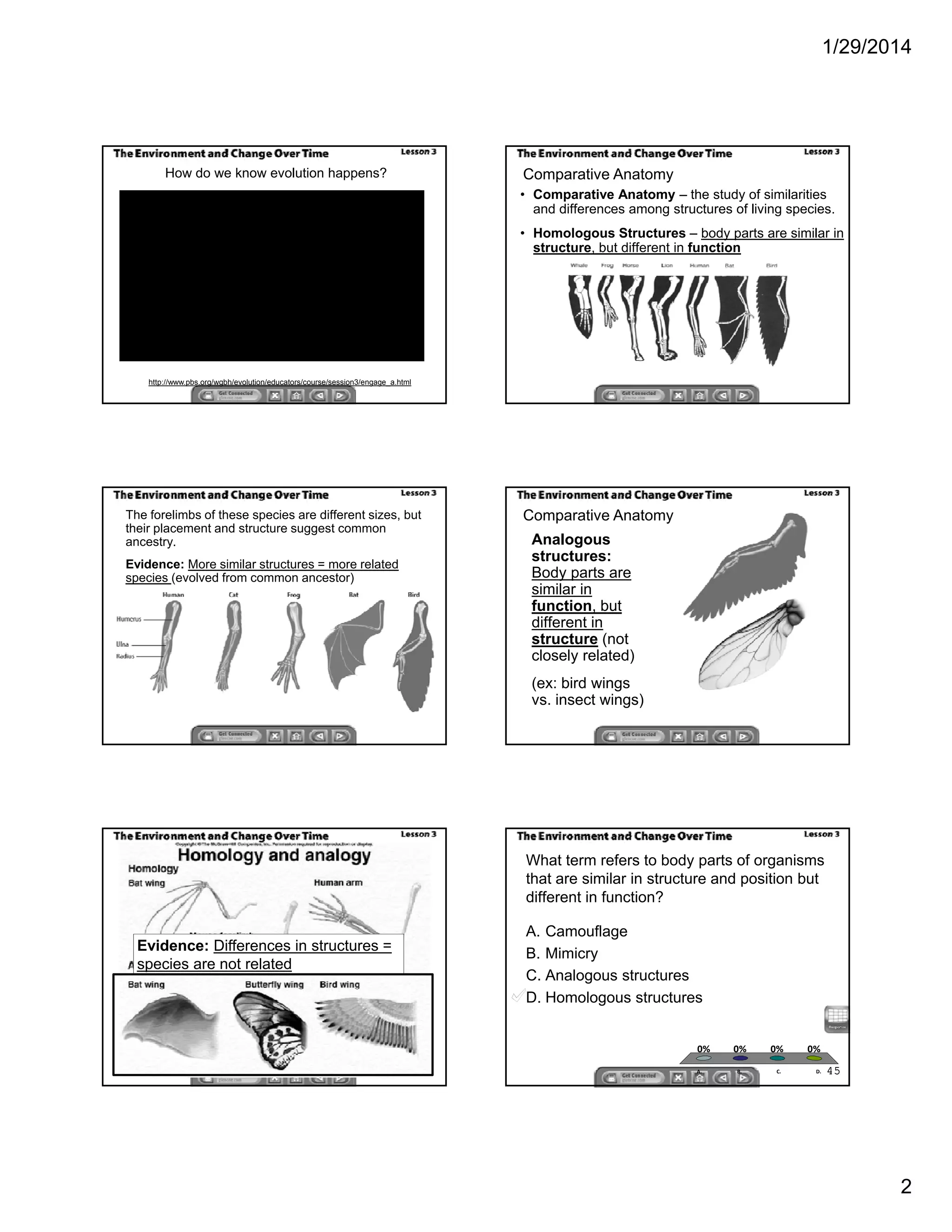
• Comparative Anatomy – the study of similarities
and differences among structures of living species.
• Homologous Structures – body parts are similar in
structure, but different in function
Comparative Anatomy
The forelimbs of these species are different sizes, but
their placement and structure suggest common
ancestry.
Evidence: More similar structures = more related
species (evolved from common ancestor)
Analogous
structures:
Body parts are
similar in
function, but
Comparative Anatomy
different in
structure (not
closely related)
(ex: bird wings
vs. insect wings)
Evidence: Differences in structures =
species are not related
What term refers to body parts of organisms
that are similar in structure and position but
different in function?
A. Camouflage
B. Mimicry
A. B. C. D.
0% 0%0%0%
B. Mimicry
C. Analogous structures
D. Homologous structures
45
1/29/2014
3
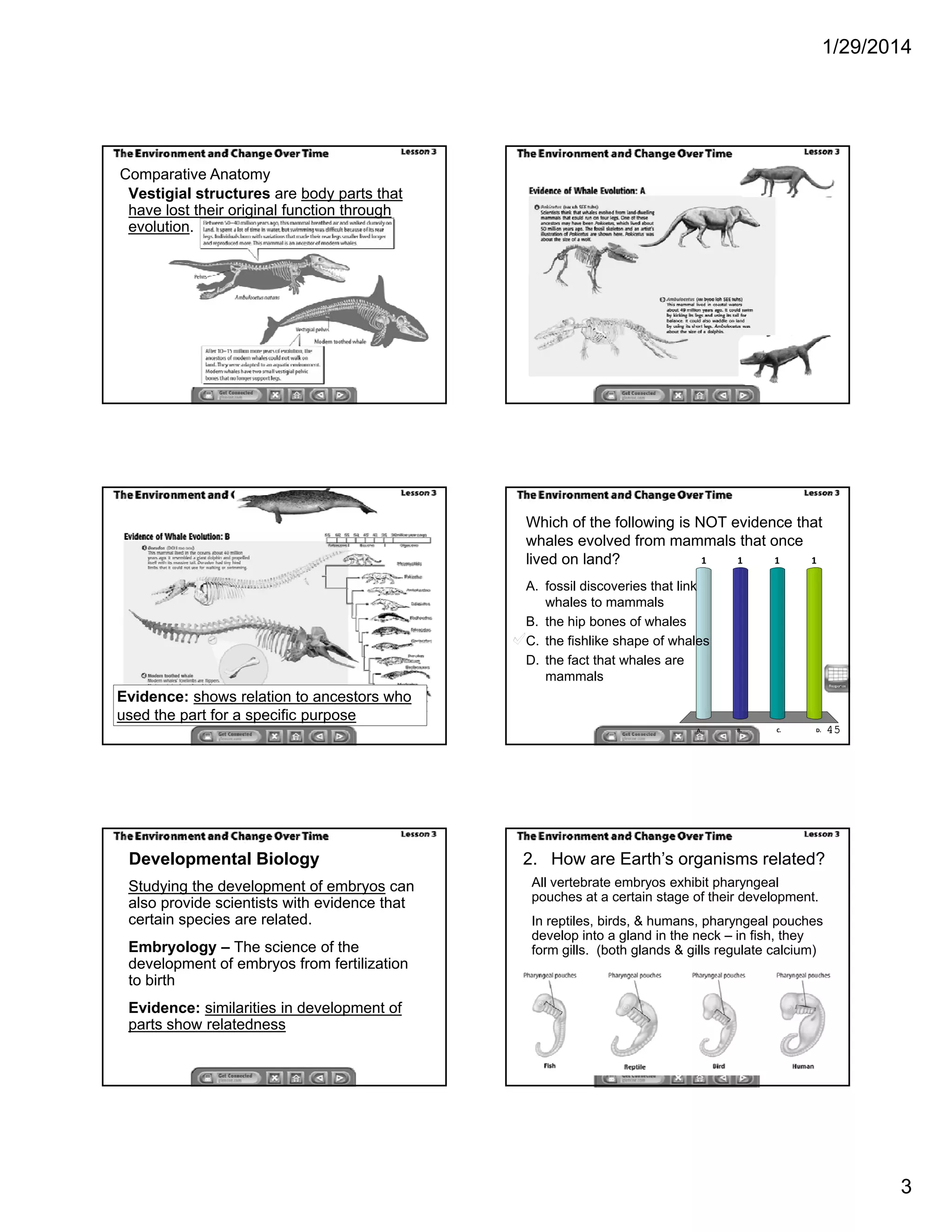
Vestigial structures are body parts that
have lost their original function through
evolution.
Comparative Anatomy
Section 1 Change over Time
Evidence: shows relation to ancestors who
used the part for a specific purpose
Which of the following is NOT evidence that
whales evolved from mammals that once
lived on land? 1 111
A. fossil discoveries that link
whales to mammals
A. B. C. D.
B. the hip bones of whales
C. the fishlike shape of whales
D. the fact that whales are
mammals
45
Studying the development of embryos can
also provide scientists with evidence that
certain species are related.
Embryology – The science of the
Developmental Biology
development of embryos from fertilization
to birth
Evidence: similarities in development of
parts show relatedness
All vertebrate embryos exhibit pharyngeal
pouches at a certain stage of their development.
In reptiles, birds, & humans, pharyngeal pouches
develop into a gland in the neck – in fish, they
form gills. (both glands & gills regulate calcium)
2. How are Earth’s organisms related?
g ( g g g )
1/29/2014
4
Rat Chicken Human http://www.pbs.org/wgbh/evolution/library/04/2/quicktime/l_042_02.html
What term refers to body parts that perform
a similar function but differ in structure?
A. Analogous structures
B. Homologous structures
A. B. C. D.
0% 0%0%0%
B. Homologous structures
C. Pharyngeal pouches
D. Vestigial pelvis
45
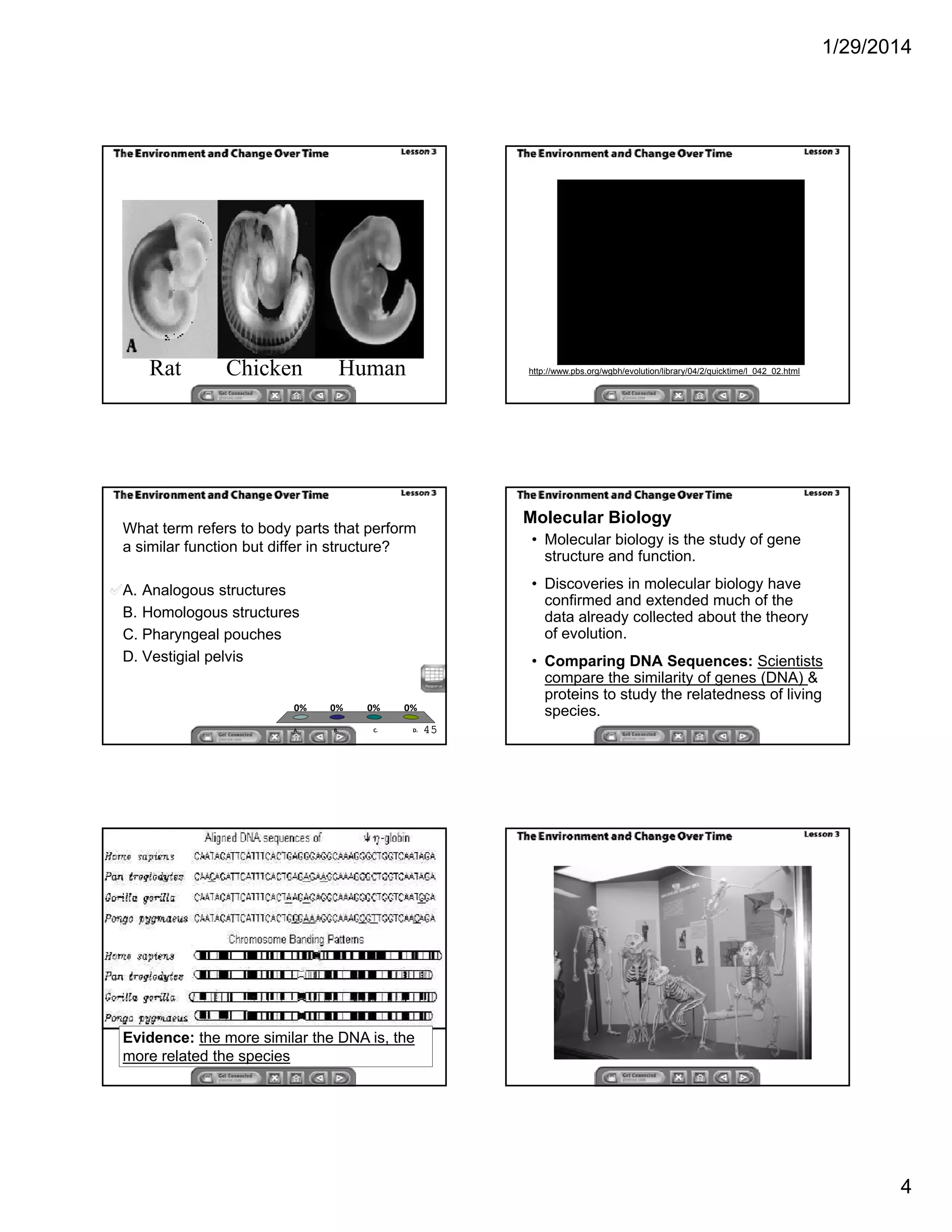
• Molecular biology is the study of gene
structure and function.
• Discoveries in molecular biology have
confirmed and extended much of the
data already collected about the theory
Molecular Biology
data already collected about the theory
of evolution.
• Comparing DNA Sequences: Scientists
compare the similarity of genes (DNA) &
proteins to study the relatedness of living
species.
Aligned DNA fragment and first chromosome banding patterns for man (Homo
sapiens), chimpanzee (Pan troglodytes), gorilla (Gorilla gorilla), and orangutan
(Pongo pygmaeus).
Evidence: the more similar the DNA is, the
more related the species
1/29/2014
5
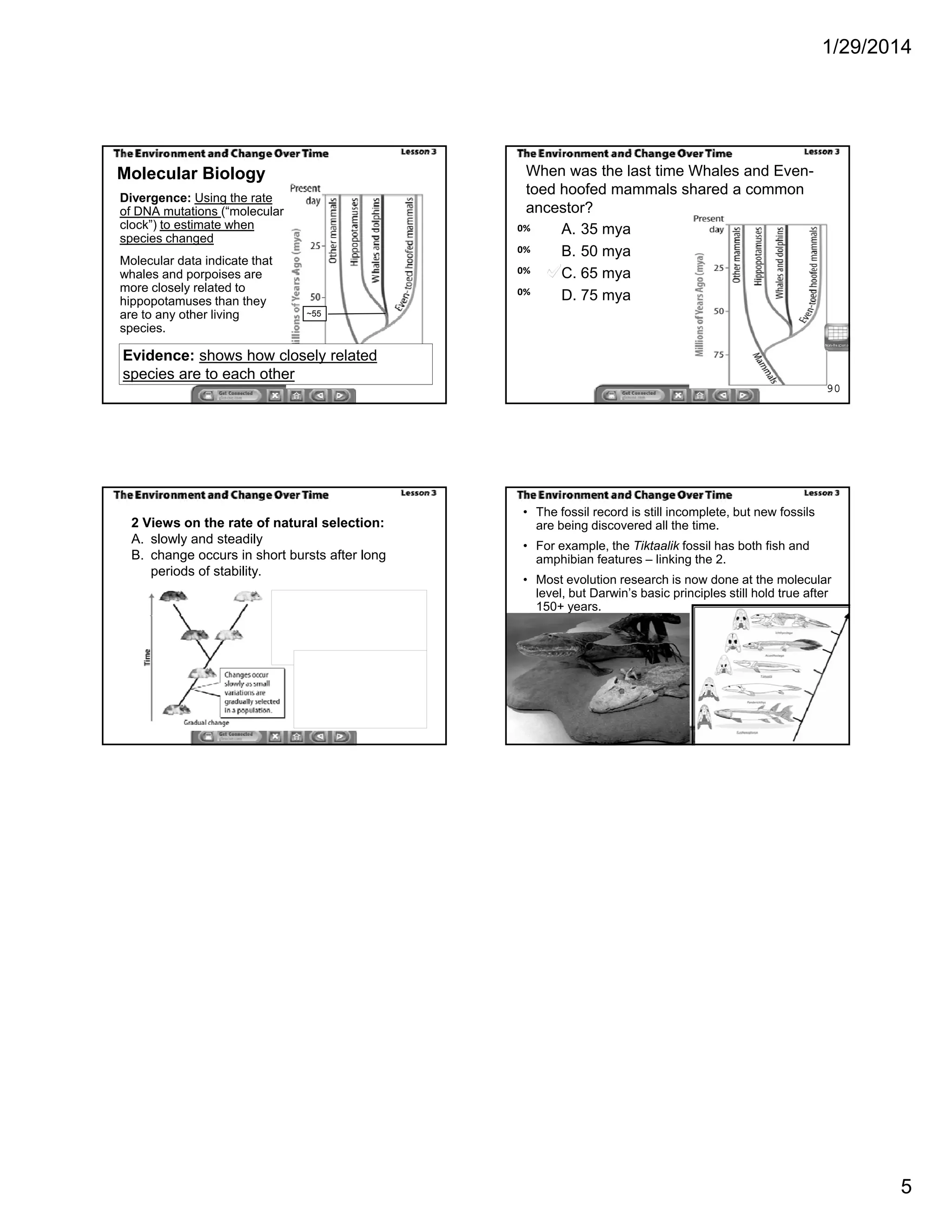
Divergence: Using the rate
of DNA mutations (“molecular
clock”) to estimate when
species changed
Molecular data indicate that
whales and porpoises are
Molecular Biology
whales and porpoises are
more closely related to
hippopotamuses than they
are to any other living
species.
~55
Evidence: shows how closely related
species are to each other
When was the last time Whales and Even-
toed hoofed mammals shared a common
ancestor?
0%
0%
0%
A. 35 mya
B. 50 mya
C 65 mya
0%
C. 65 mya
D. 75 mya
90
2 Views on the rate of natural selection:
A. slowly and steadily
B. change occurs in short bursts after long
periods of stability.
• The fossil record is still incomplete, but new fossils
are being discovered all the time.
• For example, the Tiktaalik fossil has both fish and
amphibian features – linking the 2.
• Most evolution research is now done at the molecular
level, but Darwin’s basic principles still hold true after
150+ years.

Ch. 6.3 Evidence of Evolution

  • 1.
    1/29/2014 1 Ch. 6.3 BiologicalEvidence ofCh. 6.3 Biological Evidence of EvolutionEvolution Ch. 6.3 Evidence of Evolution foldable: • Create 6-tab foldable • Label front of tabs at top: – Homologous structures – Analogous structures – Vestigial structuresVestigial structures – Developmental biology (embryology) – Comparing DNA sequences – Divergence • On inside of tabs: – Description – How it supports theory of evolution 1. What evidence from living species supports the theory of evolution? Focus Questions 2. How are Earth’s organisms related? • As fossils were discovered, patterns emerged that showed many different species with similar body structures. • Evidence suggests that species change over ti What causes species to change over time? time. • Change over time = Evolution (to evolve) • Biological evolution is the change over time in populations of related organisms. • The fossil record is evidence that horses descended from organisms for which only fossils exist today •The degree to which species are related depends on how closely in time they diverged, or split, from their common ancestor. • Although the fossil record is incomplete, it contains many examples of fossil sequences showing close ancestral relationships. • The fossil record indicates that different species of horses often overlapped with each other – not in a series of orderly steps.
  • 2.
    1/29/2014 2 How do weknow evolution happens? http://www.pbs.org/wgbh/evolution/educators/course/session3/engage_a.html • Comparative Anatomy – the study of similarities and differences among structures of living species. • Homologous Structures – body parts are similar in structure, but different in function Comparative Anatomy The forelimbs of these species are different sizes, but their placement and structure suggest common ancestry. Evidence: More similar structures = more related species (evolved from common ancestor) Analogous structures: Body parts are similar in function, but Comparative Anatomy different in structure (not closely related) (ex: bird wings vs. insect wings) Evidence: Differences in structures = species are not related What term refers to body parts of organisms that are similar in structure and position but different in function? A. Camouflage B. Mimicry A. B. C. D. 0% 0%0%0% B. Mimicry C. Analogous structures D. Homologous structures 45
  • 3.
    1/29/2014 3 Vestigial structures arebody parts that have lost their original function through evolution. Comparative Anatomy Section 1 Change over Time Evidence: shows relation to ancestors who used the part for a specific purpose Which of the following is NOT evidence that whales evolved from mammals that once lived on land? 1 111 A. fossil discoveries that link whales to mammals A. B. C. D. B. the hip bones of whales C. the fishlike shape of whales D. the fact that whales are mammals 45 Studying the development of embryos can also provide scientists with evidence that certain species are related. Embryology – The science of the Developmental Biology development of embryos from fertilization to birth Evidence: similarities in development of parts show relatedness All vertebrate embryos exhibit pharyngeal pouches at a certain stage of their development. In reptiles, birds, & humans, pharyngeal pouches develop into a gland in the neck – in fish, they form gills. (both glands & gills regulate calcium) 2. How are Earth’s organisms related? g ( g g g )
  • 4.
    1/29/2014 4 Rat Chicken Humanhttp://www.pbs.org/wgbh/evolution/library/04/2/quicktime/l_042_02.html What term refers to body parts that perform a similar function but differ in structure? A. Analogous structures B. Homologous structures A. B. C. D. 0% 0%0%0% B. Homologous structures C. Pharyngeal pouches D. Vestigial pelvis 45 • Molecular biology is the study of gene structure and function. • Discoveries in molecular biology have confirmed and extended much of the data already collected about the theory Molecular Biology data already collected about the theory of evolution. • Comparing DNA Sequences: Scientists compare the similarity of genes (DNA) & proteins to study the relatedness of living species. Aligned DNA fragment and first chromosome banding patterns for man (Homo sapiens), chimpanzee (Pan troglodytes), gorilla (Gorilla gorilla), and orangutan (Pongo pygmaeus). Evidence: the more similar the DNA is, the more related the species
  • 5.
    1/29/2014 5 Divergence: Using therate of DNA mutations (“molecular clock”) to estimate when species changed Molecular data indicate that whales and porpoises are Molecular Biology whales and porpoises are more closely related to hippopotamuses than they are to any other living species. ~55 Evidence: shows how closely related species are to each other When was the last time Whales and Even- toed hoofed mammals shared a common ancestor? 0% 0% 0% A. 35 mya B. 50 mya C 65 mya 0% C. 65 mya D. 75 mya 90 2 Views on the rate of natural selection: A. slowly and steadily B. change occurs in short bursts after long periods of stability. • The fossil record is still incomplete, but new fossils are being discovered all the time. • For example, the Tiktaalik fossil has both fish and amphibian features – linking the 2. • Most evolution research is now done at the molecular level, but Darwin’s basic principles still hold true after 150+ years.