Unit 7:
Evidence
for Evolution
(1) Types of Evidence…
• Fossil Records
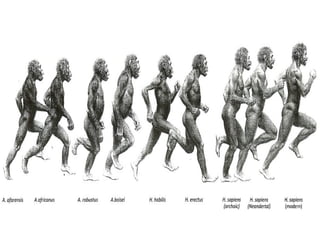
• Comparative Anatomy
• Biogeography
• Carbon dating and chemical composition
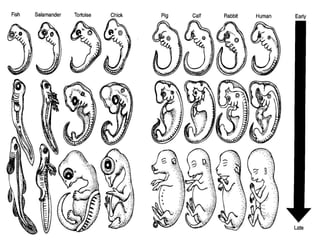
• Embryology
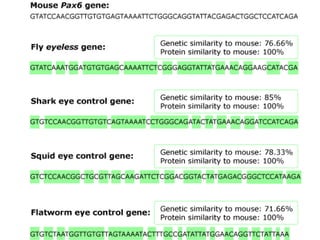
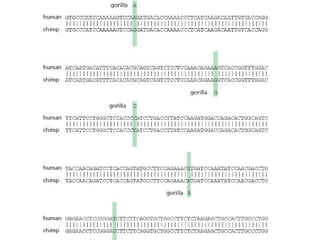
• DNA / Genetics
 WHALE VIDEO

 FOSSIL VIDEO 
(2) Comparative Anatomy
• By looking at fossils scientists can:
– Identify species which are extinct.
– Understand how and when certain anatomical
features developed, and in which types of
environments.
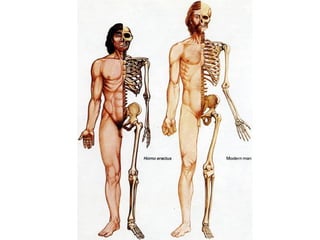
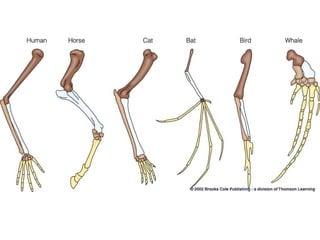
• Scientists can look at the skeletal structure
of different types of animals and…
– Look at similarities in body part development,
position and structure.
– Look at differences and consider causes.
(3) Types of Body Structures
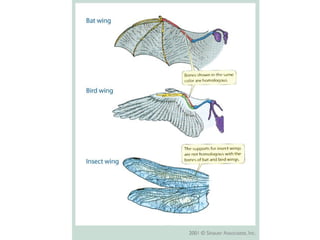
• Homologous Structures  Features in the body
part that are similar between different types of
animals, because they all evolved over time from
one common ancestor.
• Analogous Structures  Features in the body part
that are similar between different types of animals,
because they evolved in similar environments.
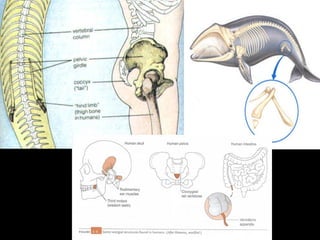
• Vestigial Structures  Features in the body part,
found between different animals, but no longer
have functions. (Proving a connection to a
common ancestor.)
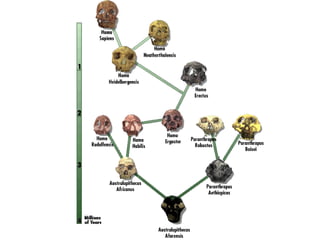
(4) Phylogenetic Trees
• A diagram used to show the evolutionary
relationships between different organisms.
• Also Includes:
– The common ancestor.
– The order organisms evolved in.
• Based off of Evidence:
– Fossils + Comparative Anatomy
– DNA
– Geology
(5) Common Ancestor
• The organism by which all other organisms
evolved from.
• The most primitive ancestor for that type of
organism.
(6) Phylo Tree Parts
• Bottom / Base = Oldest Organism/s
• Top = Most recently evolved organisms
• Organisms after a trait:
– Evolved after that trait existed in populations.
– Contain those traits.
• Organisms before a trait:
– Evolved before that trait existed in populations.
– Do NOT contain those traits.
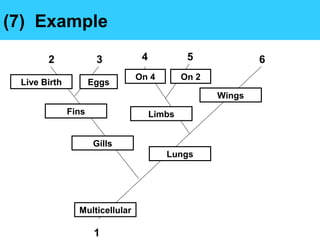
(7) Example
1
2 3 4 5 6
Multicellular
Gills
Lungs
Wings
Live Birth
LimbsFins
Eggs
On 4 On 2

Biology Unit 7 Notes: Evidence for Evolution & Phylogenetic Trees

  • 1.
  • 5.
    (1) Types ofEvidence… • Fossil Records • Comparative Anatomy • Biogeography • Carbon dating and chemical composition • Embryology • DNA / Genetics
  • 12.
  • 13.
  • 14.
    (2) Comparative Anatomy •By looking at fossils scientists can: – Identify species which are extinct. – Understand how and when certain anatomical features developed, and in which types of environments. • Scientists can look at the skeletal structure of different types of animals and… – Look at similarities in body part development, position and structure. – Look at differences and consider causes.
  • 15.
    (3) Types ofBody Structures • Homologous Structures  Features in the body part that are similar between different types of animals, because they all evolved over time from one common ancestor. • Analogous Structures  Features in the body part that are similar between different types of animals, because they evolved in similar environments. • Vestigial Structures  Features in the body part, found between different animals, but no longer have functions. (Proving a connection to a common ancestor.)
  • 19.
    (4) Phylogenetic Trees •A diagram used to show the evolutionary relationships between different organisms. • Also Includes: – The common ancestor. – The order organisms evolved in. • Based off of Evidence: – Fossils + Comparative Anatomy – DNA – Geology
  • 20.
    (5) Common Ancestor •The organism by which all other organisms evolved from. • The most primitive ancestor for that type of organism.
  • 21.
    (6) Phylo TreeParts • Bottom / Base = Oldest Organism/s • Top = Most recently evolved organisms • Organisms after a trait: – Evolved after that trait existed in populations. – Contain those traits. • Organisms before a trait: – Evolved before that trait existed in populations. – Do NOT contain those traits.
  • 22.
    (7) Example 1 2 34 5 6 Multicellular Gills Lungs Wings Live Birth LimbsFins Eggs On 4 On 2