Evidence of Evolution
Go to www.menti.com
 USE THE CODE:
8117068
 In 1 minute, write 3 words you
know about evolution
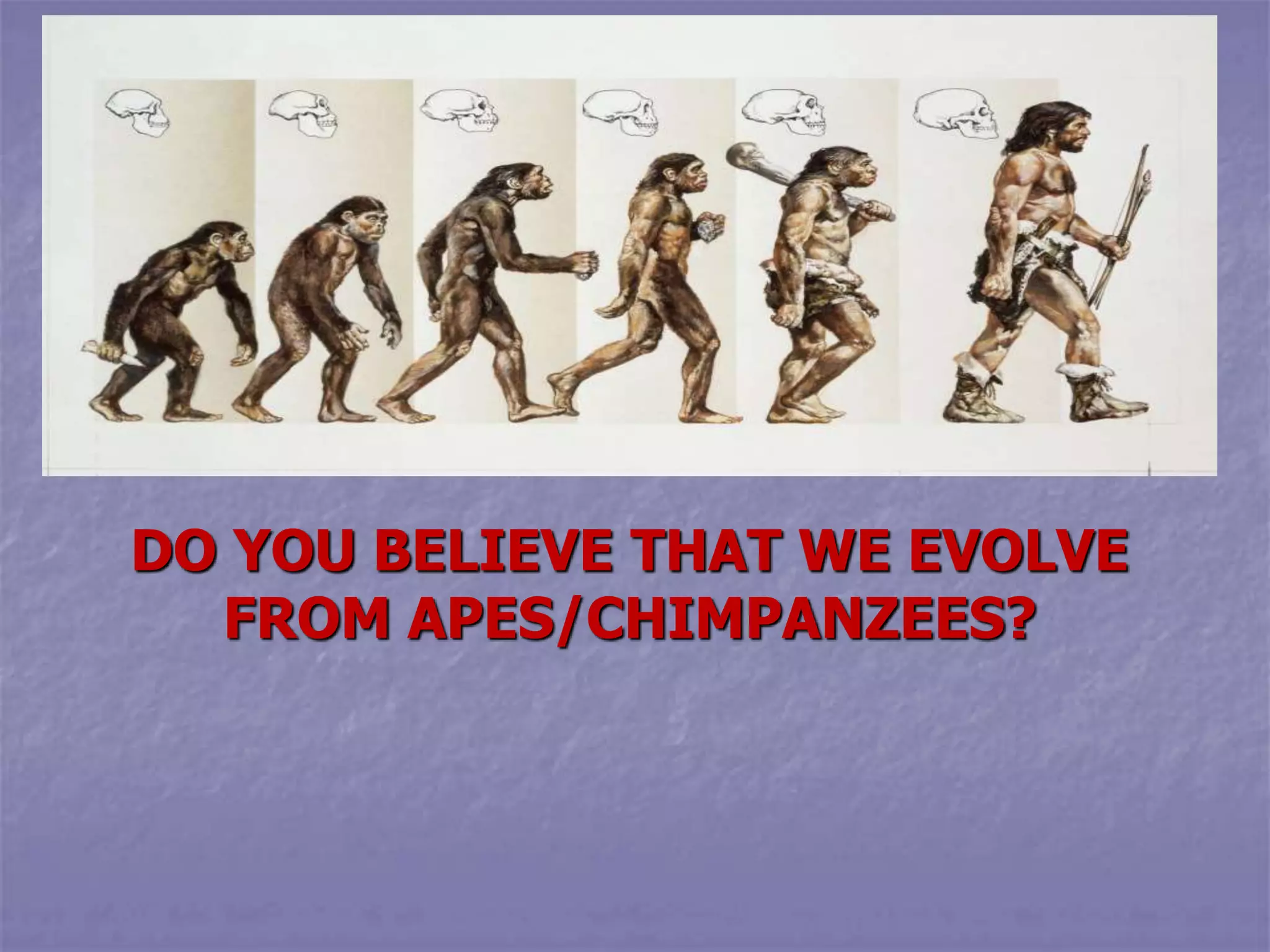
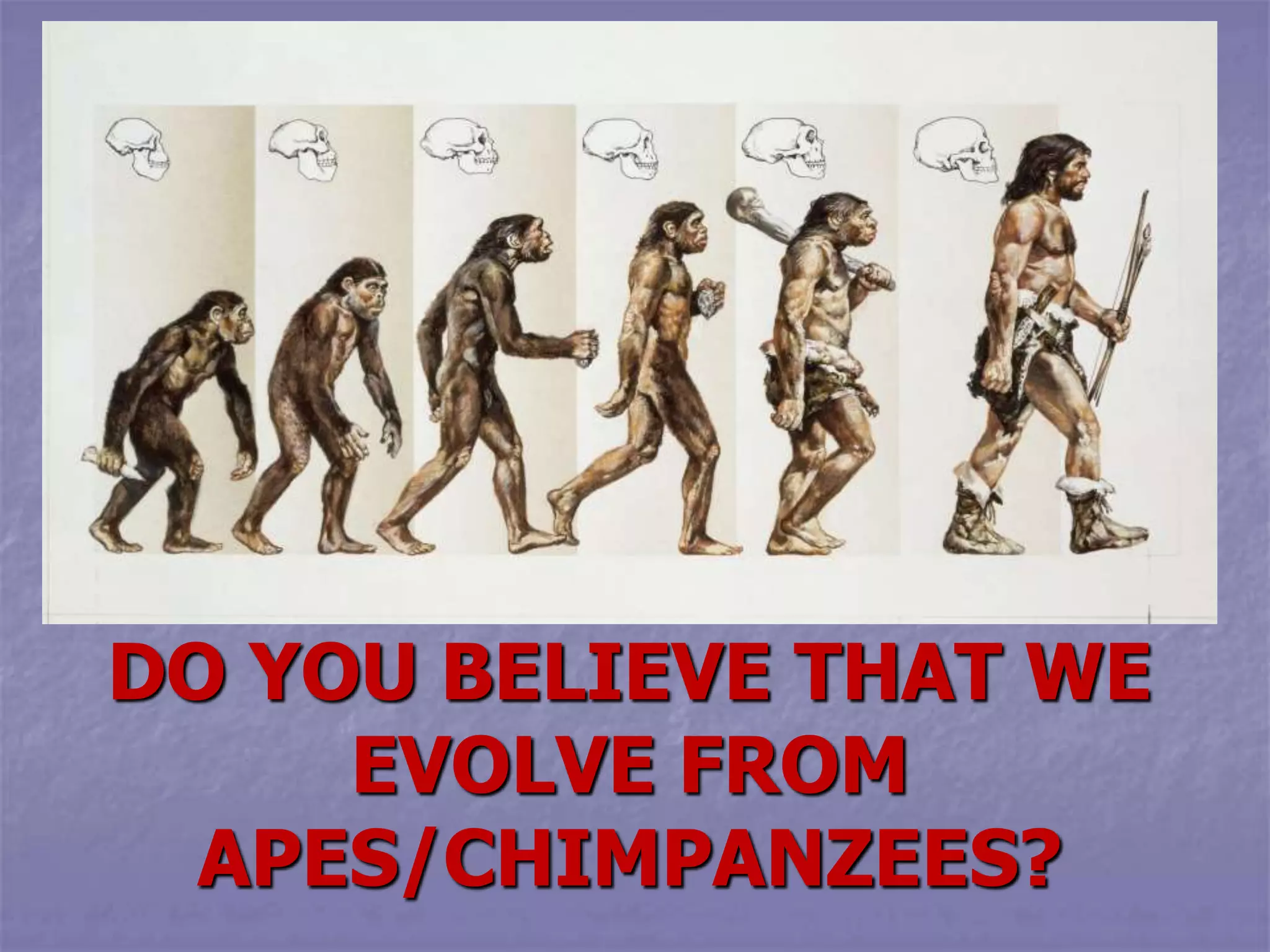
DO YOU BELIEVE THAT WE EVOLVE
FROM APES/CHIMPANZEES?
Evidence of Evolution
 EVOLUTION - genetic change in a
population of organisms over time
 4 Types of Evidence that scientists have
gathered in support of evolution
 Fossils
 Comparative Anatomy & Structures
 Embryology
 Biochemistry (Proteins & DNA)
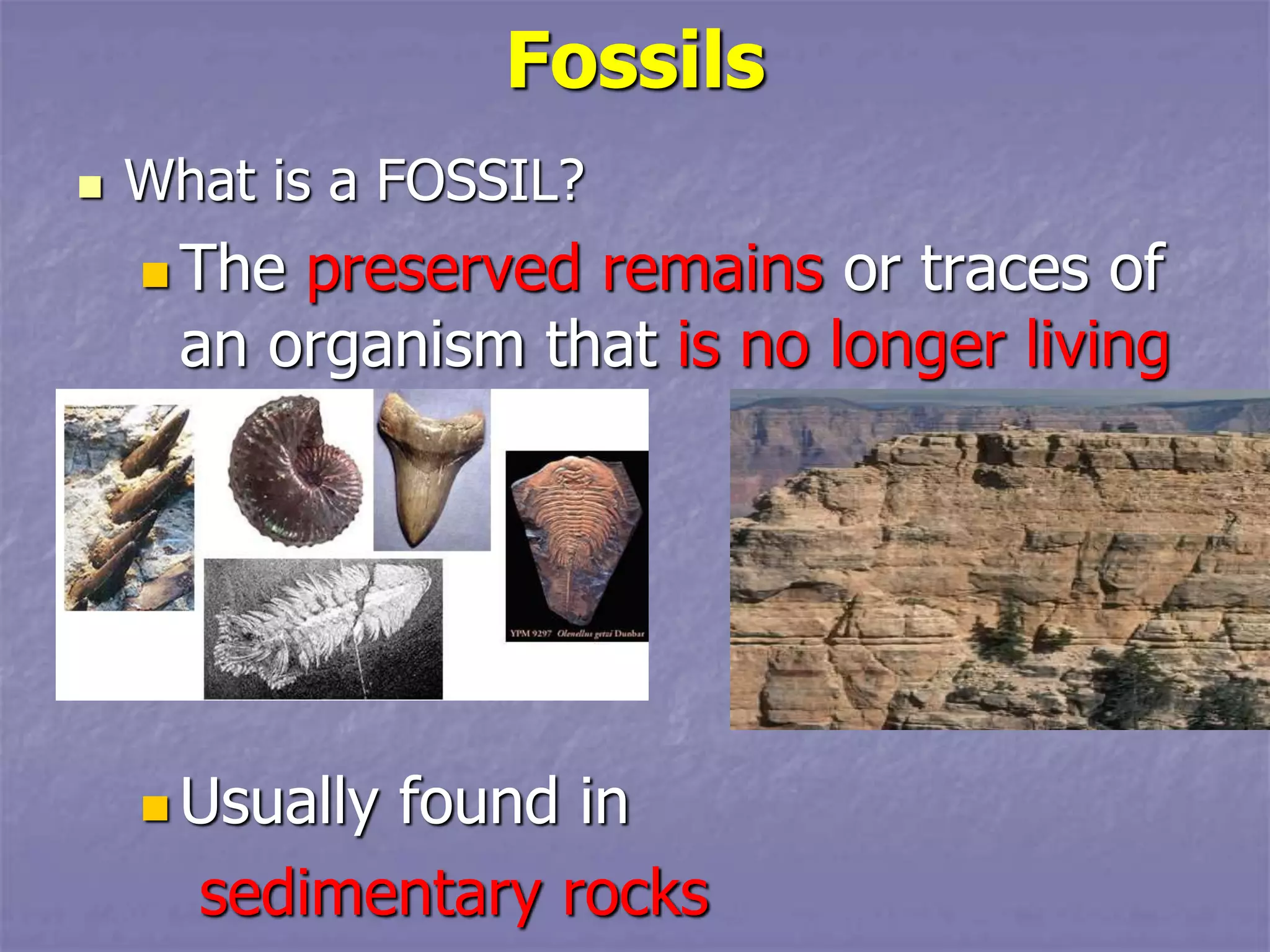
Fossils
 What is a FOSSIL?
 The preserved remains or traces of
an organism that is no longer living
 Usually found in
sedimentary rocks
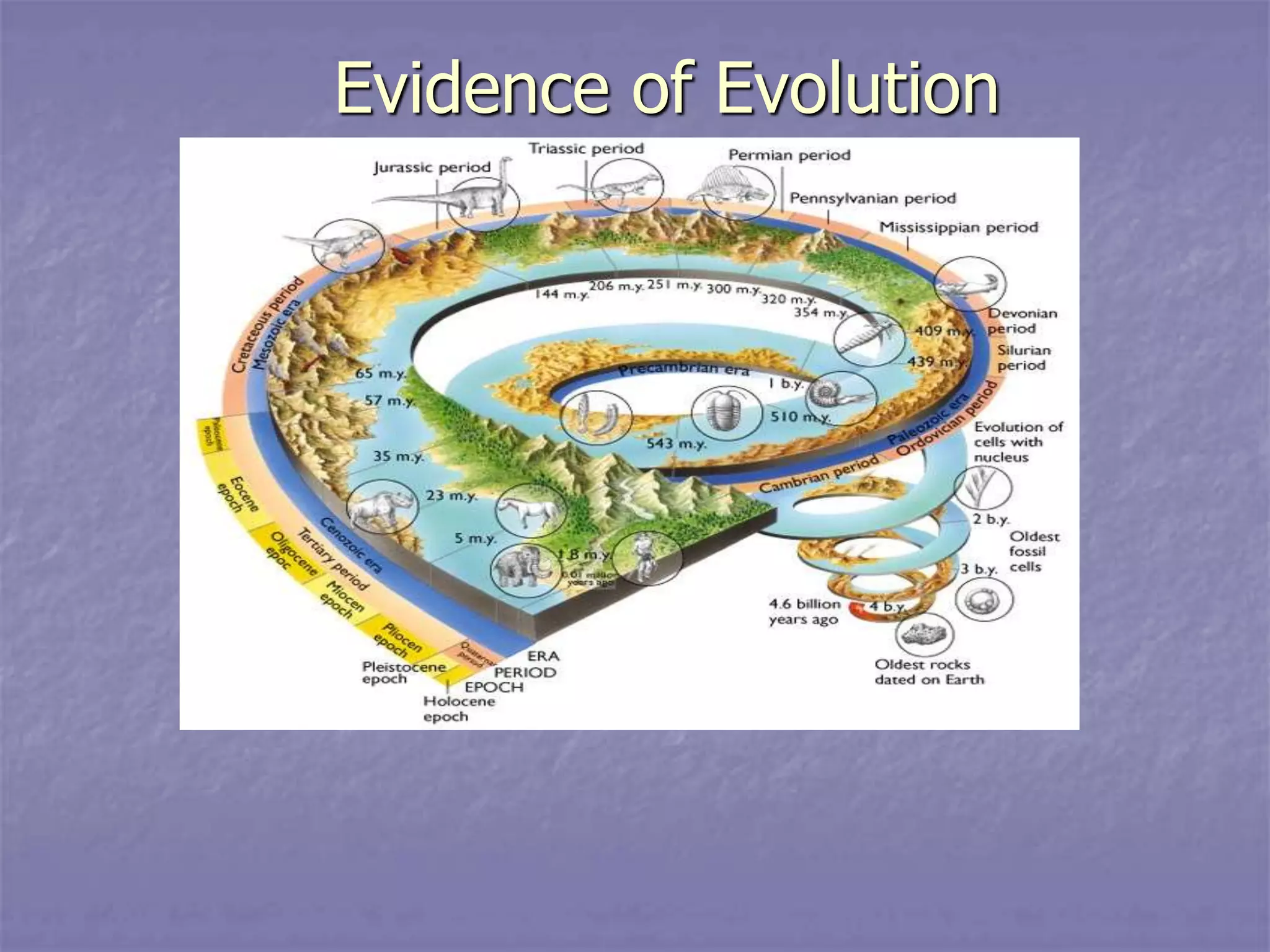
What can fossils show?
 Organisms have appeared and
disappeared, and have changed over
time
 Extinction of species
 Reveals ancient climate &
environmental conditions
 Indicates development of life from
simple to complex
 Indicates life began in water
Comparative Anatomy
 Study of anatomical structures to find
similarities and differences
 3 TYPES:
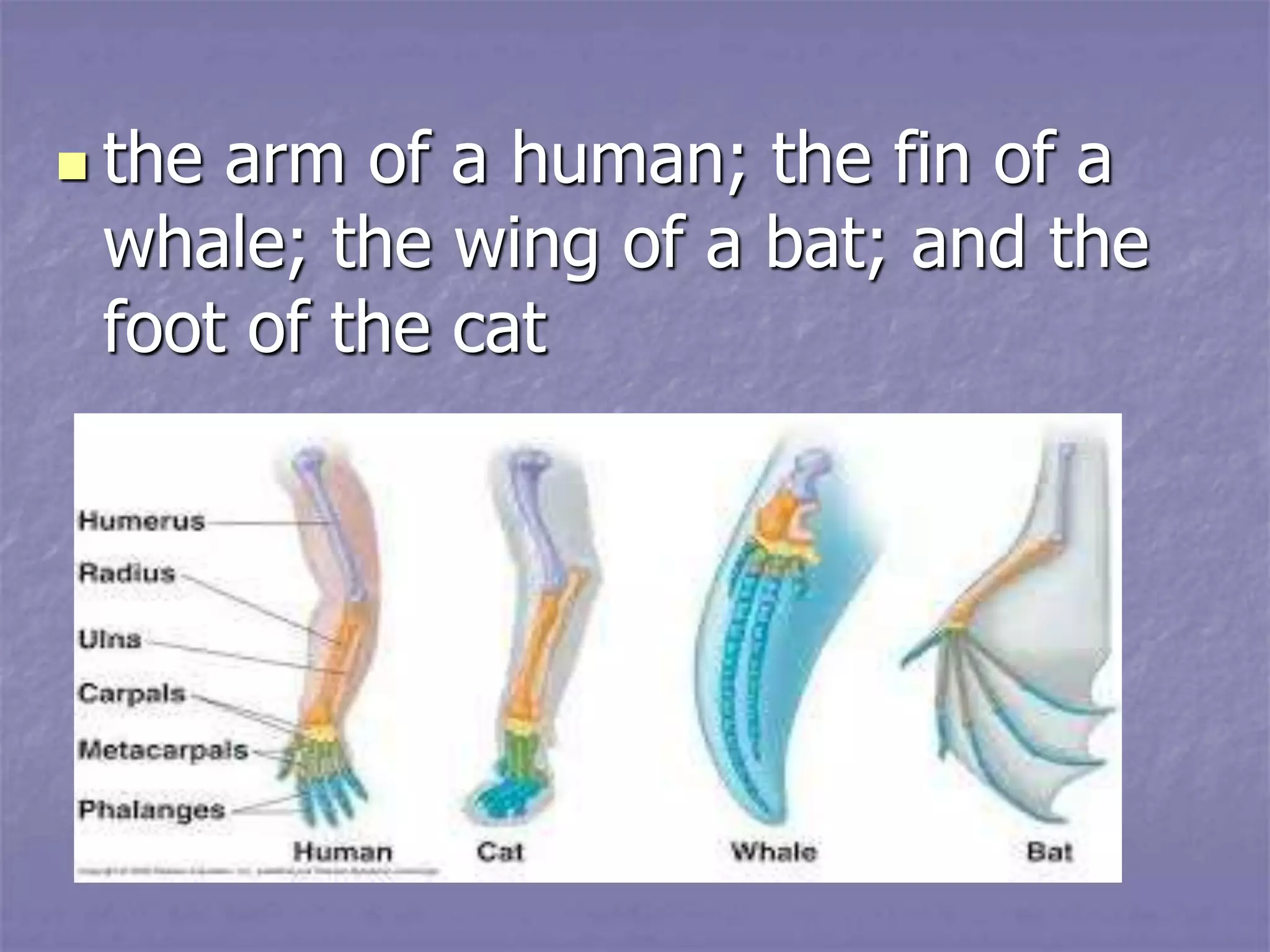
 HOMOLOGOUS STRUCTURES –
parts with similar basic structure
(derived from same structures in
embryo—same common descent),
but may vary in function
 the arm of a human; the fin of a
whale; the wing of a bat; and the
foot of the cat
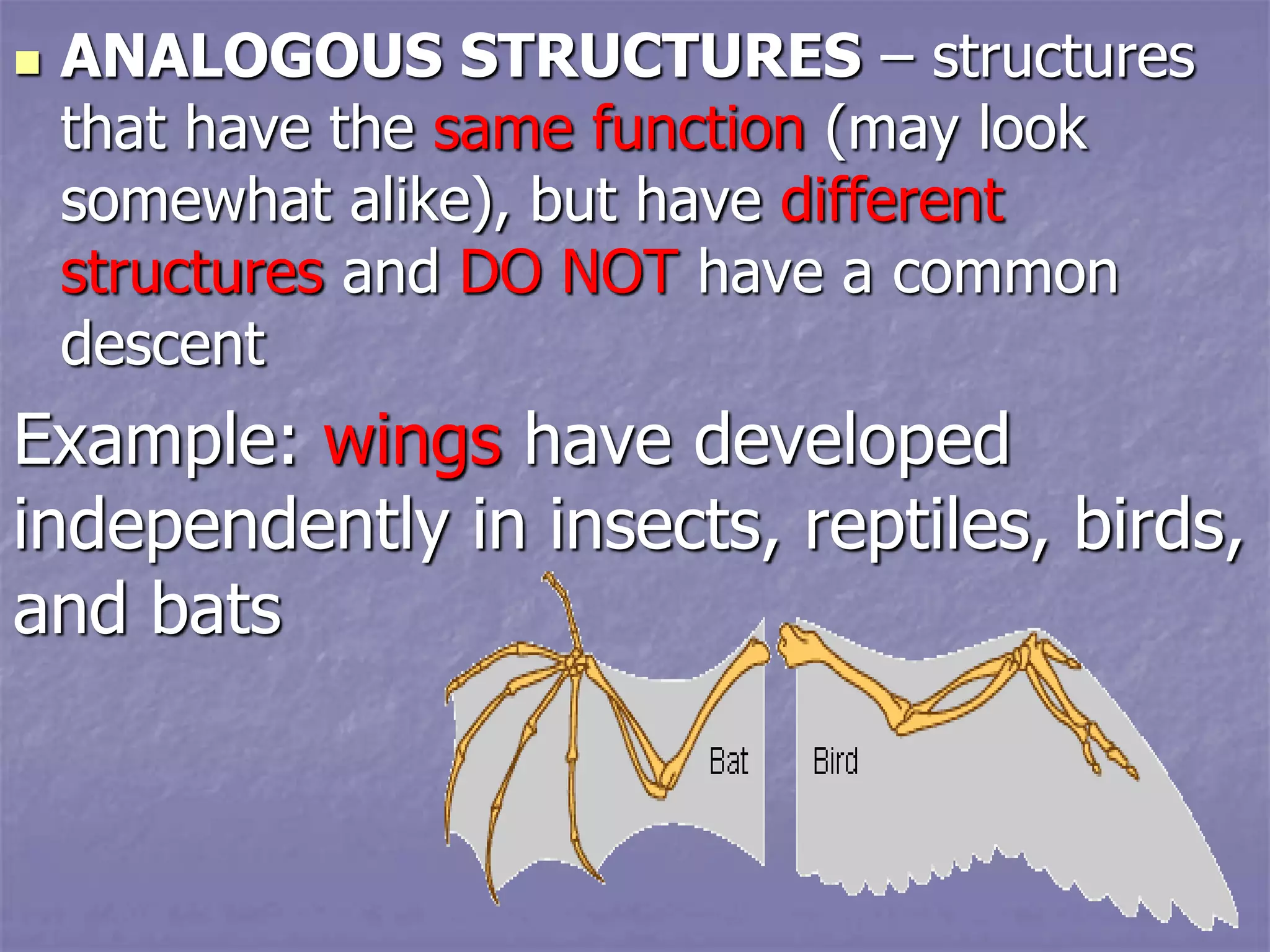
 ANALOGOUS STRUCTURES – structures
that have the same function (may look
somewhat alike), but have different
structures and DO NOT have a common
descent
Example: wings have developed
independently in insects, reptiles, birds,
and bats
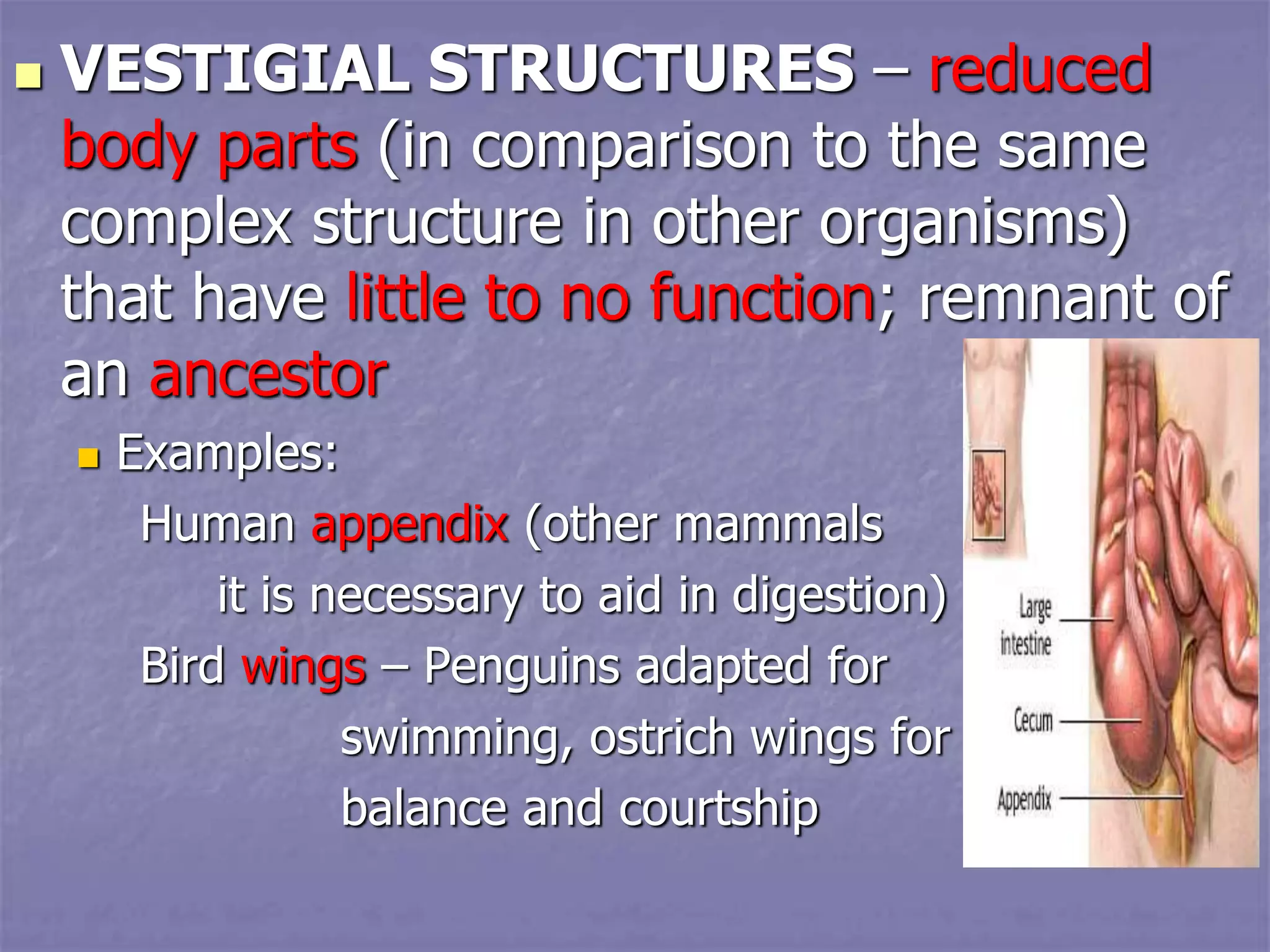
 VESTIGIAL STRUCTURES – reduced
body parts (in comparison to the same
complex structure in other organisms)
that have little to no function; remnant of
an ancestor
 Examples:
Human appendix (other mammals
it is necessary to aid in digestion)
Bird wings – Penguins adapted for
swimming, ostrich wings for
balance and courtship
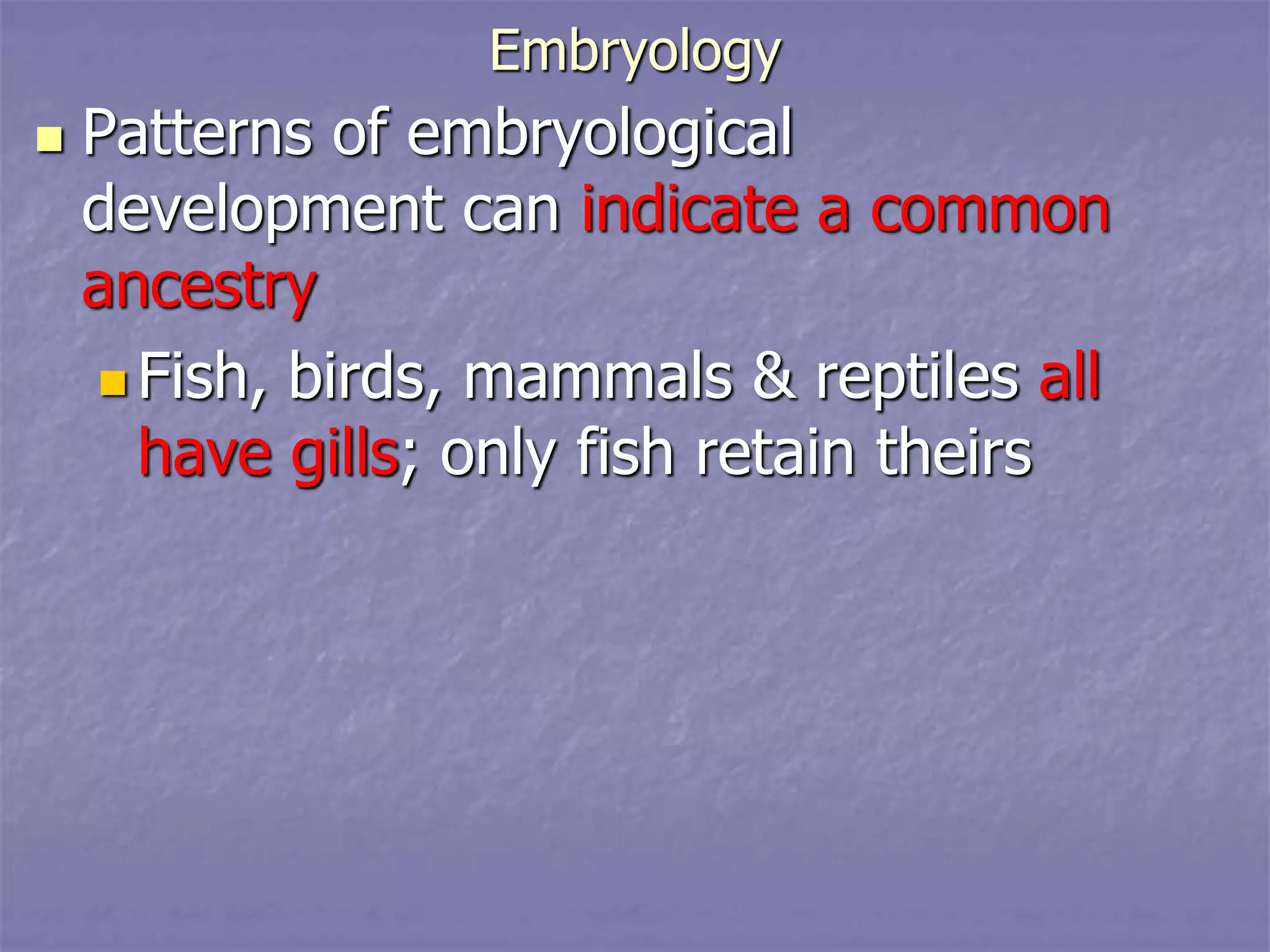
Embryology
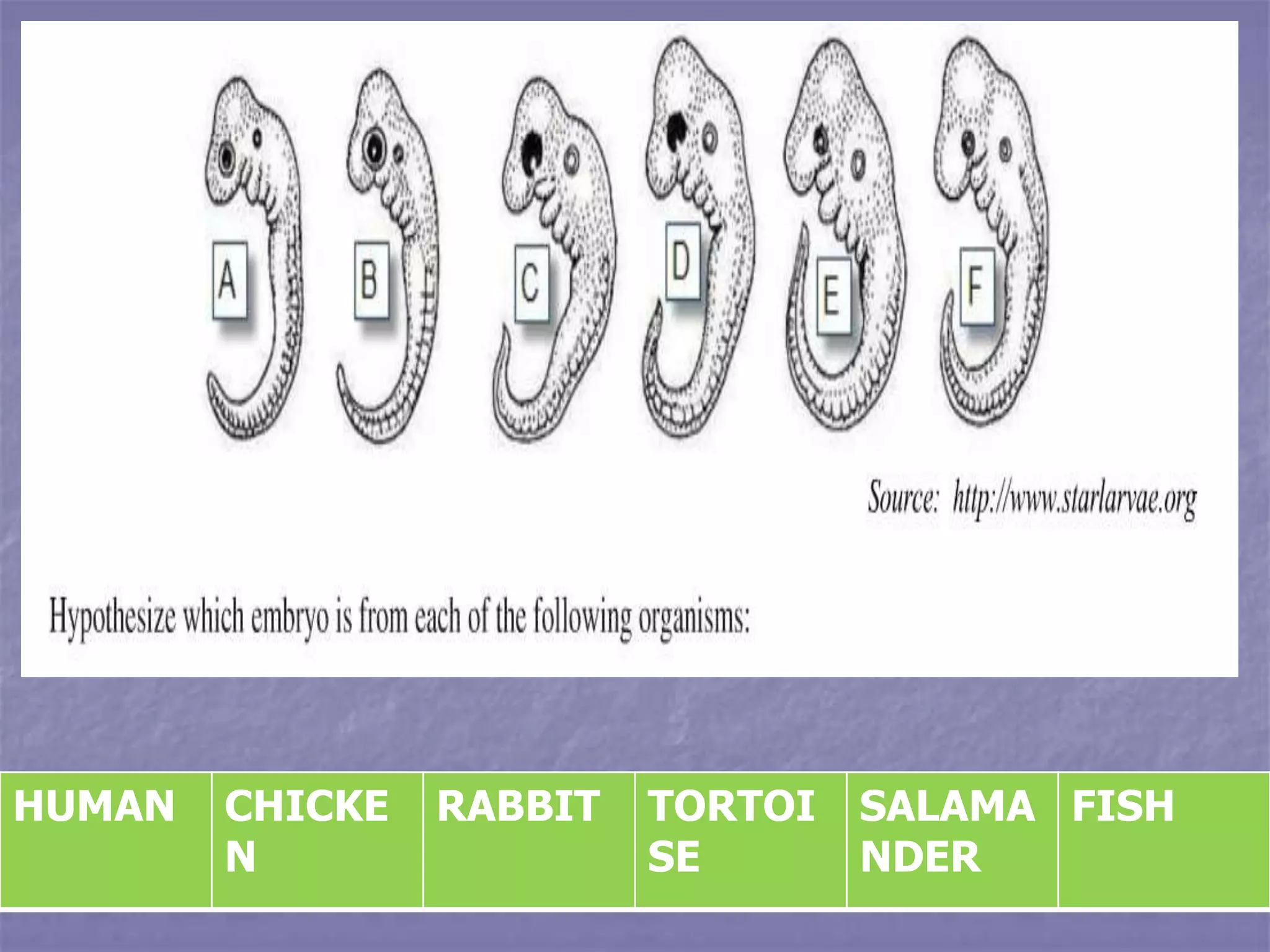
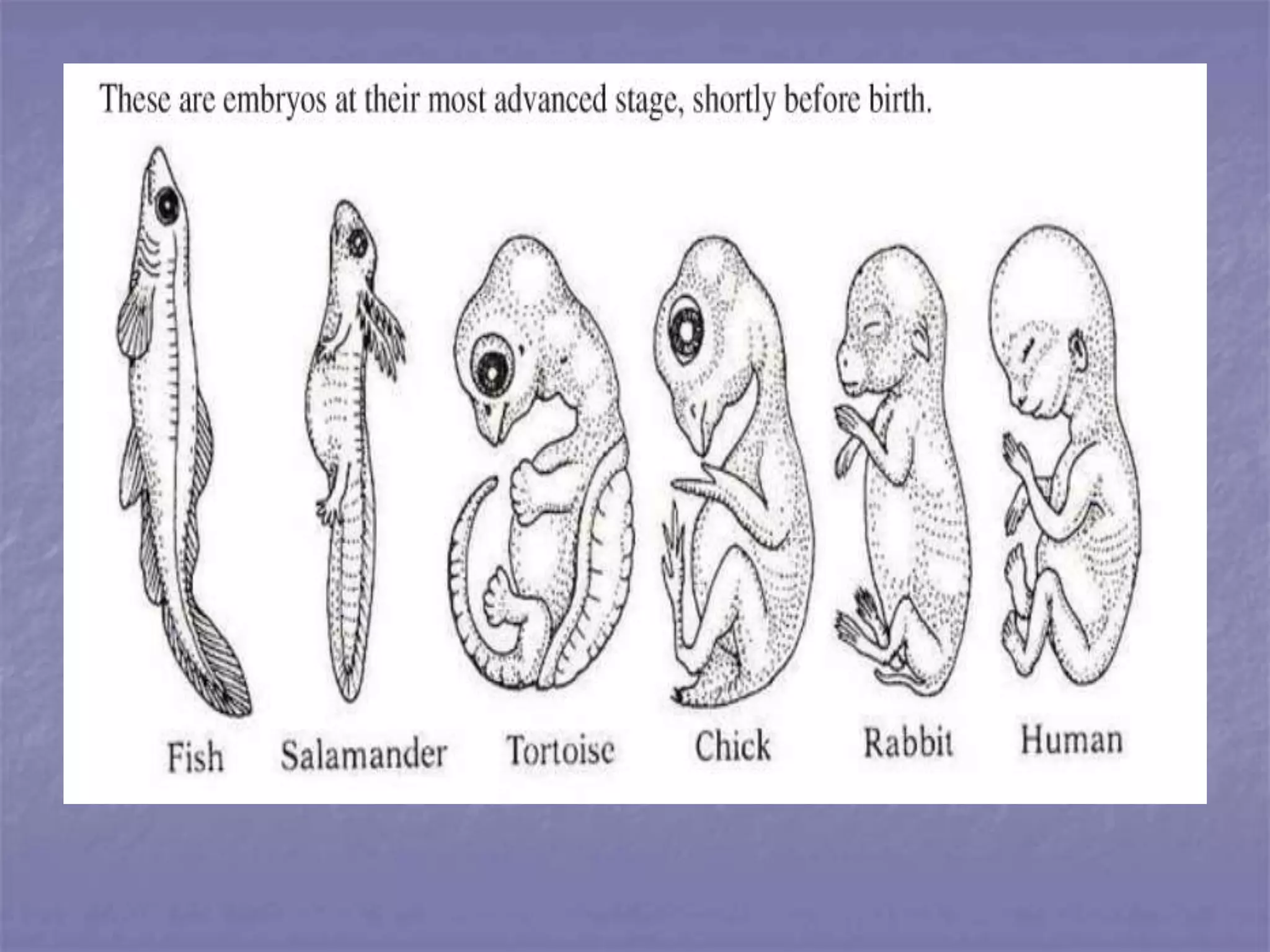
 Patterns of embryological
development can indicate a common
ancestry
 Fish, birds, mammals & reptiles all
have gills; only fish retain theirs
HUMAN CHICKE
N
RABBIT TORTOI
SE
SALAMA
NDER
FISH
Biochemical Similarities
 Similarity of proteins, RNA & DNA
molecules
 The more closely related organisms
are, the more similar is the
biochemical makeup
 Indicates common ancestor
 Universality of genetic code –
supports evolution
DO YOU BELIEVE THAT WE
EVOLVE FROM
APES/CHIMPANZEES?
Humans are not descended from
monkeys or any other primate living
today. We do share a
common ape ancestor
with chimpanzees. It lived between
8 and 6 million years ago.
But humans and chimpanzees
evolved differently from that same
ancestor.
ASYNCHOROUNS TIME
 ANSWER the worksheet given
THANK YOU AND STAY SAFE

Evidence_of_Evolution-observe.ppt

  • 1.
  • 2.
    Go to www.menti.com USE THE CODE: 8117068  In 1 minute, write 3 words you know about evolution
  • 3.
    DO YOU BELIEVETHAT WE EVOLVE FROM APES/CHIMPANZEES?
  • 4.
    Evidence of Evolution EVOLUTION - genetic change in a population of organisms over time  4 Types of Evidence that scientists have gathered in support of evolution  Fossils  Comparative Anatomy & Structures  Embryology  Biochemistry (Proteins & DNA)
  • 5.
    Fossils  What isa FOSSIL?  The preserved remains or traces of an organism that is no longer living  Usually found in sedimentary rocks
  • 6.
    What can fossilsshow?  Organisms have appeared and disappeared, and have changed over time  Extinction of species  Reveals ancient climate & environmental conditions  Indicates development of life from simple to complex  Indicates life began in water
  • 7.
    Comparative Anatomy  Studyof anatomical structures to find similarities and differences  3 TYPES:  HOMOLOGOUS STRUCTURES – parts with similar basic structure (derived from same structures in embryo—same common descent), but may vary in function
  • 8.
     the armof a human; the fin of a whale; the wing of a bat; and the foot of the cat
  • 9.
     ANALOGOUS STRUCTURES– structures that have the same function (may look somewhat alike), but have different structures and DO NOT have a common descent Example: wings have developed independently in insects, reptiles, birds, and bats
  • 10.
     VESTIGIAL STRUCTURES– reduced body parts (in comparison to the same complex structure in other organisms) that have little to no function; remnant of an ancestor  Examples: Human appendix (other mammals it is necessary to aid in digestion) Bird wings – Penguins adapted for swimming, ostrich wings for balance and courtship
  • 11.
    Embryology  Patterns ofembryological development can indicate a common ancestry  Fish, birds, mammals & reptiles all have gills; only fish retain theirs
  • 12.
  • 14.
    Biochemical Similarities  Similarityof proteins, RNA & DNA molecules  The more closely related organisms are, the more similar is the biochemical makeup  Indicates common ancestor  Universality of genetic code – supports evolution
  • 15.
    DO YOU BELIEVETHAT WE EVOLVE FROM APES/CHIMPANZEES?
  • 16.
    Humans are notdescended from monkeys or any other primate living today. We do share a common ape ancestor with chimpanzees. It lived between 8 and 6 million years ago. But humans and chimpanzees evolved differently from that same ancestor.
  • 17.
    ASYNCHOROUNS TIME  ANSWERthe worksheet given
  • 18.
    THANK YOU ANDSTAY SAFE