CLASSICAL GREECE
       Ch 5
1. How were the Greek states organized during the
   Mycenaean period?

2. Why was the polis the most characteristic Greek
   institution?

3. What features distinguished archaic Greek society?

4. Why were the Greek able to defeat the Persians?

5. What were the causes of the Peloponnesian War?

6. What were the main cultural achievements of classical
   Greece?
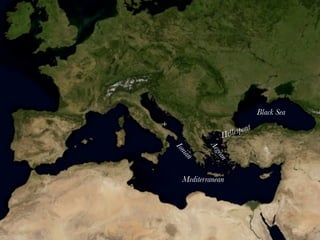
Black Sea

                      o   nt
              H ellesp


         Ae
Ion


          gea
 ian


            n
 Mediterranean
BRONZE AGE, PRIOR TO 1150
         BCE
Minoans on Crete, 2000-1700 BCE
Indo-European migrations, 2200 BCE
    Mycenaean civ, 1500-1100 BCE
    1200 BCE, Trojan War
    chaos & invasion after 1100, BCE
    Dorians, 1150-750 BCE
 Myths
Polis (pl. poleis) originally referred to a citadel or
fortified site.

In the absence of centralized authority, the polis
became an urban center

     monarchy

     aristocracy

     oligarchy

     tyrants
Athens

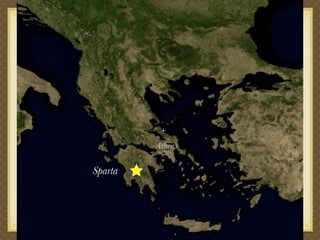
Sparta
SPARTA

1100-200 BCE, undefeated for 700 years
conquered Laconian plain, subjugated neighbors as
helots
     by 6th century, helots outnumbered Spartans
 Developed a militaristic culture to survive
     480 BCE, Battle of Thermopylae
PERSIAN WARS
546 BCE, Persia invades Ionia (former Troy)

490 BCE, Battle of Marathon

     Athenians defeat Darius

480 BCE, Xerxes moves to invade

Delian league formed

     Athens emerges as the most powerful polis
§3 DEMOCRACYAND
GREECE’S GOLDEN
     AGE
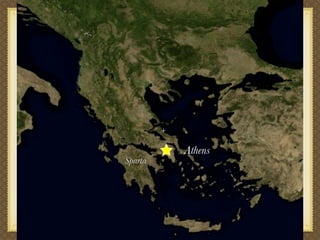
Athens
Sparta
ATHENS

Class struggles

621 BCE, Draco’s Code

594 BCE, Solon’s reforms

Direct democracy

“citizenship”
Pericles

    strengthen Athenian democracy

    hold & strengthen the empire

    glorify Athens
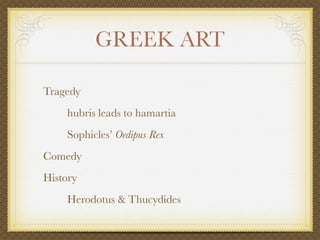
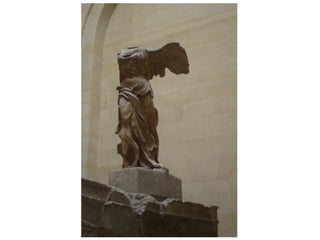
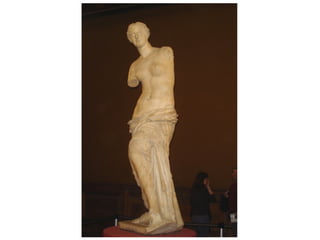
GREEK ART

Tragedy
    hubris leads to hamartia
    Sophicles’ Oedipus Rex
Comedy
History
    Herodotus & Thucydides
PELOPONNESIAN WAR

431 BCE, Sparta declares war on Athens

Plague strikes Athens

421 BCE truce

415 BCE, Athens attacks Sicily

404 BCE, Athens surrenders
SOCRATES

“Beware the barrenness of a busy life.”

“I am the wisest man alive because I know one thing: I
know nothing”

“It is not living that matters, but living rightly”

“The unexamined life is not worth living”

Hemlock
PLATO

“Death is not the worst that can happen to men”

“Only the dead have seen the end of war”

“Necessity, who is the mother of invention”
ARISTOTLE

“A friend is a second self ”

“Poverty is the parent of revolution and crime”

“The gods too are fond of a joke”

“We make war that our children may live in peace”

tutored Alexander
HELLENIZATION
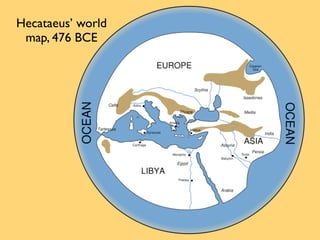
Hecataeus’ world
 map, 476 BCE
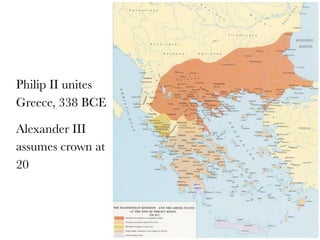
Philip II unites
Greece, 338 BCE

Alexander III
assumes crown at
20
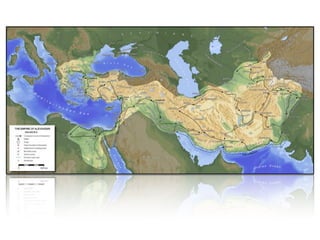
Defeats Darius III three times

Conquers Persia, Egypt, India - combines with
Greece ...

    fought for eleven years and marched
    11,000 miles

                 Hellenization
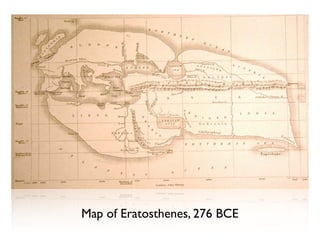
Map of Eratosthenes, 276 BCE
“When Alexander saw the breadth of his
domain, he wept for there were no more worlds
to conquer”

                  - Plutarch, 46-120 CE
Library at Alexandria, Egypt

Aristarchus, Ptolemy, and Eraosthenes -
astronomy

Euclid, Archimedes - geometry & physics

Zeno & Epicurus - philosophy

Ch 05 Slides

  • 1.
  • 2.
    1. How werethe Greek states organized during the Mycenaean period? 2. Why was the polis the most characteristic Greek institution? 3. What features distinguished archaic Greek society? 4. Why were the Greek able to defeat the Persians? 5. What were the causes of the Peloponnesian War? 6. What were the main cultural achievements of classical Greece?
  • 3.
    Black Sea o nt H ellesp Ae Ion gea ian n Mediterranean
  • 4.
    BRONZE AGE, PRIORTO 1150 BCE Minoans on Crete, 2000-1700 BCE Indo-European migrations, 2200 BCE Mycenaean civ, 1500-1100 BCE 1200 BCE, Trojan War chaos & invasion after 1100, BCE Dorians, 1150-750 BCE Myths
  • 5.
    Polis (pl. poleis)originally referred to a citadel or fortified site. In the absence of centralized authority, the polis became an urban center monarchy aristocracy oligarchy tyrants
  • 6.
  • 7.
    SPARTA 1100-200 BCE, undefeatedfor 700 years conquered Laconian plain, subjugated neighbors as helots by 6th century, helots outnumbered Spartans Developed a militaristic culture to survive 480 BCE, Battle of Thermopylae
  • 8.
    PERSIAN WARS 546 BCE,Persia invades Ionia (former Troy) 490 BCE, Battle of Marathon Athenians defeat Darius 480 BCE, Xerxes moves to invade Delian league formed Athens emerges as the most powerful polis
  • 9.
  • 10.
  • 11.
    ATHENS Class struggles 621 BCE,Draco’s Code 594 BCE, Solon’s reforms Direct democracy “citizenship”
  • 12.
    Pericles strengthen Athenian democracy hold & strengthen the empire glorify Athens
  • 13.
    GREEK ART Tragedy hubris leads to hamartia Sophicles’ Oedipus Rex Comedy History Herodotus & Thucydides
  • 19.
    PELOPONNESIAN WAR 431 BCE,Sparta declares war on Athens Plague strikes Athens 421 BCE truce 415 BCE, Athens attacks Sicily 404 BCE, Athens surrenders
  • 20.
    SOCRATES “Beware the barrennessof a busy life.” “I am the wisest man alive because I know one thing: I know nothing” “It is not living that matters, but living rightly” “The unexamined life is not worth living” Hemlock
  • 21.
    PLATO “Death is notthe worst that can happen to men” “Only the dead have seen the end of war” “Necessity, who is the mother of invention”
  • 22.
    ARISTOTLE “A friend isa second self ” “Poverty is the parent of revolution and crime” “The gods too are fond of a joke” “We make war that our children may live in peace” tutored Alexander
  • 23.
  • 24.
  • 25.
    Philip II unites Greece,338 BCE Alexander III assumes crown at 20
  • 26.
    Defeats Darius IIIthree times Conquers Persia, Egypt, India - combines with Greece ... fought for eleven years and marched 11,000 miles Hellenization
  • 27.
  • 29.
    “When Alexander sawthe breadth of his domain, he wept for there were no more worlds to conquer” - Plutarch, 46-120 CE
  • 30.
    Library at Alexandria,Egypt Aristarchus, Ptolemy, and Eraosthenes - astronomy Euclid, Archimedes - geometry & physics Zeno & Epicurus - philosophy