Learning Unit
     u07
Learning is a relatively permanent change to an
organism’s behavior due to experience.

• Classical conditioning

• Operant conditioning

• Observational learning
m21 Classical
Conditioning
The Office
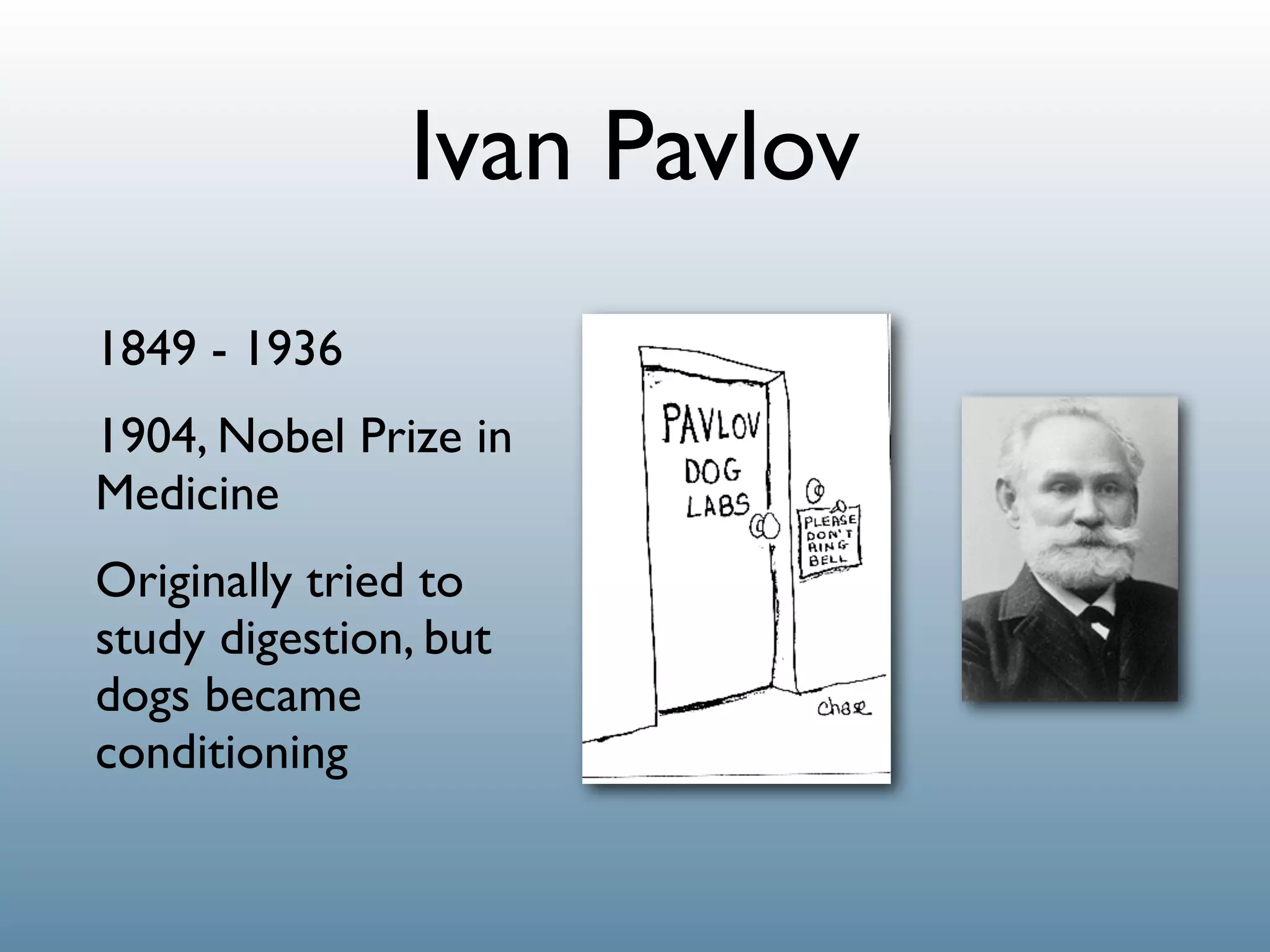
Ivan Pavlov
1849 - 1936
1904, Nobel Prize in
Medicine
Originally tried to
study digestion, but
dogs became
conditioning
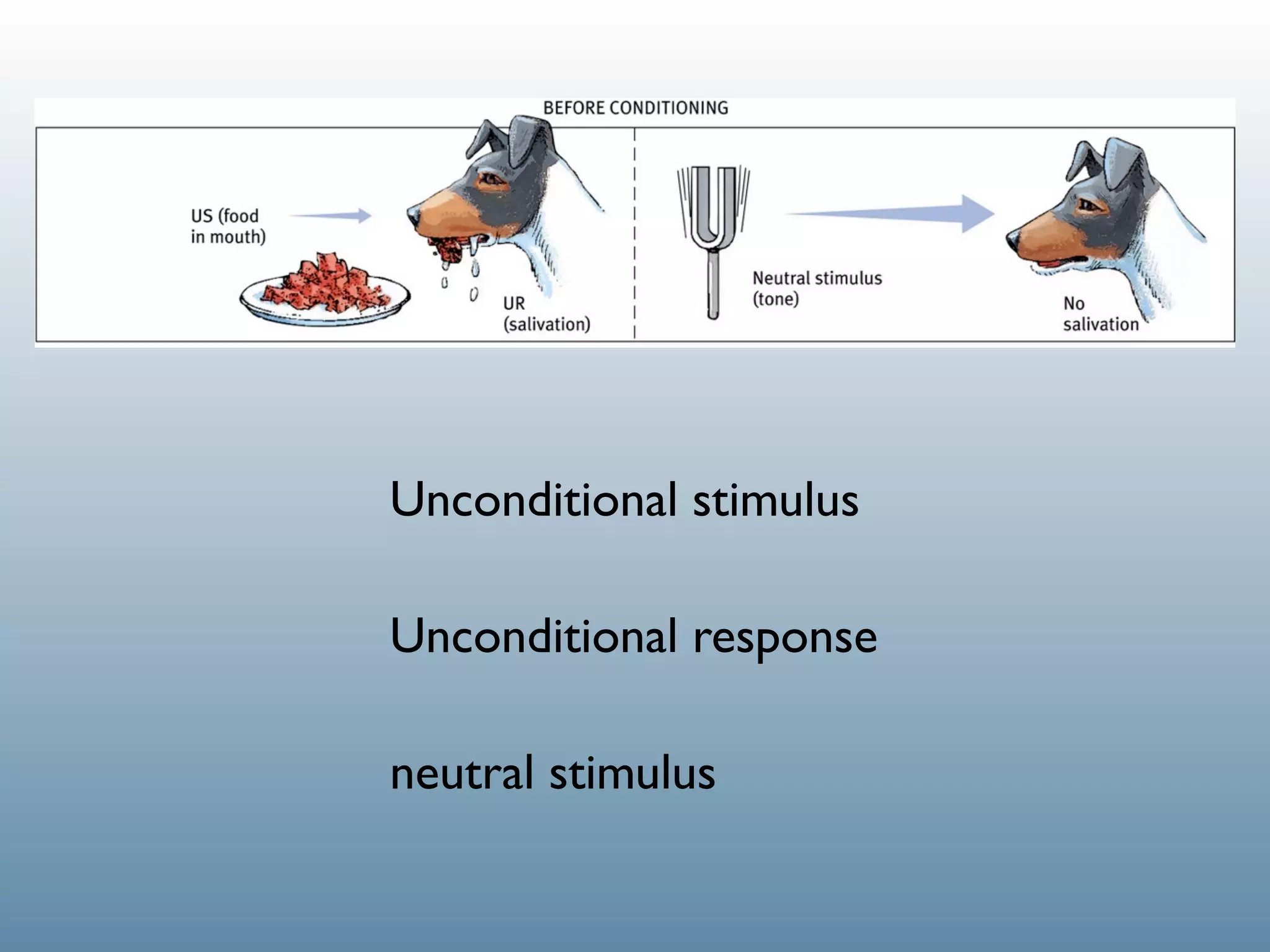
Unconditional stimulus

Unconditional response

neutral stimulus
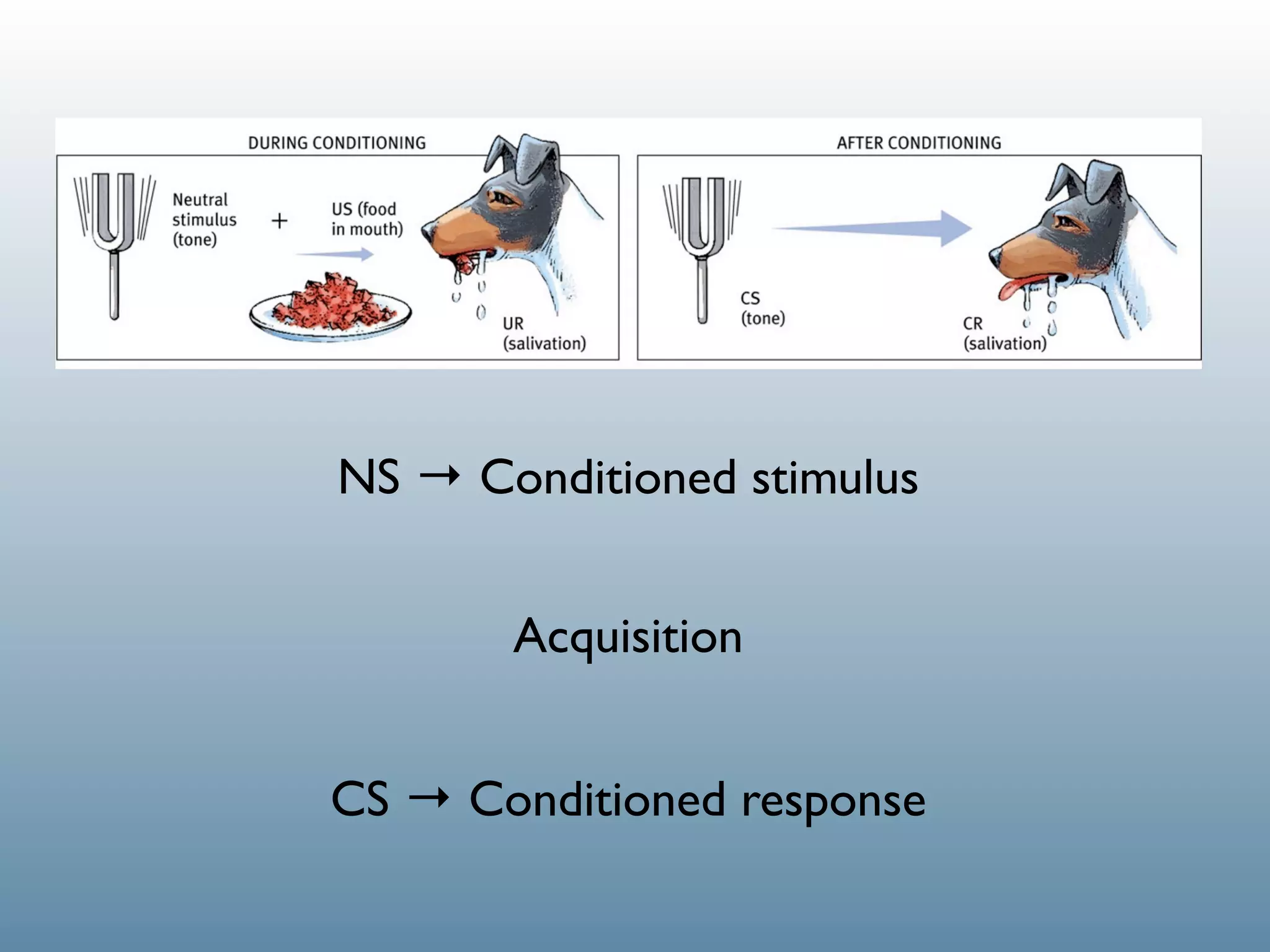
NS → Conditioned stimulus


       Acquisition


CS → Conditioned response
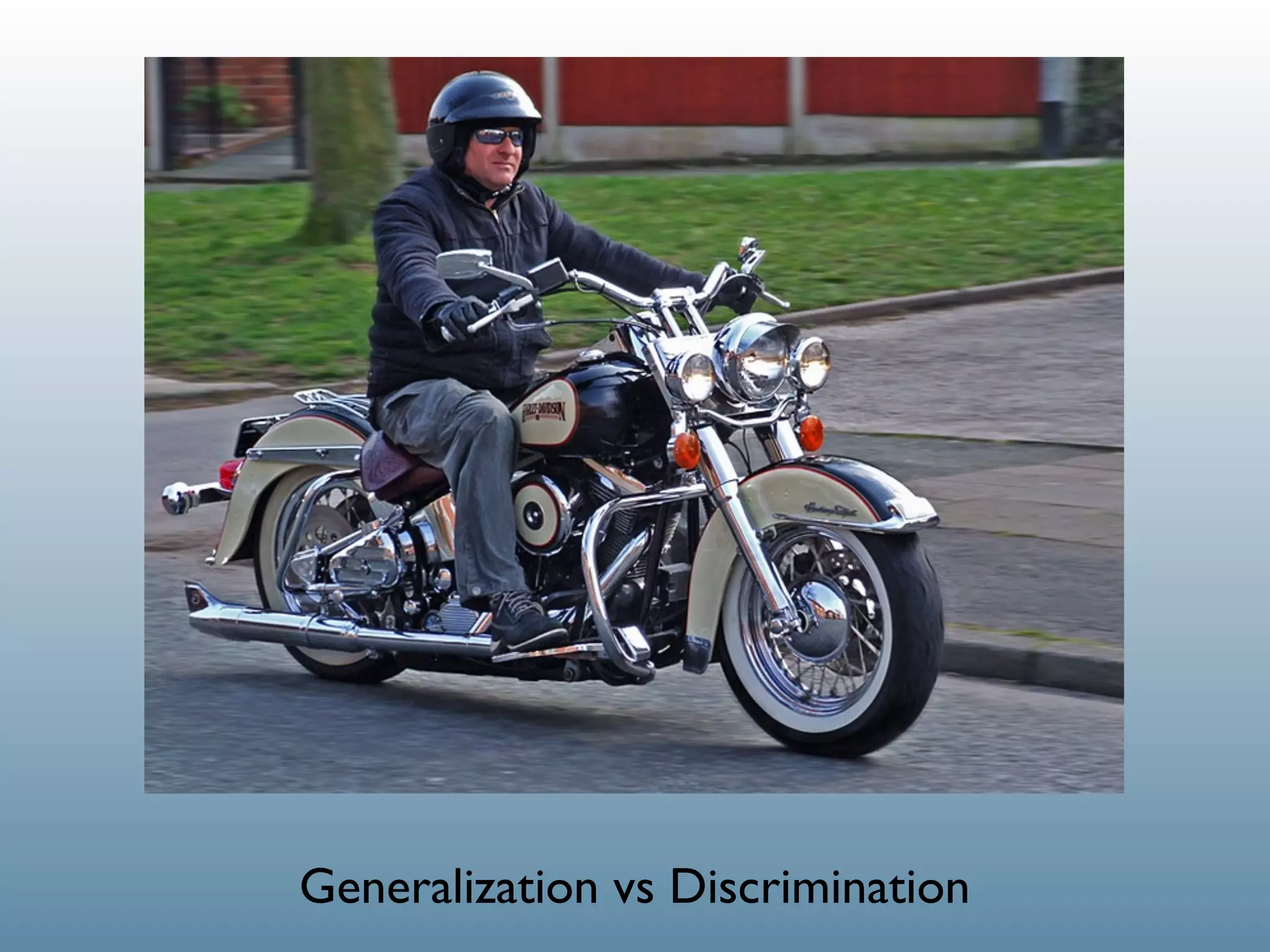
Generalization vs Discrimination
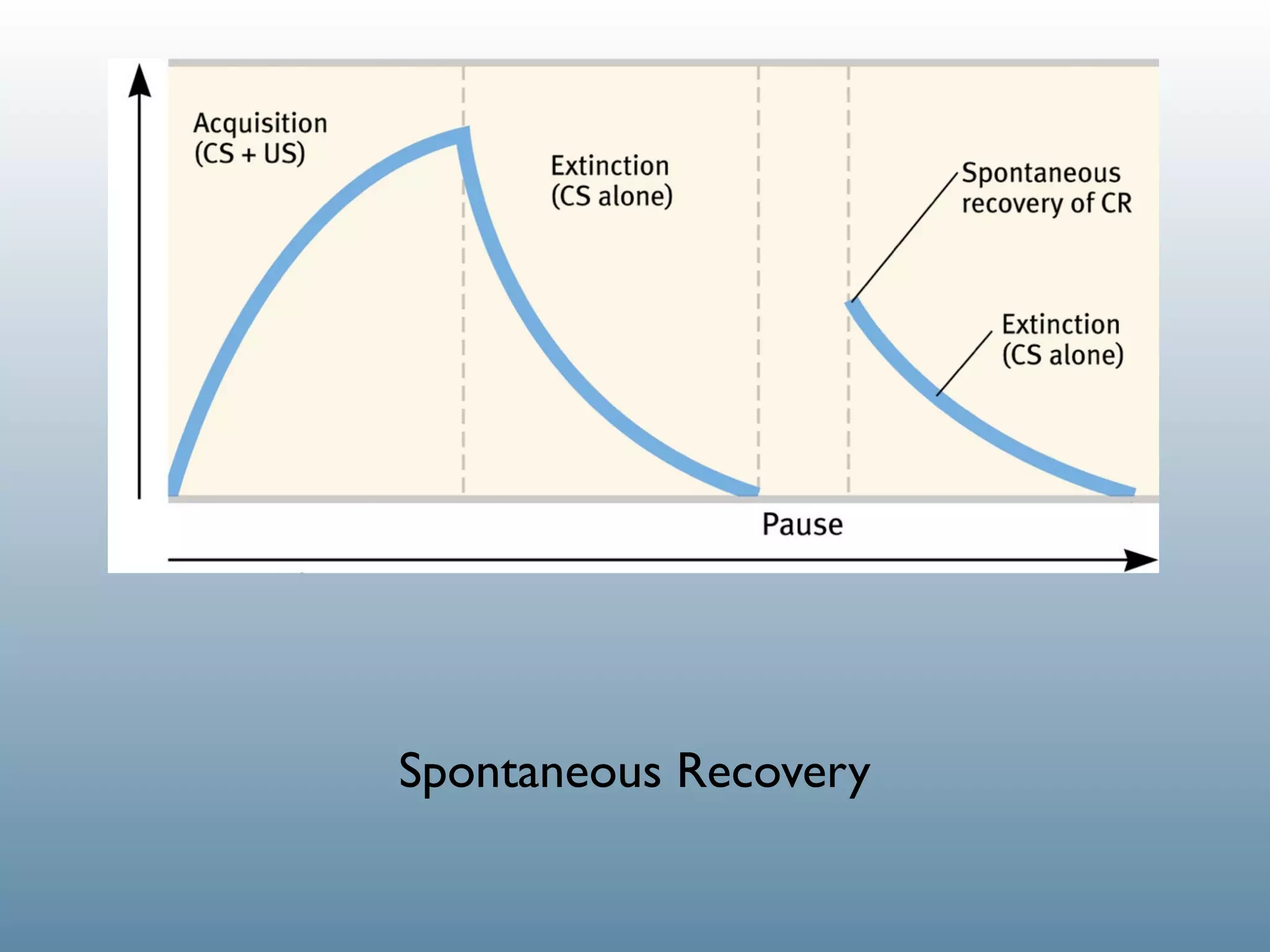
Spontaneous Recovery
Modernizing Pavlov
Biological predisposition to certain associations

Universal way to learn

    simple worms to humans . . .
    like Little Albert
Review


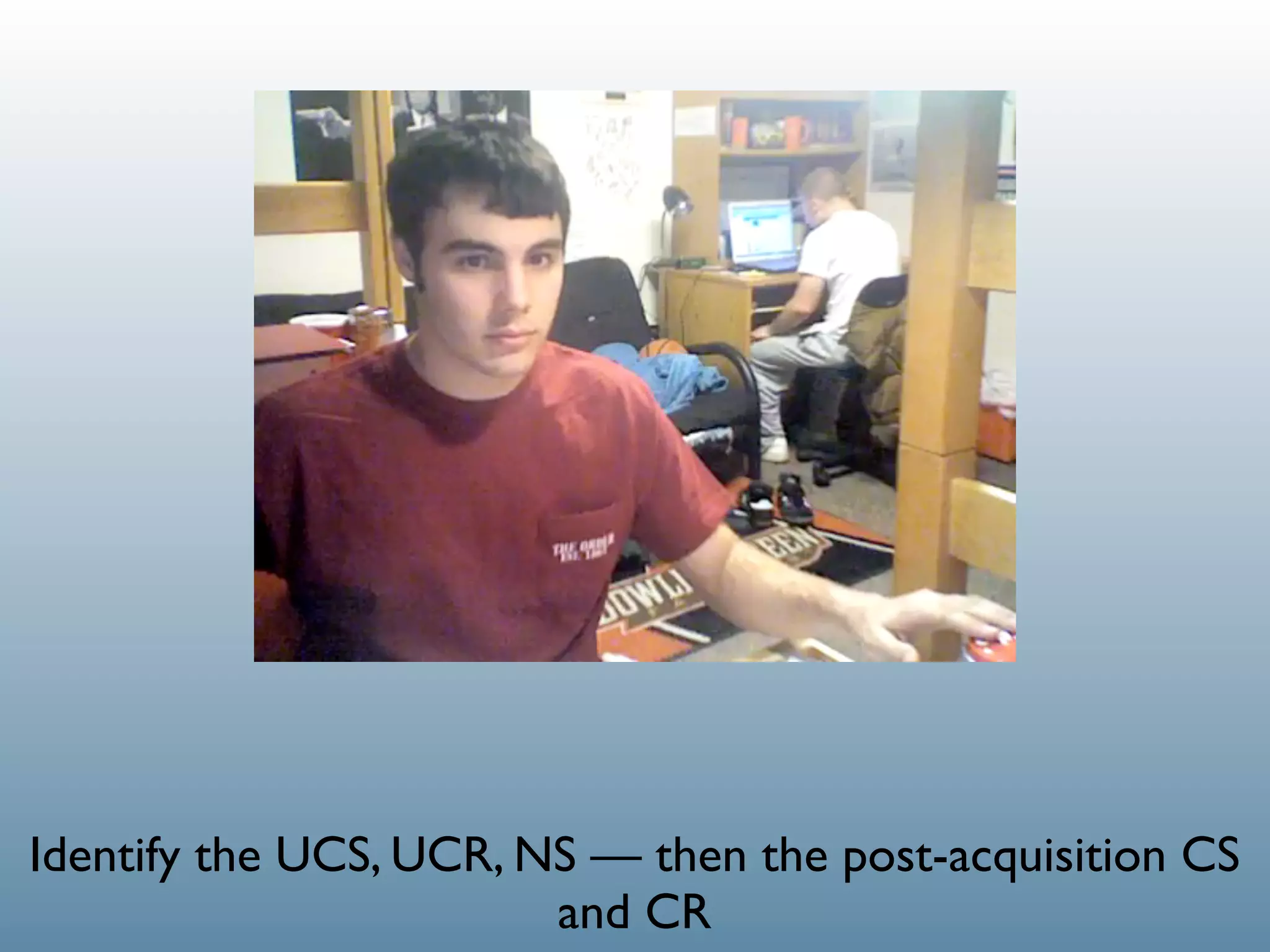
Identify the UCS, UCR, NS — then the post-acquisition CS
                        and CR
Identify the UCS, UCR, NS — then the post-acquisition CS
                        and CR
Months prior to the season opening football game between
MIT and Harvard, a psychology graduate student went to the
Harvard stadium to feed seagulls. For weeks, wearing a
white-and-black-striped shirt he walked up and down the
sidelines, blowing on a whistle, and throwing bird seed on to
the field.
At the season opener, the football game was delayed for 45
minutes as officials waited for hundreds of seagulls to leave
the field.


 Identify the UCS, UCR, NS — then the post-acquisition CS
                         and CR
m22 Operant
Conditioning
Edward Thorndike
The LAW OF EFFECT:
    rewarded behavior is likely to be be
    repeated.
Corollary:
    punished behavior is not likely to be
    repeated
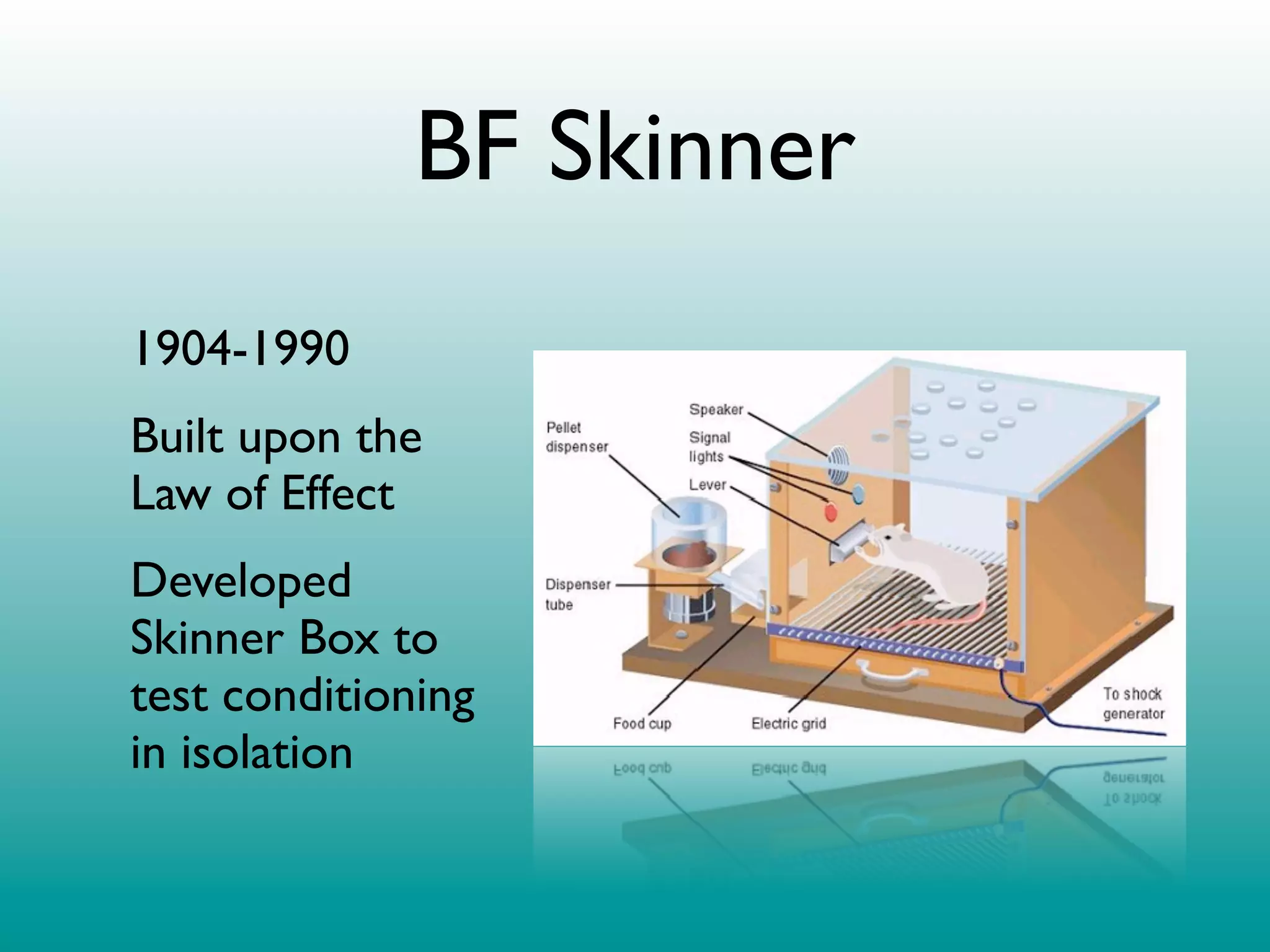
BF Skinner
1904-1990
Built upon the
Law of Effect
Developed
Skinner Box to
test conditioning
in isolation
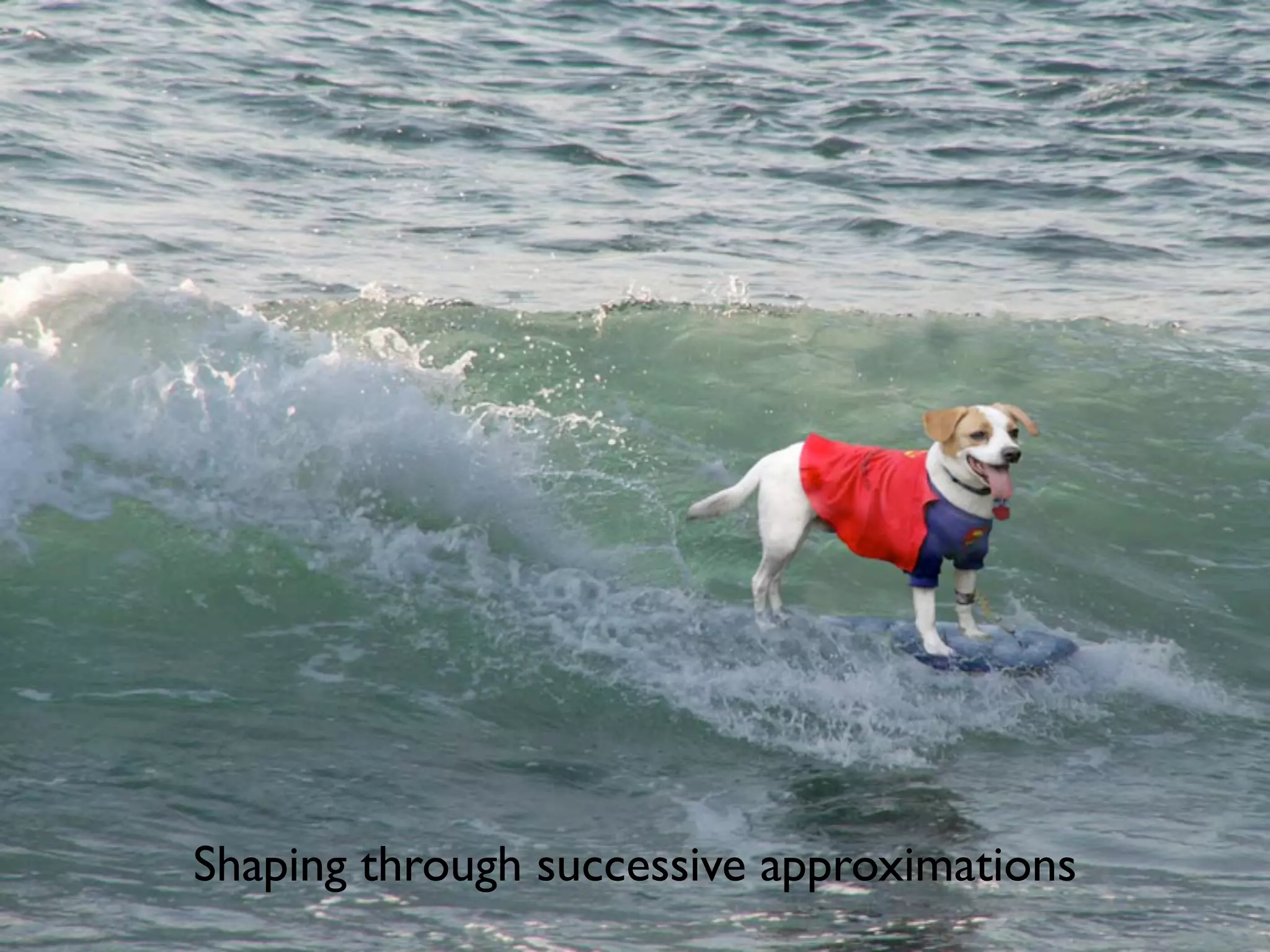
Shaping through successive approximations
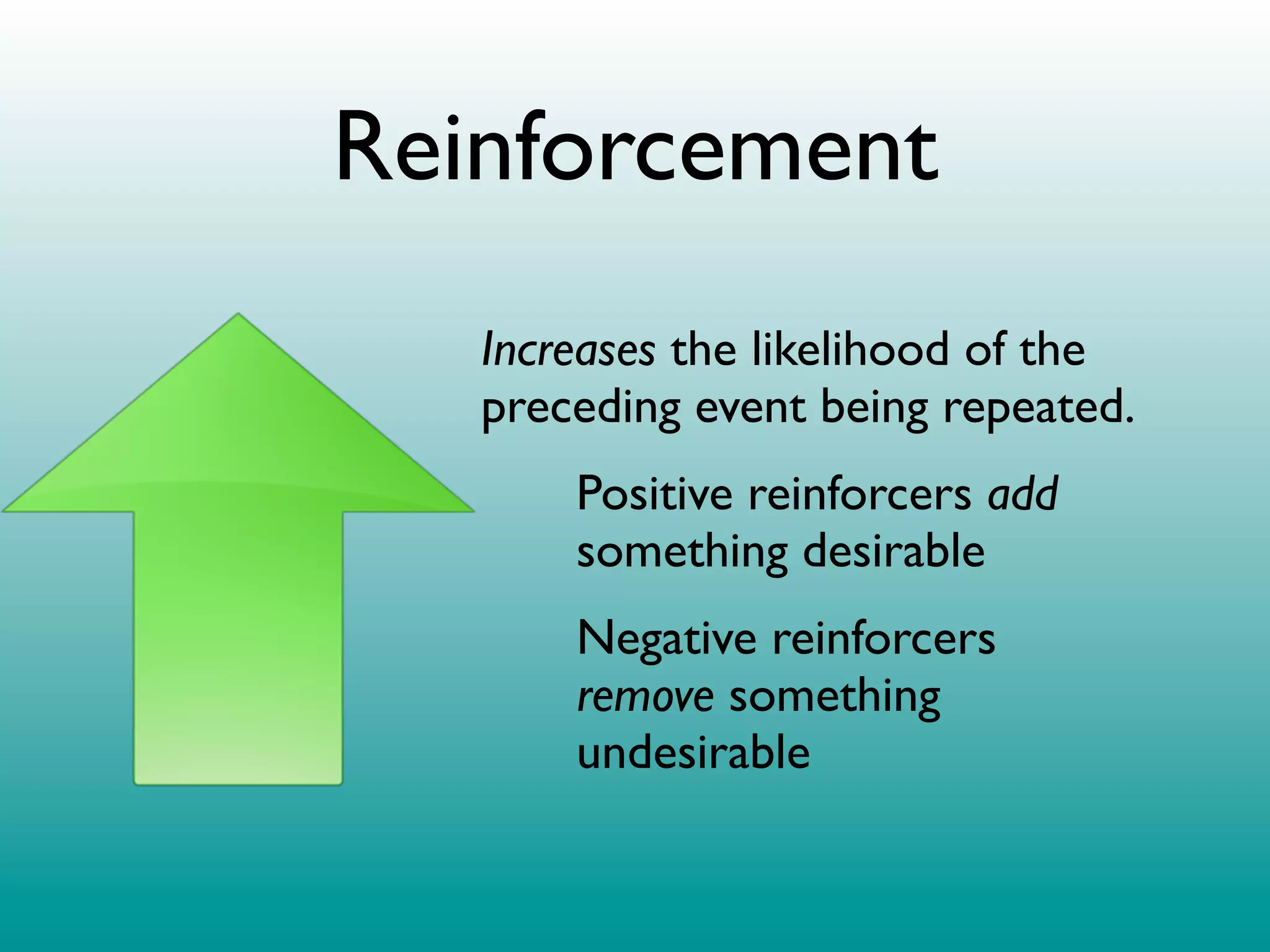
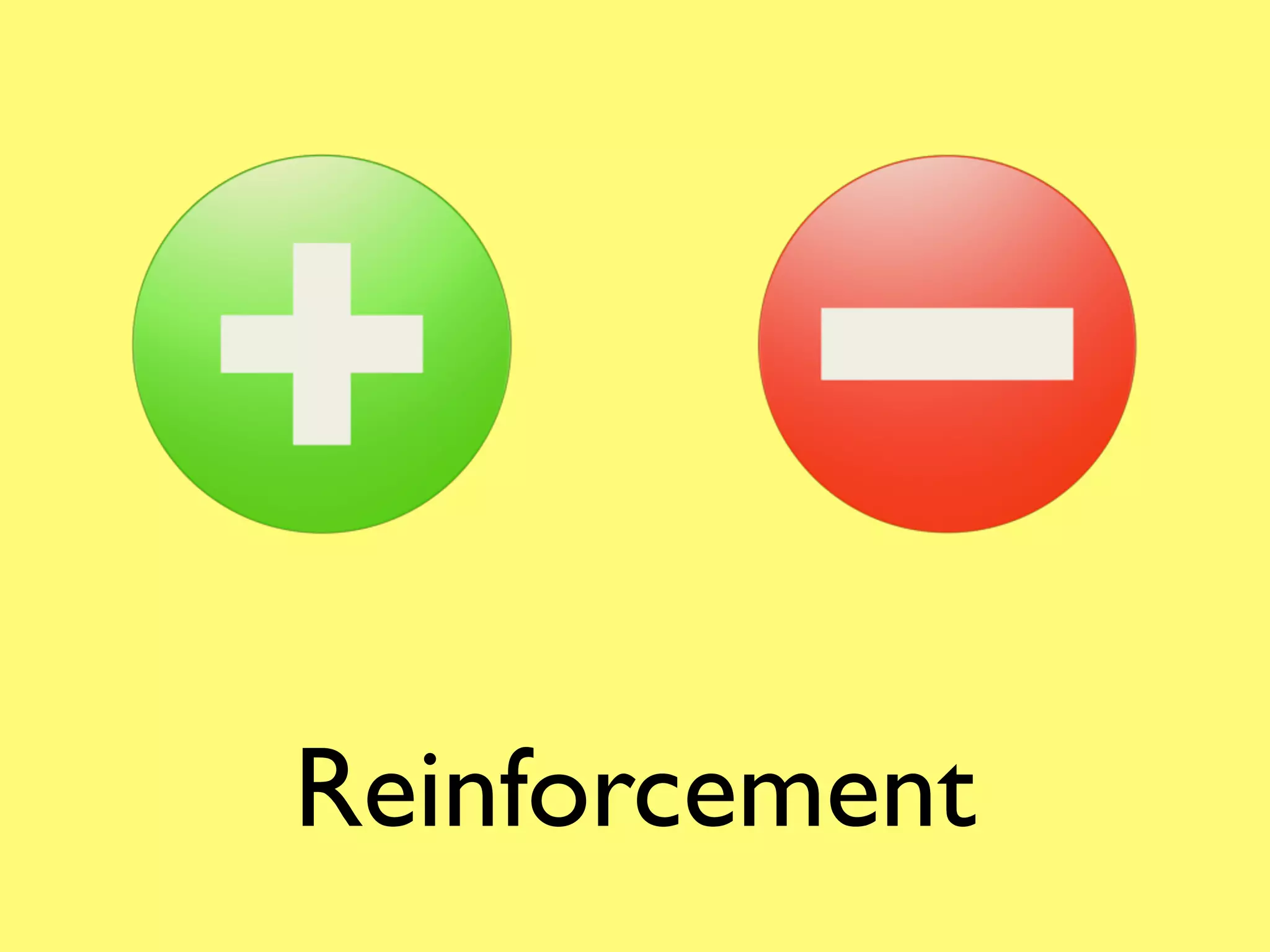
Reinforcement
   Increases the likelihood of the
   preceding event being repeated.
       Positive reinforcers add
       something desirable
       Negative reinforcers
       remove something
       undesirable
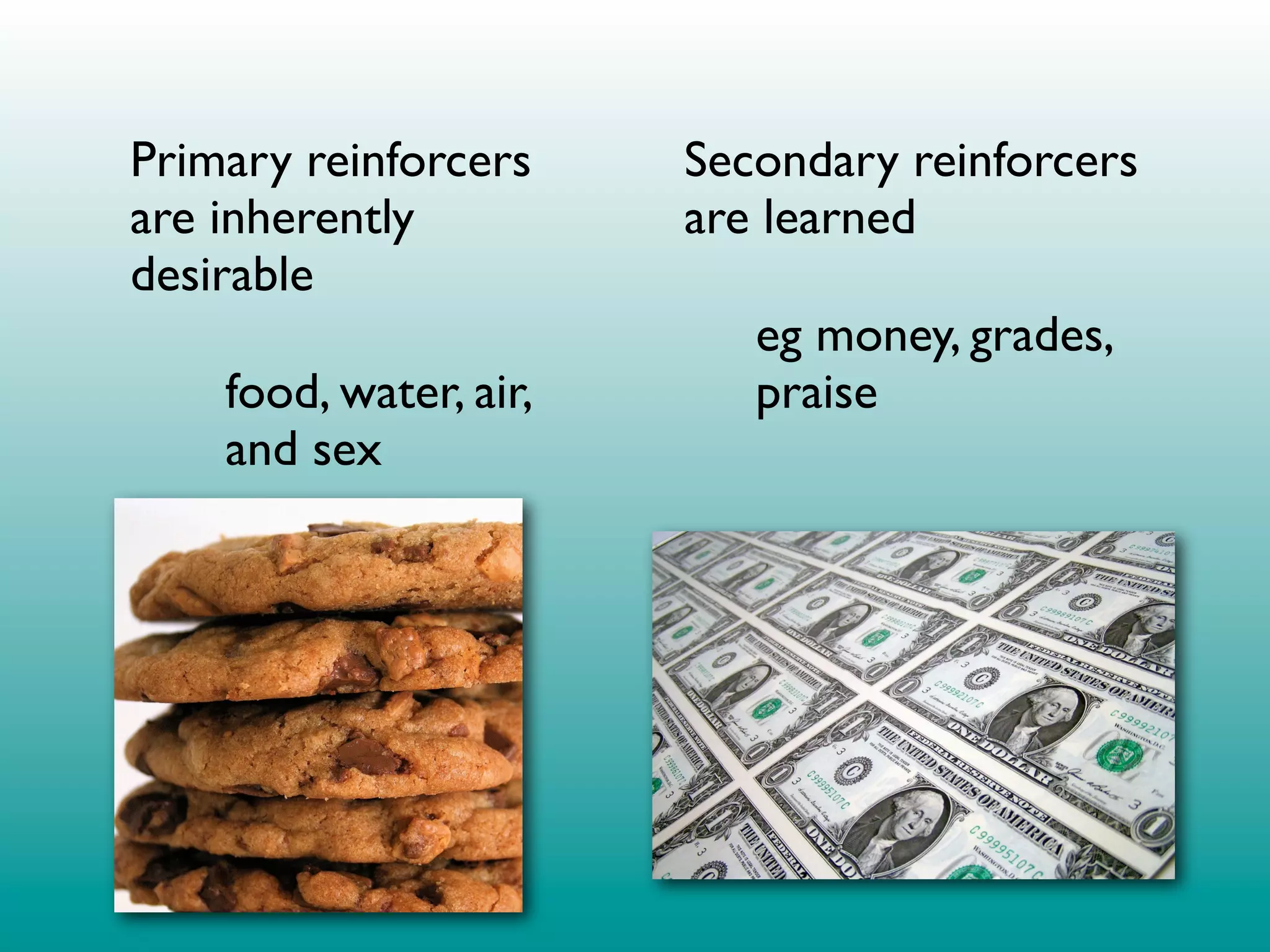
Primary reinforcers     Secondary reinforcers
are inherently          are learned
desirable
                           eg money, grades,
    food, water, air,      praise
    and sex
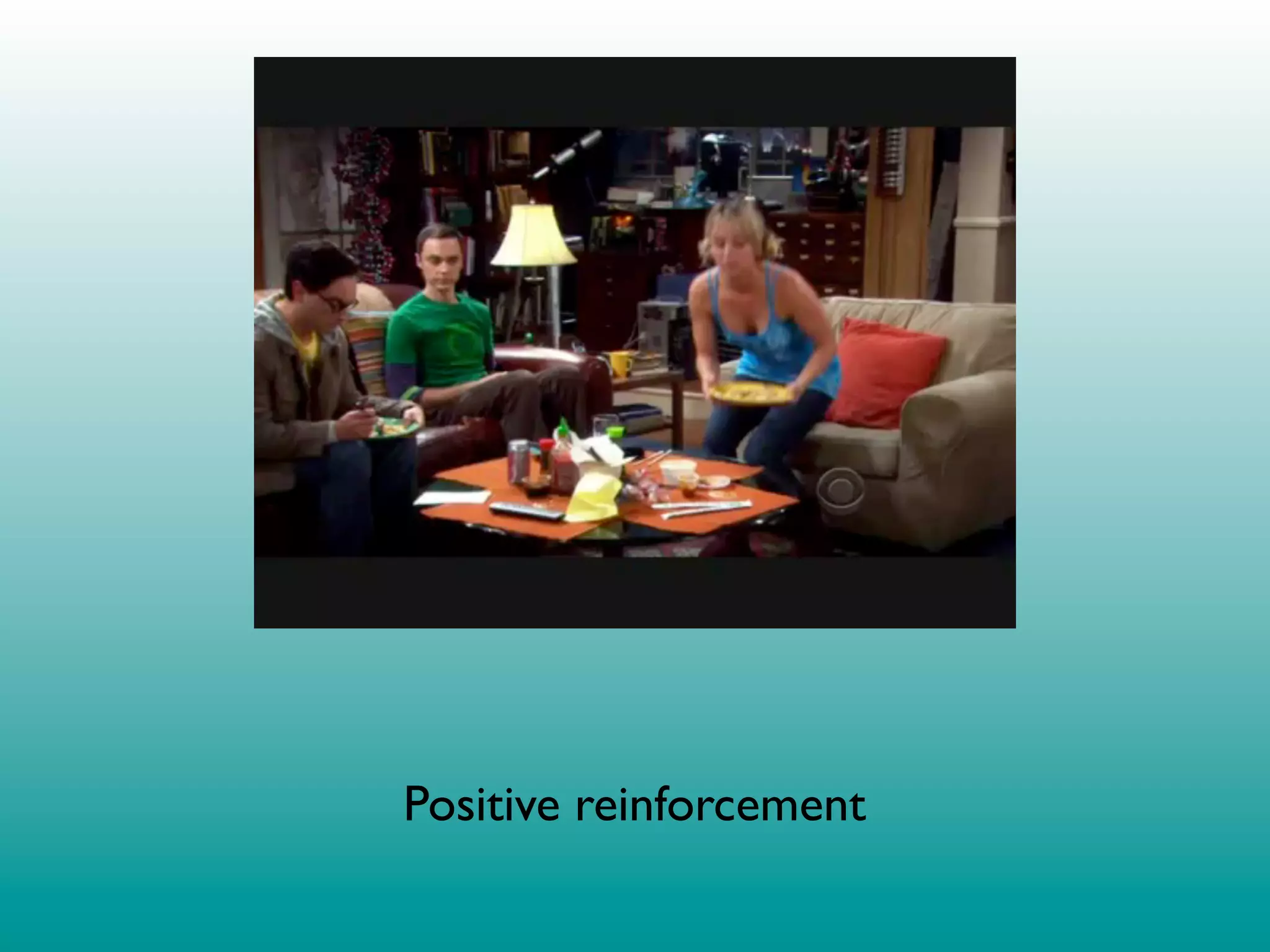
Positive reinforcement
Negative Reinforcers
• Taking aspirin to relieve a headache
• Hurrying home in the winter to get out of the cold
• Giving in to an argument or to dog’s begging to end it
• Fanning oneself to escape the heat
• Leaving a school play if the play is bad
• Smoking to relieve anxiety
• Faking a stomach ache in order to avoid school
• Putting on a seatbelt to silence the warning buzzer
• Using an umbrella to escape the rain
• Saying “uncle” to stop being beaten
Negative reinforcement
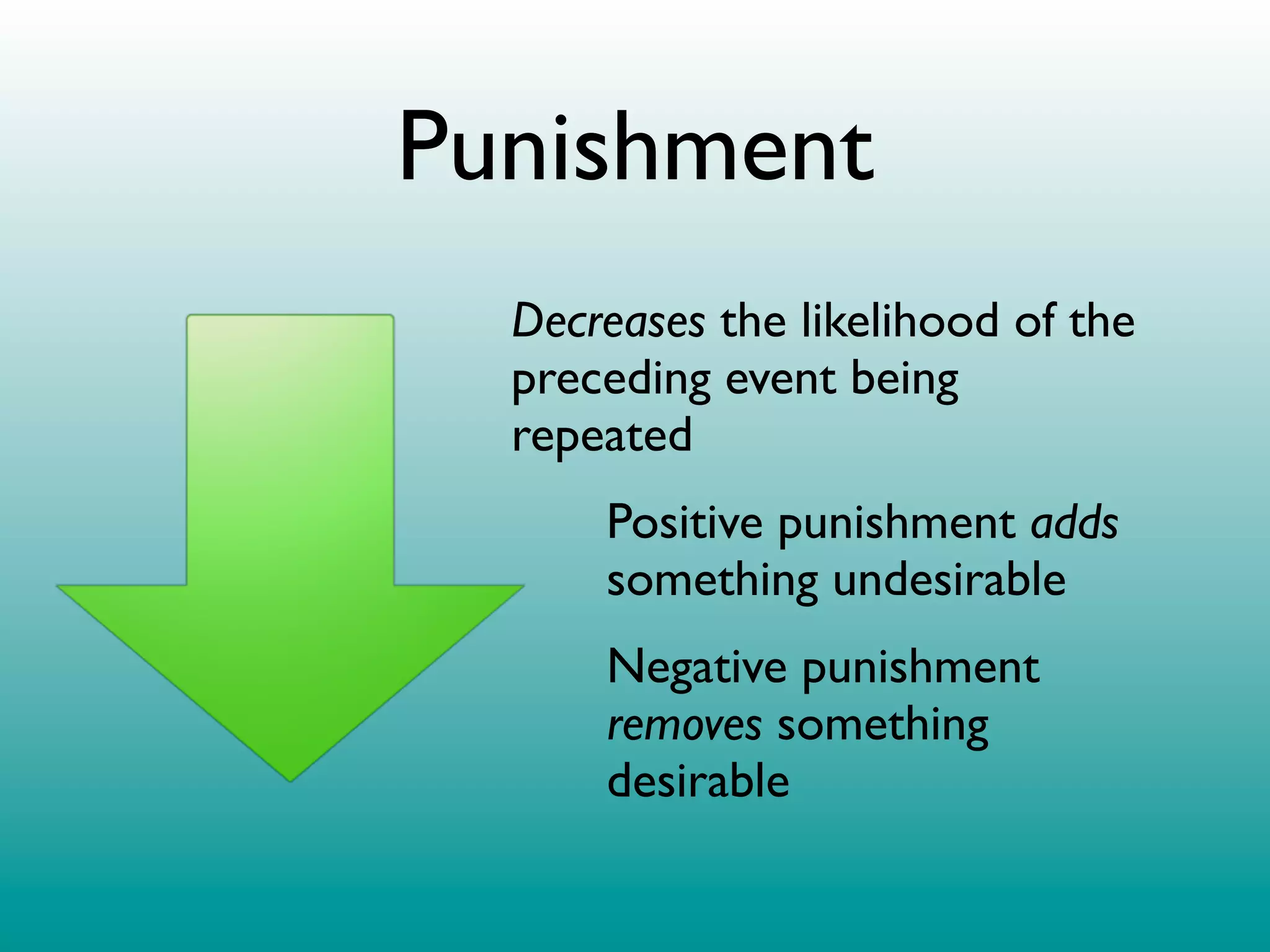
Punishment
  Decreases the likelihood of the
  preceding event being
  repeated
      Positive punishment adds
      something undesirable
      Negative punishment
      removes something
      desirable
Review
Reinforcement
Punishment
Scenarios

Does the situation require:

        Punishment or Reinforcement?

              positive or negative?

             describe the response
Schedules of
      Reinforcement
       Continuous reinforcement
                  or
       intermittent reinforcement

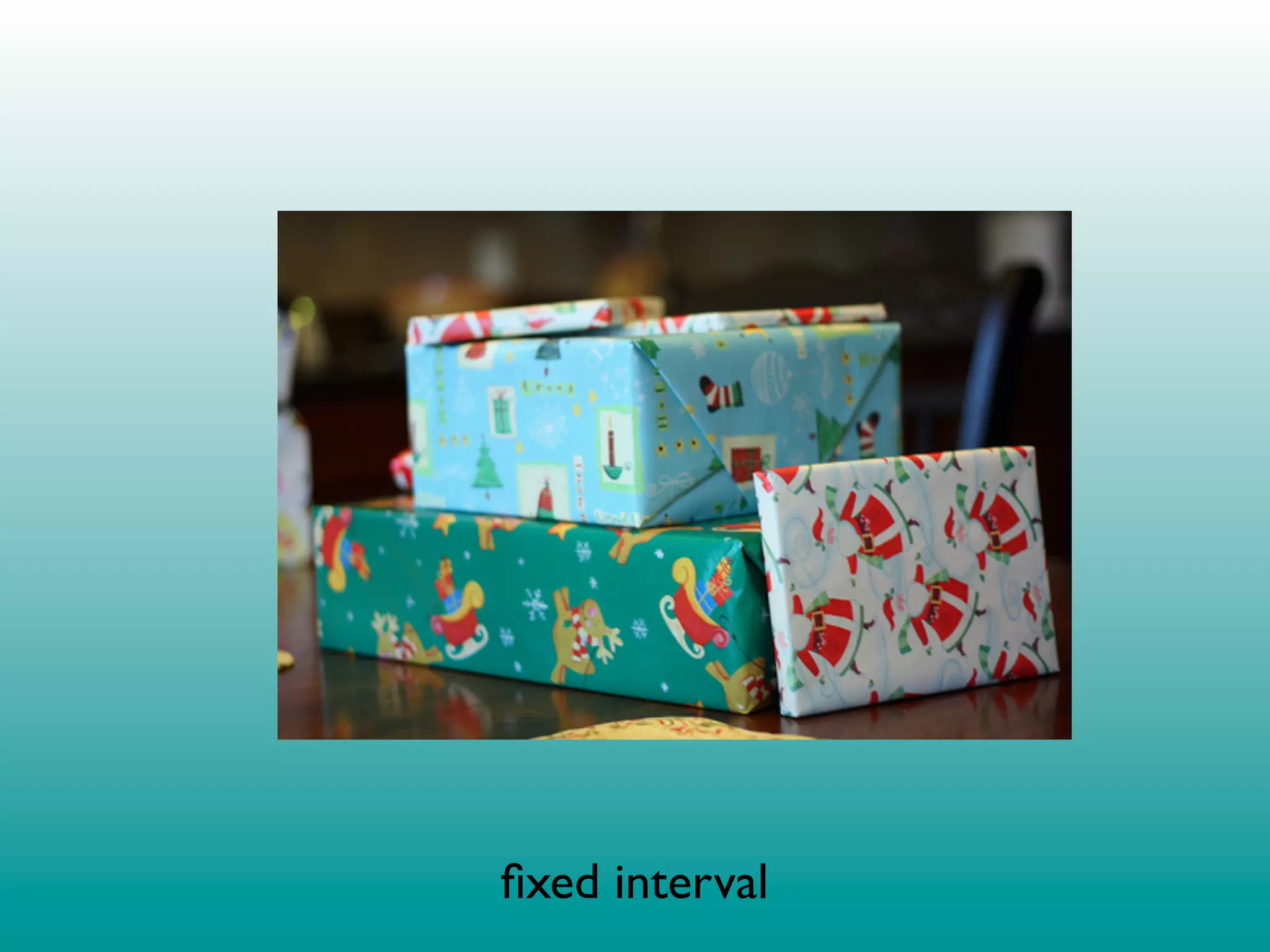
 Fixed ratio               Fixed interval

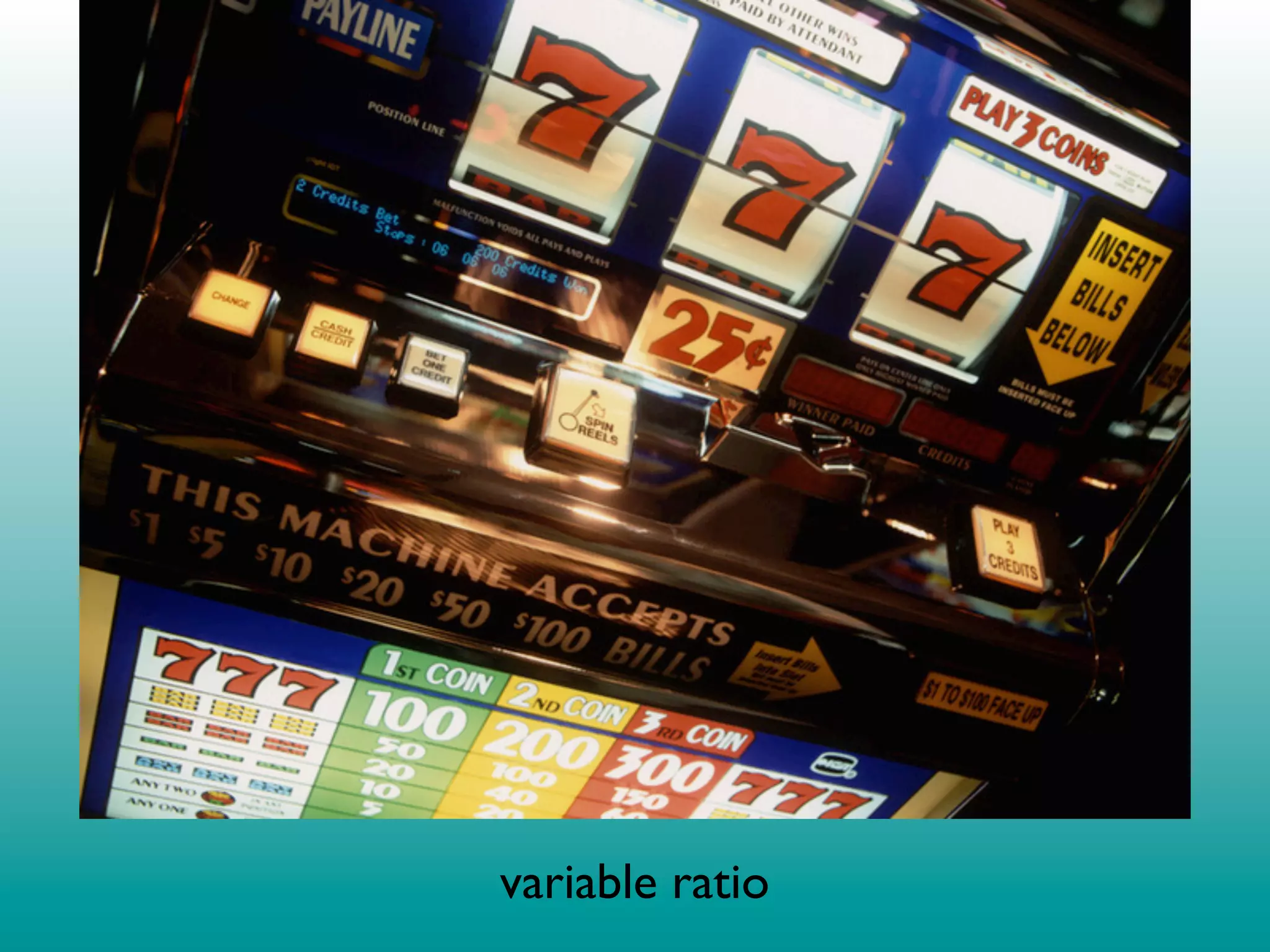
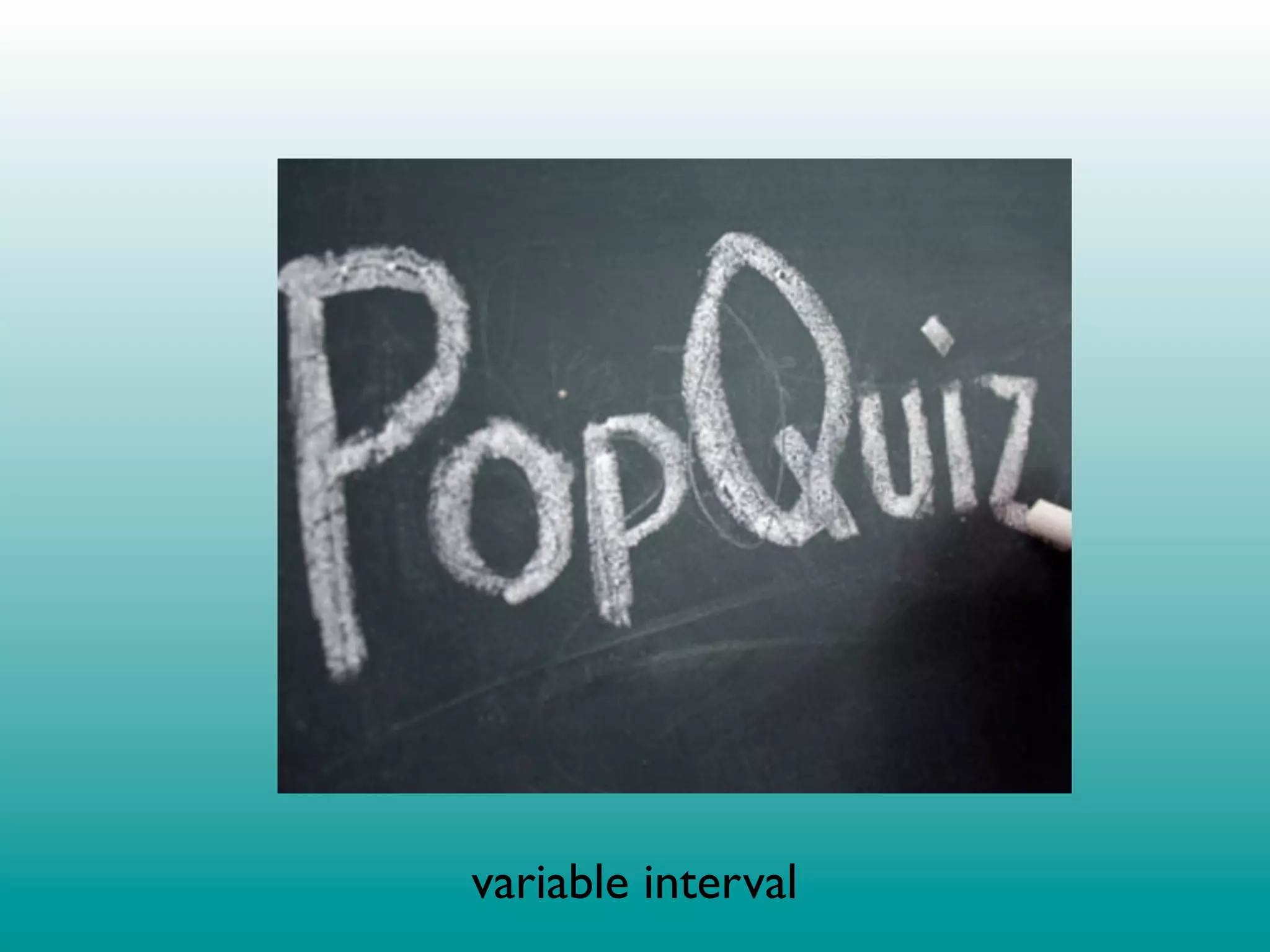
Variable ratio           Variable interval
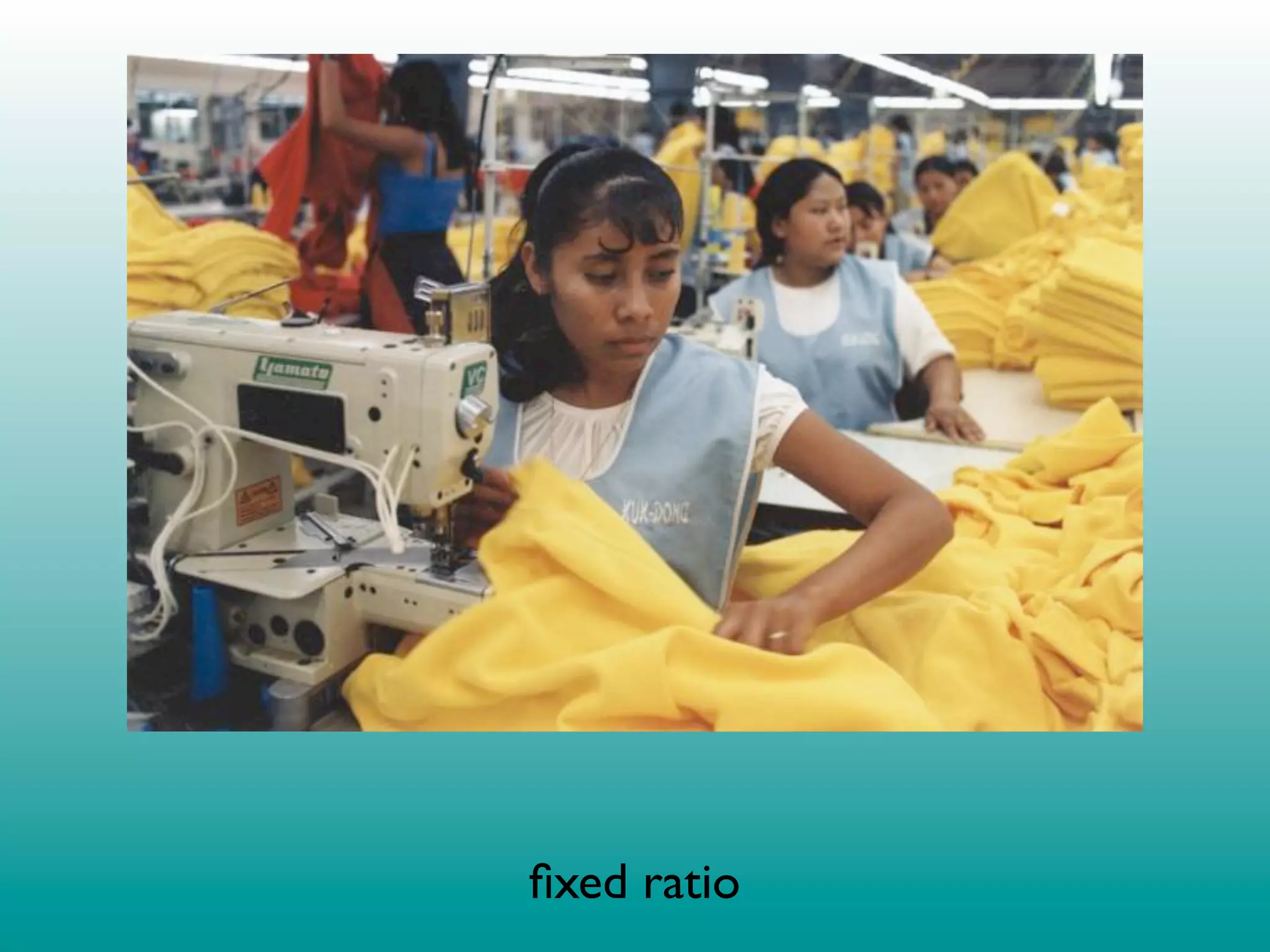
fixed ratio
variable ratio
fixed interval
variable interval
What schedule is being used?


1. Car salesman paid on commission?

2. Airline frequent-flyer rewards program?

3. Detention for eating in the halls?

4. Checking Facebook for something interesting?

5. Receiving acceptance letters from college?

6. Feeling sick after eating McDonald’s?
m23 Observational
    Learning
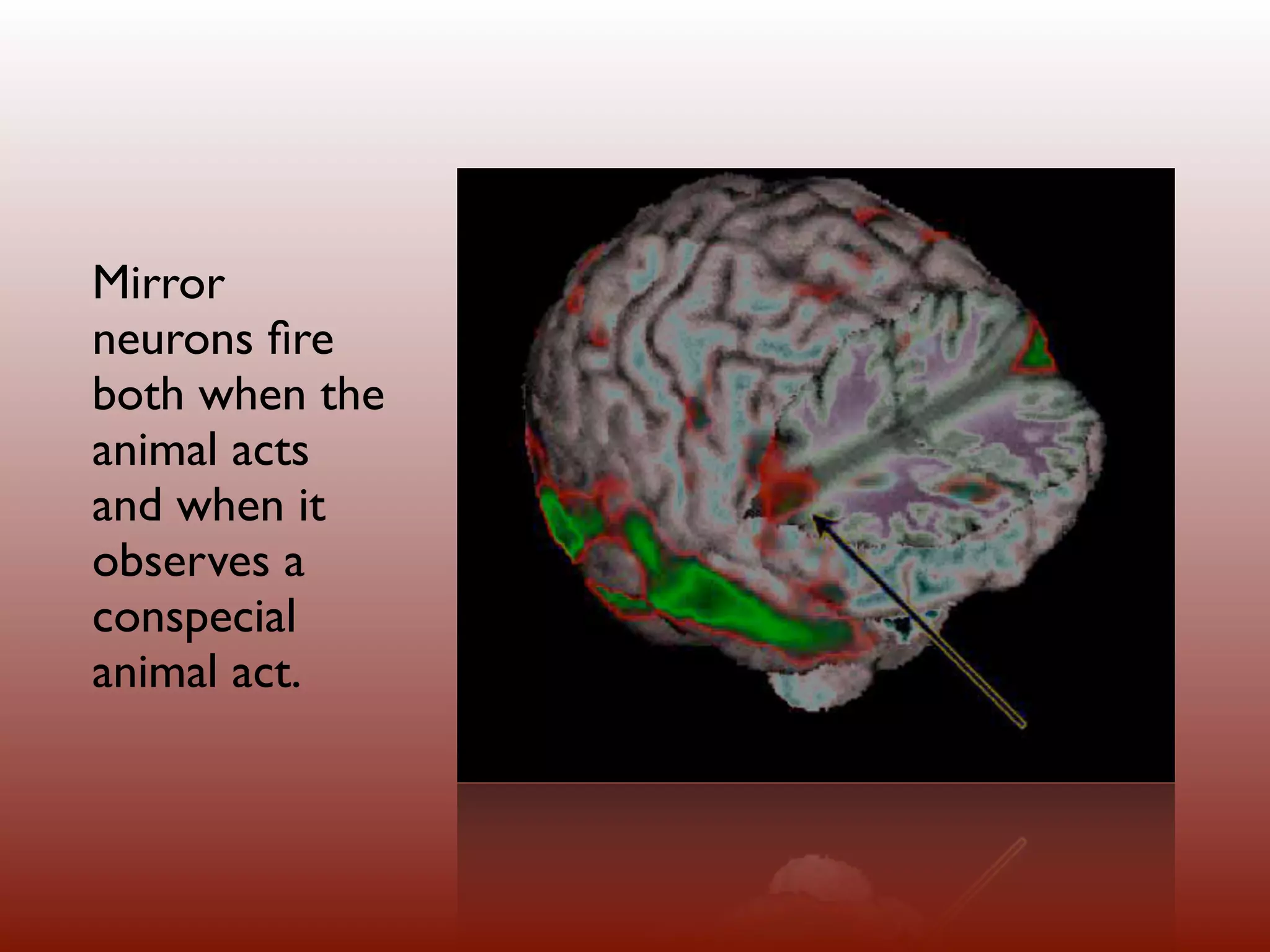
Mirror
neurons fire
both when the
animal acts
and when it
observes a
conspecial
animal act.
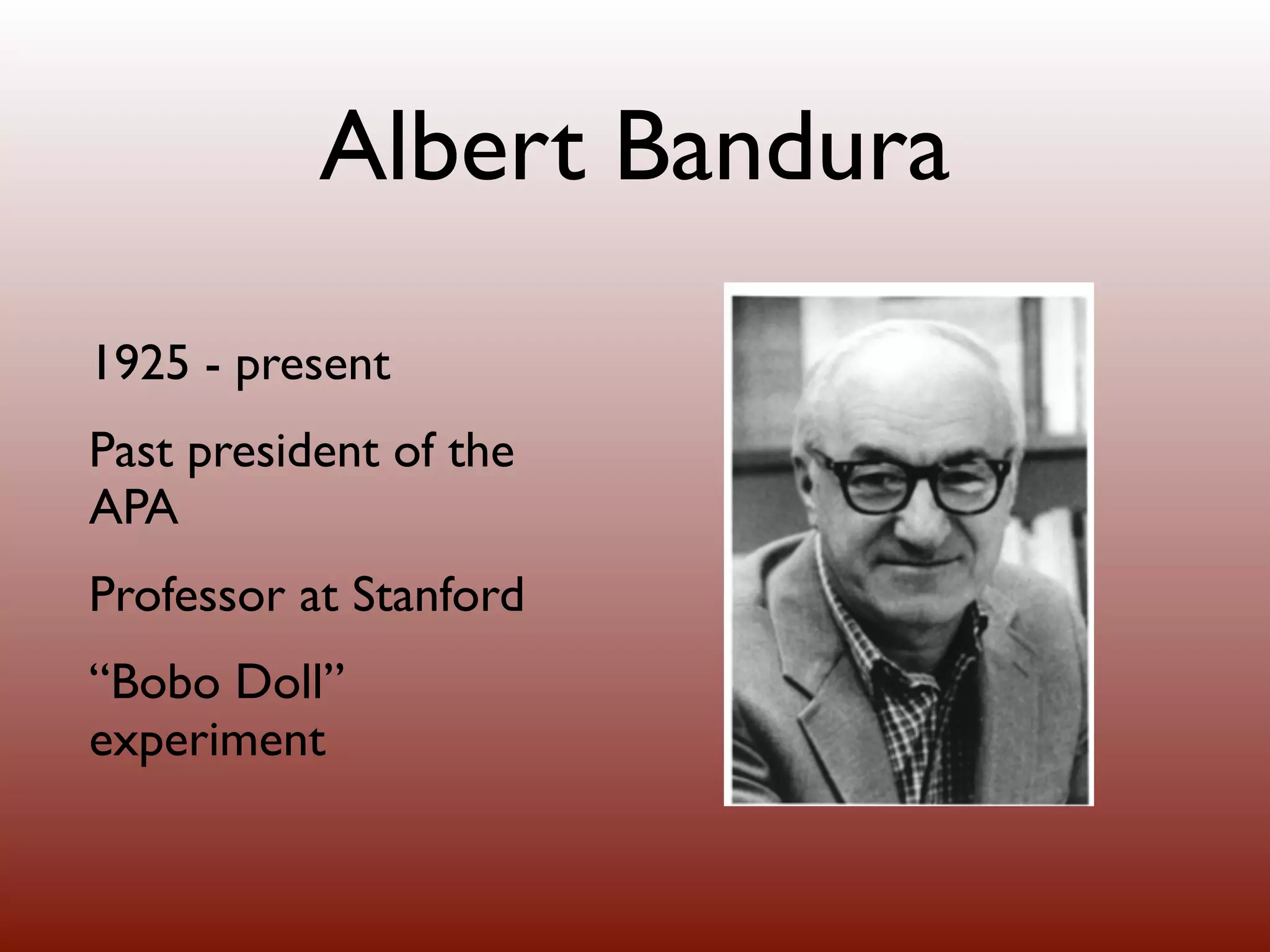
Albert Bandura
1925 - present
Past president of the
APA
Professor at Stanford
“Bobo Doll”
experiment
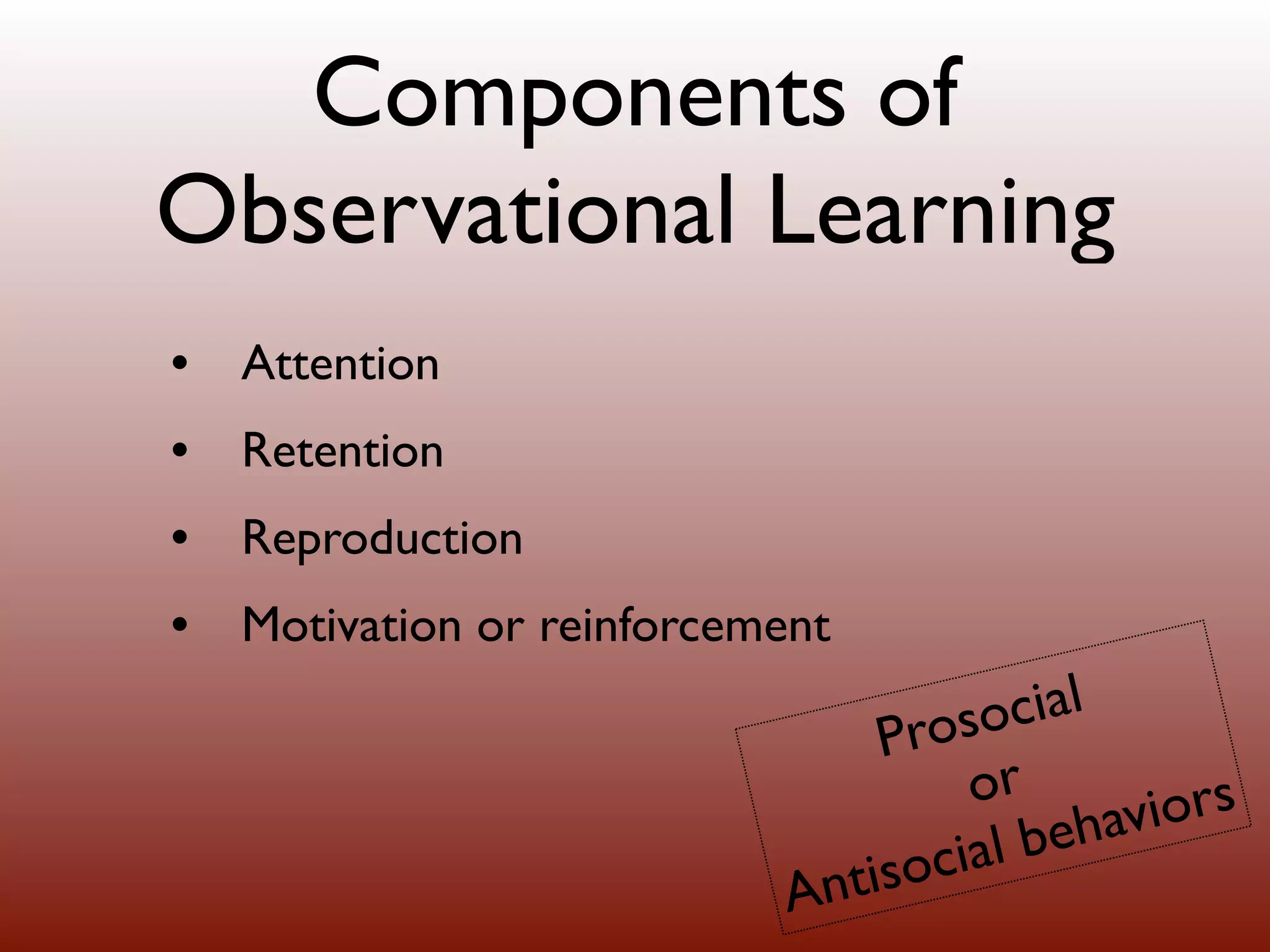
Components of
Observational Learning
• Attention
• Retention
• Reproduction
• Motivation or reinforcement

                               Prosocial
                                   or
                                      behaviors
                           Antisocial
Agenda:
      Coloring
     Presentation
    Practice FRQ


Optional review session:
       today, 5*
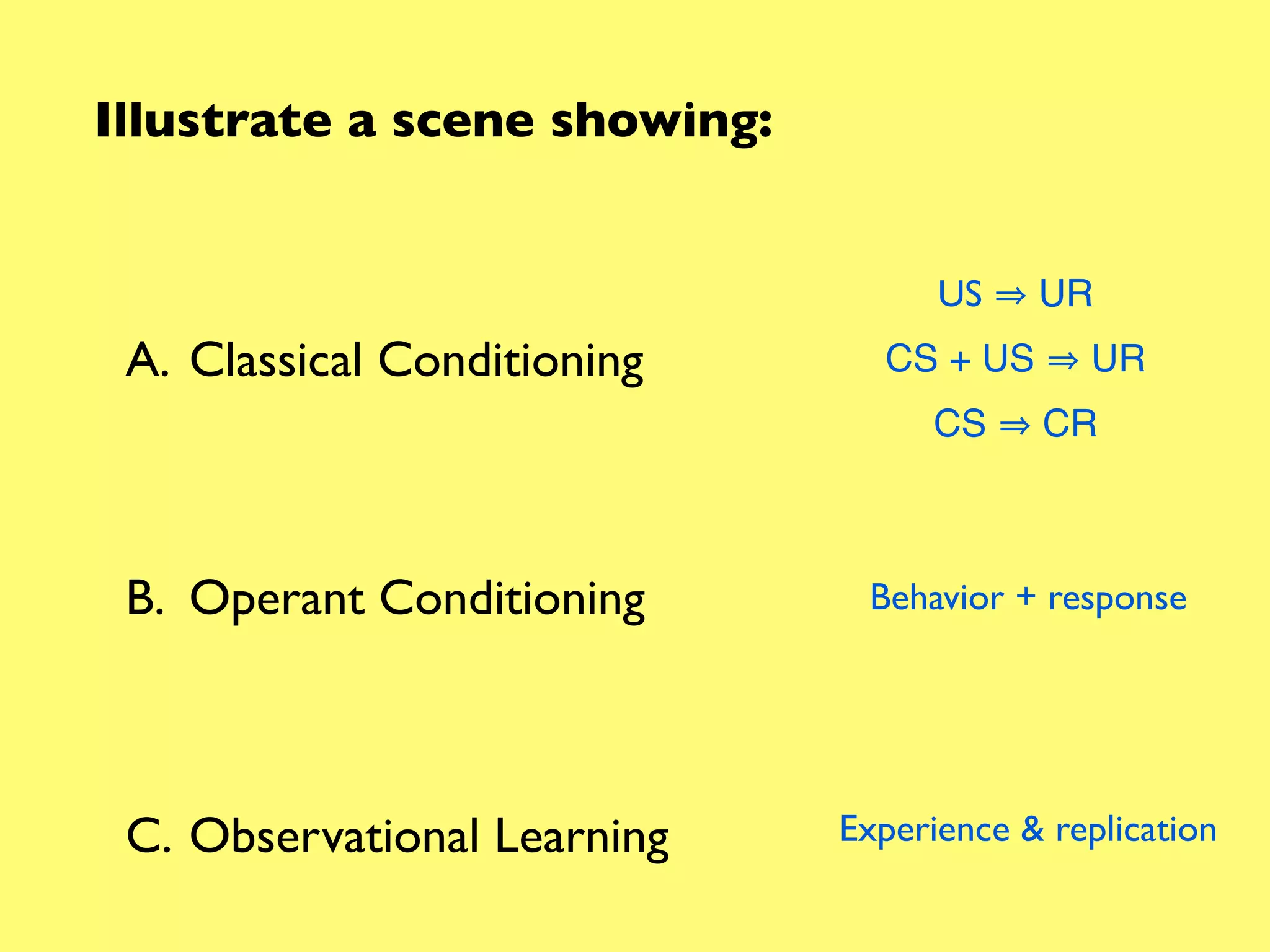
Illustrate a scene showing:


                                    US    UR
 A. Classical Conditioning      CS + US      UR
                                   CS     CR


 B. Operant Conditioning       Behavior + response


 C. Observational Learning    Experience & replication

U07 learning slides 2011