Sleep, Hypnosis, and
       Drugs
        Unit 6
True or False?   1. People prone to delinquency and
                    violence have fewer vivid fantasies.

                 2. People who sleep eight hours a night
                    tend to outlive those chronically sleep-
                    deprived.

                 3. The most common dreams are those with
                    sexual imagery.

                 4. Under hypnosis, people can be induced
                    to perform feats they would otherwise
                    find impossible.

                 5. In large amounts, alcohol is a
                    depressant; in small amounts, it is a
                    stimulant.
Waking and Sleeping
        m18
Waking Consciousness
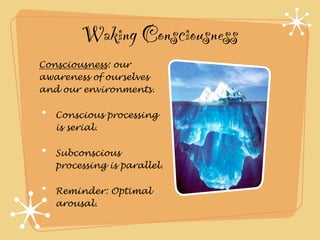
Consciousness: our
awareness of ourselves
and our environments.

   Conscious processing
   is serial.

   Subconscious
   processing is parallel.

   Reminder: Optimal
   arousal.
Daydreams are perfectly normal for most people.

   Daydreams can be escapist or rehearsal;
   daydreaming is adaptive.

    Can substitute for impulsive behavior.

   95% of people have sexual fantasies everyday.

   4% of the population suffers from fantasy-prone
   personality disorder.

    75% report spontaneous orgasm.
Biological rhythms:

     Annual cycles

     Twenty-eight day cycles

     Twenty-four hour cycles

     Ninety-minute cycles

Circadian rhythm

     Biological clock; 24-hour
     cycle

     Can be affected by light -
     light behind knees; artificial
     light delays sleep.
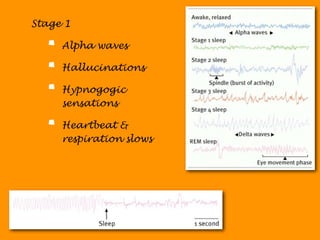
Stage 1

     Alpha waves

     Hallucinations

     Hypnogogic
     sensations

     Heartbeat &
     respiration slows
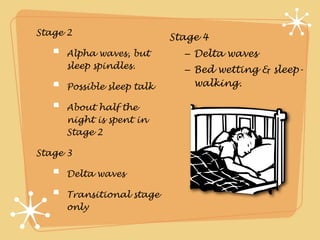
Stage 2
                           Stage 4
     Alpha waves, but        – Delta waves
     sleep spindles.         – Bed wetting & sleep-
     Possible sleep talk       walking.

     About half the
     night is spent in
     Stage 2

Stage 3

     Delta waves

     Transitional stage
     only
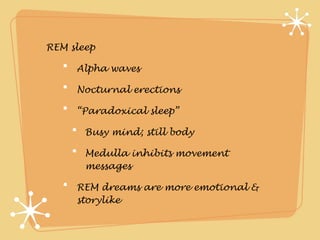
REM sleep

     Alpha waves

     Nocturnal erections

     “Paradoxical sleep”

       Busy mind; still body

       Medulla inhibits movement
       messages

     REM dreams are more emotional &
     storylike
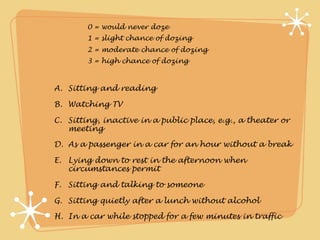
0 = would never doze
        1 = slight chance of dozing
        2 = moderate chance of dozing
        3 = high chance of dozing


A. Sitting and reading

B. Watching TV

C. Sitting, inactive in a public place, e.g., a theater or
   meeting

D. As a passenger in a car for an hour without a break

E. Lying down to rest in the afternoon when
   circumstances permit

F. Sitting and talking to someone

G. Sitting quietly after a lunch without alcohol

H. In a car while stopped for a few minutes in traffic
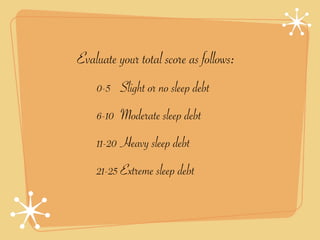
Evaluate your total score as follows:
    0-5 Slight or no sleep debt
    6-10 Moderate sleep debt
    11-20 Heavy sleep debt
    21-25 Extreme sleep debt
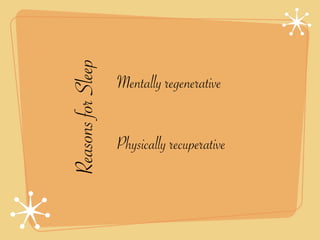
Reasons for Sleep   Mentally regenerative


                    Physically recuperative
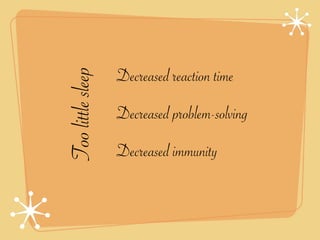
Too little sleep   Decreased reaction time
                   Decreased problem-solving
                   Decreased immunity
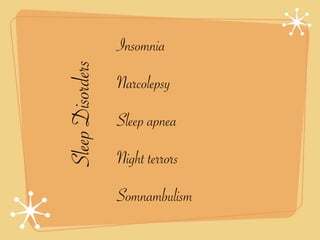
Insomnia
Sleep Disorders   Narcolepsy
                  Sleep apnea
                  Night terrors
                  Somnambulism
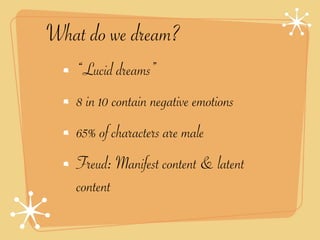
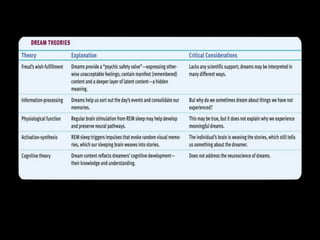
What do we dream?
   “Lucid dreams”
   8 in 10 contain negative emotions
   65% of characters are male
   Freud: Manifest content & latent
   content
M18 slides

M18 slides

  • 1.
  • 2.
    True or False? 1. People prone to delinquency and violence have fewer vivid fantasies. 2. People who sleep eight hours a night tend to outlive those chronically sleep- deprived. 3. The most common dreams are those with sexual imagery. 4. Under hypnosis, people can be induced to perform feats they would otherwise find impossible. 5. In large amounts, alcohol is a depressant; in small amounts, it is a stimulant.
  • 3.
  • 4.
    Waking Consciousness Consciousness: our awarenessof ourselves and our environments. Conscious processing is serial. Subconscious processing is parallel. Reminder: Optimal arousal.
  • 5.
    Daydreams are perfectlynormal for most people. Daydreams can be escapist or rehearsal; daydreaming is adaptive. Can substitute for impulsive behavior. 95% of people have sexual fantasies everyday. 4% of the population suffers from fantasy-prone personality disorder. 75% report spontaneous orgasm.
  • 6.
    Biological rhythms: Annual cycles Twenty-eight day cycles Twenty-four hour cycles Ninety-minute cycles Circadian rhythm Biological clock; 24-hour cycle Can be affected by light - light behind knees; artificial light delays sleep.
  • 7.
    Stage 1 Alpha waves Hallucinations Hypnogogic sensations Heartbeat & respiration slows
  • 8.
    Stage 2 Stage 4 Alpha waves, but – Delta waves sleep spindles. – Bed wetting & sleep- Possible sleep talk walking. About half the night is spent in Stage 2 Stage 3 Delta waves Transitional stage only
  • 9.
    REM sleep Alpha waves Nocturnal erections “Paradoxical sleep” Busy mind; still body Medulla inhibits movement messages REM dreams are more emotional & storylike
  • 10.
    0 = wouldnever doze 1 = slight chance of dozing 2 = moderate chance of dozing 3 = high chance of dozing A. Sitting and reading B. Watching TV C. Sitting, inactive in a public place, e.g., a theater or meeting D. As a passenger in a car for an hour without a break E. Lying down to rest in the afternoon when circumstances permit F. Sitting and talking to someone G. Sitting quietly after a lunch without alcohol H. In a car while stopped for a few minutes in traffic
  • 11.
    Evaluate your totalscore as follows: 0-5 Slight or no sleep debt 6-10 Moderate sleep debt 11-20 Heavy sleep debt 21-25 Extreme sleep debt
  • 12.
    Reasons for Sleep Mentally regenerative Physically recuperative
  • 13.
    Too little sleep Decreased reaction time Decreased problem-solving Decreased immunity
  • 14.
    Insomnia Sleep Disorders Narcolepsy Sleep apnea Night terrors Somnambulism
  • 15.
    What do wedream? “Lucid dreams” 8 in 10 contain negative emotions 65% of characters are male Freud: Manifest content & latent content

Editor's Notes