Motivation at Work
m37
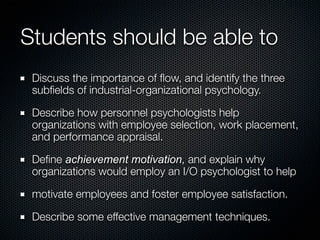
Students should be able to
 Discuss the importance of flow, and identify the three
 subfields of industrial-organizational psychology.

 Describe how personnel psychologists help
 organizations with employee selection, work placement,
 and performance appraisal.

 Define achievement motivation, and explain why
 organizations would employ an I/O psychologist to help

 motivate employees and foster employee satisfaction.

 Describe some effective management techniques.
Have you ever been so
involved in something that
  you lost track of time?
   What were you doing?
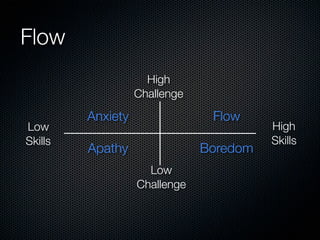
Flow
                     High
                   Challenge

         Anxiety                Flow
Low                                      High
Skills                                   Skills
         Apathy                Boredom
                     Low
                   Challenge
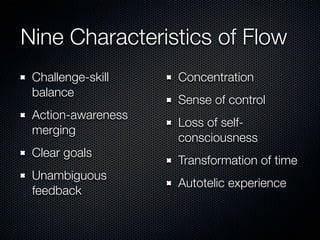
Nine Characteristics of Flow
 Challenge-skill    Concentration
 balance
                    Sense of control
 Action-awareness
                    Loss of self-
 merging
                    consciousness
 Clear goals
                    Transformation of time
 Unambiguous
                    Autotelic experience
 feedback
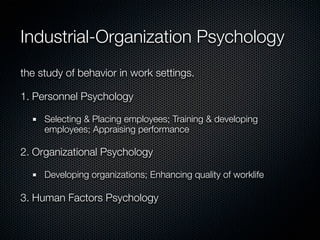
Industrial-Organization Psychology
the study of behavior in work settings.

1. Personnel Psychology

     Selecting & Placing employees; Training & developing
     employees; Appraising performance

2. Organizational Psychology

     Developing organizations; Enhancing quality of worklife

3. Human Factors Psychology
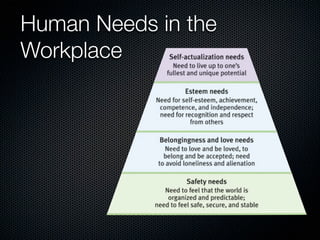
Human Needs in the
Workplace
Achievement Motivation


The keys to achievement are drive and self-discipline,
more than natural ability and raw talent.
    Angela Duckworth and Martin Seligman
Task Engagement
the extent to which an individual demonstrates
involvement, satisfaction, and enthusiasm in the task at
hand
  In the workplace, workers are either:
     Engaged
     Not-engaged
     Actively disengaged

  Those who are engaged or associated with those who
  are engaged perform markedly better
Keys to Managing Well
1. Harness job-relevant skills
2. Set specific, challenging goals
3. Choose an appropriate leadership style
   – Task leadership sets standards, organizes work, and
     focuses attention on goals
   – Social leadership builds teamwork, mediates conflict,
     and offers support
   – Transformational leadership articulates high
     standards, inspire people to share their vision, and offer
     personal attention

M37 Motivation at Work slides

  • 1.
  • 2.
    Students should beable to Discuss the importance of flow, and identify the three subfields of industrial-organizational psychology. Describe how personnel psychologists help organizations with employee selection, work placement, and performance appraisal. Define achievement motivation, and explain why organizations would employ an I/O psychologist to help motivate employees and foster employee satisfaction. Describe some effective management techniques.
  • 3.
    Have you everbeen so involved in something that you lost track of time? What were you doing?
  • 4.
    Flow High Challenge Anxiety Flow Low High Skills Skills Apathy Boredom Low Challenge
  • 5.
    Nine Characteristics ofFlow Challenge-skill Concentration balance Sense of control Action-awareness Loss of self- merging consciousness Clear goals Transformation of time Unambiguous Autotelic experience feedback
  • 6.
    Industrial-Organization Psychology the studyof behavior in work settings. 1. Personnel Psychology Selecting & Placing employees; Training & developing employees; Appraising performance 2. Organizational Psychology Developing organizations; Enhancing quality of worklife 3. Human Factors Psychology
  • 7.
    Human Needs inthe Workplace
  • 8.
    Achievement Motivation The keysto achievement are drive and self-discipline, more than natural ability and raw talent. Angela Duckworth and Martin Seligman
  • 9.
    Task Engagement the extentto which an individual demonstrates involvement, satisfaction, and enthusiasm in the task at hand In the workplace, workers are either: Engaged Not-engaged Actively disengaged Those who are engaged or associated with those who are engaged perform markedly better
  • 10.
    Keys to ManagingWell 1. Harness job-relevant skills 2. Set specific, challenging goals 3. Choose an appropriate leadership style – Task leadership sets standards, organizes work, and focuses attention on goals – Social leadership builds teamwork, mediates conflict, and offers support – Transformational leadership articulates high standards, inspire people to share their vision, and offer personal attention

Editor's Notes